
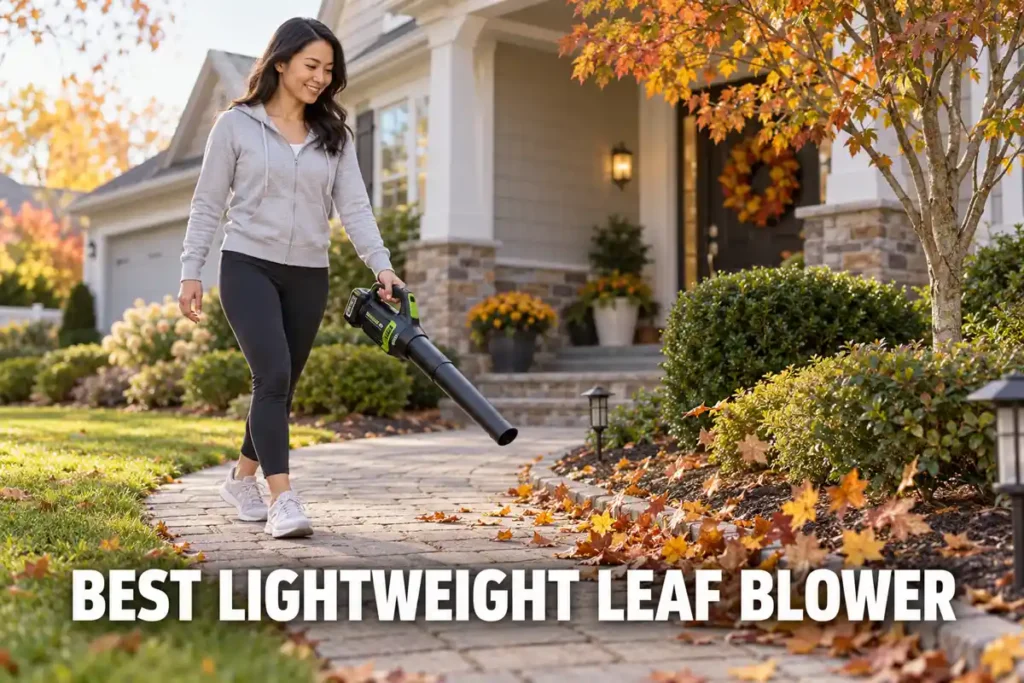
The best lightweight leaf blower is the one your wrist, shoulder and back can carry through the whole job, while it still moves the leaves in front of you. After a day of dormant pruning in the orchard I feel every pound held out at arm’s length, so I read the weight on a box before the airflow.
Affiliate Disclosure: Garden Power Scout is a proud participant in the Amazon Services LLC Associates Program. As an Amazon Associate, we earn from qualifying purchases, at no extra cost to you.
Below are five picks, from tools of about 4 lb in the hand to a backpack that carries its weight on the hips, and my top pick is the WORX WG543 20V Cordless Leaf Blower Kit.
Best Lightweight Leaf Blower Reviews 2026 With 5 Models I Rank for Easy Carrying
These five are my picks for people who count pounds before they count CFM. Four are handhelds (two cordless, one corded, one gas), and the fifth is a backpack that moves its weight to the hips. Each block gives the weight with what it includes and says who should skip the tool.
1. WORX WG543 20V Cordless Leaf Blower Kit Best Overall
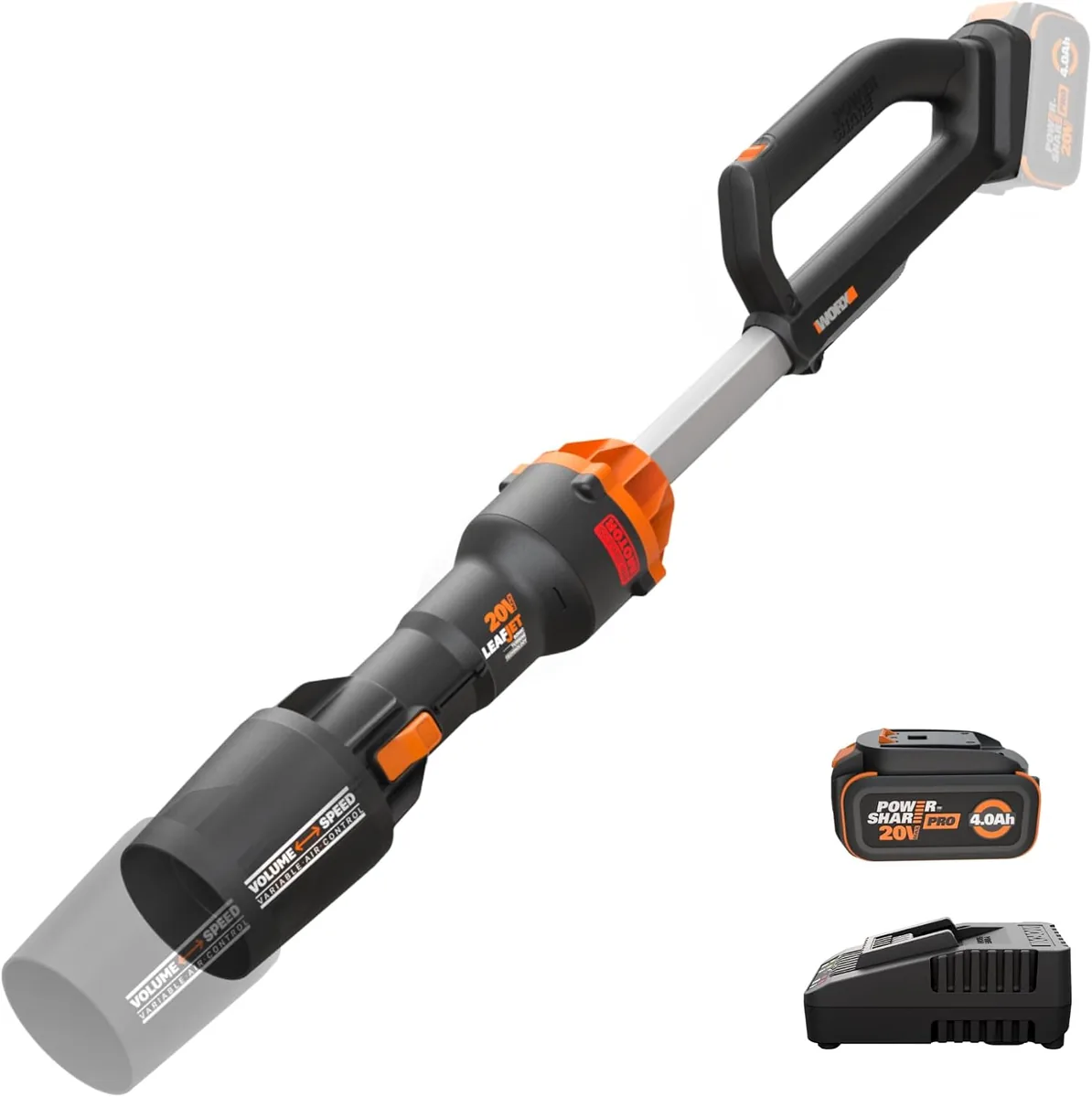
Hold the WG543 out at arm’s length and the arm hardly notices it. At about 3.8 lb with the battery on, it is the lightest of the five blowers on this page, and that makes it my pick for anyone whose wrists or shoulders set the limit before the job does. I recommend it for dry leaves, grit and clippings on hard ground, where a tool you can lift without thinking beats one with more push.
WORX WG543 20V Cordless Leaf Blower Kit Specs
Key Features:
- Light body: WORX gives about 3.8 lb for the kit with its pack on, so a wrist or shoulder carries little through a whole pass.
- Pack you can remove: The bare tool is 2.3 lb, so the pack makes up the difference, about 1.5 lb, and the tool alone is easy to hang and store.
- Sliding nozzle: Slide it forward for the 410 CFM volume mode on hard ground and back for the 130 mph speed mode on grass and grit, with no tools.
- Two power settings: Low drops the stream to 305 CFM in volume mode and 95 mph in speed mode, which suits dust and light debris beside a wall.
- One-piece tube: A straight tube with a slide-on nozzle has no joint to loosen and no second handle to hold, so the tool goes straight from the shelf to the work.
- PowerShare battery: The 20V pack fits other WORX 20V tools, so one battery can serve a trimmer or a mower as well.
- Complete kit: The blower, the 4.0 Ah battery and the charger arrive together, and nothing else is needed on the first day.
Along the wall of the machinery shed, the work pad collects dry chaff, dust and bits of apricot leaf. I slide the nozzle forward for volume mode, the setting WORX recommends for hard ground, and hold the tube about 8 inches above the concrete. The strip rolls ahead of the tube in a wide band. Crusts of dried mud tracked onto the pad are the limit: neither mode shifts them, and a stiff broom does.
Held out in front of me, the straight tube pulls on the wrist far less than I expected, though I still change hands at the end of each pass so neither shoulder does all the work. What a lightweight cordless leaf blower gives up for this low weight is the pack: a 4.0 Ah battery with no printed run time.
On the house lawn, before the first mow of spring, twigs and dry seed pods lie in the grass where the mower would throw them. WORX advises speed mode for grass, so I slide the nozzle back and the narrow jet lifts them out of the turf. It handles the strips under the shade trees where the twigs fall, and I leave the open lawn to the mower. Anything damp or pressed flat into the grass stays where it lies.
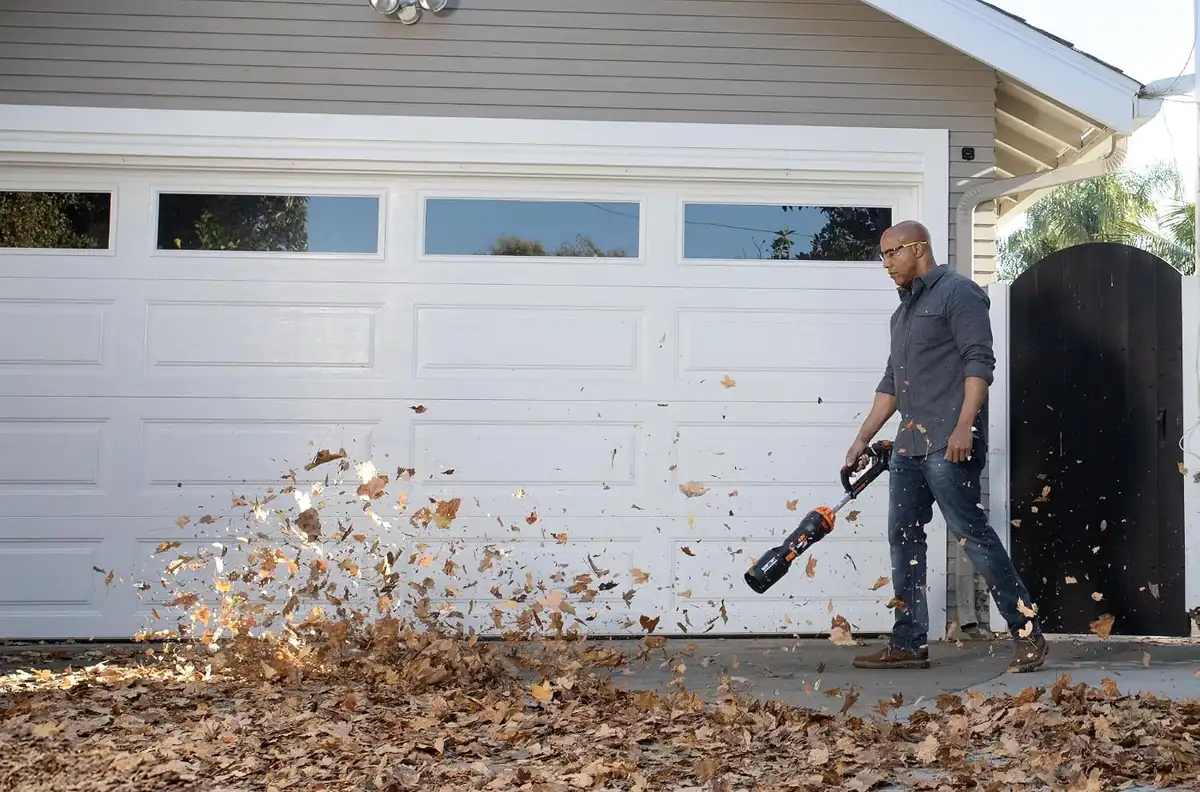
The nozzle comes assembled in speed mode, so slide it forward for hard ground before you start. Wait for the fan to stop before you move it, because the motor runs on for a few seconds after switch-off.

WHY I CHOSE THIS
Mirko Lekić, Agricultural Engineer & Farm Owner
I pick the WG543 for the person whose arm sets the limit. It is the lightest of the five blowers here with its battery on, it needs no cord, fuel or mix, and one hand carries it through a whole pass. That is why it takes Best Overall: a blower that stays light in the hand leaves the shed for every short dry job, and those jobs fill most weeks.
Wear eye protection, long pants and shoes, as WORX advises, and add ear protection, since WORX prints no noise figure. Keep people, pets and windows out of the stream, and take the battery out before you look into the fan or clean the tube.
The recharge takes about 2 hours, so a second round waits for the pack to fill again unless you own a second one. Clean it with a damp cloth and mild soap, never a spray, and keep the battery terminals clean and away from metal. WORX rates use and storage from 32 to 113 F and charging from 32 to 104 F, so a freezing shed is the wrong place for the pack. The warranty runs three years when you register within 30 days and 24 months otherwise.
Choose the WG543 for decks, steps, paths and short dry jobs on hard ground, or if you already own WORX 20V tools whose pack it can share. It also suits an older user or anyone with a sore shoulder who wants a tool that one hand carries without strain. Skip it if wet leaves on grass are your main work, or if you need a stated battery life before you buy.
FINAL VERDICT
The WG543 gives up push and a printed run time for its low weight. That trade is fair for dry leaves, grit and clippings on hard ground, and it is the blower I recommend if your wrist or shoulder sets how long you can work.
It is the blower I hand to anyone with a sore shoulder.
2. Milwaukee M18 FUEL 2724-20 Handheld Blower (Tool Only) Best Premium
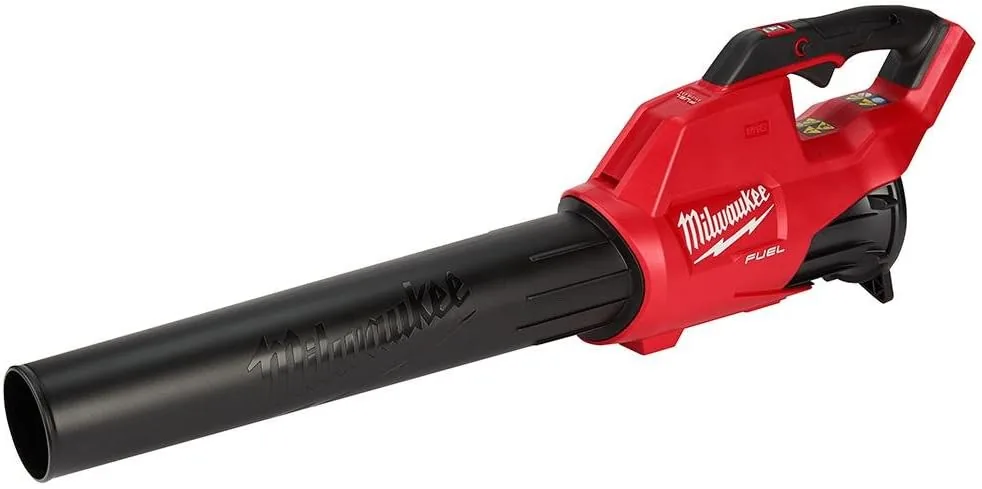
The box holds a 4.9 lb blower and nothing else: no battery and no charger, so you need an M18 pack and an M18 charger before the first leaf moves. The pack you add sets the weight in your hand, which is why I recommend this tool to people who already have M18 packs on the shelf. For them it is a premium handheld with a variable trigger, a lock-on button and a three-year tool warranty.
Milwaukee M18 FUEL 2724-20 Handheld Blower (Tool Only) Specs
Key Features:
- Tool-only body: You buy the blower without a pack, so you choose the pack that fits the job and the arm that carries it. A smaller pack weighs less and a larger one runs longer.
- Variable-speed trigger: More pull gives more air up to the ceiling you set, so you can feather the stream beside a bed or a fitting.
- High and low button: High is 450 CFM and low is 295 CFM, and the button sets the most the trigger can deliver.
- Lock-on button: Pull the trigger, press the button, and the hand relaxes on a long pass. Pull and release to stop.
- Fast response: Milwaukee says full throttle comes in under a second, so the stream is there when you squeeze.
- Tube latch: Press the latch and the tube comes off, which shortens the 33.8 in tool for a shelf.
- M18 platform: The tool takes any M18 pack, the same batteries that run Milwaukee’s other M18 tools, so a pack you own may already fit.
After dormant pruning, thin apricot twigs and bark flakes lie under the canopy along the row. Milwaukee advises holding the tube 5 to 6 inches above the ground and sweeping side to side, moving forward slowly. With a large High Output pack on high, the 450 CFM rolls the litter out toward the alley, where the mower shreds it. The push is about 11 N on a 9.0 Ah pack, roughly 2.5 lb of force, so there is little to spare: thicker twigs stay where they fall, and I pick them up by hand.
The 4.9 lb is the bare tool, and every M18 pack adds to it, a large High Output pack the most. Milwaukee ties its 450 CFM and 120 mph figures to that pack, so match the pack to the job. Choose a lightweight leaf blower battery by the job: a smaller pack saves weight and costs run time.
The irrigation pump head sits in a small pit, and leaves and twigs collect around the 150-mesh disc filter and its fittings. I crouch at the rim with one hand on the tool and the other on the edge. The variable trigger lets me start gently, which matters beside fittings, so the stream lifts the leaves without driving grit into them. Milwaukee describes low as the setting for clearing flower beds without moving mulch, and because high at that range throws grit up, I stay on low beside the filter and sweep away from it.
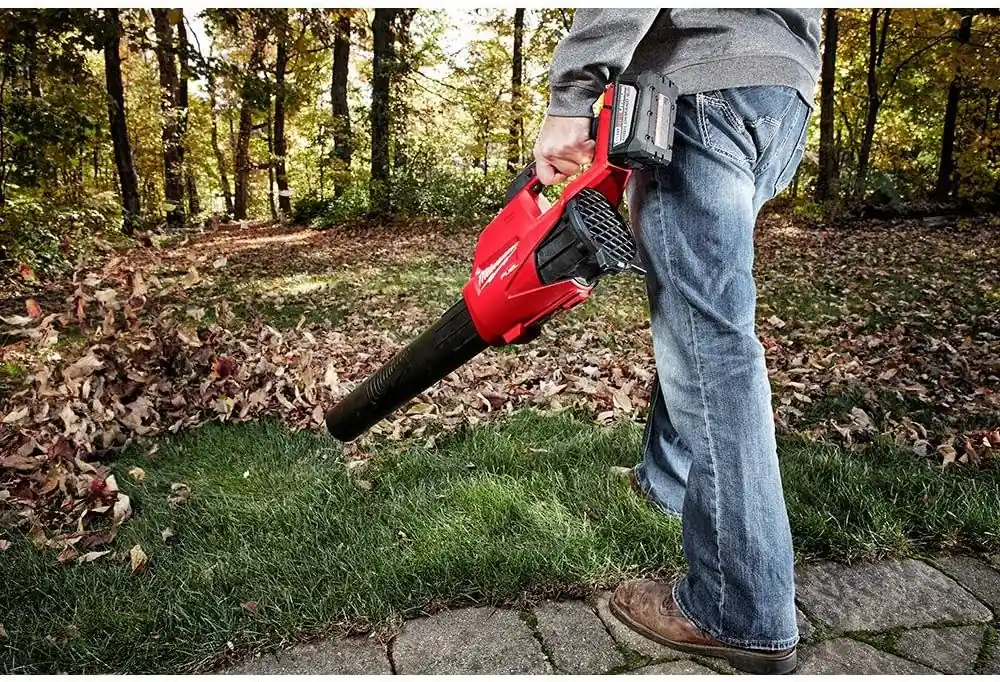
Release the trigger and the lock-on before you switch between high and low, because the tool does not change setting while it is locked on. That double release is the fussy part of the controls, so set the ceiling first, then lock on for the long pass.
WHY I CHOSE THIS
Mirko Lekić, Agricultural Engineer & Farm Owner
I rate the 2724-20 as the premium pick for anyone who already runs on M18 packs. It has a variable trigger, a lock-on that rests the hand on a long pass and a three-year tool warranty on a platform Milwaukee designed for landscape maintenance professionals. That is what Best Premium rests on here: the tier, the platform and the controls. The weight in your hand is whatever pack you add.
Milwaukee’s manual asks for eye protection with side shields, hearing protection, protective clothing and footwear, and it keeps bystanders 50 ft away from the stream. Do not use the tool in rain or wet places, and take the pack off before you change the tube.
Never run it without the tube, keep hair and loose clothing away from the rear intake, wipe dust from the vents and store it indoors. According to Milwaukee, the three-year warranty covers the original purchaser who bought from an authorized Milwaukee distributor, so check on the listing who sells the tool before you buy. Next to my old gas handheld it needs no mix, so it is ready the moment I need it.
Buy it if you already own M18 packs and a charger and want a premium handheld for dry leaves, light twigs, drives and decks on a house lot. Skip it if you are starting from nothing, because a first-time buyer pays for the platform before the first leaf moves. Soaked leaf mats and long orchard alleys are beyond its push as well.
FINAL VERDICT
The 2724-20 moves dry leaves and light twigs well and runs out of push on soaked mats. Pick it when the M18 packs are already on your shelf and the work is the dry jobs of a house lot.
It is the premium blower for a battery platform you already own.
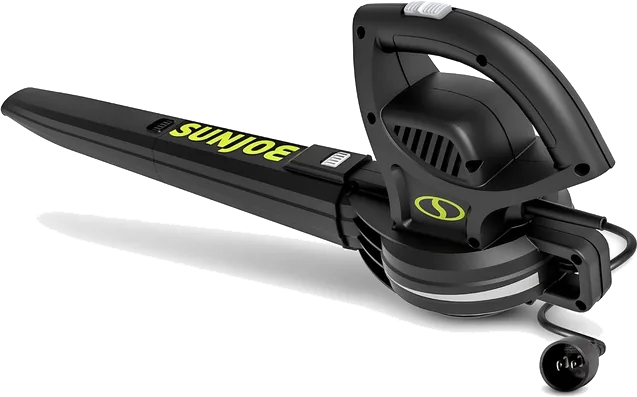
3. Sun Joe SBJ597E 6-Amp Corded Electric Blower Best Value
The 3.9 lb on the box is the whole tool in your hand, because a corded blower has no battery to add. According to Sun Joe, that is the net weight, and the extension cord comes on top of it. That makes the SBJ597E a lightweight electric leaf blower that one hand lifts through a long job, and I recommend it for dry leaves, dust and clippings on patios, garage floors and paths.
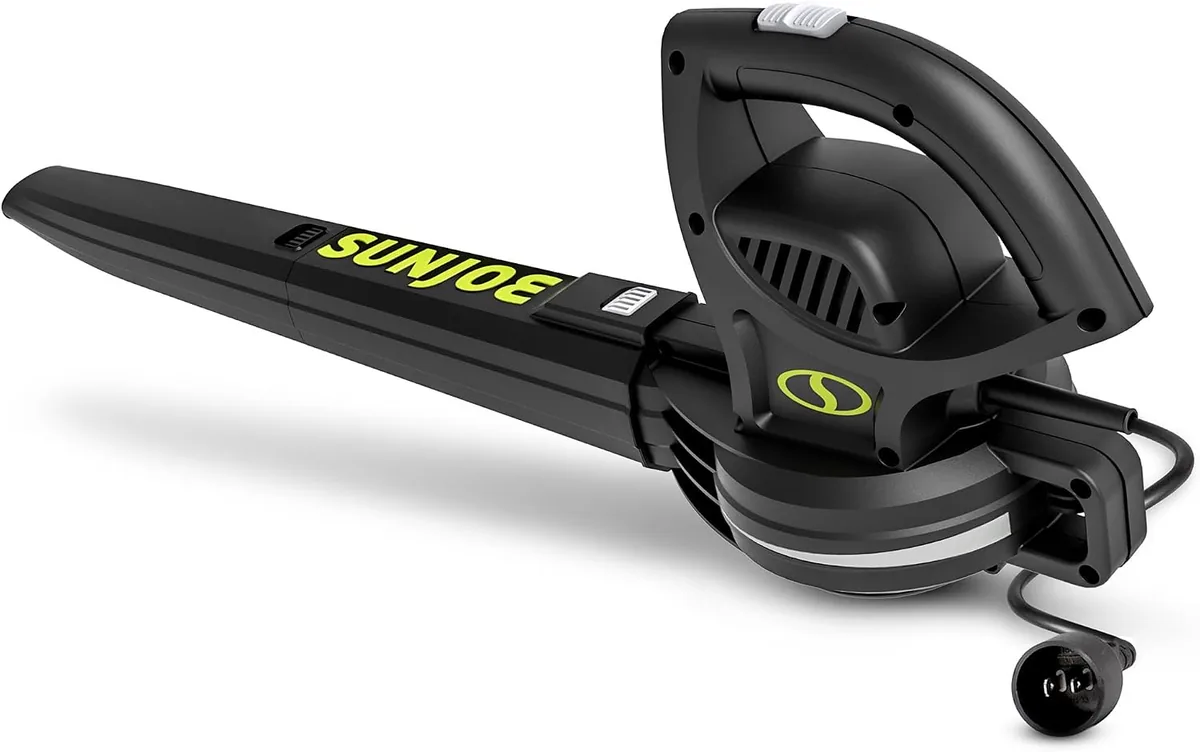
Sun Joe SBJ597E 6-Amp Corded Electric Blower Specs
Key Features:
- Net weight of 3.9 lb: No battery sits in that figure, so the tool in your hand stays at that weight all day. The extension cord is extra.
- Slide switch: One ON/OFF slide switch takes the place of a trigger, so no finger holds anything down while you work.
- Two-piece tube: The snap-lock tube goes together without tools and comes apart again for a shelf or a closet.
- No run limit: It works for as long as the outlet is live, and there is no pack to charge or swap.
- Low cord demand: The 6 A draw lets a 16 AWG outdoor cord run up to 50 ft and a 14 AWG cord up to 100 ft.
- Nothing to fuel or mix: You slide the switch and it runs, with no warm-up, no pull cord and no carburetor.
- Two-year warranty: Sun Joe covers the original end user for two years, for residential use.
In the room where we stack the fruit crates, dust and dried leaf bits settle on top of the stacks and along the floor edge. I wear a respirator-grade mask, open the door and work from the top down, so the dust travels toward the exit. At shoulder height the 3.9 lb stays easy on my arm, and the jet peels the dust off the wood at the 155 mph maximum. The 260 CFM maximum is enough to roll leaf bits across the floor, and a broom handles whatever has stuck.
A lightweight corded leaf blower swaps battery weight for cord weight, and the box number leaves the cord out. The attached cord is short, so every job needs an extension cord, and Sun Joe limits it to 100 ft. A long cord drags on the arm in a way the weight does not show. I tie the two plugs in a loose knot so a pull on the cord cannot separate them in the middle of a sweep.
The machinery shed has a floor of concrete and bare dirt. With both doors open, the blower moves dry chaff off the concrete half toward the doorway, while on the dirt half it only raises dust, so I leave that half to a broom. The same cord that makes this job easy ends the day for the orchard, because the first tree row lies beyond what a 100 ft extension cord can reach from the sheds. The orchard is out of reach for this blower, and I do not try to stretch it.
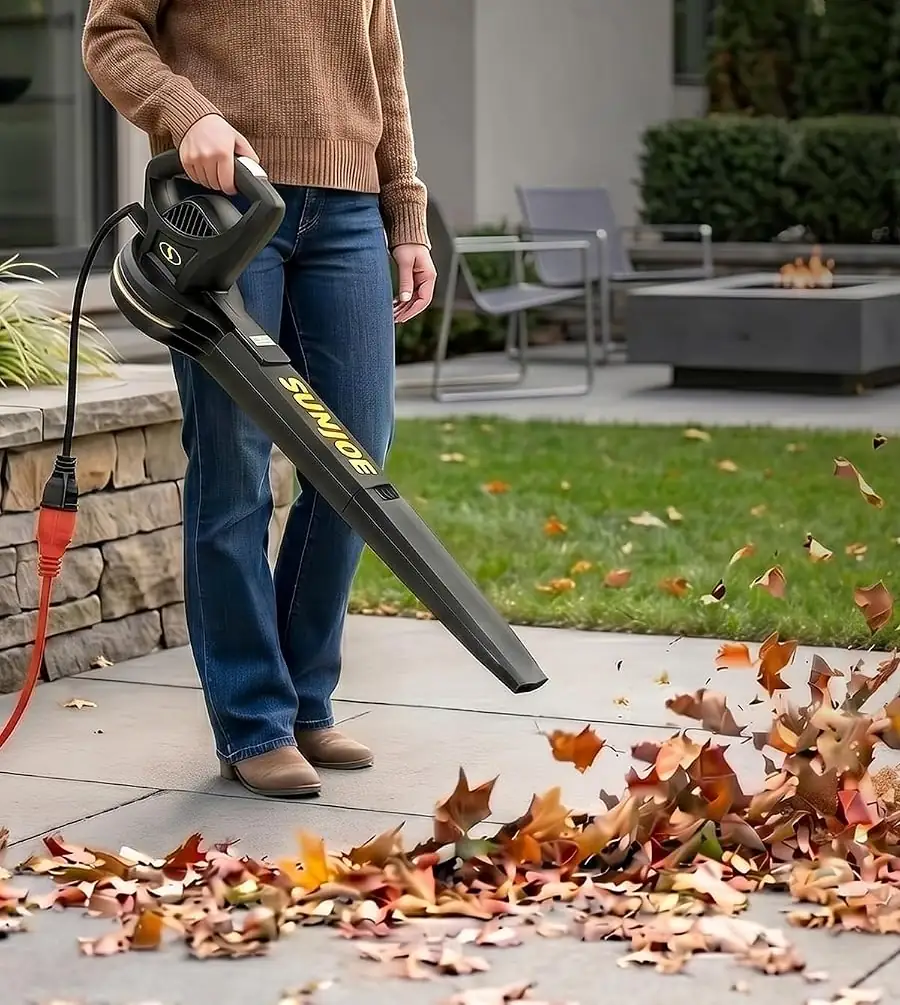
There is no speed control, so you change the stream with distance. Hold the tube at about 45 degrees and 2 to 4 inches above the surface, as the manual says, and lift the tube or step back when the air is too strong.
WHY I CHOSE THIS
Mirko Lekić, Agricultural Engineer & Farm Owner
I rate the SBJ597E as the best value for hard surfaces and small jobs. There is no battery, charger or fuel to buy, the body weighs 3.9 lb, and the budget-tier outlay ends at an extension cord. For that work it is the best lightweight leaf blower for the money. Its limits are plain: 260 CFM is the lowest airflow on this page, it has no speed control, and it is the only blower here tied to an outlet.
Unplug the blower before you assemble or clean it, wear eye and ear protection, and keep people, pets, windows and cars out of the stream, with people and pets at least 16 ft away. Never use it in rain or on damp ground, and use only an outdoor-rated, listed extension cord on a circuit with the GFCI protection Sun Joe recommends.
The motor runs on for about 5 seconds after switch-off, so let it stop before you set the tool down. Store it dry with the extension cord disconnected and the tube wiped clean, and keep the tube pieces off the floor, since plastic can crack underfoot. Sun Joe prints no noise figure, so I wear ear protection every time. Commercial use voids the warranty, which is two years for the original end user.
Pick it for patios, garage floors, steps and dry leaves on hard surfaces, or as a first blower when you want nothing to charge or mix. Skip it if leaves lie on grass, if you work more than 100 ft from an outlet, or if you want a low setting for flower beds. It is a hard-surface tool, and it does that job well.
FINAL VERDICT
Buy the SBJ597E for small, dry jobs on hard surfaces, and leave lawns, wet leaves and the orchard to a bigger machine. It makes sense when the work stays within 100 ft of an outlet.
It is the corded blower for small jobs on hard surfaces.
4. ECHO PB-2520 Gas Handheld Leaf Blower Best Lightweight Gas
ECHO gives the PB-2520 8.6 lb dry with its blower pipes on, the light end of the gas handhelds, since comparable machines weigh 9.5 to 9.8 lb on the same dry basis. It is still the heaviest handheld on this page, about 9.5 lb with a full tank by my own sum. Pick it when the job needs an engine’s push in one hand.
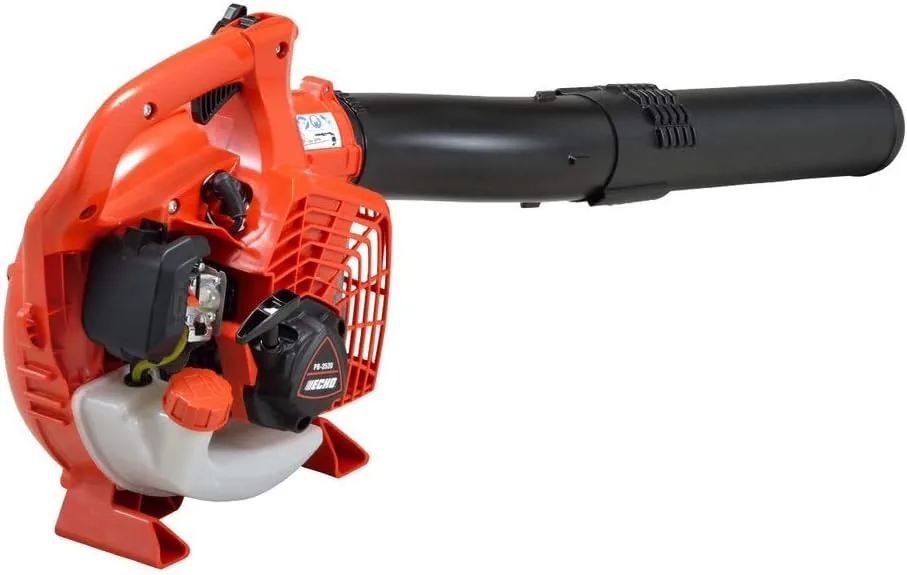
ECHO PB-2520 Gas Handheld Leaf Blower Specs
Key Features:
- Curved blower tube: ECHO lists it for rotational control and less fatigue.
- Throttle position lever: It holds a set engine speed, so the trigger finger rests.
- See-through fuel tank: It shows the fuel level, useful because ECHO gives no run time.
- Tool-less air filter access: The check before every use needs no screwdriver.
- Posi-Loc pipes: The manual says use loosens the joint, so retighten it as shown.
According to ECHO, the air reaches 453 CFM at the nozzle with the pipes on, the air speed peaks at 170 mph, and the force is 15.8 N. That is a modest push: enough for loose dry leaves and dust, not for a soaked mat. At the foot of the hedgerow on my perimeter, the curved tube let me hold the pipe low and turn my wrist along the hedge with the wind at my back.
A cold start, outdoors on flat ground, is purge bulb, choke, then short pulls with the stop switch moved off STOP. ECHO says to warm the engine for 3 minutes at idle first. On the gravel drive I set the throttle position lever above idle, which keeps the stones down and lets my trigger finger rest.
Measure the oil instead of pouring by eye: 2.6 oz of two-stroke oil per US gallon of unleaded fuel makes the 50:1 mix ECHO specifies, with 89 octane or higher and never E15 or E85.
WHY I CHOSE THIS
Mirko Lekić, Agricultural Engineer & Farm Owner
I picked the PB-2520 as the best lightweight gas leaf blower because 8.6 lb dry is the low end of the class and the engine still delivers ECHO’s 453 CFM. It is the gas tool I can hold in one hand through a whole pass along the hedge.
Hearing protection goes on before you pull the cord and stays on until the engine stops: ECHO’s 70 dB(A) is a bystander rating at 50 ft, and ECHO publishes no level at your ear. Refuel outdoors with the engine stopped and cooled, move at least 10 ft away before you start it.
The time I poured the oil by eye and ran the engine in the yard, it bogged with a wet muffler, the manual’s sign of a mix that is too rich; a measured bottle and the NGK plug at the 0.65 mm gap fixed it. ECHO states 5 years of consumer warranty and 2 commercial, covering units sold by authorized ECHO dealers, so check the seller on the listing.
Buy it if the work is dry leaves, clippings and dust on hard ground, and you want gas runtime in one hand. Skip it if hand or wrist weight is the main worry, if your town limits gas blowers, or if you clear wet mats, gravel or long orchard alleys. Wear ANSI Z87.1 eye protection and never run the engine indoors.
FINAL VERDICT
The PB-2520 keeps a gas engine’s push as light as ECHO makes a handheld, and the price is a fuel routine, a pull cord and hearing protection on every run. Choose it if the work is dry and you accept that routine for gas runtime in one hand.
It is the light gas handheld for dry yard work.
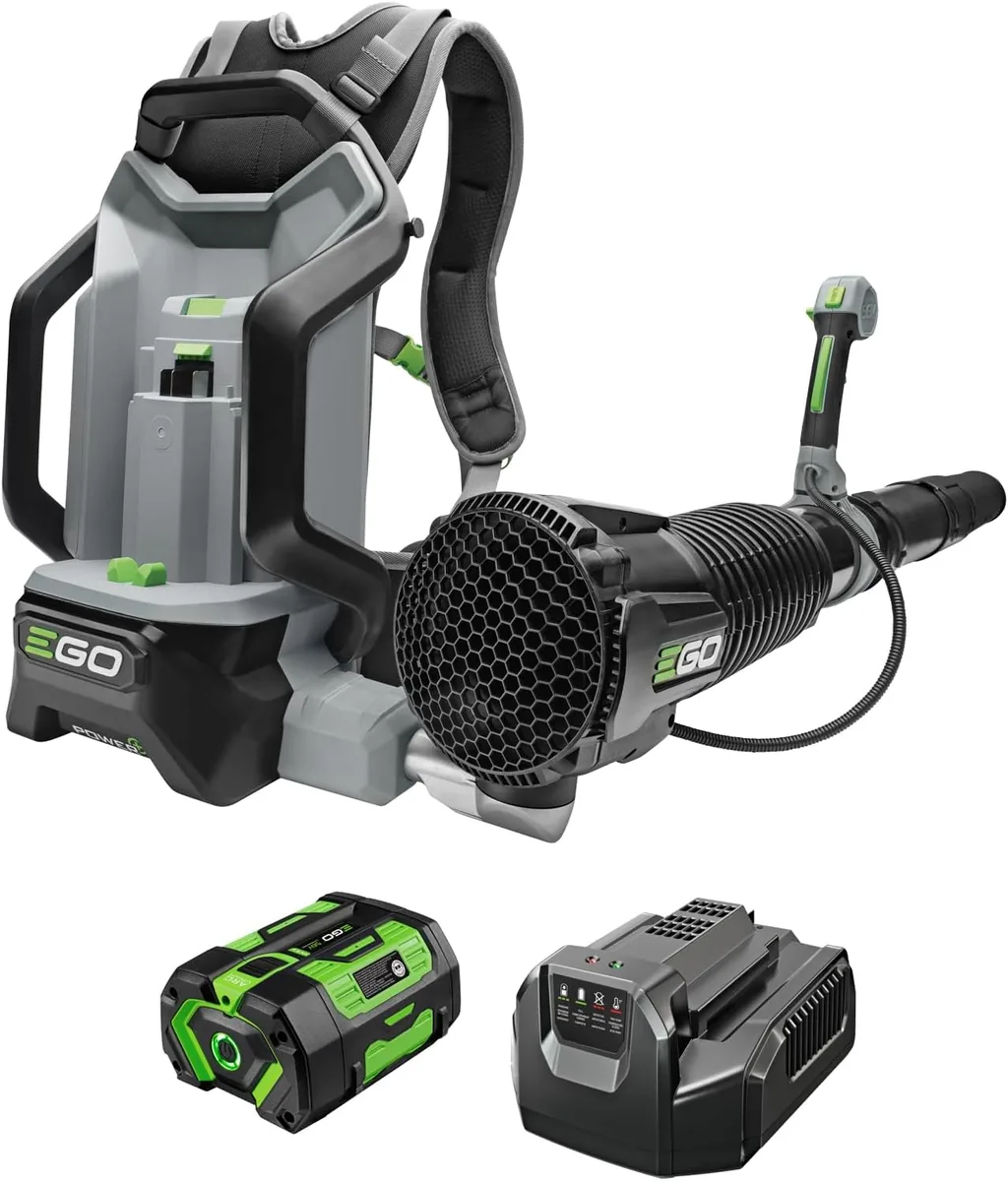
5. EGO Power+ LB6003 600 CFM Backpack Blower Kit Best Lightweight Backpack
The EGO LB6003 puts its weight where a person carries it best: about 19 lb on the back, with only the tube in your hand. That is EGO’s 12.5 lb for the blower with its tube plus EGO’s 6.31 lb for its 7.5 Ah pack, my own sum, since EGO prints no weight for the kit. It is far heavier than any handheld here.
EGO Power+ LB6003 600 CFM Backpack Blower Kit Specs
Key Features:
- Harness with waist belt: The manual says the weight should rest on the waist strap.
- Lock-on speed dial: It holds any speed from 260 to 600 CFM, so the trigger rests.
- Boost button: It raises speed to the maximum while pressed, then returns to your setting.
- Sliding control handle: Loosen the wing nut and it moves and rotates to fit your reach.
- Adjustable tube: The middle tube locks in different lengths and swings to widen the sweep.
According to EGO, the airflow runs from 260 to 600 CFM and the air speed peaks at 145 mph. Force is the modest part: 19 N according to EGO’s manual, a steady push that suits dry leaves and light debris and stops short of a packed wet mat. In May, mown clippings pile along the edge of an alley. I set the dial low, locked it, and walked the tube side to side, which spread the windrow thin across the grass.
I cinch the waist belt first and the shoulder straps second, and once the load sits on my hips I stop noticing the straps. According to EGO’s manual, the 7.5 Ah pack runs about 33 minutes on High, 23 on Boost and 180 on Low, and the kit charger takes 145 minutes from empty.
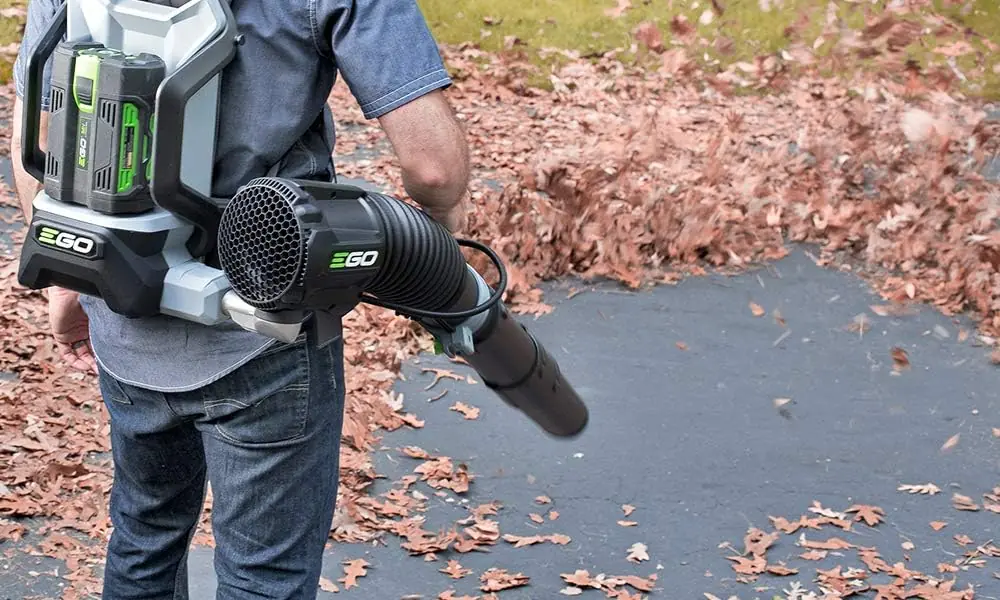
Work downhill. Leaves I pushed up the bank along my drainage ditch slid back when I stopped, and the same pass walked downhill left them put.
WHY I CHOSE THIS
Mirko Lekić, Agricultural Engineer & Farm Owner
I put the LB6003 on this page as the best lightweight backpack leaf blower for one reason: the load rides on the hips, so on a long, dry session the arm carries only a tube. It is far heavier than every handheld here, and its push stays modest.
Hearing protection stays on from the first minute: EGO’s manual calls for it and prints no sound level at the ear. Glasses with side shields to ANSI Z87.1 and a face shield go on with it, and the battery comes out before cleaning.
The blower has no engine, so there is no fuel, pull cord or exhaust. The IPX4 rating is splash only, so rain, wet snow and standing water end the session. I once forgot to turn the dial to off before pulling the pack, and the fresh pack would not start the blower until I pressed the trigger, a lockout the manual describes.
The LB6003 suits a dry session on lawns and hard ground, long enough that a handheld would tire the wrist. Skip it for a short job, where fitting the harness and carrying about 19 lb cost more than they save, and skip it if a load on your hips or back is the problem.
FINAL VERDICT
The LB6003 carries its load on a belt and needs no fuel, though its force is modest and a pack lasts about 33 minutes on High. It belongs with the person who clears long stretches of dry leaves and prefers to wear the load rather than hold it.
It is the battery backpack that carries its weight on the hips.
How to Choose the Best Lightweight Leaf Blower
A lightweight leaf blower is a tool you can hold out at arm’s length for your longest pass, so the choice starts with weight and ends with what the tool gives up to get there. I check seven things in this order: what the weight counts, balance, one-hand use, airflow, power source, carry style and session length.
What the Weight on the Box Includes
A weight figure is only as useful as the list of parts behind it. Makers count a bare tool, a tool with its pack, a gas tool dry or a corded tool without the cord, and a pound or two between two boxes can come from how the maker counted. Compare two weights only when they count the same parts.
| How the maker counts | What the figure leaves out | What to add before you compare |
|---|---|---|
| Bare tool, battery sold separately | The pack, which adds real weight | The weight of the pack you plan to buy |
| Tool with its supplied pack | Any spare pack | Nothing, for a job on one pack |
| Gas tool, dry | The fuel in the tank | Close to 1 lb for a full handheld tank |
| Corded tool, net weight | The extension cord | The cord that hangs from your hand or drags behind you |
The pack matters most. A bare-tool figure leaves the battery out, and a pack adds anywhere from about 1.5 lb on the smallest kit here to over 6 lb on the backpack’s, so the weight in your hand is the tool plus whatever pack you click in. The table further down shows each maker’s figure and what it counts.
I weigh a blower on a kitchen scale with its pack clipped on before I trust a box, because the number that counts is the one my arm carries.
Balance and the Handle
Balance decides how a weight feels at the end of your arm. A tool that hangs nose-down makes the wrist hold it level, and the same pounds sitting close to the handle tire you later. Look at where the pack or engine sits against the grip and whether the tube is straight, curved or adjustable in length.
Down an alley of plum trees the tube stays out in front of me the whole way, and a front-heavy tool shows itself in my wrist before the end of the row.
- Grip span: your fingers should close around the handle and reach the switch without stretching, whatever the size of your hand.
- The level test: hold the tool by the grip with the tube level and see which end drops.
- Control reach: your thumb or finger should find the switch or trigger without a change of grip.
One-Hand Use and Lock-On Controls
One-hand use matters when the other hand holds a branch, a gate or a rail. A variable trigger gives fine control but asks for a steady squeeze. A lock-on button or a throttle lever that holds the speed spares the trigger finger on a long pass, and a plain slide switch asks for no squeeze at all.
Starting is part of one-hand use. The gas handheld on this page starts with a purge bulb, a choke and a recoil pull, and its manual asks for 3 minutes of warm-up, so it takes two hands and a few minutes before the first pass. A battery or corded tool starts with a switch or a trigger.
When I hold a low branch aside with my free hand and aim the tube with the other, a control my thumb reaches without moving my grip decides whether I keep using the tool.
Pro Tip
Hold the tool the way you will use it, tube level and elbow at your side, for a full minute before you decide. A weight that tires you in the shop will tire you at the far end of the yard.
How Much Air a Light Blower Gives Up
A lightweight powerful leaf blower is a matter of degree. Weight alone does not predict airflow: the two tools near 4 lb on this page print 410 and 260 CFM, so read each maker’s airflow figure instead of assuming a light tool is weak. The useful question is how much air each pound buys and whether that is enough for your hardest corner.
More air costs more energy, and the cost climbs fast. A US Department of Energy sourcebook on fan systems states that airflow rises in proportion to fan speed while power rises with the cube of the speed, so cutting the speed by 20 percent cuts the power by about 50 percent (1). That principle is why the top setting of any fan is its most expensive one.
Expect these limits from any tool on this page that weighs under 5 lb in the hand:
- Wet or matted leaves: a light tool moves the top layer, so lift the edge of the mat with a rake first.
- Gravel, acorns and fruit drop: heavy objects need more push than a light tool delivers.
- Big lots: the same air spread over more ground means more passes and more time with weight in your arm.
My hardest corner is the tree-row strip in November, where the leaves drop and lie against the soil. If a light tool lifts them there I trust it on the lawn, and if it does not I fetch the rake.
Corded, Battery or Gas When Weight Comes First
The power source decides what rides on your arm besides the tool. A corded tool adds the pull of the cord, a battery tool adds the pack, and a gas tool adds an engine, fuel and a pull start.
| Power | What your arm carries | What it asks of you | Where it fits |
|---|---|---|---|
| Corded | The tool plus the pull of the extension cord | An outlet in reach and an outdoor-rated cord in the gauge the manual gives | Patios, steps and dry leaves near the house |
| Battery | The tool plus the pack | Charging, and a spare pack for a longer job | Most house lots |
| Gas | The engine and the fuel | Fuel mix, a warm-up, a pull start and hearing protection | Work far from an outlet that outlasts a pack |
A corded tool carries no pack, so its limits are the reach of the outlet and the gauge of the cord. The manual gives a cord gauge for each length, so match it to the tool’s amp draw before you buy a cord.
A lightweight cordless leaf blower trades the cord for a pack, and the pack is where the weight and the run time live. A small pack keeps the tool light and the run short, and a large pack does the opposite, so match the pack to your longest single job.
A gas tool is the heaviest handheld on this page and carries the most routine. Fuel mix, starting steps and warm-up differ by model, so read the manual of the machine you buy.
Safety First
Stop the engine and let it cool before you refuel, and refuel outdoors. Then carry the blower the distance your manual gives away from the fuelling spot before you start it. Never run a gas blower indoors, and keep people, pets and windows out of the debris path.
Noise follows the power source. In NIOSH sampling of 80 landscaping workers, 94 of 119 eight-hour noise results were at or above the 85 dBA limit that NIOSH recommends, and workers with fuel-powered leaf blowers, string trimmers and chainsaws had significantly more noise and carbon monoxide exposure than with the battery versions (2).
NIOSH recommends 85 dBA averaged over an eight-hour day and halves the time allowed for every 3 dBA more (3). A rating taken at 50 ft describes a bystander, and your ear sits much closer to the engine, so hearing protection goes on for every blower while it runs. I wore plugs under earmuffs on my old gas handheld from the first pull.
When a Backpack Is the Lighter Choice for Your Arms
A backpack blower is the heaviest tool on this page and can still be the easier one on your arms. A lightweight handheld leaf blower holds all of its weight at the end of the arm, while a backpack carries the machine on the hips and leaves only the tube in the hand.
A lab study of load carriage compared twelve pack configurations and found that strap forces and contact pressure at the shoulders and hips predicted the discomfort people reported (4). Its loads were 15 to 25 kg, far above any blower, so I take only the general point: look at the harness along with the pounds.
The short job suits a handheld, because the load in the hand is small and you set it down before the weight adds up. The long job suits a lightweight backpack leaf blower. The one on this page has a chest buckle and a waist belt, and its manual says the weight should rest on the waist strap, closer to the hips than the shoulders.
Working in Short Sessions
A light tool postpones fatigue, and short passes with a pause between them postpone it further. In a study of 17 groundskeepers, the lowest tool vibration, 1.9 m/s² on the right hand, came from seated mowers and handheld blowers, yet the workers’ lifetime hand-arm vibration dose across all their tools was 33 times that of office workers on the right hand (5). That dose builds up over years across every tool a person uses, so I take it as a reason to take breaks and change hands.
Posture counts too. Among 55 landscape workers at a Malaysian university, 85.5% reported work-related muscle or joint symptoms over the past year, 65.5% reported shoulder symptoms, and awkward posture was the main risk factor the study found (6).
These habits keep the posture and the load in check:
- Elbow at your side: hold the tool close to your body so that the load rides on your trunk.
- Tube low: keep it at the height your manual gives and sweep side to side.
- Stop early: put the tool down when your hand tingles or your shoulder aches.
Maker Weights Compared and What Each Number Includes
The table sets the five side by side, with the way each maker counts its weight in the row name. Read across a row and you know what the figure includes and what you still carry.
| Tool and how its weight is counted | Maker’s weight | Carried with everything in | Airflow, maker’s maximum |
|---|---|---|---|
| WORX WG543, with its supplied 4.0 Ah pack on | About 3.8 lb | About 3.8 lb for one pack | 410 CFM in volume mode |
| Milwaukee 2724-20, bare tool with no pack | 4.9 lb | 4.9 lb plus the M18 pack you add | 450 CFM on high |
| Sun Joe SBJ597E, net weight with the cord not counted | 3.9 lb | 3.9 lb plus the extension cord | 260 CFM |
| ECHO PB-2520, dry with the blower pipes and no fuel | 8.6 lb | About 9.5 lb with a full tank | 453 CFM at the nozzle |
| EGO LB6003 backpack, blower with tube and no pack | 12.5 lb | About 19 lb on the back with the 7.5 Ah pack | 600 CFM at most |
Two of the carried figures are my own sums. The ECHO figure adds about 0.9 lb for a full 18.6 fl oz tank to ECHO’s dry weight, and the EGO figure adds the 6.31 lb that EGO lists for its 7.5 Ah pack to EGO’s 12.5 lb blower, about 19 lb in all. Each airflow figure is the maker’s maximum, and Milwaukee’s page ties its 450 CFM to its 8.0 Ah High Output pack, so check the pack you buy against that figure.
Two kinds of tool are missing on purpose. Sweeper-class tools at about 100 CFM weigh less, but they clear only dust and light debris from hard surfaces and do not lift a lawn of leaves. The Sun Joe at 260 CFM is the lowest-airflow tool I rank, and I rank it for hard surfaces only. A blower-vacuum adds a bag and a second mode, and WORX lists 9.3 lb for its machine.
Who Should Carry What for Wrists, Shoulders, Backs and Short Jobs
Match the tool to your body and to the length of the job, and the five picks sort themselves. The table pairs each common strain with a tool, and the list after it pairs the size of the job with one.
| If this is your strain | Look first at | Because |
|---|---|---|
| A sore wrist or a weak grip | WORX WG543 or Sun Joe SBJ597E | Both put about 4 lb in the hand, and the Sun Joe starts with a single slide switch and has no trigger to squeeze |
| A shoulder that tires on long passes | EGO LB6003 | The harness moves the weight to the hips and leaves only the tube in the hand |
| A back that tires from carried weight | WORX WG543 or Sun Joe SBJ597E, for short passes | Each puts about 4 lb on the arm, and the backpack is the heaviest tool here, so keep the passes short |
| A hand that dislikes a pull start | A battery or corded tool | A switch or trigger starts them, and the gas handheld needs a purge bulb, a choke and a recoil pull |
For the size of the job, my bands are these:
- A patio, steps and a front path: the WORX WG543 or the Sun Joe SBJ597E.
- A house lot of dry leaves and light twigs, with M18 packs you already own: the Milwaukee 2724-20.
- Dry leaves and dust far from an outlet: the ECHO PB-2520, which carries its own fuel, if you accept the fuel routine.
- A long dry session on a lawn of up to about half an acre: the EGO LB6003, with the weight on your hips.
According to EGO, the 7.5 Ah pack runs about 33 minutes on high and about 180 on low, so how far one pack goes depends on how much of the job runs on high. If a back problem limits what you can lift, your doctor’s or therapist’s advice on lifting comes before anything in this section.
A Lightweight Leaf Blower for Seniors and Anyone With Sore Wrists
A lightweight leaf blower for seniors comes down to three things: the weight in the hand with everything counted, the length of the pass, and whether the controls need a strong pinch or pull.
Strength and stamina differ from person to person at every age, so I describe tools by what the hand and arm carry and leave the matching to you. A switch or trigger asks less of a hand than a recoil pull, a lock-on or throttle lever spares the trigger finger, and a short job with a pause suits most arms better than one long pass.
My Overall Verdict
Three of the five suit most readers, and the choice between them is what your arm holds and what the job asks.
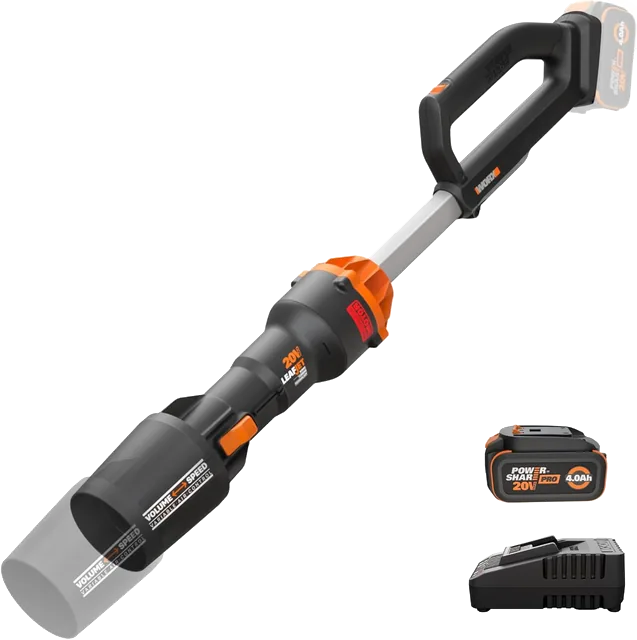
1. WORX WG543 20V Cordless Leaf Blower Kit Best Overall
Best for short dry jobs and sore wrists, with about 3.8 lb in the hand once the pack is on.
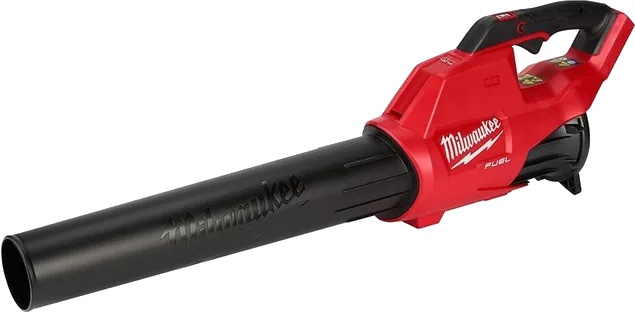
2. Milwaukee M18 FUEL 2724-20 Handheld Blower (Tool Only) Best Premium
Best for readers who already own M18 packs and want a lock-on button, at 4.9 lb for the bare tool.
3. Sun Joe SBJ597E 6-Amp Corded Electric Blower Best Value
The best lightweight leaf blower for the money, at 3.9 lb net with the cord extra, for patios, steps and dry leaves within reach of an outlet.
The WORX WG543 20V Cordless Leaf Blower Kit answers the question I ask when I put a blower down, what my arm still has left, with about 3.8 lb in the hand once the pack is on. For the steps, the path and the dry leaves around the house, a tool this light that still moves them is the best lightweight leaf blower.
Why WORX WG543 20V Cordless Leaf Blower Kit Might Be the Best Choice
The WORX WG543 20V Cordless Leaf Blower Kit is my best overall because it puts about 3.8 lb in your hand with its 4.0 Ah pack on, according to WORX, and needs no cord, fuel or mix. It still moves dry leaves, grit and clippings off hard ground, which is why a light tool earns Best Overall for the short dry jobs that fill most weeks.
The cost is strength and run time. The 4.0 Ah pack is small, so plan on a second pack for anything longer than a short job, and a wet mat of leaves on grass is where this tool stops.
Here is what puts it first:
✓ Weight: about 3.8 lb with the supplied pack and 2.3 lb bare, according to WORX.
✓ Mode for the surface: speed mode for grass and 410 CFM volume mode for hard ground, per the manual.
✓ Kit: a 4.0 Ah PowerShare pack and a charger, about 2 hours to refill.
✓ One piece: a straight tube with a slide-on nozzle.
✓ Shared pack: it fits other WORX 20V PowerShare tools.
Frequently Asked Questions
What is the best lightweight leaf blower?
The best lightweight leaf blower on this list is the WORX WG543, a cordless handheld of about 3.8 lb with its 4.0 Ah pack on. It clears dry leaves, grit and clippings from decks, steps and paths in short jobs, and a rake handles the wet mats that a tool this light leaves behind.
What is the best lightweight leaf blower for seniors?
The best lightweight leaf blower for seniors is a cordless handheld that starts without a pull cord, and on this list that is the WORX WG543 at about 3.8 lb with its battery on. Hold any tool at arm’s length for a minute before you buy it, and ask what its weight figure includes.
How big of a leaf blower do I need?
How big of a leaf blower you need depends on the surface and the pile: dust and dry leaves on hard ground need a light handheld, and thick wet mats on grass need a larger machine or a rake first. Every size up adds weight to carry, so choose the smallest tool that clears your hardest corner.
What are the different types of leaf blowers?
The different types of leaf blowers are corded handhelds, battery handhelds, gas handhelds, backpacks and walk-behind machines. This page covers the first four, from handhelds of about 4 lb in the hand to a battery backpack on the hips, and the weight climbs with the engine, the battery pack and the airflow.
Which cordless leaf blower is the best?
For weight in the hand, the best cordless leaf blower on this list is the WORX WG543 at about 3.8 lb with its pack on, and for readers who already own M18 packs it is the Milwaukee 2724-20. A tool this light does not move heavy wet piles, so those jobs call for a larger machine.
References
- US Department of Energy, Industrial Technologies Program; Air Movement and Control Association International. Improving Fan System Performance: A Sourcebook for Industry. DOE/GO-102003-1294. US Department of Energy; 2003.
- Alexander BM, Graydon PS, Pena M, Feng HA, Beamer BR. Hazardous exposures and engineering controls in the landscaping services industry. Journal of Occupational and Environmental Hygiene. 2025;22(3):189-202.
- National Institute for Occupational Safety and Health. Noise-Induced Hearing Loss. Noise and Hearing Loss. Centers for Disease Control and Prevention; 2024.
- Wettenschwiler PD, Lorenzetti S, Stämpfli R, Rossi RM, Ferguson SJ, Annaheim S. Mechanical Predictors of Discomfort during Load Carriage. PLoS ONE. 2015;10(11):e0142004.
- Chen N, Yang S, Oh J. Evaluation of hand-arm vibration (HAV) exposure among groundskeepers in the southeastern United States. Annals of Work Exposures and Health. 2025;69(1):81-95.
- Lim MC, Awang Lukman K, Giloi N, et al. Landscaping Work: Work-related Musculoskeletal Problems and Ergonomic Risk Factors. RMHP. 2021;Volume 14:3411-3421.
Safety Note: Leaf blowers throw debris and can damage your hearing. Wear eye and ear protection, read the manufacturer’s manual, and check your local rules on noise and operating hours.