
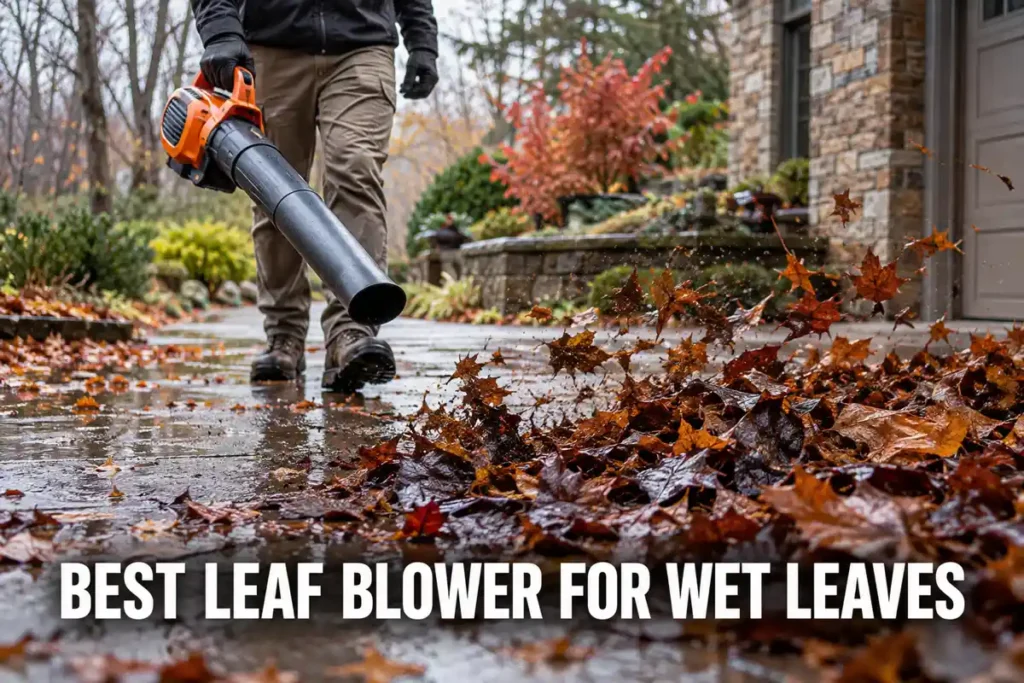
The best leaf blower for wet leaves has enough push at the nozzle to lift a soaked mat off the ground, and that push is a number in newtons that many boxes leave off. Every November the leaves under my plum and apricot trees are wet before I start, so I judge a blower on that mat first and on dry pavement second.
Affiliate Disclosure: Garden Power Scout is a proud participant in the Amazon Services LLC Associates Program. As an Amazon Associate, we earn from qualifying purchases, at no extra cost to you.
Below are the seven I rank for wet work, from gas backpacks to a cordless kit and a bare tool, and my top pick is the Echo PB-9010T Gas Backpack Leaf Blower. The buying advice after the list covers push, runtime, weight and what each maker’s manual allows on wet ground.
Best Leaf Blower for Wet Leaves 2026 With 7 Picks I Rank for Wet Work
These are the seven machines I rank for wet work, and the order follows the push each one is rated for at the nozzle and how well that figure is documented. Picks 1 and 2 are for soaked mats, picks 3 and 4 take a wet mat in sections, and picks 5 to 7 suit a single wet layer or a thin damp one. Each block says who should skip it, so you can cross a model off fast.
1. Echo PB-9010T Gas Backpack Leaf Blower Best Overall
Wet leaves are heavy, flat and glued to each other, and the PB-9010T is the blower on this page with the most force to work with. ECHO rates the nozzle at 48 N, about 11 pounds of force at the nozzle, and a 79.9 cc two-stroke engine on your back keeps it going for as long as there is fuel in the tank. I rank it first for acres of soaked alleys, ditch banks and storm-flattened yards, and it asks for a strong back and full ear protection in return.
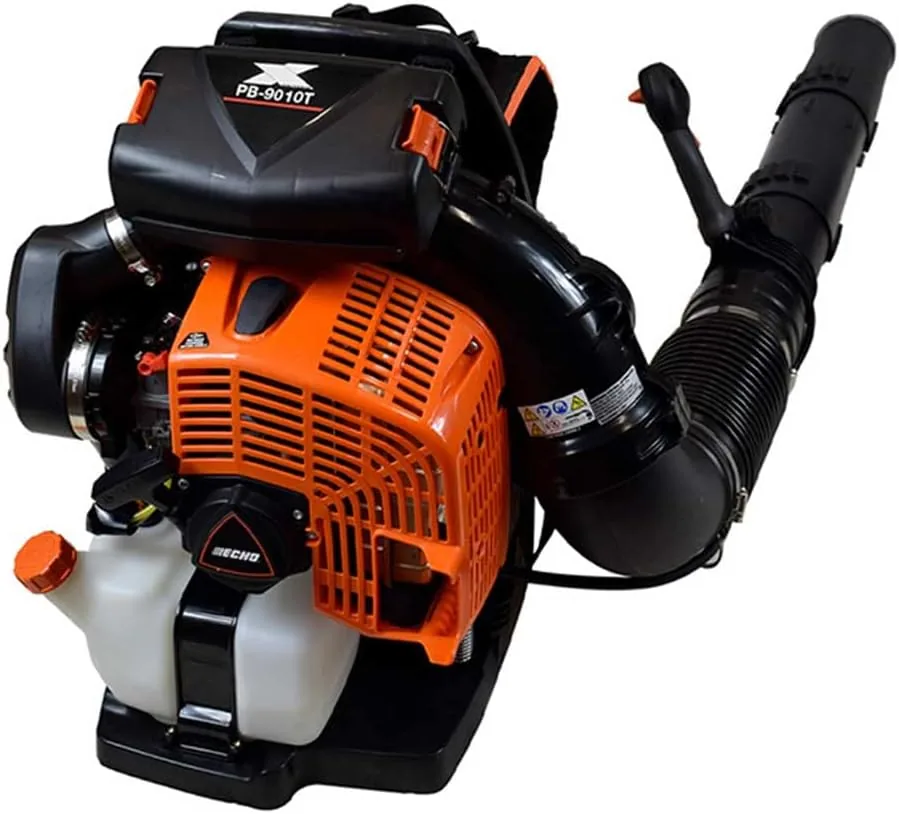
Echo PB-9010T Gas Backpack Leaf Blower Specs
Key Features:
- Tube-mounted throttle with cruise lever: Speed and aim sit in the same hand, so the other hand can steady the pipe low over the ground.
- Swivel pipe: It tilts the nozzle to a flat, shallow angle, which is the angle that gets under the lip of a wet mat.
- Variable speed: Full speed goes to the mat, and a lower setting goes where mulch, drip lines and cover crop sit.
- See-through 83.8 fl oz tank: You read the fuel level from the side, so a refill comes between alleys and never in the middle of a mat.
- Two-stage air filter: A pleated paper element and a foam pre-filter sit under a cover that opens fast for a check after muddy, dusty work.
- Purge pump and pull cord: You prime the carburetor first, so a cold November engine has fuel waiting when you pull.
- Pipes that lock into channels: Once assembled, the pipes stay in place through a hard sweep along a ditch bank.
A wet mat does not move because air passes over it. It moves when the jet gets under the leading edge and pushes the whole sheet forward, and that takes force at the nozzle. Force combines volume and speed, and the PB-9010T brings both: ECHO lists a peak of 1,110 CFM for airflow and, as a separate peak, 220 mph for speed with the pipes fitted. The price of that push is scatter, because the jet also throws mud, twigs and small stones, so people, windows and cars stay out of its path.
The tank, not a battery, sets how long it holds the strong setting. The 83.8 fl oz tank runs about 68 minutes with the throttle wide open, an estimate from the fuel rate on ECHO’s international page, and it lasts longer at part throttle. ECHO publishes no US run time. Next to the battery blowers in my shed, the PB-9010T keeps the same push at the end of a long wet alley as at the start, while a battery blower ends the job when its pack runs flat.
The low spot where leaves pile against the drainage ditch is the hardest wet job on my land, because the mat sits on mud with water under it. I work from the dry side and sweep along the bank, since full throttle pointed into the bank throws mud back across the alley. The sweep carries the top of the mat to cleared ground, and a dark film of mud and leaf fragments stays on the soil. That film needs a rake or a drier day.
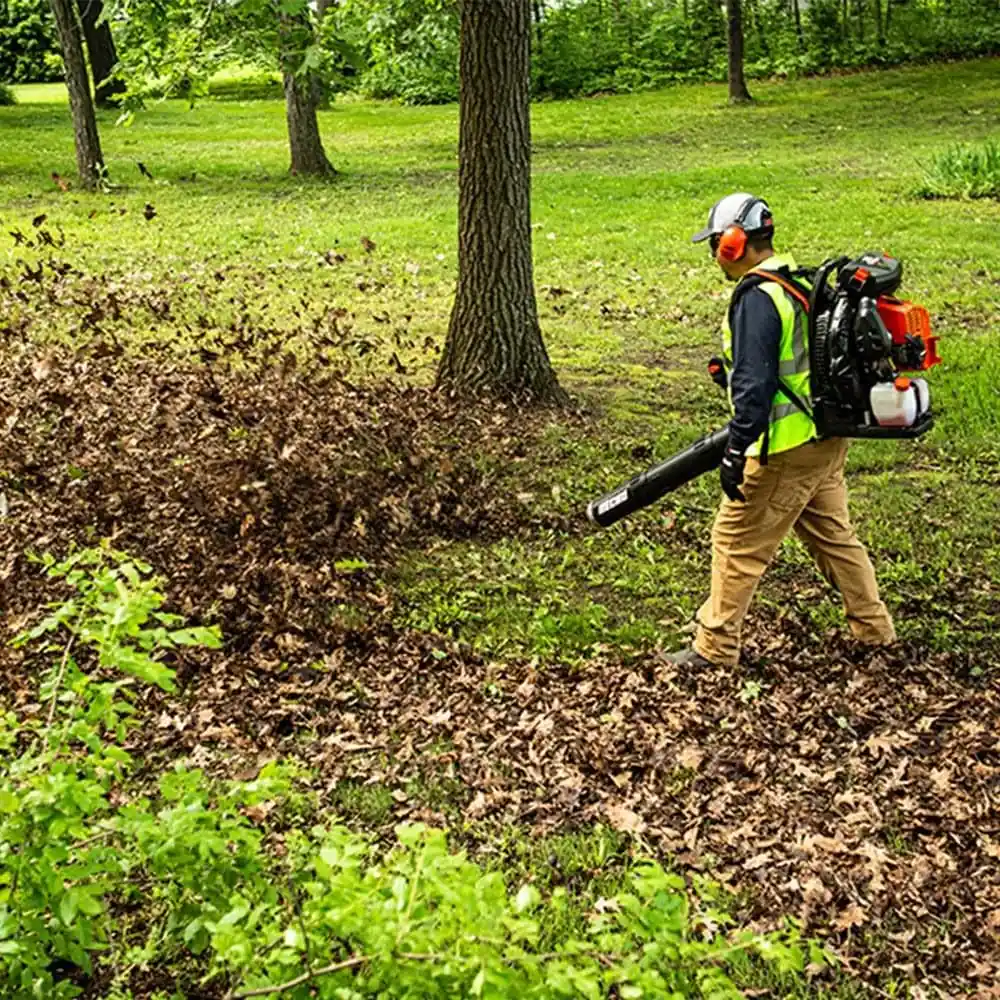
Start at the dry edge of the mat, keep the nozzle low and let the swivel pipe hold it flat, so the jet gets under the lip of the sheet.

WHY I CHOSE THIS
Mirko Lekić, Agricultural Engineer & Farm Owner
Force and fuel decide the gas slot for wet leaves, and the PB-9010T has the strongest rated jet here and a tank that keeps it working. The tube trigger and the cruise lever leave one hand on the aim while the other steadies the pipe. It is the blower I carry out when the alleys are still heavy a day after the rain stops.
Wear plugs under earmuffs, safety glasses and a dust mask from the first pull, and keep people and pets well away. ECHO rates the sound at 79.3 dB(A), a bystander figure taken 50 feet from the machine, so what reaches your ears is much louder.
Fresh mix is the main chore: 50:1 with two-stroke oil that meets ECHO’s specification, mixed no more than 30 days ahead, in a can you shake first. Refuel with the engine stopped and cool, then carry the blower at least 10 feet from the fuelling spot before you pull the cord. The exhaust smell clung to my wet jacket long after the work was done, so that jacket now hangs outside. Fueled, the blower weighs about 31 lb, and the US build documents no hip belt, so the load rides on the shoulders.
Acres of soaked alleys, ditch banks and storm debris are what this machine is for, and it suits someone who already mixes two-stroke fuel. Skip it on a small lot, on a street with close neighbors or with a weak back, since it is loud, thirsty and heavy. ECHO’s warranty applies only to units sold by authorized ECHO dealers, so check the seller on the listing before you order.
FINAL VERDICT
For soaked leaves on an acre or more, the PB-9010T is the pick. It brings the strongest rated jet on this page and a tank that keeps it working, at the price of weight, noise and fuel handling.
It is the gas backpack I start first when the alleys stay soaked.
2. Husqvarna 580BTS Gas Backpack Leaf Blower Best Premium
Under the plum canopy the grass alleys stay damp into December, and the 580BTS Mark III is the blower I wear there when the leaves lie soaked. Husqvarna rates it at up to 47 N, more than 10 pounds of push, from a 75.6 cc two-stroke engine on a harness with a padded hip belt that carries the load on your hips. I call it Best Premium because the belt and chest strap come in the box with that push, and because it is built for long hours of work.
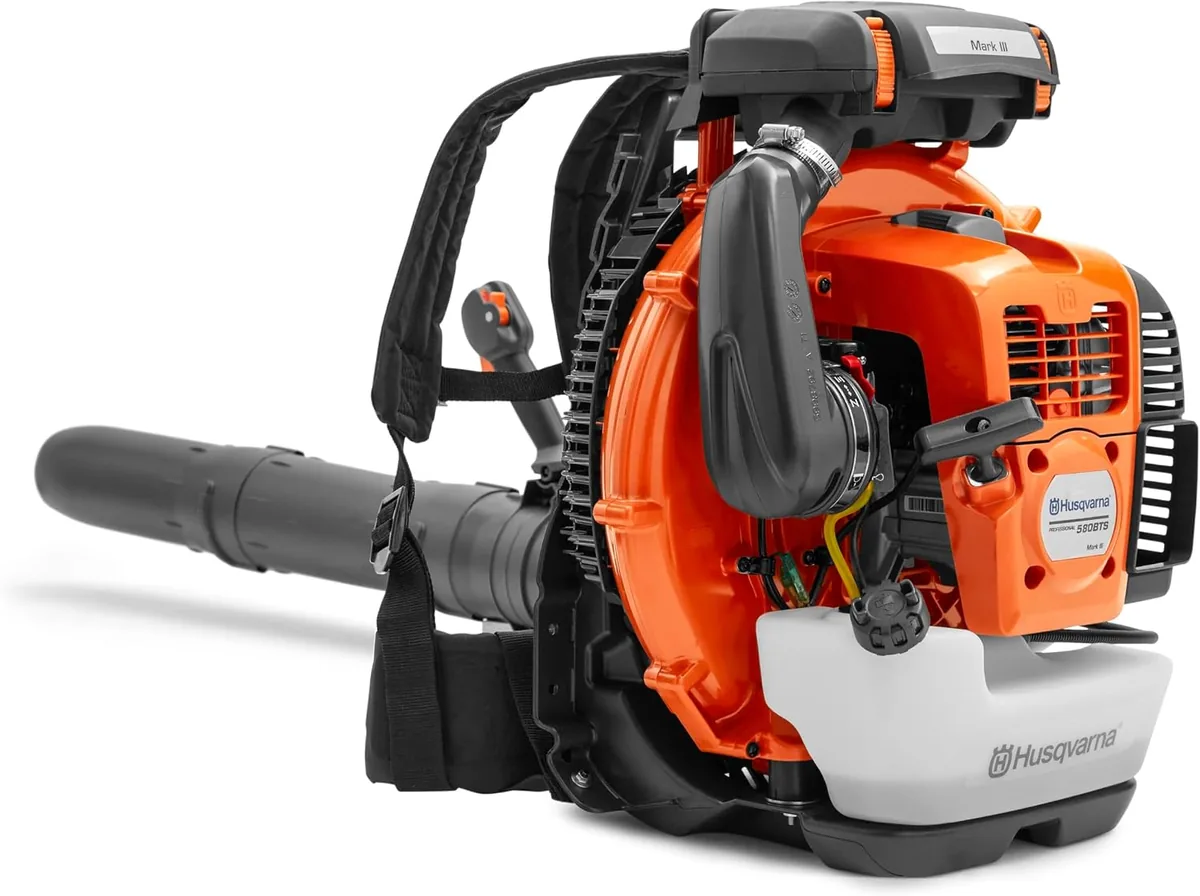
Husqvarna 580BTS Gas Backpack Leaf Blower Specs
Key Features:
- Padded hip belt and chest strap: They move the load to your hips, which matters on a long soaked alley where you cannot stop every few minutes.
- Handle on the tube: The throttle trigger sits in the handle on the tube, so your right hand sets speed and aims the stream.
- Throttle position lock: Husqvarna lists a cruise control option that holds a throttle position, so the trigger hand can rest on a long run.
- Round standard nozzle: It gathers the air into a single jet, which is the shape that gets under the edge of a matted sheet.
- Two-stage air filter: A foam filter you wash and a paper filter you replace keep fine dust out of the engine.
- Cooling fins and intake screen: Both are easy to reach for the weekly brush-down that keeps the engine from running hot.
- 87.9 fl oz tank: It gives long stretches between refills when the work is far from the shed.
On turf, footing and sod are the problems, since a full-throttle sweep along the ground tears at the grass and cover crop under the leaves. The manual asks for the lowest throttle that works and the nozzle held close to the ground, using the whole pipe length to keep the stream low, and that is how I work the alley that never dries under the canopy. The 47 N maximum is for the corners where the mat has felted together. Older 580BTS generations carry other specifications, so every figure here belongs to the Mark III.
The tank holds 87.9 fl oz, and the manual says to fill it to 80 percent, so each fill gives a little less than the tank size suggests. An estimate from Husqvarna’s fuel consumption figure puts wide-open running at about 58 minutes on an 80 percent fill, and part throttle lasts longer. The fuel is 50:1 mix with at least 90 RON (87 AKI) gasoline and no more than 10 percent ethanol, mixed no more than 30 days ahead. There is no start button, only a choke, a purge bulb and the pull cord, followed by 2 to 3 minutes of warm-up.
Wet leaves are slick, and the lower end of the alley is where I found out. My boots slid on a layer I had just loosened, so I stand on the cleared side, work from the dry edge and keep the waist belt and chest strap closed, because the manual warns that an open belt can reach the fan. After a soaked session the belt and straps stay damp, so I hang the harness to dry before it goes back in the shed. The limit is the clock: a long soaked alley is a job for breaks, with the engine stopped and cooled before any refill.
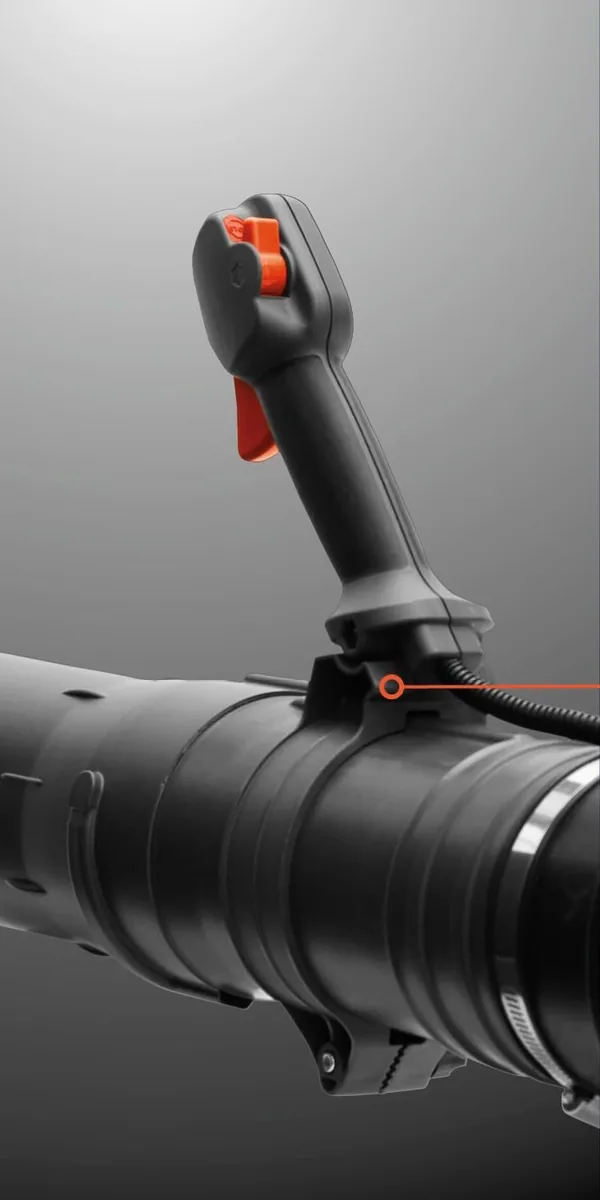
Check the air intake screen before work and again after a soaked session. Husqvarna’s manual says a clogged intake reduces blowing force and raises engine temperature.
WHY I CHOSE THIS
Mirko Lekić, Agricultural Engineer & Farm Owner
Premium should mean a machine built to carry and to keep going, and the 580BTS pairs up to 47 N with a harness that puts the load on your hips. The belt and chest strap are in the box, the throttle sits in the handle on the tube, and the round nozzle keeps the jet tight enough to get under a wet edge. It is the blower I wear when the work will run past the second tank.
Husqvarna rates the sound at the operator’s ear at 106 dB(A), so plugs go in first and earmuffs go over them, with ANSI Z87.1 goggles and a dust mask for dusty ground. Keep bystanders and animals 49 feet (15 m) away, and aim the stream away from windows, cars and play areas.
Upkeep is frequent, and the manual lays it out. The weekly list covers the spark plug, the spark arrester screen, the cooling fins and the vibration dampers. Refuel with the engine off and cool, then carry the blower at least 10 feet from the fuelling spot before the pull cord. Husqvarna’s pages give no consumer warranty term, so the warranty statement with the unit sets the term and whether your use counts as homeowner or professional.
Choose it when the leaves are soaked, the ground is large and the work runs for hours: orchard alleys, a long drive and a yard edged with trees. It suits someone who already mixes two-stroke fuel and wants the weight on the hips. Skip it on a small lot, near close neighbors or if you want a start button. Check the seller on the listing before you order, and read the warranty statement that comes with the unit.
FINAL VERDICT
For hours of soaked leaves, the 580BTS is the premium pick. It gives up to 47 N, a hip belt and chest strap in the box and a tight round jet, at the price of weight, noise and a pull cord.
It is the gas backpack I wear for long soaked alleys.
3. EGO Power+ LB7654 765 CFM Cordless Leaf Blower Kit Best Value
On the concrete pad by my machinery shed, soaked plum leaves slid across the slab on high and only lifted when I held boost. That is the LB7654 on wet leaves in one scene. According to EGO it pushes with up to 26 N, about 6 pounds, and on the kit’s 5.0 Ah pack it reaches about 25 N on turbo and about 16 N on high. I call it the best leaf blower for the money on this page because a mid-range kit with the battery and charger in the box gets that close to its rating on turbo.
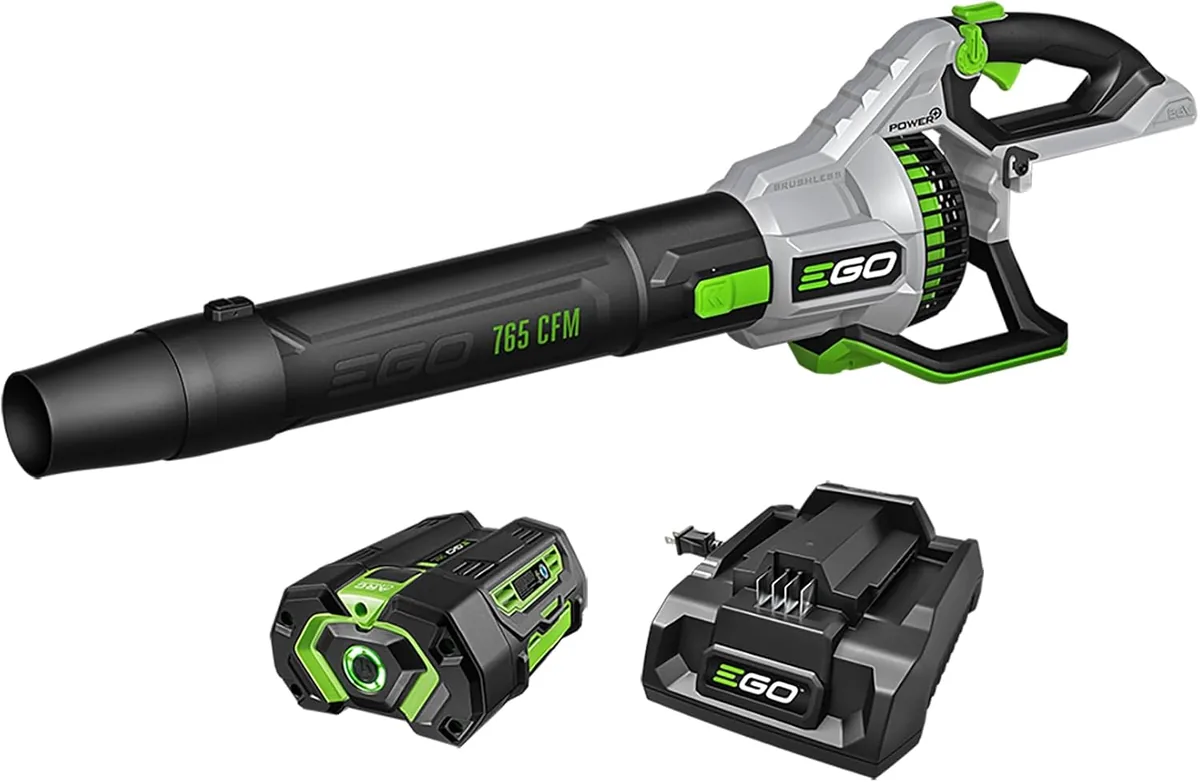
EGO Power+ LB7654 765 CFM Cordless Leaf Blower Kit Specs
Key Features:
- Speed dial that locks any speed: Set a middle speed for a long sweep and the trigger finger can rest.
- Momentary boost button: It raises speed to the maximum while you press it and drops back to your set speed on release. It does not lock.
- Tapered nozzle: It narrows the jet and lifts air speed to 195 mph from 166 mph, which helps the stream get under a mat’s edge.
- Spread nozzle: It fans a wider, softer stream for leaves that are already loosened.
- Five-light battery gauge: Press the pack’s power button and read the charge before the last pass of a strip.
- Shared 56V platform: Any EGO 56V pack fits the blower, so a second pack adds minutes without a second tool.
- Shoulder strap: EGO’s manual lists one in the box, and it moves part of the 9.6 lb off your wrist.
On high, a single wet layer lifts at its edge, but a soaked mat only slides: 195 mph from the tapered nozzle is plenty of air speed, and the push behind it is not, though boost closes most of that gap and the tapered nozzle gets under the lip. On the tilled strip under a plum row, I set the dial at a middle speed and locked it, and my finger rested for the whole row. I keep the tube low and the angle shallow, and I fit the spread nozzle only after the mat is loose. EGO’s manual describes household use and names hard-surface jobs such as driveways and walkways, so a soaked orchard alley is beyond it.
The pack is the clock. On the kit’s 5.0 Ah pack, turbo lasts about 13 minutes and high about 22, while EGO’s manual gives about 15 and about 25, and about 150 on low. I save turbo for the stubborn strip. The box charger needs about 70 minutes, so I charge a second pack over lunch.
After a week of November rain, the plum leaves under the canopy felt together into a mat, and that is where a handheld stops. Boost moves the top of it. The bottom layer stays pressed into the grass, and the pack runs flat before it breaks loose. Mature trees drop leaves faster in a wet week than one pack can move them, so the plum alleys become a two-pack job with a rake, and that is where I put the blower down and pick up the rake.
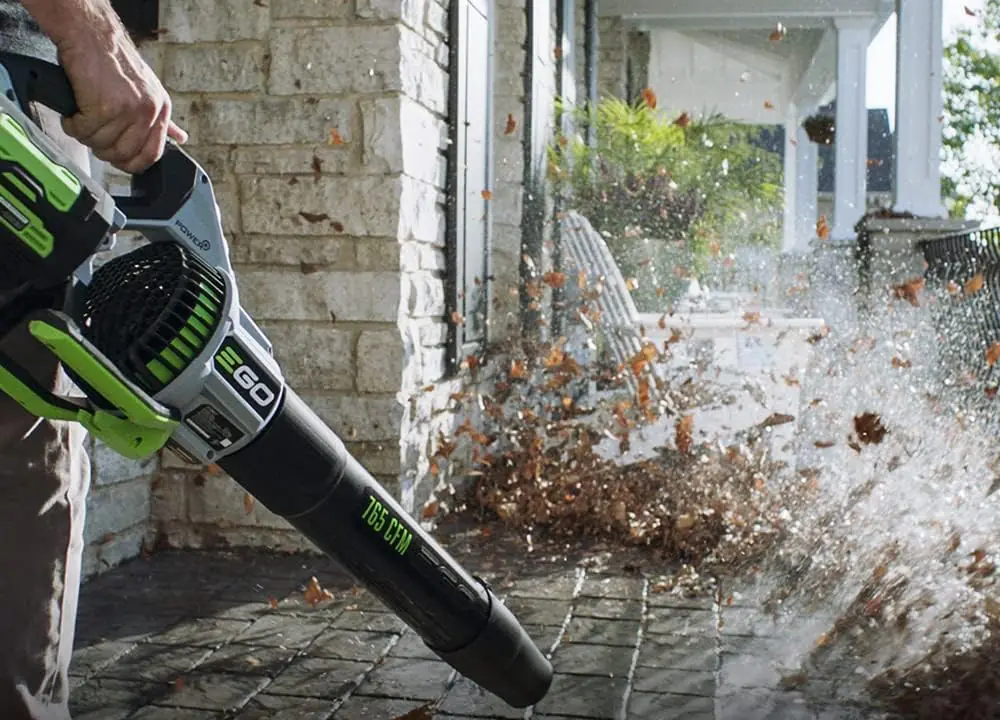
Loosen packed debris with a rake before you blow, as EGO’s manual advises, and the pack goes to moving loose leaves instead of breaking a felted mat.
WHY I CHOSE THIS
Mirko Lekić, Agricultural Engineer & Farm Owner
Value is why the LB7654 is my third pick, and the kit puts a pack, a charger and two nozzles in one box for a mid-range price. The dial holds a speed, the 56V platform adds packs later, and there is no fuel to mix. It is the blower I hand to anyone with wet leaves on a house lot and no wish to run an engine.
Wear ear and eye protection every time the fan runs, plus a dust mask for dusty work, and keep bystanders 50 feet away. EGO gives the blower an IPX4 splash rating and no rating beyond that, so the pack and charger stay out of rain and standing water, and the charger stays indoors.
Upkeep is a dry cloth on the plastic and clear air intakes. Store the pack indoors between 50 and 80 F, and expect a cold pack to pulse for the first minute on a late-autumn morning. At about 9.6 lb with the battery on, more than half of the weight sits in the rear pack, so the strap matters on a long strip. Check the seller on the listing before you order, since EGO says products bought from unauthorized sellers may be rejected for warranty.
Buy it if your wet leaves lie one layer or a thin mat deep on a house lot, a drive or a deck, and you will add a second pack. It suits someone who wants a dial that holds a setting and no fuel to mix. Skip it if you face deep soaked mats under mature trees, work all afternoon, or cannot carry nearly 10 lb in one hand.
FINAL VERDICT
The LB7654 is the value pick for wet leaves on a house lot. It reaches about 25 N on turbo from the pack in the box, and it stops where a handheld stops, at deep soaked mats.
It is the cordless blower I pick for wet leaves on a house lot.
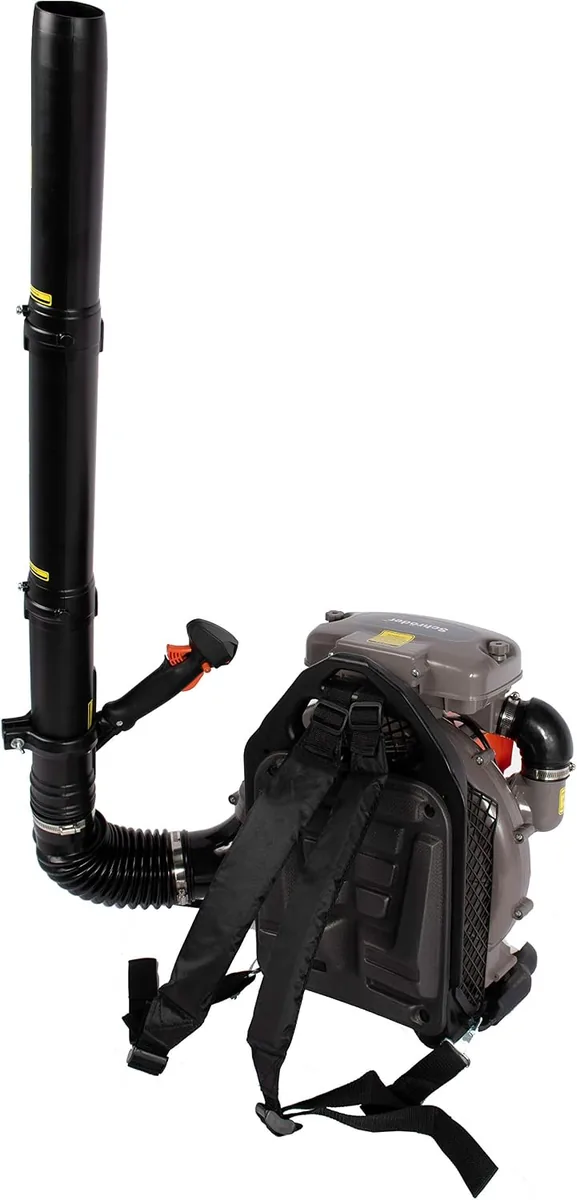
4. Schroder SR-6400L Gas Backpack Leaf Blower Best Budget Backpack
The SR-6400L is the least expensive gas backpack in this lineup, and Schroder lists its force at 42 N, about 9 pounds of push, the range where a soaked leaf mat starts to move. Buy it for the push per dollar, and go in knowing how thin the support is.
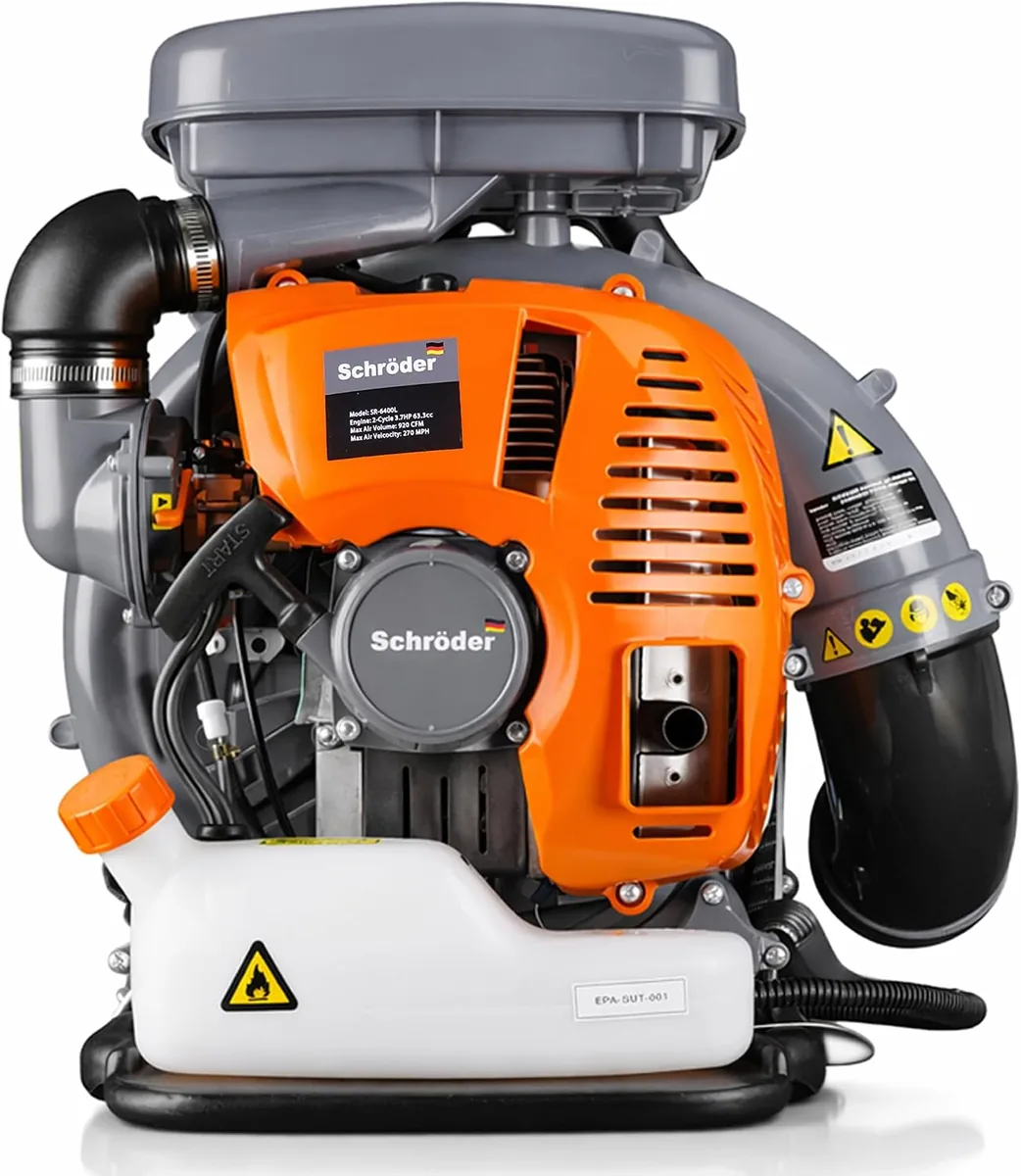
Schroder SR-6400L Gas Backpack Leaf Blower Specs
Key Features:
- Listed force: Schroder lists enough push to lift a soaked layer off concrete.
- 920 CFM and 230 mph maxima: Two separate peaks, so judge the machine by its force figure.
- 65 fl oz tank: About 1.9 L of mix for a long run with the throttle held open.
- Listed at 19.5 lb: Schroder gives no basis for the weight, so allow for the fuel.
- Parts sold individually: The carburetor, starter, throttle, filters and spark plug come as separate parts.
Under the downpipe at the corner of the house, the splash keeps wet leaves pasted flat to the concrete. My old gas handheld skims the top of that mat, but the SR-6400L got under the edge and rolled it. The bottom layer, glued down by days of drip, stayed behind until I went over it again. What surprised me was the throttle: a half-open setting only shivered the mat, and the leaves moved only near full throttle.
Schroder publishes no run time. The tank holds 65 fl oz, and owners describe about an hour to an hour and a quarter of work from a tank. Wet leaves keep the throttle wide open, so plan on the short end of that and refuel at the end of a pass with the engine stopped.
I aim the jet low at the leading edge of the mat with a shallow tube angle. Air that gets under the edge lifts the layer, and air that hits the top only presses it flatter.
WHY I CHOSE THIS
Mirko Lekić, Agricultural Engineer & Farm Owner
I call the SR-6400L the best budget backpack leaf blower on this page because it costs the least of the gas backpacks here and still lists a force in soaked-mat territory. The listed force is the reason to look, and the price is the reason to try it. I accept thin support at that price because a wet-leaf job can wait for a repair, and a crew’s workday cannot.
Wear plugs and earmuffs together from the first minute, and plant your feet before you open the throttle, since wet leaves over concrete are slick. Refuel outdoors with the engine stopped and cool, then carry the blower the distance your owner’s manual gives from the fuelling spot before you start it.
Service runs through Schroder USA by phone and email, with no dealer network to carry the machine to. Schroder’s own pages give different warranty terms, so get the warranty length in writing before you pay. Drain leftover mix before winter, since mixed fuel goes stale.
Buy it if you have half an acre or more of wet leaves, want the most listed push for the least money and can live with mail-order support. Skip it if you want a dealer nearby, if the machine earns your income, or if the yard is small enough for a handheld.
FINAL VERDICT
Choose the SR-6400L when the price decides and the job is wet leaves across a large yard. Get the warranty terms in writing before you order.
It is the budget backpack I keep for the big wet corners.
5. Husqvarna 350BT Gas Backpack Leaf Blower Best for Home Use
Husqvarna rates the 350BT at 21 N, almost 5 pounds of push, and on a page about wet leaves that number sets the limit: it lifts a single wet layer and stalls on a deep soaked mat. What earns it Best for Home Use is the fit: a padded waist belt, 22.5 lb dry weight and a size for a yard of a quarter acre to an acre. I recommend it for that yard and for no larger job.
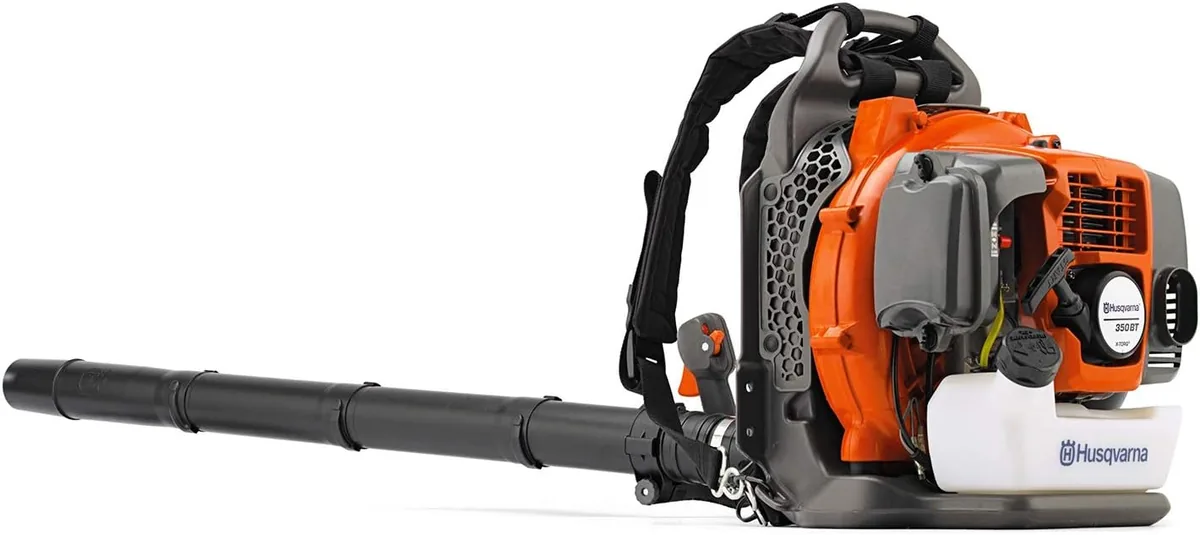
Husqvarna 350BT Gas Backpack Leaf Blower Specs
Key Features:
- Rated force: Enough to peel up a single wet layer, with a rake for anything deeper.
- Padded waist belt: Moves the load to your hips, which matters when wet work keeps you in the harness.
- Control handle on the tube: The throttle sits under the aiming hand, so you set speed without losing your aim.
- Air purge bulb: Primes the carburetor before the first pull, which helps on cold, damp mornings.
- Adjustable offset handle: Slides to where your wrist sits straight, which eases a long sweep along a wall.
Along the foot of the machinery shed wall, a single wet layer of plum leaves clings to the concrete. I expected the 350BT to struggle there, and it lifted the layer in strips that rolled out onto the pad. In the corner where the drift is deep and soaked, the air only packed the pile tighter. That is where I put the blower down and pick up a rake.
Husqvarna publishes no run time. The 42.27 fl oz tank lasts about 78 minutes at full power, an estimate from Husqvarna’s fuel consumption figure. Wet leaves keep the throttle open, so I plan a refuel into any wet job that runs longer than an hour.
Husqvarna’s manual says not to use the blower in bad weather or in very cold. So the 350BT stays in the shed while it rains, and it comes out once the weather is fine.
WHY I CHOSE THIS
Mirko Lekić, Agricultural Engineer & Farm Owner
The 350BT is the best leaf blower for home use on this page because the hip belt and the 22.5 lb dry weight fit a house yard, and its force matches what a house yard drops. It does the common wet job well, and I know exactly where it stops. An acre of soaked leaves needs more push than this.
Wear plugs and earmuffs together from the first minute: Husqvarna’s own figure at the ear is 94 dB(A). Refuel with the engine stopped and cool, then carry the blower at least 10 ft from the fuelling spot before you start it.
After wet work I wipe leaf scraps off the air intake screen, because the manual says a clogged screen lowers the blow force. The upkeep list is short: intake and filter daily, spark plug and arrestor screen weekly. What annoyed me is the tank, since a long wet afternoon brings the refuel round sooner than I like.
It suits a quarter acre to an acre, wet leaves in a single layer, and an owner who wants a hip belt at a mid-range price. Skip it if your yard drops soaked drifts or runs past an acre. Check who sells the unit on the listing and keep your receipt, since Husqvarna’s warranty claims run through dealers and need proof of purchase.
FINAL VERDICT
Take the 350BT for the common wet job at a house: one layer of leaves on lawn and paving, carried on your hips. A deep soaked mat is a rake job first.
It is the backpack I carry for single-layer wet jobs.
6. EGO Power+ LB6003 600 CFM Backpack Blower Kit Best Battery Backpack
According to EGO’s manual, the LB6003 pushes at 19 N, about 4 pounds of force, and its 7.5 Ah pack runs about 23 minutes on Boost and 33 on High. That makes it a quiet backpack with no fuel and no exhaust, and a force that clears a thin layer of damp leaves on a lawn in sections and gives up on a wet mat. The Amazon kit holds the blower, the 7.5 Ah battery and a charger.
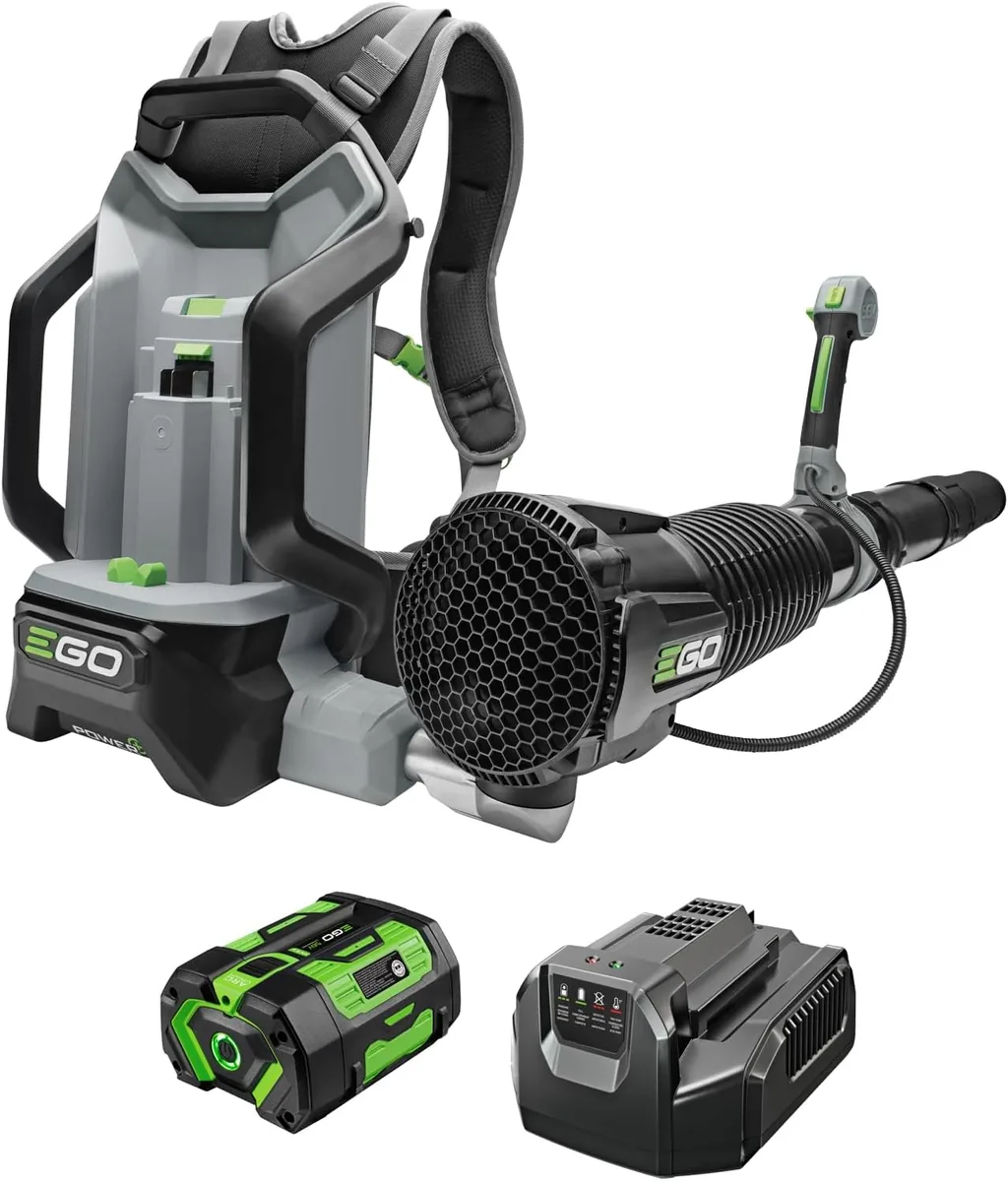
EGO Power+ LB6003 600 CFM Backpack Blower Kit Specs
Key Features:
- Boost button: Jumps to full speed for a stubborn patch and drops back to your set speed on release.
- Lock-on dial: Holds a middle setting along a long path with no squeezed trigger.
- Battery on your back: The pack rides in the housing, so your hand carries only the tube.
- Swinging tubes: EGO’s manual lets you swing the tubes slightly side to side to widen the sweep.
- Waist belt and chest buckle: EGO says the weight should rest on the waist strap.
The packed-soil path to the vegetable beds is where the LB6003 earns its place after rain. A thin damp layer lies on it beside the wood-chip mulch, and the dial at a middle setting lifts the layer without throwing chips onto the beds. Where the leaves have pasted themselves to the soil in patches, that force leaves a scatter behind, and only Boost takes them off.
EGO’s manual gives about 33 minutes on High, 23 on Boost and 180 on Low from the 7.5 Ah pack. The gap surprised me: Low barely stirs a wet layer and lasts for hours, while Boost does the work and empties the pack in under half an hour. Wet leaves keep you on High or Boost, so one pack covers one path or one lawn.
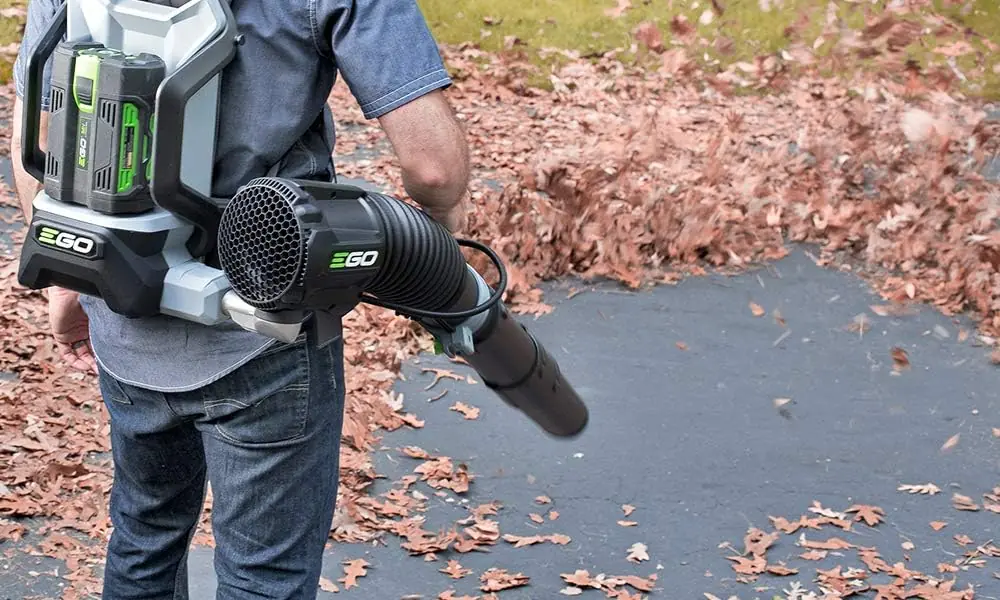
I open the layer at a middle dial setting, then press Boost only on the patches that stay stuck. Boost falls back to your setting when you let go, so the pack is spent on the patches and not on the whole path.
WHY I CHOSE THIS
Mirko Lekić, Agricultural Engineer & Farm Owner
The LB6003 is the best battery backpack leaf blower here because it is the one backpack on this page that runs with no fuel and no exhaust. Working quietly beside the house and the vegetable plot is worth the short pack life to me. I recommend it for thin damp layers on a lawn and a path, and I pick up a rake for a wet mat.
EGO’s IPX4 rating covers splashes only, so when rain starts the pack comes off the back and the job waits for a dry spell. Wear safety glasses with side shields and hearing protection, and keep bystanders 50 ft away.
Clear leaf scraps from the air inlet, because a blocked inlet cuts air speed. A second pack is the real cost of a bigger yard, since a pack this size sits in the premium tier alone.
Pick it for a lawn and yard of up to about half an acre, damp leaves in a thin layer and an owner who wants no fuel or exhaust. Skip it for acreage, soaked drifts and daily crew work. Read the listing’s return terms before you order.
FINAL VERDICT
Take the LB6003 for quiet, fuel-free work on a thin damp layer, one pack at a time. A wet mat is a job for a rake and a dry afternoon.
It is the quiet backpack I run on the damp path.
7. DEWALT DCBL777B 60V MAX FLEXVOLT Blower (Tool Only) Best DeWalt Battery Blower
The DCBL777B ships as a bare tool: the box holds the blower, two nozzles and a shoulder strap, with no battery and no charger, so you still need a FlexVolt pack and a DEWALT charger. DEWALT prints no force figure. On a 12.0 Ah pack it pushes with about 19 N on turbo, about 4 pounds, which suits a thin layer of damp leaves and little more.
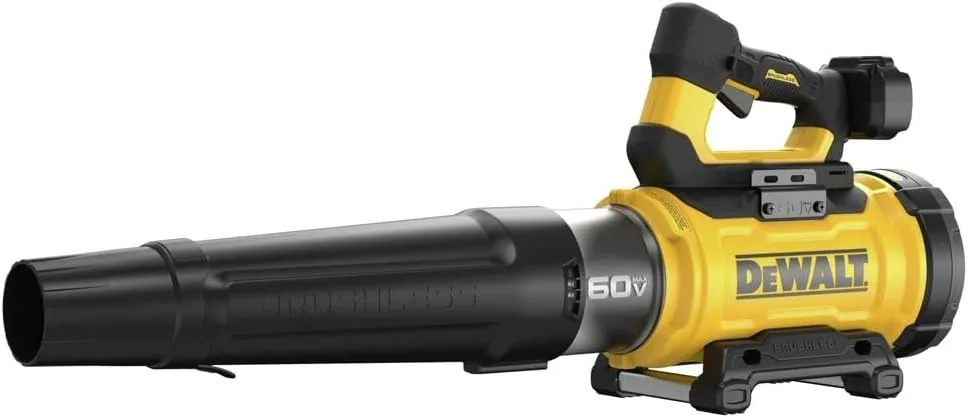
DEWALT DCBL777B 60V MAX FLEXVOLT Blower (Tool Only) Specs
Key Features:
- FlexVolt platform: It takes FlexVolt packs, the family that also runs DEWALT’s 20V and 60V tools.
- Three speed modes: One button cycles ECO, Normal and Turbo, so the strong setting is kept for the layer that sticks.
- Concentrator nozzle: It narrows the jet for seams and stuck leaves, and it lowers the overall push a little.
- Speed lock: It holds the trigger once fully pressed, which spares your finger.
- Four-light charge gauge: A blinking white light warns of a low-battery shutdown.
On the edge of the gravel yard, where the grass creeps in, leaves stick to the stones for days after rain. Once the stones had dried, turbo lifted the top layer there, but the leaves pressed into the gaps stayed put until I fitted the concentrator and went along the edge in strips. Turbo is a different tool from Normal, and it is still only a blower for leaves that are damp underneath, because a soaked mat is beyond it.
DEWALT’s up to 20 minutes is the ECO figure on a 12.0 Ah pack. The same pack runs about 18 minutes on Normal and about 14 on turbo.
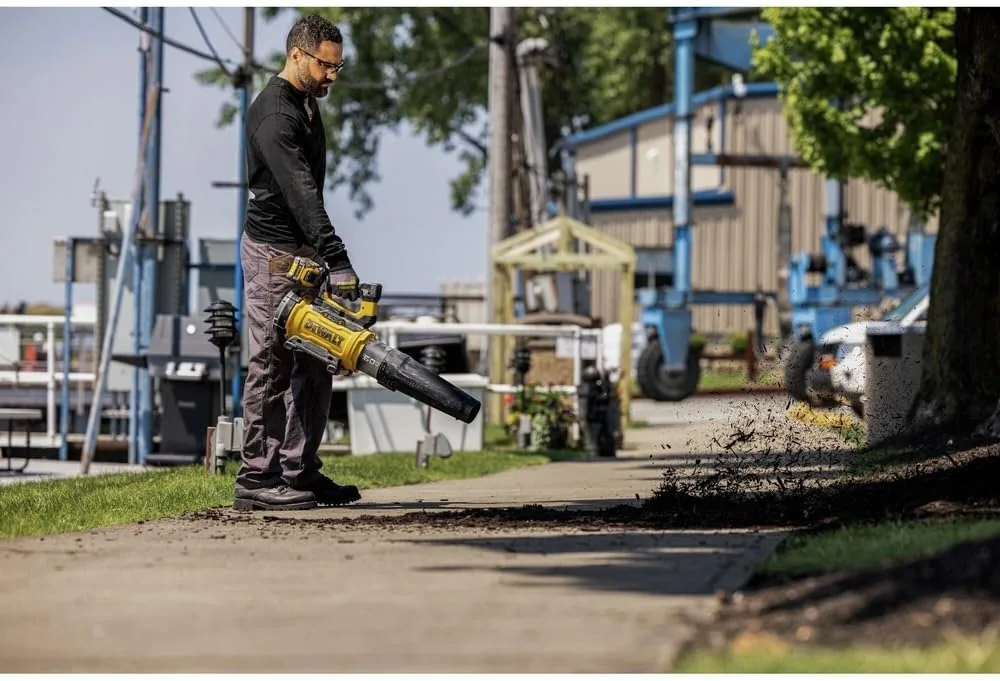
According to DEWALT, the tool stays out of rain, wet conditions and damp or wet locations. So I pick it up only once the surface and the ground have dried, and the leaves still damp underneath are what it suits.
WHY I CHOSE THIS
Mirko Lekić, Agricultural Engineer & Farm Owner
The DCBL777B is the best DEWALT battery leaf blower on this list because it is DEWALT’s strongest handheld blower, and it runs on packs a DEWALT shelf already holds. Turbo earns the label on leaves that are still damp underneath once the ground has dried. I ask nothing more of it than that.
Wear safety glasses and hearing protection from the first squeeze, because turbo puts about 79 dB at the operator’s ear. Remove the battery before you fit the tube or clear a jam, and give the fan 10 seconds to stop.
DEWALT’s manual says to store a pack fully charged, out of the charger, below 104 F. I release the speed lock before I put the blower down, since it holds the trigger and is no safety lock-off. What annoyed me is the weight: about a third of it is the pack, and my wrist knew it after a long sweep.
The DCBL777B fits an owner who already has FlexVolt packs and a charger, and leaves that are damp underneath on dry ground, in a job that fits one pack. Skip it without DEWALT packs, because the pack and charger make up most of the cost, and skip it for soaked mats or any work on wet ground.
FINAL VERDICT
Keep the DCBL777B for a shelf that already holds FlexVolt packs and a job on dry ground, with leaves damp underneath, the length of one pack. The pack and charger make it a poor first buy.
It is the bare-tool blower I run once the ground has dried.
How to Choose the Best Leaf Blower for Wet Leaves
Wet leaves are heavy, pressed flat and stuck to each other, so every check below starts from the push at the nozzle. Eight checks decide the choice, from force and nozzle shape to what the manual allows on wet ground.
Force at the Nozzle and Why CFM Alone Falls Short
Wet leaves hold water. In lab rainfall tests on alder and oak litter, a layer held water equal to about 1.4 to 2.4 times its dry weight (1), so the same leaves weigh more than twice as much as they did dry.
Force, measured in newtons, is the push of the jet at the nozzle. NASA’s page on thrust gives the principle: the force of a jet comes from the mass of air it moves each second multiplied by the speed it gives that air (2). Air volume and air speed work together in that one number, so a rating in newtons says more about a wet mat than CFM or mph alone. Distance, angle and nozzle shape decide how much of it reaches the leaves, so I use the rating to compare machines.
The box numbers add to the confusion, because the maximum CFM and the maximum mph are separate peaks that never occur together. The mistake I see most is a buyer who reads 700 CFM and expects that blower to lift a wet mat, when the newton figure is what tells you. My buying rule for wet leaves is to take the most newtons at the nozzle that I can carry for the whole job.
| Push at the nozzle | In pounds | What I expect on wet leaves |
|---|---|---|
| Under about 12 N | Under about 2.7 lb | I rake a soaked mat and blow only the loose leaves |
| About 12 to 20 N | About 2.7 to 4.5 lb | A thin, damp layer on a hard surface |
| About 20 to 25 N | About 4.5 to 5.6 lb | A wet single layer, taken in sections |
| About 25 to 40 N | About 5.6 to 9 lb | A wet mat in several passes while the strong setting lasts |
| About 40 N and up | About 9 lb and up | A soaked mat, lifted from its edge |
These bands are my own working guide, built on the figures I trust for each class, and no standard sets a pass mark for wet leaves. Use them to compare machines. Your leaves, your ground and the depth of your mat set the real result.
Three kinds of newton figure turn up, and they do not carry equal weight:
- Maker rating: a figure the maker prints for its own blower, on a spec page or in a manual.
- Independent measurement: a figure read at the nozzle by a lab, which can land above or below the maker’s maximum.
- No figure: treat CFM and mph as a rough guide for one nozzle only.
Air Speed and Nozzle Shape
Air speed peels. A fast, narrow jet gets under the edge of a stuck mat, and a slower, wider stream moves leaves that are already loose. According to EGO, its tapered nozzle lifts the air speed from 166 to 195 mph.
Pro Tip
Check what comes in the box. A kit with a tapered nozzle gives you a fast jet for the stuck edge, and a kit with one jet shape leaves you with whatever push the maker lists for it.
Best Cordless Leaf Blower for Wet Leaves and Minutes on the Strong Setting
Wet leaves keep the dial near the top, so the hours a maker prints for low speed do not apply to this job. Only the minutes on the strong setting count. According to EGO, a 56V 5.0 Ah pack runs about 25 minutes on high and 15 on boost, and a 7.5 Ah pack runs 33 and 23. A 60V FlexVolt handheld on a 12.0 Ah pack gives about 18 minutes on its normal mode and about 14 on turbo.
The strong setting is also where the push is. A 56V handheld with a 5.0 Ah pack measures about 16 N at the nozzle on high and about 25 N on turbo, which is the difference between sliding a wet layer and lifting it, though distance, angle and nozzle shape decide how much of that reaches the leaves. At about 22 minutes on high from a 5.0 Ah pack, an hour of wet strips takes about three packs and two hours takes five to six. When I plan a wet job, I ignore the hours printed for low and count only the strong-setting minutes.
Before you buy a cordless kit for wet work, check these four things:
- Minutes on the strong setting with the pack in the box, not the low-setting hours.
- Push on that setting, since high on some kits gives about 16 N and only boost gets near 25 N.
- Pack size: more amp-hours add minutes, and they add weight to the arm that holds the tube.
- Cold mornings: EGO’s battery manual says a pack below about 50 F may pulse for its first minute, and it gives 50 to 80 F as the range for best performance.
Best Backpack Leaf Blower for Wet Leaves and Weight Against Force
A backpack buys force and time. The gas backpacks on this page list 21 to 48 N, and a tank works out to roughly an hour at full power on the three whose makers publish a fuel rate, a little less for the 580BTS because its manual limits the fill to 80 percent. A handheld pack gives about 13 minutes of its strongest setting.
The price is weight. Ready to work, the Echo carries about 31 lb with a full tank, the 580BTS about 30 lb on its 80 percent fill, the 350BT about 24.5 lb with a full tank and the LB6003 about 19 lb with its battery on. The harness decides how that load feels: Husqvarna says its padded hip belt moves the load from the shoulders to the hips, while the Echo’s US build documents no hip belt. On the gas backpacks the tube length mattered as much as the engine, since it let me hold a shallow jet under the low plum branches without bending my back.
A backpack is the honest answer when the mat is soaked, the ground is large or the job runs past what a handheld pack can give. On an acre of wet leaves under mature trees, the best leaf blower for large yard work is the one that holds its push for an hour, and in this group only a gas tank does that. Below about half an acre of thin wet leaves, a handheld kit does the work and your back stays free, and the leaf blower guides cover those.
Gas Fuel, Exhaust and Starting in Cold Wet Weather
A gas backpack has no pack to run flat and no cord to keep out of a puddle, which is why wet work favors it. Choosing the best gas backpack leaf blower comes down to push, minutes per tank and whether you will measure two-stroke mix.
Echo’s manual asks for at least 5 minutes wide open every hour, because long stretches at low speed build carbon on the spark arrester screen. Wet leaves keep the throttle up, so that rule mostly looks after itself. The same manual sets a lower limit of 15 F, below which fuel lines can be damaged, and Echo and Husqvarna both call for a few minutes at idle after a cold start. Fuel is where gas machines go wrong: after a summer on old mix, my old gas handheld bogged and surged on the first cold morning, and fresh mix cured it.
Four habits keep a gas machine safe and healthy through a wet season:
- Mix: ratios differ by maker, so follow the manual of the machine you buy. Echo, for one, specifies 50:1 gasoline to its approved two-stroke oil and says to mix no more than 30 days of fuel at a time.
- Refuel: stop the engine and let it cool first. Husqvarna’s manuals say to carry the blower at least 10 ft from the fueling spot before you start it.
- Exhaust: Echo and Husqvarna both say never to run a gas engine in a shed or other closed space, because the exhaust carries carbon monoxide.
- Footing: wet leaves are slippery underfoot, so wear non-slip boots and walk the ground before you blow it.
What the Manual Allows on Wet Ground
Wet leaves sit on wet ground, and the manual decides whether your tool belongs there at all. Read the water line before you buy, because it can rule a blower out of the very job you are shopping for.
Makers say it in different ways, and the wording tells you how much room you have. A battery tool adds a pack and a charger, and each has its own limits on water and temperature. When drizzle starts over the plum rows, my battery tools go back in the shed and the rake comes out.
- A plain “do not use wet”: read it as a stop sign for wet work, and rake or wait.
- A splash rating such as IPX4: it covers splashes from any direction and nothing more, so it gives no license to work in rain or standing water.
- A temperature limit: low limits matter on a November morning.
- Charging rules: charge indoors and inside the temperature range the manual gives.
Noise and Hearing Protection
Wet leaves keep the throttle open, and the strong setting is the loud end of any blower. Makers print noise in different places: some at the operator’s ear, some as a bystander rating at 50 ft and some not at all. An ear figure and a 50 ft figure describe two different places, so I compare each only with its own kind.
A test of agricultural backpack machines, mist blowers among them, found noise above 100 dB(A) in every unit except one blower with its exhaust routed inside the hose (3). A cordless handheld on boost is quieter than that, but it is high-pitched, and I put muffs on for it as well.
NIOSH recommends 85 dBA over an eight-hour day and halves the allowed time for every 3 dBA more (4). At the 106 dB(A) that one maker declares at the operator’s ear for a gas backpack, that rule leaves about 4 minutes before the day’s allowance is used up.
Safety First
Wear foam plugs and earmuffs together from the first minute on any gas backpack, plus eye protection. Wet leaves are slippery underfoot, so wear non-slip boots, and keep people, pets, windows and cars out of the debris path.
When to Wait, Rake or Mow Instead
The right machine for a wet mat is sometimes no machine. Rain still falling, standing water and frost under the leaves all mean waiting, and a soaked mat beyond your blower’s push class means a rake.
Nebraska Extension advises a mulching mower or 2 to 3 passes with a regular mower for leaves on turf, and says up to 6 inches of leaves can be mulched at a time, depending on the mower (5). Purdue turf specialists write that heavy layers of tree leaves shade grass and can smother and kill it (6).
On the house lawn, a thin wet layer goes under the mower faster than I can blow it off. Along the hedgerow, after the first frosts, the mat stays frozen to the ground until the sun reaches it, and I leave that strip until it thaws.
Key Takeaway
A blower under about 20 N suits thin layers. For a soaked mat, bring a rake or choose one of the stronger machines on this list.
Push, Weight and Strong-Setting Time for the Seven Picks
This table puts the numbers from the product blocks next to each other. Push is the maker’s rating where one exists, and the tank times are worked out from the makers’ fuel figures at full power, so treat them as rough.
| Pick | Push at the nozzle | Weight you carry | Time on the strong setting |
|---|---|---|---|
| 1. Echo PB-9010T | 48 N per Echo | About 31 lb with a full tank | About 68 minutes per tank |
| 2. Husqvarna 580BTS | 47 N per Husqvarna | About 30 lb on an 80 percent fill | About 58 minutes on an 80 percent fill |
| 3. EGO LB7654 | 26 N maximum per EGO, about 16 N on high | About 9.6 lb with the 5.0 Ah pack | About 22 minutes on high, about 13 on boost |
| 4. Schroder SR-6400L | 42 N per Schroder’s listing | 19.5 lb as listed | Not published by the maker |
| 5. Husqvarna 350BT | 21 N per Husqvarna | About 24.5 lb with a full tank | About 78 minutes per tank |
| 6. EGO LB6003 | 19 N per EGO | About 19 lb with the 7.5 Ah pack | 33 minutes on high, 23 on boost per EGO |
| 7. DEWALT DCBL777B, tool only | About 19 N on turbo, no maker figure | About 10 lb with a 12.0 Ah pack | About 18 minutes on normal, about 14 on turbo |
Read it from the top. The first two put 47 to 48 N behind a tank that runs about an hour at full power. The third is the only cordless kit that reaches about 25 N, and it holds that for roughly 13 minutes a pack.
The Schroder lists 42 N at 19.5 lb. The last three sit at 19 to 21 N, the bottom of my wet single-layer band, so I use them on thin layers and rake the soaked mats, and the DEWALT is the one whose manual rules out wet use altogether.
What the Manuals Say About Wet Ground and Battery Tools
The wet line in a manual is the first thing I read. Here is what the makers state for the picks on this page.
- DEWALT DCBL777B: the manual says not to use the tool wet or in rain or wet conditions, and it gives 40 to 104 F as the range for charging a pack.
- EGO LB7654 and LB6003: EGO rates both IPX4, a splash rating. The charger manual for the LB7654 says to charge indoors.
- Husqvarna 350BT: the manual says not to use the blower in bad weather or in very cold weather.
- Echo PB-9010T: the manual sets a lower limit of 15 F, below which fuel lines may be damaged.
Whatever the machine, I work on dry ground with dry hands and put the manual in the box over this page. A gas engine has no pack or charger to keep dry, and the Echo and Husqvarna manuals set their limits on cold, exhaust and fuel instead.
Wet Ground Rules
Keep battery packs, chargers and plugs off wet ground, charge indoors where the manual says so, and stop and dry the tool if it gets wet. If your manual says not to use the tool wet, rake or wait.
My Overall Verdict
Three machines clear a wet mat, and the order between them depends on how much ground you cover and how much weight your back will take.
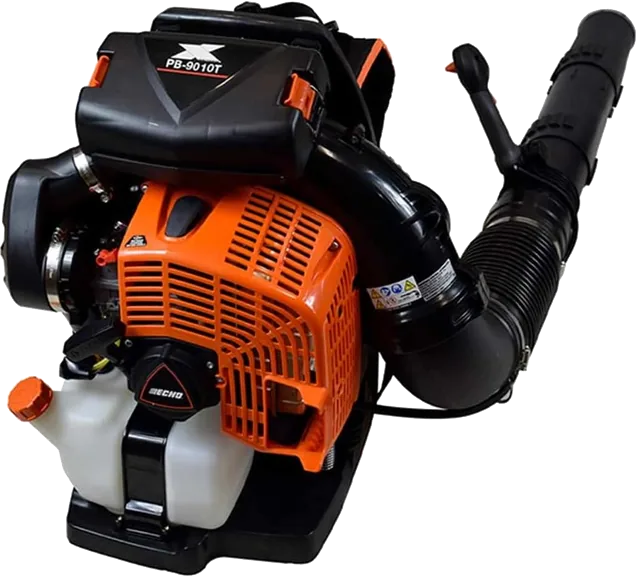
1. Echo PB-9010T Gas Backpack Leaf Blower Best Overall
Best for an acre or more of soaked mats under mature trees, with 48 N, the most push on the list.
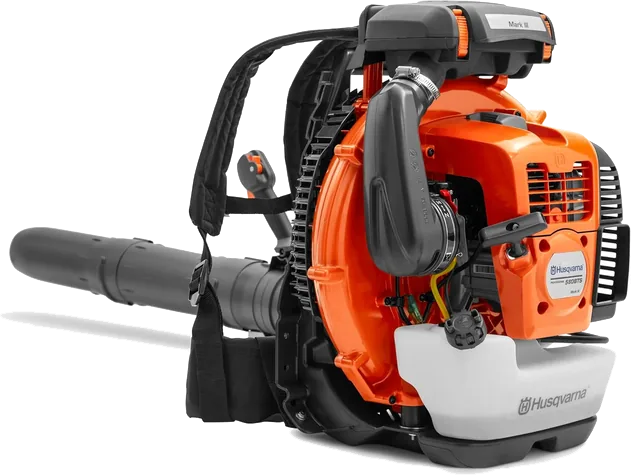
2. Husqvarna 580BTS Gas Backpack Leaf Blower Best Premium
Best for the same heavy work with a padded hip belt and chest strap in the box, with 47 N.
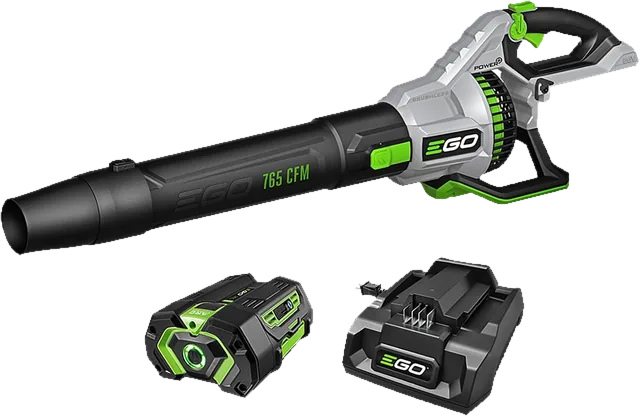
3. EGO Power+ LB7654 765 CFM Cordless Leaf Blower Kit Best Value
Best for a house lot or a half acre of wet leaves in sections, with about 25 N on boost from a kit that includes its pack and charger.
On my wet strips the Echo PB-9010T Gas Backpack Leaf Blower is the machine whose push outlasts the mat. The other four fill narrower jobs, from the budget gas backpack to three lighter machines for thin layers. Match the push to the depth of your mat and the weight to what you can carry, and you have the best leaf blower for wet leaves on your property.
Why Echo PB-9010T Gas Backpack Leaf Blower Might Be the Best Choice
The Echo PB-9010T Gas Backpack Leaf Blower is my best overall because it puts 48 N behind the jet, the most on this list, and a tank that runs over an hour at full power. I want a leaf blower on wet leaves to hold its push through a whole alley, and no cordless kit here does that.
The trade-off is weight and noise. It is about 31 lb with a full tank, and According to Echo, the US build has padded shoulder straps and no hip belt, so expect to add a belt if you want one. Like every gas backpack here it is loud, so plugs and earmuffs go on together before I start it.
Here is what puts it at the top:
✓ Push: 48 N at the nozzle, according to Echo, which is about 11 lb of force.
✓ Tank: 83.8 fl oz, which works out to about 68 minutes at full power from Echo’s fuel rate.
✓ Control: a tube-mounted trigger with a cruise lever, so one hand sets the speed and aims.
✓ Airflow: 1,110 CFM and a top air speed of 220 mph, according to Echo, as two separate maximums.
✓ Engine: a 79.9 cc two-stroke on a 50:1 fuel mix.
Frequently Asked Questions
Can you blow wet leaves?
You can blow wet leaves when the jet has enough push at the nozzle, about 20 N for a single wet layer and about 40 N for a soaked mat. Hold the nozzle low at a shallow angle and work in short bursts, and rake the mat when your blower falls below that push.
What is better for blowing leaves, CFM or MPH?
Neither CFM nor MPH is better on its own for blowing leaves, because the push of the jet in newtons combines the air volume and the air speed. For wet leaves I choose by the newton figure and treat the CFM and the MPH on a box as two separate peaks.
Which leaf blower offers the best value for money?
The EGO LB7654 offers the best value for money on this list, because the kit includes a 5.0 Ah pack, a charger and two nozzles, and its nozzle measures about 25 N on boost. Runtime is the limit at about 13 minutes on boost per pack, so add a spare pack for big jobs.
Can a leaf vacuum pick up wet leaves?
A leaf vacuum can pick up wet leaves, but they clog the bag and the impeller quickly, so it suits only a thin damp layer. Blow or rake a soaked mat loose first, and note that none of the seven picks here is a vacuum, since none has a documented push figure.
What are the different types of leaf blowers?
The different types of leaf blowers are corded, cordless handheld, battery backpack, gas handheld and gas backpack, plus walk-behind units for big lots. For wet leaves the gas backpacks give the most push, and the cordless kits suit thin layers and short sessions near the house, within reach of a charger.
References
- Li Q, Choi H, Lee EJ, Im S. Experimental Analysis of Water Retention Characteristics in the Litter of Different Deciduous Trees. J Korea Soc Environ Restor Technol. 2016;19(2):83-93.
- NASA Glenn Research Center. Thrust Equation. Beginners Guide to Aeronautics. Updated June 10, 2026.
- Calvo A, Preti C, Caria M, Deboli R. Vibration and Noise Transmitted by Agricultural Backpack Powered Machines Critically Examined Using the Current Standards. IJERPH. 2019;16(12):2210.
- National Institute for Occupational Safety and Health. Noise-Induced Hearing Loss. Noise and Hearing Loss. Centers for Disease Control and Prevention; 2024.
- Exstrom E. Don’t Let Leaves Smother the Turf. University of Nebraska-Lincoln, Nebraska Extension (UNL Water). November 29, 2023.
- Reicher Z. Keep Mowing to Mulch Those Tree Leaves! Turfgrass Science at Purdue University (extension article). October 27, 2006.
Safety Note: Leaf blowers throw debris and can damage your hearing. Wear eye and ear protection, read the manufacturer’s manual, and check your local rules on noise and operating hours.