
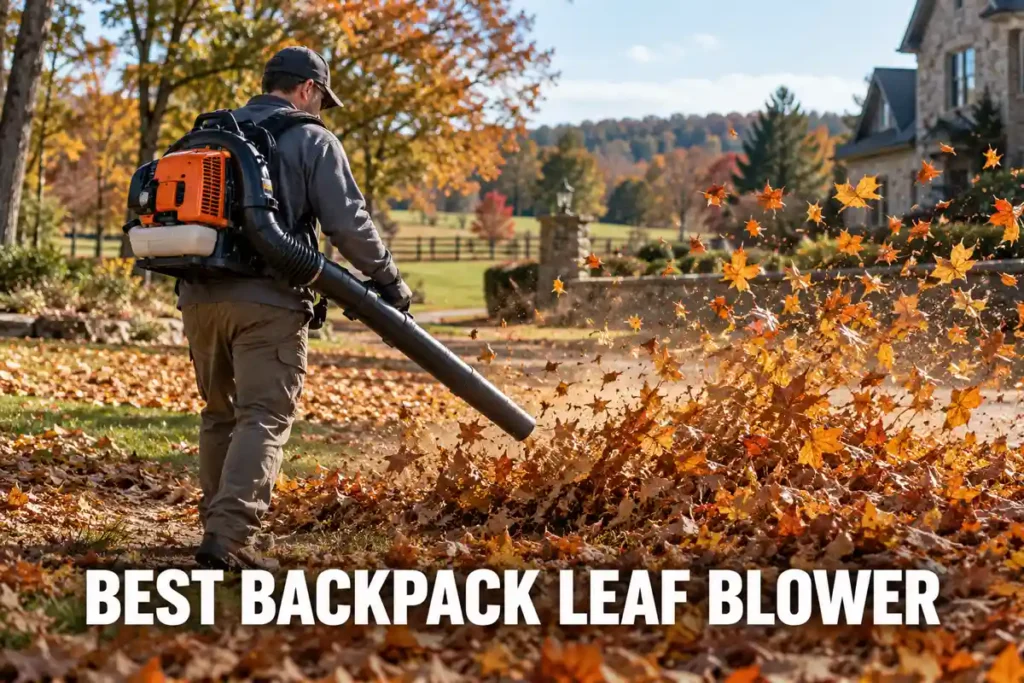
The best backpack leaf blower pushes a wet mat of leaves down a long alley and still leaves your shoulders and ears in one piece at the end of the day. I clear the leaves, pruning twigs and sawdust from a 3.7-acre apricot and plum orchard, and the long alleys between the tree rows are where a handheld stops being enough. I have worked those rows with handhelds and with backpacks.
Affiliate Disclosure: Garden Power Scout is a proud participant in the Amazon Services LLC Associates Program. As an Amazon Associate, we earn from qualifying purchases, at no extra cost to you.
Below are the seven backpack blowers I recommend, six gas and one battery, and my top pick is the Husqvarna 360BT Gas Backpack Leaf Blower. The buying advice after the list covers push, harness, noise and service for a big yard or a long leaf season.
Best Backpack Leaf Blower Reviews 2026 With 7 Models I Rank for Big Yards
Six of these seven run on gas, so the list doubles as a shortlist for the best backpack gas leaf blower, with one battery model for the quiet corners. Each block says who should skip it, so you can cross a model off fast.
1. Husqvarna 360BT Gas Backpack Leaf Blower Best Overall
The Husqvarna 360BT puts force and weight in the middle of the range. According to Husqvarna, its 65.6 cc engine delivers 30 N of blowing force, about 6.7 lb of push against a leaf mat, in a machine that weighs 23.2 lb dry. That balance suits an acre or two of lawn, orchard alley and farm yard, and it makes the 360BT a best rated backpack leaf blower in the mid-range to premium tier.
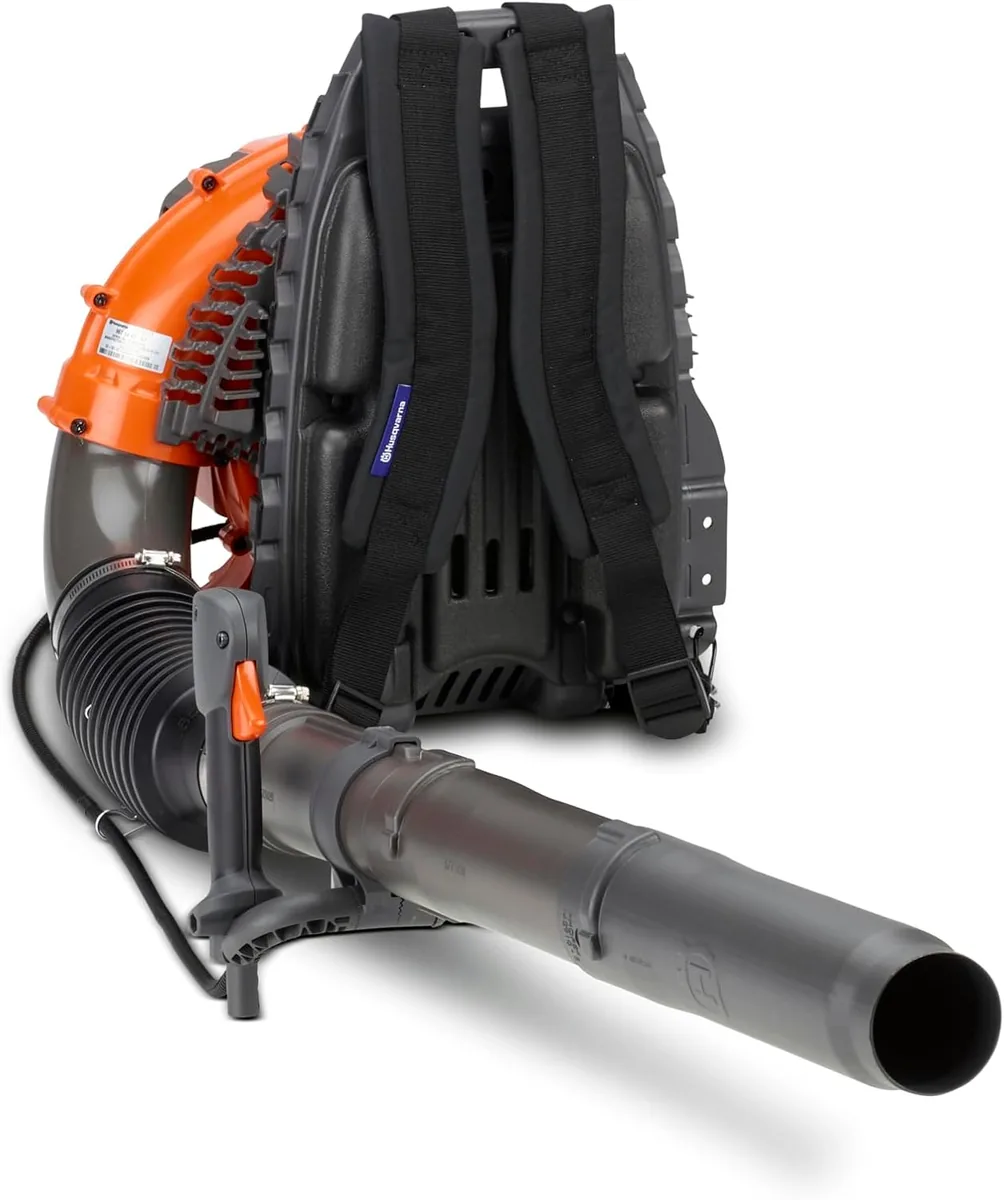
Husqvarna 360BT Gas Backpack Leaf Blower Specs
Key Features:
- 65.6 cc X-Torq engine: It supplies enough force for wet leaves and clippings without the bulk of a larger engine, so a long alley wears you down more slowly.
- 74.4 fl oz tank: It holds a generous measure of mix, so you can plan each refuel for the end of a row instead of the middle of one.
- Ventilated, load-reducing harness: Wide shoulder straps and a ventilated back keep cushion and airflow between the frame and you through a long session.
- Vibration damping system: Husqvarna’s damping units cut the shake that reaches your hands, which matters on the last row more than the first.
- Four throttle positions: Full, one third, idle and stop let you pick the lowest setting that does the job, which also keeps noise and dust down.
- Air purge bulb: Pressing the bulb fills the carburetor with fuel before the first pull, so a cold start takes fewer pulls on the cord.
- 46.65 in tube set: The long tube keeps the nozzle close to the ground while you stand upright, and Husqvarna advises working with the nozzle low.
Listings quote 890 CFM for this blower, but that is the airflow inside the housing. The air that leaves the round nozzle is 631 CFM at 232 mph, and that is the number to compare. Under the plum rows after the first frost, that volume lifts a loose carpet of leaves off the tree-row strips and rolls it into the alley for the mower. Matted, soaked leaves are the limit, and according to Husqvarna they need a rake first, which I do.
I plan the refuel for the end of a row: engine stopped and cool, away from sparks and flame, spills wiped up, and the blower carried at least 10 ft from the fuelling spot before I start it. Mixed fuel is the part of ownership that ages fastest, because Husqvarna says never to mix more than a month’s worth at a time, so I mix only what the week needs.
Late winter changes the job. Under the plum rows the litter is pruning twigs and sawdust, and the one third throttle position moves it into the alley without scattering it over the tree-row strips, which fits Husqvarna’s advice to use the lowest position that does the work. The limit is thick cut branches. No blower moves those, so they go on the pile by hand.
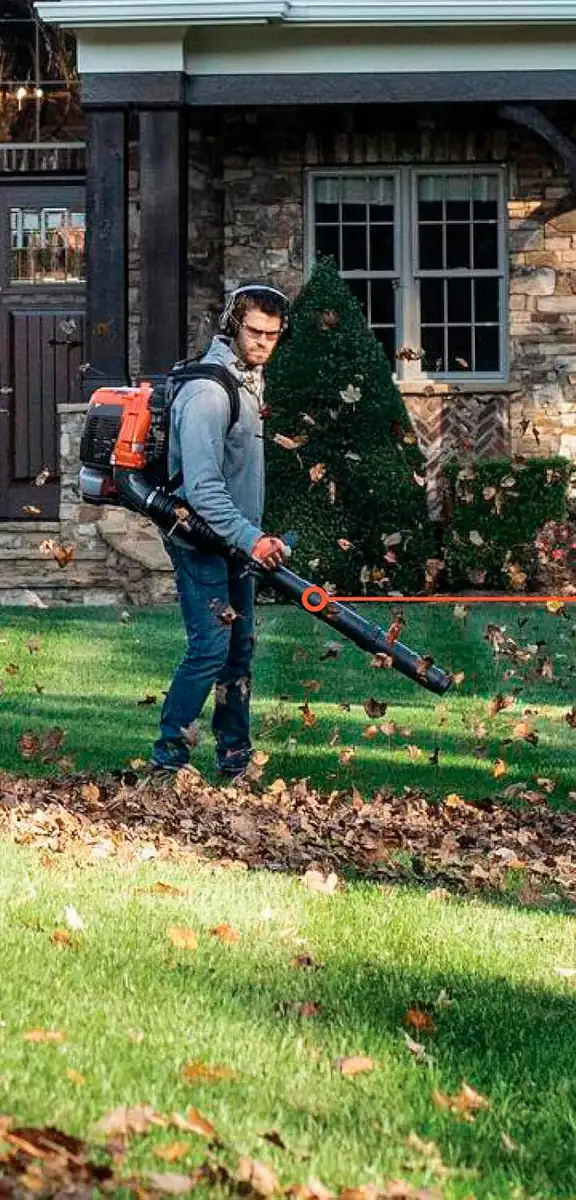
Clean the intake screen and the foam filter before each session. According to Husqvarna, a dirty intake screen lowers the blowing force, and the foam filter takes only Husqvarna filter oil after a wash in warm soapy water.

WHY I CHOSE THIS
Mirko Lekić, Agricultural Engineer & Farm Owner
The 360BT earns Best Overall because it has no weak side on mixed ground. The force handles leaves and clippings, the tank covers a long job, and 23.2 lb dry is a weight I can carry through a full block of alleys. A stronger machine costs shoulder load and a lighter one costs push, and this one sits where I stop making that trade. It is the backpack I hand to anyone with two acres and one weekend.
Hearing protection is not optional. Husqvarna declares 95 dB(A) at the operator’s ear, above the 85 dB(A) level where protection is advised, so I wear earplugs under earmuffs from the first minute, and a dust mask on dry yards.
Ownership is a schedule. The foam filter is a daily check, the spark arrestor screen on the muffler gets a wire brush weekly, and the manual says to replace the spark plug monthly or sooner, which is a shorter interval than I expected. The smell of exhaust stayed in my jacket until I washed it, so I hang it in the shed after a long session. Keep the receipt and confirm the seller before you order, since the two-year emissions warranty in the manual covers parts such as the carburetor, ignition module and fuel lines at an authorized dealer.
Buy it for half an acre up to a few acres of mixed ground: lawn, orchard alleys, a gravel yard and the leaf fall that lands on all of them. It suits an owner who will mix small batches of fuel and keep to the plug and screen schedule. Skip it on a small lot, where the engine is more than the job needs, if your town limits gas blowers, or if you want a vacuum or mulch mode, which this blower does not take.
FINAL VERDICT
The 360BT is the gas backpack I recommend to most owners of big ground. It is strong enough for wet leaves, light enough to carry through the job, and it asks only for a regular maintenance routine in return. Skip it only if the yard is small or noise rules apply.
It is the all-round backpack I keep ready for leaf season.
2. Echo PB-9010T Gas Backpack Leaf Blower Best Premium
Fully fuelled, the Echo PB-9010T puts about 31 lb on my shoulders, and I feel the load ease by about 4 lb as the tank empties. The weight pays for ECHO’s rating of 48 N at the nozzle, roughly 11 lb of push, from a 79.9 cc engine. That is the force for acreage, wet leaf mats and storm debris, and it is why this is my Best Premium pick.
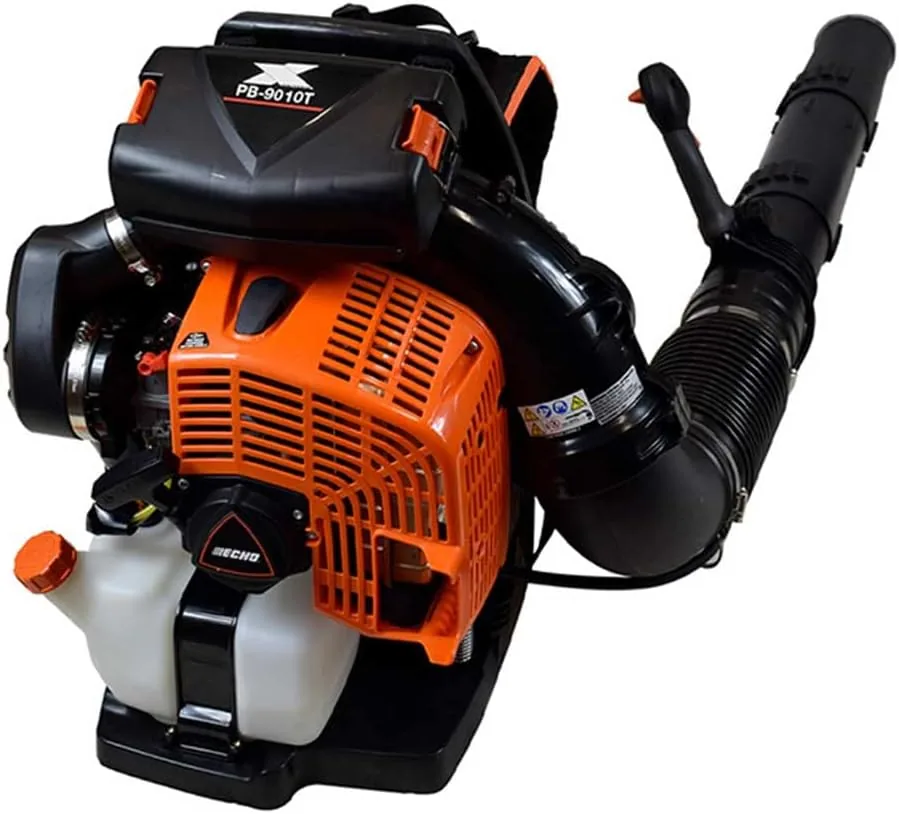
Echo PB-9010T Gas Backpack Leaf Blower Specs
Key Features:
- Tube trigger with cruise lever: One hand aims the pipe and sets the speed, and the lever holds a setting on a long run so the trigger finger can rest.
- See-through tank: You read the fuel level from the side, so you can plan the refuel at the end of a row without opening the cap.
- Swivel pipe: It tilts the nozzle up or down while your wrist stays straight, which helps under low branches and along hedge bases.
- Posi-Loc pipes: The pipes lock into channels, so once you set the swivel pipe the nozzle stays where you aimed it.
- Cold weather insert: It comes in the box and fits over the air intake under the back cushion, for the frost mornings of late autumn.
- Two-stage air filter: A pleated paper element and a foam pre-filter sit above the engine, so a check at the edge of a dusty job takes little time.
- Padded straps and vented back pad: According to ECHO, they cushion the shoulders on a long carry. A buyer who wants a hip belt should expect to add one.
ECHO’s own advice is a lower speed for dry leaves on hard surfaces, and a higher one for lawns, beds and gravel. The pit around the irrigation pump head collects leaves and twigs, and there I stay low so the air lifts the debris without driving grit into the fittings and the disc filter. Across the lawn I open the cruise lever, and 1,110 CFM at 220 mph moves a wet leaf carpet in one rolling wave. Stones are the limit: at higher speeds it throws gravel, so keep the nozzle low and people, windows and parked cars out of the debris path.
Plan by the tank. At full throttle ECHO’s fuel rate empties it in roughly an hour, an estimate, and part throttle stretches that. I stage a second can of fresh 50:1 mix at the end of the alley before I start, so a refuel does not mean a walk back to the shed.
Late November brings frost mornings, and the machine needs a different setup. I fit the cold weather insert over the air intake once the first frost arrives, and according to ECHO performance may drop slightly with it in place. The manual sets a limit of 15 F, below which the fuel lines may be damaged, so on the coldest mornings it stays in the shed. Only the idle speed is adjustable by the owner, and ECHO asks for at least two tanks of break-in before any carburetor work.
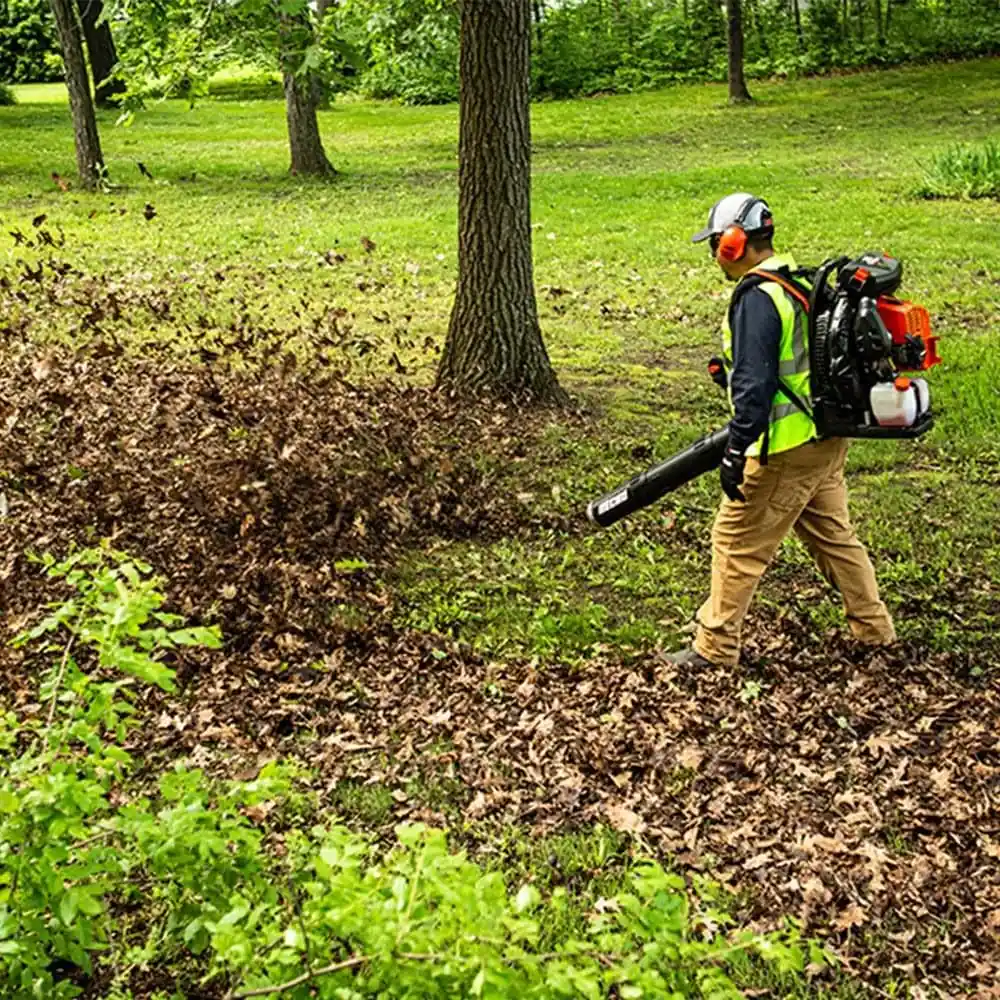
Open the throttle fully for at least five minutes every hour. According to ECHO, steady low speed builds carbon on the spark arrester screen, and the screen wants a check about every 40 hours.
WHY I CHOSE THIS
Mirko Lekić, Agricultural Engineer & Farm Owner
Best Premium means force and capacity, and the PB-9010T delivers both. It clears the wet leaf mats and storm debris that stop a smaller blower, and its see-through 83.8 fl oz tank makes the refuel easy to plan. The extra cost pays for that push and that tank, and the weight and the noise come with them. Tall trees and a wide yard are where it earns its place.
According to ECHO, the limited warranty applies only to units sold by authorized dealers, so confirm the seller before you order. It runs 5 years for residential use and 2 years for agricultural or income-producing use, which means a working orchard like mine gets the shorter term.
With plugs and muffs both on from the first pull, I still cannot hear the tractor on the farm lane, so at each alley end I turn and look behind me before I step back. ECHO rates the noise at 79.3 dB(A) measured 50 ft away, but at the operator’s ear wide open it is about 103 dBA, which is why both protectors stay on. Refuel outdoors over bare ground with the engine stopped and cool, away from sparks and flame, wipe up any spill, and carry the blower at least 10 ft from the fuelling spot before you start it.
The PB-9010T suits an acre or more of mature trees, orchard alleys, wet leaf mats and storm cleanup, if you already mix two-stroke fuel and your shoulders accept the load. Skip it on a small lot, on a street with noise rules, or if a pull cord and a thirsty engine are more than you want to manage.
FINAL VERDICT
The PB-9010T is my Best Premium pick for big ground: 48 N of force, a large tank and a tube trigger with cruise. The weight and the noise come with the push, so a buyer who wants a light, quiet machine should pass.
It is the big gas backpack I carry when the leaf mat is deep.
3. Husqvarna 350BT Gas Backpack Leaf Blower Best Value
A quarter acre to an acre of lawn, beds and hard surfaces is the ground the Husqvarna 350BT is built for, and it covers it with a padded waist belt and 22.5 lb dry weight. According to Husqvarna, the force is 21 N, enough for dry and damp leaves, clippings, twigs and pods. For yards up to an acre it is the best backpack leaf blower for the money on this list, and the reason is fit: the force matches the ground, the belt carries the load, and the design has a long record with owners.
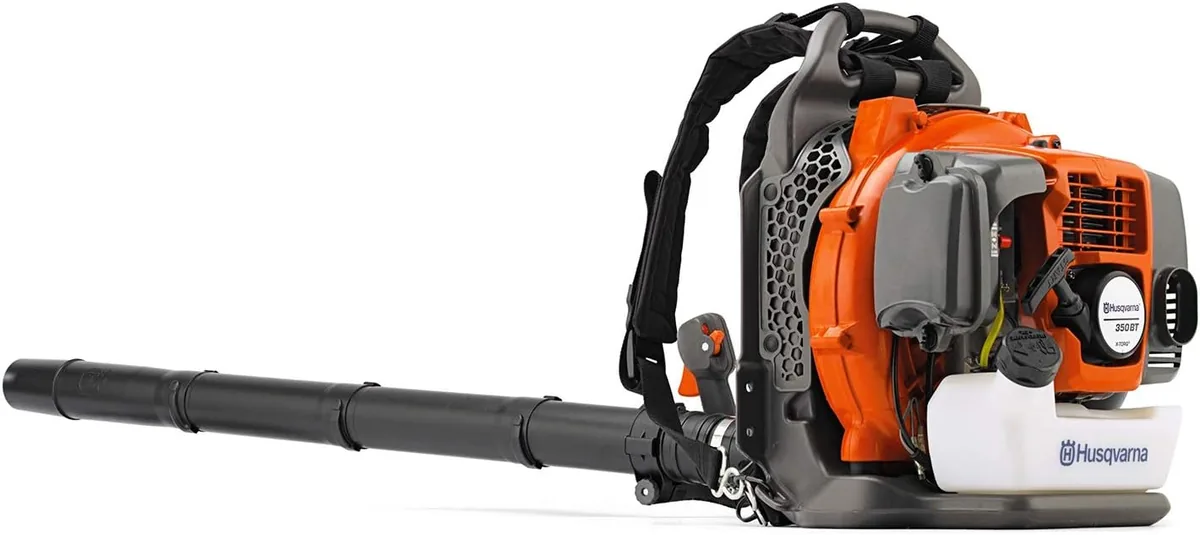
Husqvarna 350BT Gas Backpack Leaf Blower Specs
Key Features:
- Padded waist belt: Tighten the shoulder straps first and the belt second, and the weight settles on your hips instead of your shoulders.
- Weight-leveling harness: The padded, integrated harness spreads the machine across your back, which is what lets a full backpack blower feel manageable at the end of a job.
- 50.2 cc X-Torq engine: Husqvarna rates it at 2.1 hp, a size that fits a quarter acre to an acre and stays easier to carry than a bigger engine.
- Tube-mounted throttle: The speed trigger sits on the control handle, so one hand aims and sets speed. According to Husqvarna, a cruise control option is available.
- LowVib damping: The damping units soften the vibration that reaches the handle, which Husqvarna puts at 2.2 m/s2 equivalent.
- Air purge bulb: Pressing it fills the carburetor with fuel before the first pull, so a start after a cool night needs fewer pulls.
- Adjustable offset handle: Move the control handle to where your wrist stays straight, so a long fence line costs less strain.
Rated at 21 N, about 4.7 lb of push, the 350BT is a lawn and hard surface machine. Dry leaves leave the concrete pad in front of the machinery shed ahead of the nozzle, and I clear twigs and pods off the lawn with it before I mow. Soaked leaves are where it gives out. On the gravel yard I loosen a wet mat with a rake first, and after that the air can move it.
The belt changes the day. I snug the shoulder straps first and the waist belt second, and the weight stops sitting on my shoulders and settles on my hips, which is the order Husqvarna’s manual describes. A full tank adds only about 2 lb to the dry weight, so the machine at its heaviest is about 24.5 lb.
A different job is the fence line along the yard, where leaves bank up in the open wind. I blow with the wind at my back and keep the nozzle near the ground, as Husqvarna advises, and the exception is the last stretch along the fence itself, where I work along it. At 21 N the air moves the pile without scattering it past the fence. The limit is volume, because deep banks of leaves take repeated passes where a stronger machine would need fewer.
Read the airflow figure with care. The listing’s 692 CFM is the housing figure, and the air at the round nozzle is 494 CFM at 180 mph, about 30 percent lower, so compare blowers on that number.
WHY I CHOSE THIS
Mirko Lekić, Agricultural Engineer & Farm Owner
Best Value here means a machine that fits the ground it is sold for. The 350BT carries its weight on the hips, starts from a purge bulb and runs on a design with a long record behind it. Its force is modest, and I say so plainly: it is enough for lawns, beds and hard surfaces, and it is the wrong tool for deep wet mats. For the ground it fits, it asks for the least money and the least shoulder load.
Refuel outdoors with the engine stopped and cool, away from sparks and flame, wipe up any spill, and carry the blower at least 10 ft from the fuelling spot before you pull the cord. Mix 50:1 with unleaded gasoline of 87 AKI or higher and no more than 10 percent ethanol, and never mix more than a month’s worth.
A full tank carries me around the house lawn and the shade-tree beds, which is the size of job this blower fits. Before winter I drain the tank, press the purge bulb and run the engine dry, so stale mix does not sit in the carburetor. Husqvarna declares 94 dB(A) at the operator’s ear, so earplugs and earmuffs go on together before I pull the cord.
It suits a quarter acre to an acre, owners who want a hip belt, a low weight and a mid-range price, and occasional heavy use. Skip it for more than an acre of heavy wet leaves, where a stronger class of machine saves you passes. Check the seller before you order, since Husqvarna’s two-year emissions warranty is serviced through authorized dealers, and keep the receipt.
FINAL VERDICT
For a quarter acre to an acre of ordinary yard work, the 350BT is the backpack I recommend on value: a hip belt, 22.5 lb dry and a long-running design at a mid-range price. Deep wet mats on a large property call for a bigger machine.
It is the light hip-belt backpack I pick for ordinary yard work.
4. Schroder SR-6400L Gas Backpack Leaf Blower Best Lightweight
The SR-6400L is the gas backpack for the owner whose back gives out before the fuel does. According to Schroder, it weighs 19.5 lb, the lightest figure among the gas backpacks on this page, and it still throws a wide stream of air. That pairing suits half an acre or more of leaves, clippings and light gravel, as long as you are comfortable with mail-order support.
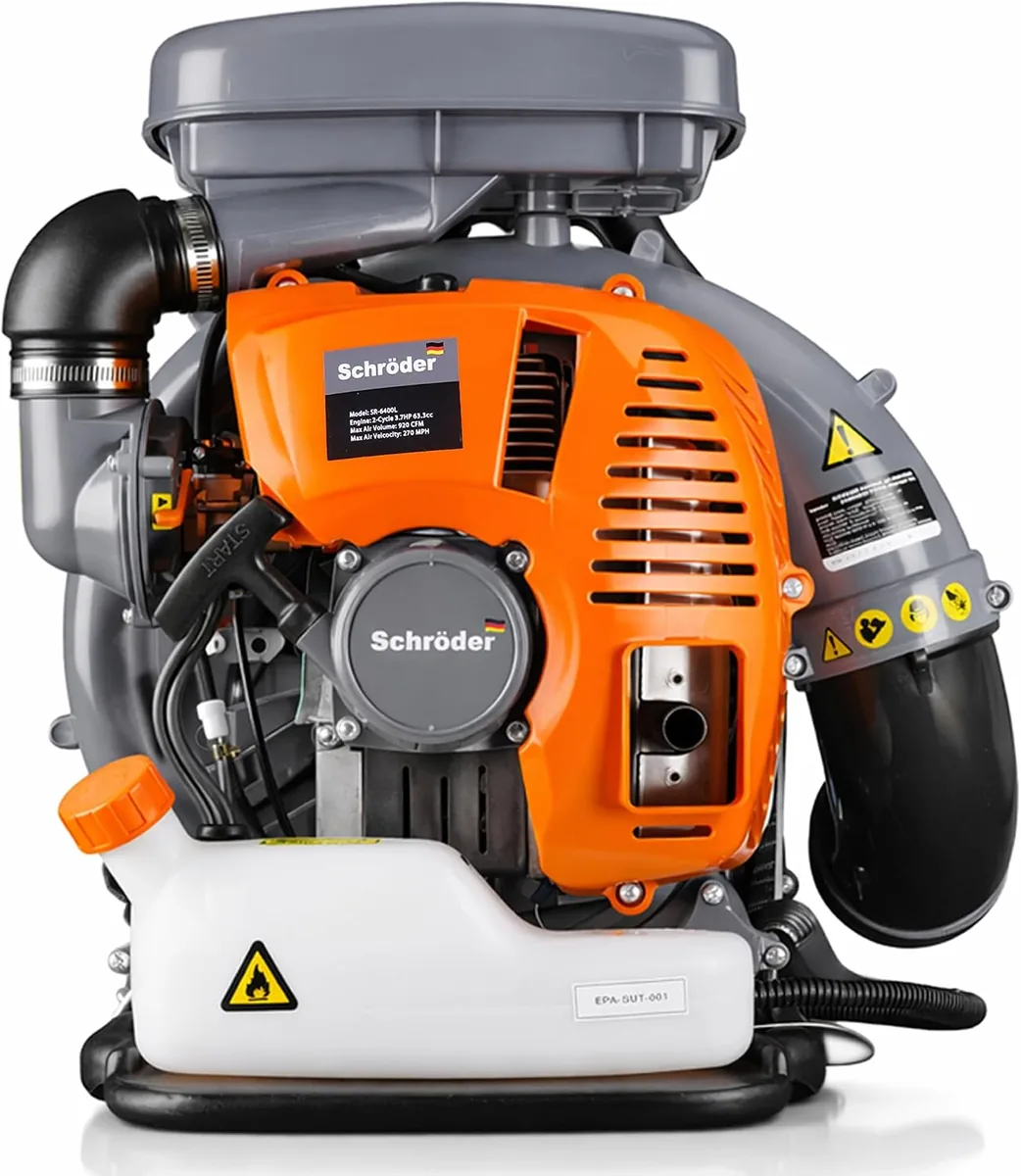
Schroder SR-6400L Gas Backpack Leaf Blower Specs
Key Features:
- Low listed weight: Less to carry leaves more of the afternoon for work.
- 920 CFM from a 63.3 cc engine: According to Schroder, enough volume to roll a long strip of leaves ahead of you.
- 65 fl oz tank: About 1.9 L of mix, so you plan each refuel for the end of a row.
- Reach attachments: According to Schroder, they reach gutters and the space under decks.
- Parts sold one by one: According to Schroder, the carburetor, starter, throttle, filters and spark plug are sold individually, so a repair starts with a part.
The air is the reason to buy it. On the grass alley between the plum rows, the stream was wide enough that I could walk at a steady pace, where my old gas handheld has me stepping back and swinging the tube. Soaked leaves still slow it down, because wet leaves stick by weight and surface tension, and speed alone does not peel them.
The tank takes a 50:1 mix, which Schroder calls typical: about 2.6 fl oz of two-stroke oil per gallon of unleaded gasoline. I mix it in a marked bottle, never by eye, and confirm the ratio in the owner’s manual before the first fill. A wrong mix is the quickest way to ruin any two-stroke.
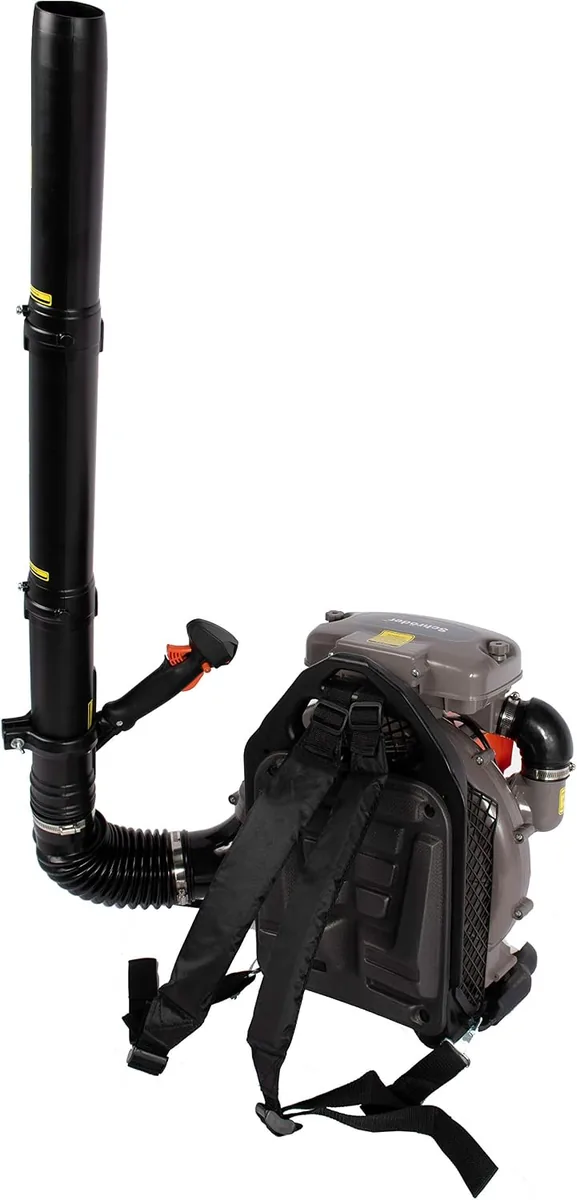
At full throttle the jet threw gravel sideways along the crushed-stone edge of my yard. Drop the throttle, hold the nozzle low and angle it shallow, and keep people, cars and windows out of the debris path.
WHY I CHOSE THIS
Mirko Lekić, Agricultural Engineer & Farm Owner
The SR-6400L gets Best Lightweight from me because the low listed weight comes with real air behind it. On a long job, the machine I can still carry at the end wins. The trade is support and track record: parts and service come by mail and owners report early failures, so I accept that for the lighter frame and skip it for daily crew work.
Plugs and earmuffs go on together from the first minute, because any gas backpack is loud at your ear. Refuel outdoors with the engine stopped and cool, away from sparks and flame, wipe up any spill, and carry the blower well clear of the fuelling spot before you start it, at the distance the manual gives.
Service runs through Schroder USA by phone and email and parts arrive by mail, so I keep a spare spark plug and an air filter in the shed drawer. Owners report early failures, a seized engine and slow support more than anything else, so I register the machine online the day it arrives. According to Schroder, registration takes the warranty from 2 years to 3.
Pick it if you clear half an acre or more, want less weight in the harness and accept mail-order parts and early-failure reports. Skip it if you want a shop to carry the machine to, daily crew work or a small yard where a handheld is easier.
FINAL VERDICT
Choose the SR-6400L if the weight on your back limits a long job and you can live with mail-order support. It moves a wide stream of air for its weight.
It is the light gas backpack for the long alleys.
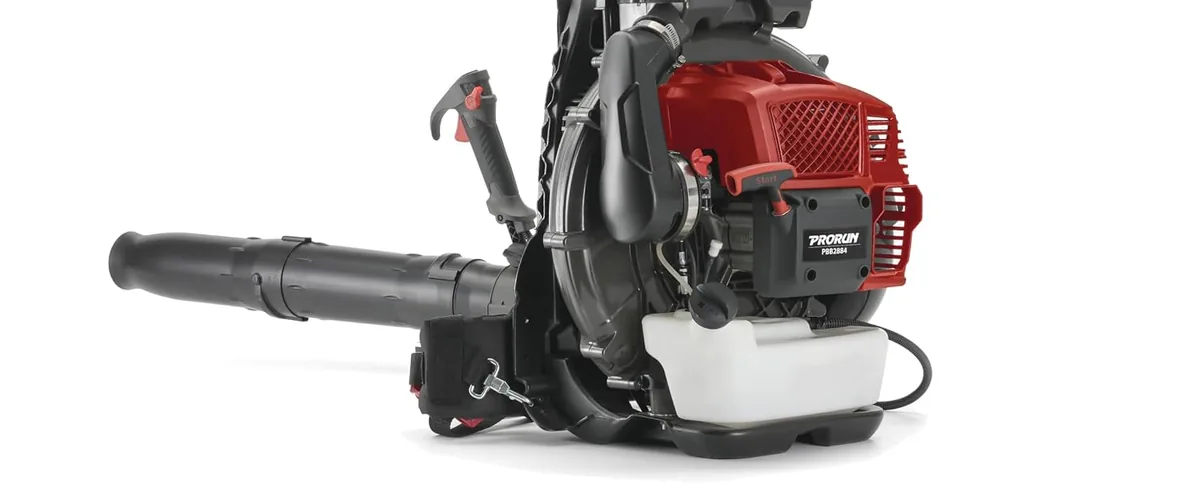
5. PRORUN PBB2884 Gas Backpack Leaf Blower Best Budget
The PRORUN PBB2884 puts 1,020 CFM on your back at the lowest price tier on this page, and it carries the thinnest support record here. According to PRORUN, the 75.6 cc two-stroke reaches 241 mph with the nozzle fitted. It suits a careful owner with a half acre to two acres of leaves who wants force for the money.
PRORUN PBB2884 Gas Backpack Leaf Blower Specs
Key Features:
- Cruise lever: It holds a speed, so your trigger finger rests on a long run.
- Adjustable control handle: It locks in several positions to suit your reach.
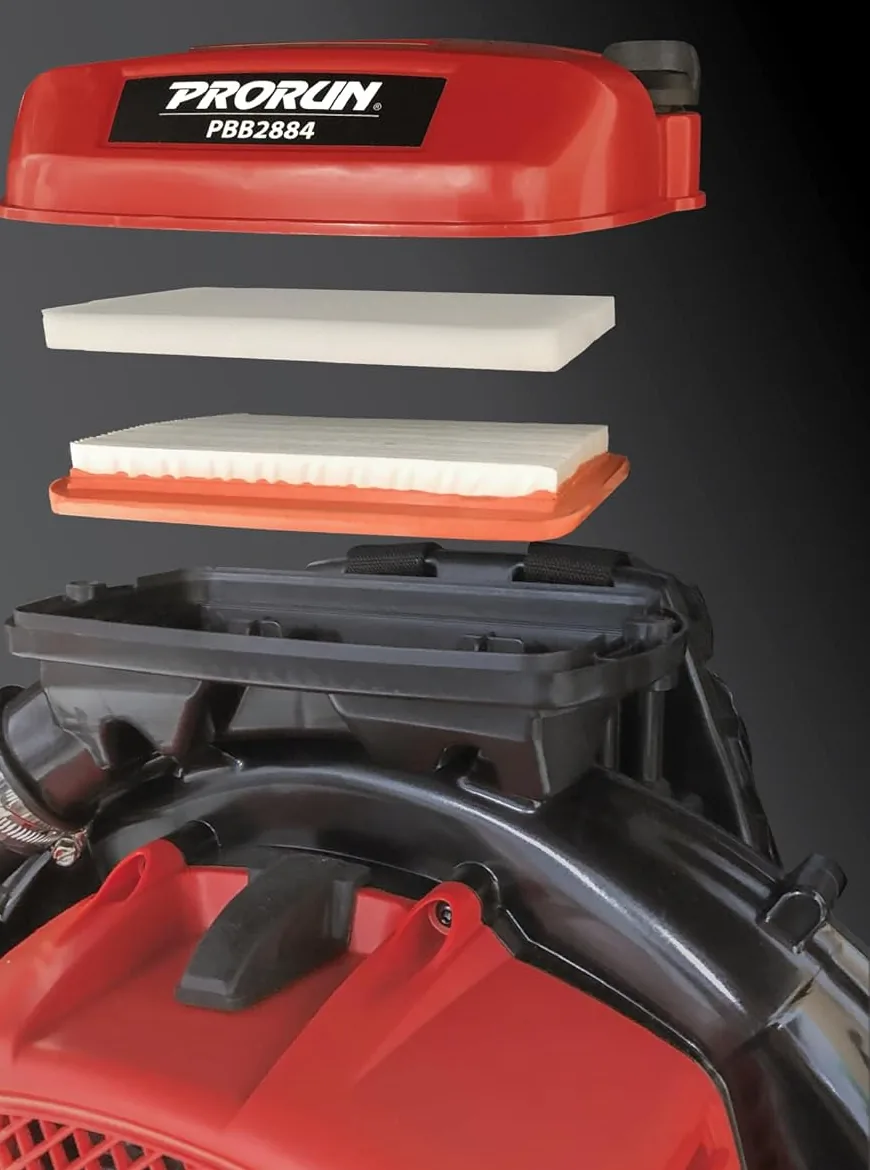
- Tool-free air filter cover: A sponge pre-filter and a paper element sit behind it.
- Spring-assisted starter: According to PRORUN, it takes 40 percent less effort to pull.
- 71 fl oz tank: According to PRORUN, a full tank runs about 70 minutes at full throttle.
On a wet pile of plum leaves by the drainage ditch, full throttle did the work my old handheld only pecked at. Mown clippings along the alley edge go at medium speed. Full throttle belongs to wet piles and heavy dirt.
PRORUN publishes no weight for this blower, and a full 71 fl oz tank adds about 4 lb to whatever it is. Strap it on with the tank full and walk the first alley before you plan a long job. I stop at each fill to check the filter.
According to PRORUN, the warranty is void without a 50:1 mix and fuel stabilizer. Measure 2.6 fl oz of JASO M345 FD or ISO-L-EGD synthetic two-stroke oil into each gallon of unleaded gasoline, add stabilizer, and do it every time.
WHY I CHOSE THIS
Mirko Lekić, Agricultural Engineer & Farm Owner
The PBB2884 earns Best Budget because it brings 1,020 CFM at the lowest price tier here, with a cruise lever and a tool-free filter cover that save time on a long day. The savings show up as thinner paperwork, so read the manual, keep the receipt and mix the fuel exactly. As the best budget backpack leaf blower on this page, I recommend it to an owner who reads the manual first.
Foam plugs under earmuffs, from the first minute: PRORUN rates it at 77 dB at 50 ft, and your ears sit far closer than that. Refuel outdoors with the engine stopped and cool, away from sparks and flame, wipe up any spill, and carry the blower at least 10 ft from the fuelling spot before you pull the starter rope.
Support is where the savings show. PRORUN names authorized service centers and a help line but publishes no dealer count, and owners most often report a blower that will not start, a failed magneto or lost compression after limited use. The Amazon page quotes 3 years residential and 1 year commercial, so ask the help line to confirm it in writing and keep your receipt. After a month in storage I follow the manual’s full starting routine to the letter.
It fits a half acre to two acres, an owner who wants the most force for the money and a careful hand with fuel. Skip it if you want a dealer to carry the machine to, coverage for daily commercial work or a lighter pack for a small frame. In California, confirm the model can be sold there before you order.
FINAL VERDICT
The PBB2884 is the right buy if you want strong air for the least money and will keep the receipt, mix the fuel exactly and confirm the warranty in writing. It suits the owner who accepts a short support record.
It is the budget backpack with force to spare.
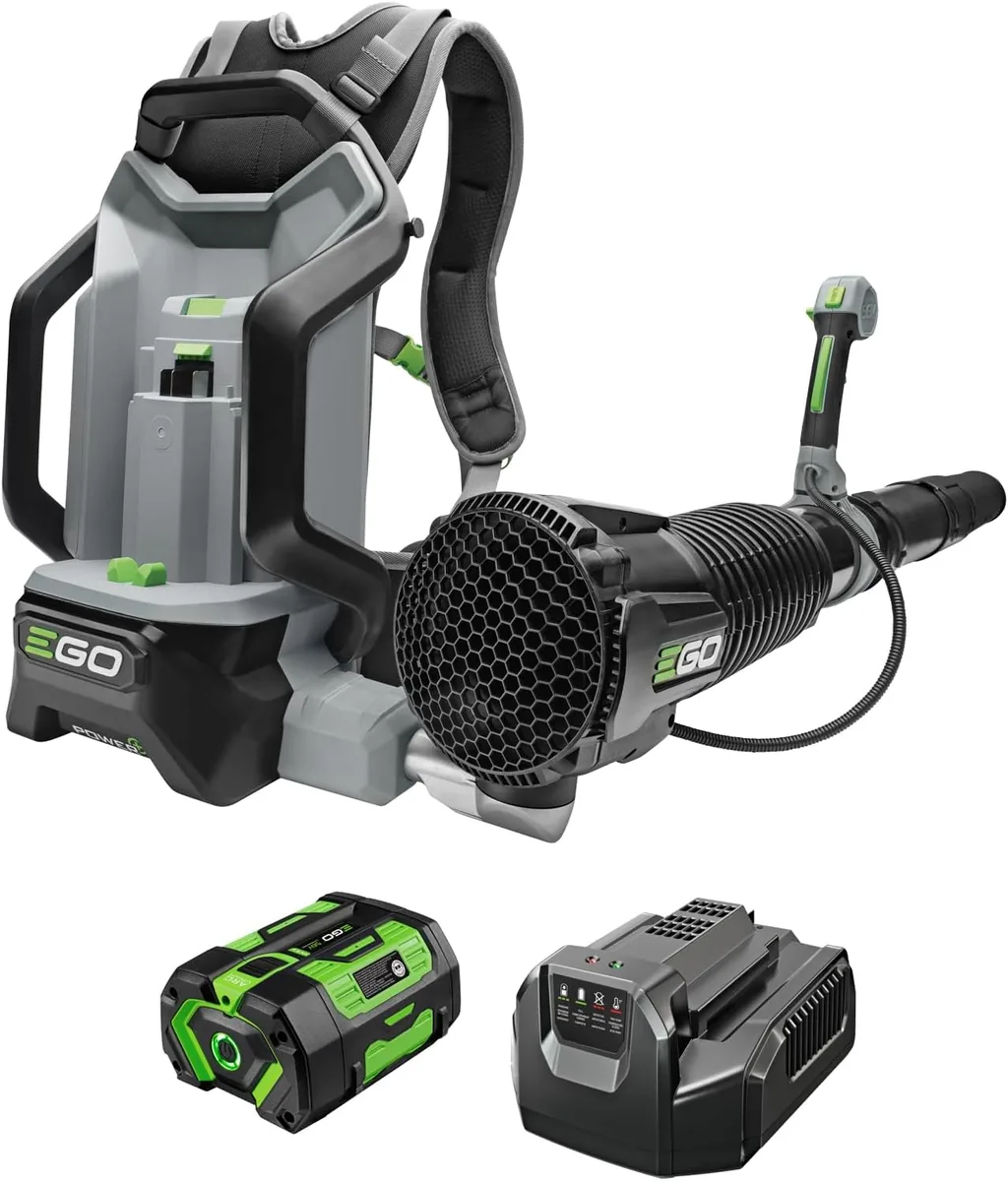
6. EGO Power+ LB6003 600 CFM Backpack Blower Kit Best Battery
A battery makes no exhaust, and that is why the EGO LB6003 is the backpack I carry into the machinery shed. According to EGO, the 7.5 Ah pack in the kit runs about 33 minutes on High, 23 on Boost and 180 on Low. It suits a lawn and yard up to about half an acre where you want quiet and no fuel handling.
EGO Power+ LB6003 600 CFM Backpack Blower Kit Specs
Key Features:
- Lock-on dial: It holds any speed you pick, so you can walk a long stretch without squeezing the trigger.
- Boost button: It jumps to maximum speed and returns to your setting when you let go.
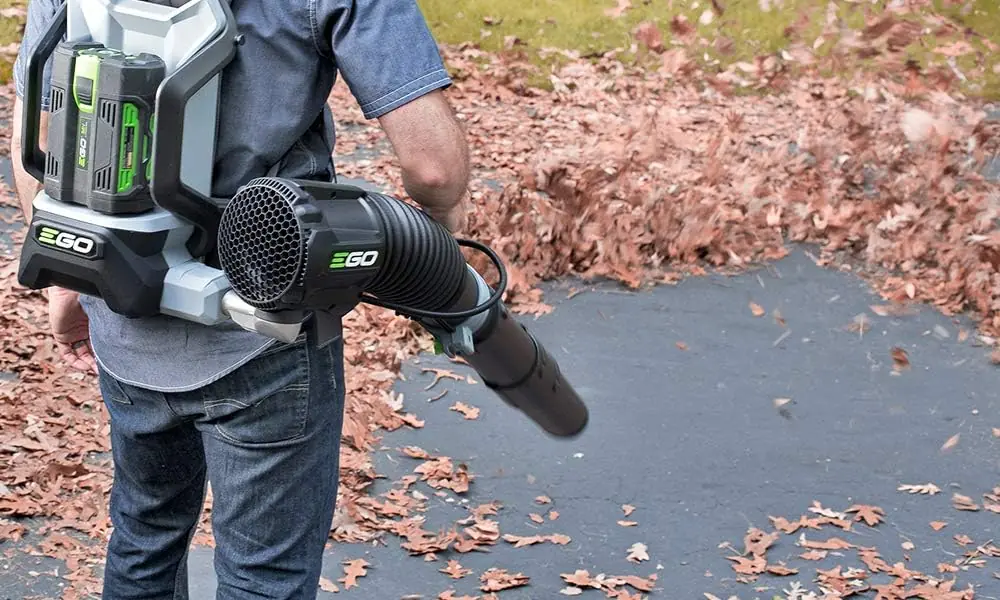
- Pack on the back: The battery rides in the housing, so your hand carries only the tube.
- Adjustable tubes and handle: The handle slides and rotates, and the middle tube locks in different positions.
- Chest buckle and waist belt: EGO says the weight should rest on the waist strap.
On the concrete pad and the gravel yard, dry leaves and needles moved easily. I also sweep the machinery shed floor with it, doors open and a dust mask on, since a battery gives off no exhaust. The limit is push: according to EGO it is 19 newtons, about 4 pounds of force, and a soaked leaf mat behind the tool shed only slid across the ground. Leave wet mats for a dry afternoon or a rake.
The 12.5 lb tool balances on the back, and what surprised me was the forearm: after a long stretch it felt nothing, where my old gas handheld pulls on the elbow. The kit’s standard charger needs 145 minutes to fill an empty pack, so I put it on charge the moment I stop for lunch.
On frost mornings I keep the pack in the house until I start, because cold cuts runtime. Charge it indoors too, since a pack should not be charged below freezing.
WHY I CHOSE THIS
Mirko Lekić, Agricultural Engineer & Farm Owner
Best Battery fits because it is the one blower here I run with no fuel, no pull cord and no exhaust, and EGO backs the tool for 5 years and the battery for 3 on household use. Quiet mornings and a swept shed are worth the shorter runtime to me. I recommend it to the owner whose yard fits a pack or two.
Rain ends the job: EGO rates the blower IPX4, splash only, so I stop when the rain starts. Wear safety glasses with side shields and hearing protection, and keep bystanders 50 ft away.
Keep the air inlet clear, because a blocked inlet cuts air speed, and hang the tubes on the knob on the battery housing. Store the pack at around half charge in a cool, dry place. Turn the dial to off before you pull the pack, or a fresh battery will not start it until you press the trigger. The slow standard charger is the one thing that annoyed me.
Buy it if your lawn and yard run up to about half an acre, you value a quiet start and no fuel handling, or you already own EGO 56V packs. Skip it for acreage, matted wet leaves or daily crew work.
FINAL VERDICT
Take the LB6003 if you want a quiet backpack with no fuel and the job fits in a pack or two. Skip it for acreage and wet leaf mats, where a pack runs flat too soon.
It is the quiet backpack I run without fuel.
7. Echo PB-580T Gas Backpack Leaf Blower Best for Home Use
Under the shade trees on the house lawn, the straight pipes of the PB-580T let me slide the nozzle beneath the lowest limbs and sweep out twigs and seed pods. At 517 CFM it has the air for that and for a lot of up to about three-quarters of an acre, with a 5-year consumer warranty through authorized ECHO dealers. It is the best backpack leaf blower for home use on this page.
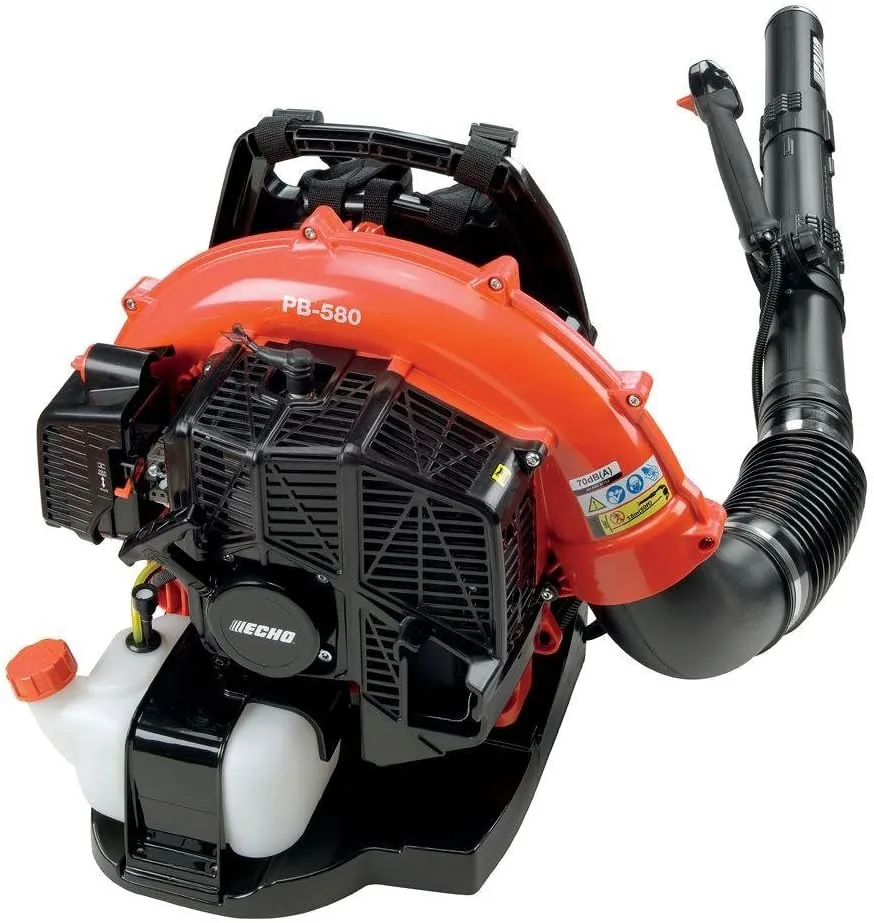
Echo PB-580T Gas Backpack Leaf Blower Specs
Key Features:
- Tube throttle with a cruise lever: Set the lever to hold a speed, and your hand relaxes on a long walk.
- See-through 62 fl oz tank: You read the fuel level at a glance.
- Purge bulb: Press it until fuel shows, then four or five more times, to prime the carburetor.
- Twist-lock Posi-loc pipes: They go together with a clockwise twist and carry a metal wear ring.
- Adjustable harness and back cushion: The straps move for position and angle on your back.
On the lawn after a damp October morning, a low sweep with the nozzle under the leading edge moves the leaves where a high sweep only ripples the top. I set the cruise lever to a low speed and walk. At 22 newtons, roughly 5 pounds of push, it handles leaves, twigs and pods and gives up on a soaked mat.
The tank takes a 50:1 mix of two-stroke oil and 89 octane unleaded gasoline with no more than 10 percent ethanol. ECHO says to mix no more than you will use in 30 days, or 90 with a stabilizer, and I mix by that rule each October.
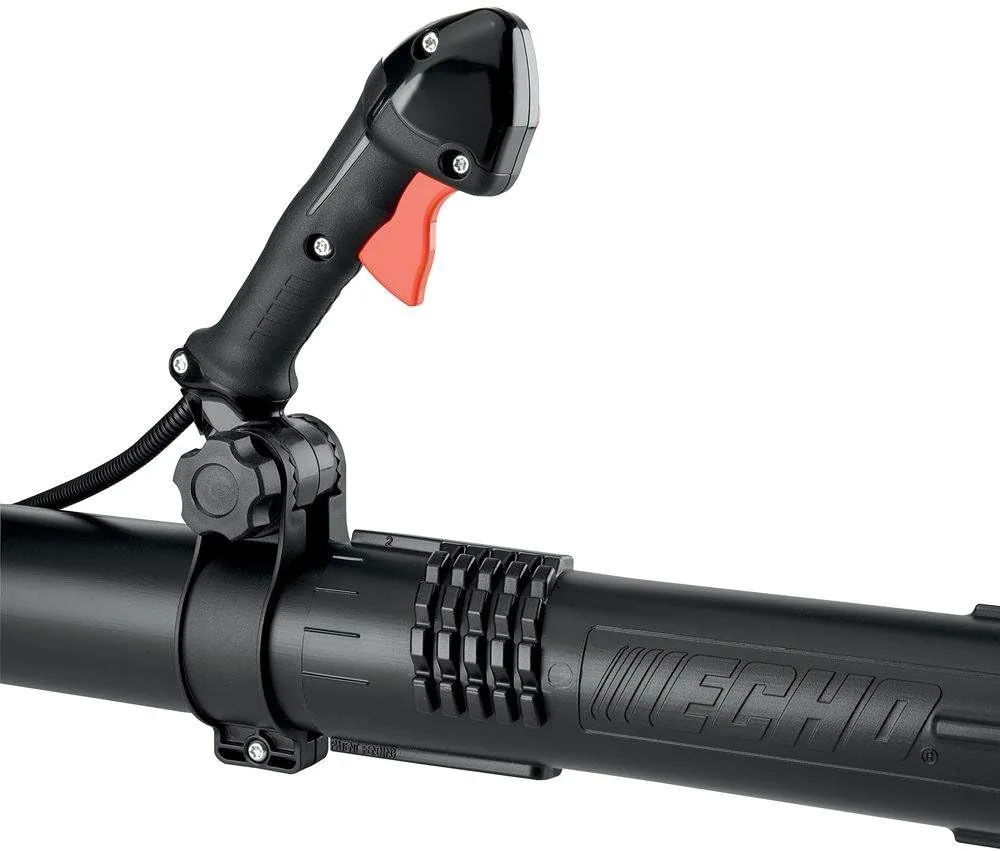
Check the trigger free play before the season: ECHO sets it at 4 to 6 mm, and the cable has an adjustment for when the idle shifts as you move the pipe.
WHY I CHOSE THIS
Mirko Lekić, Agricultural Engineer & Farm Owner
The PB-580T is my home-lot pick because its force suits a lawn, its cruise lever suits a long walk and its warranty suits a homeowner’s seasons, as long as the seller is an authorized ECHO dealer. Size the blower to the yard you have, and the work stays easy on your back and your ears. I keep the cruise lever for the long stretch and the trigger for the corners.
Wear foam plugs and earmuffs together from the first minute: ECHO’s 70 dB(A) rating is measured 50 ft away, and at your ear the engine is far louder. Stop the engine and let it cool before you refuel or clear a jam, refuel away from sparks and flame, wipe up spills, and carry the blower at least 10 ft from the fuelling spot before you start it.
Check the seller and the listing’s return terms before you order. This listing states the item is not returnable, which is separate from ECHO’s warranty: warranty and service run through authorized dealers, and an unauthorized seller can leave you without coverage. Daily upkeep is the usual two-stroke routine: brush the filter and clear the cooling grille.
Buy it if your lot runs up to about three-quarters of an acre with shade trees, you want gas power with ECHO’s dealer network behind it, you mix fuel and the listing’s seller and return terms suit you. Skip it for an acre or more, soaked leaf mats and storm debris.
FINAL VERDICT
Choose the PB-580T for a lawn with shade trees, a cruise lever and a dealer-backed warranty. Check the seller and the return terms before you order, and leave soaked mats for a rake.
It is the gas backpack I keep for the lawn around the house.
How to Choose the Best Backpack Leaf Blower
A backpack blower earns its place over hours, not minutes. I judge each one on the hardest job I give it, the leaves packed under the plum rows after the first autumn rain, and then on my shoulders, my ears and the length of the season. Seven checks decide it.
Force at the Nozzle and Why Housing CFM Misleads
Force, measured in newtons, is the push of the air at the nozzle, and it tracks clearing power better than CFM or MPH alone. One newton is about 0.225 lb, so 30 N is about 6.7 lb of push against your hand and 48 N is about 11 lb. The backpacks on this page list 19 to 48 N.
Housing CFM is the air inside the fan case, not the air that leaves the pipe. On the packs that list both, the housing figure runs about 40 percent above the pipe figure, and the top air speed often needs a narrow nozzle that cuts the airflow. I judge a blower by the leaf mat it lifts off the gravel strip, not by a number on the box.
| Push at the nozzle | In pounds | What it handles |
|---|---|---|
| About 20 N | About 4.5 lb | Dry leaves, pruning twigs and hard surfaces |
| About 30 N | About 6.7 lb | Wet leaves in a thin layer, gravel and a big lawn |
| 40 to 50 N | 9 to 11 lb | Thick wet mats, storm debris and an acre in fewer passes |
A thin stream at high MPH skims the top of a wet mat and leaves the bottom layer stuck to the ground. Volume pushed under the leading edge moves the mat, so do not shop by MPH alone.
Pro Tip
Ask which nozzle a CFM or MPH figure belongs to. When a maker prints no newtons, treat those two numbers as a rough guide for that nozzle only.
Gas or Battery on Your Back
Gas gives the most push and keeps working as long as you have fuel: you stop, refill and carry on. A battery backpack suits a yard near the house, and the best electric backpack leaf blower there is the one whose pack finishes the job on one charge.
- Gas: 21 to 48 N, a fuel mix to measure, hot exhaust and the loudest sound at your ear.
- Battery: the one battery pack here lists 19 N, needs no mix and makes no exhaust, and runs about 33 minutes on high from a 7.5 Ah pack, according to the maker.
- Closed spaces: never start a gas engine in a shed or garage, because its exhaust carries carbon monoxide.
In NIOSH sampling of 80 landscaping workers, those running fuel-powered leaf blowers, trimmers and chainsaws had significantly more noise and carbon monoxide exposure than workers using battery versions (1). Inside my machinery shed I do not run an engine at all.
For acres and wet piles, the best gas backpack leaf blower is the one whose push, harness and tank suit your longest job. Pick for the hardest job, not the average one.
Key Takeaway
The one battery pack on this list, my pick for the best battery backpack leaf blower, lists 19 N against 21 to 48 N for the gas packs. You trade push for no exhaust and less noise.
Tank Size, Fuel Mix and Engine Type
Tank size and fuel burn decide how often you stop. The tanks on this page hold 42 to 84 fl oz, a full tank adds 2 to 4 lb to your back, and engine size changes fuel burn as much as tank size does, so a bigger tank does not promise a longer run.
| Tank | Fuel weight on your back |
|---|---|
| Around 42 fl oz | About 2 lb |
| 62 to 74 fl oz | About 3 to 3.5 lb |
| Around 84 fl oz | About 4 lb |
The gas makers here mostly publish no runtime per tank, so time your first tank and plan long jobs from that number. The fuel is a 50:1 mix of unleaded gasoline with no more than 10 percent ethanol and two-stroke oil, which is about 2.5 fl oz of oil per gallon. Mixed fuel goes stale, and the manuals I read say to use it within about a month. I mix one month of fuel at a time in a measured bottle.
Oil changes what leaves the exhaust too. In bench tests of a portable two-stroke engine, carbon-based particles made up 85% of the particulate mass, and changing the oil brand cut total PAH concentrations by 46% and 60% against the baseline oil (2). Use the oil grade the maker names, and measure small batches with care, because a small error in a small batch changes the ratio sharply.
A four-cycle engine runs on plain gasoline with oil in a small sump, so there is no mixing. If mixing is the chore you hate, the best 4 cycle backpack leaf blower is a different list from this one, because none of these seven is a four-cycle engine. Whatever you buy, use only the fuel and oil the manual names.
Weight, Harness and Throttle Position
Listed dry weights on the gas packs here run from about 20 lb to about 27 lb, and a full tank adds 2 to 4 lb. The best lightweight backpack leaf blower still puts an engine and fan on your back, so the harness matters as much as the scale.
In a lab test of twelve ways to carry a load, mechanical factors explained 85% or more of the variation in discomfort, including strap force and contact pressure at the shoulders and hips (3). Where the straps press on the shoulders and hips shapes how the load feels, so the straps are worth a close look.
- Hip belt and chest strap: the manuals say to keep the weight on your hips, so a hip belt matters, and some kits ship with shoulder straps only. Read the box list.
- Padded, ventilated straps: wide straps spread the load, and a vented back pad lets air move across your back in summer.
- Throttle position: a tube-mounted trigger with a cruise lever holds a set speed, and a hip-mounted throttle arm with a stick handle puts the control at your side.
- Adjustable control handle: it should slide and lock so your arm hangs relaxed.
I set the straps before the first pull and again after the first tank, because a harness settles on the body. I also check that the belt and chest buckles release fast, since the manuals tell you to drop the unit in an emergency.
Noise at the Ear and What Protects Your Hearing
Makers declare noise in different places. Some print a figure at the operator’s ear, 94 to 95 dB(A) for the gas packs that give one. Others print a bystander rating at 50 ft, 70 to 79 dB(A) here, and some print none. Never set an ear number beside a 50 ft number, because they describe different places and different people.
NIOSH recommends 85 dBA averaged over an eight-hour day and halves the allowed time for every 3 dBA more (4).
| Sound at your ear | Daily time at the limit |
|---|---|
| 85 dBA | 8 hours |
| 88 dBA | 4 hours |
| 91 dBA | 2 hours |
| 94 dBA | 1 hour |
| 97 dBA | 30 minutes |
| 100 dBA | 15 minutes |
| 103 dBA | About 7 minutes |
Grounds crews live above that line. Among groundskeepers at North Carolina public universities, covering all their grounds equipment, 77% of the daily noise averages exceeded 85 dBA (5). In a test of agricultural backpack machines, noise passed 100 dB(A) for every unit except one blower with its exhaust routed inside the hose, which stayed below 86 dB(A) (6).
Earplugs help only when they fit. A Cochrane review notes that poor earplug fit may limit protection for about 40% of users (7). I seat foam plugs and put earmuffs over them from the first pull, and I check the fit again at every refuel.
Safety First
Wear plugs and earmuffs together from the first minute, plus eye protection and a dust mask in dusty work. Keep people, pets, windows and cars out of the debris path. Stop the engine and let it cool before you refuel, then move the blower away from the fueling spot before you start it.
Neighbors hear it too. Some cities limit gas blowers by season, hour or sound level at 50 ft, so check your city, county and HOA code before you buy.
Vibration and Hours on the Handle
The control handle shakes your hand for as long as the engine runs. In a field test with ten subjects, backpack blowers transmitted a median hand vibration of about 1.7 to 2.9 m/s2, and the authors tie the risk to the hours of daily use (8). Makers who publish a handle figure list about 2 to 2.5 m/s2.
- Break up long sessions: stop at each refuel and let your hand rest.
- Keep the grip firm: hold the handle without squeezing, because a tight grip tires the hand sooner.
- Check the dampers: one manual asks for the vibration damping units to be checked weekly for cracks.
- Know the warning signs: numbness or tingling in your fingers means stop and see a doctor.
I stop at every refuel and open my hand for a minute, and I keep my grip firm without squeezing.
Service, Parts and Warranty for Home or Farm Use
A gas blower needs filters, plugs and the odd fuel line over its life, so the nearest dealer and the parts catalog matter as much as the force. Commercial use asks more of a backpack than a home lot does: more hours per day, a dealer you can reach and a commercial warranty term. The best commercial backpack leaf blower meets all three, so check them before you compare power.
| Use | Terms makers state | What to check |
|---|---|---|
| Home use | 2 to 5 years | Who sold the unit and whether the maker honors it |
| Farm or income-producing use | 1 to 2 years | Check if your work counts as agricultural |
| Emissions parts | 2 years | Carburetor, ignition, fuel tank and lines, filters and plug |
I read the farm line of a warranty first, because an orchard is farm work and the home term may not cover it. Some makers cover only units sold by their authorized dealers, so ask who the seller is and keep the receipt.
- Parts: filters, spark plugs, harness parts and tubes should be easy to order by model number.
- Service: a dealer within driving distance beats a mail-in repair in the middle of leaf season.
- Manual: a posted operator’s manual with the fuel ratio and the plug type is a good sign.
Before You Order
Look at who sells the unit and whether it can be returned before you click. A warranty that needs an authorized dealer does not cover a unit sold outside that network.
Backpack or Handheld in Orchard Rows and Around a Farm
Under my plum and apricot rows the leaves come down mixed with pruning twigs, dust and the odd fallen fruit. A backpack earns its weight once a single pass is longer than your arm lasts, and the best backpack leaf blower for large yard work is a harness machine, not a bigger handheld.
| Job | Backpack | Handheld |
|---|---|---|
| Wet leaves under the plum rows | Rolls the mat out to the alley in fewer passes | Tires the arm before the row ends |
| The long alley between rows | Carries the weight on the back all the way | Fine for a short stretch |
| Path to the house and the concrete pad | More machine than the job needs | Enough, and quick to grab |
| Pruning sawdust and twigs in late winter | Works at low throttle | Works, with a dust mask |
| The dusty machinery shed | Never with a gas engine | A battery or corded model only |
Some ground I do not blow at all. Fast air strips mulch from young drip lines and tree bases, scatters the cover-crop seed after the October sowing and packs grit into emitter ends, so I rake there. Fallen and rotten fruit I pick up and carry out, because blowing only spreads it.
For the short jobs around the house, start with the leaf blower guides and pick a handheld that fits the path to the door.
Running a Gas Backpack Blower Season After Season
A gas backpack costs more than its sticker price. Fuel, oil, filters and a plug come back every season, and a battery model asks for a spare pack once the job runs past one charge. Count the upkeep along with the price.
| Factor | Gas backpack | Battery backpack |
|---|---|---|
| Starting | Choke, purge bulb and pull cord | Trigger and dial |
| Each season | Air filter, spark plug, fuel lines, arrestor screen | Clear the intake and look after the pack |
| Storage | Empty the tank or treat the fuel | About half charge, indoors |
| Cold weather | One manual sets a limit near 15 F | Cold shortens the runtime |
| Cost over seasons | Mid-range to premium up front, then fuel and parts | Premium up front, then a spare pack |
- Before each session: check the air filter, because orchard dust loads it faster than lawn work does.
- On the schedule in your manual: clean the spark arrestor screen and check the plug. One manual asks for the screen weekly and another every three months, so follow yours.
- At every refuel: stop the engine and let it cool, fuel outdoors, then carry the blower away from the fueling spot before you start it. Some manuals give 10 ft as the minimum, so follow yours.
- Before winter: empty the tank, press the purge bulb and put a small measure of two-stroke oil in the cylinder, as the manual says.
I check the filter before every session on the dusty days, and I never start a gas engine in the shed. A battery pack stores best at about half charge, away from the cold, and it should not be charged when it is frozen.
My Overall Verdict
Three of the seven stand out, and the order depends on the push you need and the weight your shoulders will carry.
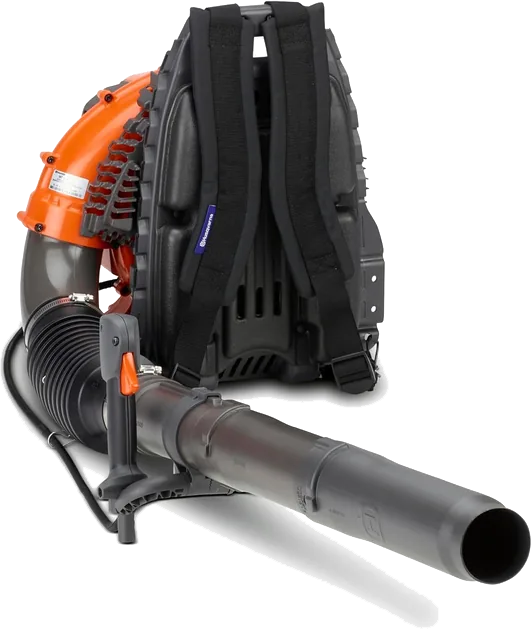
1. Husqvarna 360BT Gas Backpack Leaf Blower Best Overall
Best for half an acre to two acres of wet leaves, with 30 N of push at 23.2 lb dry.
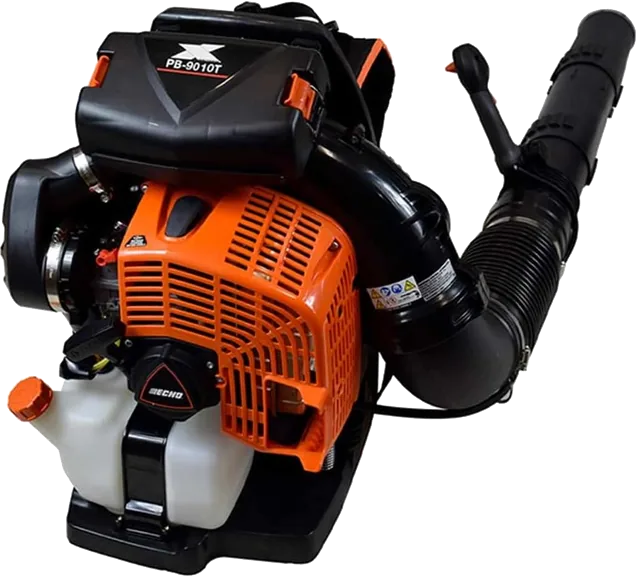
2. Echo PB-9010T Gas Backpack Leaf Blower Best Premium
Best for an acre or more of thick wet mats, with 48 N, the most push on the list.
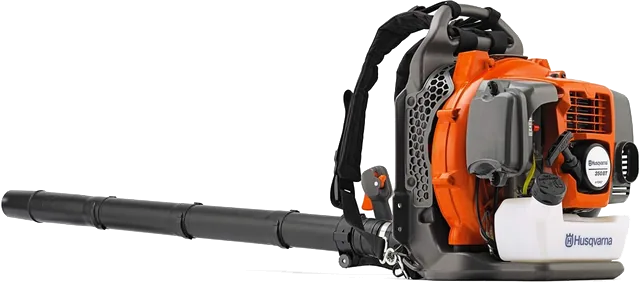
3. Husqvarna 350BT Gas Backpack Leaf Blower Best Value
Best for owners who want a hip belt and a lower price, with 21 N at 22.5 lb dry.
On my land the choice comes down to what my shoulders carry through a long alley. The Husqvarna 360BT Gas Backpack Leaf Blower balances 30 N of push against 23.2 lb, and if you match push and harness to your longest job, you have the best backpack leaf blower for your yard.
Why Husqvarna 360BT Gas Backpack Leaf Blower Might Be the Best Choice
The Husqvarna 360BT Gas Backpack Leaf Blower is my best overall because it puts 30 N of push on your back at 23.2 lb dry. I pick it for my plum and apricot alleys, where I need force to roll a wet mat out from under the canopy and a tank that lasts. Owners also rate it among the best rated backpack leaf blower models on this list.
The trade-off is upkeep and noise. The manual asks for a daily filter check, a weekly spark arrestor screen and fresh fuel each month, and Husqvarna declares 95 dB(A) at the operator’s ear, so plugs and earmuffs go on before the first pull.
Here is what puts it at the top:
✓ Push: 30 N at the nozzle, according to Husqvarna, which is about 6.7 lb against your hand.
✓ Airflow: 631 CFM in the pipe at 232 mph, according to Husqvarna, while the 890 CFM you may see quoted is the housing figure.
✓ Weight: 23.2 lb dry and about 26.7 lb with a full tank.
✓ Tank: 74.4 fl oz, the second largest on this list.
✓ Engine: a 65.6 cc two-stroke that runs on a 50:1 fuel mix.
Frequently Asked Questions
What is the best backpack leaf blower?
The Husqvarna 360BT is the best backpack leaf blower for most big yards, because it puts 30 N of push on your back at 23.2 lb dry. I pick it for that balance of force and weight and for its 74.4 fl oz tank, and I wear plugs and earmuffs from the first pull.
What backpack leaf blower has the highest CFM?
The Echo PB-9010T has the highest CFM of the backpack blowers here, at 1,110 CFM, and it also has the most push, 48 N of force. Compare newtons across brands, because one maker prints a housing CFM about 40 percent above the air that leaves the pipe, and the push tells you more than either CFM or MPH.
Should I get a backpack or handheld leaf blower?
Get a backpack leaf blower when one pass is longer than your arm lasts, such as a long alley, an acre of leaves or a wet mat, because the harness moves the weight from your wrist to your back. A handheld is enough for a path, a patio and a small lawn.
Is it better to have more MPH or cfm in a leaf blower?
More CFM is better than more MPH for most yard work, because air volume is what lifts and rolls a pile of leaves. MPH helps peel stuck debris off hard ground, so read the newtons, which blend both numbers into one push, and pick the model with the most push you can carry.
Who makes the best backpack leaf blower?
Husqvarna and Echo make the three top-ranked backpacks on this list, and both sell and service through authorized dealers. The right maker for you is the one with a dealer close to your door, because parts and service in leaf season count as much as any spec sheet or label.
References
- Alexander BM, Graydon PS, Pena M, Feng HA, Beamer BR. Hazardous exposures and engineering controls in the landscaping services industry. Journal of Occupational and Environmental Hygiene. 2025;22(3):189-202.
- Tsai JH, Chen YR, Chen SJ, et al. Characteristics of Emissions from a Portable Two-stroke Gasoline Engine. Aerosol Air Qual. Res. 2020;20(3):630-642.
- Wettenschwiler PD, Lorenzetti S, Stämpfli R, Rossi RM, Ferguson SJ, Annaheim S. Mechanical Predictors of Discomfort during Load Carriage. PLoS ONE. 2015;10(11):e0142004.
- National Institute for Occupational Safety and Health. Noise-Induced Hearing Loss. Noise and Hearing Loss. Centers for Disease Control and Prevention; 2024.
- Balanay JAG, Kearney GD, Mannarino AJ. Assessment of Occupational Noise Exposure among Groundskeepers in North Carolina Public Universities. Environ Health Insights. 2016;10:83-92.
- Calvo A, Preti C, Caria M, Deboli R. Vibration and Noise Transmitted by Agricultural Backpack Powered Machines Critically Examined Using the Current Standards. IJERPH. 2019;16(12):2210.
- Morata TC, Gong W, Tikka C, Samelli AG, Verbeek JH. Hearing protection field attenuation estimation systems and associated training for reducing workers’ exposure to noise. Cochrane Database of Systematic Reviews. 2024;5(5):CD015066.
- Alamin Gabasa SA, Md Razali KA, As’arry A, Abdul Jalil NA. Vibration Transmitted to the Hand by Backpack Blowers. IJAME. 2019;16(2):6697-6705.
Safety Note: Leaf blowers throw debris and can damage your hearing. Wear eye and ear protection, read the manufacturer’s manual, and check your local rules on noise and operating hours.