
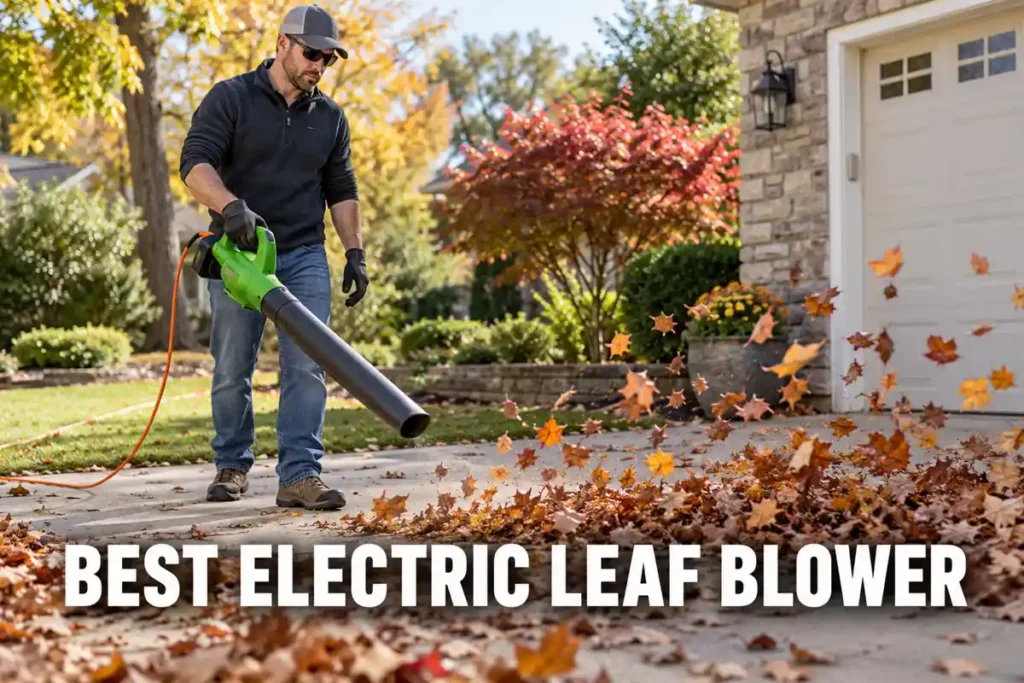
The best electric leaf blower is the one whose power reaches your leaves, and with a plug-in tool that means a cord long enough to get there. I run a cord from the outlet on my house wall across the shed apron every autumn and carry battery packs out to the orchard rows, so I know where each kind stops.
Affiliate Disclosure: Garden Power Scout is a proud participant in the Amazon Services LLC Associates Program. As an Amazon Associate, we earn from qualifying purchases, at no extra cost to you.
Below are the nine electric blowers I recommend, four on a cord and five on a battery, and my top pick is the WORX WG520 12-Amp Turbine Corded Leaf Blower. The buying advice after the list covers cord gauge, amps, weight and noise.
Best Electric Leaf Blower Reviews 2026 With 9 Corded and Battery Models I Rank for Real Yards
Four of these blowers plug in and five run on a battery, from a 4 lb sweeper to a 19 lb backpack. Each block says what is in the box, since one of the nine is a bare tool with no battery and no charger, and each names who should skip it.
1. WORX WG520 12-Amp Turbine Corded Leaf Blower Best Overall
On the concrete apron in front of my machinery shed, the WG520 does the work my old gas handheld did, with no fuel mix and no pull cord. According to WORX, the fan moves up to 600 CFM from a 6.4 lb body that one hand steers, the most air of any plug-in blower in this ranking. It is my pick for a yard where an outlet sits within a cord’s reach of the work.
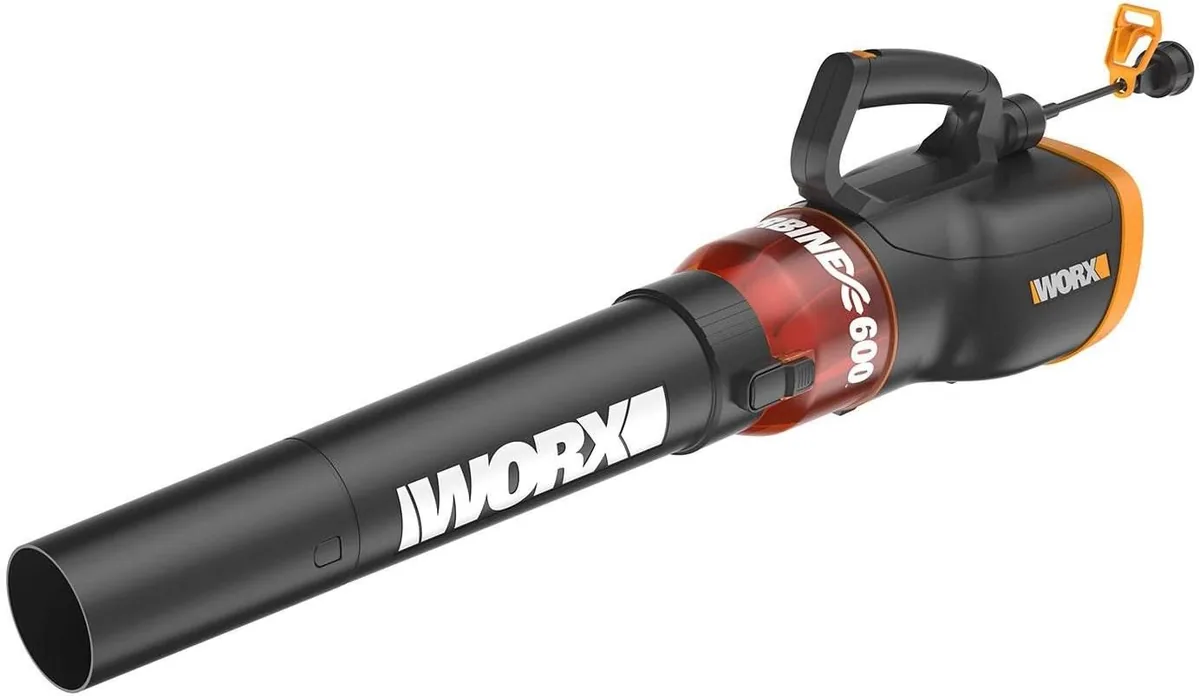
WORX WG520 12-Amp Turbine Corded Leaf Blower Specs
Key Features:
- Variable speed dial: The air runs from 320 CFM up to 600 CFM, so you can turn it down for dust and open it up for a slab.
- Rear air intake: Air enters at the back and leaves straight down the tube, so the push runs along the handle and one hand steers.
- Tapered tip: The tube narrows at the end, which tightens the stream for packed grit along a wall or in a seam.
- Cord retainer: A hook on the back holds a loop of your extension cord, so a tug on the cord does not pull the plug.
- 12-amp motor: It starts at the switch with no warm-up, no choke and no charge to check.
- Tool-free tube: The two sections snap together by hand, so the blower is ready in minutes.
- Double insulation: A second layer of insulation guards your hand if the motor develops a fault.
Dry leaves, grit and chaff roll off the slab as one wide ribbon at full speed. I keep the tube 3 to 8 inches above the concrete and sweep in wide arcs, advancing slowly with the pile moving ahead of me. A high tube only scatters the pile, so I keep it low. WORX’s manual says not to use the blower on wet surfaces, so I start only after the slab has dried and leave a soaked mat of leaves for a dry day.
The cord sets how far this blower works, and the manual spells out the rule for a 12 amp tool: an outdoor-rated extension cord of 16 AWG up to 50 feet, 14 AWG up to 100 feet and 12 AWG up to 150 feet. A thin cord also costs power. Going by the resistance of copper wire, 100 feet of 14 AWG drops the voltage at the blower by about 5 percent of the 120 volts, which is roughly 73 watts of heat in the cord, and 100 feet of 16 AWG drops it by about 8 percent, roughly 116 watts. That power never reaches the fan, and a 12 amp motor feels the loss more than a 7 amp one, so buy the gauge for the length.
Late winter brings a second job. After I cut pruning wood to length at the bench, sawdust and bark chips lie over the concrete floor of the workshop. I expected to need full speed, but the low end of the dial, 320 CFM, rolls the sawdust and raises a smaller cloud, with the door open so the air carries it out. A plug-in motor leaves no exhaust in a closed room, but the dust hangs a long time, so I wear a dust mask and eye protection, and the bark chips still need a broom.
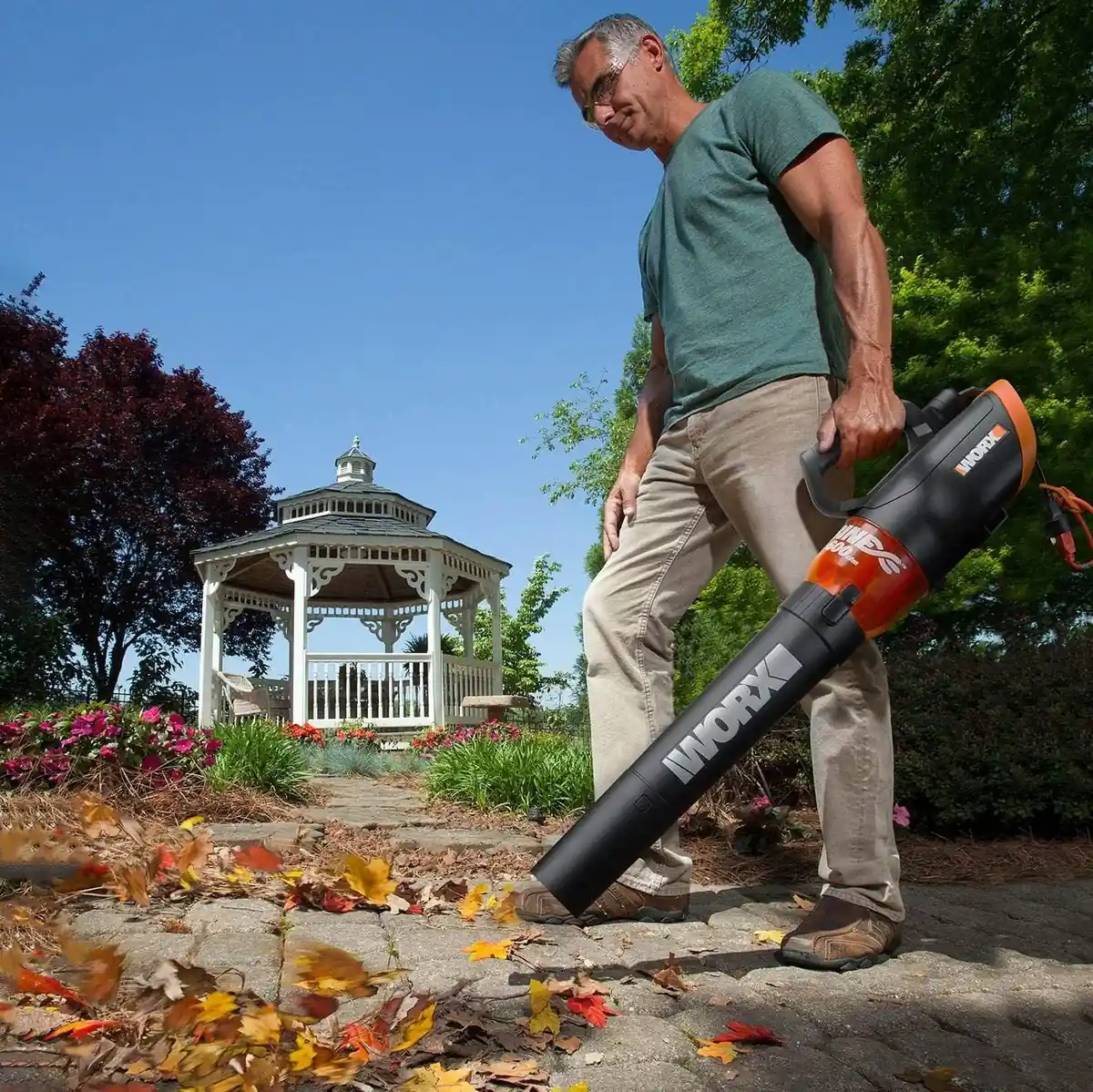
Loop the extension cord through the rear retainer and work away from the outlet with the cord behind you on ground you have already cleared, so it never drags through the pile. Unplug the blower before you touch the tube.

WHY I CHOSE THIS
Mirko Lekić, Agricultural Engineer & Farm Owner
I named the WG520 Best Overall because 600 CFM, a speed dial and a 6.4 lb body arrive with nothing to charge, fuel or replace. Read the label as best overall for a yard you can reach with a cord. That makes it the best corded electric leaf blower I can recommend to most owners of a house and a shed, and a 3-year limited term backs it if you register within 30 days.
Use an outdoor-rated extension cord at the gauge the manual gives for your length, and look it over for cracks before every job. Keep the blower and the cord off wet ground, and never run it in the rain.
A plug-in blower at full speed is loud, and WORX’s manual requires hearing protection, so I wear hearing protection and eye protection whenever it runs. At full speed the body also tries to twist in the hand, which is why I keep the dial near the middle for a long pass. Upkeep is a damp cloth and mild soap, never a spray, because the bearings are self-lubricating. Next to the cordless handheld I keep for the lawn, it never goes flat halfway across the apron, and I pay for that with the length of the cord.
Choose it when your leaves, dust and sawdust lie within a cord’s reach of an outlet, from the house wall to the shed and the workshop floor, and you want strong air with nothing to charge or fuel. It suits an owner who values one-hand control and unlimited minutes. Skip it for the orchard rows and any ground far from an outlet, for wet ground, where the manual says not to use it, and if you want a quiet tool.
FINAL VERDICT
Up to 600 CFM, unlimited minutes and one-hand handling come with nothing to charge or fuel, and the cord is what you pay for that. Walk the distance from the outlet to your farthest leaves before you buy.
It is the one to buy when that walk stays inside 150 feet.
2. Husqvarna 350iB Leaf Blaster Battery Blower Kit Best Premium
The 350iB is the cordless blower I take to the gravel yard, where a cord would drag across the stones and a cruise control button holds the airflow while I walk. According to Husqvarna, the round nozzle gives it peak ratings of 800 CFM for airflow and 200 mph for air speed, and the kit holds a 7.7 Ah battery and a charger. It is a homeowner’s blower for lawns, paths and drives, and the premium pick on this page for its push and its controls.
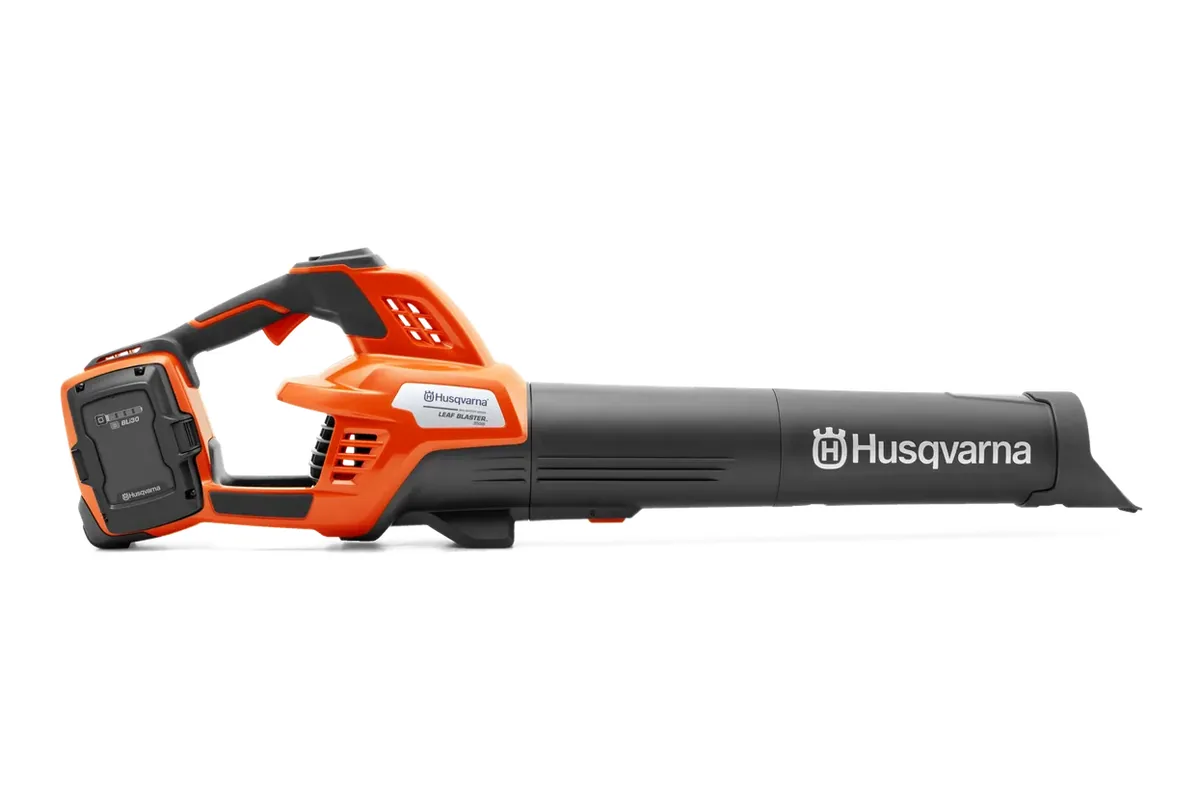
Husqvarna 350iB Leaf Blaster Battery Blower Kit Specs
Key Features:
- Cruise control button: It holds the airflow you set with no trigger pulled, which spares your finger on a long driveway pass.
- Power boost button: It gives a short burst of maximum airflow and drops back when you let go, so you spend battery minutes only where debris is stuck.
- Variable-speed trigger: You can lower the air beside gravel and flower beds, then squeeze for the open lawn.
- Round high-speed nozzle: It fits on the lower tube and raises air speed for packed grit and seams.
- Scraper tool: It loosens stuck leaves and debris before you blow, which helps on damp mornings.
- Charger in the box: The 250 W charger refills the battery in about 70 minutes.
- Brushless motor: It runs on the battery alone, with no fuel mix, no pull cord and no exhaust.
I fit the round nozzle for the seam between the concrete slabs by the shed, where a fast, narrow stream digs the packed grit out. Husqvarna’s manual names lawns, paths and asphalt as the jobs, and dry leaves, dust and gravel grit are where this blower is at home. A flat mat of soaked leaves is slower work, so I pull the scraper tool over the stuck edge first and blow after. Next to the corded blower in my workshop, I gave up unlimited minutes and gained a gravel yard with no cord to snag on the stones.
According to Husqvarna, the battery gives about 45 minutes on the normal mode. On the highest standard setting it lasts about 37 minutes, and on boost about 14 minutes, so boost drains the pack roughly two and a half times as fast as high. I treat boost as a pulse for the stubborn corner and let the trigger or the cruise control do the rest. Charging takes about 70 minutes on the charger in the box, so one battery means one session and a wait.
Late-autumn mornings test any battery. The manual allows use down to 14 F, and a warning light on the battery flashes when it is too cold or too hot. On frost mornings I keep the battery in the house until I walk out to the machinery shed, so the first minutes are not lost to a cold pack. One battery will not cover the orchard rows in a single session, so I use this blower on the yard, the drive and the paths.
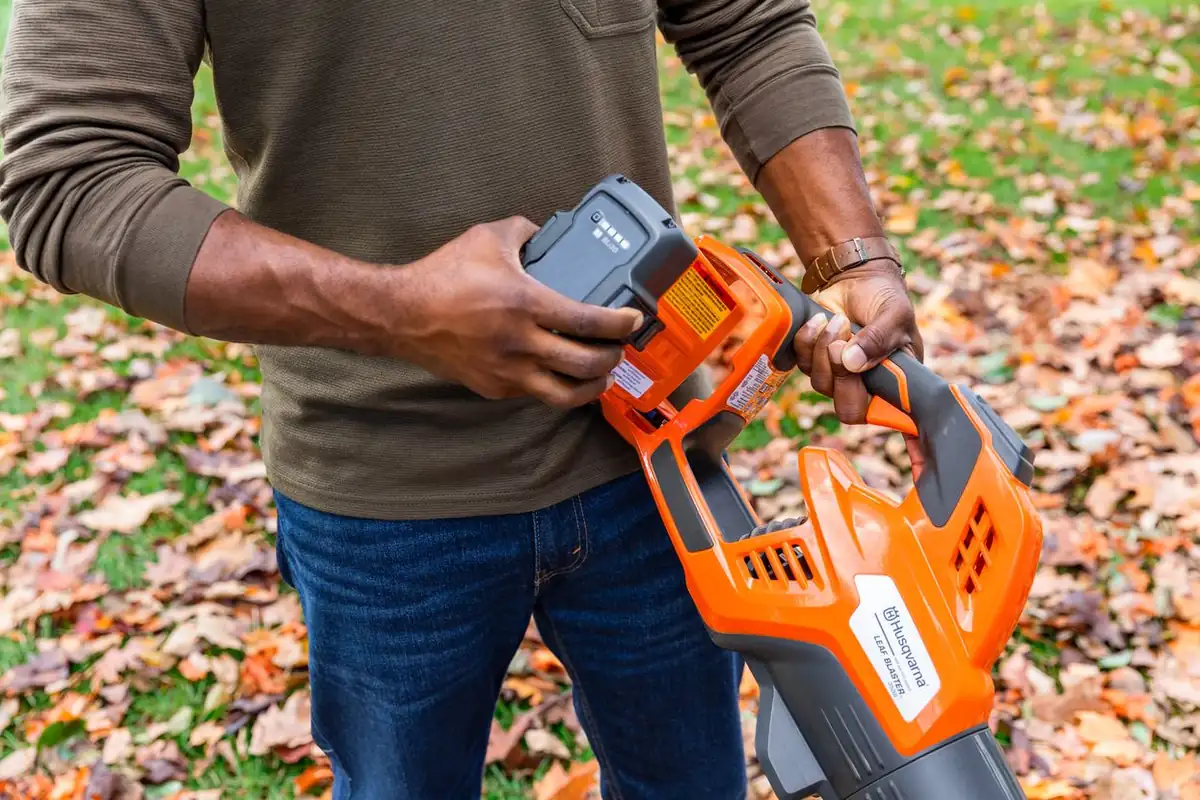
Set the cruise control to a middle level for the long pass and press boost only where the debris is stuck. Letting go of boost drops the airflow back to your setting, so the battery minutes go only to the corner that needs them.
WHY I CHOSE THIS
Mirko Lekić, Agricultural Engineer & Farm Owner
I call the 350iB Best Premium because a cruise control button, a boost button and a round nozzle put controls on a handheld that a basic blower leaves off. Premium here means the top of the price range and a high push. According to Husqvarna, the blowing force is 23.5 newtons, about 5 pounds of push against whatever the air hits. It is also the heaviest handheld on this page, and I say so below.
Take the battery out before you clear the air intake or touch the nozzle, and keep the intake free of leaves, because a blocked intake cuts the push and heats the motor. Wear eye protection rated ANSI Z87.1 and keep people and windows out of the debris path.
According to Husqvarna, the sound at the operator’s ear is 79.4 dB(A), and its manual requires hearing protection, so I wear hearing protection from the first minute. What I did not expect was where the weight lands: after a long cruise-control pass on the yard, the 10 lb sat in my shoulder and my wrist felt nothing. There is no harness in the box and the battery belongs to Husqvarna’s 36 V system, so it pays off most if you already own other tools from that line. Charge it indoors in a dry room between 41 and 104 F, store it away from metal objects, and note that the warranty covers defects in material and workmanship, according to Husqvarna.
This is the blower for a quarter acre to half an acre of lawn, gravel, paths and dry leaves, for a buyer who wants the most controls on a cordless handheld and accepts the weight. It also suits anyone who already owns Husqvarna’s 36 V batteries. Skip it if you want a light tool, if the work is far from a charger, or if wet leaf mats make up most of your job.
FINAL VERDICT
Buy the 350iB when you want the cord out of the job and the controls of a premium cordless handheld. Plan on about 37 minutes per battery on high and about 10 lb in your hands.
It is worth its weight only if cruise control and boost matter more to you than a light tool.
3. BLACK+DECKER LB700 7-Amp Corded Leaf Blower Best Value
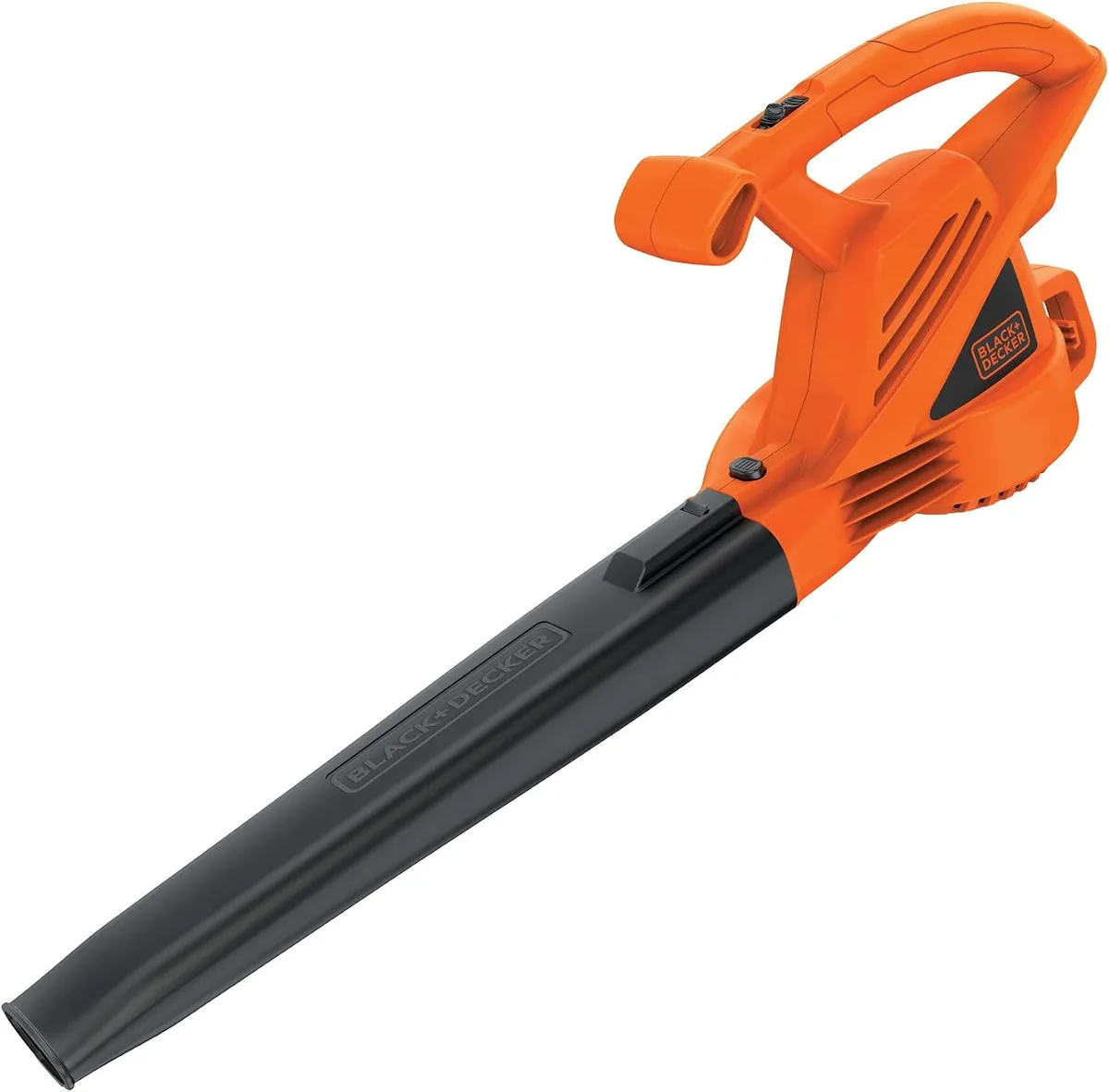
On the concrete step at my tool shed door, the LB700 clears dried clippings and grit in a few sweeps. According to BLACK+DECKER, the peak ratings are 180 mph for air speed and 180 CFM for airflow, from a body of about 5 lb, so the stream is fast, thin and light to hold. It is my value pick for small hard-surface jobs beside an outlet: a patio, a deck, a walkway or a garage floor. If your leaves lie on a lawn, skip it.
BLACK+DECKER LB700 7-Amp Corded Leaf Blower Specs
Key Features:
- Slide switch: It stays on until you slide it back, so there is no trigger to hold through a long sweep.
- Rear cord hook: A loop of your extension cord sits on the hook, so a tug on the cord does not pull the plug.
- Tool-free tube: The tube clips into the housing and releases with one lock button, so setup takes seconds.
- Fast air speed: The narrow, quick stream peels dust and dry clippings off a hard floor.
- 7-amp motor: It draws less current than a larger motor, so a cord of the right gauge costs it little power.
- Single speed: There is no dial to set, so anyone in the house can use it at once.
- Polarized plug and double insulation: The plug fits the outlet one way only, and a second layer of insulation guards your hand if the motor develops a fault.
On a hard surface the thin stream does its best work, and dry dust, chaff and clippings lift off the concrete in a few sweeps. Bark chips and damp debris are another matter, because 180 CFM carries little volume behind the speed, and it is the lowest maker-rated airflow on this page. Leaves lying in grass stay in the grass, so I keep this blower off the lawn.
A 7 amp motor draws far less current than a larger one, so the extension cord costs it less power. Going by the resistance of copper wire, 50 feet of 16 AWG drops the voltage at the blower by about 2 percent of the 120 volts, roughly 20 watts of heat in the cord, and 100 feet of 14 AWG drops it by about 3 percent, roughly 25 watts. The blower ships without a cord, so the cord you buy is part of the price and part of the plan. The manual allows 18 AWG to 25 feet, 16 AWG to 50 feet, 14 AWG to 100 feet and 12 AWG to 150 feet.
The apron in front of the machinery shed is the larger job. In summer, dust and chaff drift across the concrete, and from the outlet on the shed wall one cord off my reel reaches most of the slab. The far corner ended up about 20 feet past the end of the cord, so I carry the plug to a second outlet and finish from there. The single speed is the limit on that job: light dust and dry clippings leave, but caked mud stays where it is.

Before you buy the cord, measure from the outlet to the farthest corner of the job along the route the cord will take, around corners and door frames. That distance picks the gauge, and the straight line between the two points is always shorter.
WHY I CHOSE THIS
Mirko Lekić, Agricultural Engineer & Farm Owner
I call the LB700 Best Value for hard surfaces and small jobs, and the label rests on a 180 mph peak air speed in the budget tier, a body of about 5 lb, a rear hook for the cord and a two-year limited warranty. It is the best electric leaf blower for the money when the job is a patio, a deck, a walkway or a garage floor. Its maker-rated airflow is the lowest on this page, so a lawn full of leaves is outside what the label covers.
Wear eye protection, hearing protection and a dust mask whenever it runs. Even a light stream throws grit, and a dust cloud over a garage floor takes a long time to settle.
The LB700 has no battery to replace and no fuel to age, so after the cord is bought it costs only the electricity it uses. Upkeep is wiping the vents and keeping the openings clear, and the blower lives indoors, dry and out of reach of children. The motor runs down for about 5 seconds after you slide the switch off, so keep both hands on it until it stops, and wait at least 10 seconds for the fan to stop before you pull the tube. At about 5 lb it hangs from one hand through a whole sweep of the step, and my arm hardly notices it.
A patio, a deck, a walkway and a garage floor near an outlet are all this blower needs, and it suits a household that wants one switch and no setup. Anyone with limited strength can hold it for a sweep. Skip it if your yard is a lawn full of leaves, if the debris is wet, or if the job lies more than 150 feet from an outlet, the longest run its manual allows, and only with 12 AWG cord.
FINAL VERDICT
Its 180 mph stream, 5 lb body, cord hook and two-year term make the LB700 the budget buy for a patio, a deck, a walkway or a garage floor. It has one speed and the lowest maker-rated airflow on this page.
It is a good value only while the job stays small and the ground stays paved.
4. EGO Power+ LB6504 650 CFM Blower Kit Best Cordless Electric
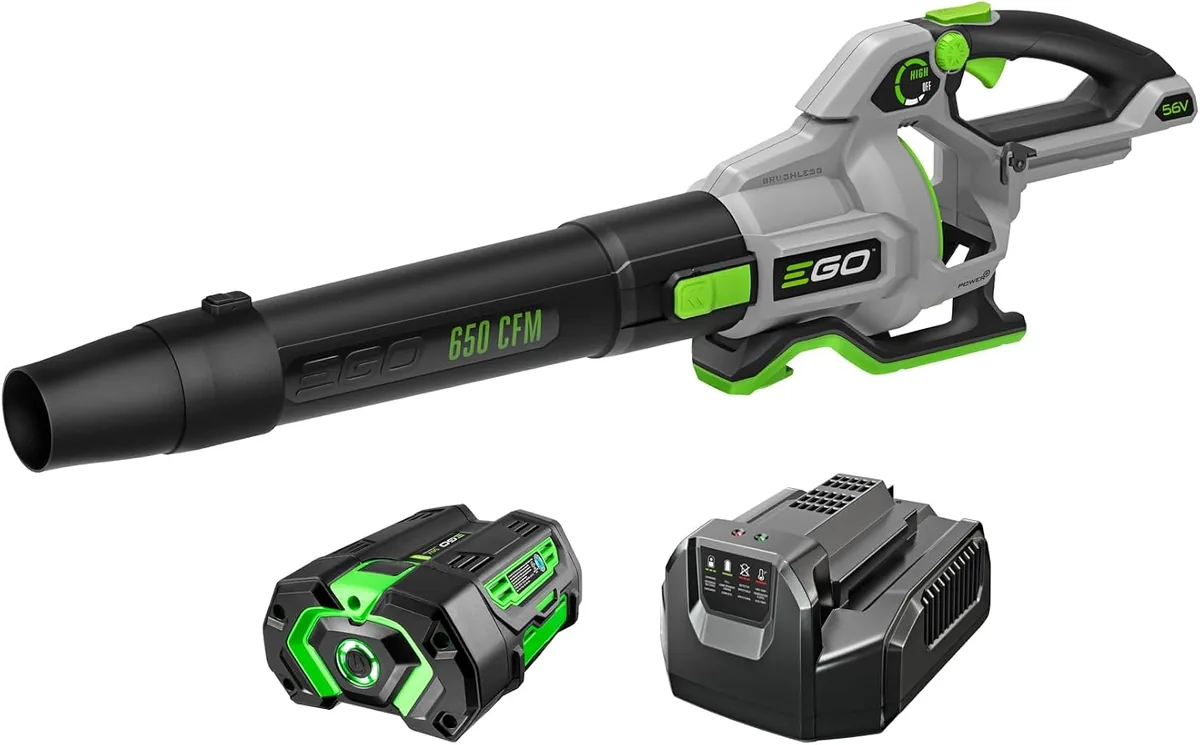
The strip along the drainage ditch at the far border of my orchard is out of reach of any extension cord I trust, and that is where the LB6504 earns its place on a list of electric blowers. According to EGO, the 5.0 Ah pack gives about 30 minutes on high. It is my pick for any yard where the outlet is the problem.
EGO Power+ LB6504 650 CFM Blower Kit Specs
Key Features:
- Its own power: The 56V pack carries the blower to the ditch bank and the far alley with no cord to route around tree trunks.
- Lock-on speed dial: Set the speed with one hand, then let the trigger finger rest through a long pass.
- Boost button: It raises the speed to maximum while held and drops back on release, so it suits short bursts.
- Two nozzles: The tapered one lifts air speed to 180 mph, against 160 without it, and the flat one widens the sweep.
- Five-light battery gauge: It shows charge in 20 percent steps, so you finish the pass before the pack quits.
On high the stream moves dry hedgerow leaves and cut grass off the ditch bank and onto the mown strip beside it. Before the mower goes along the bank, I clear the fallen twigs, so the blade does not throw them. EGO rates the force at 21 N, the push the jet puts on a surface, so a thick wet mat needs a rake first.
With the pack the blower weighs about 9.7 lb, and the pack alone is about 5 lb of that. When I pulled the pack and held the bare tool, it felt close to the corded blower in the workshop. The battery tires the arm, and the motor does not. The kit has no shoulder strap.

Plan the day around the pack. I do the far strips first, while the pack is full, and leave the jobs near the house for the end, where a cord would have reached anyway.
WHY I CHOSE THIS
Mirko Lekić, Agricultural Engineer & Farm Owner
No cord and no fuel is why I rate the LB6504 the best cordless electric leaf blower on this list, with a full 280 Wh pack, a 5-year tool warranty and a battery that fits every EGO 56V tool. The kit ships with one pack and a standard charger, so a long job needs a second pack.
Keep boost off freshly sown cover crop, because in October the alley seed lies on the surface and one burst scatters it. Put on hearing and eye protection before the first squeeze, because boost runs about 88 dB(A) at the ear.
According to EGO, a full refill takes about 100 minutes on the box charger, so I charge the pack as soon as the job ends. There is no cord to check for nicks and no fuel to mix, so the pack is the one part that wears. EGO’s battery manual reads a single flashing red light as a charge below 10 percent, so a new pack goes on the charger before its first job.
Buy it if your jobs lie beyond an outlet and each one fits inside a single pack. Skip it if your whole yard sits near a socket and you want the lightest tool in hand.
FINAL VERDICT
The LB6504 gives you about 30 minutes on high, according to EGO, with no fuel and no cord, and a recharge of about 100 minutes sets the rhythm of the day.
It is the right kit if your work lies beyond the last outlet and fits inside one pack.
5. Sun Joe SBJ597E 6-Amp Corded Electric Blower Best Lightweight Electric
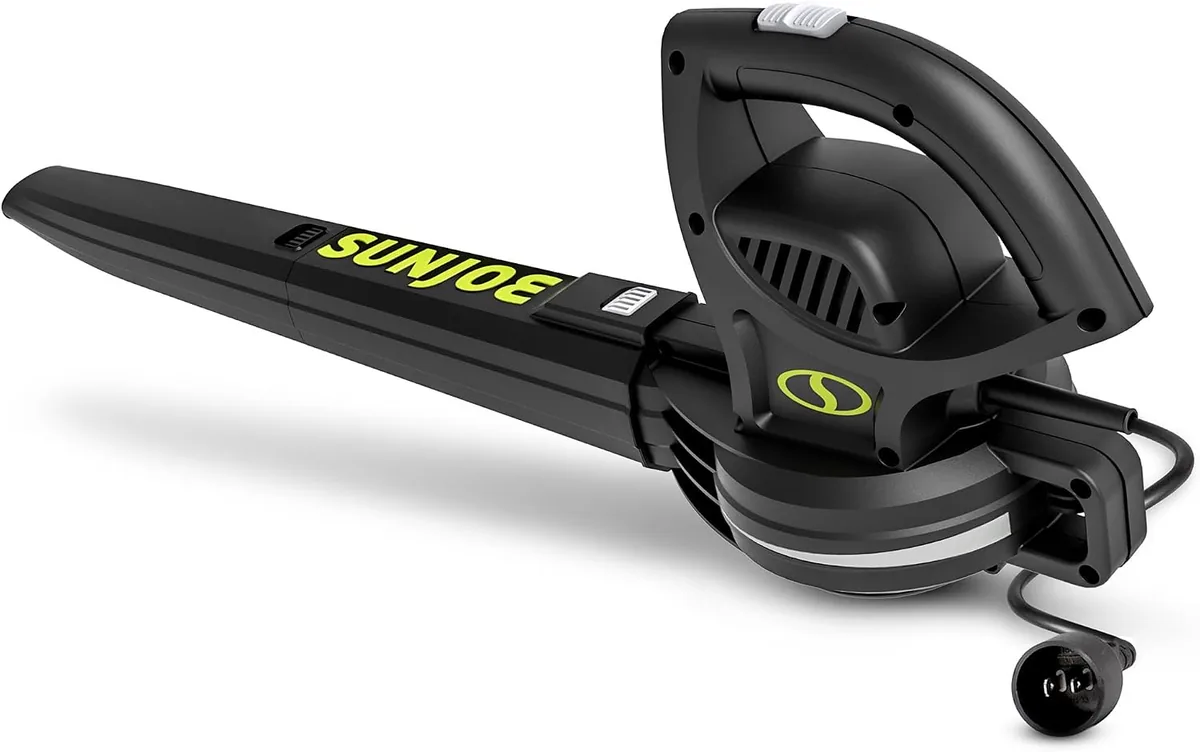
The four-foot concrete path to our house door is where the SBJ597E does its job: it sweeps the twigs, seed pods and dry leaves off the concrete and down the steps. According to Sun Joe, it weighs 3.9 lb, which makes it the best lightweight electric leaf blower on this page. It is a small sweeper-class blower for hard surfaces, and the manual rules out grassed areas.
Sun Joe SBJ597E 6-Amp Corded Electric Blower Specs
Key Features:
- Light weight: At 3.9 lb by Sun Joe’s figure, one hand holds it for a long stretch.
- One slide switch: Slide it to I and it runs at its only speed, with nothing to set.
- Two-piece snap-lock tube: It goes together without tools and comes apart for a closet.
- Low cord demand: At 6 amps, a 16 AWG extension cord covers 50 ft and 14 AWG covers up to 100 ft.
- Hard-surface design: Sun Joe lists patios, driveways, decks, garages and light snow.
The 260 CFM and 155 mph are separate peaks, so the stream is thin and fast. It clears dry leaves, twigs, pods and dust from concrete when you hold the tube at about 45 degrees, 2 to 4 inches above the ground. When I aimed it at damp leaves on the grass beside the path, they barely stirred. Wet or matted leaves, gravel and fruit drop are beyond it, and the manual says so.
The attached cord is short, and the box holds no extension cord. The manual asks for a two-prong outdoor cord: 16 AWG up to 50 ft, 14 AWG beyond that, and never more than 100 ft. A 6-amp motor loses only about 2 to 3 percent of the line voltage along those cords, by the arithmetic of the copper. I hang the cord over my shoulder and work away from the outlet.
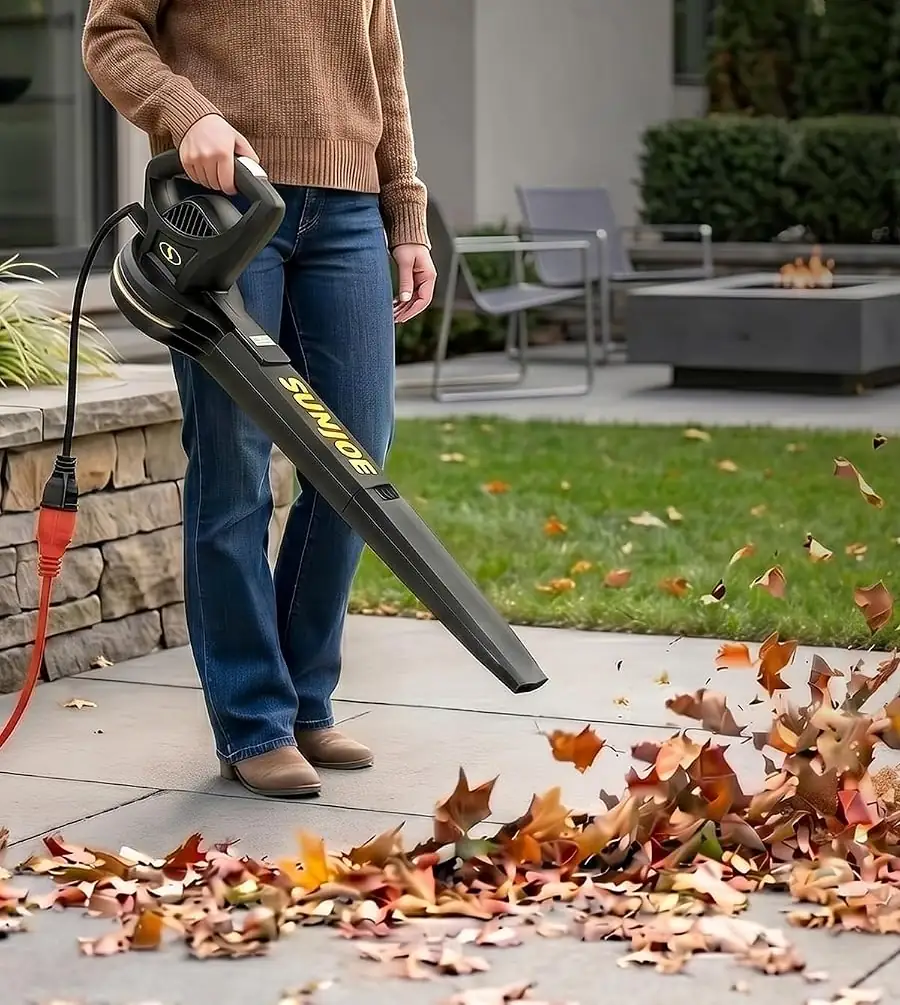
Plug into a GFCI-protected outlet, which Sun Joe’s manual recommends, and keep the cord connection off wet ground.
WHY I CHOSE THIS
Mirko Lekić, Agricultural Engineer & Farm Owner
Light weight earns the SBJ597E its label. A rake loads the shoulder and takes longer, and this blower does the same path with a 3.9 lb tool in one hand. By the makers’ own weights it is one of the two lightest ready-to-run blowers on this list.
Wear eye and hearing protection every time, as the manual asks. Keep people and pets 16 ft away and the nozzle off windows and cars.
After a month on its hook in the shed it started the moment I slid the switch, with no priming and no battery to check. I hang the plastic tube on the wall so no boot lands on it. What annoyed me most is the short attached cord: every job begins with an extension cord, and the 100 ft limit decides how far from the house the blower can go.
Skip it if your leaves lie on grass, gravel or in wet clumps, because it cannot move them. The nearest outlet more than 100 ft away rules it out, and so does paid work, which voids the warranty. It suits a patio, deck, garage, steps and a short paved drive, and it suits anyone who wants a tool that weighs next to nothing.
FINAL VERDICT
At 3.9 lb it moves dry leaves, twigs and dust off hard surfaces with one hand and nothing to charge. Give it a 16 AWG cord for runs up to 50 feet, and keep it off grass and gravel.
It is the right pick when the whole job is a patio, a deck or the path to your door.
6. WORX Trivac WG509 3-in-1 Blower Vacuum Mulcher Best Electric Blower Vacuum
Dry leaves go into the WG509 as a drift and come out as a small bag of fine mulch, and that is why I call it the best electric leaf blower vacuum on this list. According to WORX, its all-metal two-stage system shreds leaves at 18 to 1. It is the one blower vacuum on this list, a corded 12-amp machine for a small to mid-size yard with dry leaves under the trees.
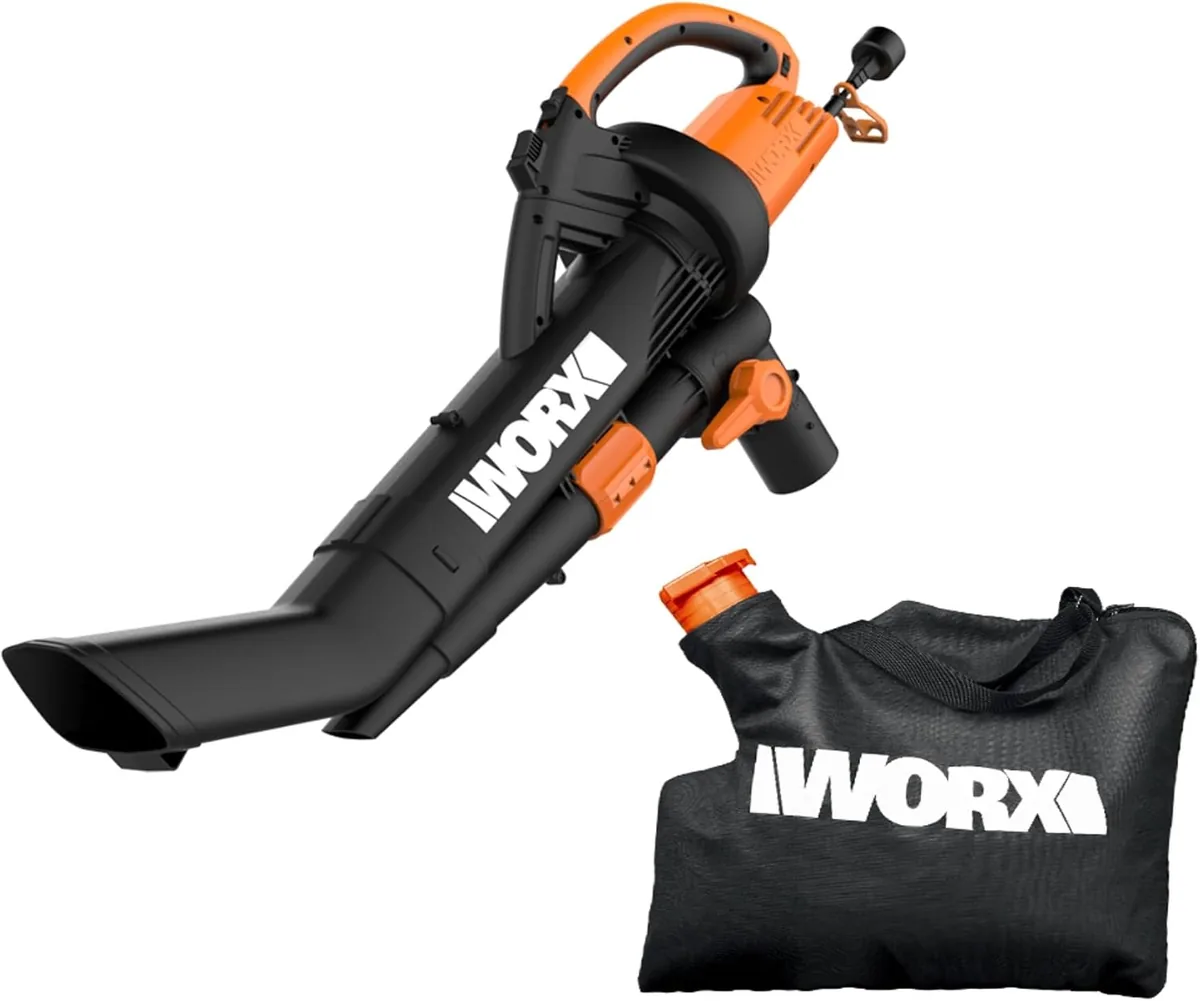
WORX Trivac WG509 3-in-1 Blower Vacuum Mulcher Specs
Key Features:
- Mode lever: Turn the selector from blower to vacuum with no tools, and the machine pushes a pile along or bags it.
- Variable speed: A handle control sets air speed from about 80 to 210 mph, low for corners and full for heavy debris.
- Metal impeller and shredder blade: Metal parts do the shredding that the 18 to 1 ratio rests on.
- 1.2-bushel bag: It holds the shredded leaves for the compost heap and empties unplugged.
- Tool-free access: A release button splits the tube from the housing, so you reach the impeller to clear a jam.
In vacuum mode the leaves pass through the metal impeller, get shredded and land in the bag. Dry leaves from the plum and apricot rows were better than I expected, because the shredded volume is a fraction of what went in. Green apricot leaves and small fruit jammed the machine, and WORX’s own FAQ says wet leaves are not recommended for vacuuming because they can clog it. To clear a jam, unplug it, press the release button and clear the impeller with a long, sturdy tool.
The manual asks for 14 AWG up to 100 ft and 12 AWG up to 150 ft, and never more than 150 ft. A 12-amp motor loses about 5 percent of the line voltage on the cord the manual asks for and about 8 percent on one a size too thin, by the arithmetic of the copper.
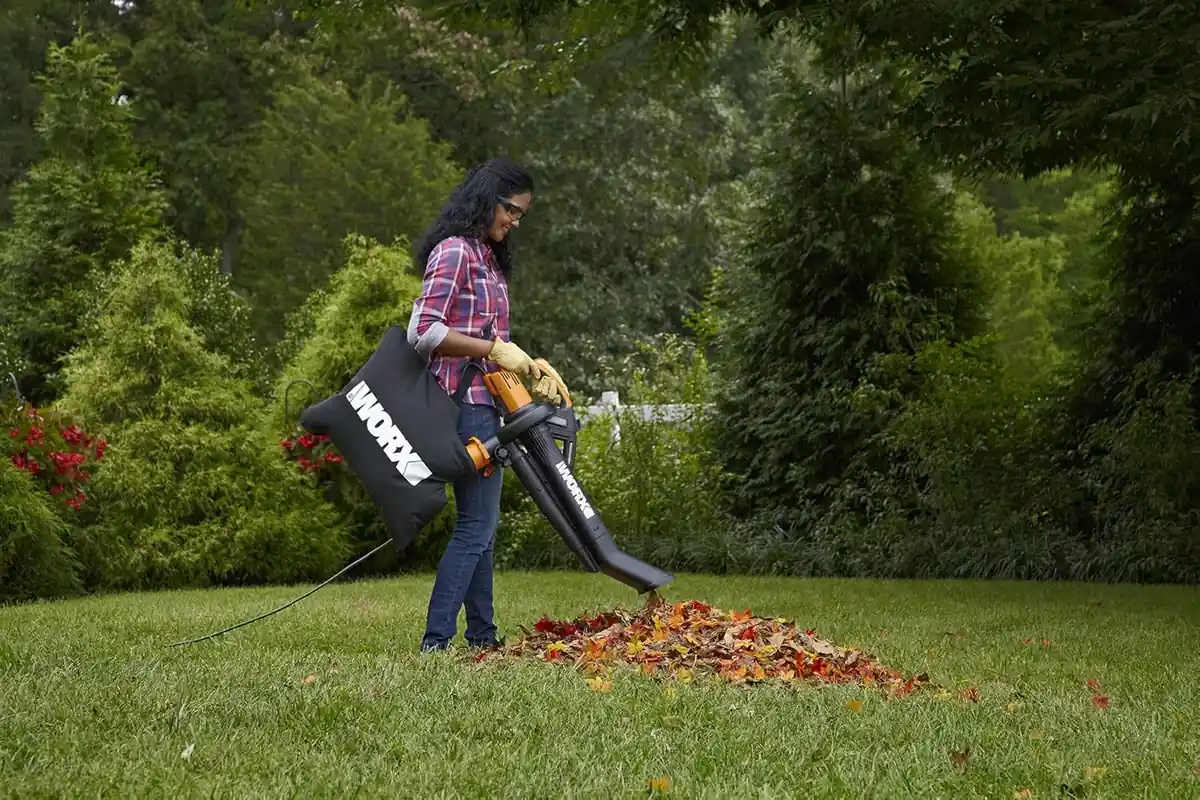
Rake or blow the damp patches into the open first, then vacuum only what has dried.
WHY I CHOSE THIS
Mirko Lekić, Agricultural Engineer & Farm Owner
Bagging and shredding in one machine is why I put the WG509 on this list. Shredded leaves go onto my compost pile and break down faster than whole ones. At 350 CFM it is a modest blower, so I rate it as the best electric leaf blower and mulcher for dry leaves.
Unplug it before you touch the nozzle, the bag or the impeller, and wear eye and ear protection, plus gloves for a clog. After any jam, inspect the metal impeller and blade, and stop if either is damaged, which is why I keep vacuum mode off the gravel yard.
At 9.3 lb it is too heavy for the gutter and fine for the yard, and the box holds no strap. The 1.2-bushel bag fills quickly on a lawn, so I empty it between passes. WORX’s manual shows the ear protection symbol, so I wear earmuffs and eye protection whenever it runs.
This is the machine for a small to mid-size yard where dry leaves fall under trees and the compost heap wants shredded leaves. Skip it if your leaves are usually wet, if gravel borders the lawn, or if the outlet is more than 150 ft away. A reader who only blows leaves needs neither the bag nor the weight.
FINAL VERDICT
Dry leaves under trees and a compost heap that wants them shredded make the case for the WG509. Wet leaves, gravel and an outlet beyond 150 feet make the case against it.
It is worth its 9.3 lb only if the bag is why you are buying.
7. BLACK+DECKER LSW221 20V MAX Cordless Sweeper Best Small Electric
The LSW221 is the smallest tool on this page: about 19 in long, about 4 lb, one slide switch and no cord. BLACK+DECKER’s manual calls it a sweeper for driveways, sidewalks, decks and garages, and that is the job it does. It brushes dust and light dry litter off hard ground and will not clear a lawn of leaves.
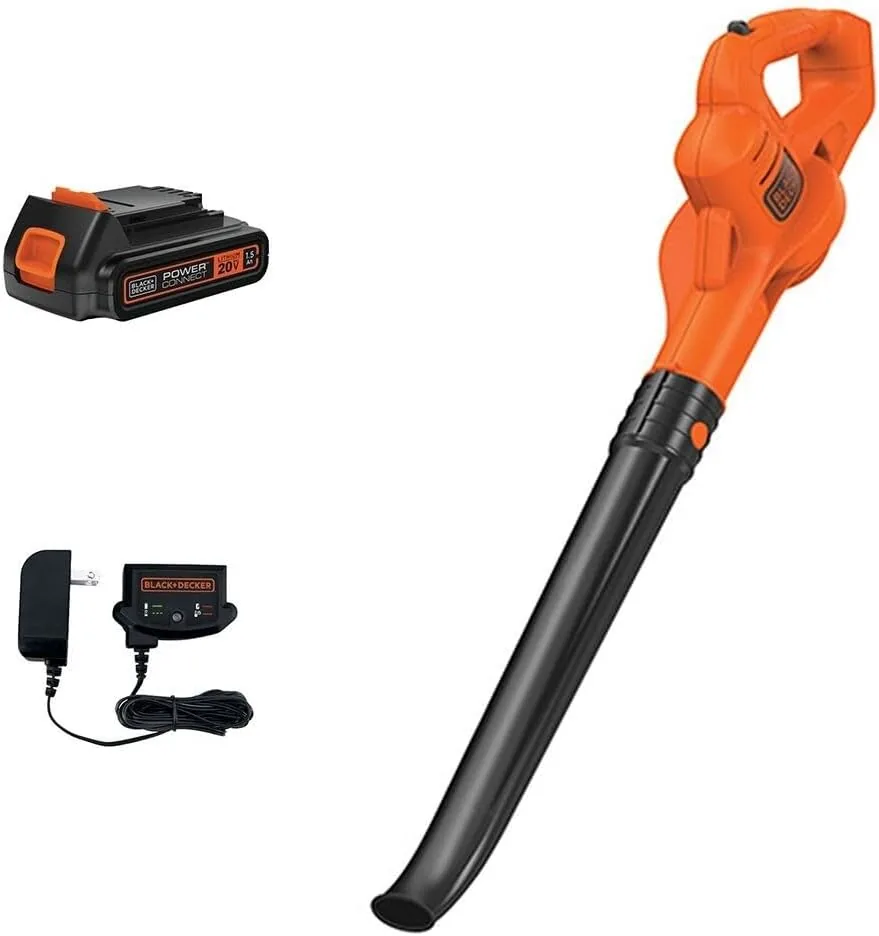
BLACK+DECKER LSW221 20V MAX Cordless Sweeper Specs
Key Features:
- Slide switch: One push forward starts it, with no trigger to hold down.
- Short body: At about 19 in it hangs on a hook and fits a drawer or a shelf.
- Tool-free assembly: The tube slides in until the lock button snaps, and the battery clicks in.
- Battery and charging base in the box: The base mounts on a wall.
- Shared 20V MAX pack: The battery comes from BLACK+DECKER’s 20V MAX system.
Before I open the disc filter housing at the irrigation pump house, I sweep the concrete floor around it with a dust mask on, so no grit drops into the 150-mesh screen. According to BLACK+DECKER, the air leaves at up to 130 mph. The jet is fast and thin, which suits dust, chaff and mown clippings and little else.
The single speed is the limit I feel most. With no dial I cannot soften it, and along the foot of the tool shed wall it scattered dry plum leaves sideways instead of rolling them into a pile. A rake does that job better. The pack is a small 1.5 Ah one, so I keep to short jobs and charge a second pack the evening before.
Charge the pack indoors. BLACK+DECKER’s manual puts the best charging range at 65 to 75 F and rules out charging below 40 F, so a cold shed is the wrong place for the charging base.
WHY I CHOSE THIS
Mirko Lekić, Agricultural Engineer & Farm Owner
I give the LSW221 the Best Small Electric label because it is small in every way that counts at the door: about 19 in long, about 4 lb, no cord to unroll and no fuel to mix. I hang it where I can grab it for a job that a broom does slowly and a full-size blower is too much for. I recommend it to a buyer who wants exactly that.
Wear eye protection every time, add a dust mask on dusty floors and hearing protection as the manual’s symbol shows, and never point the outlet at a person, an eye or an ear.
At the loading area, after the crates leave, it clears the stems and dust from the corner behind the pallet, where my push broom only drags them around. Keep it dry: the manual rules out rain, wet surfaces and damp places, and says to store it indoors. According to BLACK+DECKER, the pack holds a charge in storage for up to 18 months, which suits a tool that hangs unused between jobs.
It suits a household that wants a grab-and-go sweeper for patios, decks, steps and garage or pump-house floors, and anyone who already owns BLACK+DECKER 20V MAX packs. Skip it if you have leaves to clear, wet debris, gravel or any job bigger than a small paved area.
FINAL VERDICT
A cordless sweeper this size earns its hook by the door when the mess is dust, chaff or a few dry clippings. Fall leaves, wet ground and gravel are outside its job.
It is a fair buy only if the mess is small, dry and on pavement.
8. EGO Power+ LB6003 600 CFM Backpack Blower Kit Best Electric Backpack
Most of the LB6003’s weight rides on your hips, and your hand carries only the tube. The 12.5 lb blower plus the kit’s 6.3 lb pack comes to about 19 lb on the back, and EGO’s manual says that load should rest on the waist strap. It suits long, dry sessions with no cord to trail and no fuel to mix.
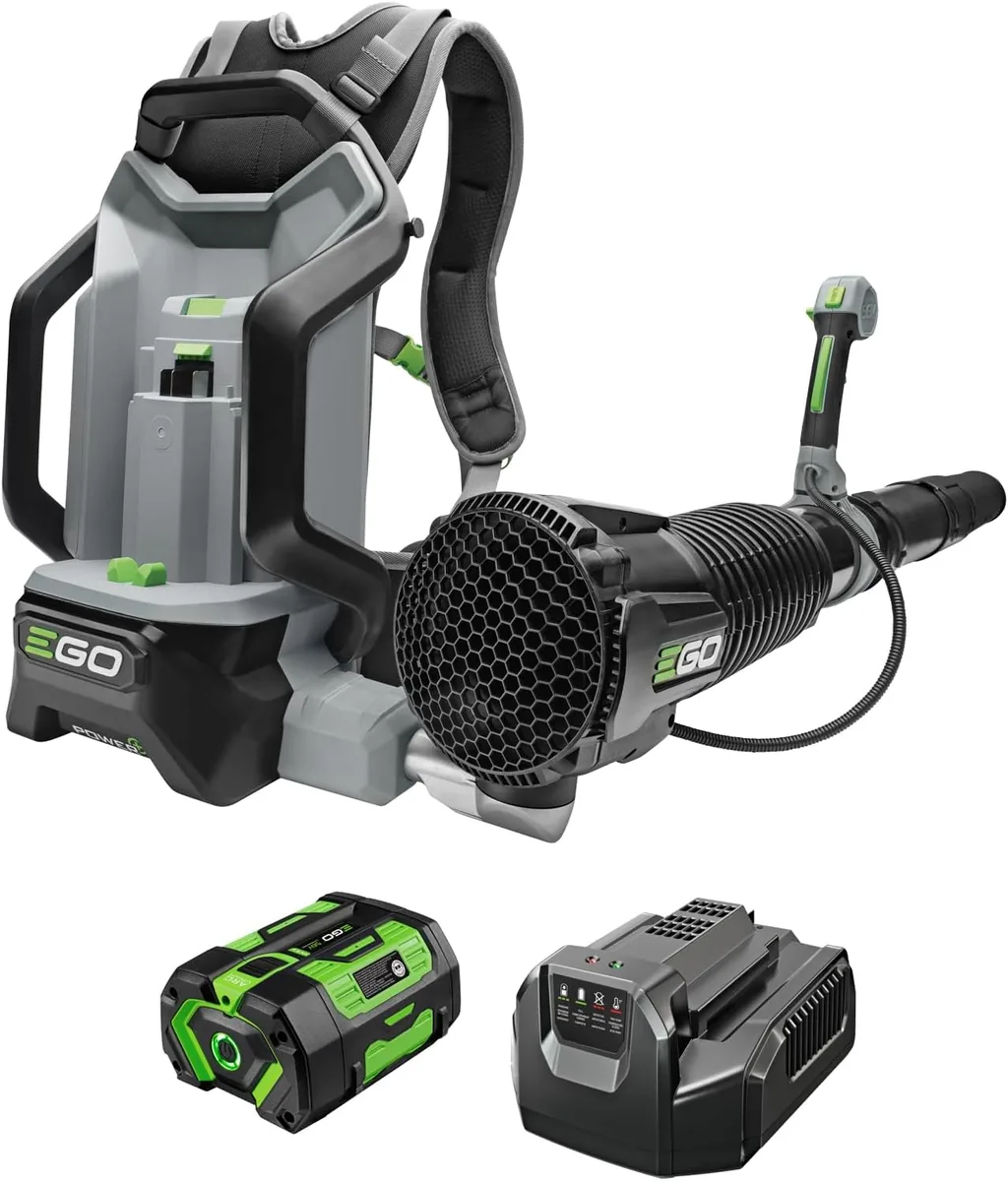
EGO Power+ LB6003 600 CFM Backpack Blower Kit Specs
Key Features:
- Lock-on speed dial: It holds the speed you set while you walk a long stretch.
- Boost button: It jumps to maximum and drops back to your setting on release.
- Fuel gauge on the pack: It shows what is left before you start the next stretch.
- Lockable middle tube: It sets the tube longer or shorter for low branches.
- Waist belt and chest buckle: They put the load on your hips.
According to EGO, the fan peaks at 600 CFM, the air speed peaks at 145 mph and the rated force is 19 N, about 4 lb of push. In November the leaves drop onto the tilled strips under my plum rows, so I lock the middle tube short and the nozzle slides under the low branches. I roll the leaves out to the alley and mow over them. Dry leaves move at a middling dial setting; matted ones need a rake first.
Plan by minutes. According to EGO, the kit’s pack runs about 33 minutes on High, 23 on Boost and 180 on Low, so I keep Boost for a stubborn drift at the end of an alley and work the rest on the dial. The gauge on the pack tells me at the end of each alley whether to start the next one. The kit’s standard charger needs about 145 minutes for an empty pack.
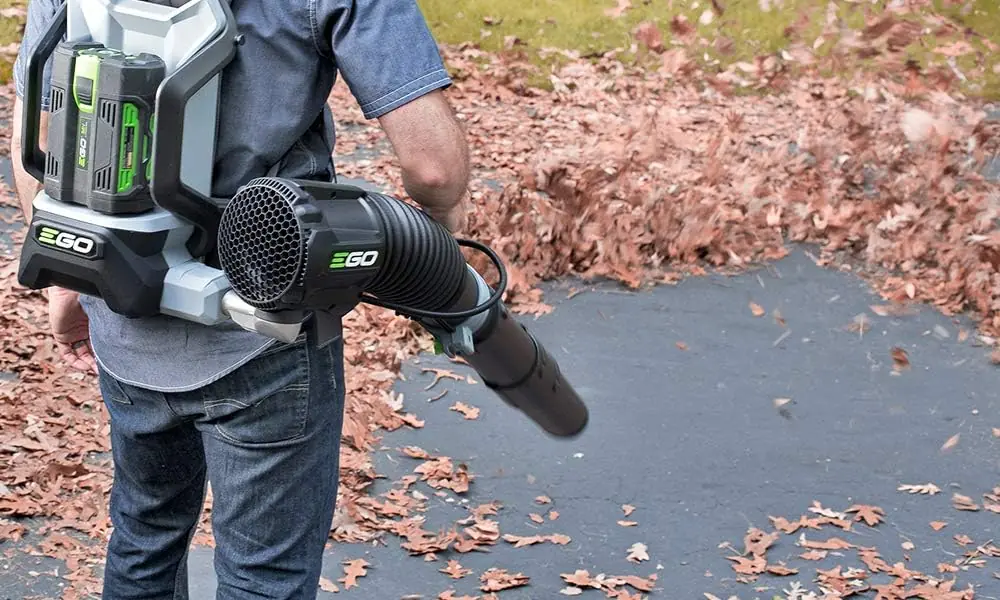
Swing the tube slightly from side to side, which EGO says widens the blowing area, and slide the control handle until your elbow rests at your side.
WHY I CHOSE THIS
Mirko Lekić, Agricultural Engineer & Farm Owner
I call the LB6003 the best electric backpack leaf blower for one reason: a long session sits on the hips instead of the arm, with no cord behind me and no engine to fuel. It is the heaviest tool on this page, and the harness is what makes that weight workable. I recommend it to the owner whose jobs run longer than a handheld is comfortable to carry.
Safety glasses with side shields, hearing protection, gloves and boots go on before the dial moves, and bystanders stay 50 ft away.
There is no mix, plug or carburetor to look after, and at the end of a session my jacket smells of leaves and nothing else. EGO rates the blower IPX4, splash only, so I hang it dry with its tubes on the storage knob. A second pack or the rapid charger is a separate purchase, and the return terms are worth checking on the listing before you order.
Choose it for long dry sessions on a small or mid-size yard, or if you already own EGO’s 56V packs. Skip it for acreage, matted wet leaves, daily crew work or a ten-minute patio job.
FINAL VERDICT
The LB6003 puts a battery-powered session on your hips, with a rated 19 N of push and about 33 minutes on High per pack, according to EGO. Acreage and matted wet leaves are beyond a single kit.
It is the right backpack only when your sessions run longer than a handheld is comfortable to carry.
9. Makita XBU03Z 18V LXT Brushless Blower (Tool Only) Best Quiet Electric
The XBU03Z ships as a bare tool: the box holds no battery and no charger, so you need an 18V LXT pack and a charger of your own. With a pack on, it weighs about 6 lb. According to Makita, its sound pressure rating is 60 dB(A), measured per ANSI B175.2, a bystander rating taken at a distance from the blower.
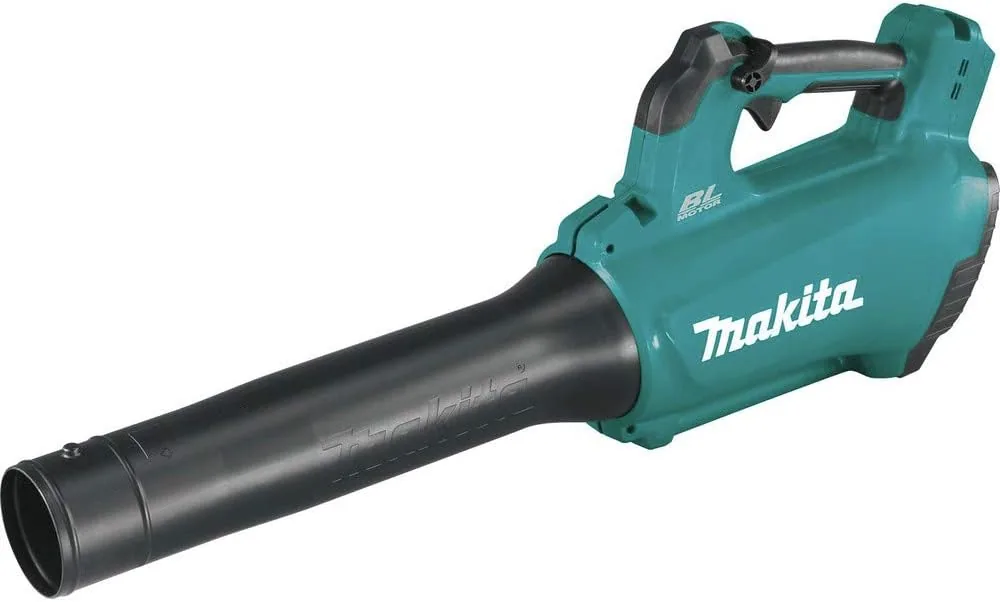
Makita XBU03Z 18V LXT Brushless Blower (Tool Only) Specs
Key Features:
- Variable-speed trigger: More pull gives more air, so you can feather it near young trees.
- Cruise control lever: It holds a speed without the trigger, so your finger can rest on a long pass.
- Restart prevention: The tool will not start if the pack goes in with the trigger pulled.
- Hook hole in the housing: It hangs from a nail, up off the dusty floor.
- Automatic stop: The motor cuts out on overload, overheat or a drained pack.
According to Makita, the fan peaks at 459 CFM and the air speed peaks at 116 mph, with an average of 96 mph. On a 5.0 Ah pack the push on high is about 11 N, roughly 2.5 lb of force, enough to roll dry leaves and clippings along the ground. On the quarter-acre lawn by the house I pull the trigger partway, so the air lifts the dry leaves and leaves the turf alone. Leaves matted under the shade trees stayed put, and a rake finished that corner.
Run time is the price of the weight: about 10 minutes on high with a 5.0 Ah pack, so I plan by packs. A cord would catch on every shade tree trunk on the lawn, and here the pack is the only limit. At about 6 lb with a pack and 32.5 in overall, it carries easily in one hand across the whole lawn.
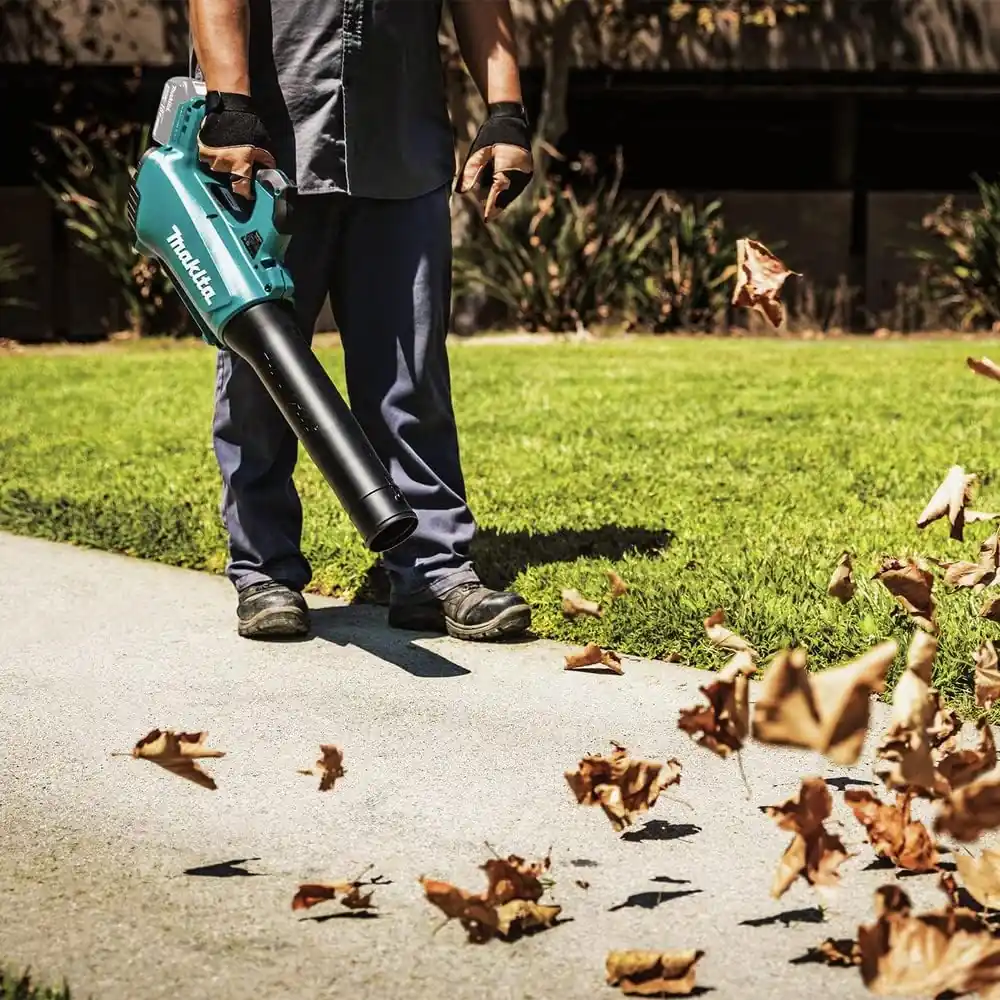
The manual warns that blowing raises dust that can carry pesticide or fertilizer residue, so I wear a mask and work with the wind at my back.
WHY I CHOSE THIS
Mirko Lekić, Agricultural Engineer & Farm Owner
I give the XBU03Z Best Quiet Electric because Makita ties its 60 dB(A) rating to a named standard, which makes it the quiet pick I can document. It is a bystander rating, and at the operator’s ear the level at full output is about 83 dB(A). I wear hearing protection from the first minute with every blower, this one included.
Goggles go on before the pack does, ordinary glasses do not count, and the pack comes out before any nozzle change or blockage. Keep people, pets and open windows out of the debris path.
Next to my old gas handheld the sound is higher and thinner and there is no exhaust, yet the earmuffs go on before I pull the trigger. The hook hole in the housing hangs it from a nail in the tool shed, off the dusty floor. Clean it with a dry or wrung-out soapy cloth, never solvents, and keep the rear inlet free of dust.
Buy it if you already own Makita 18V LXT packs and clear a lawn, a drive or a storage room in short sessions. Skip it if you have no LXT packs and want a single box, if wet leaf mats are the job, or if the yard needs more than a few short runs.
FINAL VERDICT
The XBU03Z is a light brushless blower with a sound rating tied to a named standard, sold without a pack or a charger. Matted leaves and long sessions are beyond it.
It is a sensible buy only if Makita 18V packs and a charger already sit in your shop.
How to Choose the Best Electric Leaf Blower
An electric blower has no fuel to mix, but it still has a limit: a cord or a pack. I weigh eight checks in a fixed order, starting with the distance from your nearest outlet to your farthest leaves, because that distance decides whether a plug or a battery fits the yard.
Corded or Battery Power
A corded blower runs for as long as the outlet has power, and a battery blower runs for as long as the pack holds charge. Choosing the best corded electric leaf blower starts with a tape measure: walk from the outlet to your farthest spot, add the detours around trunks and corners, and compare that with the cord you can run. Past the 100 to 150 ft that the corded manuals allow, only a battery tool reaches.
I paced the run from the nearest outlet to the far corner of the yard before I trusted a corded blower with the job, and the pacing told me more than any spec sheet.
| Factor | Corded | Battery |
|---|---|---|
| Reach | As far as the outlet and a cord of the right gauge | As far as you walk while the pack lasts |
| Runtime | No limit while the outlet has power | About 10 to 37 minutes on high per pack across the battery blowers here |
| Weight in hand | About 4 to 9 lb, with the cord adding drag | About 4 to 10 lb in a handheld with the pack |
| Starting up | Plug in and press the switch | Charge, seat the pack and press the trigger |
| First season cost | Budget to mid-range tool, plus a cord in the right gauge | Budget for a small sweeper kit, premium for the large kits |
| Later seasons | A new cord or plug now and then | A spare pack for long jobs and a replacement pack in time |
For hard surfaces and small jobs the best budget electric leaf blower is a corded one, since there is no pack to buy, but the right cord is part of the price and heavier gauge costs more. A battery kit costs more up front and adds a spare pack once your longest job passes one charge. For a long paved drive, a push model from the power sweepers category is worth a look.
Amps and What They Mean for a Corded Blower
Amps are the current the motor draws from a 120 V outlet, so a 6 A blower draws about 720 W and a 12 A blower about 1,440 W. More amps put more power into the motor, and the fan and the housing decide how much of it becomes air. On my list a 6 A blower moves up to 260 CFM, a 7 A blower up to 180 CFM and a 12 A blower up to 600 CFM, while a second 12 A machine manages 350 CFM and spends its power on a vacuum and a mulching blade as well.
The most powerful corded electric leaf blower here is therefore a 12 A tool, and it asks the most of your cord. The 6 A and 7 A blowers draw far less and are easier on both the cord and the outlet.
- 6 to 7 A: light blowers for hard surfaces, which call for 16 AWG up to 50 ft and 14 AWG up to 100 ft in their makers’ tables, and the 7 A BLACK+DECKER lists 12 AWG up to 150 ft.
- 12 A: the strongest corded motors on the list, with 14 AWG up to 100 ft and 12 AWG up to 150 ft in their makers’ tables.
- Shared outlet: a 12 A blower draws about 1,440 W, so keep a second power tool off the same cord while it runs.
Extension Cord Length and Gauge
A long, thin cord starves the motor. Every foot of wire resists the current, the resistance costs voltage and wastes power as heat, and a lower gauge number means thicker wire, so 12 AWG is heavier than 16 AWG. Each maker sets its own minimum gauge by length, and I treat the minimums as a hard floor, so use the table in the manual of the machine you buy.
| Blower | Motor | Minimum gauge by cord length |
|---|---|---|
| WORX WG520 | 12 A | 18 AWG to 25 ft, 16 AWG to 50 ft, 14 AWG to 100 ft, 12 AWG to 150 ft |
| BLACK+DECKER LB700 | 7 A | 18 AWG to 25 ft, 16 AWG to 50 ft, 14 AWG to 100 ft, 12 AWG to 150 ft |
| Sun Joe SBJ597E | 6 A | 16 AWG to 50 ft, 14 AWG to 100 ft, and no extension cord over 100 ft |
| WORX Trivac WG509 | 12 A | 14 AWG to 100 ft, 12 AWG to 150 ft, and no extension cord over 150 ft |
The arithmetic shows why the 12 A machines care more. On 100 ft of 14 AWG a 12 A blower loses about 5 percent of the 120 V in the cord, which is about 6 V, and on 100 ft of 16 AWG it loses about 8 percent, close to 10 V, so the cord runs warm and gives off more than 100 W as heat. A 6 A blower on the 14 AWG cord loses about 2.5 percent. These figures are for copper wire at 68 F, and a warm cord loses a little more.
A cord that feels warm in my hand tells me the gauge is wrong or the run is too long, and I swap it before the next pass.
- Outdoor rating: the manuals call for an outdoor-rated cord.
- Condition: look along the cord for cracks, cuts and bare wire before each job.
- Retainer: loop the cord through the retainer or hook on the blower, so a tug does not pull the plug.
- Length: use the shortest cord that reaches, since each extra 50 ft adds resistance.
Cord Safety
Unplug the blower before you change a tube or clear a clog. The makers’ manuals for the corded blowers here say not to use them in rain or on wet ground, so a wet lawn is a reason to wait.
Airflow, Air Speed and Force for the Job
CFM is the volume of air leaving the tube each minute, and mph is how fast that air moves. Volume rolls a mat of wet leaves and speed peels a stuck leaf off a surface, so I match both to the hardest job on the land. Check which setting and nozzle each number belongs to. WORX lists the WG520’s 600 CFM and 110 mph at full speed, and Husqvarna lists 800 CFM and 200 mph for the 350iB with the round nozzle, while EGO lists the LB6504’s 650 CFM on boost and its 180 mph with the tapered nozzle attached.
A fan sourcebook from the US Department of Energy gives the physics: airflow rises in proportion to fan speed, while fan power rises with the cube of the speed, so a 20 percent cut in speed cuts power by about 50 percent (1). That is why turbo costs minutes on a pack, and on two of the battery handhelds here it takes half the minutes or more.
The gravel corner of my yard takes more passes than the concrete pad beside it, so I set the speed low and keep the tube down.
- Porch, steps and garage floor: up to 260 CFM moves dust and dry light debris from hard surfaces.
- Dry leaves on grass and gravel: about 450 CFM and up, with a speed control to slow the stream near beds.
- Wet leaf mats: volume and force, and the strongest battery handhelds here are rated at 21 to 23.5 N, about 5 lb of push, so a thick wet mat may still need a rake.
- Sawdust and fine dust: low speed and a dust mask.
Pro Tip
Work with the wind at your back, blow downhill and push the leaves onto a tarp or into one corner. Collecting a pile in one place saves chasing leaves across the yard twice.
Weight in the Hand
Weight shows up in the shoulder after a few minutes. Compare the weight with the pack on, because a bare-tool figure can hide 2 to 5 lb, and on the larger kits the pack is up to half of what hangs from your hand. A corded blower’s box weight leaves out the cord, which adds drag.
The best handheld electric leaf blower for most readers is one you can hold in one hand for your longest pass. The heaviest handhelds here, at about 10 lb with the pack, ask more of the shoulder than the wrist.
| Weight in hand | Kind of tool | Where it works | What you give up |
|---|---|---|---|
| About 4 lb | Corded or battery sweeper-class blower | Porch, deck, steps, garage floor | A thin stream for dry light debris |
| About 6 lb | Corded 12 A blower, or a bare battery tool with a pack on | Driveway, patio, small lawn | A cord to drag, or minutes limited by a small pack |
| 9 to 10 lb | Full-size battery kits and the corded blower vacuum | Lawn and yard, longer passes | Shoulder fatigue, and on the battery kits the pack is up to half the weight |
| About 19 lb | Battery backpack | Long sessions, with the load on the hips | The heaviest tool, and a bigger spend |
The best small electric leaf blower for a porch and steps weighs about 4 lb and moves up to 260 CFM, enough for dry dust and light debris. Lighter also means less air, so size the weight to the hardest job on your land.
Noise and Close Neighbors
A noise number can describe two different places. A rating measured to ANSI B175.2 describes a bystander 50 ft from the blower, the level at your ear a few feet from the tube is far higher, and a figure with no distance or method is the maker’s word only. None of the corded blowers here comes with a maker noise rating at all.
In a community field test of two gas leaf blowers and a hose vacuum, single machines measured 85 to 101 dB(A) at the point of operation, and the combined sound still read about 57 dB(A) at 800 ft (2). The blowers in that test ran on gas, and their combined sound carried well past any lot line.
NIOSH recommends 85 dBA averaged over an eight-hour day and halving the time for every 3 dBA more (3). The battery handhelds on my list sit between about 79 and 88 dB(A) at the ear, and at the top of that range the NIOSH scale allows about 4 hours a day.
Hearing protection works only when it seats. A Cochrane review of workplace hearing protection notes that poor earplug fit may limit protection for about 40% of users (4). I put my ear protection in before I pick up any blower, corded or battery, and leave it in until the fan stops.
Landscaping noise reaches close neighbors. In a Canadian survey of 6,647 adults, landscaping equipment, a group that includes lawn mowers, hedge trimmers, leaf blowers and chainsaws, ranked third of nine noise sources for annoyance, behind only road traffic and construction (5). The best quiet electric leaf blower is the battery tool with the lowest ear-level reading and a maker rating tied to a named standard, and it still needs hearing protection. On my land the nearest house is far off, so noise is a family matter before it is a neighbor matter.
Eye and Ear Protection
Wear eye protection every time and hearing protection whenever any blower runs, on low speed too. A dust mask belongs on dry piles and shed floors, and people, pets and windows stay out of the path of the air.
Blower Only or Blower Vacuum
A blower-vacuum switches between blowing leaves into a pile and drawing them into a bag, and the one on my list shreds them at the maker’s rating of 18 to 1, which turns about 18 bags of loose leaves into one. It pays off on dry leaves under trees, where you would otherwise rake and bag. It costs weight, blowing power and a few jobs.
- Weight: the one on my list is the heaviest corded machine at 9.3 lb, and it feels heavier in vacuum mode on a long pass.
- Wet leaves: the maker does not recommend vacuuming them, because they can clog the impeller, so use blower mode when the leaves are damp.
- Blowing power: its 350 CFM is a modest stream next to the 600 CFM of a plain blower, so a thick mat of leaves moves slowly.
- The bag: it holds 1.2 bushels and fills fast on a big lawn, and a full bag makes the cord harder to manage.
Shredded leaves have a second use as lawn mulch. In a field trial on one Kentucky bluegrass lawn, mulching maple or oak leaves into the turf cut dandelion counts by up to 80 percent after one application (6). That trial used maple and oak on bluegrass and my trees are plum and apricot, so I read it as a reason to shred and I do not expect the same dandelion result. A heavy bag and a dragging cord together make a long pass tiring, so empty the bag at half full.
Where Electric Stops and a Gas Backpack Starts
Electric covers most home yards, and it stops where the work outlasts a pack or outreaches a cord. On my land the orchard rows are where my cord ends and a battery pack takes over, because the nearest row lies 100 to 150 ft from the buildings.
Exposure is where electric earns its place. In NIOSH personal sampling of 80 landscaping workers at 11 sites, those using fuel-powered leaf blowers, string trimmers and chainsaws had significantly more noise and carbon monoxide exposure than workers using battery versions (7). A corded blower makes no exhaust either, which is why electric is the only kind I run in the workshop.
Commercial work is a separate purchase. The best commercial electric leaf blower has to run all day, and the manuals and warranties for most of these nine are written for home use, with EGO cutting its tool warranty to one year for professional use.
- You clear an acre or more of leaves in one go: the minutes on a pack and the length of a cord both run out first.
- Your leaves lie wet and thick for weeks: the strongest gas backpacks are rated near 48 N, about twice the push of the strongest handheld here.
- No outlet is near and your longest job passes 30 minutes on high: plan on a second pack or a backpack.
- You work in freezing weather: a pack gives fewer minutes in the cold, and one maker’s manual allows charging only between 41 and 104 F.
Key Takeaway
Electric fits the yard you can reach with a cord or a pack. Measure your longest job against the cord and the minutes on high before you pick a power source.
Using the Best Electric Leaf Blower Around Sheds, Trees and Wet Ground
Around buildings and trees the cord is the main hazard, and around water it is the plug. These habits come from my own yard and from what the makers’ manuals say.
Read the wet-weather line in your manual before the first job. WORX’s manuals tell you not to use its corded blowers on wet surfaces, and the manual for its blower vacuum adds that the cord must not run through standing water or wet grass. Sun Joe’s manual says not to use its blower in rain or in damp areas, and BLACK+DECKER’s says its corded blower is not for wet conditions and belongs indoors in storage.
EGO rates its battery blowers IPX4, which means splash resistance only, and Makita’s manual says not to expose its blower to rain. Husqvarna’s manual says not to charge a pack outdoors or in the wet. I read all of that as a reason to wait for dry weather.
Sun Joe’s manual recommends ground-fault protection on the circuit, and Husqvarna’s manual advises an approved residual-current device for extra safety. I plug into an outlet with ground-fault protection and keep the plug and the blower’s connector off wet ground.
- Reel: keep the cord on a reel by a door, so it comes out in one pull and goes back dry.
- Direction: work away from the outlet with the cord behind you on ground you have already cleared, since a cord drags on trunks, fence posts and mulched tree bases.
- Unplug first: pull the plug before you change a tube or clear the intake, and keep it in your hand.
- Pack charging: charge a pack indoors in a dry, ventilated room, and note that Husqvarna’s manual allows charging between 41 and 104 F.
Under fruit trees a battery tool can move the leaves into the open alley, where a mower shreds them, a mow-and-mulch approach that spares the bagging.
My Overall Verdict
Three of the nine stand out, and the order depends on how far your outlet sits from the work and what you clear.
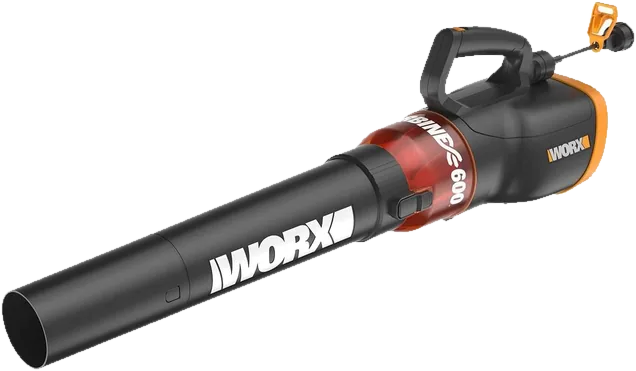
1. WORX WG520 12-Amp Turbine Corded Leaf Blower Best Overall
Best for a yard you can reach with a cord, with up to 600 CFM from a 6.4 lb body and a 3-year warranty when you register it.
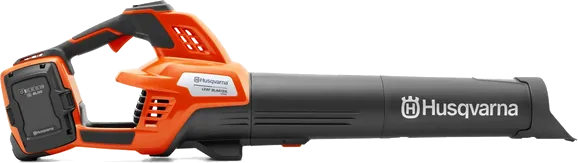
2. Husqvarna 350iB Leaf Blaster Battery Blower Kit Best Premium
Best for owners who want the most push from a cordless handheld, rated at 23.5 N, with cruise control, at about 10 lb with the pack.
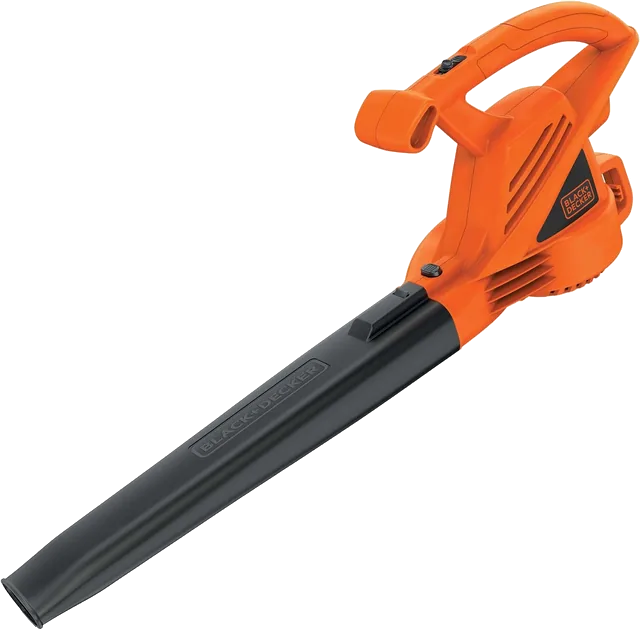
3. BLACK+DECKER LB700 7-Amp Corded Leaf Blower Best Value
Best value for hard surfaces and small jobs such as patios, decks and walkways, at about 5 lb with a switch that stays on.
The WORX WG520 12-Amp Turbine Corded Leaf Blower does the work wherever your outlet reaches, with no pack to charge, and past the last outlet a battery tool takes over. Pick the machine that reaches your farthest leaves, and you have the best electric leaf blower for your yard.
Why WORX WG520 12-Amp Turbine Corded Leaf Blower Might Be the Best Choice
The WORX WG520 12-Amp Turbine Corded Leaf Blower is my best overall because it puts the most air of any plug-in blower on this list into a body I can steer with one hand. It moves up to 600 CFM from a 12 A motor at 6.4 lb, and the speed control starts at 320 CFM for lawn work.
The trade-off is the cord. The box holds no extension cord, so you buy an outdoor-rated one in the gauge the manual gives, and past 150 ft a battery blower takes over.
Here is what puts it at the top:
✓ Airflow: 320 to 600 CFM across the speed control, according to WORX.
✓ Weight: 6.4 lb machine weight, and the air leaves straight down the tube so one hand steers it.
✓ No battery: it runs for as long as the outlet has power and starts with a switch.
✓ Warranty: 3 years limited when you register it within 30 days.
✓ Cord retainer: a rear retainer keeps the extension cord plugged in.
Frequently Asked Questions
What is the best electric leaf blower?
The best electric leaf blower for most yards is a corded one when an outlet reaches your leaves, and my pick is the WORX WG520, which moves up to 600 CFM from a 6.4 lb body. Where no outlet is near, the Husqvarna 350iB gives the most rated push of the battery handhelds, at about 10 lb with its pack.
Is it better to have more MPH or cfm in a leaf blower?
It is better to have more CFM than MPH in a leaf blower for lifting a pile, because airflow carries the volume of the leaves while speed only helps on stuck debris. Compare the CFM first, then check which setting and nozzle the mph figure belongs to, since makers list the two peaks under different conditions.
Are hand held leaf blowers any good?
Hand held leaf blowers are good for yards up to about half an acre, where one hand steers the tool and a cord or a single pack reaches the work. They tire the wrist and shoulder on long jobs, so the heavier battery kits at about 10 lb suit short passes with breaks.
What is the best leaf vacuum with a bag?
The best leaf vacuum with a bag on this page is the WORX Trivac WG509, a corded blower vacuum with a 1.2 bushel bag and a maker rating of 18 to 1 for mulching. It handles dry leaves, and wet leaves can clog it, so switch it to blower mode when the leaves are damp.
What is the best time of year to buy a leaf blower?
The best time of year to buy a leaf blower is late summer, before the leaves come down, because you have weeks to charge a pack, size an extension cord and read the wet-weather line in the manual. Buying in the middle of leaf season means learning a new tool in the cold, when a pack gives fewer minutes.
References
- US Department of Energy, Industrial Technologies Program; Air Movement and Control Association International. Improving Fan System Performance: A Sourcebook for Industry. DOE/GO-102003-1294. US Department of Energy; 2003.
- Walker E, Banks JL. Characteristics of Lawn and Garden Equipment Sound: A Community Pilot Study. J Environ Toxicol Stud. 2017;1(1).
- National Institute for Occupational Safety and Health. Noise-Induced Hearing Loss. Noise and Hearing Loss. Centers for Disease Control and Prevention; 2024.
- Morata TC, Gong W, Tikka C, Samelli AG, Verbeek JH. Hearing protection field attenuation estimation systems and associated training for reducing workers’ exposure to noise. Cochrane Database of Systematic Reviews. 2024;5(5):CD015066.
- Michaud DS, Marro L, Denning A, Shackleton S, Toutant N, McNamee JP. Annoyance toward landscaping equipment noise in Canada. JASA Express Letters. 2022;2(8):083602.
- Kowalewski AR, Buhler DD, Lang NS, Nair MG, Rogers JN. Mulched Maple and Oak Leaves Associated with a Reduction in Common Dandelion Populations in Established Kentucky Bluegrass. HortTechnology. 2009;19(2):297-304.
- Alexander BM, Graydon PS, Pena M, Feng HA, Beamer BR. Hazardous exposures and engineering controls in the landscaping services industry. Journal of Occupational and Environmental Hygiene. 2025;22(3):189-202.
Safety Note: Leaf blowers throw debris and can damage your hearing. Wear eye and ear protection, read the manufacturer’s manual, and check your local rules on noise and operating hours.