
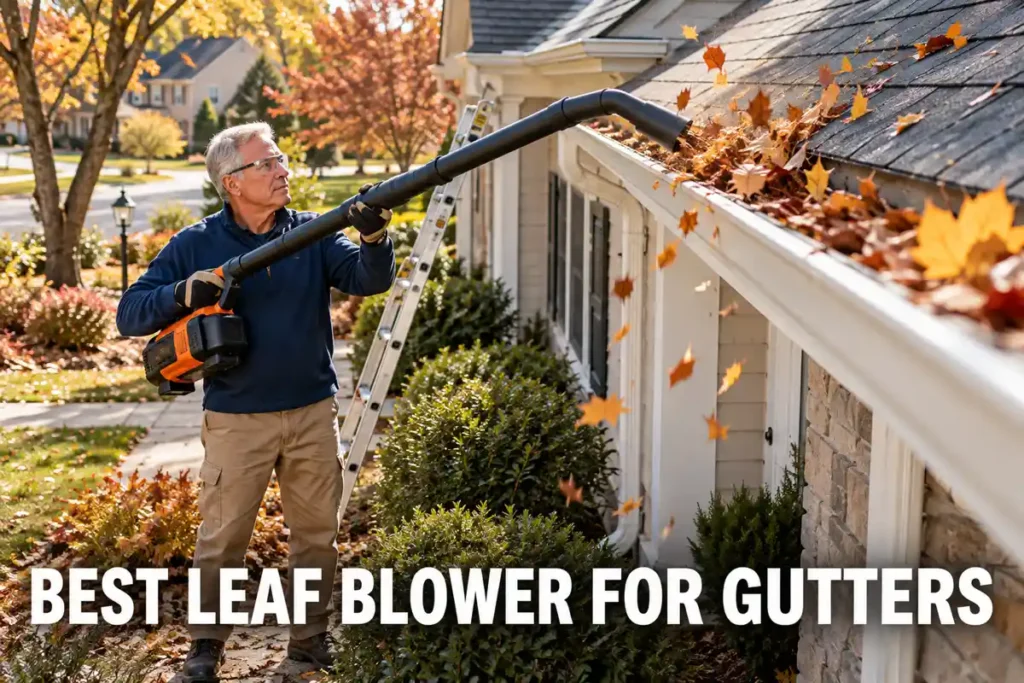
The best leaf blower for gutters is the one whose own maker sells a gutter kit made for that exact model, because a kit that does not fit leaks air at the joint and the job fails before it starts. I have worked the gutters on my farm buildings with the blowers and kits below, and the kit mattered more to me than the number on the blower’s box.
Affiliate Disclosure: Garden Power Scout is a proud participant in the Amazon Services LLC Associates Program. As an Amazon Associate, we earn from qualifying purchases, at no extra cost to you.
A gutter cleaning leaf blower does its best work on dry debris, from the ground, and these five picks cover cordless, corded and gas. My top pick is the EGO POWER+ LB7654 Cordless Leaf Blower Kit, and the buying advice after the list explains how kit, weight and power source decide the rest.
Best Leaf Blower for Gutters 2026 With 5 Models and Their Maker Gutter Kits
Each of these five blowers has a gutter attachment for leaf blower tubes that its own maker sells for it. The picks split by power source: two EGO cordless blowers share one kit, WORX adds a corded and a cordless pick with kits of their own, and ECHO covers gas.
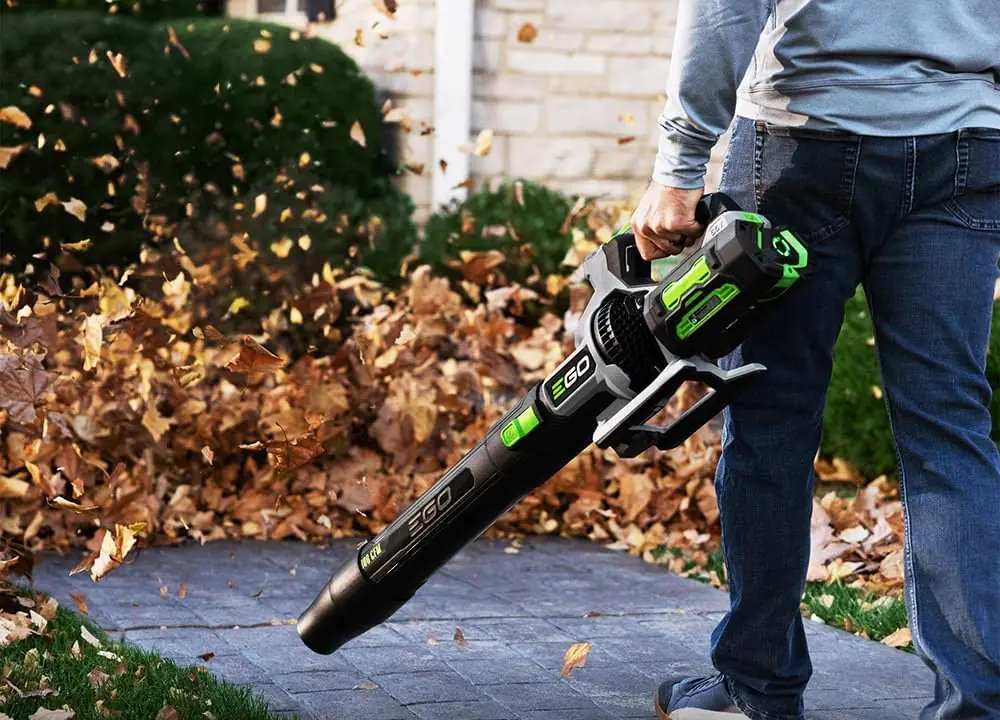
1. EGO POWER+ LB7654 Cordless Leaf Blower Kit Best Overall
Clearing a gutter from the ground means holding a long tube overhead and still pushing air at the far end. The EGO LB7654 is the cordless blower I pick for that job. EGO lists its AGC1000 gutter kit for the LB7650, the blower body in this kit, and the LB7650 manual names the AGC1000 as a recommended accessory. The AGC1000 is sold separately, so the button below buys the blower kit alone.
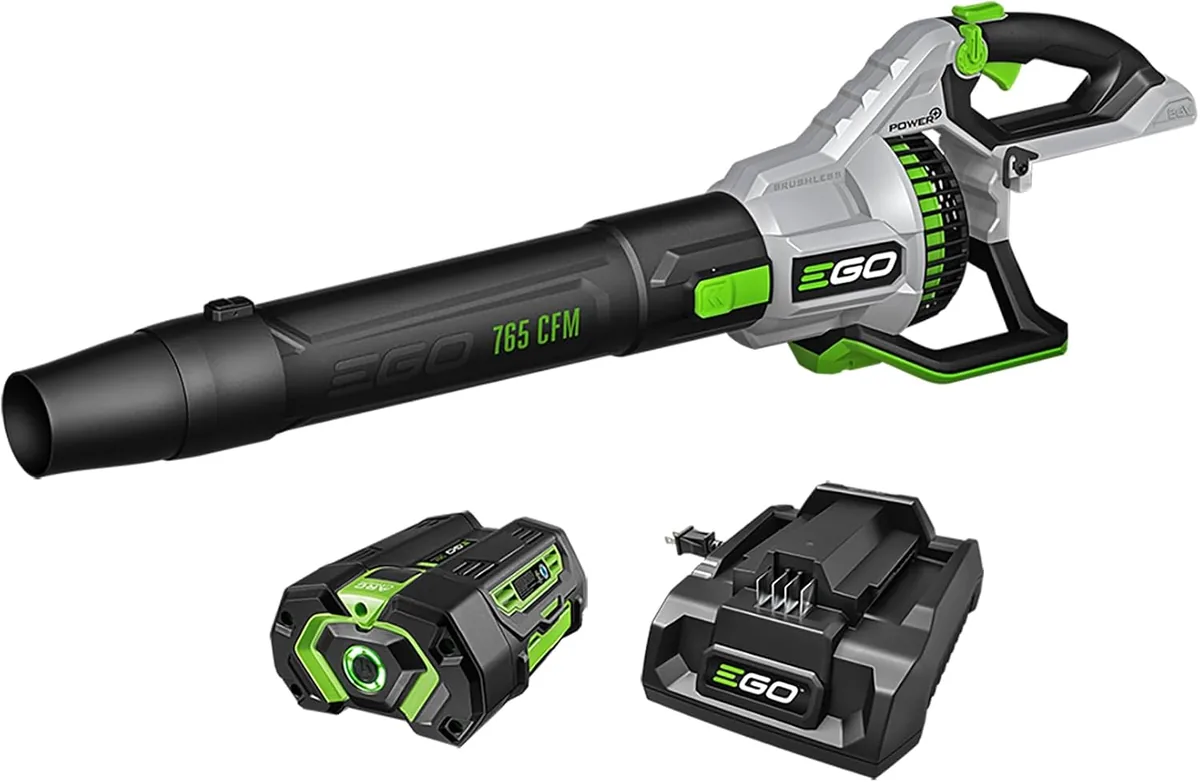
EGO POWER+ LB7654 Cordless Leaf Blower Kit Specs
Key Features:
- Kit EGO lists for this blower: the AGC1000 page names the LB7650, the blower inside the LB7654 kit, so the blower and its gutter kit come from one maker.
- Screw-together tubes: EGO builds the 8.3 ft attachment from tubes that screw together, so you can assemble it on the ground with the battery out.
- Adjustable nozzle: the AGC1000 ends in an adjustable nozzle, which gives you a way to change how the stream leaves the tube.
- Speed and lock-on dial: it holds any speed with your finger off the trigger, which matters when the arm is raised.
- Cordless: there is no cord to drag along a wall and no outlet to hunt for.
- Run time on the box battery: EGO’s manual gives about 150 minutes on low and 25 on high from the 5.0 Ah battery.
- Five-year tool warranty: EGO’s page lists 5 years on the tool and 3 on the battery and charger.
EGO’s 765 CFM belongs to the blower at its own nozzle, and EGO gives no airflow or speed for the blower with the kit fitted. At a middle setting the stream carries dry leaves, blossom petals and chaff along a trough. A wet, packed mat needs a scoop, and no setting changes that.
The blower weighs 4.6 lb bare and about 9.6 lb with the battery on, and the battery is more than half of that. A pole pruner taught me that weight at the far end of a long reach tires the arms first, so I like that the heaviest part of the LB7654 sits behind the grip and the tube is the only extra out front. EGO publishes no weight for the AGC1000, so the total with the kit is a number your own arm will tell you.
After the apricot harvest, the gutter over the crate store fills with dry chaff, petals and stem bits, and that is the job this kit does well. Where a knot of plum twigs had jammed at a seam, the stream slid around it and left it in place, and I did not push harder to win. The limit I found is the tangle: the kit moves loose, dry material and nothing that has locked itself into the gutter. One 5.0 Ah battery carried me along the eaves of both sheds with charge to spare, because the dial stayed well below boost.
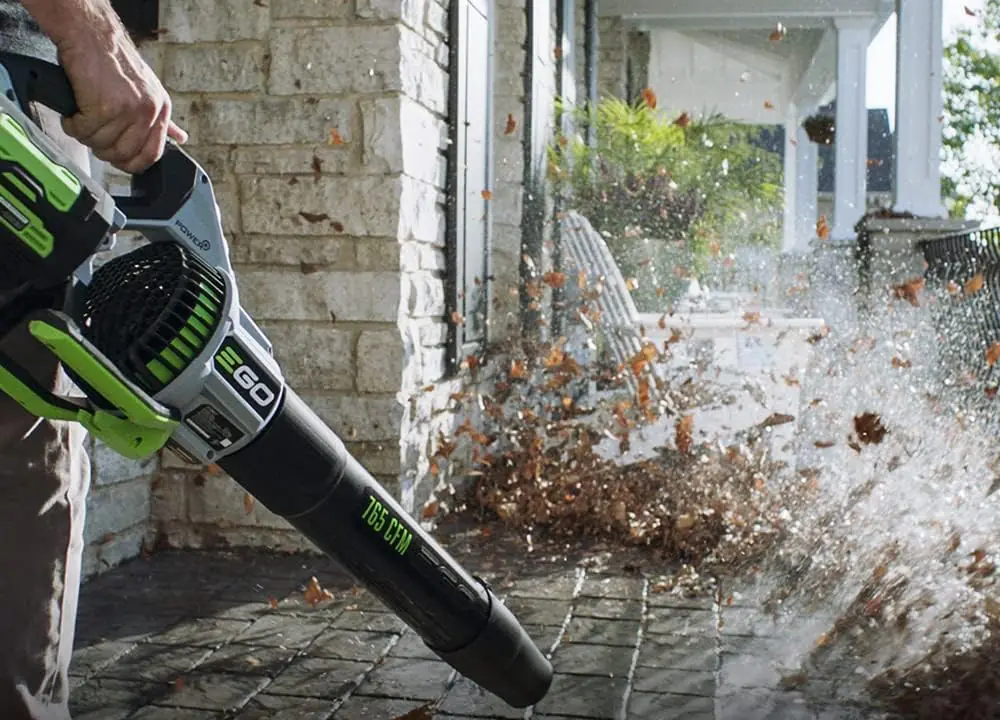
Screw the tubes together on the ground, seat the battery with the dial at off, then pull the trigger and set the dial before you lift. The boost button needs a thumb press that a raised arm will not hold for long, so I leave boost for ground work and let the locked dial carry the gutter.

WHY I CHOSE THIS
Mirko Lekić, Agricultural Engineer & Farm Owner
I choose the LB7654 because three things line up: EGO lists the AGC1000 for this blower body, the dial lock lets my arm do the holding while my finger rests, and the battery in the box gives a long run on low. Best Overall here means a documented kit, enough air to spend on a tube and a battery that lasts the whole job. For the best cordless leaf blower for gutters on single-story eaves, it is where I start.
EGO’s LB7650 manual, the manual for this blower body, says: “Do not use on a ladder, rooftop, tree, or other unstable support.” It adds that stable footing on a solid surface gives better control of the blower in unexpected situations, and that is why I buy a kit and keep both feet on level ground.
Any EGO 56V battery fits the blower, which helps if you already own the platform. I wear hearing protection whenever it runs, safety glasses with side shields rated ANSI Z87.1 because a gutter drops debris back toward you, and a dust mask for dry chaff. What annoys me is the dial rule: if the dial is not back at off when the battery comes out, a fresh battery will not start the blower until the trigger is pulled once, and the first time that looks like a fault. I turn the dial to off before I take the battery out.
Buy it if your gutters are single-story eaves holding dry leaves, chaff and petals, you want no cord to manage, and you may already own EGO 56V batteries. Skip it if the gutter sits higher than a single story, since EGO prints a length for the kit and no reach, or if your gutters hold wet, packed debris.
FINAL VERDICT
For clearing a single-story gutter from the ground, the LB7654 and the AGC1000 that EGO lists for the LB7650 body inside it make my first pick. The dial lock keeps a raised arm working while the finger rests. Buy it for dry debris on single-story eaves and skip it for anything higher or wetter.
It is the cordless gutter blower I pick first for single-story eaves.
2. EGO POWER+ LB8803-2 Two-Battery Leaf Blower Kit Best Premium
The EGO LB8803-2 gives a gutter job what a long tube uses up first: spare air. EGO rates it at 880 CFM on turbo with the tapered nozzle, and the kit ships with two 4.0 Ah batteries, so a long eave run does not end with one empty battery. EGO sells a gutter attachment for leaf blower models in its 56V line, the AGC1000, and lists it for the LB8800, the same blower this kit sells with two batteries. The AGC1000 is sold separately, so the button below buys the blower, the batteries and the charger alone.
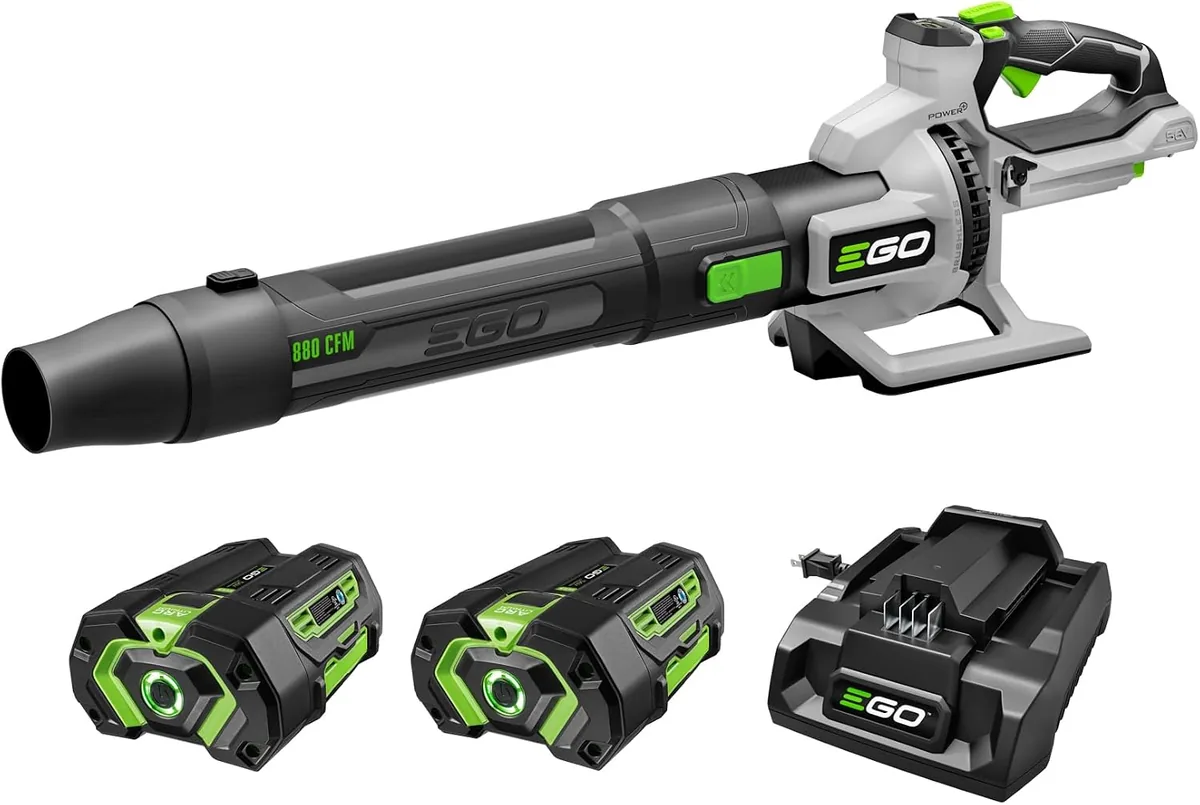
EGO POWER+ LB8803-2 Two-Battery Leaf Blower Kit Specs
Key Features:
- Kit EGO lists for this blower: EGO’s AGC1000 page names the LB8800, and the LB8800 manual lists the AGC1000 as an accessory sold separately.
- Two 4.0 Ah batteries in the box: when the first battery runs down, the second one keeps the job going.
- Speed lock button: it holds the speed you set with your finger off the trigger, and a second press switches the blower off.
- Screen with fuel gauge and speed bars: you can read the charge and the speed before the arm goes up, and the screen turns off 1 minute after the trigger is released.
- Wide trigger range: EGO’s page puts it at 270 to 700 CFM, so the stream can be turned down for light debris.
- Turbo button: it raises the air to EGO’s maximum while you hold it and drops back when you let go.
- Five-year tool warranty: EGO lists 5 years on the tool and 3 on the batteries.
The 880 CFM and 200 mph are EGO’s maxima at the blower’s own nozzle, and EGO gives no figures with the kit fitted. EGO rates the push at 30 N at most. For a gutter of dry leaves I stay well below that, and I rarely reach for turbo.
The blower weighs 4.9 lb bare and about 9.7 lb with one 4.0 Ah battery on, and the battery is nearly half of that. EGO publishes no weight for the AGC1000, so the total with the kit is not a published figure. Run time is the price: EGO’s manual gives about 80 minutes on low, 12 on high and 8 on turbo per battery. According to EGO, both batteries together come to about 24 minutes on high.
I split the eaves by battery: the first takes the machinery shed, the second takes the tool shed and the crate store, and I swap with the blower on the ground. At middle bars the stream moved leaves along the machinery shed without effort, but past the corner of the crate store it only crept, so I raised the bars one notch and the battery drained faster. The screen helps, because I read the bars and the charge with the nozzle still low, before the arm goes up. The far end of a bent run asks for more bars than the near end did.
Choose the bars first, then press the speed lock. A second press of the lock button switches the blower off, and that is how I stop it before I lower the tube.
WHY I CHOSE THIS
Mirko Lekić, Agricultural Engineer & Farm Owner
I pick the LB8803-2 as the premium choice because the money buys things a gutter job uses: a screen that shows charge and speed, a lock that holds the setting, an 880 CFM rating and a second battery ready to swap. The screen, the speed lock and the higher rating are what the premium tier pays for here. One caveat: EGO lists the kit for the LB8800, and EGO sells the LB8803-2 as the LB8800 with batteries and a charger.
EGO’s LB8800 manual says “Do not overreach” and “Keep proper footing and balance at all times,” which “enables better control of the machine in unexpected situations.” A long tube makes overreaching easy, so I walk my feet along the wall.
Charge both batteries before the job, because EGO’s manual says to charge fully before first use. A battery under 4.0 Ah limits the blower to two speed bars, which matters only if you plan to use older EGO batteries with it. EGO publishes no noise figure, so hearing protection goes on before the blower starts, along with ANSI Z87.1 glasses with side shields, and a dust mask when the chaff is dry. Turbo has no lock, so my thumb decides how long it runs, and that is what I like least.
Choose the LB8803-2 for a long gutter run, several outbuildings or a house with a long single-story eave, where a spare battery and a screen earn their place. Skip it if you clear one short wall, because the premium tier pays for extras you will not use, or if the gutter sits higher than a single story, since EGO prints a kit length of 8.3 ft and no reach.
FINAL VERDICT
The LB8803-2 earns its premium with a screen, a speed lock and EGO’s 880 CFM rating, and EGO lists the AGC1000 for its LB8800 body. Its two batteries give about 24 minutes on high together. Choose it for those features on a long run, and skip it for one short wall.
It is the two-battery EGO I reach for on long eave runs.
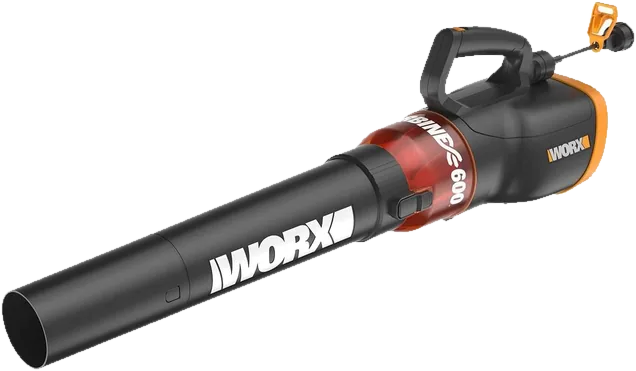
3. WORX WG520 Turbine Corded Leaf Blower Best Value
The WORX WG520 turns a gutter run into a job with no battery to charge and no fuel to mix, as long as an outlet sits near the wall. For this blower, the WORX leaf blower gutter attachment is the GutterPro Universal Gutter Cleaning Kit WA4094: WORX’s kit page lists the WG520, and its support page for this blower names the same kit. The WA4094 is sold separately, so the button below buys the blower alone. The pair sits in the budget tier, with a cord as the price of admission.
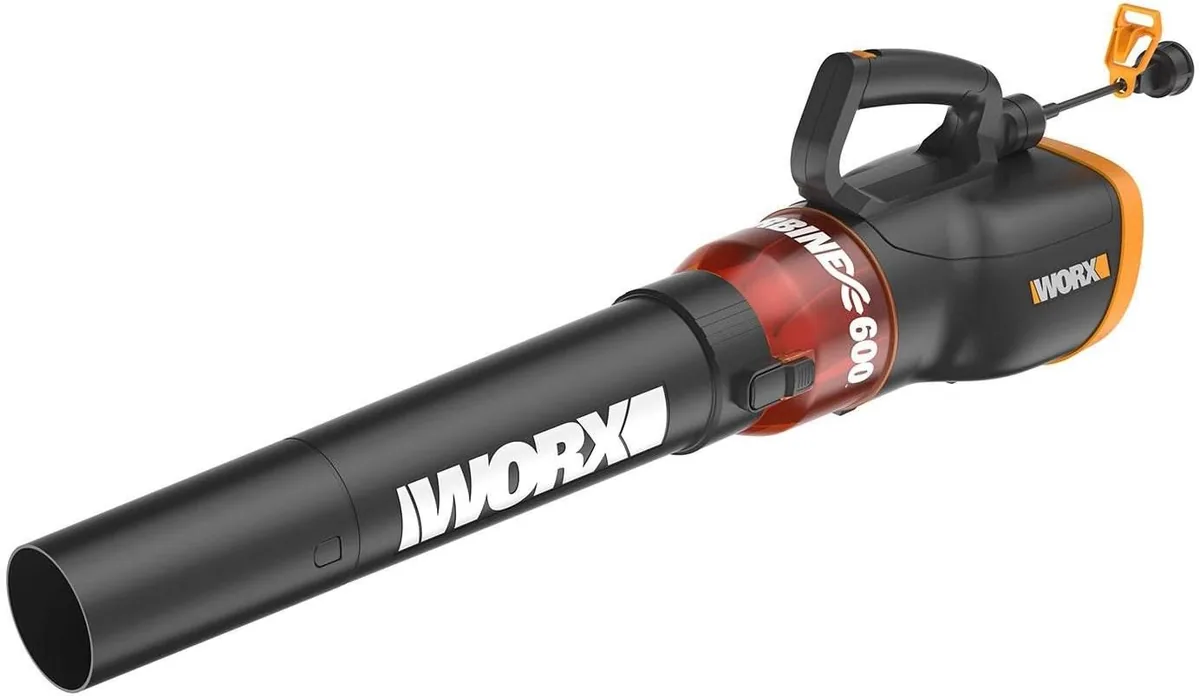
WORX WG520 Turbine Corded Leaf Blower Specs
Key Features:
- Kit WORX names for this blower: the WA4094 page lists the WG520, and WORX’s support page for the WG520 says to make sure your GutterPro kit is the WA4094.
- Up to 11 ft of reach: WORX gives that figure for the kit, built on 8 ft of tube.
- Published kit weight: WORX lists the WA4094 at 3.31 lb, so you can add it to the blower before you buy.
- Variable speed dial: it runs from 320 to 600 CFM, so you can turn the stream down for light debris.
- No battery or fuel: it starts from the switch and runs as long as the outlet does.
- Rear cord retainer: it keeps the extension cord plugged in while you move along the wall.
- Three-year limited warranty: WORX’s US page asks you to register within 30 days, and the term is 24 months without registration.
WORX rates the WG520 at 600 CFM and 110 mph at full speed, and both numbers describe the blower on its own, because WORX gives no figures with the kit fitted. I run the dial near full for a long reach and back it off for light debris. Dry leaves, petals and chaff travel along a trough in a wide stream, but 110 mph does not peel off material that has stuck.
WORX lists the blower at 6.4 lb and the WA4094 at 3.31 lb, which adds up to about 9.7 lb in your hands. The cord decides how much wall one outlet covers: WORX’s manual calls for an outdoor-rated extension cord of at least 14 AWG up to 100 ft or 12 AWG up to 150 ft, and none comes in the box.
I start at the far corner of the tool shed’s end wall and work back toward the plug, so the cord trails behind me while the debris falls ahead. With the tubes on, my forearm noticed the extra 3.31 lb well before the job was done, more than I felt from the blower alone. The speed dial sits on the housing and is out of reach once the tube is up, so I set it before lifting, and the one time I wanted less air at a corner I had to lower the whole assembly. The limit is the cord: a long wall needs a second outlet or a longer run.
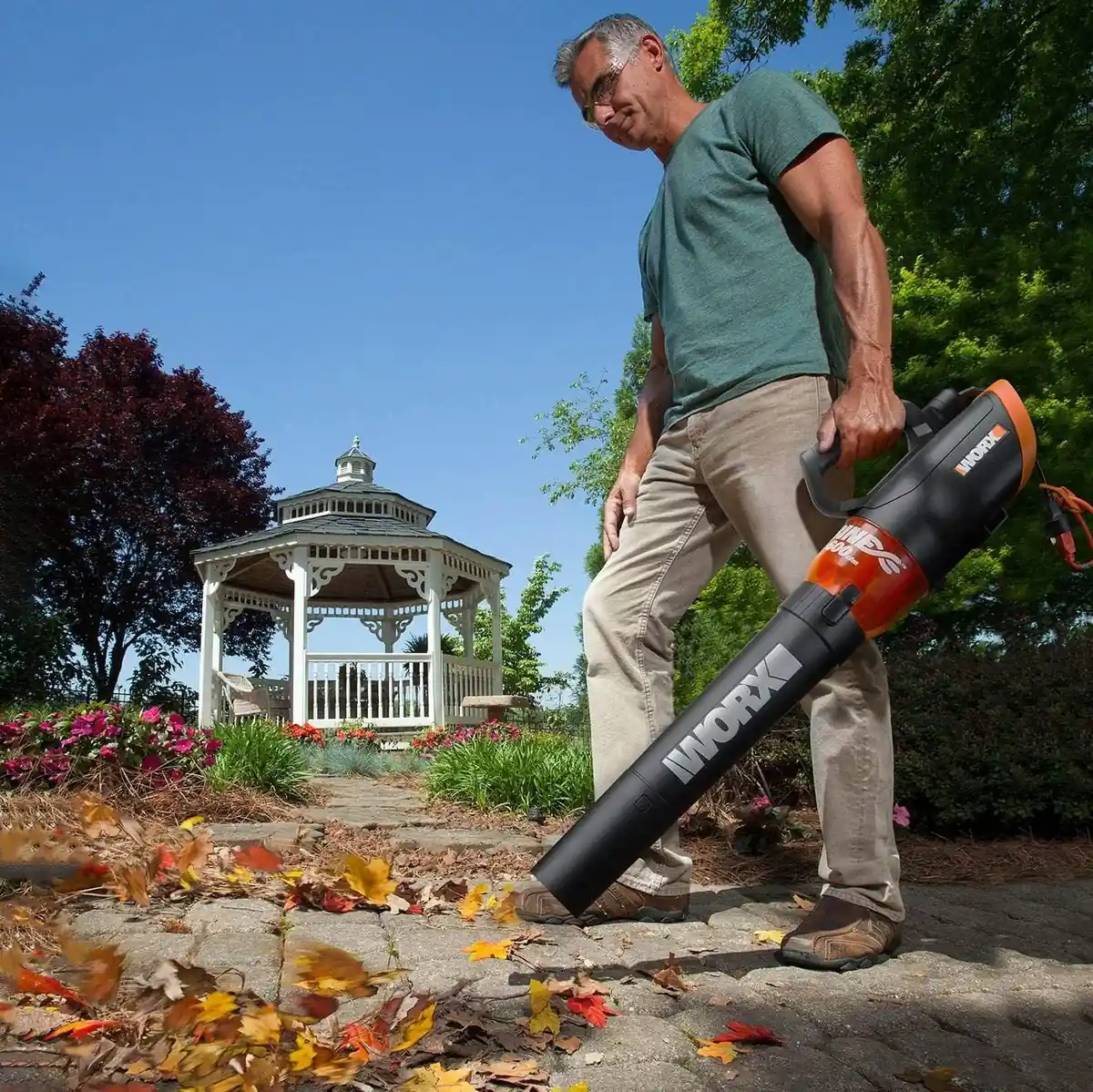
WORX’s kit manual says to use only enough tube extensions to comfortably reach the inside of the gutter. I follow it, because each extra section adds weight at the end of the arm and takes air out of the stream, and a shorter tube is easier to carry along the wall.
WHY I CHOSE THIS
Mirko Lekić, Agricultural Engineer & Farm Owner
I pick the WG520 as Best Value for one job: dry gutters within reach of a plug. WORX names this blower for its kit, there is no battery to buy, and 600 CFM is enough air to spend on a tube. The WG520 is the budget-tier pairing for a wall with an outlet nearby. Where it is weakest on this page is the cord, which sets how far you can work from the plug.
WORX’s kit manual says not to overreach or stand on unstable support and to keep good footing and balance at all times, and the WG520 manual repeats the footing rule. Plug in only on a dry day, because WORX’s manual says not to use the blower on wet surfaces, and a gutter, its downspout and the ground below stay wet after rain.
WORX’s manual requires hearing and eye protection, so I wear both, plus a dust mask for dry chaff. Unplug the blower before you change tubes, and check the extension cord for cracks before every job. What annoys me most is the cord catching on a corner post, which a battery blower never does.
The WG520 with the WA4094 suits a house or outbuilding with single-story eaves, an outdoor outlet within a cord’s reach and a preference for no batteries. Skip it if the gutter sits higher than the 11 ft WORX states for the kit, if the wall is far from power, or if your gutters hold wet, packed debris.
FINAL VERDICT
The WG520 and WA4094 are the budget pairing WORX itself documents for dry gutters. You get 600 CFM, a published kit weight and a three-year warranty with no battery to buy. Plug it in when the eaves you need are a short cord away.
It is the corded gutter blower I plug in first for short walls.
4. WORX WG543 20V Cordless Leaf Blower Kit Best Lightweight Cordless
The WORX WG543 weighs about 3.8 lb with its battery on, which makes it the best lightweight cordless leaf blower for a gutter cleaned from the ground. WORX sells a gutter kit for it, the WA4096, with up to 11 ft of reach by WORX’s figure. The kit is a separate purchase, so the button below buys the blower, one 4.0 Ah battery and a charger alone.
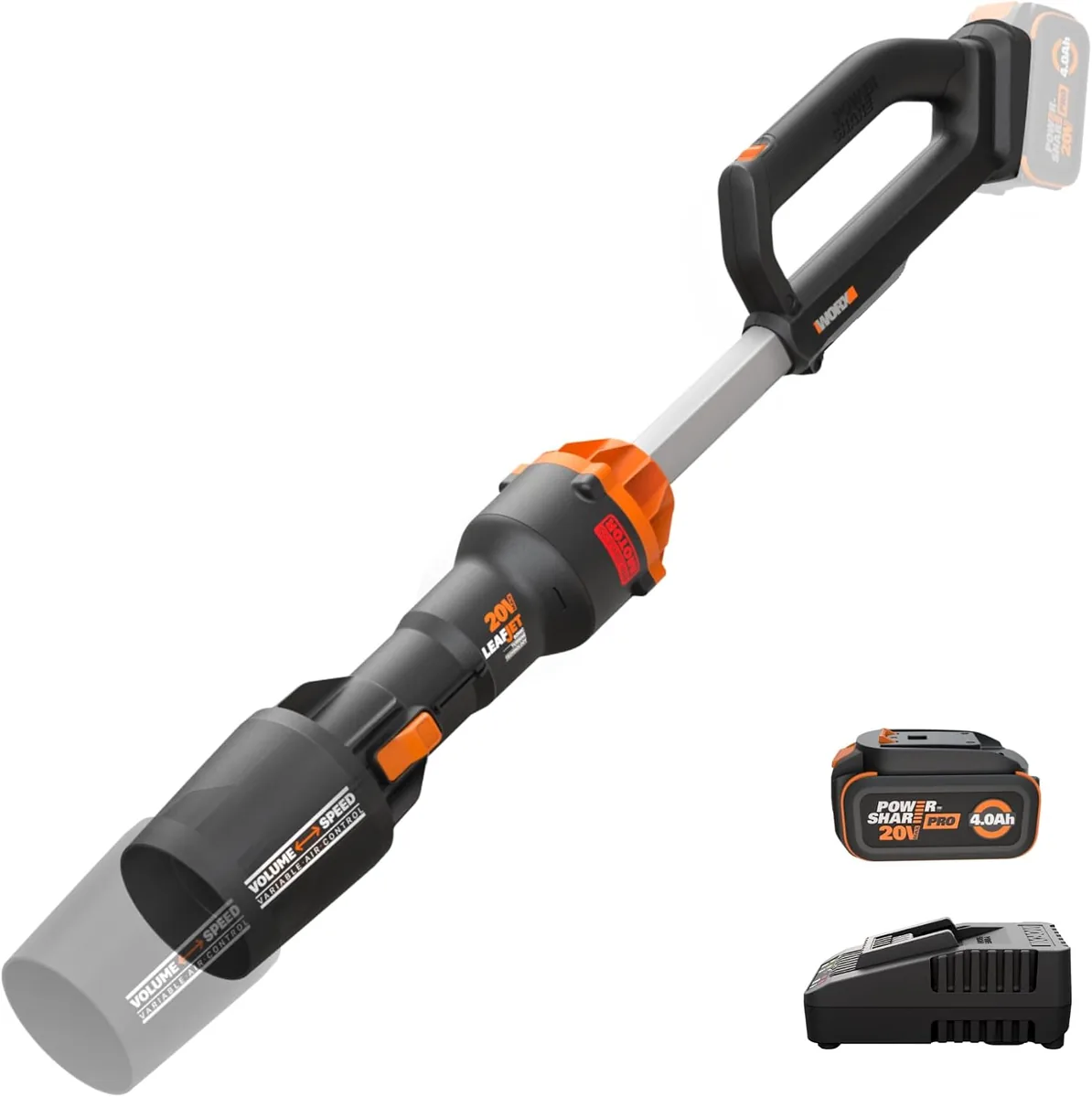
WORX WG543 20V Cordless Leaf Blower Kit Specs
Key Features:
- Kit made for it: WORX says the LeafJet adapter in the WA4096 is designed for this blower.
- Three tube extensions: WORX lists 11 ft of reach in all.
- Two power settings: low is 305 CFM and 95 mph, in separate modes.
- One-hand controls: a two-setting switch on a straight tube, with no cord or hose.
- PowerShare battery: the 20V pack fits other WORX 20V tools.
WORX lists 410 CFM in volume mode and 130 mph in speed mode on high, and both belong to the stock nozzle. The kit manual has you take that nozzle off, so WORX gives no airflow or speed with the kit on. Treat 410 CFM as a ceiling, the smallest airflow figure of the five blowers on this page, and keep the pairing for dry leaves.
The blower is 3.8 lb with the pack, and WORX prints no weight for the kit. Weight at the far end of a tube costs the shoulder more than the same weight at the grip. So I fit only as many extensions as the eave needs, as the kit manual asks: “Use only enough Gutter Tube Extensions to comfortably reach the inside of the gutter.”
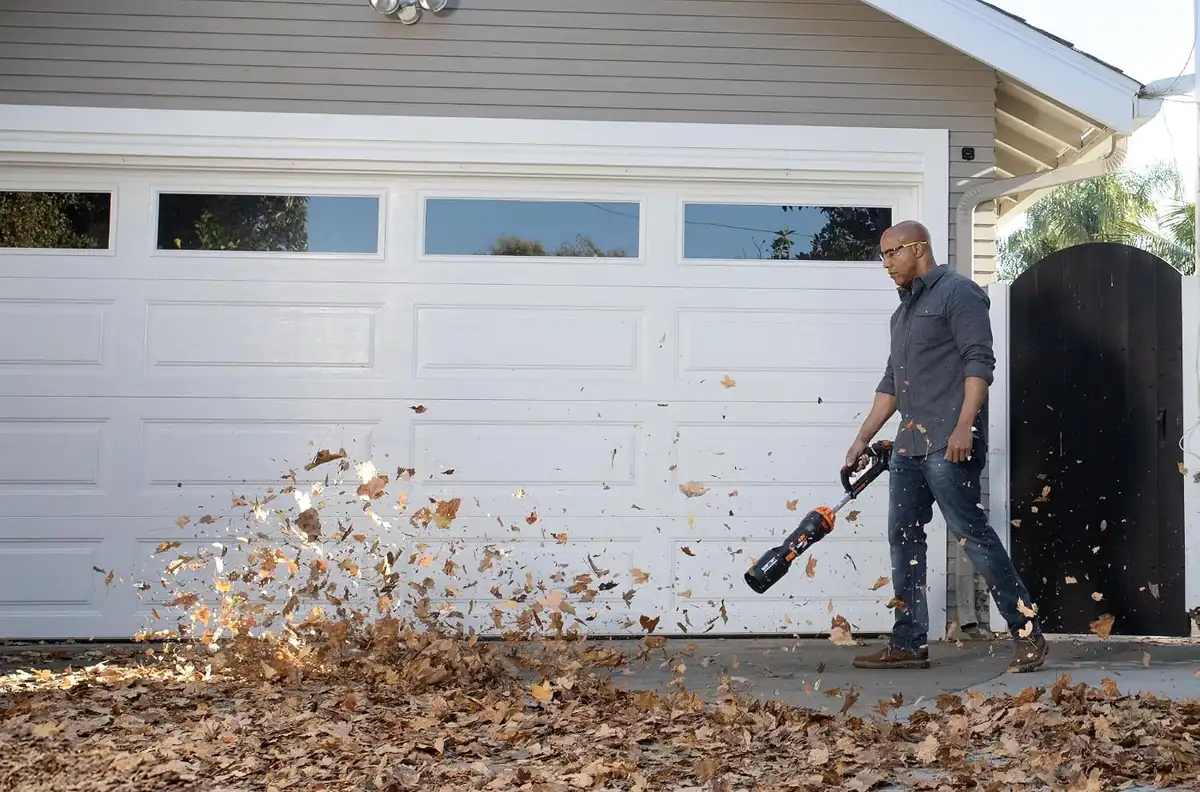
On the open side of the machinery shed, a side wind leaned on the long tube harder than I expected, so I start on the sheltered side and finish with the wind at my back. With the stock nozzle off for the adapter, the slide between modes is gone and the switch is all I have, so on the shed eaves I set it and leave it.
WHY I CHOSE THIS
Mirko Lekić, Agricultural Engineer & Farm Owner
I give the WG543 the Best Lightweight Cordless label on one fact: 3.8 lb with the battery on, lighter than the other cordless picks here by a wide margin. I recommend it for dry leaves in a short single-story eave, where a light tool beats a stronger one that tires the arm first.
WORX’s kit manual says to keep good footing and balance at all times and not to overreach or stand on unstable support. Take the battery out before you swap the nozzle for the adapter, and wear eye protection and a dust mask.
The 4.0 Ah pack is the limit. WORX publishes no run time, and a recharge takes about 2 hours, so a second pack suits more than one wall. In late October, plum leaves lay loose along the tool shed gutter; low moved them, and I used high only at the corner where they had piled. I wear ear protection with it, as with every blower.
This pairing suits a single-story eave with dry leaves and light litter,. Skip it for wet or packed gutter debris, a two-story roofline, or any job that needs a stated run time.
FINAL VERDICT
The WG543 with the WA4096 earns its place on arm fatigue, and it gives up air to get there. Buy it for dry leaves in a short single-story gutter, where the weight in your hand matters more than the air at the end of the tube.
It is the light cordless blower for a short single-story gutter.
5. ECHO PB-2520 Gas Handheld Leaf Blower Best Handheld Gas
The ECHO PB-2520 is the one gas engine on this page, and ECHO names it for its gutter kit: the Posi-Loc Rain Gutter Cleaning Kit, part 99944100026. According to ECHO, the kit gives 7 ft of extension for a maximum reach height of 15 ft at first-story level. It is my pick for a single-story gutter if you already run gas; the kit is bought separately, so the button below buys the blower alone.
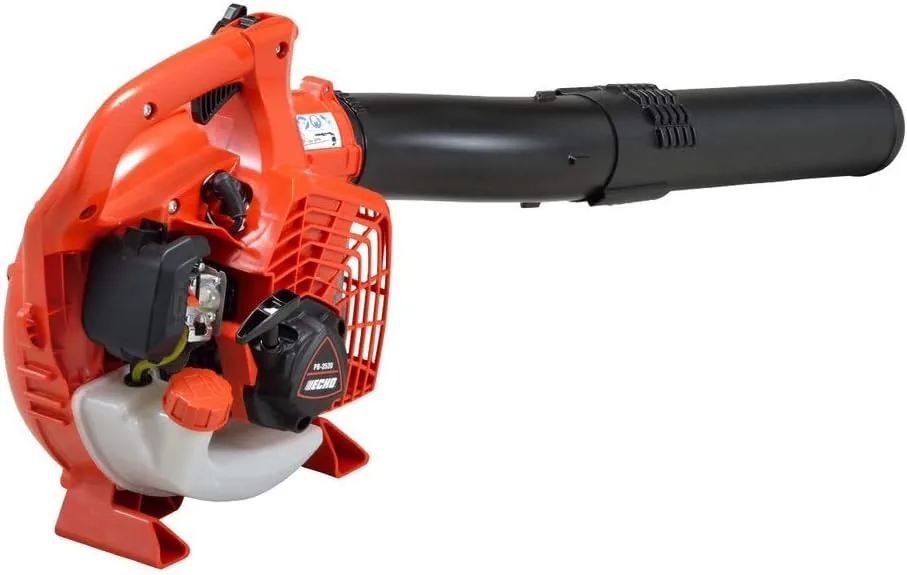
ECHO PB-2520 Gas Handheld Leaf Blower Specs
Key Features:
- Kit made for it: ECHO’s page lists the PB-2520 for kit 99944100026.
- Adjustable elbows: two of them angle the tube end toward the trough.
- Throttle position lever: it holds a set engine speed for you.
- See-through fuel tank: 18.6 fl oz, level visible.
- Posi-Loc pipes: a secure connection.
ECHO lists 453 CFM and 170 mph at the nozzle with the blower’s own pipes, and 15.8 N of force, about 3.5 pounds of push. ECHO gives none of these with the kit on. Wet, packed debris is scoop work.
A full tank adds about 0.9 lb to the 8.6 lb dry weight, so you hold about 9.5 lb before the kit adds anything, and ECHO prints no kit weight. With the engine at my hand and the tubes pulling out in front, next to a cordless handheld I feel this one at the shoulder rather than the wrist. I set the throttle position lever on the ground before I lift the tube, so my trigger finger holds nothing with the arm raised. Move the stop switch off STOP before you pull the cord.
Use the lowest speed that moves the debris, as ECHO’s manual says, and work with the breeze at my back, because on a still morning the exhaust smell stayed with me along the wall. ECHO also asks for 5 minutes at wide open throttle every hour of running, so I plan that run on open ground after the gutter pass.
WHY I CHOSE THIS
Mirko Lekić, Agricultural Engineer & Farm Owner
I call the PB-2520 the best handheld gas leaf blower here because ECHO itself lists it for a gutter kit and states a reach height for first-story gutters. I recommend it to the owner who already mixes fuel.
ECHO’s Quick Start Guide for the PB-2520 says: “Do not operate from ladders, maintaining balance will be difficult and could result in serious injury.” ECHO’s manual also says the unit is not insulated, so keep the tubes clear of every wire.
Fuel is a 50:1 mix of unleaded gasoline at 89 octane or higher, never E15 or E85. ECHO’s manual says to fill over bare ground with the engine stopped and cool and to carry the blower at least 10 feet from that spot before you pull the cord. The 70 dB(A) rating is a bystander figure at 50 ft, so put hearing protection on before the engine starts. I work when the family is out of the side yard.
Buy it if you already run gas and your gutters are first-story, dry and loose. Skip it for a two-story eave, or for wet, packed debris. ECHO’s five-year consumer and two-year commercial warranty covers units sold by authorized ECHO dealers, so check the seller before you buy.
FINAL VERDICT
The PB-2520 with ECHO’s kit handles a first-story gutter of dry leaves, and it brings a fuel mix and a pull cord with it. The gas owner with first-story gutters is the buyer it fits.
It is the gas handheld for first-story gutters.
How to Choose the Best Leaf Blower for Gutters
Seven factors decide which blower earns this job, and the first is the leaf blower gutter attachment its maker sells for it. The rest follow the path of the air and your arm: the tube, the weight, the power source, the debris and the height of your eaves. I judge each one by the hardest wall I clean.
A Leaf Blower Gutter Attachment Made for Your Exact Model
Look for a kit that the maker names for your blower’s model number. Buy a leaf blower with gutter attachment support written into the maker’s own kit page, because a kit that fits blowers by rule rather than by model leaves you to test the joint yourself, and a leaking joint lets air escape before it reaches the gutter.
Read the list with care. Makers often name the bare tool, while the box you buy carries a kit number for the same blower with a battery and a charger. The model number on the data label settles whether the two are the same blower.
Check these four things on the kit page:
- Your exact model number: it appears on the kit page or in the accessory list at the back of the manual.
- The tube size: the largest tube diameter the kit’s collar accepts, stated in inches.
- Sold separately: some blowers ship without the kit, so read what the box contains.
- The wall it is meant for: a line such as “Designed for first story use” tells you the height the maker has in mind.
Pro Tip
Write the kit’s part number and your blower’s model number on one note before you order. I tape mine inside the shed door, so a replacement tube is the right part on the first try.
Maker Kit or Universal Leaf Blower Gutter Attachment
A maker kit is built for one family of blowers, with an adapter that matches the outlet and the way the tube locks on. A universal gutter cleaning kit for leaf blower tubes leans on collars instead and states a largest tube diameter, up to 5 inches on the universal kits makers describe.
Universal kits exist and some owners use them. I list no kit from a third party here, because a third-party universal kit carries no maker statement that it fits your model, and outlet diameters and locking styles differ between makers and between models of one maker. WORX is the exception among the picks: it sells a kit it calls universal and still names the blower models it fits, so count the list, not the word universal on the box. I buy the maker’s kit for my blower and nothing else.
Air Left at the End of a Long Curved Tube
A leaf blower for gutter cleaning pushes its air through about eight feet of added tube and an elbow before it reaches the debris. The CFM and mph on the box describe the bare blower, so a kit delivers less at the elbow than the box promises.
Moving air also spreads once it leaves an opening. How much air a turbulent jet pulls in from the still air around it depends on the jet’s momentum and its distance from the nozzle (1). I read that as a reason to hold the elbow’s outlet close to the debris.
Power is the second cost. For a given fan, airflow rises in proportion to speed while power use rises with the cube of speed, and the US Department of Energy’s fan sourcebook gives the example of 20 percent less speed for about 50 percent less power (2). A kit pushes you toward the top of the dial, where a pack drains fastest, so I count run time on high and never on low.
Makers print maximum airflow and maximum air speed as separate peaks, often on different nozzles, so no single pair of numbers tells you what leaves the elbow. Before a kit goes near a gutter, I run the assembled tube over dry leaves on the gravel yard and watch where the stream lands, because that is the stream the gutter gets.
Air to Spare
Choose the blower that still moves dry debris on a middle dial with the kit fitted. A blower that needs its top setting to do that has nothing left for the far end of the wall.
Weight Held Overhead and One-Hand Control
With the tube out in front and the elbow raised, the weight acts at the end of a long lever, and weight times distance from your hand is what tires your wrist. My forearm gives out before the pack does once the tube is out in front. The best leaf blower for gutters weighs as little as the debris allows: dry, loose leaves need little air, so a light blower does the job, and packed debris is a job for a hose or a snake from below.
Compare weights on the basis you will hold. A cordless blower counts with its battery on and a gas blower with fuel in the tank, because a bare-tool or dry figure hides the pack or the fuel. The battery is about half the weight of some cordless kits. A kit then adds its tubes at the end of your arm, and the kit table below gives a weight only for the WORX WA4094, at 3.31 lb.
Look for a control that holds your speed:
- Lock-on dial or lock button: it holds a speed while your trigger finger rests.
- Throttle lever: on a gas handheld it holds the engine speed the same way.
- Boost or turbo button: it works only while your thumb presses it, and a raised arm will not hold it for long.
- Dial on the housing: you set it before you lift the tube, because changing it later takes a second hand.
Cordless, Corded or Gas for This Job
Each power source solves one problem along a wall and brings another, and the same trade-offs run through the other lawn care tools I review. The table sets the three side by side for a raised blower.
| Power | What it gives you along a wall | What it asks of you | Check before you buy |
|---|---|---|---|
| Cordless | No cord to drag along the wall and no fuel | Minutes end with the pack, and high speed ends them fastest | Minutes on high for your pack |
| Corded | No run-time limit and no battery weight | A wall within cord length, and a heavier cord for a longer run | The cord gauge table in the manual, and outdoor-rated cord only |
| Gas | No cord and no pack | Fuel mix, refuel rules, exhaust and more noise at your ear | Mix ratio and refuel distance in the manual |
Gas asks for the most care. Stop the engine and let it cool before you refuel, then carry the blower the distance your manual gives away from the fuelling spot before you start it. NIOSH sampling of 80 landscaping workers found significantly more noise and carbon monoxide exposure with fuel-powered leaf blowers, string trimmers and chainsaws than with battery versions (3).
Where a maker rates noise, it does so at a distance, such as the 50 feet of the bystander rating, so the level at your ear is higher. I wear earplugs and earmuffs together whenever a gas engine runs, I refuel on the gravel yard away from the buildings, and I wear hearing protection with every blower.
Gas Stays Outdoors
Never run a gas blower inside a shed, a garage or any enclosed space, even with the door open. The exhaust is hot and carries carbon monoxide, so aim it away from your face.
Dry Debris Against Wet or Packed Gutters
Dry leaves, needles, seed pods and grit lie loose on the floor of the trough, and a steady stream carries them out. Soaked leaves weigh far more than dry ones and cling to the metal by surface tension, so the stream that rolls dry leaves only slides a wet mat.
A stronger blower does not fix that. I look at the downspout end first, because wet debris collects and stays there, and when the debris there is wet the blower stays in the shed and a scoop does the job.
| Debris | What a blower does | Better tool |
|---|---|---|
| Dry leaves, needles and seed pods | Rolls them along the trough and out | The blower and its kit |
| Dry grit and dust | Lifts it in a cloud | The blower, with a dust mask and the windows closed |
| Damp leaves | Slides them as a mat that sticks again | A dry day, then a scoop for what stays |
| Mud and sludge | Smears it along the trough | A scoop, a hose or a wet and dry vacuum |
| Packed debris at the downspout | Leaves it packed | A hose or a snake from below |
Reach Against Your Eave Height
Kit reach is a figure measured from somewhere. Makers publish a length of attachment, a reach with a stated tube length or a maximum reach height, and those three figures cannot be compared with each other. Read which one your maker prints and what it was measured from.
Then measure your own wall. I took a tape from the ground to the gutter lip on every building I clean: the single-story sheds come out at 10 to 12 feet and the two-story house at 18 to 20. A kit meant for a first-story wall cannot do the second, and the house wall is a professional’s job.
Before you order a kit, check three things:
- The gutter lip: its height from the ground, measured with a tape.
- The maker’s figure: whether it states a length, a reach or a maximum reach height.
- The hold height: a reach counted from your hand holds only if you hold the blower at the same height.
Each Pick’s Maker Kit and What the Manuals Say About Ladders
Leaf blower gutter cleaning from the ground is the version the makers describe: Echo says its kit reaches first-story gutters without a ladder. The table lists each pick with the kit its maker sells for it and what the maker states the kit adds. None of the five blowers comes with its kit: each Amazon button leads to the blower, and the kit is a separate purchase.
| Pick | Maker kit | What the maker states the kit adds | Fit as the maker states it |
|---|---|---|---|
| EGO LB7654 | EGO AGC1000 | An attachment 8.3 ft long, with an adjustable nozzle and screw-connection tubes | EGO lists the AGC1000 for the LB7650, the blower this kit is built on |
| EGO LB8803-2 | EGO AGC1000 | An attachment 8.3 ft long, with an adjustable nozzle and screw-connection tubes | EGO lists the AGC1000 for the LB8800, the same blower this kit sells with two batteries |
| WORX WG520 | WORX WA4094 | Up to 11 ft of reach with 8 ft of tube, at 3.31 lb | WORX’s kit page names the WG520 |
| WORX WG543 | WORX WA4096 | Up to 11 ft of reach, with tube sections and an angled top | WORX makes a LeafJet adapter for the WG543, sold separately |
| ECHO PB-2520 | ECHO 99944100026 | 7 ft of tubes and up to 15 ft of maximum reach height, for first-story gutters | ECHO’s page for the kits lists the PB-2520 |
The figures use three bases: a length of attachment from EGO, a reach with a tube length from WORX and a maximum reach height on 7 ft of tubes from Echo. Read them as descriptions and do not rank them, then measure your own wall.
The manuals add footing rules, in the makers’ words:
- EGO, LB7650 manual (the blower inside the LB7654 kit): “Do not use on a ladder, rooftop, tree, or other unstable support.”
- EGO, LB8800 manual (the blower sold as the LB8803-2 with two batteries): “Do not overreach. Keep proper footing and balance at all times.”
- WORX, WA4096 kit manual: do not overreach or stand on an unstable support, and keep good footing and balance.
- Echo, PB-2520 and PB-2620 quick start guide: “Do not operate from ladders, maintaining balance will be difficult and could result in serious injury.”
These lines are the reason the reach section comes first. Match the kit to the wall you measured, so that both feet stay on level ground, and leave a wall the kit cannot reach to a professional.
Eyes First
Debris leaves the elbow and falls toward the wall and toward you. In a US study of lawnmower eye injuries, 77 percent came from projectiles such as grass, dirt and rocks, and only 2 percent of those were documented as involving eye protection (4). I put on safety glasses before any blower starts, add a dust mask for dry debris and keep people and pets 50 feet away, as the EGO and Echo manuals require.
My Overall Verdict
Three of the five stand out, and the order follows the kit, the weight in your hand and the power source. The best leaf blower for gutter cleaning is the one that scores well on all three for your wall.
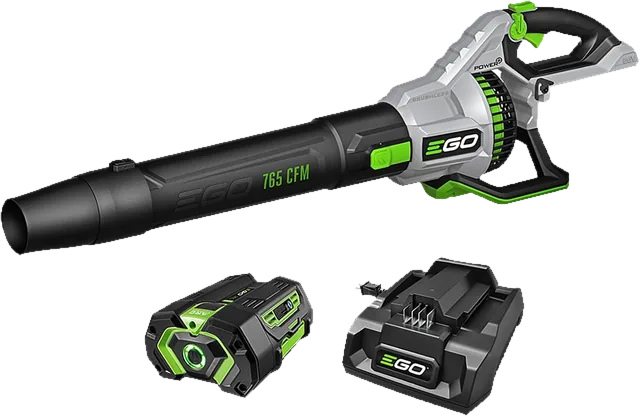
1. EGO POWER+ LB7654 Cordless Leaf Blower Kit Best Overall
Best for single-story walls cleaned in short sessions, with a cordless blower and the AGC1000 kit that EGO lists for the blower inside.
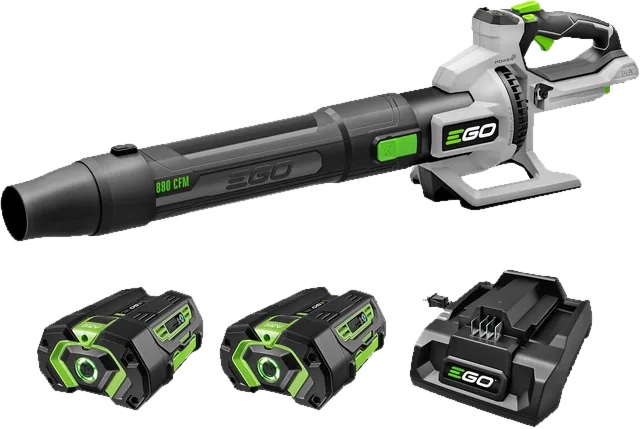
2. EGO POWER+ LB8803-2 Two-Battery Leaf Blower Kit Best Premium
Best for owners who want the most air EGO prints and two packs in the box, and can hold about 9.7 lb on a raised arm.
3. WORX WG520 Turbine Corded Leaf Blower Best Value
Best for a wall within reach of an outlet, with a corded blower and the WA4094 kit that WORX names for it.
Every gutter cleaning attachment for leaf blower tubes in the table above comes from the blower’s own maker, and that is the first thing I check. The EGO POWER+ LB7654 Cordless Leaf Blower Kit gives me a listed kit, a dial that locks any speed and, according to EGO, about 25 minutes on high from its pack. That makes it the best leaf blower for gutters on my farm.
Why EGO POWER+ LB7654 Cordless Leaf Blower Kit Might Be the Best Choice
The EGO POWER+ LB7654 Cordless Leaf Blower Kit is my pick as the best leaf blower for gutters on single-story walls because EGO lists its AGC1000 gutter kit for the LB7650, the blower inside this kit, and the LB7650 manual names that kit as a recommended accessory. The trade-off is weight: about 9.6 lb with the 5.0 Ah pack, held out on a raised arm.
The dial is what I notice first: set once, it holds a speed while the arm does the work. The trigger finger rests, and the thumb stays free for the boost button.
Here is what puts it at the top:
✓ Kit named for the blower: EGO lists the AGC1000 for the LB7650, the blower in this kit.
✓ Attachment length: 8.3 ft long, with an adjustable nozzle and screw-connection tubes, according to EGO.
✓ Locking dial: it holds any speed, so the trigger finger can rest on a raised arm.
✓ Air in hand: EGO’s maximum airflow is 765 CFM, and its maximum speed is 195 mph with the tapered nozzle.
✓ No cord, no fuel: the blower is cordless, with a 5-year tool warranty and a 3-year battery warranty.
Frequently Asked Questions
What is the best leaf blower for cleaning gutters?
The best leaf blower for cleaning gutters is a cordless handheld whose maker sells a gutter kit for that exact model, and my pick is the EGO LB7654 with its AGC1000 kit. Choose one you can hold at arm’s length for a whole wall, and keep both feet on the ground.
What is the number one rated leaf blower?
The number one rated leaf blower for gutter work is the EGO LB7654, because EGO lists its kit for the blower inside it and its dial locks any speed. The ranking changes with the job, so judge gutter work by kit fit, weight in hand and the air left at the elbow.
Do leaf blower gutter attachments work?
Leaf blower gutter attachments work on dry, loose debris when the kit is made for your blower and the wall is within its reach. Expect a weaker stream at the elbow than at the bare nozzle, so buy air to spare, and do not expect a kit to move wet sludge.
Can I use a leaf blower to clean my gutters?
You can use a leaf blower to clean your gutters when the debris is dry and you work from the ground with the kit your blower’s maker sells for it. Wet or packed debris needs a scoop, and the EGO LB7650 manual and the Echo quick start guide both rule out a ladder.
What is the easiest way to clean out gutters?
The easiest way to clean out gutters is from the ground with a blower and its maker’s kit while the debris is dry, and with a scoop or a wet and dry vacuum when it is wet or packed. Choose by the debris, because a blower smears sludge instead of lifting it.
References
- Ricou FP, Spalding DB. Measurements of entrainment by axisymmetrical turbulent jets. J. Fluid Mech. 1961;11(1):21-32.
- US Department of Energy, Industrial Technologies Program; Air Movement and Control Association International. Improving Fan System Performance: A Sourcebook for Industry. DOE/GO-102003-1294. US Department of Energy; 2003.
- Alexander BM, Graydon PS, Pena M, Feng HA, Beamer BR. Hazardous exposures and engineering controls in the landscaping services industry. Journal of Occupational and Environmental Hygiene. 2025;22(3):189-202.
- Stange NR, Jennissen CA. Lawnmower-Related Eye Injuries in the U.S., 2004 to 2023. Am J Ophthalmol. 2025;277:7-16.
Safety Note: Leaf blowers throw debris and can damage your hearing. Wear eye and ear protection, read the manufacturer’s manual, and check your local rules on noise and operating hours.