
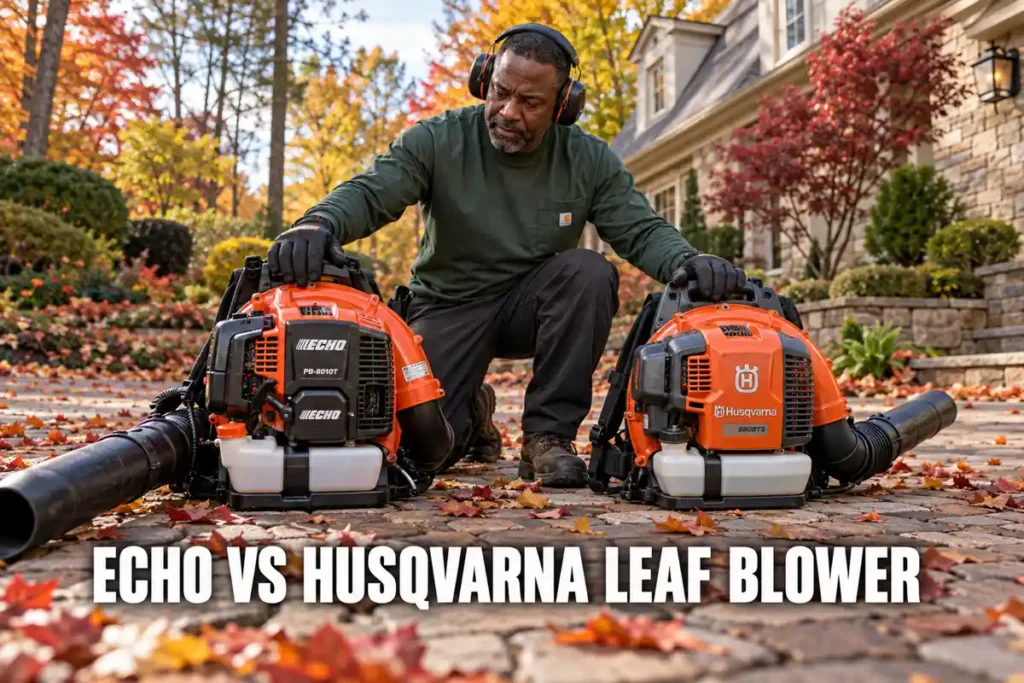
In the Echo vs Husqvarna leaf blower choice, buy ECHO when you want the most push in a handheld or a mid-size backpack, and buy Husqvarna when you carry a big backpack for an hour or more or want ear-level noise figures and handle vibration figures. I use a gas handheld around the house and the concrete pad and carry a backpack down the orchard alleys, and the two brands split differently in each size. Below, six models meet in three matched pairs, and every figure carries the basis it was taken on.
Affiliate Disclosure: Garden Power Scout is a proud participant in the Amazon Services LLC Associates Program. As an Amazon Associate, we earn from qualifying purchases, at no extra cost to you.
My Short Answer on Echo vs Husqvarna Leaf Blower
The Echo vs Husqvarna blower question gets a different answer in each size, because the makers lead on different things. ECHO leads on printed force and on the length of its home warranty term. Husqvarna leads on ear-level noise and handle vibration figures and, at the top, on a hip belt. This comparison covers six gas models in three pairs and leaves out the battery lines.
- Handheld: I pick ECHO’s PB-2520, which prints more force at a lower weight than Husqvarna’s 125B.
- Mid-size backpack: I pick ECHO’s PB-770T for push, and I take Husqvarna’s 360BT only when ear-level noise and handle vibration figures matter.
- Top-end backpack: I pick Husqvarna’s 580BTS for most buyers, because it is the one with a hip belt.
Two rows decide most of it: the force row, where ECHO prints more in the two pairs that compare cleanly, and the harness row, where only the 580BTS lists a hip belt.
What Each Pair Is For
The handheld pair is for the house lawn, the patio, the path to the shed and pruning cleanup under the trees. The mid-size backpack pair is for a half acre to a couple of acres, where a handheld needs too many passes. The top pair is for an acre or more, wet leaf mats and storm debris.
Model names need one key. The PB-770T is the tube-throttle version, and the PB-770H moves the throttle to a hip arm. The 580BTS is the Mark III sold in the US, and the 125B is the plain handheld, not the 125BVx blower-vac. One class below sits the Husqvarna 150BT vs ECHO PB-580T pair, 22 N machines, and my Husqvarna 150BT vs 350BT comparison covers the 150BT.
Head-to-Head Specs Table
The echo vs husqvarna leaf blower specs below sit in three tables, one per pair, and each cell says where its figure was taken. A CFM figure at the nozzle and a CFM figure in the pipe are different measurements, so read the newtons first when you compare the brands.
Husqvarna 125B vs ECHO PB-2520
| Spec | ECHO PB-2520 | Husqvarna 125B |
|---|---|---|
| Engine | 25.4 cc two-stroke | 28 cc two-stroke |
| Airflow, maker’s figure | 453 CFM at the nozzle, with pipes | 423 CFM in the pipe |
| Air speed, maker’s figure | 170 mph with pipes | 163 mph with the standard nozzle |
| Blowing force, maker’s figure | 15.8 N at the nozzle | 12.5 N maximum |
| Dry weight | 8.6 lb with pipes | 9.5 lb with tube and nozzle fitted, no fuel |
| Fuel tank | 18.6 fl oz | 16.9 fl oz |
| Sound, bystander rating | 70 dB(A) at 50 ft | 72 dB(A), ANSI B175.2 |
| Sound at the operator’s ear | Not published in ECHO’s US documents | 92.6 dB(A) |
| Handle vibration | Not published in ECHO’s US documents | 11.5 m/s2 |
| Stop switch | Stays where you put it | Springs back to ON |
| Harness in the box | None, sold separately | None |
| Warranty on the maker’s pages | 5 years consumer, 2 years commercial, authorized dealers only | 2 years standard, up to 5 with a fuel purchase |
The force row and the stop-switch row decide this pair.
Mid-Size Backpack Pair
| Spec | ECHO PB-770T | Husqvarna 360BT |
|---|---|---|
| Engine | 63.3 cc two-stroke | 65.6 cc two-stroke |
| Airflow, maker’s figure | 756 CFM at the nozzle, with pipes | 631 CFM in the pipe |
| Air speed, maker’s figure | 234 mph maximum, with pipes | 232 mph with the round nozzle |
| Blowing force, maker’s figure | 33 N at the nozzle | 30 N maximum |
| Dry weight | 21.6 lb without pipes | 23.2 lb without fuel, pipes not stated |
| Fuel tank | 68.3 fl oz | 74.4 fl oz |
| Sound, bystander rating | 73 dB(A) at 50 ft | Not published |
| Sound at the operator’s ear | Not published in ECHO’s US documents | 95 dB(A) |
| Handle vibration | Not published in ECHO’s US documents | 2.5 m/s2 |
| Throttle | Tube trigger plus a position lever | Tube trigger, with full, 1/3, idle and stop positions |
| Harness on the maker’s page | Padded backrest and shoulder straps | Ventilated harness with wide shoulder straps |
| Warranty on the maker’s pages | 5 years consumer, 2 years commercial, authorized dealers only | Term not stated on the US pages |
The force row and the sound rows decide this pair, because ECHO leads the first and only Husqvarna publishes the second.
Top-End Backpack Pair
| Spec | ECHO PB-9010T | Husqvarna 580BTS |
|---|---|---|
| Engine | 79.9 cc two-stroke | 75.6 cc two-stroke |
| Airflow, maker’s figure | 1,110 CFM at the nozzle, with pipes | 1,000 CFM with the standard nozzle |
| Air speed, maker’s figure | 220 mph with pipes | 220 mph with the standard nozzle |
| Blowing force, maker’s figure | 48 N at the nozzle | 47 N maximum |
| Dry weight | About 26 to 27 lb with pipes, by production run | 26.8 lb without fuel |
| Fuel tank | 83.8 fl oz | 87.92 fl oz |
| Sound, bystander rating | 79.3 dB(A) at 50 ft | Not published |
| Sound at the operator’s ear | Not published for the US model | 106 dB(A), distance not stated |
| Throttle | Tube trigger plus a position lever that sets cruise speed | Tube lever with full, 1/3, idle and stop positions |
| Harness on the maker’s page | Padded shoulder straps and a vented back pad | Padded hip belt, shoulder straps, waist belt and chest strap |
| Warranty on the maker’s pages | 5 years consumer, 2 years commercial, authorized dealers only | 2 years, per the 2026 warranty chart |
The harness row and the airflow row decide this pair, and the 1 N force gap does not.
Echo vs Husqvarna Handheld Blower
The handheld pair suits a quarter-acre lawn, the patio and pruning cleanup, and ECHO takes most of the numbers. ECHO lists its blower at 15.8 N and 8.6 lb with pipes, and Husqvarna lists its blower at 12.5 N and 9.5 lb with the tube and nozzle fitted. The ECHO also holds more mix, 18.6 fl oz against 16.9.
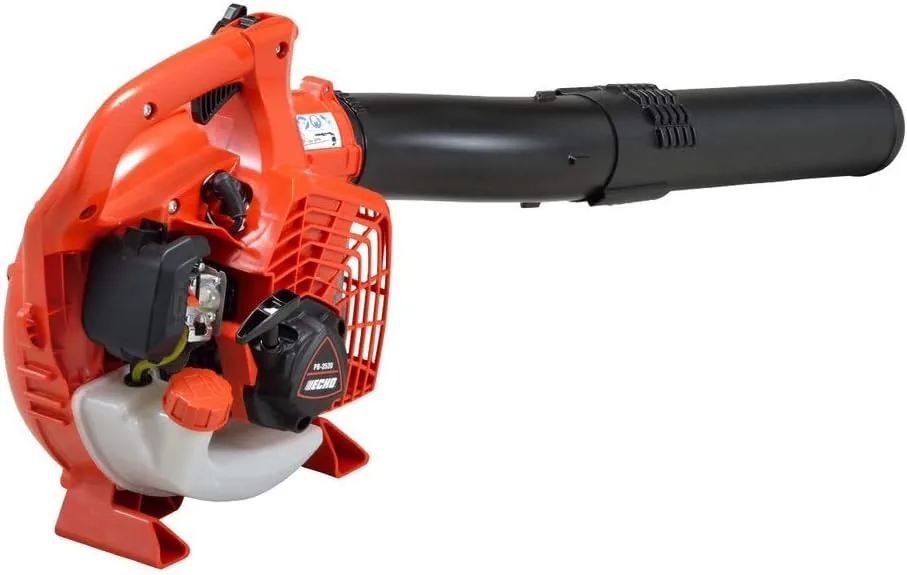
According to ECHO, the ECHO PB-2520 Gas Handheld Leaf Blower ships with a curved and a straight pipe, and a throttle position lever holds a steady speed. Its stop switch stays where you put it, so move it off STOP before you pull the cord, and the manual asks for 3 minutes at idle before full power. I once pulled the cord until my arm tired before I saw the switch still sat on STOP.
According to Husqvarna, the Husqvarna 125B Gas Handheld Leaf Blower comes with a round and a flat nozzle, and its STOP switch springs back to ON by itself. The manual asks for a 7 second wait before you restart. The first time I stopped it and pulled again at once, nothing happened until that wait was over.
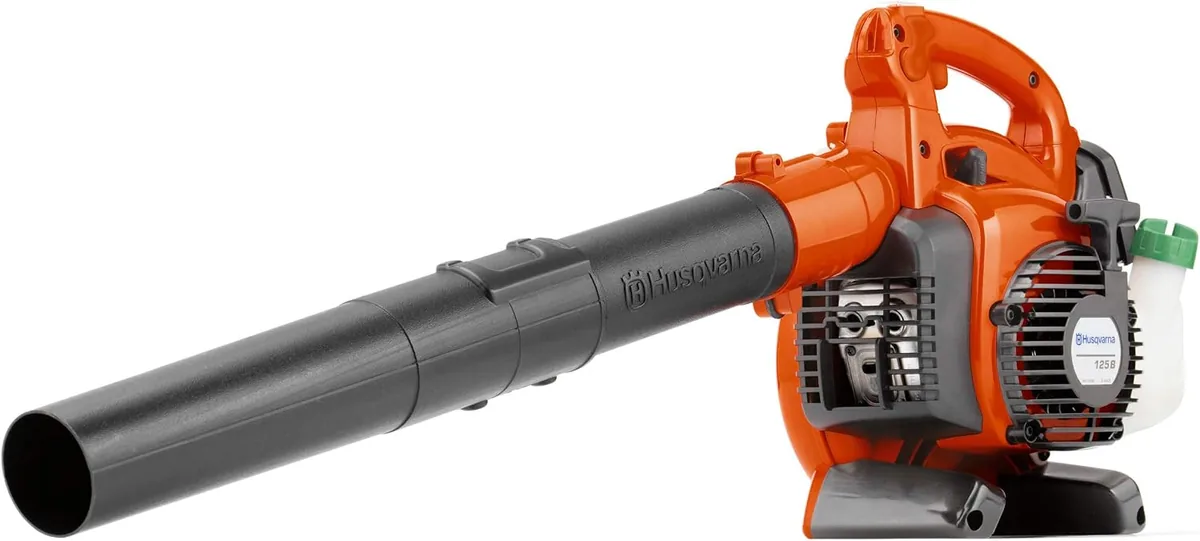
Husqvarna also prints more about the operator: 92.6 dB(A) at the ear and 11.5 m/s2 at the handles. ECHO’s US documents give 70 dB(A) as a bystander rating at 50 ft and no vibration value, against Husqvarna’s 72 dB(A) under the same ANSI B175.2 standard. The 125B manual calls the blower “for occasional operation only”. On the concrete pad in front of the machinery shed, the 125B’s vibration reached my elbow sooner than I expected, which fits that line.
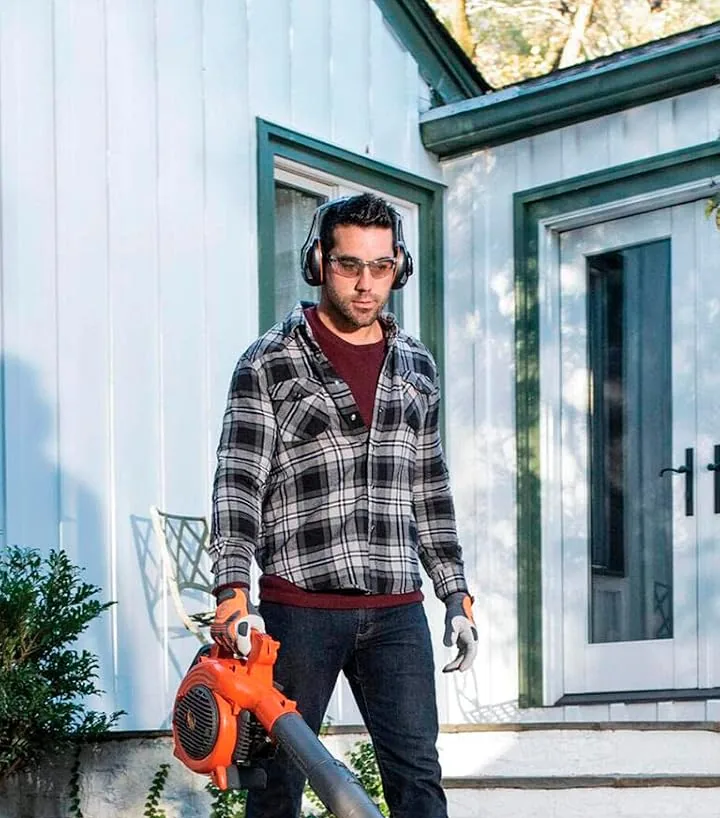
Under the plum rows in late winter I run the PB-2520 at part throttle, since ECHO’s manual says never to use a higher speed setting than the job needs, and the sawdust and twigs travel to the alley without stripping the mulch. Both handhelds are modest in absolute terms, so wet leaf mats and gravel take many passes.
Winner: ECHO PB-2520, which prints about 3 N more force at about 1 lb less weight. The Husqvarna answers with a stop switch that resets itself and with ear-level noise and handle vibration figures.
Echo vs Husqvarna Backpack Blower in the Mid Size
In the mid-size class the PB-770T and the 360BT carry 63.3 and 65.6 cc engines, and both put the throttle on the tube. ECHO rates the PB-770T at 33 N and 756 CFM at the nozzle, and Husqvarna rates the 360BT at 30 N and 631 CFM in the pipe, at nearly the same top air speed of 234 and 232 mph. On paper that makes the ECHO about 10 percent stronger on force and about 20 percent higher on airflow.
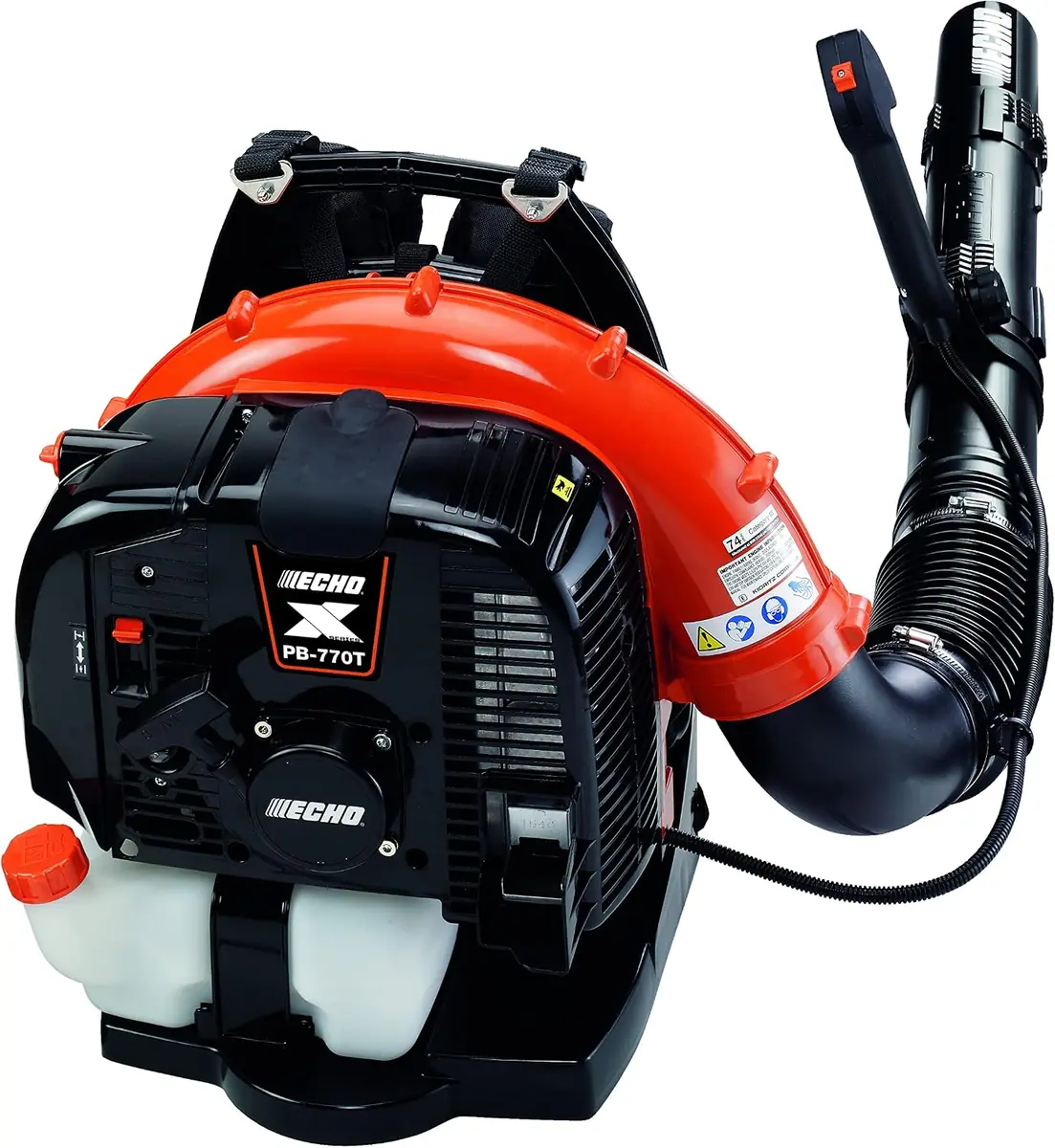
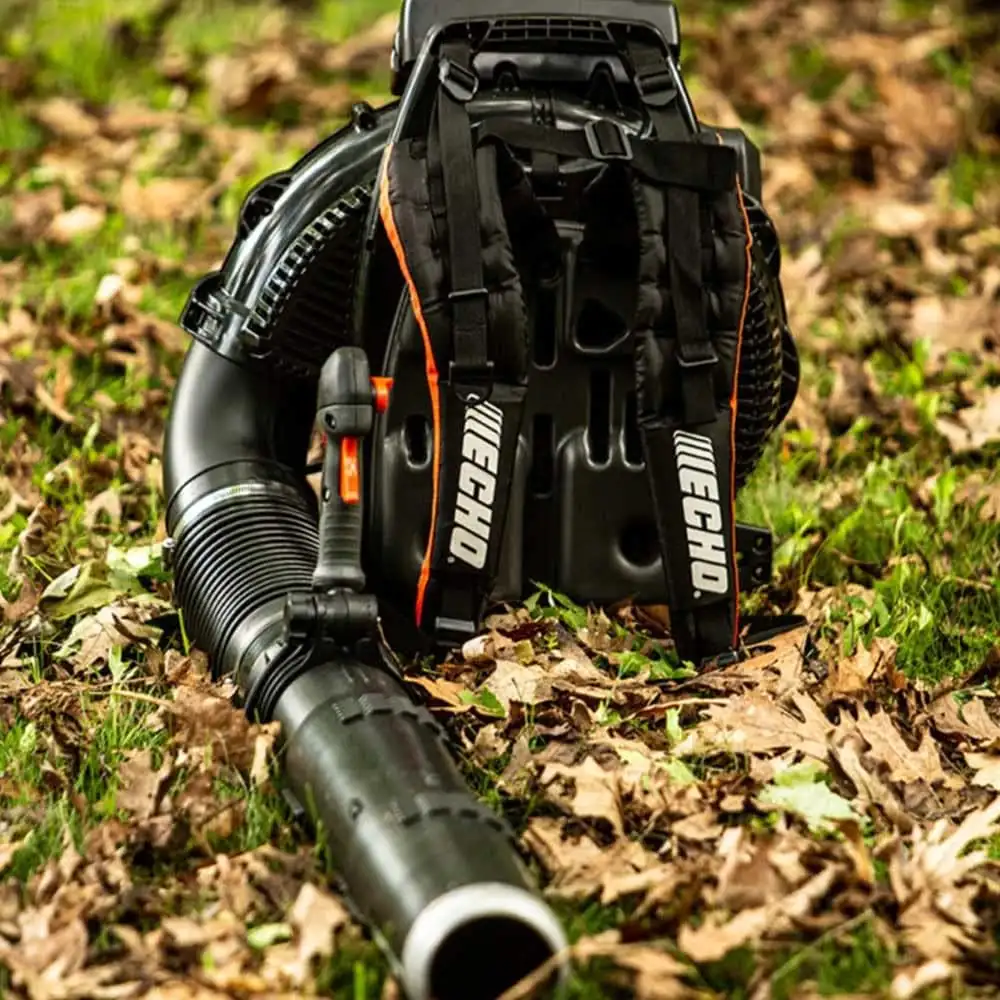
According to ECHO, the ECHO PB-770T Gas Backpack Leaf Blower weighs 21.6 lb without pipes, holds 68.3 fl oz of mix, and has padded shoulder straps with no hip belt. The box holds a flex pipe, a swivel pipe and straight pipes, so you build the tube you need. The tube length mattered as much as the engine for me: with the flex and swivel pipes added, the nozzle reached under the low plum branches where a short tube left the leaves behind.
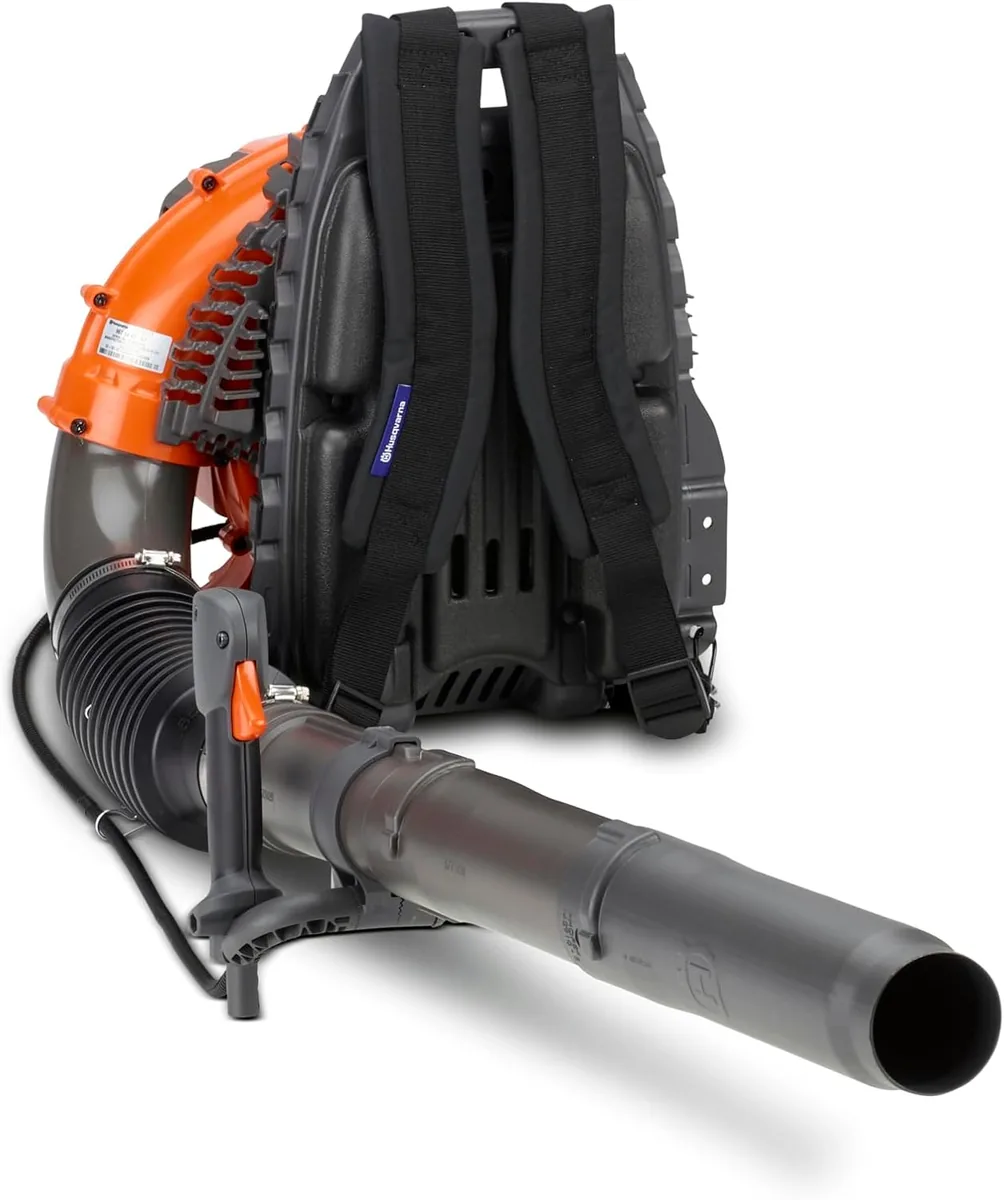
According to Husqvarna, the Husqvarna 360BT Gas Backpack Leaf Blower weighs 23.2 lb without fuel, with the pipes not stated, and holds 74.4 fl oz of mix, about 6 fl oz more than the ECHO. The page describes a ventilated harness with wide shoulder straps and mentions no hip belt, so check the listing before you count on one. Husqvarna also prints 95 dB(A) at the operator’s ear and 2.5 m/s2 at the handle, which ECHO does not.
Along the long plum alley the 360BT kept the leaves rolling to the far end, where my old gas handheld pushed them in short hops. It asks more upkeep in return. Husqvarna’s manual calls for a new spark plug every month, so I keep a spare plug in the shed.
Winner: PB-770T for push, at 33 N against 30 N and about the same air speed. The 360BT takes the bigger tank and the ear-level figures.
Echo vs Husqvarna Backpack Blower at the Top End
At the top end the push is a tie, and the Husqvarna vs ECHO leaf blower question turns on the harness. ECHO rates the PB-9010T at 48 N, 1,110 CFM and 220 mph. Husqvarna rates the 580BTS at 47 N, 1,000 CFM and 220 mph. The ECHO weighs about 26 to 27 lb dry, depending on its production run, and the Husqvarna 26.8 lb without fuel.
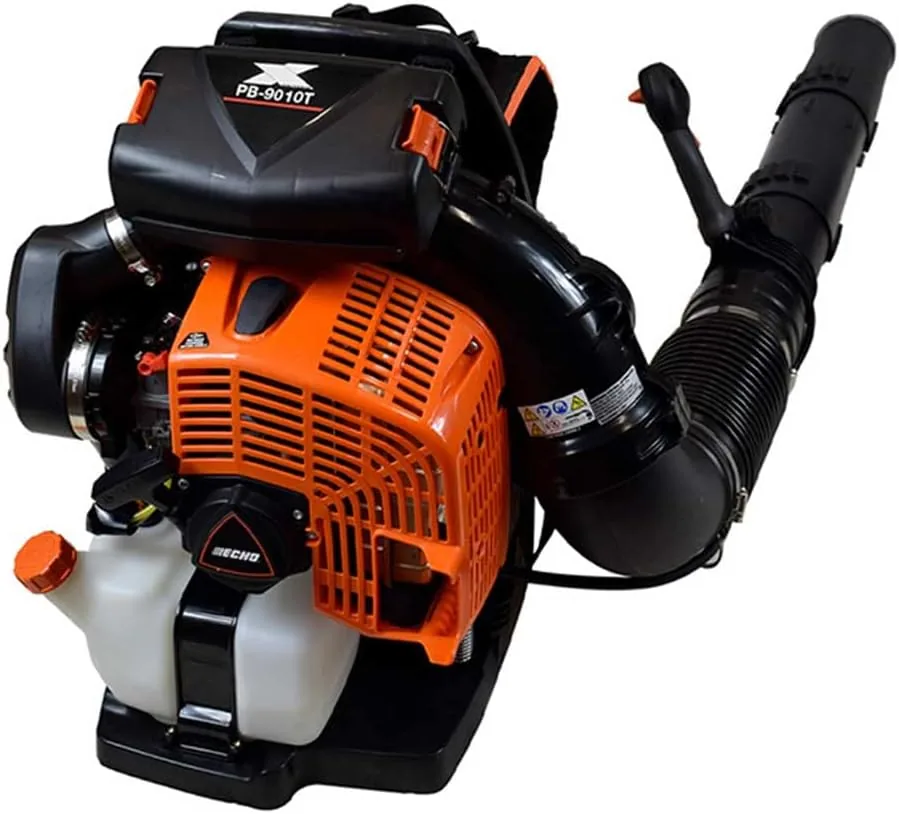
ECHO gives the ECHO PB-9010T Gas Backpack Leaf Blower padded shoulder straps and a vented back pad, and its US documents list no hip belt.
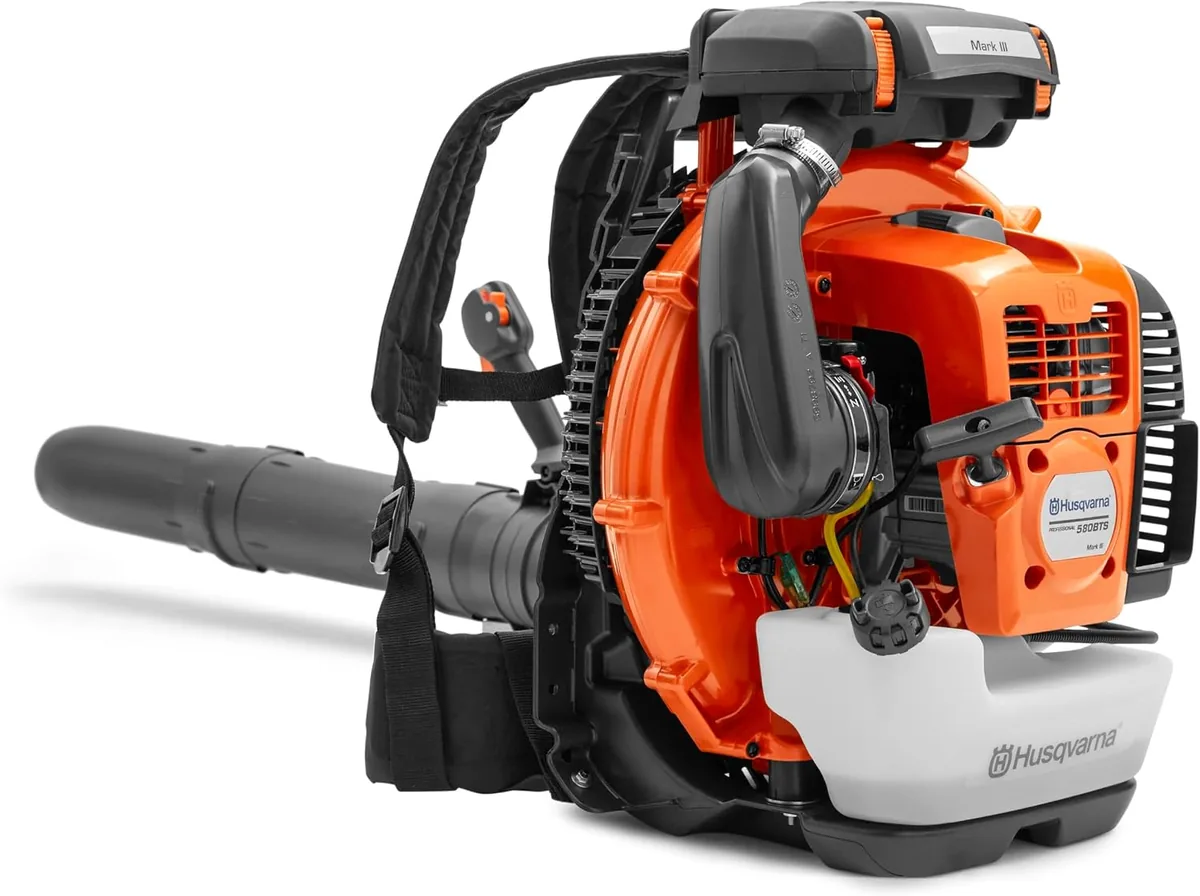
According to Husqvarna, the Husqvarna 580BTS Gas Backpack Leaf Blower comes with a padded hip belt, a waist belt and a chest strap. It prints 106 dB(A) at the operator’s ear, a different measurement from ECHO’s 50 ft rating. My full PB-9010T vs 580BTS comparison goes deeper on the harness and the two noise ratings.
Winner: the 580BTS for most buyers, since the hip belt is the one large difference. The PB-9010T suits short sessions on wet, heavy leaves, where its extra 110 CFM counts.
Why the Airflow and Noise Numbers Do Not Line Up
Airflow is quoted at three different places. Husqvarna prints a figure in the housing, before the air enters the pipe, and a lower one in the pipe. For the 360BT that is 890 CFM in the housing and 631 CFM in the pipe, and for the 580BTS 1,200 CFM in the housing and 1,000 CFM with the standard nozzle. ECHO states its airflow at the nozzle with the pipes on, so the PB-770T’s 756 CFM belongs next to 631, never next to 890.
Newtons settle the comparison, because force follows how much air moves and how much its speed changes (1). Each maker rates its own blowers, so a 1 N gap, like 48 against 47 at the top, is a tie.
Noise is quoted at two different places. ECHO prints a bystander rating at 50 ft. Husqvarna prints the sound at the operator’s ear: 92.6 dB(A) for the 125B, 95 for the 360BT and 106 for the 580BTS. The two kinds of number cannot be set against each other, and a rating at 50 ft says little about what reaches the ear of the person wearing the machine.
NIOSH recommends 85 dBA as the average exposure over an eight-hour workday and halving the time for every 3 dBA above it (2). In a test of agricultural backpack machines, all but one, a blower with its exhaust inside the hose, measured above 100 dB(A) (3). Earplugs protect less than their rating when they do not seal, and a Cochrane review notes that poor fit may limit protection for about 40 percent of users (4).
Hearing and Eye Protection
On either backpack, wear foam plugs and earmuffs together from the first minute, and wear hearing protection on the handhelds too. Add ANSI Z87.1 eye protection and a dust mask for dusty work. Keep people and pets 50 ft away, aim the nozzle away from windows and cars, and never run a gas blower in a closed shed, where the exhaust builds up carbon monoxide.
Engines, Fuel and Starting
All six blowers are air-cooled two-strokes that run on a 50:1 mix of gasoline and two-stroke oil. Both makers’ manuals cap ethanol at 10 percent and limit mixed fuel to 30 days. ECHO states 89 octane on the R+M/2 scale, the same number a US pump shows as AKI, and Husqvarna states at least 87 AKI (90 RON), so ECHO asks for the higher octane by 2 points.
The oil rules differ. ECHO’s manuals call for oil that meets ISO-L-EGD and J.A.S.O. M345-FD at 2.6 oz per US gallon, and the PB-2520 manual excludes engine problems caused by oil outside those standards from the two-stroke engine warranty. Husqvarna’s manuals call for air-cooled two-cycle oil, at 2.5 fl oz per gallon for the 360BT and 580BTS and 2.6 oz for the 125B.
The 10 percent cap has a reason. In a Department of Energy test of 28 small engines, open-loop engines ran leaner and hotter as ethanol rose, and exhaust temperatures were about 36 to 126 F higher on E20 than on plain gasoline (5).
Refuelling
Stop the engine and let it cool before you refuel, fill outdoors, and carry the machine 10 ft (3 m) from the fuelling spot before you start it. Both makers’ manuals say so.
Starting looks alike on paper: a purge or primer bulb, a choke and a pull cord. ECHO asks for short pulls of half to two thirds of the rope, and Husqvarna says never to pull the rope to its end.
Upkeep differs more than starting. Both makers ask for a daily check of the air filter, the fuel system and the fasteners. After that, ECHO’s PB-2520 and PB-9010T manuals list an air filter replacement, a plug inspection and a spark arrester cleaning every 3 months at most, and ask for 5 minutes at wide open throttle every hour so carbon does not build on the screen. Husqvarna’s 360BT manual asks for a new plug every month and a clean screen every week, and its 125B manual also lists a monthly plug change.
Before winter I empty the tank and run the engine until it stops. ECHO’s manual adds 7 cc (0.25 oz) of fresh two-stroke oil in the cylinder, and Husqvarna’s 360BT manual about 15 ml (0.5 oz) of oil and three turns of the engine.
Harness, Weight and Vibration
Weights come on different bases, so read each with its basis. ECHO lists the PB-2520 at 8.6 lb with pipes and the PB-770T at 21.6 lb without pipes. Husqvarna lists the 125B at 9.5 lb with the tube and nozzle fitted and the 360BT at 23.2 lb without fuel. At the top the PB-9010T runs about 26 to 27 lb dry and the 580BTS 26.8 lb without fuel.
A load-carriage study found that strap force and contact pressure at the shoulders and hips predicted how uncomfortable carriers felt (6). Only the 580BTS page lists a hip belt, while the pages for the PB-770T, the 360BT and the PB-9010T list shoulder straps, so that is the harness where the load reaches the hips.
Husqvarna prints handle vibration of 11.5 m/s2 for the 125B and 2.5 m/s2 for the 360BT, and ECHO’s US documents give no value for these models. Field measurements on backpack blowers found median hand vibration between about 1.7 and 2.9 m/s2, and the authors tie the risk to hours of use per day (7). The practical answer is regular breaks.
Warranty, Dealers and Where You Buy
ECHO’s product pages list 5 years for the PB-2520, PB-770T and PB-9010T, with 2 years for commercial use. ECHO’s warranty statement adds that coverage applies only to units sold by authorized ECHO dealers, and it puts commercial, agricultural and income-producing use under a 2-year term for backpack blowers.
The Husqvarna warranty on the 125B is 2 years. Buying 96 fl oz of Husqvarna premixed fuel and registering online within 30 days can extend it to 5 years for consumer use, and commercial and agricultural use are excluded. For the 580BTS, Husqvarna’s 2026 warranty chart lists 2 years for its 500-series professional blowers. The 360BT page states no term, so ask a dealer.
Federal rules add a separate emission-related warranty of at least 2 years on new engines like these, starting on the date of sale, and a claim can be denied when improper maintenance or use caused the problem (8). My orchard sells fruit, so I count on the shorter 2-year term, and any reader whose land earns income should read it the same way.
Husqvarna sends claims through a dealer or authorized service center with proof of purchase, and ECHO covers only units from authorized ECHO dealers. Check the seller on the Amazon listing before you order, and keep the receipt.
Choose ECHO If
Choose ECHO if you want the most printed push in a handheld or a mid-size backpack, with a long home term from an authorized dealer.
- You clear a quarter-acre lawn, a patio and paths, and want the lighter, stronger handheld.
- You work a half acre to two acres and want 33 N from a mid-size backpack.
- You buy from an authorized ECHO dealer and want the 5-year consumer term.
Skip ECHO if you want ear-level noise figures, handle vibration figures or a hip belt on a big backpack, because the US pages give none of them.
Choose Husqvarna If
Choose Husqvarna if you carry a big backpack for an hour or more, or if you want published figures for the operator’s ear before you buy.
- You want the 580BTS hip belt, waist belt and chest strap on a long job.
- You want a handheld whose stop switch resets itself.
- You want ear-level noise and handle vibration figures for the 125B or the 360BT.
Skip Husqvarna if printed force comes first in the handheld or mid-size class, or you want the lighter handheld, because ECHO prints more force in both classes and weighs less in the handheld pair.
Which Brand Fits Your Yard
Choosing an Echo or Husqvarna leaf blower comes down to the size of the job. On a lawn, a patio and paths, I pick ECHO’s lighter PB-2520. Across a half acre to a couple of acres, I pick ECHO’s PB-770T for push and the 360BT when ear-level figures matter. On an acre or more with long sessions, I pick Husqvarna’s 580BTS for its hip belt and keep the PB-9010T for short, heavy jobs on wet leaves, so on my land the Echo vs Husqvarna leaf blower choice is settled size by size.
Frequently Asked Questions
Is Echo better than Husqvarna?
Echo is better than Husqvarna on printed force in the handheld and mid-size classes, at 15.8 against 12.5 newtons and 33 against 30 newtons. Husqvarna is better at the top end, where the 580BTS has a hip belt, and it prints ear-level noise and handle vibration, which ECHO does not.
What is a good lightweight backpack blower?
A good lightweight backpack blower is the Husqvarna 150BT at 22.0 lb without fuel or the ECHO PB-580T at 22.7 lb dry, and both are rated at 22 newtons. For more push, the ECHO PB-770T is rated at 33 newtons, and ECHO lists it at 21.6 lb without its pipes.
What kind of gas does a Husqvarna 125B leaf blower use?
A Husqvarna 125B leaf blower uses a 50:1 mix of new unleaded gasoline, at least 90 RON (87 AKI) with no more than 10 percent ethanol, and air-cooled two-cycle oil, and the manual limits mixed fuel to 30 days. ECHO’s PB-2520 also runs a 50:1 mix but asks for 89 octane on the R+M/2 pump scale, 2 points higher.
Are ECHO backpack blowers any good?
ECHO backpack blowers are good for push, with the PB-580T rated at 22 newtons, the PB-770T at 33 and the PB-9010T at 48. According to ECHO they carry 5 years at home from authorized dealers, but the US documents list no hip belt and give only a bystander noise rating of 73 to 79 dB(A) at 50 ft.
Does Husqvarna make good backpack blowers?
Husqvarna makes good backpack blowers for long sessions, with a range from 22 N to 47 N across the 150BT to the 580BTS and a padded hip belt on the 580BTS. It also prints 95 dB(A) at the ear and 2.5 m/s2 of handle vibration for the 360BT, which ECHO’s US documents do not give for any of its backpacks.
References
- NASA Glenn Research Center. Thrust Equation. Beginners Guide to Aeronautics. Updated June 10, 2026.
- National Institute for Occupational Safety and Health. Noise-Induced Hearing Loss. Noise and Hearing Loss. Centers for Disease Control and Prevention; 2024.
- Calvo A, Preti C, Caria M, Deboli R. Vibration and Noise Transmitted by Agricultural Backpack Powered Machines Critically Examined Using the Current Standards. IJERPH. 2019;16(12):2210.
- Morata TC, Gong W, Tikka C, Samelli AG, Verbeek JH. Hearing protection field attenuation estimation systems and associated training for reducing workers’ exposure to noise. Cochrane Database of Systematic Reviews. 2024;5(5):CD015066.
- Knoll K, West B, Clark W, et al. Effects of Intermediate Ethanol Blends on Legacy Vehicles and Small Non-Road Engines, Report 1 – Updated. NREL/TP-540-43543; ORNL/TM-2008/117. National Renewable Energy Laboratory; 2009.
- Wettenschwiler PD, Lorenzetti S, Stämpfli R, Rossi RM, Ferguson SJ, Annaheim S. Mechanical Predictors of Discomfort during Load Carriage. PLoS ONE. 2015;10(11):e0142004.
- Alamin Gabasa SA, Md Razali KA, As’arry A, Abdul Jalil NA. Vibration Transmitted to the Hand by Backpack Blowers. IJAME. 2019;16(2):6697-6705.
- Electronic Code of Federal Regulations. 40 CFR §1054.120: What emission-related warranty requirements apply to me? Accessed October 12, 2026.
Safety Note: Leaf blowers throw debris and can damage your hearing. Wear eye and ear protection, read the manufacturer’s manual, and check your local rules on noise and operating hours.