
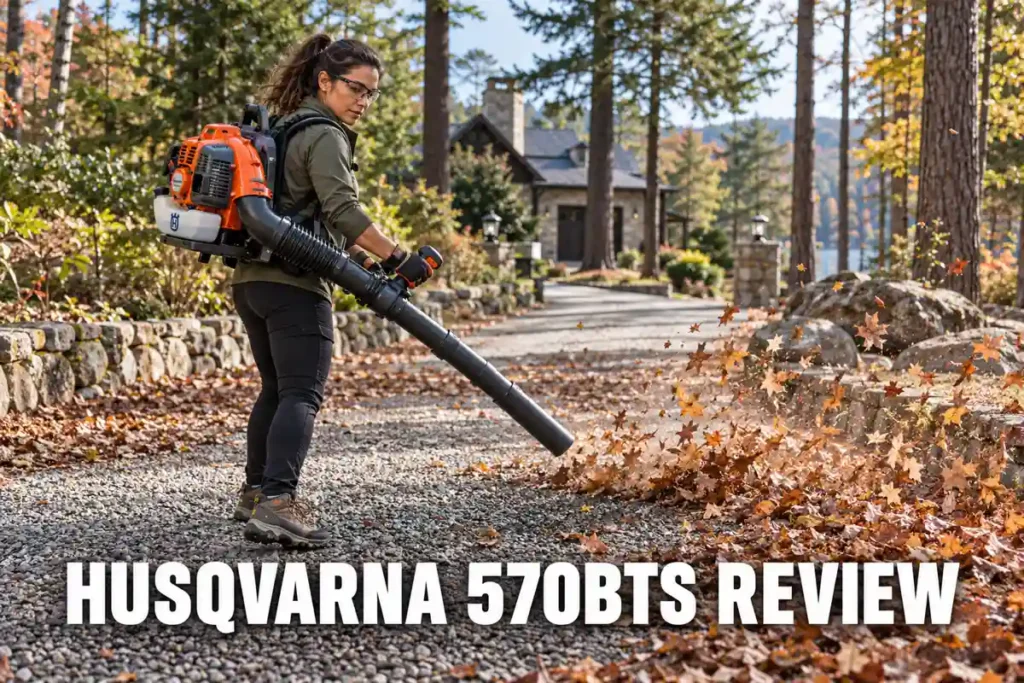
In my Husqvarna 570BTS review, the machine earns a buy for an acre or more of leaf mats, wet debris and gravel edges, and a skip on a small lot, with a bad back or beside close neighbors. You get 37 N of blowing force and a belted harness at 24.7 lb dry, and you pay in noise, a strict 50:1 fuel routine and a pull cord. I used it on my gravel yard, on the concrete pad in front of the machinery shed and on the leaf-covered tilled strips under the apricots.
Affiliate Disclosure: Garden Power Scout is a proud participant in the Amazon Services LLC Associates Program. As an Amazon Associate, we earn from qualifying purchases, at no extra cost to you.
Husqvarna 570BTS Review: My Verdict in Brief
I recommend the Husqvarna 570BTS Gas Backpack Leaf Blower for an acre or more of lawn, yard and drive, where leaf mats, wet debris and gravel edges are the job. It pairs a 65.6 cc engine with a waist belt and chest strap, and at 24.7 lb dry it weighs about 2 lb less than the Husqvarna 580BTS and the ECHO PB-9010T. Skip it on a small lot, with a bad back or beside close neighbors.
- Who it is for: owners of an acre or more with wet leaf mats, gravel and long sessions.
- What it does best: moves a soaked mat and loose yard debris.
- Main trade-off: 103 dB(A) at the ear, about 28 lb with fuel and a 74.4 fl oz tank.
What the Husqvarna 570BTS Backpack Blower Is and What Comes in the Box
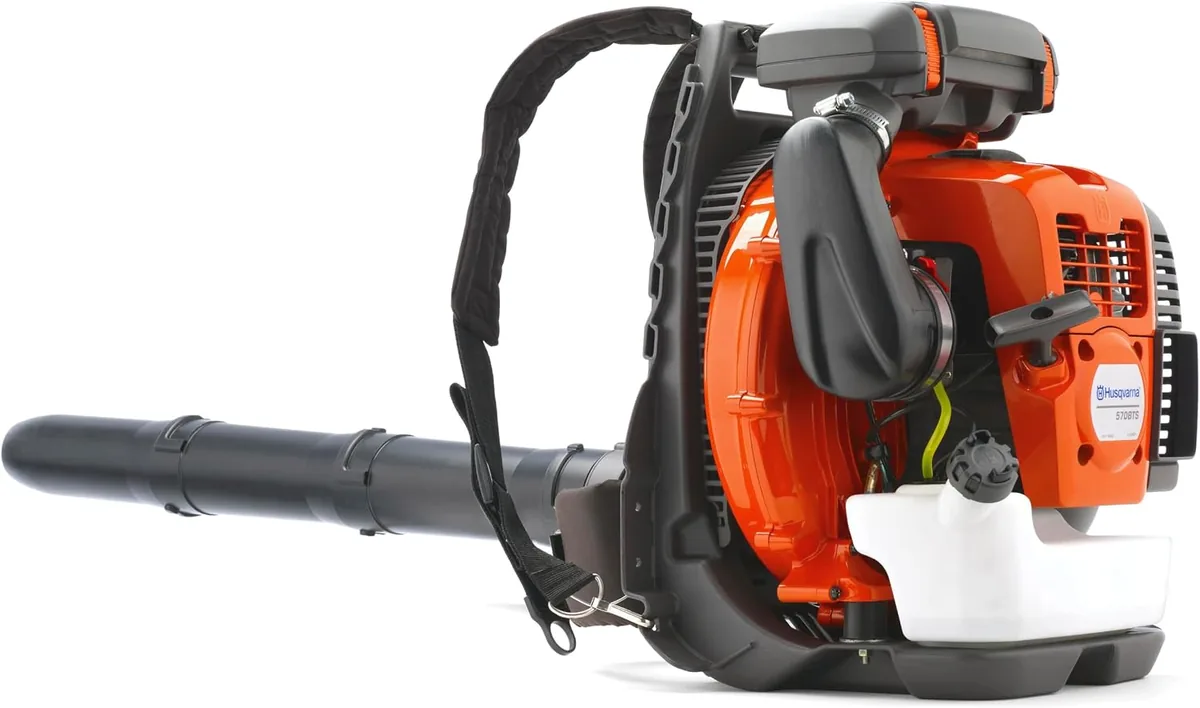
This blower is the middle step of Husqvarna’s tube-throttle line, with a 65.6 cc X-Torq two-stroke engine rated at 4 hp. BT in the name marks the throttle handle on the blower tube, worked with your right hand, while the 570BFS puts the throttle on the harness frame.
According to Husqvarna’s manual, the box holds the blower with its harness, the hose and pipes, the control handle, the standard round nozzle, a combination wrench and the operator’s manual. It holds no fuel and no two-stroke oil, and no hearing or eye protection either.
Husqvarna rates the airflow at 768 CFM through the standard round nozzle. Some listings print 972 CFM, which is Husqvarna’s figure for the air inside the housing, so compare blowers on 768, the air that leaves the nozzle.
Husqvarna 570BTS Specs at a Glance
Two rows decide the purchase: blowing force and dry weight. 37 N is about 8.3 lb of push at the nozzle, and 24.7 lb is what your back carries.
| Spec | Figure |
|---|---|
| Engine | 65.6 cc air-cooled two-stroke X-Torq, 4 hp |
| Airflow | 768 CFM through the standard round nozzle |
| Blowing force | 37 N (about 8.3 lb) |
| Fuel tank | 74.4 fl oz (2.2 L) |
| Dry weight | 24.7 lb (11.2 kg) |
| Noise | 103 dB(A) at the operator’s ear |
| Handle vibration | 1.8 m/s2 |
Setup, Fuel Mix and Starting
Assembly goes from the engine outward: hose and clamp, control pipe with its mark facing up, handle, cable clamp, intermediate pipe and the nozzle last.
The Husqvarna 570BTS fuel mixture is 50:1, which works out to about 2.6 fl oz of two-stroke oil per US gallon of gasoline. According to Husqvarna, use unleaded fuel of at least 87 AKI (90 RON) with no more than 10 percent ethanol, never leaded fuel, and mix no more than 30 days of it at a time. I write the mixing date on the can with a marker, since the limit is easy to lose track of in a busy season.
Fueling Safety
Stop the engine and let it cool before you take off the fuel cap. Fill the tank only to 80 percent, loosen the cap slowly to release pressure, and carry the blower 10 ft away from the fueling spot before you start it.
A cold start follows five steps from the manual:
- Move the choke lever to closed.
- Press the air purge bulb repeatedly until fuel fills it.
- Set the stop switch to the one-third throttle position.
- On flat ground, hold the blower with your left hand, pull the starter handle slowly until it resists, then pull quickly with your right hand until it runs.
- Open the choke gradually and let a cold engine run 2 to 3 minutes. I give it the full three before I open the throttle.
Never run it indoors or in a closed shed, where the exhaust fills the space with carbon monoxide.
Controls and Harness
The handle on the control pipe sits under your right hand, and the stop switch on it has four positions: full throttle, one third, idle and stop. Never shut the engine down from full throttle.
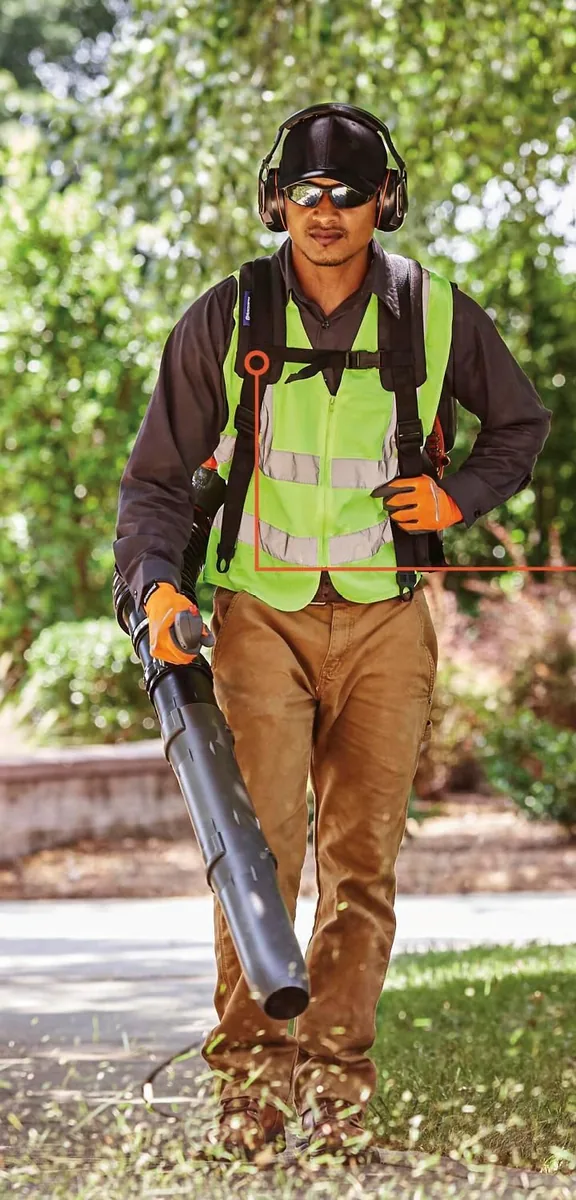
The manual requires the waist belt and chest strap to be attached and adjusted, because an open belt can reach the fan, and the side straps go tight until the unit sits against your body. I tighten the waist belt first, which moves the load from my shoulders to my hips, and after that the weight is not what I notice at the end of a tank. In a load-carriage study, strap force and contact pressure at the shoulders and hips predicted reported discomfort (1), so the straps deserve ten minutes.
Performance on Leaves, Gravel and Wet Debris
With 768 CFM behind the nozzle and 37 N of force at the opening, the Husqvarna leaf blower 570BTS is built for ground that a rake would take an afternoon to clear.
Wet Leaves on the Concrete Pad
A soaked mat on the concrete pad in front of my machinery shed lifted off at full throttle, a job that used to be a rake job. Wet leaves need volume under the edge, and this blower has it. The manual’s advice does the rest: hold the opening close to the ground, use the whole pipe length, work with the wind and rake the patches that stick.
Gravel, Tilled Strips and No-Blow Zones
On the gravel yard, full throttle threw stones toward the shed wall, so I dropped to one third and kept the nozzle low, and the leaves left while the stones stayed. The manual asks you to keep people, windows and cars 50 ft (15 m) clear. The tilled strips under the apricots turn to dust under strong air, so there I work at one third with the wind at my back, and flowering strips and drip lines get a rake.
Fuel Use and Run Time per Tank
The manual says to fill the 74.4 fl oz tank only to 80 percent, about 59 fl oz. Husqvarna rates fuel consumption at 431 g/kWh, which at 4 hp works out to roughly 58 fl oz an hour at full power. That puts one fill at about an hour at full throttle, and longer at partial throttle.
I plan the day in fills rather than hours: each fill needs about 1.2 fl oz of oil at 50:1.
Noise, Weight and Vibration
According to Husqvarna, the sound pressure at the operator’s ear is 103 dB(A), the figure that counts, since you stand beside the engine. NIOSH sampling of 80 landscaping workers found 94 of 119 full-shift noise results at or above the 85 dBA recommended limit, and noise was significantly higher with fuel-powered leaf blowers than with battery versions (2).
I put muffs on before the first pull and take them off after the engine stops. Fit matters: a Cochrane review notes that poor earplug fit may limit protection for about 40 percent of users (3), so seat each plug before the muffs go on.
Plan your back around the Husqvarna 570BTS weight: 24.7 lb dry, and a full tank adds about 3.6 lb, so expect 28 lb. Handle vibration is 1.8 m/s2 according to Husqvarna, at the low end of the 1.7 to 2.9 m/s2 measured on backpack blowers in the field, where 5 hours of use a day could pass the EU daily action value on one blower (4).
Maintenance and Storage
The Husqvarna 570BTS manual splits upkeep into daily, weekly and monthly jobs, and a dusty week deserves the short intervals.
- Daily: check the handle and stop switch, look for fuel leaks and clean the air filter.
- Weekly: check the starter rope and the vibration dampers, and brush the cooling fins and the intake screen.
- Monthly: clean the fuel tank, check the cables and the spark arrester screen, and replace the spark plug.
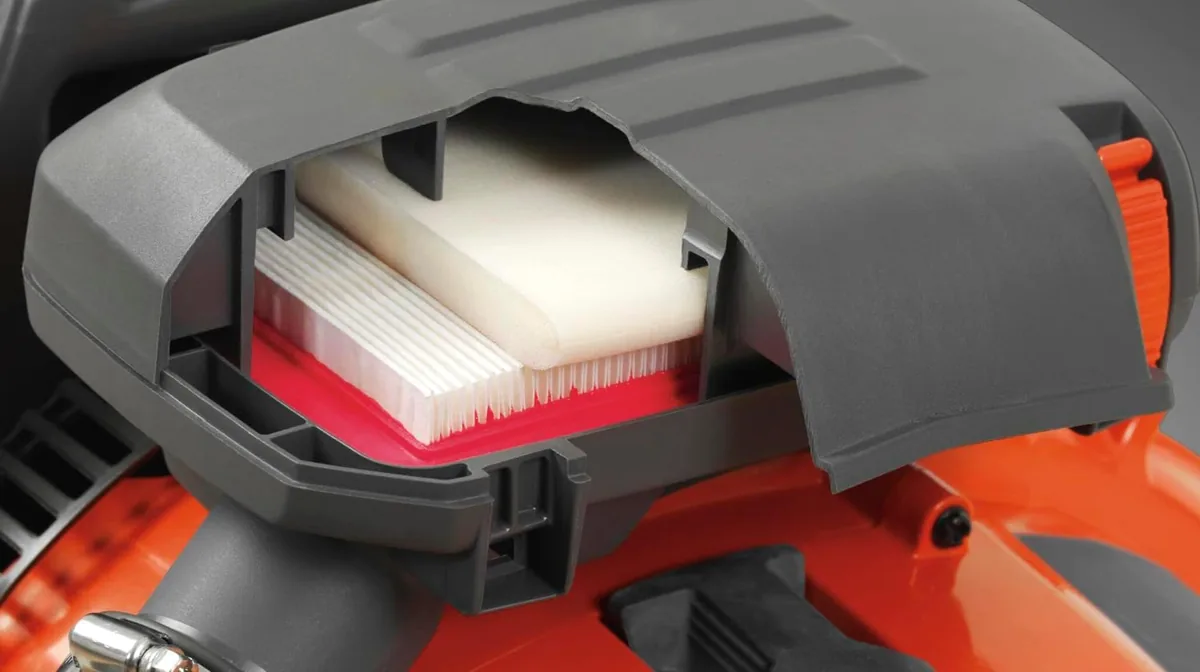
A loaded air filter starves the engine, so after dusty work on the shed pad and the gravel I open the housing and look. Wash a foam element in warm soapy water, let it dry fully and never oil it; replace a paper one.
Gap the Husqvarna 570BTS spark plug, an NGK CMR7H, to 0.6 to 0.7 mm. For winter storage, empty the tank, press the purge bulb to clear the fuel, then pour about 15 ml (0.5 fl oz) of two-stroke oil into the cylinder through the plug hole. Turn the engine over 3 times, refit the plug and store the blower clean, dry and upright. I do this in December, when the leaves are down.
Common Husqvarna 570BTS Problems and How to Fix Them
Most trouble starts with fuel, air or the plug, so I work down this list before I call a dealer.
- It will not start: check the stop switch, then the fuel, the idle speed and the plug, which may be wet, dirty, loose or gapped wrong.
- It starts, then stops: wrong fuel, a clogged air filter or an idle speed that needs a dealer.
- It stumbles at part throttle or wants to stall: suspect old mix, a fouled plug or dirt in the carburetor. Husqvarna requires 50:1, and a richer mix is a known cause of plug fouling and hard starting in two-stroke engines in general. The Husqvarna 570BTS carburetor is a dealer job, because the manual leaves only the idle screw to you.
Who Should Buy It and Who Should Skip It
It suits big ground and little else.
Who Gets the Most From It
- You clear an acre or more of lawn, yard and drive.
- You face wet leaf mats, gravel edges or heavy fall debris.
- You already mix two-stroke fuel and keep a maintenance routine.
Who Should Skip It
- Your lot is under about a quarter acre, where a battery handheld starts faster.
- Your back or shoulders complain at 28 lb.
- Close neighbors or local rules limit gas blowers.
Drawbacks to Know About
- Weight and heat: about 28 lb with fuel, and the muffler stays very hot after use, even at idle.
- Noise: 103 dB(A) at the ear. Landscaping equipment ranked third among nine noise sources for annoyance in a survey of 6,647 Canadian adults (5).
- Fuel and tank: the 74.4 fl oz tank is smaller than the ones on the 580BTS and the PB-9010T, so expect more refills on big ground.
On warranty, Husqvarna lists 2 years as the standard term for its two-stroke handheld products and offers longer plans only for personal household use. Commercial and farm use fall under different terms, so before you count on cover for orchard work, ask Husqvarna what applies and confirm that the Amazon seller is an authorized dealer.
How It Compares With Alternatives
Three blowers sit closest to it. If a battery blower fits your yard better, see my leaf blower guides.
| Model | Force | Airflow | Dry weight |
|---|---|---|---|
| Husqvarna 570BTS | 37 N | 768 CFM | 24.7 lb |
| Husqvarna 560BTS | 30 N | 631 CFM | 23.15 lb |
| Husqvarna 580BTS | 47 N | 1,000 CFM | 26.8 lb |
| ECHO PB-9010T | 48 N | 1,110 CFM | 26.4 or 27.2 lb |
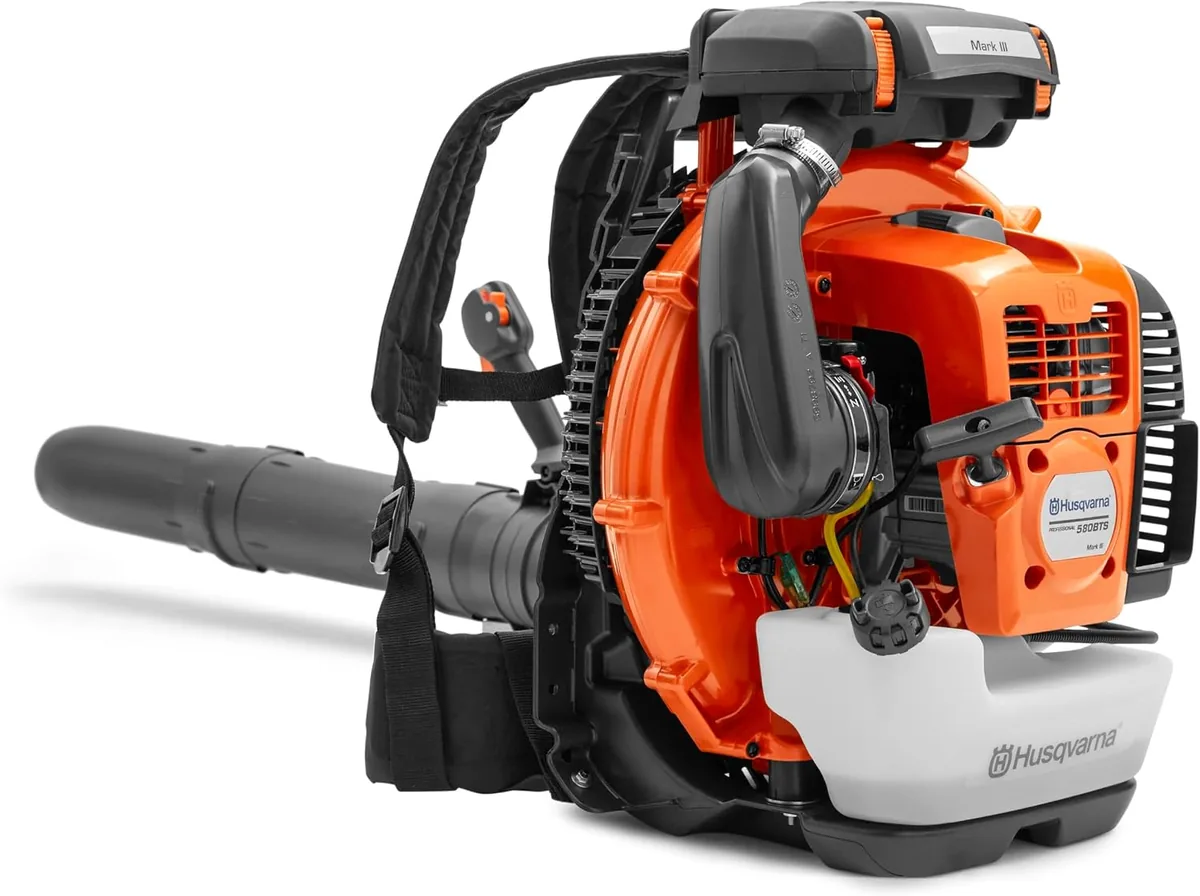
Husqvarna 580BTS
According to Husqvarna, the Husqvarna 580BTS Gas Backpack Leaf Blower adds 10 N of force and 232 CFM for a larger engine, a larger tank and 2.1 lb more weight. Step up to it for ground well beyond an acre or leaf mats that stay wet for weeks.
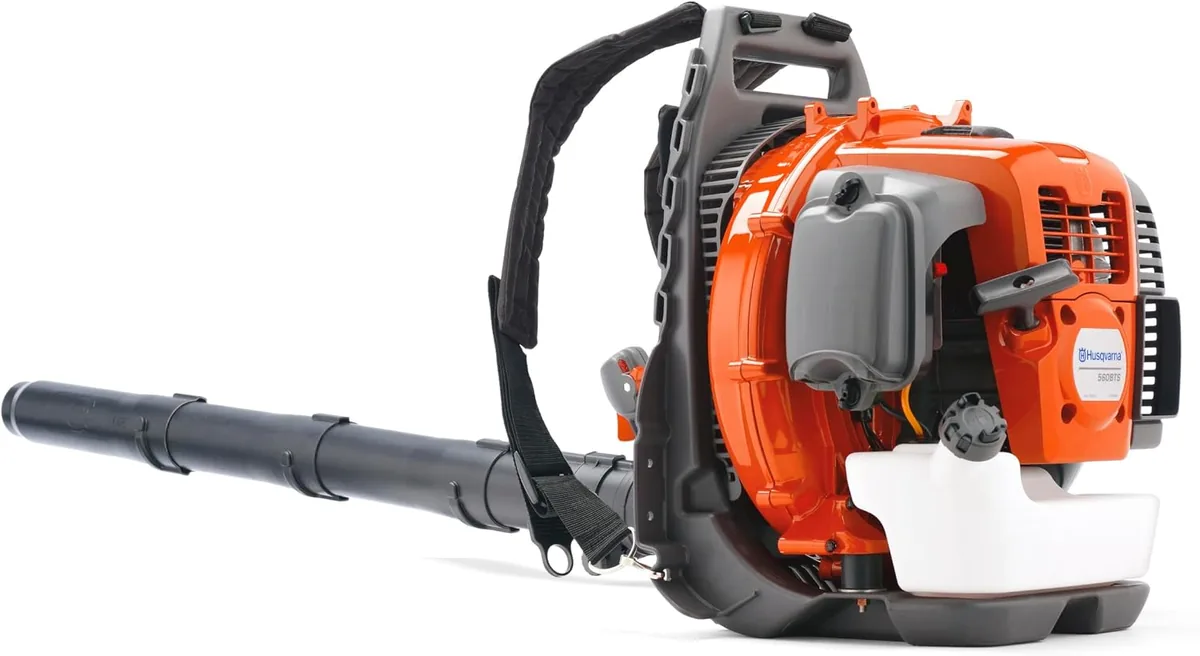
Husqvarna 560BTS
The Husqvarna 560BTS Gas Backpack Leaf Blower rates 30 N and 631 CFM at 23.15 lb, with the same tank and 97 dB(A) at the ear. Pick it for lots of about half an acre to an acre where dry leaves, not wet mats, are the job.
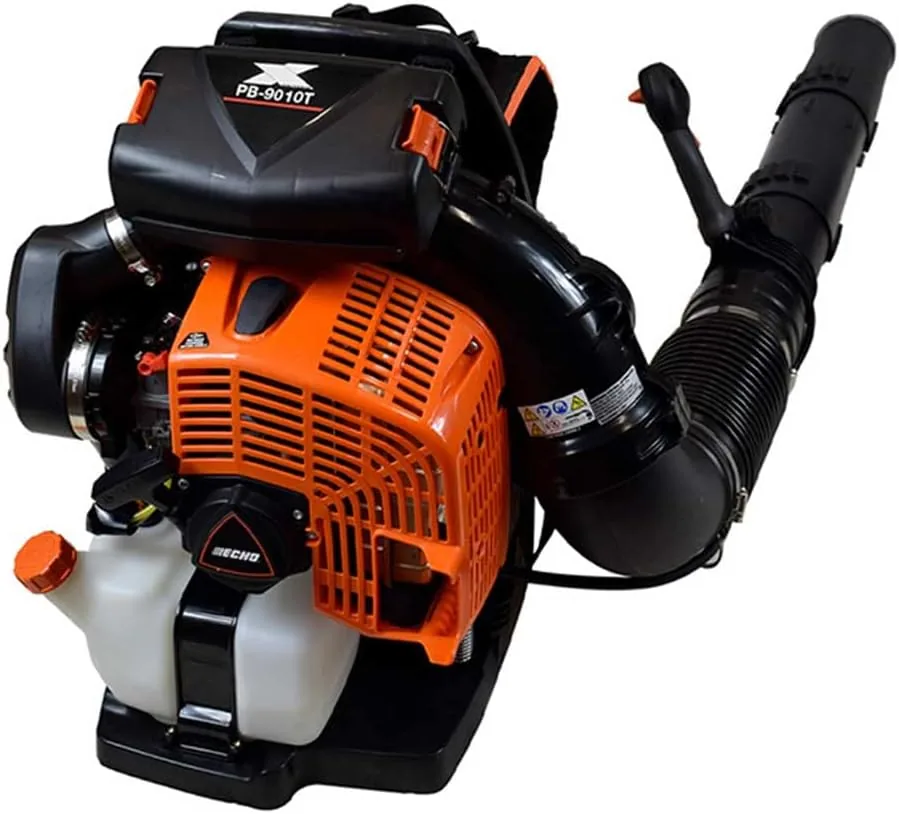
ECHO PB-9010T
According to ECHO, the ECHO PB-9010T Gas Backpack Leaf Blower delivers 48 N and 1,110 CFM from a 79.9 cc engine. Pick it for big ground where more force is worth the extra weight, and note that ECHO’s U.S. build has no hip belt.
Is the Husqvarna 570BTS Worth Buying?
The 570BTS earns its weight on an acre or more. 37 N and 768 CFM clear wet mats and the debris on a gravel yard, and the waist belt keeps 28 lb workable. You pay in noise at 103 dB(A), a 50:1 mix measured every time and upkeep you do on schedule. My Husqvarna 570BTS review verdict is a buy for an acre of leaves and wet ground and a pass for a quarter-acre lawn.
Frequently Asked Questions
Are Husqvarna backpack blowers any good?
Husqvarna backpack blowers are good professional-grade machines for large yards, and the 570BTS shows why. It delivers 37 N of force and 768 CFM at 24.7 lb dry, though like every gas backpack it is loud at 103 dB(A) and demands a strict 50:1 fuel routine and a pull-cord start.
Which is better, the Husqvarna 570BTS or the Stihl BR800?
On published numbers, the Stihl BR 800 is the stronger blower and the Husqvarna 570BTS is the lighter one. Stihl rates the BR 800 at 912 CFM, 41 N and 25.8 lb, against 768 CFM, 37 N and 24.7 lb dry for the 570BTS, so the Stihl gains power at the cost of about a pound.
What does BT stand for in Husqvarna?
In a Husqvarna backpack blower name, BT marks the model with the throttle handle on the blower tube, worked with your right hand. The 570BFS moves its throttle to the harness frame instead, so the letters tell you where your hand sits when you aim the pipe and set the speed.
How to start Husqvarna 570BTS?
To start the Husqvarna 570BTS cold, close the choke, press the purge bulb until fuel fills it, set the stop switch to one third and pull the starter handle until it runs. Then open the choke gradually and let the engine warm for 2 to 3 minutes before you work.
Which Husqvarna backpack blower is considered the best?
The best Husqvarna backpack blower for most large yards and orchards is the 570BTS or the 580BTS, depending on your leaves and acreage. The 570BTS suits an acre of lawn, drive and tree strips at 24.7 lb, while the 580BTS suits wetter, bigger ground with 47 N of force and a larger tank.
References
- Wettenschwiler PD, Lorenzetti S, Stämpfli R, Rossi RM, Ferguson SJ, Annaheim S. Mechanical Predictors of Discomfort during Load Carriage. PLoS ONE. 2015;10(11):e0142004.
- Alexander BM, Graydon PS, Pena M, Feng HA, Beamer BR. Hazardous exposures and engineering controls in the landscaping services industry. Journal of Occupational and Environmental Hygiene. 2025;22(3):189-202.
- Morata TC, Gong W, Tikka C, Samelli AG, Verbeek JH. Hearing protection field attenuation estimation systems and associated training for reducing workers’ exposure to noise. Cochrane Database of Systematic Reviews. 2024;5(5):CD015066.
- Alamin Gabasa SA, Md Razali KA, As’arry A, Abdul Jalil NA. Vibration Transmitted to the Hand by Backpack Blowers. IJAME. 2019;16(2):6697-6705.
- Michaud DS, Marro L, Denning A, Shackleton S, Toutant N, McNamee JP. Annoyance toward landscaping equipment noise in Canada. JASA Express Letters. 2022;2(8):083602.
Safety Note: Leaf blowers throw debris and can damage your hearing. Wear eye and ear protection, read the manufacturer’s manual, and check your local rules on noise and operating hours.