

My WORX WG509 review gives one answer: buy this corded blower, vacuum and mulcher for dry leaves within reach of an outlet, and skip it for wet leaves, gravel or a big lot. I used the Trivac on the lawn around our family house and in the yard beside the machinery shed, a short walk from our 3.7-acre apricot and plum orchard. The numbers behind my verdict are WORX’s own: 350 CFM, an 18:1 mulch ratio and a 9.3 lb machine with no shoulder strap.
Affiliate Disclosure: Garden Power Scout is a proud participant in the Amazon Services LLC Associates Program. As an Amazon Associate, we earn from qualifying purchases, at no extra cost to you.
WORX WG509 Review: My Verdict in Brief
I recommend the WORX Trivac WG509 3-in-1 Blower Vacuum Mulcher for a small or mid-size yard with dry leaves and a socket within about 150 feet. One selector lever on the shaft switches it between blowing and vacuuming, and vacuum mode shreds the leaves as they pass the metal impeller. You give up blowing push, wet-leaf work and any reach beyond the cord.
What Comes in the Box and Which Kit This Is
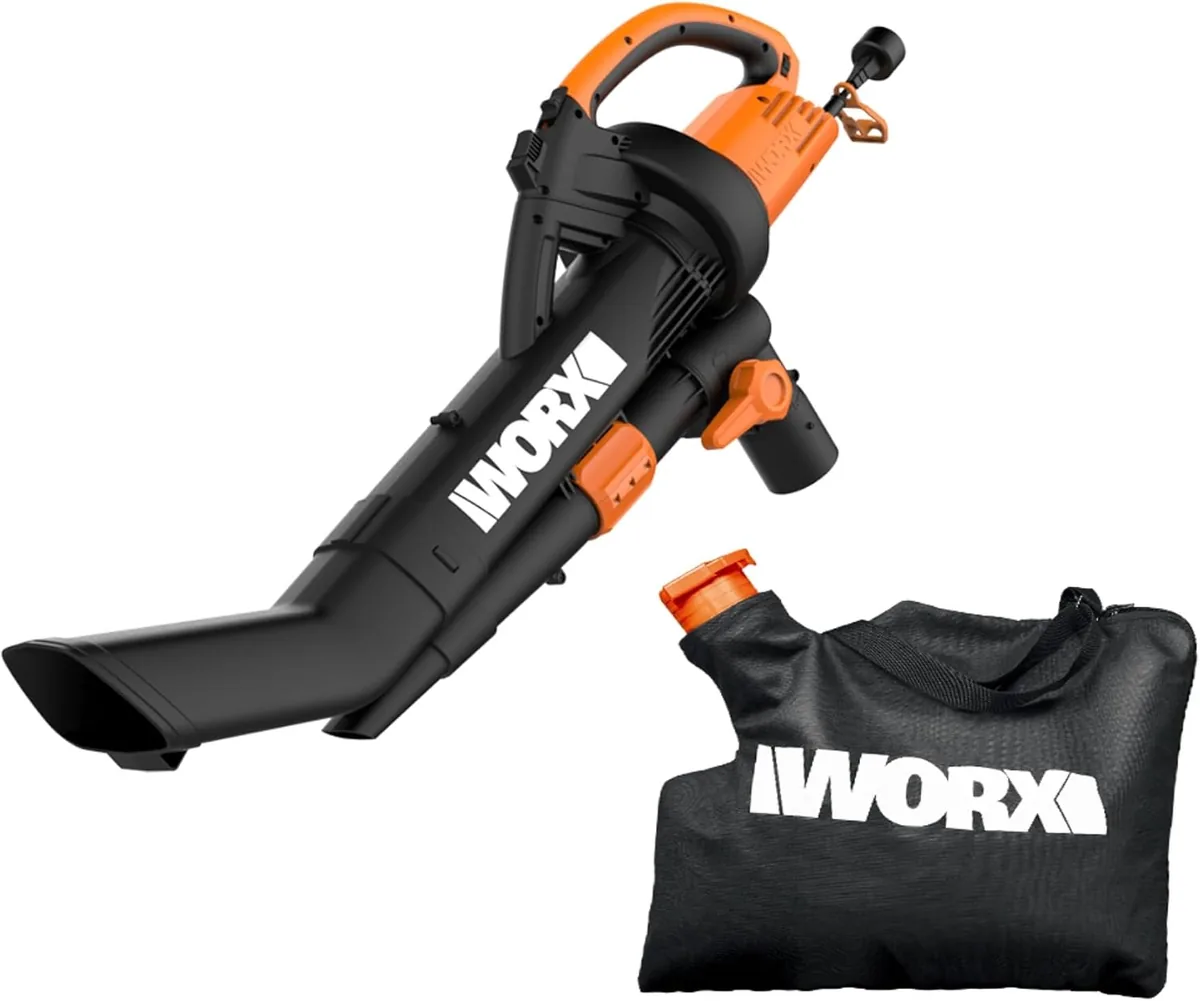
The WORX Trivac WG509 ships as one machine and one debris collection bag. No extension cord or shoulder strap comes with it.
WORX’s manual covers three kits with the same technical data: the WG509 with one bag, the WG509.1 with a high-capacity leaf collection system and the WG509.2 with two bags. Amazon sells the plain WG509, which is the kit I mean throughout. Check the model number before you compare: the WG505 is an older Trivac and a different machine from the WG509.
Specifications at a Glance
Two rows show up in use: 350 CFM is modest for a blower, and 9.3 lb hangs from one arm.
| Spec | Value |
|---|---|
| Power, maker’s figure | 12 A at 120 V, corded |
| Airflow, maker’s figure | 350 CFM |
| Air speed, maker’s figure | 80 to 210 mph, six speed positions |
| Mulch ratio, maker’s figure | 18:1 with a two-stage metal impeller and shredder blade |
| Bag, maker’s figure | 1.2 bushels (42 L) |
| Weight, maker’s figure | 9.3 lb machine weight |
Setup and First Use
Assembly takes under three minutes without tools, according to WORX, and the plug stays out of the socket until the last step.
- Unplug and check the switch. It must sit at O before you fit anything.
- Join and lock the tube. Line up the notches on the upper and lower tubes with the holes on both sides, fit the tube to the motor housing, swing the top up until it locks and check that it is firm.
- Fit the bag for vacuum and mulch work. Line up the slots of the quick-release bag collar with the locking pins on the motor housing and push the collar up. With the plug out of the socket, press the quick-release button to take it off.
- Plug in and start. Secure the plug connection, then move the switch to I.
The tool will not run until the blower/vacuum tube is locked onto the motor housing. That line sits in the WORX WG509 manual as an important note, and it is the first thing I check when the switch does nothing. After a month in the storage room mine started the moment I moved the switch to I, with no fuel to go stale and no cord to pull.
The motor keeps spinning for a few seconds after switch-off, so I wait for a full stop before I put the tool down or take off the bag. The manual also asks for GFCI protection on the outlet or circuit.
WORX WG509 Leaf Vacuum and Mulcher Performance
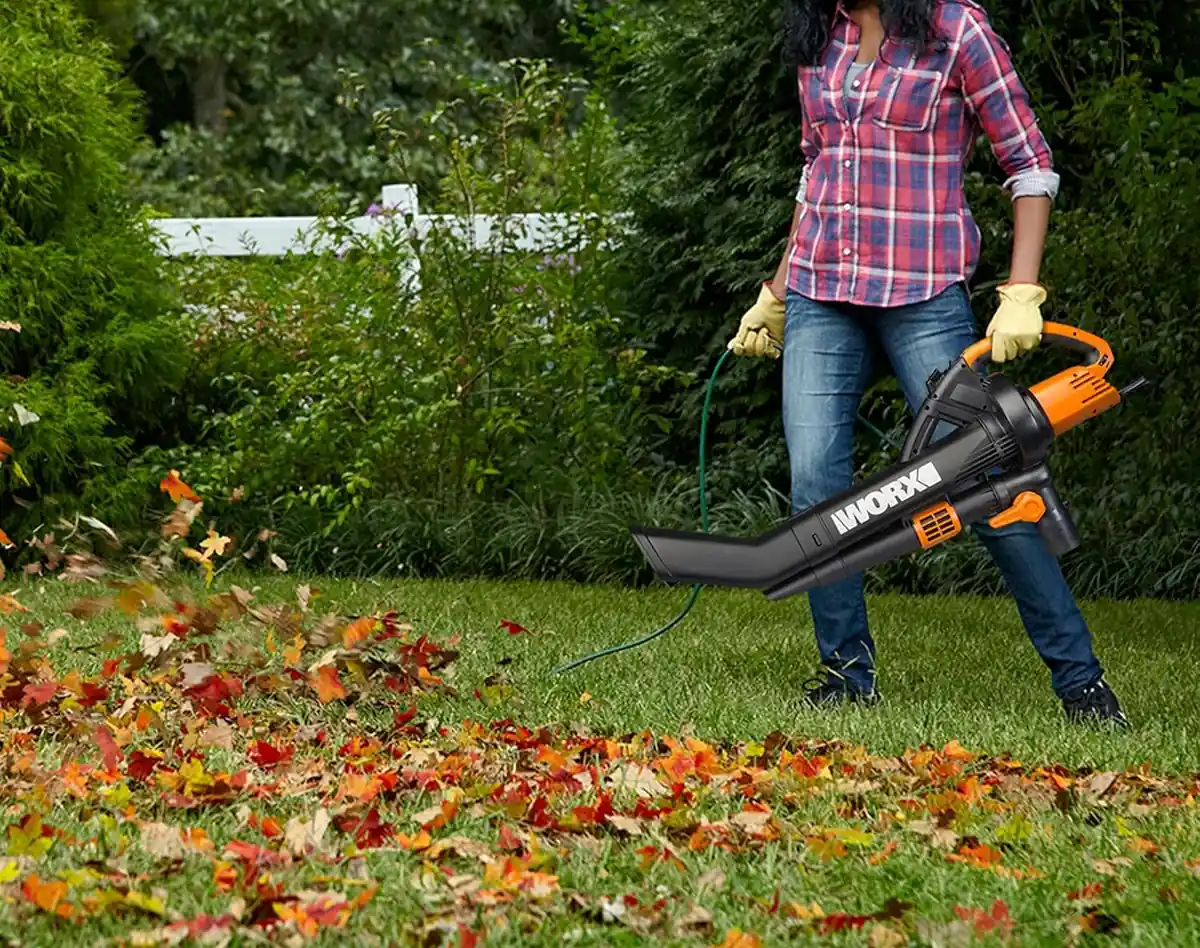
One selector lever on the shaft changes the WORX Trivac blower vacuum mulcher between blowing and vacuuming, and WORX says you can switch modes while you work. Mulching happens in vacuum mode, because the impeller shreds what the tube pulls in.
Blower Mode on the Lawn
In blower mode the WORX WG509 leaf blower moves 350 CFM at 80 to 210 mph, according to WORX, which is modest for a blower. It suits dry leaves on a lawn, a path or a work pad. Across the house lawn the cord found every shade tree trunk, and I spent more attention on the cable than on the leaves. Before the first mow after a windy week I blow seed pods and twigs to the lawn edge so the mower does not throw them, with the tube pointed away from windows and people.
Vacuum Mode and the Technique WORX Asks For
Turn the selector lever to the vacuum symbol and the tube pulls leaves through the metal impeller into the bag. WORX asks you to keep the vacuum tube about 1 inch above the debris. It also says not to force the tube into a pile of debris or hold it upright while force feeding debris into it, because either action may clog the tube and damage the metal impeller and blade.
The speed switch has six positions, 1 lowest and 6 highest, and WORX points the low end at corners and light debris and the high end at heavy debris. I start low on a thin layer of leaves and move up the dial only when the layer thickens.
Mulching Dry Leaves
WORX credits the two-stage metal impeller and shredder blade with an 18:1 mulch ratio, so 18 bags’ worth of loose leaves shrinks to 1 bag’s worth. In a field trial, mulched maple and oak leaves worked into established Kentucky bluegrass cut dandelion counts by up to 80 percent after one application (1). In suburban yards, years of autumn leaf removal left soil carbon up to 24 percent lower than in yards that kept their leaves (2). Shredded leaves belong on the beds and in the compost pile.
Wet Leaves
WORX says not to vacuum wet leaves, because they stick to parts and cause clogging. The manual bars use in rain or on wet surfaces, so wet leaves wait for dry weather. Lab tests on leaf litter from three deciduous trees found it can hold about 2.4 to 4.2 times its dry mass in water (3). That is a heavy load for a bag, a tube and a shredder blade.
Cord, Reach and Power Supply
The WG509 has no battery, so the cord decides where it can work. WORX asks for an outdoor-rated, polarized extension cord and, for a 12 amp tool at 120 V, sets the minimum gauge by length.
| Cord length | Minimum gauge |
|---|---|
| Up to 25 ft | 18 AWG |
| Up to 50 ft | 16 AWG |
| Up to 100 ft | 14 AWG |
| Up to 150 ft | 12 AWG |
WORX says never to use an extension cord over 150 feet, and it warns that an undersized cord drops the line voltage, which causes loss of power and overheating. From the outlet in the machinery shed, 150 feet of cord just about reaches the nearest tree row, so the Trivac stays on the lawn, the work pad and the yard. I drape the extension cord over my shoulder and work away from the socket, with the plug connection knotted as the manual allows.
Bag, Emptying and Maintenance
Switch the tool off and unplug it before you empty the bag, and do not store debris in it. To clean it, shake it out inside out and hand wash it in soapy water about once a year.
WORX warns that a worn bag lets small objects fly through it, so fit a WORX WG509 replacement bag when it shows wear. WORX does not sell the impeller as a replaceable part. Never run the vacuum without the bag or with the zipper open.
For upkeep, unplug the tool and wipe the housing with a dry cloth, because WORX bars water and chemical cleaners.

Noise, Weight and Safety Gear
Wear hearing protection whenever the fan runs. WORX gives no sound figure for the WG509, and its manual shows an ear protection symbol. NIOSH recommends limiting noise exposure to 85 A-weighted decibels averaged over an eight-hour day and cutting the time in half for every 3 decibel rise (4). I put on earmuffs before the first start.
The fan throws what it blows. WORX asks for safety goggles, long pants and shoes, and for children, bystanders and pets to stay away. A U.S. study of lawnmower-related eye injuries found that 77 percent came from projectiles such as grass, dirt and rocks, and only 2 percent of those projectile injuries were documented as involving eye protection (5).
With no strap in the box, one arm carries the whole machine. On a long pass over the house lawn my forearm notices the 9.3 lb long before I reach the end of the lawn.
Who Should Buy the WG509 and Who Should Skip It
It suits you if your yard is small to mid-size, your leaves are dry and a socket sits close:
- You clear dry leaves from a small to mid-size yard and want them bagged and shredded for beds or compost.
- You have an outdoor socket within 150 feet and a cord that matches the gauge table.
Skip it if the job is wet, stony or far from power:
- Your leaves or your lawn are wet.
- Your yard has gravel or stone.
- Your lot runs past 150 feet from a socket, or you work in an orchard with no outlet.
- You want a light handheld or a high-power blower for a big lot, or you work professionally, because the manual says the blower is for residential use only.
Drawbacks and Trade-Offs
The cord and the wet-leaf limit are covered above. These are the other limits.
- Stones and hard objects. WORX’s manual bars nails, bolts and rocks from blowing, and wires, staples, nails and rocks from vacuuming. At my gravel yard I keep the tube clear of the stone edge and rake that strip by hand.
WORX WG509 vs WG512 and Other Alternatives
The closest alternative is the WG512 from the same Trivac line, and the table adds a rival corded model, a gas blower and a battery blower. My leaf blower guides go deeper on each class.
| Tool | Power | Maker’s figures |
|---|---|---|
| WORX WG509 | Corded, 12 A | 350 CFM, 80 to 210 mph, 18:1 mulch ratio, 9.3 lb |
| WORX Trivac WG512 | Corded, 12 A | 600 CFM, 16:1 mulch ratio, 8.6 lb |
| BLACK+DECKER BEBL7000 | Corded, 12 A | Up to 400 CFM, 250 mph, 15.3 lb |
| Husqvarna 125BVx | Gas, 28 cc | 425 CFM, 130 mph, 94 dB(A) at the ear, 9.6 lb |
| Greenworks 24322 | 40V battery | 340 CFM, 185 mph, 9.9 lb without battery |
In a WORX WG512 vs WG509 choice, the WG512 gives more air and less weight on paper, with a 16:1 mulch ratio against 18:1. Pick the WG512 if blowing push matters more to you than the tighter shredding, and the WG509 if mulching is the main job.
Pick the BLACK+DECKER BEBL7000 only if you want up to 400 CFM with POWERBOOST and can carry its 15.3 lb. The Husqvarna 125BVx needs no cord but asks for fuel mix. The Greenworks 24322 needs neither cord nor fuel, with about 20 minutes on high from the 4.0 Ah pack, according to Greenworks.
Common Problems and How to Avoid Them
Unplug the tool before any check below, because every fix puts a hand near the tube or the impeller.
- The switch does nothing or the tool keeps shutting off. Check that the blower/vacuum tube is locked onto the motor housing, because according to WORX the tool does not run without it. Then look for a clog in the tube or at the impeller, and check the extension cord against the gauge table, since an undersized cord drops the line voltage and causes loss of power and overheating.
- The tube or the impeller clogs. WORX names wet leaves, forcing the tube into a pile and holding it upright while force feeding debris. Put on glasses and gloves, switch off, wait until every moving part stops, unplug, press the release button, separate the tube from the motor housing and clear the impeller with a long, sturdy tool.
- Vibration, odd noise or a damaged impeller. WORX says to stop, unplug and find the cause, and if the impeller or blade looks damaged, not to use the tool and to contact an authorized WORX dealer.
Warranty and Registration
WORX gives 3 years if you register the tool within 30 days of buying it, and 24 months if you do not. WORX covers defects from faulty materials or workmanship, asks for a dated receipt, and excludes misuse, damage from foreign objects and professional, trade or rental use. Check the seller on the listing before you buy.
My Recommendation on the WORX WG509
I recommend the WORX WG509 to anyone with a small to mid-size yard of dry leaves and a socket within 150 feet. The 18:1 mulch ratio and the metal impeller come at a budget to mid-range price with no fuel or battery to manage, while wet leaves, gravel and a lot beyond the cord’s reach belong to another tool. Wear eye and ear protection, and unplug before you touch the tube or the bag. For dry leaves near an outlet, my WORX WG509 review verdict is a buy.
Frequently Asked Questions
Why does my Worx leaf blower keep shutting off?
A Worx leaf blower such as the WG509 that keeps shutting off needs checks in this order, with the plug out first: the tube locked onto the motor housing, which WORX says the tool needs to run, then a clog in the tube or at the impeller, then the extension cord’s gauge and connection. Use the manual’s gauge table.
Can you use a leaf blower as a vacuum?
You can use a leaf blower as a vacuum only if it is built as a blower-vacuum, such as the WORX WG509, which switches modes with a selector lever. Vacuuming needs a vacuum tube and a collection bag, and in the WG509 the leaves pass through the impeller, which shreds them.
What is the best leaf mulcher for a large yard?
The best leaf mulcher for a large yard is one that reaches the whole yard, and the WG509 suits a small to mid-size yard because its extension cord stops at 150 feet. A lot beyond that reach calls for a gas or battery blower-vacuum, while the WG509 fits dry leaves near a socket.
What is better for blowing leaves, CFM or mph?
CFM is better for blowing leaves in bulk, because air volume moves the whole pile, while mph helps most on stuck debris on hard ground. The WG509 pairs 350 CFM with 80 to 210 mph, according to WORX, which suits dry leaves on a lawn, a path or a work pad.
How much is the Worx Trivac?
The Worx Trivac WG509 sits in the budget to mid-range price tier, so check the current listing for today’s price before you buy. The box holds one blower, vacuum and mulcher with a cord attached and one debris collection bag, and it holds no extension cord and no shoulder strap.
References
- Kowalewski AR, Buhler DD, Lang NS, Nair MG, Rogers JN. Mulched Maple and Oak Leaves Associated with a Reduction in Common Dandelion Populations in Established Kentucky Bluegrass. HortTechnology. 2009;19(2):297-304.
- Ferlauto M, Schmitt L, Burghardt K. Legacy effects of long-term autumn leaf litter removal slow decomposition rates and reduce soil carbon in suburban yards. Plants People Planet. 2024;6(4):875-884.
- Li Q, Choi H, Lee EJ, Im S. Experimental Analysis of Water Retention Characteristics in the Litter of Different Deciduous Trees. J Korea Soc Environ Restor Technol. 2016;19(2):83-93.
- National Institute for Occupational Safety and Health. Noise-Induced Hearing Loss. Noise and Hearing Loss. Centers for Disease Control and Prevention; 2024.
- Stange NR, Jennissen CA. Lawnmower-Related Eye Injuries in the U.S., 2004 to 2023. Am J Ophthalmol. 2025;277:7-16.
Safety Note: Leaf blowers throw debris and can damage your hearing. Wear eye and ear protection, read the manufacturer’s manual, and check your local rules on noise and operating hours.