
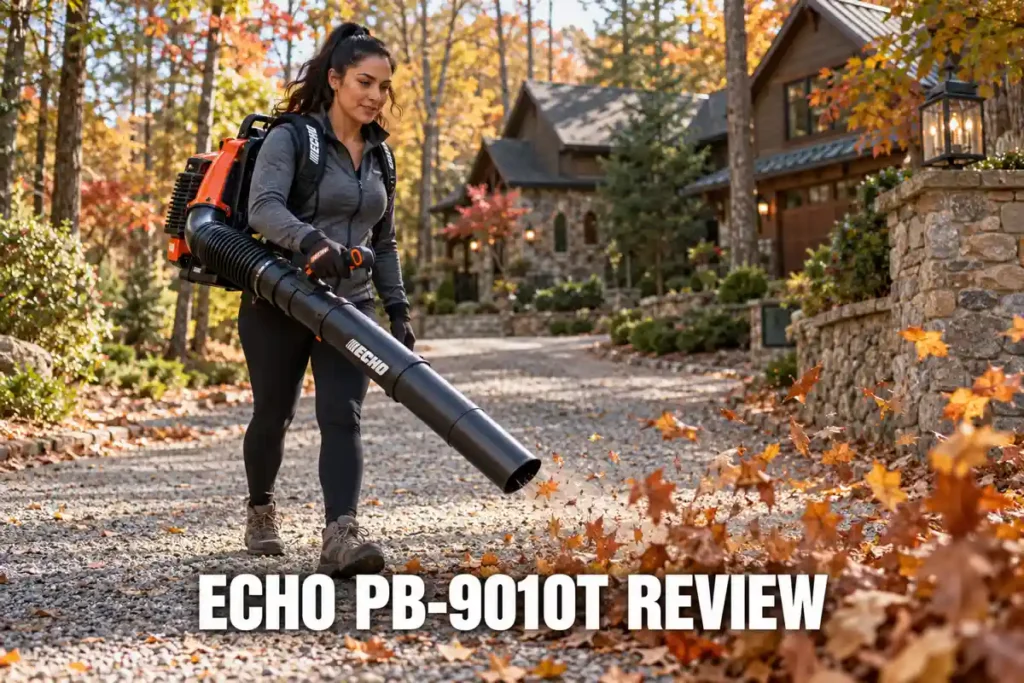
In this Echo PB-9010T review my verdict is short: buy it for an acre or more of leaf fall and storm debris, and skip it for a small lot. My own test for a gas backpack is one job, the long alleys between my plum rows after leaf fall, where a handheld needs three passes. The PB-9010T is ECHO’s 79.9 cc X Series blower with 48 N of rated force, and it charges you in weight, noise and fuel. Below I cover setup, fuel, noise, upkeep, problems and the alternatives.
Affiliate Disclosure: Garden Power Scout is a proud participant in the Amazon Services LLC Associates Program. As an Amazon Associate, we earn from qualifying purchases, at no extra cost to you.
Echo PB-9010T Review and My Verdict in Brief
I recommend the ECHO PB-9010T Gas Backpack Leaf Blower for properties of an acre and up, for wet leaf mats and for long sessions. ECHO rates the force at 48 N at the nozzle, and the trigger and cruise lever sit on the tube, so one hand sets speed and aims. You pay with about 31 lb on your shoulders, a roar that demands ear protection, and a thirsty engine.
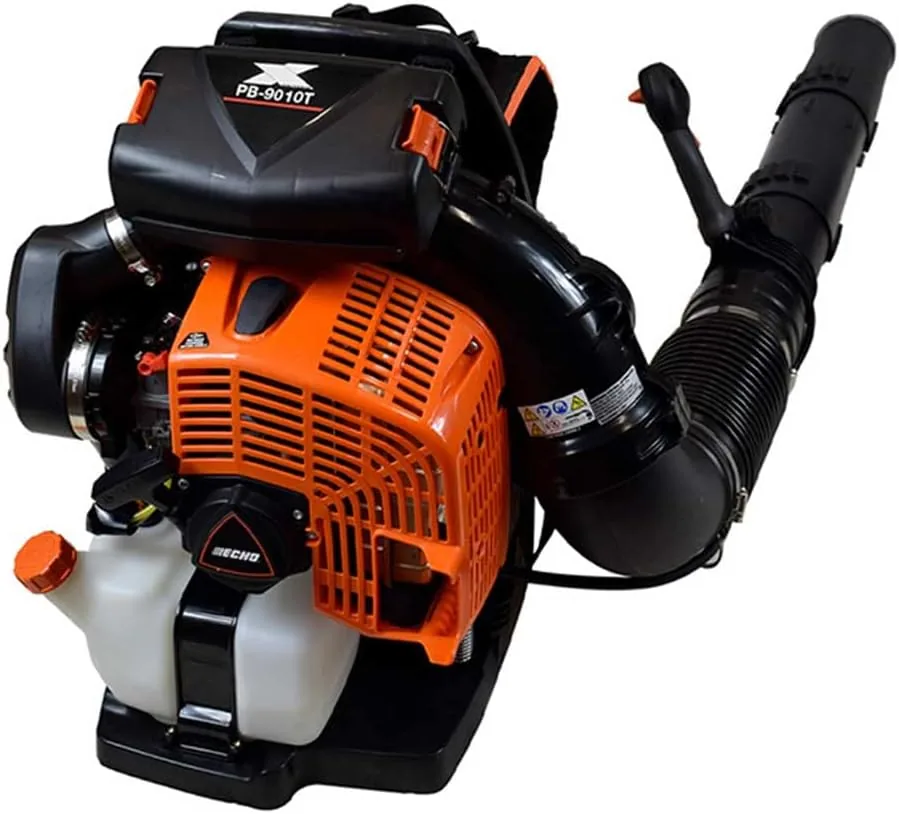
What the Echo PB-9010T Backpack Blower Is and What Comes in the Box
The Echo PB-9010T backpack blower is the tube-throttle model in ECHO’s 79.9 cc X Series. The T stands for the trigger and cruise lever on the tube, and the PB-9010H moves the throttle to a hip arm. Owners also write the name as Echo PB 9010T or just the Echo 9010.
According to ECHO’s manual, the box holds the power head, four pipes, two clamps with screws, a quick start guide, the warranty statement and a cold weather insert. It holds no fuel, no two-stroke oil and no mixing bottle, and no hearing or eye protection, so buy those first.
Echo PB-9010T Specs at a Glance
Two rows decide the fit: blowing force and weight, so I read the force row first.
| Spec | Figure |
|---|---|
| Engine | 79.9 cc air-cooled two-stroke |
| Blowing force | 48 N at the nozzle (about 10.8 lb) |
| Air volume | 1,110 CFM |
| Air speed | 220 mph with the pipes fitted |
| Fuel tank | 83.8 fl oz, see-through |
| Dry weight | 26.4 lb or 27.2 lb, by production run |
| Sound | 79.3 dB(A) at 50 ft |
Setup, Fuel Mix and Starting
Assembly is the slowest part of day one. The pipes lock into channels and then stay put, so I lay them out in order on the bench and check the swivel pipe faces the right way before I tighten a clamp.
Fuel is a 50:1 mix, which works out to 2.6 fl oz of oil per US gallon. According to ECHO, use fresh unleaded gasoline of 89 octane or higher with up to 10 percent ethanol, and oil that meets the ISO-L-EGD and JASO M345 FD standards. I mix in a measured bottle and only what I will burn in 30 days, the manual’s limit, because one tankful of old mix made my engine bog and surge.
A cold start follows four steps:
- Set the throttle to idle and the choke to COLD START.
- Press the purge bulb until fuel shows, then four or five more times.
- Pull the rope up to five times, in short pulls.
- When the engine fires, pull the trigger to return the choke to run, then let it idle for several minutes.
A warm start skips the choke: purge bulb, then pull. Fuel it outdoors with the engine cool, move 10 ft from the fueling spot before you start, and never run it in a closed shed, where the exhaust builds up carbon monoxide.
Tube Trigger, Cruise Lever and Stop Controls
The trigger sits on the swivel pipe and always overrides the lever. The lever sets a cruise speed, so on a long alley I set the speed once and ease my finger off the trigger, and the swivel pipe lets me tilt the nozzle under low plum branches without bending.
The stop is the last stretch of lever travel, so it is easy to go from idle to off by mistake. I ease the lever back to idle and stop short of the end of its travel until I mean to shut the engine down.
Echo PB-9010T vs 9010H and Which Throttle Suits You
The T and the H share the same engine, fan, airflow and tank, so the choice is about your hands. I picked the T because I change speed all day and want the trigger in the same hand that aims the pipe.
| Item | PB-9010T | PB-9010H |
|---|---|---|
| Throttle | Trigger on the swivel pipe plus a cruise lever | Hip-mounted throttle arm plus a position lever |
| Dry weight | 26.4 lb or 27.2 lb | 26.7 lb or 27.5 lb |
The T suits one-hand aiming under branches, and the H suits a hip throttle with a two-hand grip.
Performance on Leaves, Debris and Gravel
The Echo PB-9010T backpack leaf blower rolls a mat of leaves as one sheet instead of combing through it, which fits ECHO’s rating of 48 N at the nozzle.
Wet Leaf Mats in the Plum Alleys
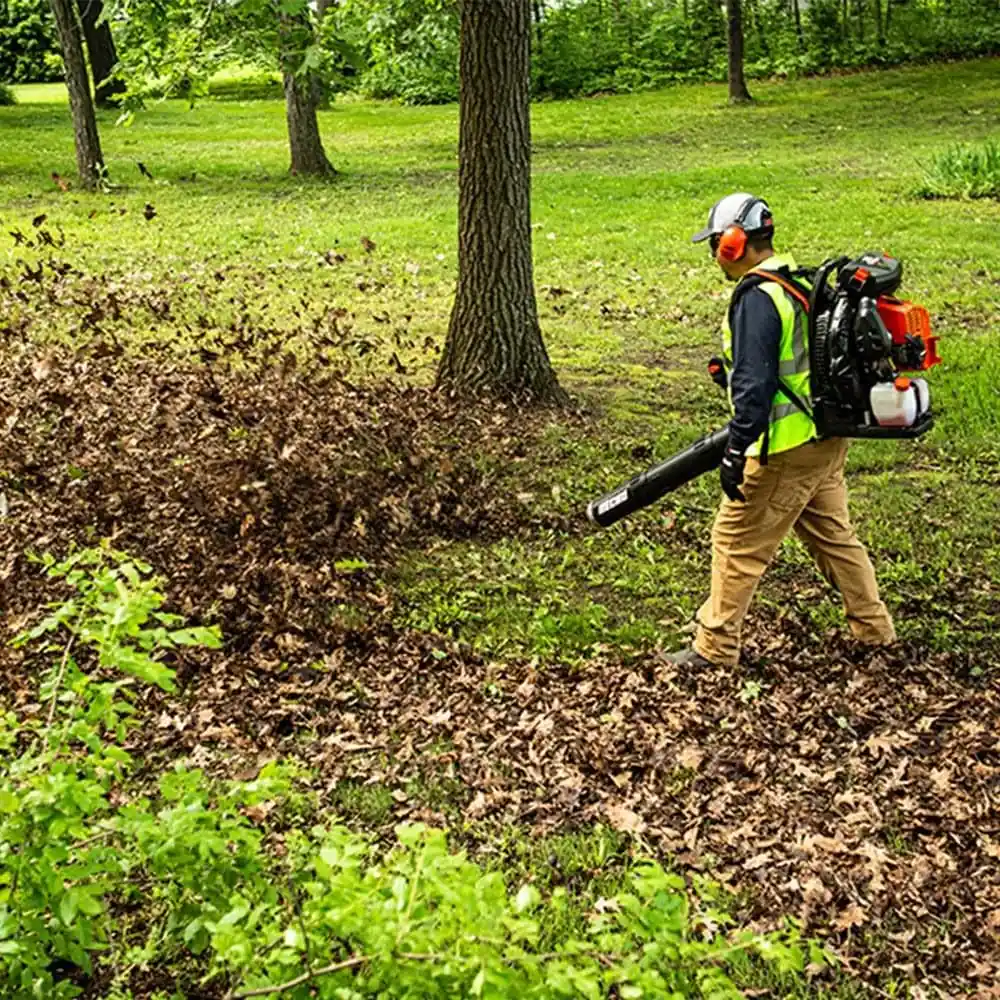
Wet leaves stick by weight, so they need volume under the edge. After rain, the mat that packs against the hedgerow side of my first alley lifts when I set the cruise lever and sweep low under its leading edge, where my old gas handheld only skated over the top. Keep the nozzle low and the wind at your back, and the mat rolls into the alley, where the mower shreds it.
Pruning Debris and Gravel
In late winter it moves pruning twigs and sawdust from under the canopy into the alley for the mower. On the gravel yard the manual calls for higher speed, and higher speed throws stones, so I hold the pipe low at a shallow angle and keep the nozzle away from the shed windows.
Where I Keep It Off
The cover crop strips, the young drip lines and the mulched tree bases stay out of its path. At this force the air strips mulch and shifts a drip line, so there I use a rake.
Fuel Use and Run Time per Tank
The tank holds 83.8 fl oz and is see-through, so I read the level at a glance. According to ECHO, fuel use at maximum power is about 74 fl oz an hour, close to the whole tank, so hard blowing means a refuel about every hour.
Plan tanks by the job, not by the clock. Two tanks cleared the pruning litter under my plum rows, with one stop to let the engine cool before I refilled it.
Noise, Weight and Comfort
A full tank puts about 31 lb on your shoulders, and the engine is loud enough to need both plugs and muffs.
Noise and Hearing Protection
ECHO rates the sound at 79.3 dB(A) measured 50 ft away, but the operator stands next to the engine, far closer than that. In a community field test, two leaf blowers and a hose vacuum running together measured about 102 dB(A) at the center of the work area (1).
I wear plugs under muffs from the first pull, and I check that the plug seals, since a Cochrane review notes that poor earplug fit may limit protection for about 40 percent of users (2).
Weight and Harness
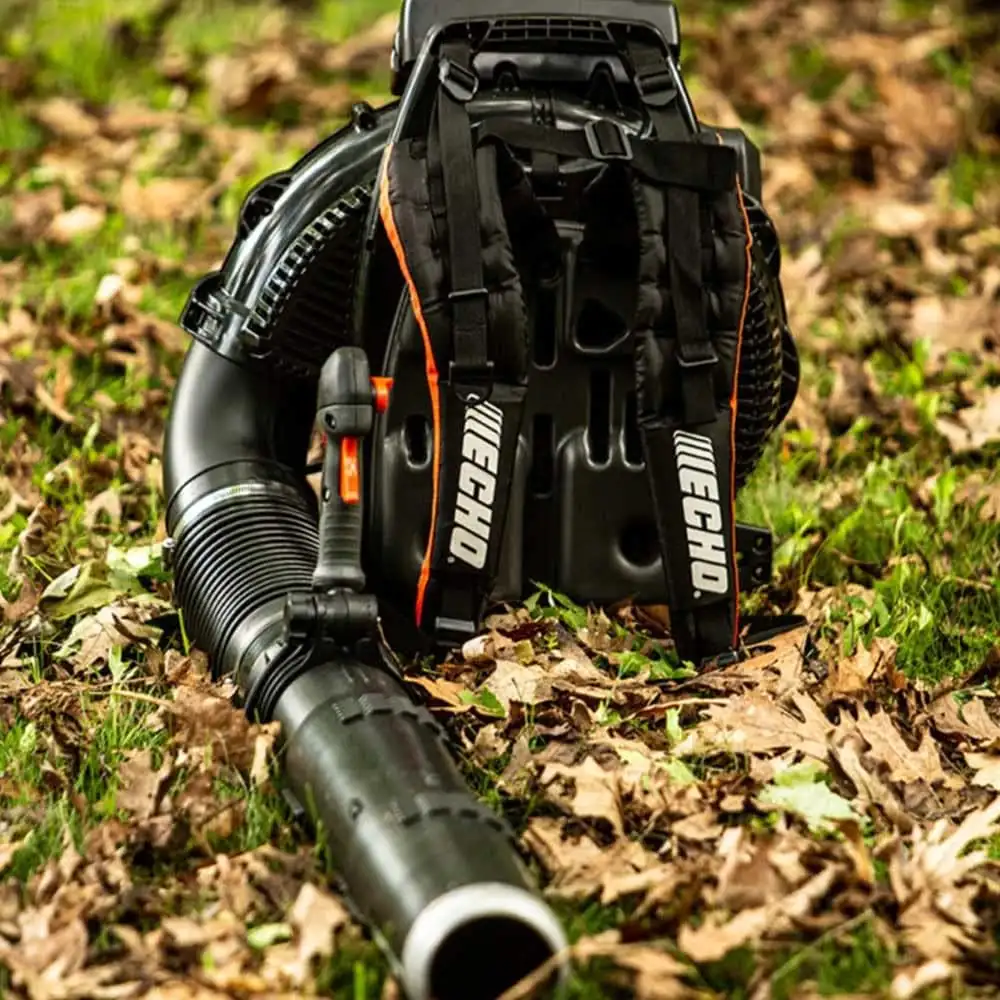
The Echo PB-9010T weight is 26.4 lb or 27.2 lb dry, depending on the production run, and a full tank adds about 4 lb. The US build has padded straps and a vented back pad but no hip belt, so all of it rides on your shoulders. A load-carriage study found that strap force and contact pressure at the shoulders and hips predicted how much discomfort carriers reported (3), so strap fit matters.
With no hip belt, I feel the load across my shoulders and neck by the end of a long alley. I stop at each alley end for a drink of water.
Hand Vibration
According to ECHO, hand vibration is 2.4 m/s2. Field measurements on backpack blowers ran from about 1.7 to 2.9 m/s2 (4). Time on the trigger adds up, so take breaks, keep a loose grip and wear gloves.
Maintenance and Storage
Upkeep decides how long a gas two-stroke lasts, and the Echo PB-9010T manual is clear about it. Blocked intakes and dusty cooling fins cause overheating, which ECHO does not warrant.
- Before each use: clean the air filter and cooling fins, and check the fuel system, the rope and the screws.
- Every 3 months: replace the air filter, and inspect the fuel filter, the spark plug (NGK CMR7H, 0.026 in gap) and the spark arrester.
- Every year: replace the fuel filter and the fuel cap gasket.
- If you run it slow for long stretches: open the throttle fully for at least 5 minutes every hour, because steady low speed builds carbon on the spark arrester screen, and check the screen about every 40 hours.
In dusty weeks I wash the foam pre-filter in detergent water, squeeze it dry and never oil it, as the manual says. Do not use the blower below 15 F, because the fuel lines can be damaged. For storage over 30 days, follow the manual’s sequence:
- Drain the fuel tank completely.
- Press the purge bulb 6 to 7 times to clear the carburetor, then drain the tank again.
- Run the engine until it stops from lack of fuel.
- Let it cool, remove the spark plug and pour 7 cc (0.25 oz) of fresh two-stroke oil into the cylinder.
- Pull the starter 2 to 3 times to spread the oil, and leave the piston at the top of its travel.
- Refit the plug, remove the pipes, and store the blower dry and dust free, away from any flame.
Common Problems and How to Fix Them
Fuel, air and heat cause most engine trouble, and each symptom below has a likely cause and a fix.
- Hard to start: a clogged fuel strainer, a flooded engine or a wrong plug gap. Clean or replace the strainer and the air filter, and set the NGK CMR7H gap to 0.026 in.
- Starts, then dies: a dirty air or fuel filter, a blocked fuel vent or a worn plug. Clean or replace each in turn.
- Will not accelerate: a carburetor out of adjustment, blocked cooling or a clogged spark arrester. Clear the cooling fins, replace the arrester screen, and leave carburetor work to an ECHO dealer, since only idle speed is yours to adjust.
- Loses power once it is warm: a clogged fuel filter can starve the engine. Fit a new fuel filter, work down the list above, and see a dealer if it still bogs.
- Water in the air filter: the blower is not weatherproof, so dry the filter and keep the unit out of the rain.
Who Should Buy It and Who Should Skip It
Buy it for mature trees and wet leaf mats, and skip it on a small lot.
Buy It If
- You clear an acre or more, or a lot with many mature trees.
- You face wet leaf mats, storm debris or gravel edges.
- You run long sessions and already mix two-stroke fuel.
Skip It If
- Your lot is under half an acre.
- You dislike mixing fuel or pulling a starter rope.
- Your back or shoulders complain at 31 lb with no hip belt.
- Your town limits gas blowers, so check the local rules first.
Drawbacks to Know About
- Fuel and restarts: close to a tank per hour of hard blowing, exact 50:1 mixing, and a pull cord for every restart.
- Warranty depends on the seller: according to ECHO, the limited warranty applies only to units sold by authorized dealers, and runs 2 years instead of 5 for agricultural or income-producing use, so confirm the seller before you order.
How It Compares With Alternatives
If an acre is more than you need, an ECHO backpack blower one step down or a Husqvarna in the same class gives you a real choice. For cordless options, see my leaf blower guides.
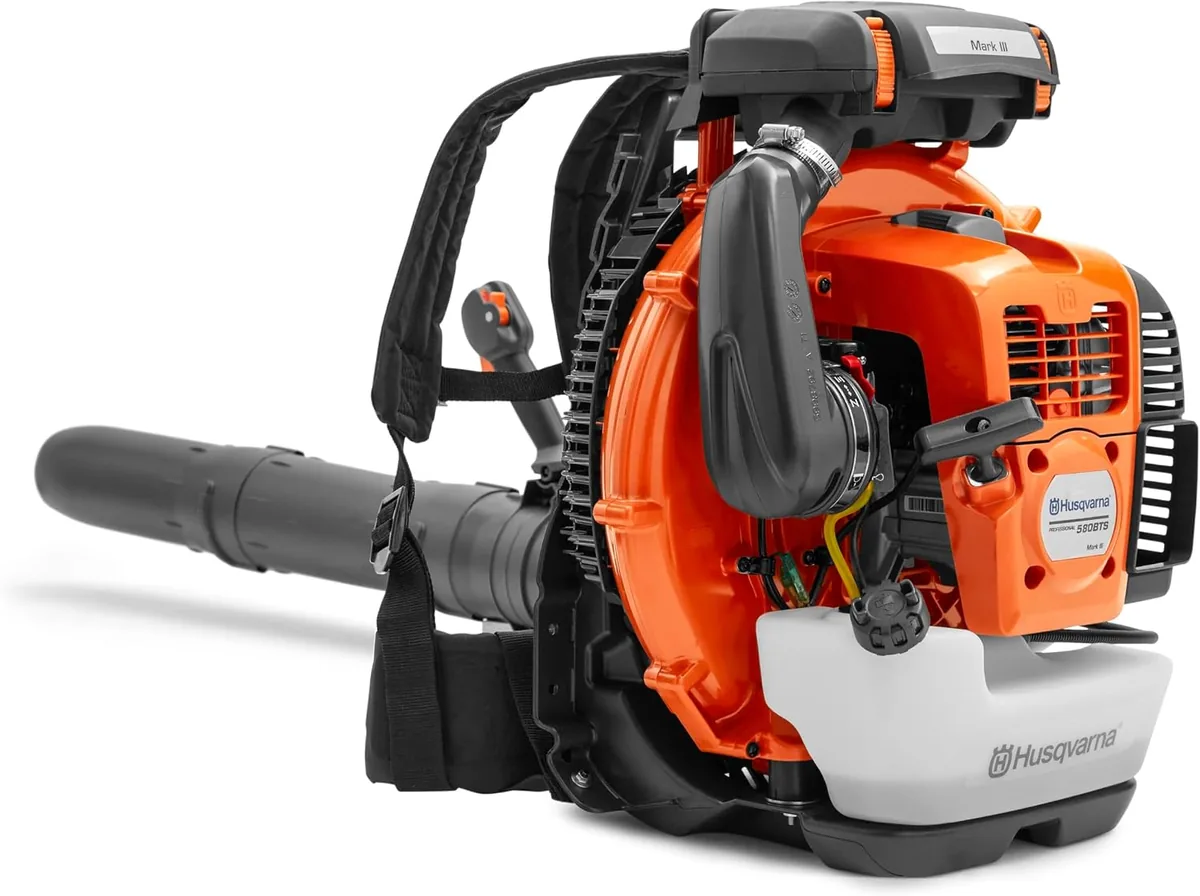
Husqvarna 580BTS
According to Husqvarna, the Husqvarna 580BTS Gas Backpack Leaf Blower gives 47 N from a 75.6 cc engine, with a padded hip belt and a slightly bigger tank. The hip belt is the one thing the PB-9010T lacks, while the ECHO rates higher on airflow. Pick the Husqvarna if shoulder load worries you more than the last bit of push.
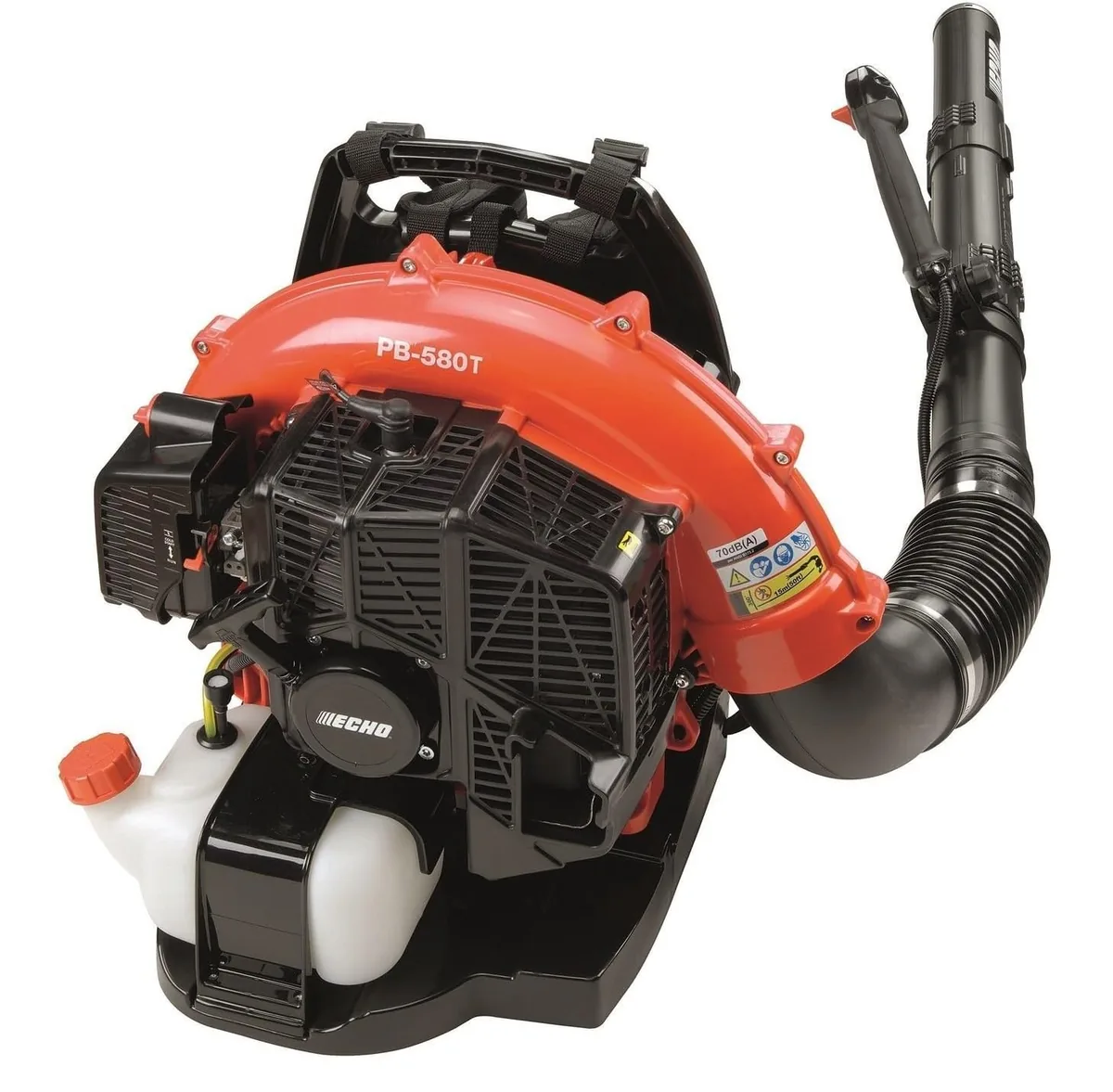
ECHO PB-580T
According to ECHO, the ECHO PB-580T Gas Backpack Leaf Blower gives 22 N and 517 CFM at 22.7 lb dry, with the same tube throttle. That is under half the force and about 4 lb lighter. Pick it for yards of a quarter to three quarters of an acre.
Is the Echo PB-9010T Worth Buying?
It is worth buying if your ground matches its size. On an acre of mature trees, an orchard alley or a gravel yard, 48 N and an 83.8 fl oz tank save real hours. You pay in weight, noise and a fresh 50:1 mix measured every time. That is the verdict of this Echo PB-9010T review: buy it for big ground and skip it for small lots.
Frequently Asked Questions
Is the Echo 9010 a good blower?
The Echo 9010 is a good blower for wet leaf mats and long jobs on an acre or more. Its 48 N of rated force and 1,110 CFM of air suit that kind of work, but at about 31 lb with a full tank and loud at full throttle, it is a poor fit for small lots and tight spaces.
What is the difference between ECHO 9010T and 9010H?
The difference between the ECHO 9010T and 9010H is the throttle: the T has a trigger and cruise lever on the tube, and the H has a hip-mounted throttle arm with a stick handle. Both share the same 79.9 cc engine and airflow, and the H is about a third of a pound heavier and an inch wider.
Which ECHO backpack blower is the most powerful?
The most powerful ECHO backpack blower is the PB-9510T, which reaches 56 N of rated force. The PB-9010T sits just below it with 48 N, 1,110 CFM of air and a 79.9 cc engine, which makes it the model to pick for an acre of leaf fall ahead of ECHO’s lighter blowers.
How to start Echo PB-9010T?
To start the Echo PB-9010T cold, set the choke to COLD START, press the purge bulb until fuel shows plus four or five more times, then pull the rope in short pulls until it fires. Pull the trigger to return the choke to run, and let it idle for several minutes before you open the throttle.
Is ECHO backpack blower better than Stihl?
An ECHO backpack blower is better than Stihl on raw power: the PB-9010T is rated at 48 N and 1,110 CFM, against 41 N and 912 CFM for the Stihl BR 800 C-E model. The Stihl is rated a little quieter at 50 ft and about a pound lighter, so it wins on noise and weight.
References
- Walker E, Banks JL. Characteristics of Lawn and Garden Equipment Sound: A Community Pilot Study. J Environ Toxicol Stud. 2017;1(1).
- Morata TC, Gong W, Tikka C, Samelli AG, Verbeek JH. Hearing protection field attenuation estimation systems and associated training for reducing workers’ exposure to noise. Cochrane Database of Systematic Reviews. 2024;5(5):CD015066.
- Wettenschwiler PD, Lorenzetti S, Stämpfli R, Rossi RM, Ferguson SJ, Annaheim S. Mechanical Predictors of Discomfort during Load Carriage. PLoS ONE. 2015;10(11):e0142004.
- Alamin Gabasa SA, Md Razali KA, As’arry A, Abdul Jalil NA. Vibration Transmitted to the Hand by Backpack Blowers. IJAME. 2019;16(2):6697-6705.
Safety Note: Leaf blowers throw debris and can damage your hearing. Wear eye and ear protection, read the manufacturer’s manual, and check your local rules on noise and operating hours.