
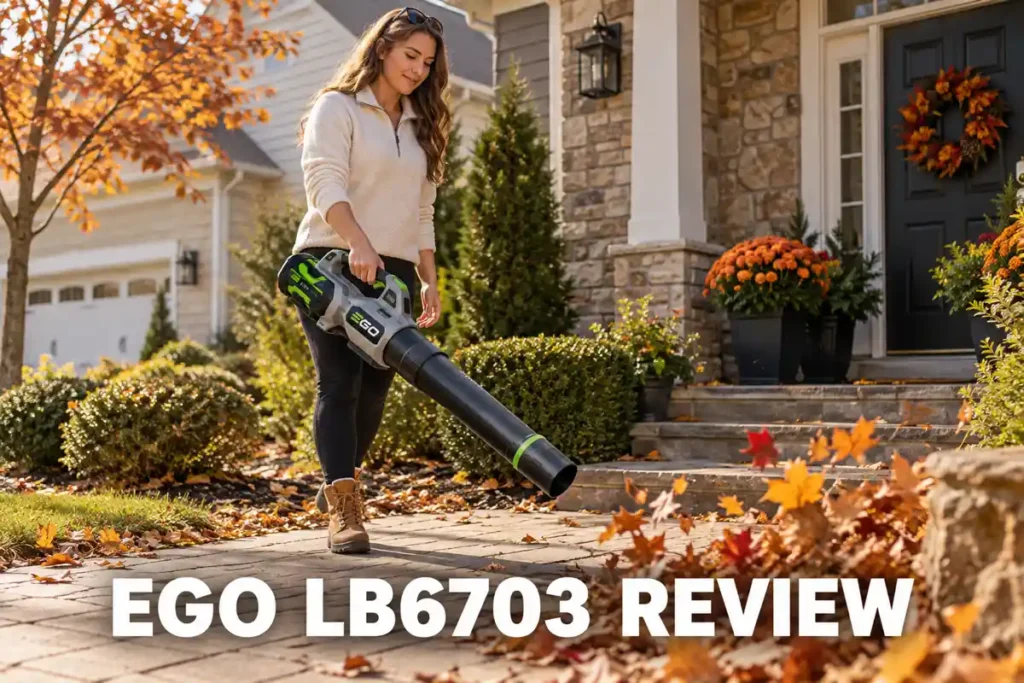
My EGO LB6703 review comes to this: the 670 CFM kit is worth buying for a quarter to half an acre of lawn, path and deck work, and its 4.0 Ah battery is the part to plan around. I use it for the jobs a gas handheld used to do beside my 3.7-acre orchard: the concrete path to the house door, the packed paths of the vegetable plot and the crate room, where I wear a dust mask and eye protection. According to EGO, one pack gives about 24 minutes on high, so I count minutes the way I count sprayer tanks per row. Below I cover the box, setup, runtime, noise, upkeep and problems.
Affiliate Disclosure: Garden Power Scout is a proud participant in the Amazon Services LLC Associates Program. As an Amazon Associate, we earn from qualifying purchases, at no extra cost to you.
EGO LB6703 Review and My Verdict in Brief
I recommend the LB6703 for a quarter to half an acre of lawn, driveway, deck and walkways, as long as a second pack joins the kit before leaf season. The EGO 670 blower is the middle step of the line, and EGO’s listing gives 55 minutes for a full charge. Skip it if one battery has to clear a whole afternoon, or if your main job is wet leaf mats.
- Who it is for: owners of a house lot, a drive and a deck.
- What it does best: it refills fast and clears dry leaves off hard surfaces.
- The main trade-off: about 24 minutes on high from the one pack.
What Comes in the Box
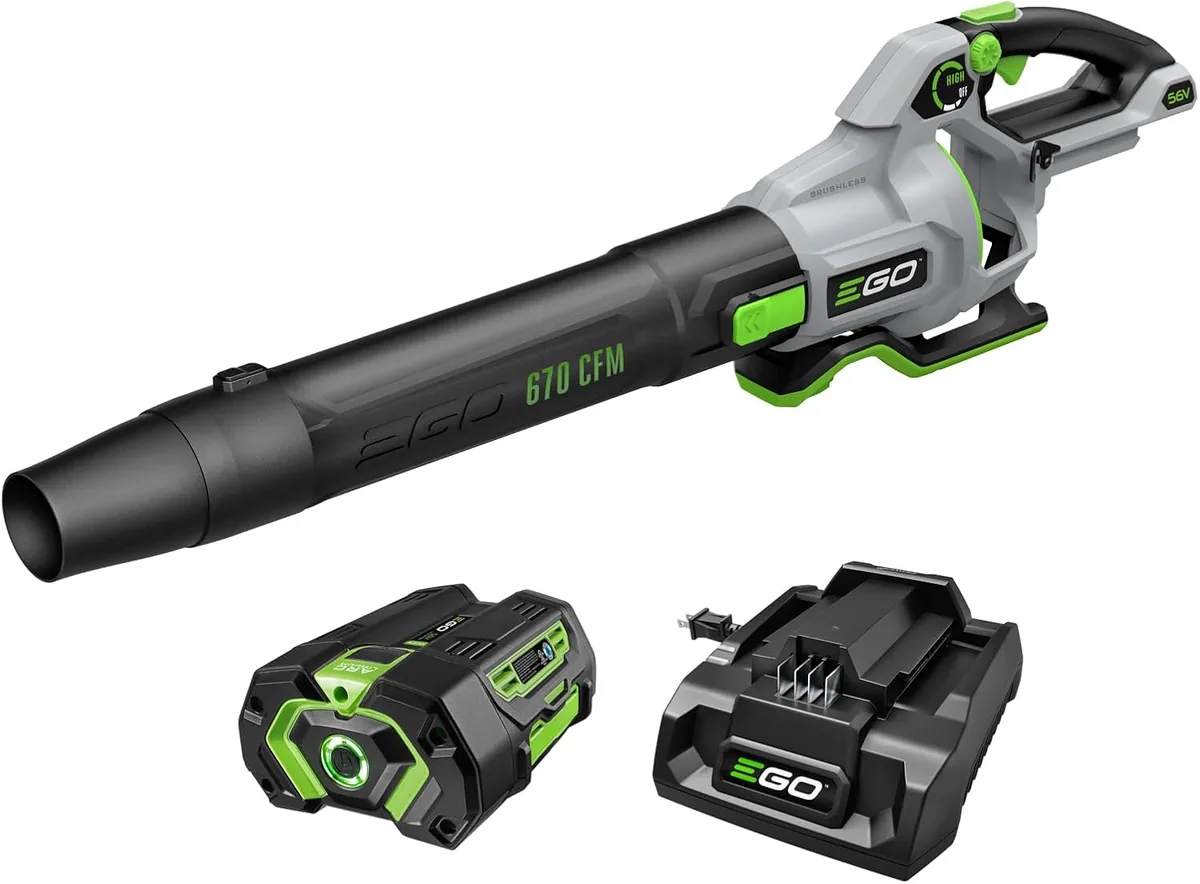
The EGO 670 CFM Blower with Battery and Charger arrives as the LB6703 kit, and the box holds these parts.
- Blower and tube: the tube snaps onto the housing.
- Tapered nozzle: a narrow stream for seams and stuck debris.
- Spread nozzle: a wide, soft sweep for lawn debris.
- Battery: one 56V 4.0 Ah pack with a five-light gauge.
- Charger: the CH3200, 320 W, for dry indoor use.
What the box lacks is a shoulder strap. The 765 kit lists one in its manual, so I looked for one in mine and found none. EGO sells it as the AP1500 accessory. LB6703 is the kit number, and the bare tool is the EGO LB6700.
Specifications at a Glance
Two rows matter most: the minutes per mode and the weight with the pack on.
| Spec | Figure |
|---|---|
| Airflow, maker’s figure | 670 CFM on boost, up to 530 CFM on the dial |
| Air speed, maker’s figure | 180 mph with the tapered nozzle, 160 mph without |
| Blowing force, maker’s rating | 21 N maximum, about 4.7 pounds of push |
| Battery in the kit | 56V, one 4.0 Ah pack, 224 Wh |
| Run time, maker’s approximate figure | About 160 min low, 24 min high, 13 min boost |
| Weight, tool plus pack | 4.8 lb tool, about 9.7 lb with the pack |
| Charge time, maker’s listing | About 55 min on the CH3200 |
| Warranty, maker’s terms | 5 years tool, 3 years battery and charger |
The weight row adds EGO’s 4.8 lb tool figure to the 4.85 lb pack, so it describes a blower ready to run.
Setup and First Use
Assembly needs no tools, and I had mine together while the first charge was still running.
- Keep the battery out of the blower during assembly.
- Push the tube onto the housing until the latch snaps, then push one nozzle onto the tube. Only one fits at a time.
- Charge the pack before first use, then slide it in until it clicks.
One rule trips new owners. If the dial is not at off when the battery comes out, the blower will not start with a charged pack until you pull the trigger once. It looks like a dead pack, so I turn the dial to off before the pack leaves the handle, every time.
Trigger, Dial and Boost Controls
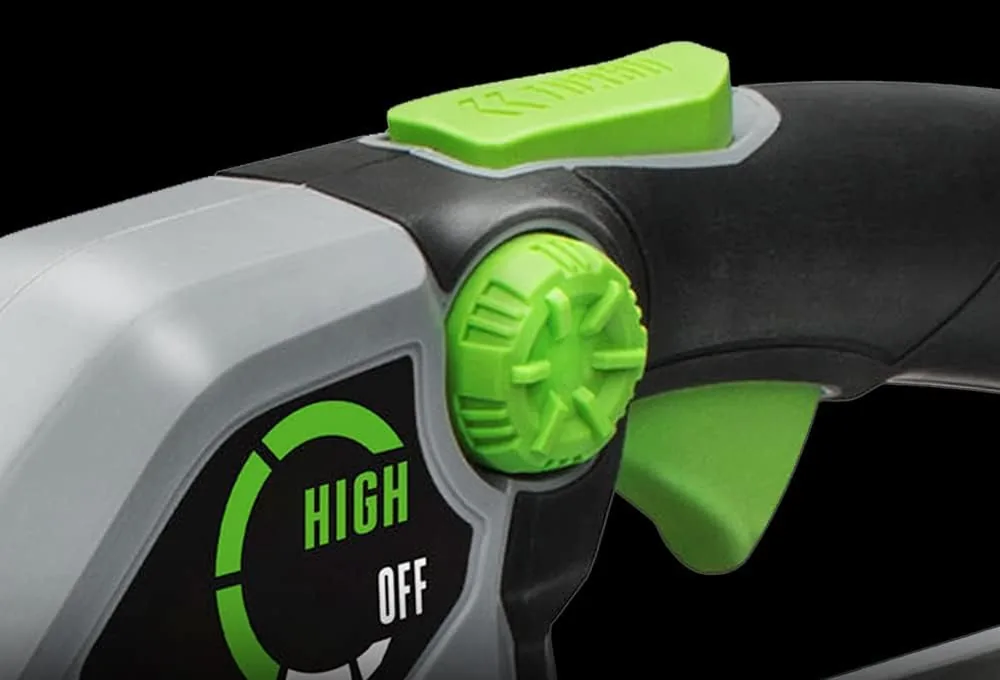
The trigger sets speed by how far you pull it. The dial beside it locks any speed so your finger can rest, and counterclockwise it runs down to off.
Boost is momentary: the blower jumps to maximum while you press it and falls back when you let go. It does not lock, and by EGO’s minutes one minute of boost uses as much energy as 12 minutes on low.
Beside the vegetable beds I turn the dial down until the stream only lifts the dust off the path, because a hard stream throws soil onto the seedlings.
Performance on Leaves, Debris and Gravel
The manual names driveways, walkways and decks as the jobs and calls the blower a household tool. Mulch, drip lines and gravel are outside that list, so I treat them as light work and keep the dial low there.
Dry Leaves and Hard Surfaces
Along the drive, the prevailing wind packs leaves against the fence line. I work edge first, as the manual advises, with the spread nozzle on, the dial at mid setting and the wind at my back, so the pile gathers at the corner. The tapered nozzle’s 180 mph earns its place on the seams of the concrete path to the door.

Mulch and Drip Lines
Leaves and twigs collect around the 150-mesh disc filter at the pump head. I clear around it with the dial low and the tube held high, because hard air drives grit into emitter ends. Under the plum trees I keep the nozzle above the mulched bases, since the tapered stream strips mulch fast.
Wet Leaves and Gravel
Wet leaves are where the 21 N rating shows its limit. Soaked leaves stick by weight and surface tension, so a thick mat needs a rake first, as the manual advises. On gravel I drop the dial and keep the tube low, and I never set a running blower on loose ground, because the intake can pull in stones.
Runtime by Mode and Charging
According to EGO, the 4.0 Ah pack runs about 160 minutes on low, 24 on high and 13 on boost. The listing’s “up to 80 minutes” names no mode, so I plan with the three mode times.
I plan a leaf season in minutes, not acres. Two hours of blowing on high is about five packs of 24 minutes, and that sum is why a second pack belongs in the plan. I time jobs on my phone because the five-light gauge moves in 20 percent steps, and a fifth of this pack is nearly five minutes on high.
A second pack gives roughly twice the work before the first long wait: about 48 minutes on high, then about half an hour of waiting for the first pack to fill. A faster charge also puts more heat into a pack, and a modeling study links that heat to shorter cycle life (1). The charger stays indoors, since the manual forbids charging outdoors, and the pack charges between 41 and 104 F.
Noise, Weight and Balance
EGO publishes no sound level for this blower, and the manual requires hearing protection, so the earmuffs go on first in every session. Next to my old gas handheld it is quieter, with no pull cord and no mix can, but it still whines at a high pitch. NIOSH sampling of 80 landscaping workers found significantly more noise with fuel-powered blowers than with battery versions (2).
With the pack on, the LB6703 weighs about 9.7 lb, and the pack is half of that. With no strap, all of it hangs from one hand, and past 15 minutes of continuous work the weight counts, so I split long jobs into runs.
Vibration adds to the load. In a study of 17 groundskeepers, handheld blowers sat at the low end of the tools measured, far below a chainsaw (3). Low is not zero, so on a long job take breaks and change hands.
Maintenance, Storage and Battery Care
Upkeep is short. Take the pack out before cleaning, and wipe the plastic with a clean cloth only, because the manual rules out brake fluid, gasoline and penetrating oils. After a dusty session in the crate room, where the dust mask and eye protection stay on, I knock the grit off the air intake with the pack out, and I store the blower indoors, away from garden chemicals and de-icing salts.
The pack asks for more care than the tool. EGO gives 50 to 80 F as the range for best performance and storage, and a pack left for a month rests near 30 percent and needs a full charge. Lab work found that lithium-ion capacity loss follows the charge range and the calendar age (4), and a model of one cell type stored 36 months at 131 F and 90 percent charge found electrolyte conductivity down by over 20 percent (5). So spare packs stay in the house, never in a hot shed or a parked truck.
Common Problems and How to Fix Them
Most stops trace back to a short list, and the manual has a table for it.
| Symptom | Likely cause | Fix |
|---|---|---|
| Blower does not start | Pack not seated, or dirty contacts | Remove the pack, check the contacts, reinstall |
| Blower does not start | Dial was not at off when the pack came out | Pull the trigger once |
| Blower dead or stops | Pack or blower too hot | Let both cool; the pack works again below 152 F |
| Blower dead, or pulses at the start | Pack empty, or cold | Charge it, or warm a cold pack indoors |
| Air speed drops | Air intake blocked | Remove the battery and clear the debris |
Heat is one reason a blower seems to shut off. Above 158 F the pack stops itself, and it works again once it has cooled below 152 F.
A run that gets clearly shorter after a full charge means the pack is nearing the end of its life, and EGO wants the dated receipt with any warranty claim.
Who Should Buy It and Who Should Skip It
Short, dry jobs near the house suit the kit; long ones do not.
Buy It If
- You clear a quarter to half an acre in sessions under 25 minutes.
- You want a pack that is full again in under an hour and plan to add a second.
- You own 56V EGO packs, so the EGO 670 CFM Blower tool only version saves you a battery.
Skip It If
- One pack has to run for an afternoon.
- Your main jobs are wet leaf mats or acre-size cleanups.
- A tool near 10 lb in one hand is already heavy for you.
Drawbacks to Know About
These are the limits I plan around, and the first two shape every job.
- Small pack: 24 minutes on high and 13 on boost mean a second pack for any real leaf job.
- No strap: about 9.7 lb hangs from one hand until you buy the AP1500.
- Boost has no lock: your thumb carries it, which suits short bursts.
- Rated force: 21 N is EGO’s rating and leaves less margin on wet leaves than the bigger models.
How It Compares With Alternatives
Three EGO blowers sit close to the LB6703. More models are in our leaf blower guides.
| Model | Airflow on boost | Pack in the kit | Charge time |
|---|---|---|---|
| EGO LB6703 | 670 CFM | 4.0 Ah | About 55 min |
| EGO LB7654 | 765 CFM | 5.0 Ah | About 70 min |
| EGO LB6504 | 650 CFM | 5.0 Ah | About 100 min |
| EGO LB6151 | 615 CFM | 2.5 Ah | About 50 min |
EGO LB7654 for More Force
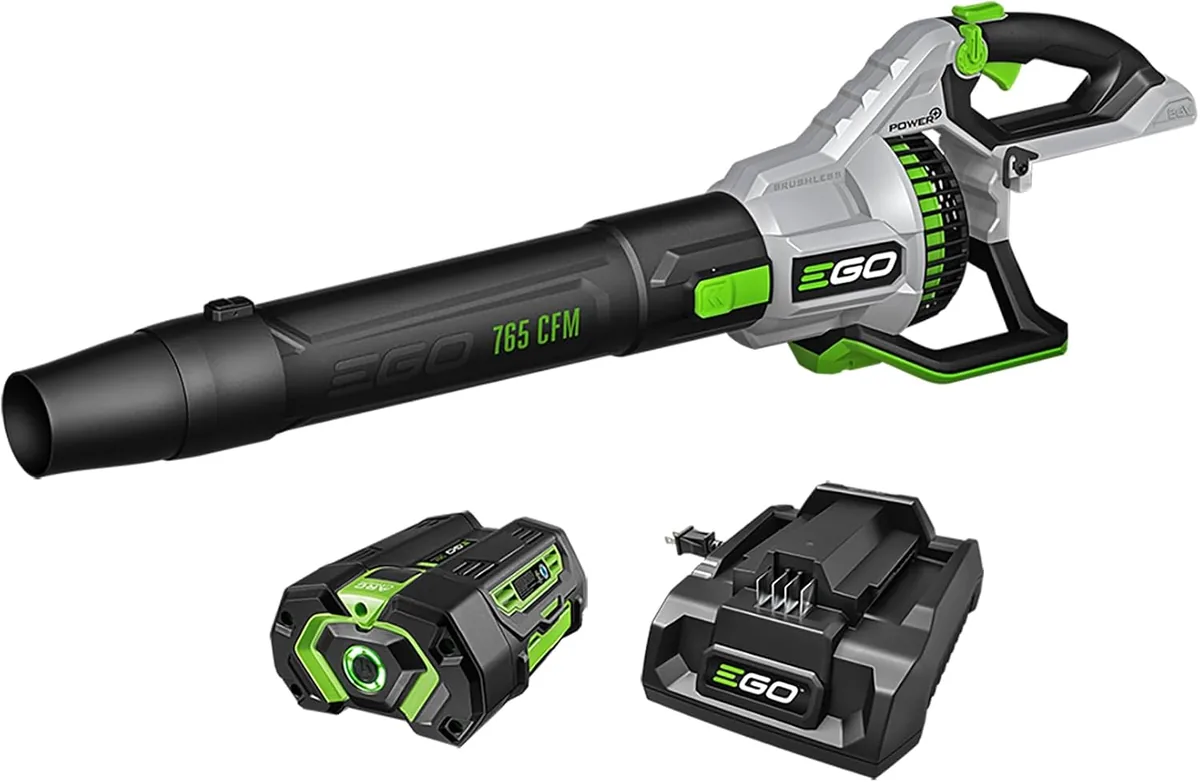
Pick EGO Power+ LB7654 765 CFM Blower Kit if wet or heavy leaves are the main job. It adds 5 N of rated force, 26 N against 21 N, and a 5.0 Ah pack.
EGO LB6504 for a Bigger Pack
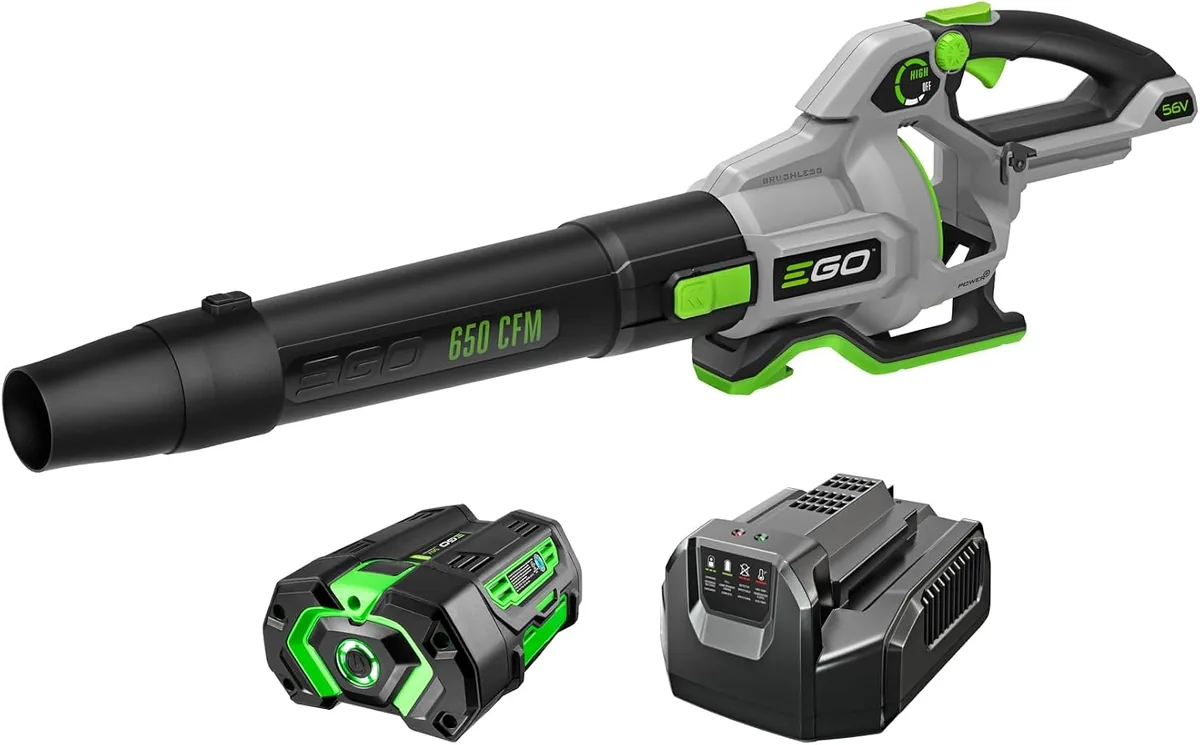
Pick EGO Power+ LB6504 650 CFM Blower Kit if one pack has to carry the whole job. Its 5.0 Ah battery runs about 30 minutes on high against 24, at the price of a slow standard charger.
EGO LB6151 for Light Jobs
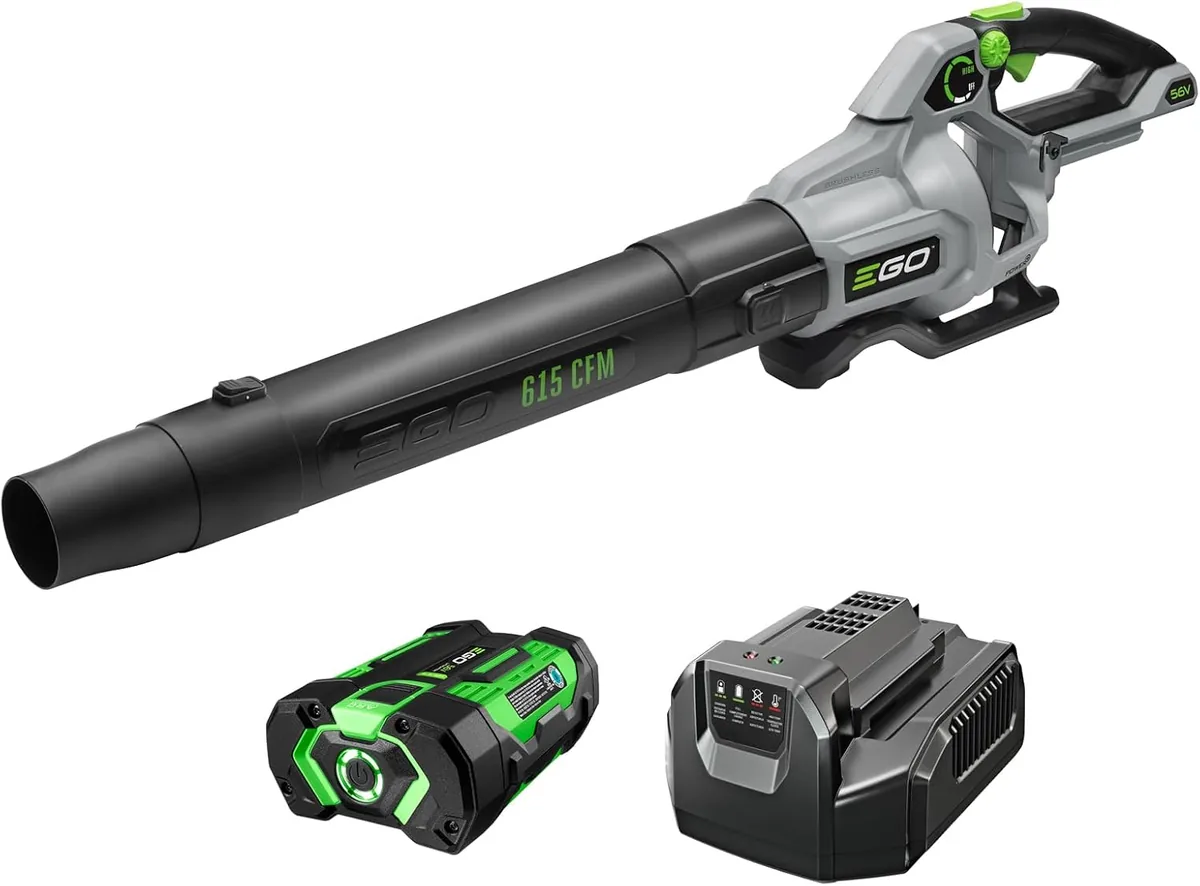
Pick EGO Power+ LB6151 615 CFM Blower Kit for a deck, a patio and a small lawn. Its 2.5 Ah pack holds about 60 percent of the energy in the LB6703’s 4.0 Ah pack, and EGO rates the blower at 615 CFM against 670.
My Recommendation
I recommend the LB6703 as the mid-priced EGO kit for a house lot, a drive and a deck. Treat the pack in the box as a 24-minute tool on high, add a second pack for twice the work before the first long wait, and keep the blower on dry leaves and hard surfaces. My EGO LB6703 review verdict is a buy for a quarter to half an acre of dry work, with a second pack on the shopping list.
Frequently Asked Questions
Is the EGO 670 a good blower?
The EGO 670 is a good blower for a quarter to half an acre of lawn, drive and deck work, where its 670 CFM and 21 N rating suit dry leaves. It falls short on wet leaf mats and long jobs, because the 4.0 Ah pack gives about 24 minutes on high, according to EGO.
Which EGO blower is considered the best?
The best EGO blower for most yards is the 670 CFM LB6703, which covers a quarter to half an acre of dry work and refills its pack in about 55 minutes. For big or wet jobs, step up to the 765 CFM LB7654 or the 880 CFM LB8803, which move more air.
Which leaf blower is better, Ryobi or EGO?
The better leaf blower, Ryobi or EGO, is the one that matches the battery platform you already own, because packs and chargers carry across one brand’s tools. If you are starting fresh, EGO’s 56V line offers kits from 615 to 880 CFM, a quick charger on the mid-priced models and a 5-year tool warranty.
Why does my Ego leaf blower keep shutting off?
An EGO leaf blower keeps shutting off when the pack gets too hot, because the pack stops itself above 158 F and works again once it has cooled. A flat or cold pack and a blocked air intake cause the same stop, so charge or warm the pack indoors and clear the intake with the battery out.
Which is better, a gas or an electric leaf blower?
An electric leaf blower is better for short jobs near the house, because it is quieter, starts at once and needs no fuel mix or exhaust in the shed. A gas blower is better for long runs and wet leaf mats, since a full tank outlasts a 24-minute pack on high.
References
- Koo B, Yi J, Lee D, Shin CB, Park S. Modeling the Effect of Fast Charge Scenario on the Cycle Life of a Lithium-Ion Battery. J. Electrochem. Soc. 2018;165(16):A3674-A3683.
- Alexander BM, Graydon PS, Pena M, Feng HA, Beamer BR. Hazardous exposures and engineering controls in the landscaping services industry. Journal of Occupational and Environmental Hygiene. 2025;22(3):189-202.
- Chen N, Yang S, Oh J. Evaluation of hand-arm vibration (HAV) exposure among groundskeepers in the southeastern United States. Annals of Work Exposures and Health. 2025;69(1):81-95.
- Gauthier R, Luscombe A, Bond T, et al. How do Depth of Discharge, C-rate and Calendar Age Affect Capacity Retention, Impedance Growth, the Electrodes, and the Electrolyte in Li-Ion Cells?. J. Electrochem. Soc. 2022;169(2):020518.
- Asiri M, Kedhim M, Jain V, et al. Impact of temperature and state-of-charge on long-term storage degradation in lithium-ion batteries: an integrated P2D-based degradation analysis. RSC Adv. 2025;15(28):22576-22586.
Safety Note: Leaf blowers throw debris and can damage your hearing. Wear eye and ear protection, read the manufacturer’s manual, and check your local rules on noise and operating hours.