


In my Earthquake K32 chipper shredder review the verdict is plain: buy it for pruning wood up to about 3 inches and a yard full of dry leaves, and skip it if your limbs run thicker or you cannot handle 121 pounds on wheels. I ran it on the dormant pruning pile from my apricot and plum rows and on the autumn leaves around the house, the mixed job a two-opening machine exists for. Below you get the real limits, the bag and the weight, and the shutdown steps that matter.
Earthquake K32 Chipper Shredder Review: My Verdict
Earthquake K32 33968 Gas Chipper Shredder is a gas chipper shredder with two openings: a chipper cone for branches up to approximately 3 inches in diameter, and a top hopper for leaves and soft waste up to 1/2 inch. I recommend it to a homeowner or small-farm owner who prunes fruit trees, rakes a lot of leaves and wants one bagged, wheeled machine for both jobs. Three things decide it: the 3 inch ceiling, the debris bag the manual requires and the weight.
- Who it is for: a yard or small orchard with pruning wood and leaves, and room to store a 121 lb machine.
- What it does best: it takes twigs and branches in the cone and dry leaves in the hopper, and the maker prints a 20:1 waste reduction ratio.
- Main trade-off: the 3 inch cone is a hard limit, and everything it throws goes into a bag you must empty.

Specs and What Is in the Box
Two rows decide most purchases: the capacity of each opening and the net weight. This listing is the Earthquake 212cc chipper shredder, model 33968, in a manual that also covers the larger K33.
| Spec | Earthquake K32 |
|---|---|
| Machine type | Gas chipper shredder: chipper cone plus top shredder hopper |
| Engine | 212 cc four-cycle Viper engine, recoil start; horsepower: Not published by the maker |
| Chipper cone capacity, maker’s figure | Approx. 3 in diameter |
| Shredder hopper capacity, maker’s figure | 1/2 in diameter, 18 in long; opening 16.75 x 13.25 in |
| Waste reduction ratio, maker’s figure | 20:1 |
| Collection | 24 x 36 in debris bag, required for operation |
| Weight, manual’s specification table | 121 lb net, 131 lb gross; fuel and oil basis not stated |
| Wheels | Two 11 x 2 in non-pneumatic rubber wheels, handlebar and kickstand |
| Warranty, according to the listing | 5-year limited; the manual refers to a warranty insert |
The carton holds the chipper assembly with its cone, the hopper, the handlebar, two wheels, the kickstand, the bag with its connector and support rod, and a bottle of 4-cycle engine oil. I put the oil in before anything else, because the manual states that the engine is shipped from the factory without oil and that you must add it before starting.
What the Earthquake K32 Wood Chipper Takes: Cone and Hopper
The K32 has two separate openings, and each has its own limit, so read the capacity as a pair of figures. The cone is for tree limbs and branches, and the hopper is for light brush, leaves and other soft but bulky organic waste, in Earthquake’s words.
The Chipper Cone
According to Earthquake, the cone handles branches up to approximately 3 inches in diameter, fed large end first, and its self-feeding action draws the sticks in. The rotor is steel, 14 inches across, with 2 chipping knives. When I fed apricot prunings in butt end first, the cone took them without any push from me, which is the behavior the manual describes. A limb that looked thicker than the cone went onto the firewood stack instead, because the manual also rules out kiln-dried lumber and pressure-treated wood. My roundup of 3 inch gas wood chippers compares nine picks for branches up to 3 inches.
The Shredder Hopper
The top hopper sends material into the path of 2 J-hammers and 2 triangle hammers by air flow, and nothing over 1/2 inch in diameter belongs in it. I fed dry leaves in small handfuls, and the pile from one row of the orchard looked far smaller afterward, which fits Earthquake’s 20:1 figure. The manual says to alternate wet and dry loads so the discharge does not plug. A run of wet leaves did start to pack the discharge for me, so I stopped feeding and went through the shutdown in the box below before I touched anything.
Feeding Branches and Leaves in Real Work
The K32 is a hand-fed machine, and the way you stand and feed matters more than any spec. CDC’s report on wood chipper injuries describes operators caught in the feed mechanism and pulled into the rotating knives (1), and a plastic surgery report describes severe hand injuries to operators of yard shredder and chipper machines, mostly in fall and spring (2). The K32 manual says its spinning blades can amputate hands and feet.
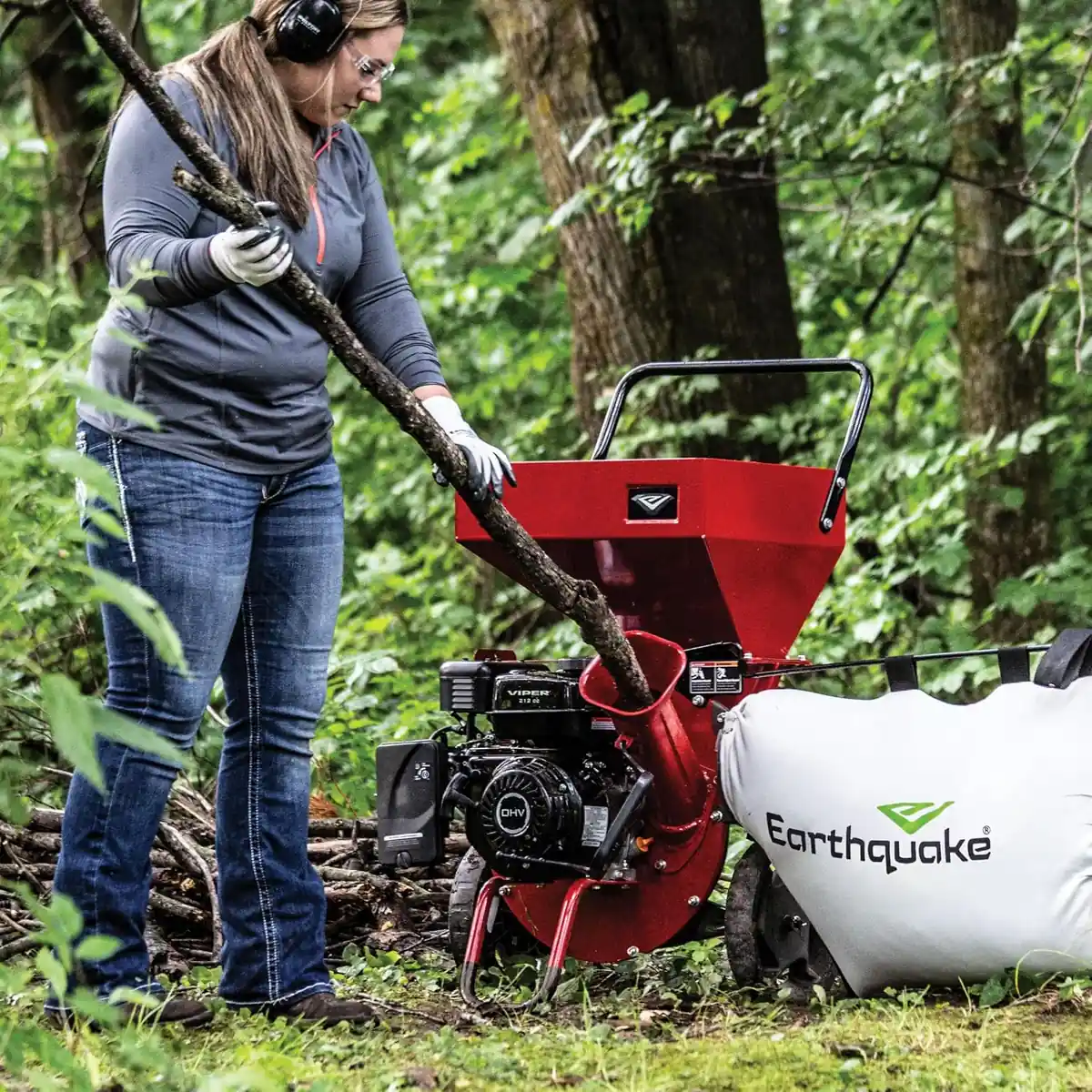
Stand to the side of the cone, never in front of it, because the manual warns that branches and harder woods can kick back. Hold the branch near its outer end with an open hand, never wrap your fingers tightly around it, and let it go as soon as the machine draws it in. No push stick comes with the K32: the manual says to use a larger piece of material to feed short pieces and a shorter piece of wood to push end pieces, never your hand. If a branch is extremely hard, kicks back or cannot be controlled, stop feeding and let go without chasing or restraining it. Material trapped in the machine comes out only after the full shutdown in the box below.
Full Shutdown Before You Touch Anything
Shutdown before you clear a clog, open a hopper, chute or panel, touch knives or hammers, empty a bag, move, tilt, store or leave the machine. Never use your hand, foot or any body part to unclog it, even after shutdown, and clear a blockage only with the method and tool your manual names. Gas chipper: turn the engine off, wait until the rotor and every moving part have stopped completely, let the engine and muffler cool, remove the key where fitted, and pull every spark plug wire off and secure it away from its plug. Then follow Earthquake’s own order: the engine off, the rotor stopped completely and the spark plug wire removed before any excess material is removed, and the spark plug disconnected before you leave the area. Never open a hood or access panel before every moving part has stopped. Refit every guard, flap, hopper, discharge chute and the debris bag before you restart.
Before every start I check that the shredding chamber, the hopper and the cone are empty. The manual explains why: material left inside can stop the starter cord suddenly and injure your hand or topple the unit. Start the engine outdoors, pull the cord slowly until you feel resistance and then pull rapidly, and bring the engine to full throttle before you feed.
Keep the discharge area clear, because the manual says buildup there or in the shredding chamber can make new material kick back with enough force to injure you or bystanders. Never put in stones, metal or soil, and never point the discharge at people, windows or vehicles.
The Debris Bag, Weight and Moving It
The 24 x 36 inch debris bag is part of how the K32 works, and Earthquake’s manual prohibits running the unit without it. It docks on a Dock-and-Lock connector, and according to Earthquake a bottom zipper empties it. Before you open the bag, complete the full shutdown for your machine in the shutdown box above.
I emptied the bag onto the compost bay and wore a dust mask, because a small study found that brief exposure to wood chip mulch dust caused flu-like symptoms and lung inflammation in some volunteers (3). Chips from pruning wood also make mulch: a trial in olive orchards found that shredded pruning residue spread on sloped soil cut soil loss by more than 95 percent compared with tillage under simulated rain (4). Keep chips off the drip line and away from the trunks.
The manual lists the K32 at 121 pounds net and 131 pounds gross. Two airless wheels and a handlebar make it a one-person machine to roll across a lawn. I rolled it from the shed to the pruning pile by the handlebar. The weight made me plan the spot so I could keep moves to a minimum.
The manual says to use at least two people if the unit must be lifted, gripping the front leg and hopper handle and never the fuel tank. Before you move, tilt or store it, complete the full shutdown in the box above.
Noise, Maintenance and Living With It
The noise at the hopper was louder than I expected, even with hearing protection on. NIOSH recommends limiting exposure to 85 dBA averaged over an eight-hour workday and halving the time for every 3 dBA increase (5), and the K32 manual tells you to always wear eye and hearing protection. I put the ear protection on before the first pull of the cord and check its fit, since a Cochrane review notes that poor earplug fit may limit protection for about 40 percent of users (6).
On the first start the hammers made a metal-to-metal sound as they settled on the rotor. The manual calls that normal at start-up and shut-down. If it continues at full speed, stop, complete the full shutdown in the box above and call the dealer, as the manual says.
The upkeep schedule is short. Earthquake lists loose hardware every 5 hours, the hammers and chipping knives every 25 hours or as necessary, and the engine air cleaner every 25 hours. Clean debris from the engine and chipper before each use. Every one of these jobs starts with the full shutdown in the box above.
Fuel and storage follow the manual. Stop the engine, wait until all moving parts have stopped and let the engine cool. Never fill the tank while the engine is still hot, refuel outdoors with no smoking, flames or sparks nearby, and wipe up spills. If fuel spills, do not start the engine: move the machine away. Run it outdoors only, never in a garage or shed even with the door open, because the exhaust contains carbon monoxide. Store it dry, never with fuel in an enclosed building, and never near a furnace, water heater or pilot light.

Common Problems and What to Check
Most trouble with a chipper shredder traces back to feeding, and the manual covers the main cases.
- The discharge plugs: alternate wet and dry loads, as the manual says, and stop at the first sign of packing. Complete the full shutdown in the box above before you look inside.
- A branch resists the cone: the manual says needing extra force to insert material probably means the blades need sharpening. Treat a stubborn branch as a reason to stop feeding.
- A kickback: let go without chasing or restraining the branch, and keep the discharge clear, because buildup there causes kickback toward you. Remove trapped material only after the full shutdown in the box above.
- Odd noise or vibration: stop the engine at once, complete the full shutdown in the box above and look for the cause. The manual says never to keep running a machine that makes unusual noise or vibration, so fix the cause before you restart.
- The engine will not start: complete the full shutdown in the box above before you check the chamber, hopper and cone for material, and check the oil.
Who Should Buy It and Who Should Skip It
The K32 suits a narrow, common job: pruning wood and leaves at home scale, with one operator and a flat place to work. For other gas models, my gas wood chipper picks cover yard branches, brush and small jobs.
- Buy it if: your pruning wood stays within about 3 inches and you also have leaves to shred.
- Buy it if: you want a bag that keeps the chips contained and a machine on wheels you can roll to the pile.
- Skip it if: your limbs run thicker than the cone, since the K32 offers no way past the 3 inch limit.
- Skip it if: you cannot store, roll or lift a 121 lb machine, or you want a towable unit.
Drawbacks
The cone stops at approximately 3 inches, so thicker limbs go to the firewood stack, or to a tree professional when they are large. The shredder hopper stops at 1/2 inch, so it is a leaf and soft-waste opening. The weight is the other cost, and the bag needs periodic emptying, with the full shutdown completed before you open or remove it. I check oil and fuel against the maker’s engine instructions
How It Compares With Other Options
Two other gas chipper shredders come up most often next to the Earthquake chipper shredder. The table sets the maker figures of the K32 and its larger sibling side by side, and my Earthquake K32 and K33 comparison covers engine size, weight and capacity.
| Spec | Earthquake K32 | Earthquake K33 |
|---|---|---|
| Engine | 212 cc Viper | 301 cc Viper |
| Chipper cone capacity | Approx. 3 in | Approx. 3 in |
| Shredder hopper capacity | 1/2 in | 1/2 in |
| Reduction ratio, maker’s figure | 20:1 | 20:1 |
| Net weight, manual’s table | 121 lb | 145 lb |
Earthquake K33
Earthquake K33 Chipper Shredder shares the K32’s chassis, cone, hopper and bag, with a 301 cc engine and 145 lb net weight. Pick it if you want the larger engine and can take 24 more pounds. My review of the Earthquake K33 covers the larger machine on its own.

Landworks 3-in-1
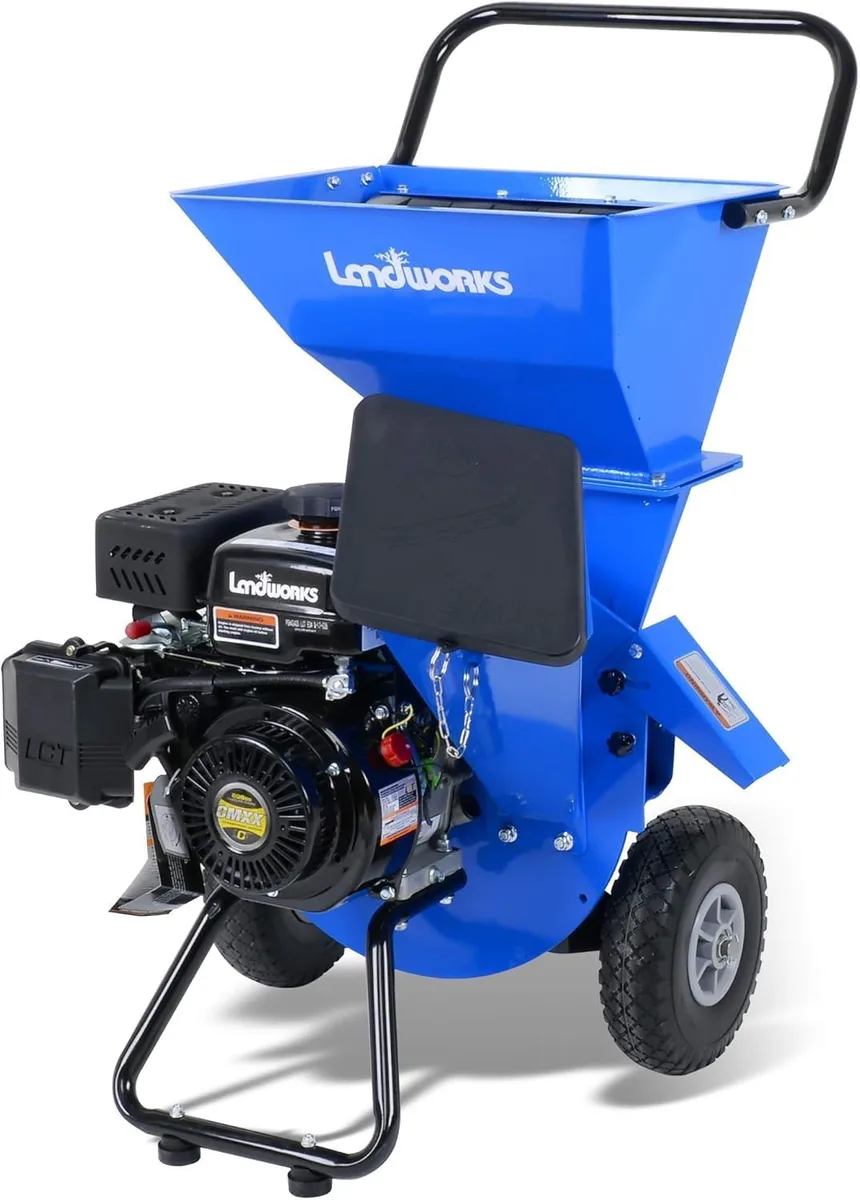
Landworks 3-in-1 Gas Chipper Shredder is another gas chipper shredder with a side chute for branches and a top hopper for leaves, according to its listing. Pick it if you prefer a side-chute layout to the K32’s cone. My K32 and Landworks 3-in-1 comparison explains which gas chipper I recommend.
My Final Verdict on the Earthquake K32
I recommend the K32 to anyone whose work is orchard or yard pruning up to about 3 inches plus a season of leaves. The 3 inch cone and the 1/2 inch hopper each did their stated job, and the bag kept the chips in one place. Plan for the weight, wear hearing protection from the first start, and use the full shutdown in the box every time you reach for the bag, the knives or a clog. That is where my Earthquake K32 chipper shredder review lands: a clear yes for a home-scale pruning pile, and a no for anything past the cone. For other machines in this class, my wood chipper shredder picks cover branches, leaves and yard cleanup.
Frequently Asked Questions
Does the Earthquake K32 come with a debris bag?
The Earthquake K32 comes with a 24 x 36 inch debris bag that docks on a Dock-and-Lock connector, and the manual forbids running the unit without it. According to Earthquake, a bottom zipper empties the bag, and you complete the full shutdown before you open it or remove it from the machine.
What size branches can the Earthquake K32 chip?
The Earthquake K32 chips branches up to approximately 3 inches in diameter in the chipper cone, and the shredder hopper takes nothing over 1/2 inch. The manual rules out kiln-dried lumber and pressure-treated wood, so limbs thicker than the cone need a different tool or a tree professional, and never go into the cone.
What engine does the Earthquake K32 have?
The Earthquake K32 has a 212 cc four-cycle Viper engine with recoil start, as the listing title and engine badge state. The manual points to the engine manual for oil and fuel details and says the engine ships without oil, so you add oil before the first start and read the engine manual first.
Can the Earthquake K32 shred leaves?
The Earthquake K32 shreds leaves in its top hopper, which Earthquake describes as made for light brush, leaves and other soft but bulky waste. Feed dry material in small handfuls, alternate wet and dry loads so the discharge does not plug, and never put anything over 1/2 inch into the hopper.
How much does the Earthquake K32 weigh?
The Earthquake K32 weighs 121 pounds net and 131 pounds gross in the manual’s specification table, and the table does not state a fuel and oil basis. Use at least two people if the unit must be lifted, gripping the front leg and the hopper handle, and never lift it by the fuel tank.
References
- Centers for Disease Control and Prevention. Fatal and nonfatal occupational injuries involving wood chippers–United States, 1992-2002. MMWR Morb Mortal Wkly Rep. 2004;53(48):1130-1131.
- Hallock GG. Mutilating shredder/chipper hand injuries. Ann Plast Surg. 1994;33(1):6-8.
- Wintermeyer SF, Kuschner WG, Wong H, D’Alessandro A, Blanc PD. Pulmonary Responses After Wood Chip Mulch Exposure. J Occup Environ Med. 1997;39(4):308-314.
- Repullo-Ruibérriz de Torres MA, Pérez-Serrano F, Moreno-García M, Carbonell-Bojollo RM, Ordóñez-Fernández R, Rodríguez-Lizana A. The Use of Pruning Residue Mulch and Spontaneous Groundcovers to Control Erosion and Carbon Loss in Olive Orchards. Agriculture. 2025;15(7):677.
- National Institute for Occupational Safety and Health. Noise-Induced Hearing Loss. Noise and Hearing Loss. Centers for Disease Control and Prevention; 2024.
- Morata TC, Gong W, Tikka C, Samelli AG, Verbeek JH. Hearing protection field attenuation estimation systems and associated training for reducing workers’ exposure to noise. Cochrane Database of Systematic Reviews. 2024;5(5):CD015066.
Safety Note: Only an adult who has read the manual and understands the controls should use a wood chipper or shredder, never a child or anyone tired or impaired. The rotor, knives, hammers or cutting line behind the inlet can draw in a hand, a sleeve or a glove faster than you can let go, and they keep turning after you switch the machine off. Never put your hands, feet or any part of your body into the hopper, the chute or the discharge while the machine runs or the rotor still turns, never reach past the rubber flap or the mouth of the chute, and push short pieces in only with the paddle or push tool your manual supplies, or with the next branch or a small stick as your manual describes. Stand to the side of the hopper, never in front of it, feed branches butt end first with an open hand near the outer end, and let go as soon as the machine draws the branch in; if a branch kicks back or will not feed, stop feeding and let go, never chase it into the chute. Feed only the clean material your manual allows, into the opening it names and within that opening’s limit (a chipper chute and a shredder hopper have different limits, and a leaf mulcher takes no branches, sticks or brush), and never stones, soil, metal, nails, wire, glass or plastic. The machine can throw chips, stones and metal: keep children, pets and other people out of the work area, at least the distance your manual prints (the Champion, MTD and Yardmax manuals ask for 75 feet), stop at once if anyone comes closer, and never point the discharge at people, animals, windows, cars or buildings. Set the machine on firm, level earth or grass, never on a slope, on pavement, concrete or gravel, or close to a wall, work in daylight, never work on wet or slippery footing where you could slip toward the inlet, never run an electric chipper in rain or in damp or wet conditions, and stop and seek shelter for thunder or lightning. Wear safety glasses or goggles with side shields marked ANSI Z87.1, a face shield where your manual asks for one, hearing protection, gloves only as your manual directs (snug ones without loose cuffs or drawstrings where it asks for them), long pants and sturdy non-slip boots, and respiratory protection as your manual requires (WEN asks for NIOSH-approved dust masks or other respiratory protection during operation and cleaning); never wear loose clothing, scarves, jewelry or dangling drawstrings, and tie up long hair. Before every start, check that the guards, flaps, hoppers, discharge chute and any collection bag your manual requires are fitted and secured, and stop at once if the machine starts to vibrate abnormally, complete the full shutdown below and have the cause fixed before you restart. Never use your hand, foot or any body part to unclog the machine, even after it is shut down. Before you clear a clog, open the hopper or a panel, touch the knives, empty the bag, move or tilt the machine or leave it: on an electric hopper chipper, switch it off, unplug it from the outlet by the plug and wait until the blades have stopped completely, and on a leaf mulcher switch it off, wait until all motion has stopped and unplug it by the plug, never opening any electric machine before it is unplugged and still; on a gas chipper, follow your manual’s own shutdown sequence and every wait it prints: the engine off, the rotor and every moving part stopped completely, the engine and muffler cooled, the key removed where fitted, and every spark plug wire pulled off and secured away from its plug or grounded where your manual says so; on a PTO chipper, throttle to idle, disengage the PTO, turn the tractor off, remove the key, set the parking brake, wait until all motion has stopped and disconnect the PTO shaft before any service. Complete every model-specific step and minimum wait in the order your manual prescribes before any access, clear the blockage only with the method and tool it names, and refit every guard and any required bag before you restart. Use an electric chipper only with an outdoor-rated extension cord of the gauge and length your manual gives, plugged into GFCI-protected power, and never touch it or the plug with wet hands. Refuel a gas chipper outdoors with the engine off and cooled for at least the time your manual gives (Champion and MTD: two minutes), open the cap slowly, keep smoking, flames and sparks away, wipe up spills and never start it where fuel spilled; clear chips and leaves from the engine and muffler only after the full shutdown, spark plug wire off included, keep every cooling and combustible-material clearance your manual gives (Champion: 3 feet around the machine for cooling, 5 feet from combustible materials and dry vegetation), and never run it indoors or in a garage or shed, even with the doors open, because the exhaust contains carbon monoxide. Take breaks and stop when you are tired.