


The LUBA mini 2 vs LUBA 3 choice is simple for most lawns: buy the Mammotion LUBA mini 2 AWD 1500H if your lawn is up to 0.37 acre, and buy the LUBA 3 AWD 3000 when it runs from 0.37 to 0.75 acre. Both carry the same slope and noise figures, so lawn size, sky view and edges decide it. I set the quarter-acre house lawn beside both ratings before I read anything else. Below I compare sensors, size, slopes, edges and upkeep.
LUBA Mini 2 vs LUBA 3: The Short Answer
The LUBA mini 2 AWD 1500H is the better buy for a lawn near a quarter acre, because it is lighter, rated for the smaller lawn and cuts edges with its own disc. Lawn size, charging time and sensors favor the larger machine. According to Mammotion, both climb 80% slopes inside the mapped area and 40% at the edge, so slope does not split them. The table shows the figures on the same basis for both.
| Spec | LUBA mini 2 AWD 1500H | LUBA 3 AWD 3000 |
|---|---|---|
| Navigation (North American kit) | 360 degree LiDAR plus AI vision, no RTK station | 360 degree LiDAR, AI vision and RTK; RTK station in the kit, NetRTK in select regions |
| Rated lawn, maker’s single figure | 1,500 m2 (0.37 acre) | 3,000 m2 (0.75 acre) |
| Slope, inside the area / at the edge | 80% (38.6 degrees) / 40% (21.8 degrees) | 80% (38.6 degrees) / 40% (21.8 degrees) |
| Cutting width | 200 mm (7.8 in) main disc plus 120 mm (4.7 in) edge disc | 400 mm (15.7 in) cutting width |
| Cutting height | 55 to 100 mm (2.2 to 4 in), H version | 25 to 70 mm (1 to 2.7 in), standard version |
| Mowing time per charge / charging time | 150 min / 150 min | 150 min / 105 min |
| Battery | 21.6 V, 6.1 Ah, 131.76 Wh, removable | 21.6 V, 12 Ah, 259.2 Wh, serviced by Mammotion |
| Weight, as printed in the manual | About 39 lb (17.5 kg) | About 43 lb (19.5 kg) |
| Noise, sound power / sound pressure | 64 dB(A) / 56 dB(A) | 64 dB(A) / 56 dB(A) |
| Step the drive can climb | 75 mm (2.9 in) | 50 mm (2 in) |
| Zones | Up to 20 | Up to 30 |
| Warranty | 3 years on battery, motor, LiDAR or vision module and station | 3 years on battery, motor, LiDAR, RTK station and station |
Two rows decide it for most buyers: the rated lawn, and the sky view the LUBA 3 asks for at its RTK station. Everything else is close.
What the Model Numbers Mean
The numbers in both names are the rated lawn in square meters: 1,500 for the mini 2 and 3,000 for the LUBA 3. The letter H on the mini 2 means the taller cutting-height version, 55 to 100 mm instead of 20 to 65 mm, and Mammotion’s US page showed the standard version out of stock. The LUBA 3 AWD 3000 in this comparison is the standard version at 25 to 70 mm, and the 3000H is a different model with taller grass settings. Compare cutting heights with that in mind, because the pair you buy decides which grass you can leave.
Navigation: LiDAR and Vision Against LiDAR, Vision and RTK
Both mowers see the lawn with a 360 degree LiDAR laser scanner and an AI camera. The LUBA 3 adds RTK, a satellite link corrected by a fixed reference station, so it can also place itself by satellites. For the North American kit the manual asks for the RTK station on open ground at least 3 m (10 ft) from any wall or tree, with a power outlet and 2.4 GHz Wi-Fi, and it says never to move the station after mapping. My roundup of the top LiDAR robot mowers ranks the LiDAR models I picked by lawn and slope.
That sky requirement is the price of RTK. A forest-harvester trial under mature spruce held 8 mm precision for 86 percent of readings with a survey-grade receiver, yet more canopy cover meant more inaccurate positions (1). Where the lawn has no good station spot, the manual offers iNavi NetRTK over 4G, available in select North American regions, so check coverage before you count on it. I walked the yard with the 3 m rule in mind, and the shed wall and the hedgerow line took away every spot near the house.
The mini 2 has no RTK station and no sky-view rule. Its manual asks for a charging station on flat ground with no trees or houses within 1.5 m (4.9 ft) to the left, right and front, in a well-lit spot, because good lighting helps the robot navigate. I put the mini 2 station beside the tool shed outlet on level ground with that 1.5 m clear on three sides. My list of mowers with no perimeter wire compares the wire-free models by how each one finds its position.
Winner: mini 2 1500H for easier set-up, because it needs no RTK station to place. How either mower copes with a shaded lawn depends on a good charging spot and on how the mapping behaves there.
Lawn Size and Run Time
The LUBA 3 is rated for 0.75 acre and the mini 2 for 0.37 acre. Each rating is one figure from the manual, with no tolerance, no maximum and no area per charge, so treat both as a best case. Both list 150 minutes of mowing per charge, and the LUBA 3 carries a 12 Ah pack of 259.2 Wh against the mini 2’s 6.1 Ah pack of 131.76 Wh, about twice the energy.
The cutting widths differ: 400 mm (15.7 in) for the LUBA 3 against 200 mm (7.8 in) for the mini 2’s main disc, while both list the same 150 minutes per charge. On my quarter acre the mini 2 rating leaves room, while the LUBA 3 rating covers the quarter acre and the strips by the orchard. Pick the mini 2 when the lawn fits inside 0.37 acre, because paying for 0.75 acre of capacity then buys nothing you will use. Beyond 0.75 acre neither model is rated. My list of robot mowers for 1/4 acre shows the models that fit a lawn near that size.
Winner: the LUBA 3 AWD 3000, because its rated lawn is about twice the size.
Slopes: The Same Numbers on the Same Basis
Both manuals state 80% inside the task area and 40% at the edge. In degrees that is 38.6 and 21.8, and percent is rise over run times 100. The edge figure is the one that matters at a border, so do not read 80% as an edge limit. My roundup of robot mowers for steep slopes compares five climbers by slope rating.
The drive differs in one way: the mini 2 passes a vertical step of 75 mm (2.9 in) and the LUBA 3 a step of 50 mm (2 in), both on all-wheel drive. I read the 40% edge figure first, because the bank beside the drainage ditch is where a mower with no one watching can slip. Wet grass makes any mower slip, so both manuals advise dry weather.
The mini 2 passes the taller step, and the slope figures are equal.
Edges and Cutting Height
The mini 2 is the only one of the two with a dedicated edge disc, 120 mm (4.7 in) wide and set at 65 mm (2.6 in). Mammotion claims it works to about 2.1 inches from a wall, so allow for some hand trimming. The LUBA 3 states a 400 mm cutting width, so plan a trimmer pass along edges.
Cutting height splits the same way. The 1500H cuts at 2.2 to 4 inches and the standard LUBA 3 at 1 to 2.7 inches, so the mini 2 H suits longer turf and the LUBA 3 suits a short lawn. At the gravel yard edge I set obstacle detection to Sensitive, which treats gravel as non-grass, and kept a trimmer pass for the strip that remains.
Winner: mini 2 1500H, because it has a separate edge disc and a taller height range. The edge disc stays fixed at 65 mm (2.6 in) and only the main disc reaches 4 inches, so the edge strip along a wall will be shorter than the lawn if you keep the grass tall.
Weight, Noise and Charging
The mini 2 weighs about 39 lb and the LUBA 3 about 43 lb according to the manuals, so both are a handle lift for storage. The LUBA 3 charges from 15 to 100 percent in 105 minutes and the mini 2 takes 150 minutes. Before I lift either one by the handle, I press STOP, switch the robot off as the manual says, remove the security key, wait until the disc has completely stopped and put on protective gloves, then I keep the disc turned away from my body.
Noise is identical on the same measure: 64 dB(A) sound power and 56 dB(A) sound pressure for both, each with a stated uncertainty of 3 dB. Measurements of more than 600 mowers found electric lawn mowers significantly quieter than gas mowers (2), which is the comparison that matters if you are replacing a gas machine.
Charge only with the maker’s station and power supply, within 4 to 45 C (39 to 113 F). OSHA advises that charging a lithium-ion battery below freezing can cause permanent damage and raise the risk of failure, and that you follow the maker’s instructions (3).
Winner: the LUBA 3 AWD 3000 for charging time, with a tie on noise.
Connectivity, Tracking and Wildlife
Both mowers connect over 4G, Bluetooth and Wi-Fi, and both list GPS Theft Tracking and a geo-fence alarm that sends a notice when the mower is more than 50 m (164 ft) from its task area. According to Mammotion’s 2026 terms both include three years of free 4G data, the 4G service is not mandatory, and the price after year three is not published. Neither manual describes a PIN, so the security key matters.
Both have a Wildlife Safety setting that slows or stops night mowing. In collision tests of 18 robotic mower models with hedgehog cadavers, none detected juvenile hedgehogs under 200 g, and every model had to touch the hedgehog to detect it (4). The authors suggest that running mowers by day might largely avoid the problem. I leave night mowing off on either one and keep the schedule to daylight.
Neither model has an advantage in these documented connectivity, tracking and wildlife features.
Value Over Three Seasons
The LUBA 3 sits in the premium price tier and the mini 2 in a lower one, and both carry a three-year warranty on the main parts. Over three seasons the costs that repeat are the same: blades every 3 months or 150 hours, a wiped LiDAR dome and camera lens, and dry winter storage. For storage, charge to at least 80 percent, store the robot between -10 and 40 C (14 and 104 F) and keep it indoors below -10 C (14 F). Recharge the LUBA 3 to at least 80 percent every 90 days, and keep both charging stations indoors below -20 C (-4 F), which includes the LUBA 3 RTK station.
The battery is where they differ. The mini 2 manual lists a removable battery, while the LUBA 3 manual says opening the battery compartment other than for disposal voids the warranty, so battery service goes through Mammotion. Both manuals restrict battery replacement to skilled or authorized people and forbid opening or modifying the pack, so the removable pack is a convenience for service, not a do-it-yourself repair. I treat the removable pack as a handle for the service visit and nothing more.
Winner: mini 2 1500H for a lawn inside 0.37 acre, because you do not pay for capacity you cannot use. For a small lawn like that, my list of robot mowers for small yards shows the full set of picks I rank for that size.
Safety Before Either Mower Runs
Neither mower is a toy, and neither sensor replaces supervision. Keep children, pets and bystanders off the lawn while it runs, never let a child ride or play with it, and clear toys, hoses, sticks and stones first. Never disable the lift sensor, the alarm or the security key.
Before You Touch the Blades
Press the STOP button, switch the robot off with a long press of the power button, remove the security key, wait until the cutting disc has completely stopped, then put on protective gloves. Never lift the mower while it is on.
Choose the LUBA Mini 2 AWD 1500H If
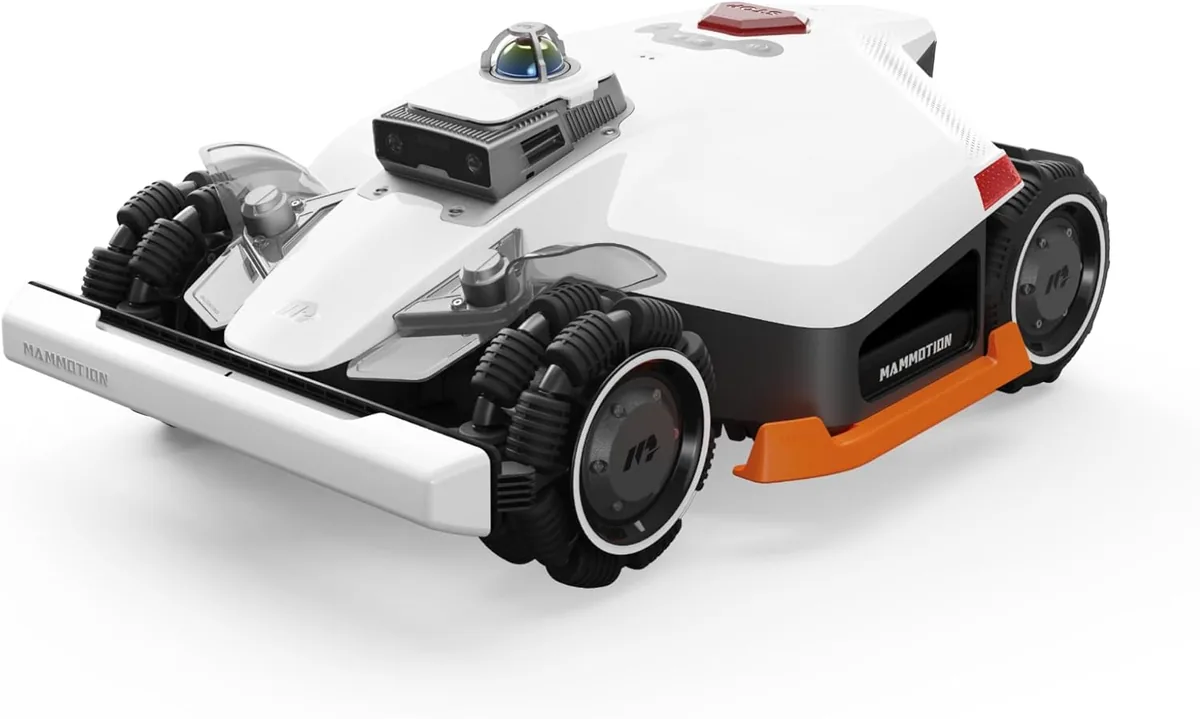
The Mammotion LUBA mini 2 AWD 1500H Robot Lawn Mower fits a compact lawn where sky view, weight and edges matter more than size.
- Your lawn is 0.37 acre or less. The rating is one figure with no tolerance, so leave room.
- Trees or walls limit the sky. There is no RTK station to place. My head-to-head of i215 and LUBA Mini 2 sets the mini 2 beside a LiDAR mower from Segway.
- You want edges cut. The 120 mm edge disc works along borders, though the strip width is not published.
- You cut longer grass. The H version reaches 4 inches.
Around the drip lines I drew no-go zones before the first run, as the manual’s list of uses suggests. Skip it if your lawn passes 0.37 acre or you want a larger cutting width. My LUBA mini 2 review covers setup, mapping and the edge disc in full.

Choose the LUBA 3 AWD 3000 If
The Mammotion LUBA 3 AWD 3000 Robot Lawn Mower fits a larger, open lawn where capacity and a third sensor matter.
- Your lawn is up to 0.75 acre. Its 400 mm cutting width is built for that size. For a lawn closer to half an acre, my list of robot mowers for 1/2 acre names the models I rank first.
- The sky is open. The RTK station needs a spot 3 m from walls and trees, or NetRTK coverage in your area.
- You want faster charging. 105 minutes against 150.
- You mow short grass. The standard version cuts 1 to 2.7 inches.
Around the young plum trunks I drew no-go zones instead of trusting the bumper alone. Skip it if you need grass cut taller than 2.7 inches, because that is the 3000H, or if your yard has no clear sky and no NetRTK coverage, or if the lawn passes 0.75 acre. My LUBA 3 AWD review goes through slopes, sky and real lawns in full.
Which Mammotion Fits Your Lawn
Measure the lawn first: up to 0.37 acre the mini 2 is my pick, from 0.37 to 0.75 acre the LUBA 3 is, and beyond 0.75 acre neither is rated. Then check the grass height, because 2.7 inches is the LUBA 3 limit and 4 inches the mini 2 H limit, and check that you have open sky or NetRTK for the LUBA 3. Before you buy, check the station spot against the manual’s distances and read the 4G terms. My picks of the top robot lawn mowers show how these two fit the wider field.
Frequently Asked Questions
Does a robot lawn mower do edges?
The LUBA mini 2 AWD 1500H cuts edges with a separate 120 mm edge disc, while the LUBA 3 AWD 3000 states a 400 mm cutting width and no edge claim in its manual. Neither maker publishes an uncut-strip width, so plan a trimmer pass along walls, beds and gravel lines, and keep the gravel crossing clear.
Can robot lawn mowers go uphill?
Both Mammotion models are rated for 80% slopes (38.6 degrees) inside the mapped area and 40% (21.8 degrees) at the edge, according to their manuals. Wet grass makes any mower slip, so the manuals advise dry weather, and the edge figure is the limit at borders, so check where each slope sits before you map it.
Do robotic lawn mowers require Wi-Fi?
Neither Mammotion model strictly needs home Wi-Fi for the app, because both offer Bluetooth and built-in 4G as well as Wi-Fi. The LUBA 3 AWD 3000 RTK station does need 2.4 GHz Wi-Fi at its spot, while the mini 2 has no RTK reference station, and the 4G service is optional once the free period ends.
Do robotic lawn mowers have trackers?
Both Mammotion models have GPS Theft Tracking once linked to the app, plus a geo-fence alarm that sends a notice when the mower is more than 50 m (164 ft) from its task area. The security key and vision geo-fence add protection, and neither manual describes a PIN, so keep the key somewhere safe.
What are the downsides of using a robotic lawn mower?
A robot mower needs a cleared lawn, dry weather and regular blade and lens care, and it can leave a strip at the edges. The mini 2 covers only 0.37 acre, while the LUBA 3 needs an open-sky station spot or NetRTK coverage, so measure your lawn and your sky first.
References
- Lopatin E, Väätäinen K, Kukko A, et al. Unlocking Digitalization in Forest Operations with Viewshed Analysis to Improve GNSS Positioning Accuracy. Forests. 2023;14(4):689. doi:10.3390/f14040689
- Blomberg L, Trezza D. The evolution of quiet lawn mowers and their impact on community noise and hearing conservation. INTER-NOISE and NOISE-CON Congress and Conference Proceedings. 2021;263(2):4896-4902. doi:10.3397/in-2021-2877
- Occupational Safety and Health Administration. Preventing Fire and/or Explosion Injury from Small and Wearable Lithium Battery Powered Devices. Safety and Health Information Bulletin SHIB 06-20-2019. US Department of Labor; 2019.
- Rasmussen SL, Schrøder A, Mathiesen R, Nielsen JL, Pertoldi C, Macdonald DW. Wildlife Conservation at a Garden Level: The Effect of Robotic Lawn Mowers on European Hedgehogs (Erinaceus europaeus). Animals. 2021;11(5):1191. doi:10.3390/ani11051191
Safety Note: A robot mower has sharp blades. Keep hands and feet away from them. Do not run it with children, other people or animals on the lawn; stop it and park it or switch it off if they come onto the lawn. Never ride on it or let children play with it. Clear toys, hoses, sticks, stones and fallen fruit before a run, and do not mow while sprinklers run. Never lift or tip it while it runs or while it sits in its charging station. Before you lift it, clean it or touch the blades, press STOP, switch it off exactly as your manual says, wait until every blade has stopped, and wear protective gloves. Daytime schedules reduce encounters with animals that come out at night, though animals can be on the lawn by day too. Plug the power supply into a covered outdoor GFCI outlet, keep its cable out of the mowing area, and follow your manual for installation, slopes, charging and storage.