

The best self-propelled lawn mower saves your legs on a long mow, and it only does that when the drive, the weight and the run time match your lawn. I mow a level house lawn and the grass alleys of my orchard, and I have pushed and driven machines like these on both. Below are seven I rank for a typical homeowner, six on batteries and one on gas.
My top pick is the EGO Power+ LM2135SP 21-Inch Self-Propelled Mower. It has the best mix of drive control, blade options and warranty on this page.
Best Self-Propelled Lawn Mower 2026: 7 Models I Put to Work
These seven cover the drive types, deck widths and power sources that matter most on a home lawn. I ranked them by how well each does the job for the buyer it suits. Each review below gives the specs and says who should buy it and who should skip it.
1. EGO Power+ LM2135SP 21-Inch Self-Propelled Mower Best Overall
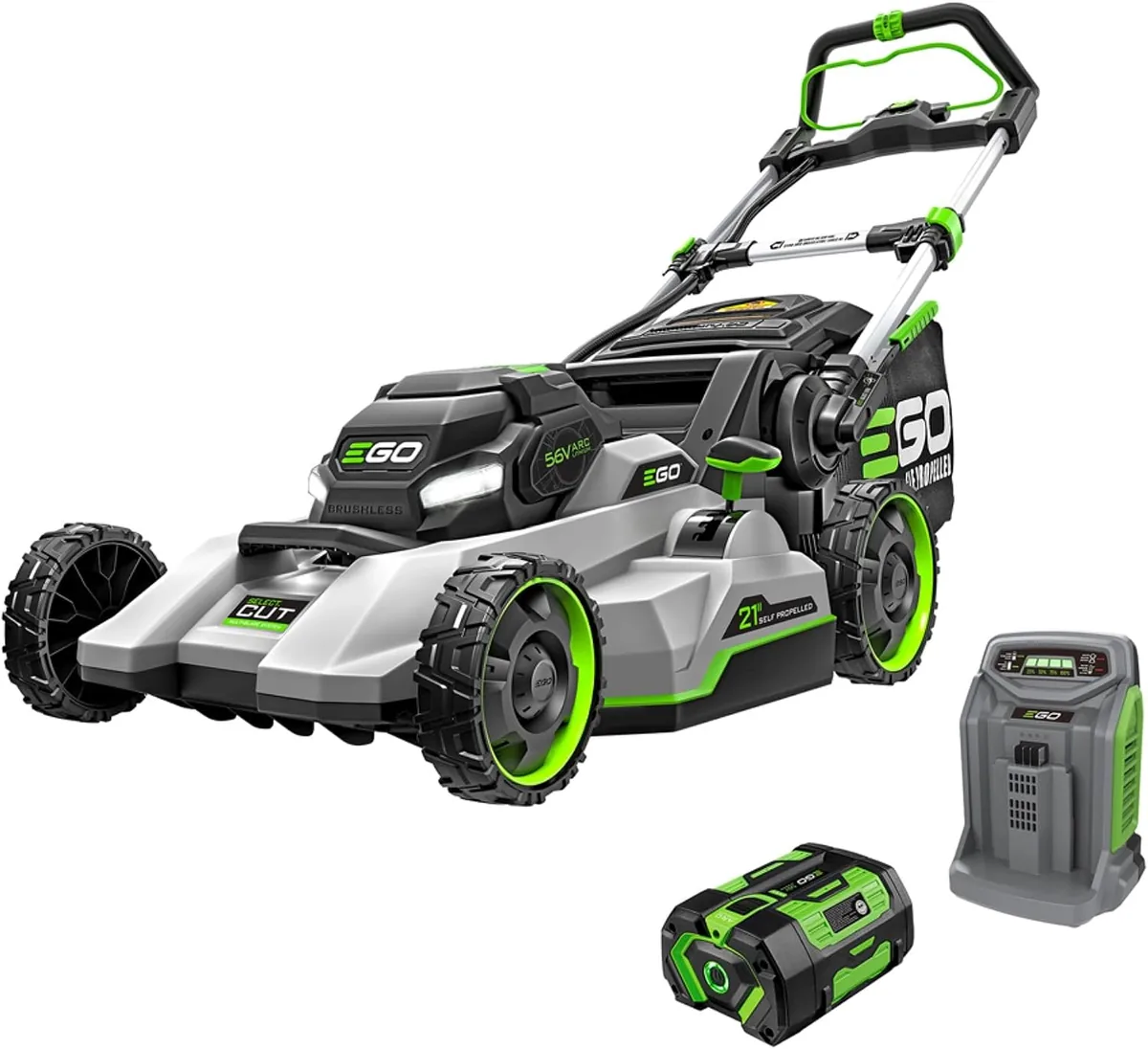
The EGO Power+ LM2135SP is the self-propelled mower I recommend first to a homeowner with a level lawn who wants one machine that mulches, bags and throws to the side. Its Touch Drive speed runs from 0.9 to 3.1 mph, and the Select Cut blade set lets you match the blade to the job. It is a premium-tier kit, and the single pack in the box is the thing to plan around.
WHY I CHOSE THIS ✓
I picked the LM2135SP as Best Overall because it has no hole in the features that count on a level lawn. Variable drive, three grass modes, eight heights and a 5-year tool warranty arrive in one kit, and the Select Cut blades let me change the machine instead of changing my plans. I give up some run time to the one-pack box, and I accept that.
EGO Power+ LM2135SP 21-Inch Self-Propelled Mower Specs
Key Features:
- Touch Drive speed range: The self-propel runs from 0.9 to 3.1 mph, so you slow to a walk around obstacles and open up on a straight run.
- Select Cut blade set: EGO lists a mulching, a high-lift bagging and an extended-runtime lower blade, plus the upper blade, so the blade follows the job.
- Eight cutting heights: A one-handed lever moves the deck from 1 to 4 inches, which is enough to raise the cut in a hot, dry spell.
- Three grass modes: Mulch, bag or side discharge, with a two-bushel bag for the days you collect clippings.
- Rapid charger: EGO gives about 60 minutes to refill the 7.5Ah pack, which makes a second pack worth owning.
- Folding handle: The handle locks into a storage position, so the mower stands in a shed corner without a fight.
- 5-year tool warranty: The tool carries 5 years and the battery and charger 3 years for household use.
On long straight alleys I set the dial once and walk at the pace it gives me. The drive works independently of the blade, so EGO’s manual lets you drive the mower back to the shed with the blade off, or switch the drive off and push to save charge. Releasing the drive control stops the push, but it does not brake the wheels, so you still steer through the stop.
The first time a pack quit in the orchard, what surprised me was how abrupt it is: full cut, then nothing, with part of an alley still standing. EGO says up to 60 minutes with the 7.5Ah pack, and its own manual table for this mower family drops to 45 minutes at medium load and 30 at heavy load. I now plan an alley in minutes of real mowing, not in the number on the box.
Swapping the Select Cut blades takes a torque wrench and the right side of the blade facing the deck. Before a long alley I fitted the extended-runtime lower blade, which EGO’s manual names as its first tip for more run time. The upper and lower blades must both be in or the mower will not run. The pack comes out before I touch anything, and the mulching and high-lift bagging blades both shorten run time against the extended-runtime blade by an amount EGO does not publish.

Take off no more than 1.5 inches of grass in a pass, and for tall grass cut high first and come back lower. EGO’s manual gives that advice for run time, and it keeps the motor out of overload too.
Never reach under the deck with the pack in. The blade needs about 3 seconds to stop after you release the bail, so I wait, then take the pack out before I clear a clog or touch the bag or the chute.
There is no fuel to mix or stabilise. I store it with the pack removed, in a covered place, as the manual tells you. A spare pack on the charger in the workshop works like a fuel can: next to my old gas push mower, the mower never waits for a refill, though the kit ships with one pack and the spare is a separate buy. If you pull the mower backward with the drive off, the wheels may lock for a moment; push forward slightly and they free up, and look down and behind before you back up.
Buy it for a level lawn of medium size if you want one machine that mulches, bags and discharges to the side. Plan on a spare pack if one run is not enough for your lawn. Skip it if you mow steep ground, since the manual limits slopes to 15 degrees across the face. Leave it on the shelf for wet grass, which the manual rules out, or for a small flat lawn where self-propel is an extra you will not use.
FINAL VERDICT
The LM2135SP covers drive, blade choice and warranty for most level lawns. Buy it for a flat lawn that is dry on mowing day, and plan around EGO’s up to 60 minutes on the 7.5Ah pack, a light-load figure; a heavier cut runs shorter, so add a second pack for a bigger lawn.
It is the all-round battery mower I reach for on level ground.
2. EGO Power+ LM3004SP-2 30-Inch Self-Propelled Mower Best Premium
The EGO Power+ LM3004SP-2 is the self-propelled mower I pick when the job is long, straight and wide. Its 30-inch deck cuts about nine inches more per pass than a 21-inch deck, and the kit comes with two 6.0 Ah packs and a dual-port charger. It is a premium machine, and at 103.6 pounds without batteries it is a heavy one.

WHY I CHOSE THIS ✓
I picked the LM3004SP-2 as Best Premium because it brings a 30-inch deck, two motors, two packs and a 10-year deck warranty in one kit. If you want the best 30 inch self-propelled lawn mower for long open runs, this is the one I choose. The price tier and the weight are the cost of that width, and I accept both.
EGO Power+ LM3004SP-2 30-Inch Self-Propelled Mower Specs
Key Features:
- Dual-motor 30-inch deck: Two motors turn two independent blades, and EGO rates the cutting torque at 13.2 ft-lb by its own tests.
- Two 6.0 Ah packs in the kit: The mower runs on one pack or two, and EGO says up to 75 minutes with two in Mode 1 on a light load.
- Three blade-speed modes: Mode 1 gives the longest run time and lowest noise, Mode 2 is the default, and Turbo handles tall, thick grass at a cost in run time.
- Nine cutting heights: The deck moves from 1 to 5 inches, with front and rear levers set to the same position.
- Speed dial and two triggers: Either trigger engages the drive, and the dial sets the pace.
- Mulch, bag or side discharge: The factory-fitted insert mulches, and a 2.5-bushel bag collects clippings.
- 10-year deck warranty: The tool itself carries 5 years and the batteries 3 years.
Deck width only pays off when it fits the ground. In my orchard a deck that matches the alley with a small overlap saves passes, and one that is too wide runs into the tree rows, so I check the 30 inches against the row before the first pass. Two blades on two motors hold the cut across that width, and the status light flashes orange if you feed the deck too much grass at once.
EGO’s 75 minutes is Mode 1 on a light load, so I treat it as the best case. Mode 2 is the default balance, and Turbo gives the speed for thick grass at the cost of run time. The manual says higher blade speed will significantly affect run time and gives no figure, which is why I mow the flat alleys in Mode 1 and save Turbo for the thick patches. EGO publishes no mph range, noise figure or charge time.
The weight is the second job. The manual needs two people to lift this mower out of the carton, and I saw why when I loaded it: 103.6 pounds without batteries is a lift, and a ramp makes it a push. Near the tree rows I also mow parallel to the drip line and never across it, because a deck set low over a line can catch it. The handle folds to a locked storage position, but the manual strongly recommends storing the mower flat, since tipping it upright may cause damage or injury.

The speed dial ships at its lowest, off position, so turn it forward the first time or the drive will not move. Set front and rear heights to the same notch every time.
Take the batteries out before you clean, adjust or touch the bag. The blades keep turning for a few seconds after the motor stops, and EGO’s manual asks for people and pets at least 100 feet away while you mow.
Clean the underside of the deck after each use with a damp cloth, and keep water away from the drive shaft and the motor fan. EGO says to sharpen the blades about twice a season, and a swap from mulching to bagging means pulling the insert and side chute first, with the batteries out. With the drive off, pulling the mower backward may lock the wheels briefly; push ahead slightly, and look behind you before you reverse. The packs fit the rest of EGO’s 56V platform, which the maker puts at more than 100 tools.
Buy it for a large, open, mostly flat lawn or for long alleys with room for the deck, and only if you can store and load a 104-pound machine. Small yards, tight beds and narrow gates are the wrong match. So is steep or wet ground, since the manual bans slopes over 15 degrees and wet grass.
FINAL VERDICT
The LM3004SP-2 is a specialist, and a good one. It earns its premium on wide, long ground where two packs and a 30-inch deck save passes. If your lawn is small or your back dislikes lifting, it is the wrong machine.
It is the wide-deck battery mower I keep for the long alleys.
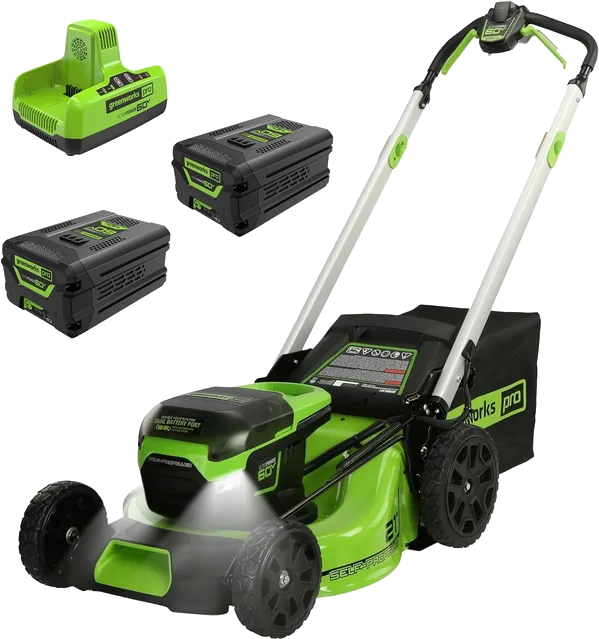
3. Greenworks 60V MO60L424 21-Inch Self-Propelled Mower Best Value
The Greenworks MO60L424 is the self-propelled kit I recommend when value means what is in the box: two 4.0 Ah packs that hand over to each other automatically, so the mower keeps cutting when the first one runs down. It is a 21-inch, 3-in-1 mower at a mid-range price. I rate it the best value for a mid-size lawn that needs a second pack.

WHY I CHOSE THIS ✓
I picked the MO60L424 as Best Value because the box holds two packs with automatic switch-over, a high-lift blade, a side chute and a 4-year warranty at a mid-range price. The second pack and the side chute are in the box, so nothing needs adding before the first mow. Its weak spot is weight, at 65 pounds before any pack goes in.
Greenworks 60V MO60L424 21-Inch Self-Propelled Mower Specs
Key Features:
- Automatic battery switch-over: When the first pack cannot go on, the manual says the other one takes over, so there is no stop to swap a pack.
- Two charge gauges: Left and right gauges step from four green lights above 80 percent down to none under 20 percent, when the manual says to charge at once.
- Speed slide on the handle: You set the drive speed with the free hand, from 1.6 to 4.9 feet per second, which is about 1.1 to 3.3 mph.
- Turbo button: One press lifts the blade from 2,800 to 3,200 RPM for thick patches, at a cost the maker does not quantify.
- High-lift blade in the box: Greenworks supplies a second blade with deeper curves, meant for tall grass.
- Mulch, rear bag or side discharge: The side chute works with the catcher off and the mulch plug kept in.
- Vertical storage: The lower handle folds, and with the catcher and battery removed the mower stands on its end.
The automatic switch-over is the reason this kit exists. On a long mow the first pack ran down and the mower carried on, and I only learned the first pack was empty when I looked at the gauges afterward. A single-pack mower would have stopped mid-row and waited for a swap. You hold a start handle, pull either drive lever, and set the pace with the slide on the handle bar.
I plan this mower by the charge gauges on its two packs, because the kit switches from one pack to the other by itself and a long lawn is finished on both. The weight is the other limit, 65 pounds before any pack goes in, and the manual does not say which wheels drive.
Wet spring grass is where this deck clogs, so I stopped the mower, waited for the blade to stop, took out the safety key and both battery packs, and cleared the underside with a stick and a gloved hand. The manual says wait until the grass dries, so the high-lift blade changes nothing there. June and July bring a different job, fallen plums and apricots. I walk the alley first and pick up the fruit and sticks, because rotten fruit leaves the orchard and a stone can leave the chute at speed, and then I mulch what is left with the plug in.
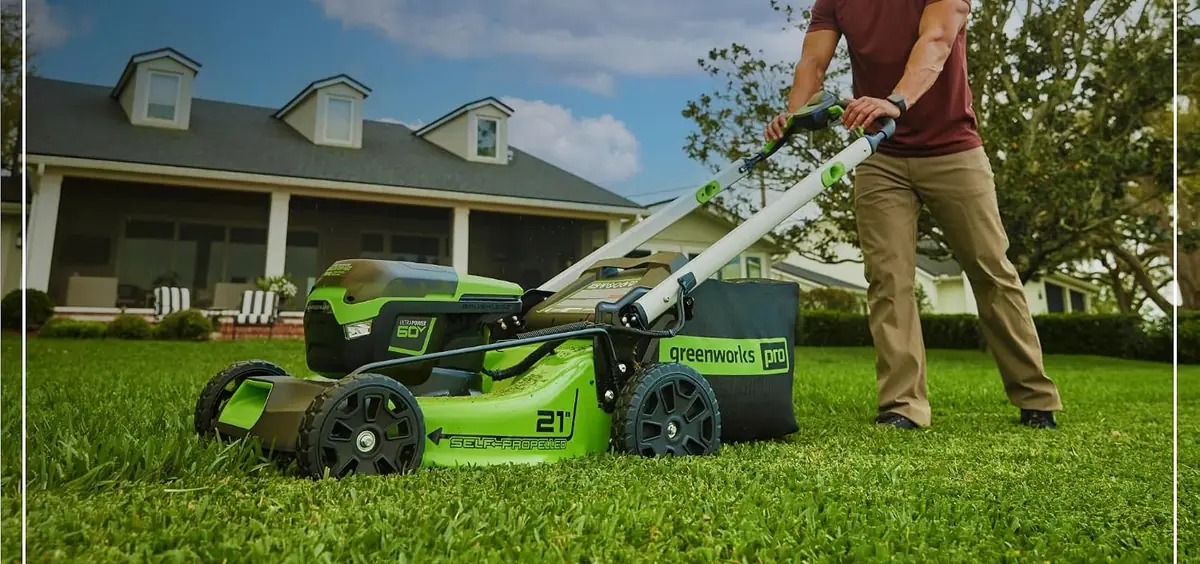
With the side chute fitted, leave the catcher off and keep the mulch plug in, as the manual orders. Fit the high-lift blade for tall grass and keep the standard blade for dry, shorter grass, as the manual advises.
Take out the key and the battery first. Before you clear or adjust anything, remember that the blade keeps turning for a few seconds after the motor stops, and the manual says contact with it can amputate hands and feet.
Wipe the deck clean after each use with a dry cloth, since the manual forbids a hose and any water near the motor. Greenworks covers the tool and the battery for 4 years, for personal use and the original buyer, and blade sharpening is excluded. The manual gives no reverse feature, so look down and behind before you pull the mower toward you. Eye protection is part of the routine, so is keeping children and pets at least 100 feet away, and the packs charge only on Greenworks’ own charger.
Buy it for a mid-size lawn where one pack might not last, or for a mixed lawn with tall patches that benefits from Turbo and the high-lift blade. Leave it if you lift the mower into a vehicle often, since 65 pounds is before the packs. Pass also if you want a run time, bag size or noise figure on paper before you pay, or if the ground is steep or wet.
FINAL VERDICT
The MO60L424 earns Best Value from what comes in the box. For a lawn that needs two packs of mowing time and a flat, dry surface, it is the self-propelled kit I recommend.
It is the two-pack mower I recommend for a mid-size lawn.
4. SKIL PWR CORE 40 SM4910C 20-Inch Self-Propelled Mower Best Inexpensive Battery
The SKIL SM4910C-11 puts a self-propelled drive and a folding handle at the lowest price of the battery kits on this page. The rear-wheel drive has a speed dial on the handle, and on my house lawn I turned it down for the corners around the shade trees and up again on the straights. The box holds one 6.0Ah battery and a charger, so it fits a lawn that one pack can finish.

WHY I CHOSE THIS ✓
I chose it as the inexpensive battery pick because it keeps a rear drive, a speed dial and seven heights at the lowest price of the battery kits here, well below the premium ones. For a house lawn with trees it is the lowest-priced battery kit here, and the best inexpensive self-propelled lawn mower for it, and SKIL adds a five-year tool warranty when you register within 30 days.
SKIL PWR CORE 40 SM4910C 20-Inch Self-Propelled Mower Specs
Key Features:
- Speed dial on the handle: matches the drive to your walking pace, so tight corners do not drag you along.
- Rear-wheel drive: the manual places the drive gear at the rear wheels.
- Seven cutting heights: 1.5 to 4 inches from one lever.
- 3-in-1 deck: bag, mulch insert or rear discharge, with no side chute.
- Folding handle: it folds for storage, and a limit switch cuts the motor when it is turned to storage. The manual warns that a mower stored upright can tip over, so store it flat where you can.
Self-propel runs with the blade off, so the mower can carry itself back to the shed after the last pass. I scalped a bump at the lawn edge once with the deck on its lowest setting, so I now start one notch higher and drop down only on a flat stretch. The manual says not to cut wet grass at all, since clippings stick under the deck.
Run time is the number to plan around. SKIL says up to 50 minutes on a full charge with the 6.0Ah pack and gives no grass height or speed. The manual says grass condition and cutting height greatly affect it, and advises raising the cut and slowing down. A second pack is a separate purchase.

Take off no more than a third of the grass height at once. Bagged clippings go straight to my compost pile, and the mulch insert comes out before you fit the 1.7 bushel bag.
Charge with the maker’s charger only, indoors, between 41 and 104 degrees F. Before you touch the deck, wait for the blade to stop, since it keeps turning a few seconds, then take the battery out and wear heavy gloves.
Clean the underside of the deck after every use and sharpen the blade about twice a season. The side rails can creep shut under the push on the handle and stall the mower, so extend them fully and relock both clamps. SKIL does not publish a weight, so lift it with care into a trunk or over a step.
Buy it if you have a small to medium, mostly level lawn with trees and beds to turn around, and you want the lowest-priced battery self-propelled mower on this page. Skip it if one pack cannot cover your lawn, if you need a published weight, noise level or drive speed before you order, or if you want a side discharge chute. I compare nine picks that store easily and cut clean in my guide to lawn mowers for small yards.
FINAL VERDICT
The SKIL gives you a self-propelled drive, a folding handle and a long tool warranty without premium money. Choose it when one charge covers your mowing.
It is the lowest-priced battery self-propelled mower for a house lawn with trees.
5. SENIX LSSG-M10 21-Inch Gas Self-Propelled Mower Best Gas
The SENIX LSSG-M10 is the gas self-propelled mower for a buyer who wants an engine and no battery to manage. A 170 cc RATO engine sits on top of a 21-inch steel deck, a primer bulb and a pull rope start it, and one bail on the handle engages the drive. It has no speed dial and no push-button start.

WHY I CHOSE THIS ✓
I picked it because it gives you a gas engine and a self-propelled drive with one simple bail. A 170 cc engine, a tool weight of 61.7 pounds and the lowest price tier on this page make it the plain choice for a flat lawn.
SENIX LSSG-M10 21-Inch Gas Self-Propelled Mower Specs
Key Features:
- Drive bail: pull it to roll, release it to stop the drive; releasing the blade control stops the engine and blade.
- 170 cc RATO engine: the manual names the engine, and it keeps running as long as you refuel it.
- 3-in-1 deck: mulch, rear bag or side discharge, with the bag rated at 16 gallons.
- Six cutting heights: 1.25 to 3.75 inches, set by a lever on the right rear wheel.
- Published tool weight: SENIX gives 61.7 lb without fuel or oil.
The engine tells you what the blade is doing. I once ran it into thick grass that was still damp at the base, and the engine note dropped as the deck loaded up. That was my cue to stop and come back when it was dry, because the manual says wet grass sticks under the deck and ruins mulching. Above four inches, the manual says to bag instead of mulch. I rank mowers by how they cut dense grass in my best lawn mower for thick grass roundup.
Starting follows a fixed order. Press the primer three times on a cold engine, hold the blade control against the handle, pull the rope, and only then pull the drive bail. Never engage the drive while starting. The mower ships with no fuel or oil in the engine, so add both before the first start.
Before the last mow of autumn I add fuel stabiliser to the tank, or run the engine dry, which is the manual’s advice for storage over 30 days. The mower then sits in the tool shed, and the engine never runs inside it, because exhaust carries carbon monoxide.
I wear hearing protection and safety glasses with it, and SENIX publishes no noise figure. Stop the engine and let it cool at least two minutes before refuelling, and fill outdoors, never above the bottom of the neck.
Check the oil before every use and change it after the first 5 hours. Before any work under the deck, stop the engine, wait until the blade has stopped, then disconnect the spark plug wire and ground it against the engine. The two-year warranty excludes the RATO engine, which carries its own warranty from the engine maker, so read that term before you buy.
This is the gas self-propelled pick for a flat lawn up to the 0.4 acre SENIX claims, if you accept a pull start and a single speed. Hills, wet grass, variable speed and push-button start are out, and so is any buyer who wants the engine warranty in writing before ordering.
FINAL VERDICT
It starts with a rope, runs at one speed and needs no battery. Buy it when you accept a rope start and one speed in return for no battery to charge.
It is the plain gas self-propelled mower for a flat lawn.
6. Greenworks 80V MO80L416 21-Inch Self-Propelled Mower Best 80V Cordless
The Greenworks MO80L416 is the self-propelled cordless mower for a lawn where the tool shed has little floor space. The handle folds and the mower stands on its end, so it fits into a corner. Drive is rear-wheel with a variable speed button, and the 80V pack belongs to a platform Greenworks says runs more than 75 of its tools.

WHY I CHOSE THIS ✓
For anyone who already owns Greenworks 80V tools, this is the best self-propelled cordless lawn mower here. One pack and one platform cover the mower and the rest of the shed, and the 4-year warranty covers tool and battery. Vertical storage is the other reason it earns a place.
Greenworks 80V MO80L416 21-Inch Self-Propelled Mower Specs
Key Features:
- Variable speed drive: a thumb button sets the pace, and the maker’s range runs from a slow walk to a brisk one.
- Rear-wheel drive: Greenworks puts the drive at the rear wheels for traction.
- Vertical storage: the handle folds and the mower stands on its brackets, and a storage switch blocks starting when it is upright.
- Seven cutting heights: 1 3/8 to 3 3/4 inches from one lever.
- 80V platform: the pack fits Greenworks 80V tools only, a plus if you own some already.
In late October the leaves from the plum and apricot rows drift onto the lawn, and I fit the mulch plug and run this mower over them instead of raking. Dry leaves break into fine pieces and settle into the turf. Damp ones pack under the deck, and the manual says wet clippings stick there and stop mulching, so I wait for a dry afternoon.
Run time is modest. Greenworks lists up to 33 minutes on the 4.0Ah pack and up to 60 minutes to recharge it, with grass conditions deciding the real figure. The kit holds one pack, so a lawn that needs more means a second 80V pack, which is a real extra cost. I compare it with the two-pack 60V Greenworks in MO80L416 against the MO60L424.

The drive can hold the wheels when you pull the mower backward. At the end of a row the wheels resisted my pull backward until I released the lever and gave the mower a small push forward, so look behind and down before and while backing up.
Before you clear a clog or change a blade, release the bail, wait for the blade to stop, then take out the safety key and remove the battery. Wear heavy gloves on the blade, and clean the underside with a dry cloth or a stick, never with water.
The mower weighs 75.7 lb with the battery in, so lifting it into a truck or up steps takes both hands. Charge the pack between 39 and 104 degrees F with the maker’s charger only. Greenworks publishes no noise figure for this model.
This mower suits a small to medium lawn, an owner who needs shed space back and anyone with Greenworks 80V tools already. It is the wrong choice if one pack cannot finish your lawn, if you back the mower into tight spots often, or if you want a light machine. I assess this 80V self-propelled mower for mid-size lawns in my Greenworks MO80L416 review.
FINAL VERDICT
The MO80L416 pays off on the Greenworks 80V platform, in a small shed, on a lawn that one charge covers. If your lawn needs a longer run, look elsewhere.
It is the folding self-propelled mower for a Greenworks shed.
7. Honda HRN216 21-Inch Battery Self-Propelled Mower Best Honda
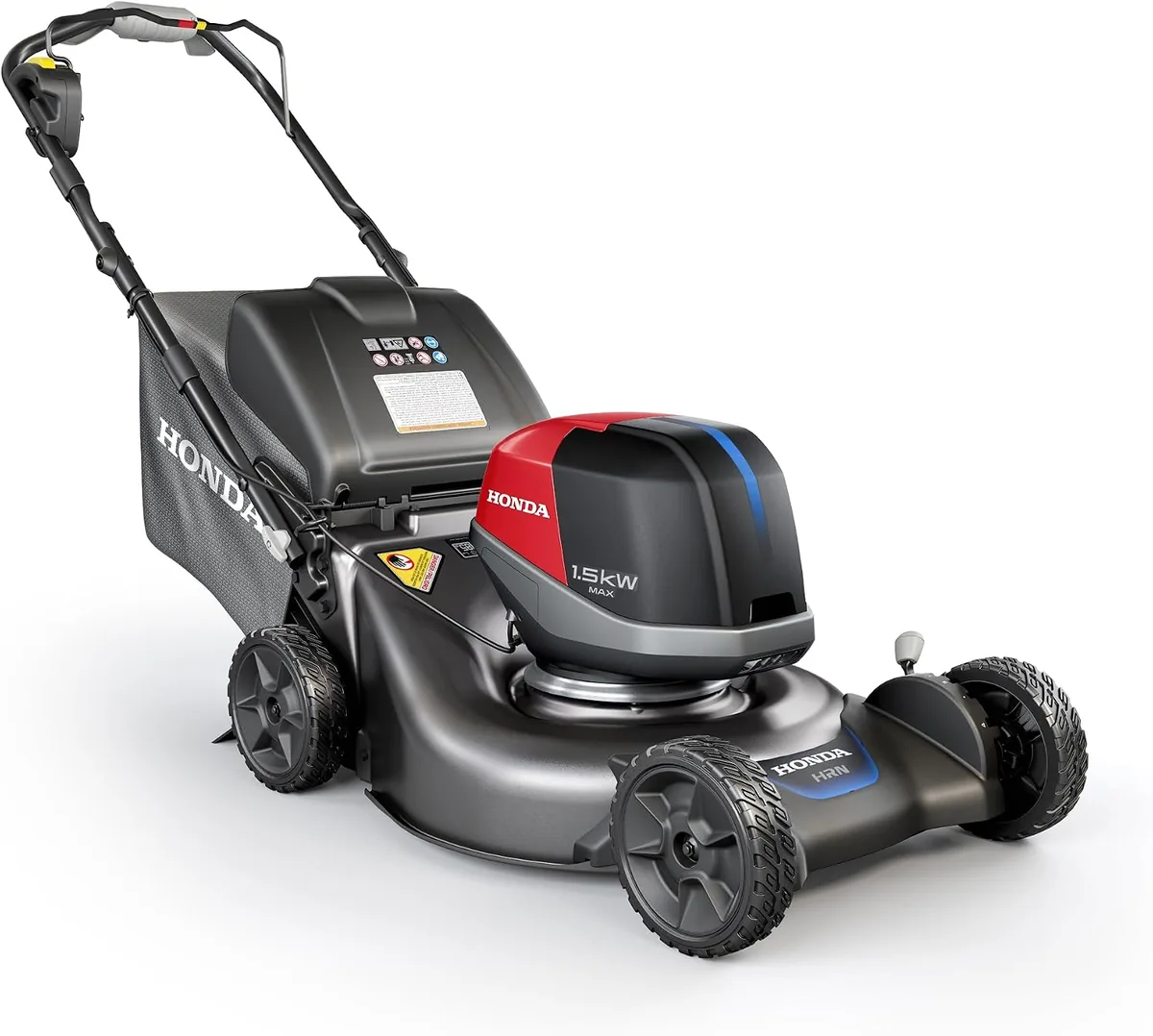
The Honda HRN216 (HRN-BV, model HRN216YXBVKA4) is the battery self-propelled mower for a buyer who wants a Honda dealer to look after it. The Smart Drive paddle sets the pace by how hard you push, up to 3.8 miles per hour, and releasing it disengages the drive. The kit holds one 8Ah Honda battery, a charger and a grass bag.
WHY I CHOSE THIS ✓
I picked it because the paddle gives you smooth, hand-pressure speed control, and a Honda buyer gets a dealer service route with it. Honda services through authorized dealers, and the 36 month residential warranty comes from the company that built it.
Honda HRN216 21-Inch Battery Self-Propelled Mower Specs
Key Features:
- Smart Drive paddle: hand pressure sets the speed, from a crawl to 3.8 mph, and releasing it disengages the rear wheels.
- One-inch low cut: the cutting range starts at 1 inch and reaches 4 inches in seven settings.
- Folding handlebar: turn two knobs 90 degrees and fold it forward for the shed or a car.
- Clip Director deck: switches between mulch, bag and rear discharge.
- Headlight: it lights while the mower runs and stays on for 3 minutes after you release the controls.
On the house lawn the paddle replaced the dial for me. I keep light pressure on it through the beds and press harder on the long runs, and when I let go the drive disengages, so I can push the mower by hand around a trunk. The five handle positions suit different hand heights.
My gravel yard has a soft grass edge, and Honda’s manual says never to run the blades over gravel. A struck stone can damage the power unit, and that damage is not covered by the warranty. I mow the grass side of the line, stop the blade at any crossing and walk the edge first for loose stones. Keep people and pets at least 100 feet away, as the manual says, because stones leave the deck fast.
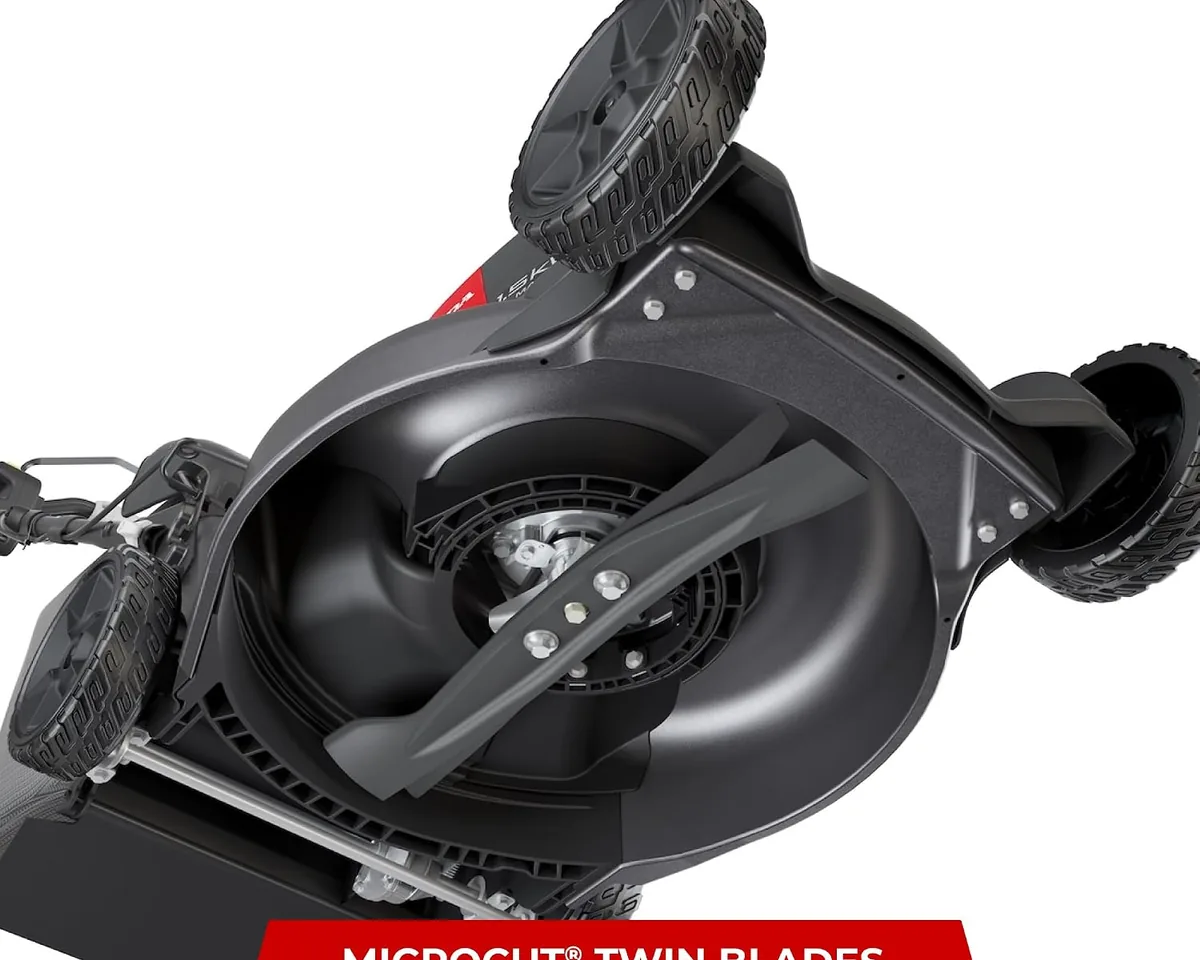
Set the rear height lever first and match the front one to it, with the battery out. Both levers sit on the left side.
Honda lists up to 30 minutes on the 8Ah pack and up to 45 with the optional 12Ah, with no conditions. The standard charger takes about 4.5 hours, and an optional quick charger cuts that to about an hour.
When a part wears, I want a counter to walk up to, and that is why I keep a dealer-serviced machine for the house lawn. Use only the Honda charger and packs, and keep the pack dry. The manual puts the weight at 82.3 lb with bag and battery, so lifting it up a step takes two hands. I compare it with an EGO self-propelled kit in Honda HRN-BV against EGO’s LM2135SP.
If you want a Honda self propelled lawn mower with dealer service for the life of the machine, this one suits a small, flat lawn. A large lawn is a poor fit, since 30 minutes is short, and so is a buyer who wants a light mower at 82.3 lb or who mows wet grass, which the manual forbids.
FINAL VERDICT
Honda sells you a mower and a service route in one purchase. Pick it when a dealer counter matters more to you than run time.
It is the dealer-serviced battery mower for a small flat lawn.
How to Choose the Best Self-Propelled Lawn Mower
Seven factors decide whether a self-propelled mower helps you or annoys you. I weigh the drive first, then the power source, deck width, run time, weight, grass handling and warranty.
Drive Control and Speed
A self-propelled mower turns its wheels for you, so you steer and the machine sets the pace. What matters is how you control that pace. A variable-speed drive lets you slow down in tight corners and speed up on open grass, while a single-speed drive holds one pace you cannot change. Makers publish top speeds from about 3 to nearly 4 mph, which is a brisk walk.
- Variable speed: a dial, slide, button or paddle on the handle sets your pace, so one mower suits a slow shaded corner and a fast open stretch.
- Single speed: a bail you pull to engage the drive and release to stop. It is simple, but you walk the mower’s pace.
- Drive layout: some makers state rear-wheel drive and some do not publish the layout, so read the drive section of the manual of the mower you buy.
Sellers argue about rear-wheel against front-wheel drive, and I do not pick a mower on that argument alone. If rear-wheel drive matters to you, check what the maker documents and how the mower handles with a full bag. On my own lawn most of the mowing is long straight runs, so I care more about a smooth, steady pace than a high top speed.
Pulling Back With the Drive Off
Several of these manuals warn that the drive wheels can lock when you pull the mower backward. Release the drive, then give the mower a small push forward to free the wheels before you reverse.
Battery or Gas Power
Six of the seven mowers here run on batteries, and one runs on gas. The best self-propelled electric lawn mower costs more up front than a basic gas one, but it removes fuel, oil and a pull cord from your routine. The table sets the two side by side. Cordless picks for small and large lawns are ranked in my best battery lawn mower list.
| Question | Battery | Gas |
|---|---|---|
| How does it start? | Push button after you insert the pack | Pull cord, with fuel and oil in the engine |
| What does it need each season? | Charging and careful pack storage | Fuel, oil and engine upkeep as the engine manual lists |
| How long can you mow? | As long as the pack lasts, then you recharge | As long as the tank lasts, then you refuel |
| How loud is it? | Quieter than gas | Louder, so wear hearing protection |
| Where do you charge or fuel it? | Indoors or in a shed outlet, within the manual’s temperature range | Outdoors only, with the engine off and cool |
A noise survey of more than 600 mowers found electric mowers significantly quieter than gas ones (1). If you mow early on a weekend, that matters to your family and your neighbors. The best self-propelled battery lawn mower is the one whose pack gives you a full lawn, so read the run time section before the price.
Gas still has a place. Choose it when you want a low entry price and no pack to charge, and accept a pull start, a single drive speed and fuel and oil to look after. Gas manuals tell you to refuel outdoors with the engine off and cool, and I never run a gas mower indoors, and that includes a shed or garage with the door open.
Deck Width and Lawn Size
A wider deck cuts a wider strip, so you make fewer passes. The decks on this page run from 20 to 30 inches. A wider deck is also heavier, harder to store and tighter in a narrow gate, so the widest deck is not automatically the best one.
For a house lawn of about a quarter acre, a walk-behind self-propelled mower with a 21-inch deck does the job and still fits through a side gate. A small yard rarely needs the widest deck. My orchard alleys are long and straight, so a wider deck saves passes there, but only if it clears the tree rows with room to spare. Plots from half an acre up have their own picks in my best lawn mower for large yard roundup.
- Small yards: a 20 or 21-inch deck is easy to turn and store.
- Long open lawns and alleys: a wider deck saves passes if the gate and rows allow it.
- Storage space: measure the shed door before you buy a wide deck.
Run Time and Battery Packs
A maker’s run time depends on test conditions that are not always stated, and EGO ties its figures to a light load. Thick or wet grass shortens it, and a mulching or bagging blade can shorten it further. Plan your mowing in real minutes, not in the number on the box.
A kit with two packs gives you more minutes before you stop. With one pack you either fit a charged spare or wait for a recharge, and some kits switch from one pack to the next on their own. On a large lawn, count the packs first and the volts second. I keep a spare pack charging in the workshop so the second half of a mow does not wait on an outlet.
Pro Tip
Cut the lawn before the grass gets tall. A mower works less and the pack lasts longer when it only trims the top of the blade.
Weight, Storage and Lifting
Published weights on this page run from the low 60s to over 100 pounds, and some makers count the battery or the bag while others do not. A heavy mower is steady on the lawn but hard to lift into a truck or up two steps. Look for a folding handle if your shed is small, and follow the manual on whether the mower may stand upright or must lie flat.
The mistake I see most is buying on power and ignoring the lift. Before you order, count the steps, the threshold and the shelf where the mower will live, and how you will load it into a vehicle.
Grass Handling and Cutting Height
Most mowers here mulch, bag and discharge to the side or rear. A good mulching setup is a plug or insert that fits your deck, plus a bag you can empty without a fight. A cutting range of about 1 to 4 inches covers most lawns, and a wider range helps you raise the deck in a dry spell. Models built around mulching are ranked in my best mulching lawn mower roundup.
- Mulching: leaves clippings on the lawn as fine pieces, so you skip the bag.
- Bagging: collects clippings, and a full bag changes the balance of the mower.
- Side or rear discharge: throws grass out the side or back, so keep people and pets clear.
Warranty and Support
Warranty terms on these mowers run from 2 years to 5 years on the tool, and the deck has 10 years on one. Read the conditions: some need registration, some exclude the engine or a battery, and commercial use is either excluded or covered for a much shorter term. On a tight budget, choose the warranty you can claim, not just the lowest tag.
Key Takeaway
Choose the drive control first, then the power source and the packs, and check the weight before the deck width.
Self-Propelled Lawn Mower Slope Limits and Wet Grass
Self-propelled drive saves your effort, but it does not make a slope safe. Each maker’s manual behind this page limits mowing to slopes of 15 degrees or less and says not to mow wet grass. A paper on ride-on mower warnings notes that many people cannot judge a slope by eye, so measure it instead of guessing (2).
That is why I do not name a best self-propelled lawn mower for hills. Mow across a slope with a walk-behind mower, never up and down, and skip a wet slope altogether. Stay well back from drop-offs, ditches and banks. Wet grass also clogs the deck faster and tears the blade tips instead of cutting. I rank seven picks by drive and slope limits in my guide to lawn mowers for hills.
Self-Propelled Lawn Mower Safety Before You Mow
A self-propelled mower still has a blade that can turn after you let go of the bail. Before you clear a clog, check the blade or tip the mower, stop the engine or motor and wait until the blade has stopped. Then take out the safety key and every installed battery, or on a gas mower disconnect the spark plug wire and ground it against the engine, and wear heavy gloves. Walk the lawn first and pick up stones, sticks, toys and wire.
- Eyes: in a large US study of mower eye injuries, 77% came from projectiles, mostly grass, dirt and rocks, and only 2% of those injury cases were documented as using eye protection (3). Wear safety glasses.
- Hands and feet: the hand and finger were the most injured parts in an estimate of about 934,000 US mower injuries treated in emergency departments from 2005 to 2015 (4). Keep your hands out from under the deck.
- Children: a study of mower injuries to people aged 20 and under estimated about 9,400 emergency visits a year from 1990 to 2004 (5). Keep children out of the yard while you mow.
- Guards and controls: keep the bag, the mulch plug or the chute guard in place, and never disable the bail or the operator-presence control.
- Fuel and charging: refuel gas outdoors with the engine off and cool. Charge and store a battery within the manual’s temperature range with the maker’s charger, and never use a damaged or swollen pack.
I keep children and dogs inside while I mow, and I check the discharge direction before every pass so grass and stones never leave toward the house or a car.
My Overall Verdict
The right self-propelled mower is the one that matches your lawn, your storage space and your patience for charging or fuel. My ranking follows that logic, and my top three suit three kinds of buyer.

1. EGO Power+ LM2135SP 21-Inch Self-Propelled Mower Best Overall
Pick it if you want a proven all-rounder with Touch Drive speed control and a long warranty.

2. EGO Power+ LM3004SP-2 30-Inch Self-Propelled Mower Best Premium
Pick it if you mow a large lawn and want a 30-inch deck with two packs in the box.
3. Greenworks 60V MO60L424 21-Inch Self-Propelled Mower Best Value
Pick it if you want two packs in the box and variable speed without paying for the premium kits.
If you have a level lawn and a place to charge, the best self-propelled lawn mower is a battery model with variable speed that you can lift into your shed. If you want the field beyond self-propelled models, my overall lawn mower picks rank battery and gas mowers by yard size.
Why EGO Power+ LM2135SP 21-Inch Self-Propelled Mower Might Be the Best Choice
I picked it first because it does the job on the widest range of lawns without asking you to learn a new system. The Touch Drive responds to your palm and the dial sets the pace, so corners and open stretches both feel natural.
The trade-off is price and a run time that belongs to one pack. If your lawn is large, you will want a second pack, and the manual still bans wet grass and slopes over 15 degrees.
Here is what pushed it to the top:
✓ Variable-speed Touch Drive with a speed dial
✓ Three interchangeable blades in the Select Cut system
✓ Eight cutting heights from 1 to 4 inches with one lever
✓ A folding handle and a 2-bushel bag
✓ A 5-year tool warranty and a 3-year battery warranty
Frequently Asked Questions
What is the best self-propelled lawn mower?
The best self-propelled lawn mower on this page is the EGO LM2135SP, a 21-inch battery mower with variable-speed Touch Drive and a 5-year tool warranty. If your lawn is large, the EGO 30-inch kit with two packs suits it better, and the SENIX suits a buyer who wants a pull-start gas engine.
Are AWD lawn mowers worth it?
All-wheel drive means both axles are driven, and on a level lawn I do not pay extra for it. None of these seven mowers is sold as all-wheel drive, and the makers that state a layout drive the rear wheels, so choose by speed control, weight and warranty, then read the drive section of the manual.
How much do lawn mowers typically cost?
A self-propelled mower costs more than a push mower, and the seven here run from a budget gas model to a premium 30-inch battery kit. A kit with two packs and a wide deck sits at the top, while a single-pack battery kit or a pull-start gas mower sits lower.
What are some good battery-powered self-propelled lawn mowers?
Good battery-powered self-propelled lawn mowers on this page include the EGO LM2135SP, the Greenworks 60V MO60L424 and the SKIL SM4910C. All three have variable-speed drive, and the Greenworks kit ships with two batteries, which gives you a longer job without stopping to recharge, while the EGO and SKIL kits ship with one.
What is the best lawn mower?
The best lawn mower depends on your lawn size, the ground you mow and how you feel about fuel and charging. For a level lawn I pick a self-propelled battery mower with variable speed, because it saves effort, starts with a button and skips the pull cord, the oil and the fuel can in the shed.
References
- Blomberg L, Trezza D. The evolution of quiet lawn mowers and their impact on community noise and hearing conservation. INTER-NOISE and NOISE-CON Congress and Conference Proceedings. 2021;263(2):4896-4902. doi:10.3397/in-2021-2877
- Karnes EW, Leonard SD, Lenorovitz DR. Ride-on lawnmowers warnings: Slope measurements and safety-by-separation. WORK: A Journal of Prevention, Assessment & Rehabilitation. 2012;41(S1):3629-3632. doi:10.3233/wor-2012-0116-3629
- Stange NR, Jennissen CA. Lawnmower-Related Eye Injuries in the U.S., 2004 to 2023. Am J Ophthalmol. 2025;277:7-16.
- Harris C, Madonick J, Hartka TR. Lawn mower injuries presenting to the emergency department: 2005 to 2015. The American Journal of Emergency Medicine. 2018;36(9):1565-1569. doi:10.1016/j.ajem.2018.01.031
- Vollman D, Smith GA. Epidemiology of Lawn Mower-Related Injuries to Children in the United States, 1990-2004. Pediatrics. 2006;118(2):e273-e278. doi:10.1542/peds.2006-0056
Safety Note: A mower blade can cut through a hand or foot and throw stones and sticks with force. Pick up debris before you mow, keep the discharge guard, bag or mulch plug in place, never point the discharge at people, windows or cars, and keep children and pets indoors while the mower runs; never let a child ride on a riding mower. Never disable the operator-presence control. Before you clear a clog, tip the mower or touch the blade, stop the engine or motor, wait until the blade has stopped, then remove the safety key or battery, or disconnect the spark plug wire on a gas model. Mow across slopes with a walk-behind mower and up and down with a riding mower, within the slope limit in your manual, and stay off wet slopes, drop-offs and ditch edges; on a rider with a rollover protection bar, keep it up and wear the seat belt as the manual says. Refuel only outdoors with the engine off and cool, wear closed shoes and eye and hearing protection, and read the manufacturer’s manual.