

The best string trimmer for edging is one whose manual allows edging, and I rank nine that do, from cordless and corded to gas. I keep the lawns, paths and beds around a family farm and a 3.7 acre orchard, and I used each of these tools on that edge work.
My top pick is the BLACK+DECKER LST136 40V MAX 13-Inch Trimmer Edger Kit. The reviews come first, then how to choose and the safety rules that matter when a line throws stones sideways.
Best String Trimmer for Edging Reviews 2026: 9 Models With an Edge Mode or Edger
Five cordless, one corded and three gas models, ranked for lawn, path and bed edges. Each review says how the tool edges: a rotated head, a wheel or guide, a blade edger or a tilted line head, as its own manual describes it.
1. BLACK+DECKER LST136 40V MAX 13-Inch Trimmer Edger Kit Best Overall
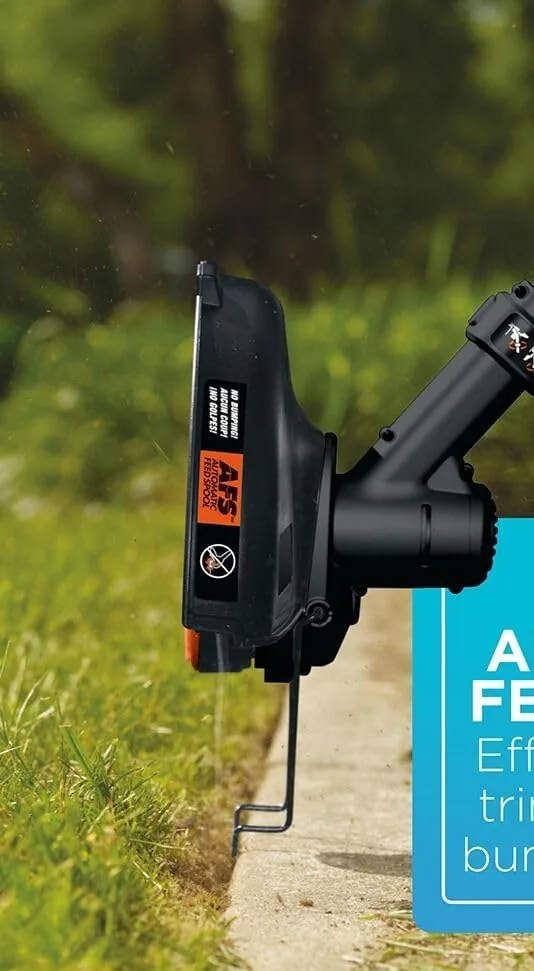
The BLACK+DECKER LST136 is the string trimmer I reach for first on a lawn edge, because the head turns into an edger in a few moves and an edge guide drops down beside the line. It is a 40V MAX cordless trimmer with a 13 in swath, a six-step power dial and an automatic feed spool, and it ships with a battery and a fast charger. I recommend it to anyone with a house lawn, flower beds and a walk to keep sharp who wants one tool and no cord.

WHY I CHOSE THIS ✓
I put it first because it edges and trims on one battery at a mid-range price. The dial, the edge guide and the fast charger are the three parts that decided it for me. It is the right pick for lawns and beds, and the wrong one for brush.
BLACK+DECKER LST136 40V MAX 13-Inch Trimmer Edger Kit Specs
Key Features:
- Edger conversion: the manual has you switch off, wait for the head to stop, remove the battery, press the head release button, turn the head counterclockwise for edging and drop the edge guide until it clicks.
- POWERCOMMAND dial: six stops run from setting 1 for the longest run time to setting 6 for the most power, so one tool serves a lawn edge and a thick patch.
- Automatic Feed Spool: the head feeds line by itself, and the manual says never to bump it on the ground.
- Fast charger: BLACK+DECKER says it restores a fully depleted battery in about 2 hours, and its base mounts on a wall.
- Charge indicator: press the button on the battery and four lights show how much is left.
- Adjustable-length tube: a locking clamp sets the height, so you can keep the 24 in the manual wants between the guard and your feet.
- Three-year warranty: it covers home use and leaves out commercial use and accessories.
An edge asks the line to spin vertically beside a hard surface, and the guide is what keeps it there. With the guide down, I walk it along the concrete work pad in front of the machinery shed, and the line follows the pad like a ruler. The manual says the auto feed may not work properly in edge mode without the guide, and that line wears faster when it runs over a sidewalk, so I keep the line on the grass side of the joint.
The dial is what makes the run time workable. Setting 6 gives maximum power for thick weeds and drains the pack faster, while setting 1 gives the longest run. BLACK+DECKER publishes no minutes for either, so plan the job, not the number: I run the dial low on the open lawn edge and turn it up only for a patch that bogs the head down. Check the pack size on the listing before you buy a spare, because it is the first extra this kit needs.
The grass that creeps into my gravel yard is a harder edge, and the dial goes to 6 there. The manual warns that edging throws stones, metal and other objects at high speed, so I wear eye protection, gloves, heavy long pants and sturdy shoes, keep anyone at least 100 ft away and work away from walls, steps and trees. Line wears fast on stone and brick, and the 0.065 in line is the only size this head takes, so a woody weed at the fence line is slow work. The manual wants growth over 12 in cut from the top down, and I follow it.
Keep spare line fresh: store spare spools in a sealed bag, with a tablespoon of water in it as the manual says, so the line does not dry out and snap.
Never run the head with the guard off, because the manual says the motor overheats and the line throws debris at edge speed. Switch off, wait for the head to stop, take out the battery, and only then touch the head.
The line cutter on the guard dulls, and a few strokes with a file keep it cutting. If the line crisscrosses on the spool or the track is damaged, the feed stops working, and the manual’s troubleshooting steps are the fix. The battery belongs to BLACK+DECKER’s 40V MAX platform, and the manual lists no other tools that share it, so check the maker’s list before you count on one battery for a second tool. Charge between 40 F and 105 F, and never leave the pack where a metal shed can reach 105 F in summer.
Buy it if you edge a lawn, beds and a walk and want a trimmer that converts in seconds. Skip it if you clear long fence lines or heavy weeds, because the 13 in swath and the 0.065 in line suit lawn work. Commercial crews should skip it too, since the warranty covers home use only.
FINAL VERDICT
The LST136 does the job most yards need: it trims, it edges, and it charges quickly. Pick it when your edges run along concrete, gravel and beds, and you want one cordless tool to do all of them.
It is the cordless edger-trimmer I hand to most homeowners.
2. ECHO PAS-225VP 21.2 cc Gas Trimmer and Edger Kit Best Premium
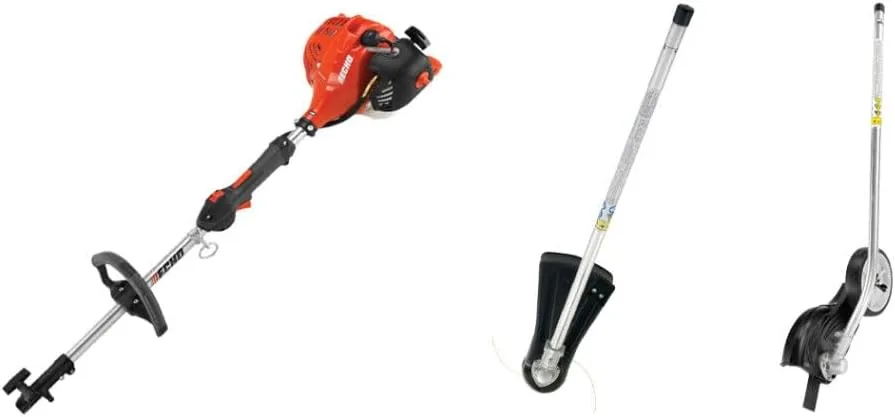
The ECHO PAS-225VP is the only gas kit on this page that ships with its own edger, a curved-shaft attachment with a steel blade, beside a Speed-Feed trimmer on one 21.2 cc engine. It is my premium pick for a property with long edges along paths and beds, where a pro-grade engine, a five-year consumer warranty and room to add attachments justify the fuel can. It suits a property where the edges run long enough to justify mixed fuel.
WHY I CHOSE THIS ✓
I put it second because no other gas kit here carries a blade edger and a line trimmer on one engine, and ECHO covers the consumer engine for five years. I pick it for a long property edge, where a cord and a battery run out of reach. A small lawn is the wrong place for it.
ECHO PAS-225VP 21.2 cc Gas Trimmer and Edger Kit Specs
Key Features:
- Curved-shaft edger: a 7.75 in blade under an open, clog-resistant shield cuts the edge, and it comes in the kit.
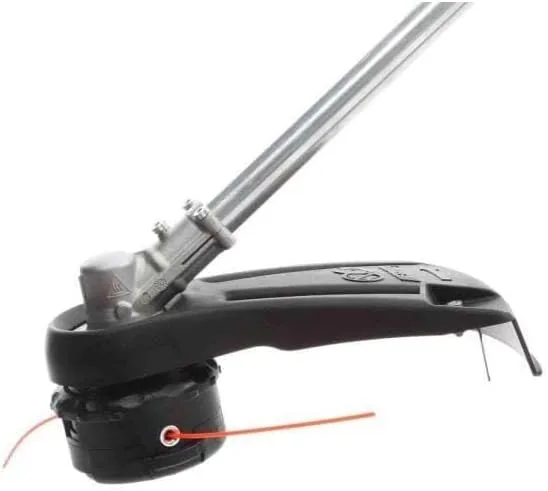
- Speed-Feed 400 trimmer: the straight attachment cuts a 17 in swath, according to ECHO, and takes 0.080 in or 0.095 in line.
- Tool-less coupler: you change attachments by hand, with no wrench, and ECHO says to use only its own attachments.
- Twelve listed attachments: ECHO lists them for the power head, and it names exclusions such as the straight-shaft edger.
- Line reload without taking the head apart: with the engine stopped and the plug lead off, align the arrows with the eyelets, push the line through and turn the knob.
- Throttle trigger: you set the speed with your finger, and the manual asks for about 80 percent near objects.
- Five-year consumer warranty: ECHO gives two years for commercial use, and a wrong two-stroke oil can void the engine cover.
The blade edger and the line head do different work: the edger cuts a vertical face beside a path or bed with a steel blade, and the line head trims. ECHO’s manual also lets the line head edge and scalp when you tilt it at a steep angle, so debris and stones do not ricochet back at you. I use the edger for the clean face and the line head for everything above it, and switching between them takes seconds at the coupler. On the house lawn edge I stop the engine, wait for the head to stop, pull the spark plug lead, take the trimmer attachment off and fit the edger, then reconnect the lead and walk the bed first, then refit the trimmer for the grass above it.
Weight is where this kit asks something of you. The power head is about 9.3 lb dry, the trimmer attachment adds 2.3 lb and the edger adds 5.17 lb, so the edger setup is about 14.5 lb before fuel, a sum from those manual figures. ECHO publishes no single kit weight and no run time per tank. ECHO recommends a shoulder harness for trimmer use, and the kit’s contents list does not name one.
The fuel routine is the second thing to weigh: the engine wants fresh 89 octane gasoline mixed 50:1 with a two-stroke oil that meets ISO-L-EGD and J.A.S.O. M345-FD, and ECHO says a wrong oil can void the engine warranty. I measure the mix the way I measure a sprayer tank, in a marked cup, outdoors, and I buy fuel in small amounts because the manual wants it used within about 30 days. That routine is the price of the engine, and it is why a battery tool suits a short edge better.
Carry the unit away from the fuel spot before you pull the rope. I do it every time, and I fill only with the engine off and cool, outdoors.
A gas tool never runs in a shed or a garage, even with the door open, and the muffler stays hot after the engine stops. Before you clear wound-up grass or change line, stop the engine, wait for the head to stop and remove the spark plug lead, and keep people at least 50 ft away with eye and hearing protection on.
ECHO gives a long-term storage routine that is longer than most: drain the tank, run the engine dry, put 7 cc of fresh two-stroke oil in the cylinder through the plug hole and leave the piston at the top. The manual also lists grease and filter checks at intervals, so read its schedule before the first season. ECHO publishes no noise or vibration figure for the trimmer, so I wear plugs and earmuffs together at the first pull.
Choose it if your edges run long, you already handle mixed fuel and you may add a hedge trimmer or pole saw to the same engine. Skip it if your yard is small, if you want a light tool or a quiet one, or if you do not want to measure two-stroke oil.
FINAL VERDICT
The PAS-225VP is a serious edging system on a pro-grade engine, and it asks for fuel, weight and upkeep in return. Pick it for long edges along paths and beds and for the option to grow it with attachments.
It is the gas edger kit I keep for the long edges.
3. WORX WG163 20V 12-Inch 2-in-1 Trimmer and Wheel Edger Best Value
The WORX WG163 puts a wheel edger, a line trimmer and two batteries in one box, and that is why it is my value pick for edging a small yard. It is a 20V Max, 12 in cordless 2-in-1 with push-button Command Feed, an edger wheel and a flower guard that keeps the line off your plants. It fits a small, flat lawn with a few beds and paths, for an owner who wants to edge without buying into a bigger system.

WHY I CHOSE THIS ✓
I put it third because a real edger wheel and two packs in one kit is the value for a small yard. The wheel, the second pack and the flower guard are what you pay for. It is the weakest tool here for long edges and thick growth, and I say so before you buy.
WORX WG163 20V 12-Inch 2-in-1 Trimmer and Wheel Edger Specs
Key Features:
- Wheel edger: you pull the telescoping shaft up and turn the head 90 degrees, and the wheel on the guard rides the edge.
- Command Feed: the motor pauses while you hold the button, and fresh line comes out when you release it.
- Automatic advance: the tool feeds about 0.25 in of line at each start from rest, and a rattle for about 5 seconds is normal.
- Two 2.0 Ah packs: one works while the other charges, which matters more on an edge than a bigger swath.
- Flower guard: an adjustable spacer guard shields plants and lawn ornaments from accidental trimming, in WORX’s words.
- PowerShare packs: WORX says the packs fit its PowerShare tools, and its 40V tools take two 20V packs.
- Three-year warranty: WORX covers batteries and chargers for three years too, and excludes trade use.
On the packed path beside my vegetable plot, the wheel does the steering and the flower guard keeps the line off the bed plants. The manual says to run the head at full speed before you edge, and it asks you to make sure line is fed out first. The 12 in swath is the smallest on this page, which suits short, tidy edges and a longer edge is slower work. At the end of a bed I stop, let the head spin down and check how much line is out before I start the next stretch.
Run time is the number you cannot plan around, because WORX publishes none for this kit, and it gives no charge time either. The kit’s charger is a small one, so I charge the second pack the night before a big edge. The two packs are the real value here: when the first one quits mid-bed I swap and keep going, and the tool weighs about 5.3 lb with a pack in it, according to WORX.
The weak spot showed at the fence line, where weeds stand tall and the single speed and 0.065 in line are all it has. The manual’s troubleshooting says to cut tall grass in stages, and I do, taking the top first and coming back for the rest. Do not expect it to cut thick weeds like a heavier tool: WORX allows no thicker line and no speed control, and the manual gives no thick-weed rating.
Wind the spool neatly. WORX’s manual says a badly coiled spool impairs the automatic line feed, and a tidy winding is the cheapest fix for a jam.
Switch off, wait for the head to stop and remove the battery before you change the spool, clear the head or carry the tool. Keep it out of rain and wet ground, because the manual forbids both.
The packs charge between 0 and 40 C and store between 0 and 45 C. Register the tool within 30 days, because the warranty drops to 24 months if you do not. The listing says WORX sells replacement spools under a program it calls free spools for life, so check that offer on the listing before you count on it. Line is a recurring wear item on an edging tool, and the manual says a neatly wound spool feeds best.
It suits a small flat yard with paths and beds when you want a wheel and two packs for a low price. Skip it if your edges run long, your weeds stand tall or you want a published run time. The 12 in swath and the 0.065 in line suit tidy work, and the second pack gives you a second run when the first quits. A buyer who already owns WORX 20V tools gets the most from it, since the packs are shared.
FINAL VERDICT
The WG163 is the best value on this page for small-yard edging with a wheel, because the kit gives you the edger, the trimmer and a second pack. Pick it for short, neat edges, and pick another tool for fence lines.
It is the budget wheel edger I recommend for small yards.
4. EGO MHC1603 Multi-Head 16-Inch Trimmer and Edger Kit Best Cordless Edger Attachment Kit
The EGO MHC1603 is the only cordless kit on this page that comes with an edger attachment in the box. One 56V power head carries a 16 in carbon fiber string trimmer and an 8 in blade edger, so a lawn edge gets the right tool without a gas can. Long straight runs along a lawn and a bed are where it works, for a buyer who wants a cordless system that can grow. I put it head to head with a DeWalt kit in DeWalt DCST970X1 against EGO MHC1603.

WHY I CHOSE THIS ✓
I ranked it fourth because a cordless edger blade is rare, and this kit gives you both heads for one battery system. The edger, the POWERLOAD and the wide attachment list make it the one to grow with. Its weakness is weight, and EGO publishes no figure with the pack.
EGO MHC1603 Multi-Head 16-Inch Trimmer and Edger Kit Specs
Key Features:
- 8 in blade edger: the EA0820 has a depth knob for edges up to 3 in deep and a guide wheel.
- POWERLOAD: one button winds a full spool of line in about 12 seconds, according to EGO’s manual.
- Two speed modes: low gives better control and a longer run, and the maker’s 75 minute edging figure is on low.
- Carbon fiber shaft: the straight shaft joins the power head through a coupler.
- Attachment list: EGO lists nine types for this power head, and only the trimmer and edger are in the kit.
The edger cuts a face into the soil with a blade, at a depth you set with the knob up to EGO’s 3 in limit, and I set it shallow for a bed edge. EGO’s manual says to cut at a steady pace and not to force the blade, and a blade that bogs down means you are going too fast. I use it along the lawn side of the garden bed, where a straight line matters more than speed, and the trimmer attachment finishes the grass above it.
The edger carries one hard limit: EGO says not to use it on or near gravel and to clear rocks, glass, nails and wire first. My gravel yard is off limits to it, so on that edge I stay with the line head. EGO gives up to 45 minutes with the trimmer and up to 75 minutes edging on low, with no test conditions. The power head and edger together weigh about 11.3 lb without the battery, and EGO publishes no weight with the pack.
To change attachments, switch off, wait for the head or blade to stop and take the battery out, then loosen the wing knob, press the release button and pull the shaft straight out. POWERLOAD winds a full spool in about 12 seconds, so I reload at the shed bench and not at the bed.
The edger is a blade tool and its guard clogs in wet or tall grass. Switch off, wait for the blade to stop and remove the battery before you clear it, and wear eye protection and hearing protection. For ground that stays tall, my list of the best trimmers for tall grass shows which trimmers cope with it.
The line is 0.095 in nylon twist line only, because heavier line overloads the motor, and winding with POWERLOAD again and again in quick succession can damage it.
It fits a lawn and bed edge when you want a blade edger without fuel and you may add attachments later. Skip it if your edge is mostly gravel, if you want a light tool, or if you only need a trimmer.
FINAL VERDICT
The MHC1603 is the cordless way to get a blade edger, and it carries a trimmer too. Pick it for a lawn and bed edge and skip it for gravel.
It is the cordless kit for a straight lawn edge.
5. WORX WG173 20V 13-Inch Brushless 3-in-1 Trimmer Edger Best 3-in-1
The WORX WG173 is the only trimmer here with three modes: line trimmer, wheeled edger and wheeled trimming that WORX calls mowing. A pivoting head and a telescoping shaft move it between them, and the wheels bolt on in three positions. Small to medium yards with long straight edges and flat grass suit it, for a buyer who wants a brushless 20V tool with a 4.0 Ah pack and a 13 in swath.

WHY I CHOSE THIS ✓
It earns fifth place because it is the only one here with a third mode, and a 4.0 Ah pack in the box. Three wheel positions and a 4.0 Ah pack do the work of two tools. It is not a tool for heavy weeds.
WORX WG173 20V 13-Inch Brushless 3-in-1 Trimmer Edger Specs
Key Features:
- Three modes: you set the wheels for edging, trimming or trimming with the wheels down, and the manual shows all three positions.
- Edging lock: pull the telescoping shaft up, turn it 90 degrees with the lower housing held, and it locks into edging mode.
- Command Feed: a push button feeds line while the motor pauses, plus an automatic advance of about 0.25 in at each start.
- 4.0 Ah pack: one larger pack gives WORX’s figure of up to 33 minutes, with no conditions stated.
- Brushless motor: WORX states the motor is brushless.
Moving between modes is the point of this tool. For edging, I switch off, wait for the head to stop and take the battery out, then hold the lower housing with a foot, pull the shaft up and turn it until it locks, as the manual describes. The wheels stay on for edging and I keep the wheels in the edging position the whole bed. On the strip beside my flowering plantings I edge the line first, so the cut does not spread into the flowers.
Run time is WORX’s best case. The maker says up to 33 minutes with the 4.0 Ah pack for medium yards and states no conditions, so I plan the edging in blocks of work, not minutes. The tool weighs 5.18 lb bare and 6.6 lb with the pack, according to WORX, and the extra pound comes with the 4.0 Ah pack.

The manual says to make sure the line is fed out and the motor is at full speed before you edge, so I always check the line first and let the motor spin up.
Switch off, wait for the head to stop and remove the battery before you change the wheels, wind the spool or clear the head. The head keeps spinning after switch-off, so lay the tool down only when it has stopped.
Register the tool within 30 days for the full three years. It charges between 0 and 40 C, and WORX says a short run time after charging can mean a battery that was charged only briefly. It shares packs with WORX’s PowerShare tools, and I check the maker’s tool list first.
Pick it for long straight runs on flat ground when you want wheels for edging and for trimming. Skip it if your weeds are thick, if you want a thicker line or a speed control, or if you need a published run time you can trust.
FINAL VERDICT
The WG173 gives the most modes on this page in one light, brushless tool. Pick it for flat yards with long edges and skip it for brush.
It is the three-mode edger for flat yards.
6. BLACK+DECKER BESTA510 6.5-Amp 14-Inch Corded Trimmer Edger Best Corded
The BLACK+DECKER BESTA510 is the corded model on this page, and it is the one to buy when your edges sit within reach of an outlet. A 6.5 amp motor drives a 14 in cut path, a wheeled edge guide turns the trimmer into an edger, and the whole tool weighs 6.5 lb with no battery to charge. It suits a small yard where plugging in beats charging a pack. I cover this model in full in my review of the BESTA510.

WHY I CHOSE THIS ✓
I chose it because the corded motor never runs out, and the budget price leaves money for a good extension cord. The edge guide, the cord retainer and the automatic feed are the parts I use. It is the wrong tool far from an outlet.
BLACK+DECKER BESTA510 6.5-Amp 14-Inch Corded Trimmer Edger Specs
Key Features:
- 6.5 amp motor: it runs as long as the cord reaches, so there is no pack to size or swap.
- Wheeled edge guide: with the tool switched off, stopped and unplugged, you turn the collar, rotate the lower housing 180 degrees and turn the collar back until it is tight.
- Automatic Feed Spool: the line feeds itself, and the manual says never to bump the head.
- Cord retainer: you double an extension cord about 8 in from its end and hook it into the slot so a tug cannot unplug it.
- 14 in cut path: BLACK+DECKER gives it as the cut path.
The manual says edging works best on edges deeper than 2 in and tells you not to use the tool to cut trenches. I edge the four-foot concrete path to the house door with the wheel on the pavement side and the line over the grass. If the line wears out fast, the wheel is too far from the edge, which is how BLACK+DECKER’s troubleshooting reads. The line also wears faster on sidewalks, abrasive surfaces and fences.
The cord decides where this tool works. BLACK+DECKER asks for an outdoor-rated extension cord of adequate gauge, secured in the retainer, with GFCI protection on the circuit, and it warns you to keep the cord away from the rotating line. I walk the cord out behind me, from the outlet in the machinery shed to the house lawn edge, and I never let it cross my path of travel. Check the manual’s cord table for gauge and length before you buy a cord. My list of the best corded trimmers covers five plug-in picks for small to medium lawns.
Switch off, wait for the head to stop and unplug the tool, then blow the dirt out of the vents with clean dry air at least once a week, with eye protection on. The manual asks for it.
Switch off, wait for the head to stop and unplug it before any adjustment, line change or cleaning. Edging throws stones and metal at speed, so keep people and pets 100 ft away and wear eye protection, gloves, heavy long pants and rubber-soled shoes.
The line is 0.065 in round nylon only, and the motor has one speed, the trigger. It is for home use, and the two-year warranty excludes commercial work. Never use it in rain or on wet grass; if it gets wet, let it dry for 48 hours. I compare it with a Craftsman corded model on line and warranty in BESTA510 against Craftsman CMEST900.
Reach for it if your edges run near an outlet and you prefer to plug in rather than charge a pack. Skip it if you edge far from power, along wet ground, or through brush and tall weeds.
FINAL VERDICT
The BESTA510 is the simplest edging tool on this page and the easiest to keep running. Pick it for a small yard near an outlet and skip it for a long property.
It is the plug-in edger I keep by the shed outlet.
7. CRAFTSMAN V20 CMCST900D1 13-Inch Trimmer Edger Kit Best Two-Speed Edger
The CRAFTSMAN V20 CMCST900D1 has a plain two-speed switch, HI for heavier growth and LO for a longer run, and it turns into an edger with a collar and a wire guide. It is a 13 in, 20V Max trimmer with automatic feed and a 2.0 Ah pack in the kit. It makes sense for a small yard owner who already uses CRAFTSMAN V20 tools and wants a simple edge tool. My list of the best trimmers for small yards covers nine easy-to-handle picks.

WHY I CHOSE THIS ✓
What put it seventh is that a two-speed switch and a turn-to-edge collar come together at this size. The switch lets me choose the run time before I start the edge. It is a small-yard tool, and I say so.
CRAFTSMAN V20 CMCST900D1 13-Inch Trimmer Edger Kit Specs
Key Features:
- Two speeds: the switch goes forward to HI for heavier growth and back to LO for a longer run.
- Turn-to-edge collar: you switch off, wait for the head to stop, remove the battery, pull the collar down and rotate the head 180 degrees counterclockwise until it snaps.
- Wire edge guide: it is for edge mode only, and CRAFTSMAN says edging works best on edges deeper than 2 in.
- Automatic feed: the head senses when line is needed, and the manual says never to bump it on the ground.
- V20 platform: the pack fits other CRAFTSMAN V20 tools, according to the maker.
Edging with this tool is a short routine: switch off, wait for the head to stop, battery out, collar down, head turned until it snaps, guide set. The guide is only for edge mode, and CRAFTSMAN says not to use the trimmer to cut trenches. On the tilled strip under the plum trees I keep the head well off the thin bark of trees planted in 2016, because the manual says to work away from walls, steps, stones and trees to reduce ricochet.
The two speeds are how I plan the pack. LO gives the longer run and HI shortens it, per the manual, though CRAFTSMAN publishes no minutes for either setting and no charge time. I start on LO and switch to HI only for the patch that stalls the head. A 2.0 Ah pack is a small one, so a long edge ends before the grass does.

Do not bump the head on the ground, because the feed trims the line itself. If sap or debris clogs the feeding hub, switch off, wait for the head to stop, take the battery out, then pull the spool cap and the spool, and clear it.
Wear ANSI Z87.1 eye protection, since everyday eyeglasses are not safety glasses, plus ANSI S12.6 hearing protection, long pants and sturdy rubber-soled shoes, and keep people and pets 100 ft away when you edge. Debris leaves the line at speed in edge mode.
The line is 0.065 in only, so heavier weeds cut slowly and wear the line, and CRAFTSMAN says heavier or serrated line overloads the motor. Charge the pack between 40 F and 104 F, and do not store it in a place that can reach 104 F, such as a shed in summer. The pack stays out of the charger for long storage, charged and dry. The motor is brushed, per the maker’s product page. For heavier growth, my list of the best trimmers for thick weeds names the tools built for it.
It makes sense if you already own CRAFTSMAN V20 tools and your yard is small to medium. Skip it if you need a published run time or weight, a thicker line, or a tool for weeds and long edges.
FINAL VERDICT
The CMCST900D1 is a simple edge tool with a real two-speed switch. Pick it for tidy lawn and bed edges on the V20 platform.
It is the two-speed edger for V20 owners.
8. ECHO SRM-3020T 30.5 cc Gas String Trimmer Best for Large Yards
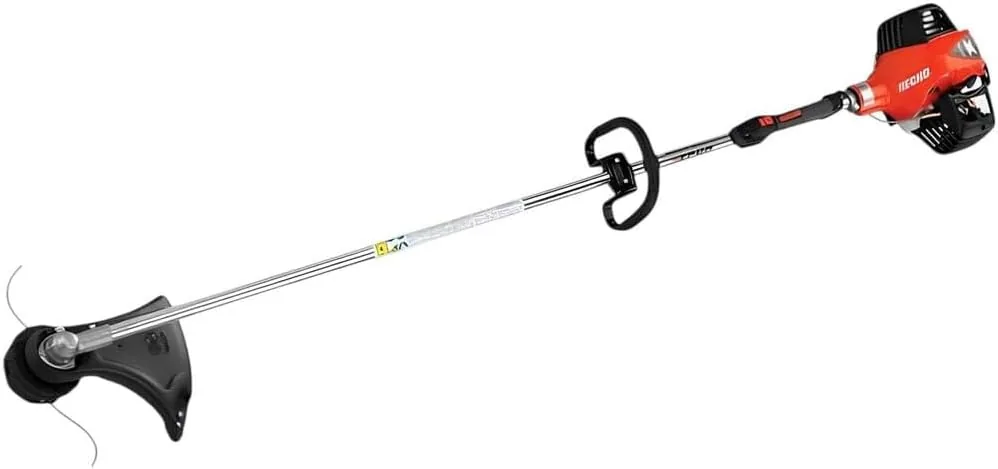
The ECHO SRM-3020T is the widest trimmer on this page, with a 20 in swath, a 30.5 cc engine and a 0.71 L tank. A high-torque gear case drives a Speed-Feed line head, and ECHO’s manual lets that head edge when you tilt it at a steep angle. Long open edges and big grass areas are its ground, for a buyer who accepts mixed fuel and weight.
WHY I CHOSE THIS ✓
I picked it because 20 in is a wide cut for open grass along a long edge. The 30.5 cc engine and big tank suit a field edge.
ECHO SRM-3020T 30.5 cc Gas String Trimmer Specs
Key Features:
- 20 in swath: ECHO gives the width.
- High-torque gear case: the ratio is 2.07 to 1 against 1.62 to 1 on the plain SRM-3020, and wide open speed is 10,700 rpm.
- Speed-Feed 500 LH: you reload without taking the head apart, and the head holds 8.2 m (27 ft) of line.
- 0.71 L tank: it is the largest tank among the gas models here.
- Rubber mount and grip: a rubber engine cushion and a rubber front grip are the vibration measures ECHO lists.
On the long edge where the house lawn meets the gravel yard, I tilt the head at a steep angle, as ECHO’s manual allows for edging and scalping, so stones and debris do not ricochet back at me. The line head does the edging, with no separate edger, so the cut is a line trimmer’s cut, not a blade’s. I keep the cutting head below knee height and wear eye protection, gloves, sturdy boots, long pants and plugs with earmuffs. I weigh it against Husqvarna’s gas model in Husqvarna 130L against Echo SRM-3020T.
The manual gives 12.3 lb dry without the cutter head, and ECHO’s page gives 13.9 lb with the head, both before fuel and without a harness. The weight is the cost of the size, and a harness is optional for this model. ECHO publishes no run time per tank, noise figure or vibration figure.
Run 2.0 mm line on lawn edges and 2.4 mm along a fence line, which ECHO’s manual allows. Tap the head only while it turns at normal operating speed, as the manual says.
Refuel with the engine off and cool, outdoors, and move the unit away from the fuel spot before you start it. Never run it in a shed or a garage, even with the door open, and stop the engine, wait for the head to stop and remove the spark plug lead before you clear wound line.
ECHO asks for fresh 89 octane gasoline bought within the last 30 days, mixed 50:1 with an approved two-stroke oil, and a wrong oil can void the engine warranty. The manual lists grease for the flex-cable shaft every 25 hours, and grass must be cleaned from the cylinder fins with the engine off and cool, because a blockage there is not covered.
Take it if your edges and grass areas are long and open and you accept mixed fuel. Skip it if you want a light tool, a quiet one, a blade or an edger attachment. For bigger properties, my list of the best trimmers for large yards covers models built for long jobs.
FINAL VERDICT
The SRM-3020T is the wide-swath gas pick on this page, and it edges with a tilted line head. Pick it for large open edges; small yards do not need it.
It is the wide gas trimmer for the long edges.
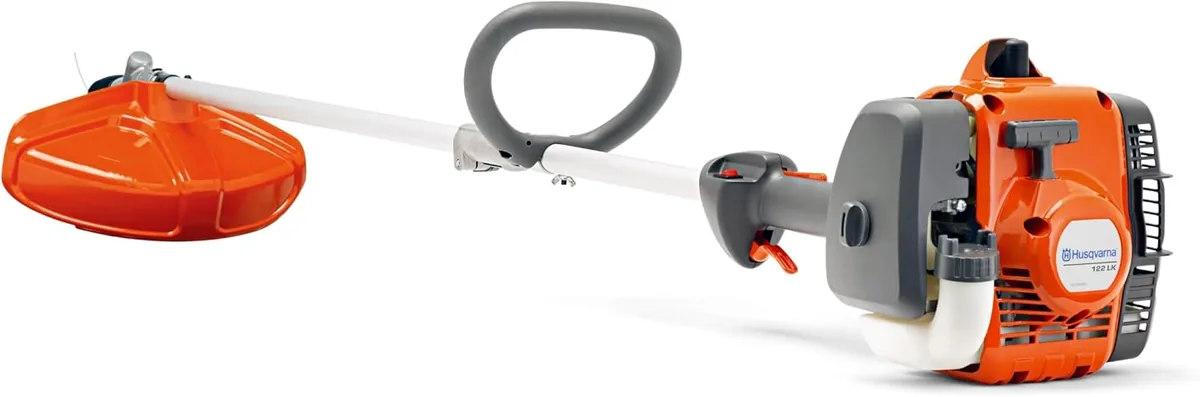
9. Husqvarna 122LK 21.7 cc Gas Trimmer With Edger Option Best Add-On Edger Attachment
The Husqvarna 122LK is a gas trimmer whose shaft splits at a coupling, and Husqvarna’s manual lists an edger among the attachments that fit it. The edger is a separate purchase with its own manual, so the 122LK edges only once you add one. It suits a buyer who wants a light 21.7 cc power unit for trimming now and an edger later.
WHY I CHOSE THIS ✓
It sits last because the edger is not in the box, though it is the one tool here that publishes noise and vibration figures. The coupling and the eleven listed attachments make it a sensible base for a gas edging setup.
Husqvarna 122LK 21.7 cc Gas Trimmer With Edger Option Specs
Key Features:
- Detachable shaft: with the engine stopped and the plug lead off, you turn the knob three times, hold the button and pull the attachment straight out.
- Eleven listed attachments: Husqvarna’s manual lists an edger, a hedge trimmer, a pole saw, a cultivator and a blower among them, all bought separately.
- Published noise and vibration: 90 dB(A) at the operator’s ear, and 3.6 and 3.5 m/s2 at the left and right handle.
- Purge bulb start: you push the bulb ten times, set the choke and pull the rope.
- 10.6 lb dry: the manual gives the weight without fuel, cutting attachment and guard.
The string head on the 122LK has no edging mode, and Husqvarna’s manual describes none. For an edge you fit the edger from the accessory list, which means a second purchase and its own hazards and manual. The coupling is what earns the price: three turns of the knob, a button, and the string head comes off the same power unit. Along the hedgerow base I trim at 80 percent throttle near the trunks and open it up in the grass between them, as the manual says.
Weight and noise are the two figures I check, and the manual gives 10.6 lb dry, without fuel, cutting attachment and guard, so the real figure in your hands is higher. Sound pressure at the operator’s ear is 90 dB(A), and the sound power level is 108 dB(A), so I wear plugs and earmuffs together. Vibration is 3.6 and 3.5 m/s2 at the handles, with a typical dispersion of 1 m/s2. After a long pass along the hedgerow base my hands tell me about it, so I stop and rest them.
Stop the engine, wait for the head to stop, pull the spark plug lead and let the unit cool before you touch it, because the bevel gear stays hot after the engine stops, as the manual says.
Husqvarna calls the 122LK a tool for occasional use, because continuous use can cause white finger. Stop and see a doctor if you feel pain, tingle or numbness in your fingers.
Mix fuel at 2 percent (50:1) with two-stroke oil for air-cooled engines, which is 2 1/2 fl oz of oil per US gallon, and do not mix more than a month’s fuel at a time. Never run it in a shed or garage, and move it 10 ft from the fuel spot before you start. Check the warranty term on the listing before you buy.
Consider it if you want a gas trimmer you can extend with an edger later and you like to see noise and vibration figures. Skip it if you want a kit that edges in the box, a long run per tank or no fuel.
FINAL VERDICT
The 122LK is a flexible gas power unit that edges once you add the maker’s edger. Pick it for light trimming now and a system you can grow, and look elsewhere for an edger in the box.
It is the light gas unit that grows into an edger.
How to Choose the Best String Trimmer for Edging
Six checks sort the edging tools. Start with how the tool edges, because that decides what you can cut and what it throws at you. I run these checks in order on my own lawn and bed edges.
Pick the Edging Setup Before the Brand
An edger cuts a vertical face with a blade, and a string trimmer edges with a spinning line, so the setup tells you what you are buying. The difference between an edger and a trimmer comes down to the blade: an edger digs a defined face into the soil, and a trimmer’s line shaves the grass at the border. I read the edging page of the manual before I do anything else, because the maker’s own words decide what the tool may do.
| Setup | How it works | What it asks of you |
|---|---|---|
| Rotated head with a wheel | You pull the shaft up and turn the head 90 degrees so a wheel rides the edge | Keep the wheel close to the edge, because line wears fast when it is too far away |
| Rotated head with a guide | The head turns 180 degrees and a guide drops down beside the line | Use the guide in edge mode only |
| Blade edger attachment | A separate attachment carries a steel blade on the power head | Clear stones, glass and wire first, and keep it off gravel where the maker says so |
| Tilted line head | The manual lets you tilt the head at a steep angle | Angle the head so debris does not ricochet back at you |
Some makers’ manuals go the other way and say the tool is not an edger, and they tell you to keep the line parallel to the ground. A trimmer like that should not edge your walk, whatever its listing says.
A blade edger is the other route, and a compatible attachment carries its own steel blade.
Check the Manual First
One maker’s manual says the guard cannot protect you from flying debris when the tool is tilted to a right angle to the ground. Read your own manual’s edging section before you tilt any trimmer.
Match the Swath and the Line to the Edge
Swaths on this page run from 12 in to 20 in. The swath cuts the grass beside the edge, and a narrower head turns more tightly around a bed or a drip line. The line sets how well the head cuts and how fast it wears: the best string trimmer line for edging is the type and size your head’s manual allows, because a heavier line overloads the motor.
- 0.065 in: the only line most of the battery and corded models here accept.
- 0.080 in to 0.095 in: what the gas heads here take, while the EGO head takes nylon twist line of 0.095 in at most.
- Wear: several makers say line wears fast along sidewalks, stone, brick and fences, so keep the line on the grass side of the joint.
I match a thin line to a lawn edge and a thicker one to the fence line. Spare spools stay in a sealed bag, because the best trimmer string for edging is no use once it dries out and snaps.
Weigh the Whole Tool at the End of a Long Edge
Weight feels small at the start of an edge and large at the end. Makers weigh a tool bare, with the battery, or dry without fuel, so compare figures only on the same basis. My list of the best lightweight string trimmer picks compares the weight each maker states.
| Tool type | Figure | What it includes |
|---|---|---|
| 12 in cordless kit | About 5.3 lb | With the battery, per its maker |
| 14 in corded trimmer | 6.5 lb | No battery to count, per its maker |
| 13 in cordless kit | 9.0 lb | With the battery, per its maker |
| Gas power head | About 9.3 lb | Dry, without any attachment |
| Blade edger attachment | 5.17 lb | Attachment only, without the power head |
I read the basis of every weight figure before I trust it, and I carry a tool through a full bed before I judge it.
Pro Tip
Add the battery or the fuel to a bare figure in your head before you compare, and ask what a weight leaves out.
Choose Cordless, Corded or Gas for the Edge
Cordless suits an edge you can finish on one or two packs, corded suits an edge within safe reach of an outlet, and gas suits long work when you accept fuel, noise and upkeep. Match the power to the longest edge you cut, because run time, cord length and tank size set it. My ranking of the best overall string trimmers sorts the cordless, corded and gas models by yard and budget.
| Power type | What you supply | What it limits |
|---|---|---|
| Cordless | A charged pack, and a second one for a long edge | Run time, which several makers do not publish |
| Corded | An outlet and an outdoor-rated extension cord | Reach, and a cord the line can cut |
| Gas | Fresh mixed fuel and a pull cord | Weight, noise and exhaust, and never a shed |
Noise belongs in the choice. NIOSH sampled 80 landscaping workers and found they had significantly more noise and carbon monoxide exposure with fuel-powered leaf blowers, string trimmers and chainsaws than with battery versions (1). The best cordless string trimmer edger is the one whose pack outlasts your longest edge. Hands matter too: a laboratory test with two participants measured 3.5 to 5.8 m/s2 on gloved hands for a grass trimmer and 1.1 to 2.0 for a backpack blower (2). I rest my hands between beds whichever power type I use.
Read the Edging Safety Rules Before the First Cut
Edging points the line at the ground beside a hard surface, so stones leave sideways. A US emergency department analysis estimated 81,907 lawn trimmer injuries from 2000 to 2009, and the eye accounted for 42.5 percent of them (3). In a Taiwanese series of 26 lawn trimmer open-globe eye injuries, 57.7 percent involved an intraocular foreign body, most often metal (4). Eye protection is not optional, and the guard stays on.
- Eyes, ears and body: ANSI Z87.1 eye protection every time, hearing protection with every power type, and gloves, sturdy non-slip boots and heavy long pants where your manual asks for them.
- Bystanders: several manuals here ask for 100 ft around people and pets when you edge, and published eye trauma cases include bystanders as well as operators (5).
- Direction: work away from walls, steps, stones and trees, as the manuals say, to lower ricochet.
- Trees: keep the line off young trunks, because the line strips bark.
Stop Before You Touch the Head
Switch off, wait for the head to stop, then remove the battery, disconnect the spark plug wire on a gas model or unplug a corded one. Only then clear the head or change line.
Compare Warranty Terms and the Battery Platform
Terms here run from two years to five years, and most cover home use only. Read what each warranty says about work for pay. A pack fits only its maker’s approved tools, so match the platform name and the tool list and never the voltage alone. My ranking of the best battery string trimmer picks lists the pack platform each model uses.
- Registration: one maker cuts the term to 24 months unless you register within 30 days.
- Packs: a WORX cordless string trimmer and edger takes the maker’s PowerShare packs, and WORX says its 40V tools take two 20V packs.
- Gas: a wrong two-stroke oil can void one engine’s warranty, so read the oil rule before the first fill. My list of the best gas string trimmer picks covers the power, weight and warranty of each gas model.
The best cordless string trimmer and edger for you sits on a platform you will keep, because a second pack is part of owning any cordless edger.
My Overall Verdict
How a tool edges, and how long I could hold it at the end of a bed, decided my ranking more than any single spec.

1. BLACK+DECKER LST136 40V MAX 13-Inch Trimmer Edger Kit Best Overall
For a house lawn with beds, paths and a walk, when you want one cordless tool that converts to an edger.

2. ECHO PAS-225VP 21.2 cc Gas Trimmer and Edger Kit Best Premium
For long edges on a property, when you want a blade edger and a line trimmer on one gas engine.

3. WORX WG163 20V 12-Inch 2-in-1 Trimmer and Wheel Edger Best Value
For a small flat yard, when you want a wheel edger and two packs at a low price.
Check the edging page of the manual, match the power to your longest edge and read the weight with its basis. For most yards with lawn, bed and path edges, the BLACK+DECKER LST136 is the best string trimmer for edging on this page. My Black+Decker LST136 trimmer review goes through its setup and its limits in more detail.
Why BLACK+DECKER LST136 40V MAX 13-Inch Trimmer Edger Kit Might Be the Best Choice
I put the BLACK+DECKER LST136 40V MAX 13-Inch Trimmer Edger Kit first because it edges and trims on one battery. A turn of the head and a dropped guide change the job.
The trade is run time and reach. BLACK+DECKER publishes no minutes, and the 13 in swath and 0.065 in line suit lawn work, so a long fence line or heavy weeds are its limit.
What puts it first:
✓ Edger conversion: the head turns and an edge guide drops into place.
✓ Dial: six stops from run time to power.
✓ Feed: automatic, with no bumping.
✓ Charger: BLACK+DECKER says the fast charger restores a depleted battery in about 2 hours.
✓ Warranty: three years for home use, per the manual.
Frequently Asked Questions
What is the best edger trimmer to buy?
The best edger trimmer to buy on this page is the BLACK+DECKER LST136, a cordless trimmer that converts to an edger with a guide. A buyer who wants a separate blade edger on a gas engine should look at the ECHO PAS-225VP, and a small-yard buyer on a budget should look at the WORX WG163.
What is the difference between an edger and a whipper snipper?
A whipper snipper is another name for a string trimmer, which cuts with a spinning nylon line, while an edger cuts a vertical face along a lawn edge with a blade. Several trimmers here convert to edge with a wheel or a guide, and two kits carry a separate blade edger.
What does an edger do?
An edger cuts a clean vertical line where a lawn meets a path, a bed or a driveway, so grass stops creeping over the border. The models on this page do it with a rotated trimmer head or a blade edger attachment, and every manual asks for eye protection and a wide gap around bystanders.
What is the most durable trimmer string?
Trimmer string has no proven durability winner, so use the line type and diameter your head’s manual lists, because a heavier line overloads the motor. The EGO head takes nylon twist line up to 0.095 in, most battery models here take only 0.065 in round line, and several makers warn that sidewalks and fences wear line fast.
How to use string trimmer for edging?
To use a string trimmer for edging, set the head or guide into the edge position your manual describes and keep the line on the grass side of the edge. Wear eye protection, switch off, wait for all movement to stop, then remove the battery, unplug the cord or pull the spark plug lead before you touch the head.
References
- Alexander BM, Graydon PS, Pena M, Feng HA, Beamer BR. Hazardous exposures and engineering controls in the landscaping services industry. Journal of Occupational and Environmental Hygiene. 2025;22(3):189-202.
- Oh J, Chen N, Boyd C. Laboratory evaluation of occupational exposure to hand-arm vibration (HAV) during grounds maintenance equipment operations. Ann Agric Environ Med. 2023;30(2):384-389.
- Leinert J, Griffin R, Blackburn J, McGwin G. The epidemiology of lawn trimmer injuries in the United States: 2000-2009. J Safety Res. 2012;43(2):137-139. doi:10.1016/j.jsr.2012.03.001
- Zhang JR, Hsieh TC, Chang FL, He MS. Lawn trimmer-related open-globe injuries in Taiwan. Retina. 2022;42(5):973-980. doi:10.1097/IAE.0000000000003402
- Lubniewski AJ, Olk RJ, Grand MG. Ocular dangers in the garden. A new menace: nylon line lawn trimmers. Ophthalmology. 1988;95(7):906-910. doi:10.1016/s0161-6420(88)33076-9
Safety Note: Read your manual first. A string trimmer or brush cutter throws debris with force, so clear stones, glass and wire from the area before you cut. Wear impact-rated eye protection with side coverage that meets ANSI Z87.1, hearing protection, gloves, heavy long pants, long sleeves and sturdy slip-resistant boots (steel-toe where your manual says so). Keep people and pets at least as far away as your manual says (50 feet in some manuals, 100 feet in others), and stop if anyone comes closer. Keep the correct guard fitted, use only the cutting attachments, handles and harness the maker approves for your exact tool, and never replace trimmer line with wire. A blade can kick sideways when it hits a stump or a thick stem, so fit the handlebar and harness your manual requires for blade work, hold both handles firmly and keep secure footing. Before you clear a jam, clean the tool or change line, a blade or an attachment, switch it off, wait for all movement to stop, then remove the battery, unplug the cord or disconnect the spark plug wire. Refuel a gas model outdoors with the engine off and cool, away from flames or sparks, and move away from the fueling spot before starting, as far as your manual says (often 10 to 30 feet); never run it in a garage, shed or other closed space. For a battery model, use only the maker’s battery and charger, charge it within the temperature range in your manual and never use a damaged or swollen pack. For a corded model, use a GFCI outlet, keep the cord clear of the cutting line and avoid wet conditions.