

The best kindling splitter turns small pieces of wood into stove-sized kindling with a hammer and a fixed wedge, and it needs no motor, no cord and no fuel. I put all five of these hand-struck tools to work on pruning wood from my 3.7-acre apricot and plum orchard, so I know which ring fits a thick limb and which tool belongs in a camping bag.
My top pick is the Kindling Cracker King XL Cast Iron Kindling Splitter, the one with the largest printed ring opening on the list. None of these tools splits big rounds; for those you need a powered log splitter and its manual.
Best Kindling Splitter Reviews 2026: 5 Hand-Struck Tools I Put to Work
Five tools made the list, and you strike every one of them from above. Each manual kindling splitter here is a different shape: two Kindling Cracker sizes, a cast steel frame with carry handles, a cast iron arch with five fins and a 3 inch steel wedge for a bag. None splits rounds for the stack.
1. Kindling Cracker King XL Cast Iron Kindling Splitter Best Overall
The Kindling Cracker King XL is the kindling splitter I pick when the pieces are too thick for a small ring: a 9 in safety ring on a 17 in tall cast iron frame. It is the best kindling splitter on this page for a homeowner who feeds a stove, fire pit or pizza oven from orchard limbs and wants one tool that stays put on a block by the shed.

WHY I CHOSE THIS ✓
I chose it first because it has the largest opening with a printed size on this page, and an orchard produces wide pieces. According to Kindling Cracker the frame is one piece with no welds, joints or moving parts, so the only thing that moves is your hammer. I recommend it before any smaller ring for that reason.
Kindling Cracker King XL Cast Iron Kindling Splitter Specs
Key Features:
- 9 in safety ring: the inside diameter sets the widest piece that can stand in the tool.
- 17 in tall frame: the maker says the extra height makes longer pieces of firewood possible.
- One-piece cast iron: according to Kindling Cracker, there are no welds, no joints and no moving parts.
- Fixed splitting head: the wedge stays still, so all the force comes from your strike.
- Broad 10.5 in base: the maker prints this stance and builds the bolt holes into it.
- Heavy frame: 21 lb by the maker’s product weight keeps it steady on a block.
- Brush-off upkeep: Kindling Cracker calls the tool virtually maintenance-free.
You stand a piece in the ring and strike it with a blunt instrument, which Kindling Cracker lists as a hammer, a mallet or even another piece of wood. The wedge head is fixed inside the frame, so the force comes from your strike and the piece drops onto the teeth. A thick section of plum limb stood in the 9 in opening with room to spare, and that is why I pair this size with orchard pruning. Kindling Cracker lists the jobs for the kindling as a fireplace, a fire pit, a pizza oven, a sauna, a barbecue and a smoker, and the ring decides which of my limb pieces make the cut.
At 21 lb by the maker’s product weight, this is a tool you park. The base has a broad 10.5 in stance with bolt holes built in, so I set it on a block by the machinery shed and left it there instead of carrying it to the pile. Parked on the block, it stayed where I put it while I worked down a stack of limb pieces. A heavy base changes the work: I stood on level ground, took my hand off the top of the piece, struck, and watched the base stay where it was.
The 17 in frame is the detail a spec table hides. On a low stump the top of the ring sat at a height where I struck downward without stooping, and on bare ground I bent for every piece. The maker says the taller frame suits longer pieces, so I cut my limb sections to a length that stood in the ring without leaning. A piece wider than 9 in does not belong in this tool, and a knotty fork that will not sit upright goes back to the saw.

Take your free hand off the piece before every strike, and bolt the base down through its holes before you start. The box holds only the tool, so the fasteners are yours to buy, and a piece that leans in the ring pulls the strike off center, so stand each one square.
Wear safety goggles and work gloves when you split, strike with a solid hammer you can aim accurately, and keep the top of the piece clear of your free hand. Kindling Cracker says the ring keeps fingers away from the blade, and I still treat the strike zone as off limits.
Upkeep is a brush after use. The cast iron is heavy to lift, and I lifted it with both hands onto the block. I matched a hammer I already keep around, chosen for how well I can aim it and not for its weight, since the maker gives no hammer weight.
Buy it if you split kindling from thick limb pieces, want one tool that stays on a block and can bolt it down. Skip it if you carry your tools to a campsite, if your pieces are small enough for a smaller ring, or if you split rounds for the stack, because rounds need a powered log splitter. The bigger ring suits an orchard, and it does not suit a camping bag.
FINAL VERDICT
For a stove fed from orchard limbs, the King XL has the largest printed opening, at 9 in, and a broad bolt-down base. Choose it when the work happens at one spot and the pieces run thick.
It is the wide-ring kindling splitter for orchard limbs.
2. Kindling Cracker Original Cast Iron Kindling Splitter Best Premium
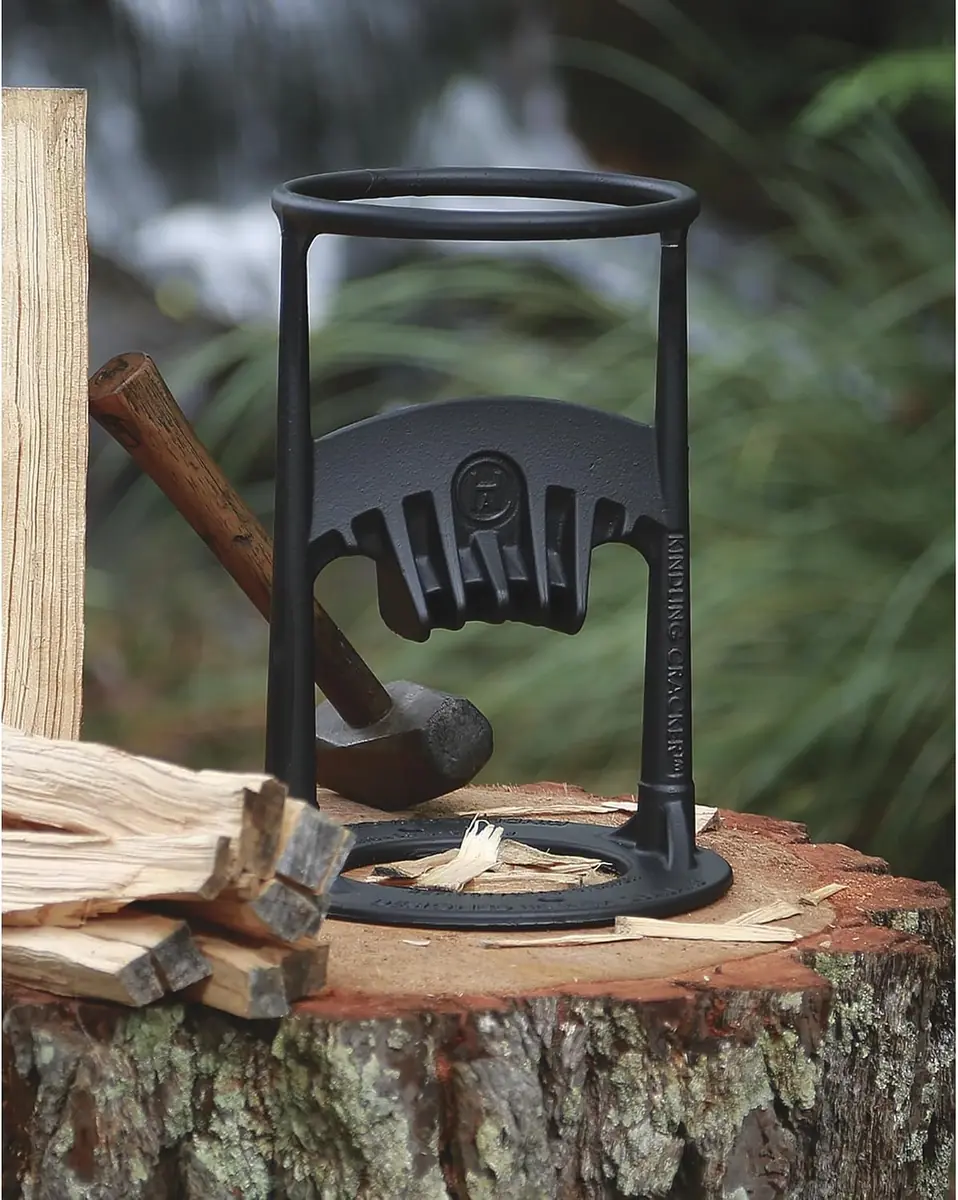
The Kindling Cracker Original is the kindling splitter for stove kindling from thin pieces: a 6.5 in safety ring on a 12 in cast iron frame, struck from above with a hammer. It is the second-dearest pick on this page, a step up from the cheapest end of the list, and I rate it the best kindling splitter here for twigs and thin limb pieces that fit a 6.5 in ring.

WHY I CHOSE THIS ✓
I chose it for the safety ring that sits around the wedge, because a ring is the first thing I look at on any hand-struck tool. Kindling Cracker calls it a patented cast iron ring that keeps your hands completely away from the fixed wedge. I still lift my free hand off the piece before every strike. That ring is the reason this size earns the second slot.
Kindling Cracker Original Cast Iron Kindling Splitter Specs
Key Features:
- 6.5 in safety ring: the opening sets the widest piece that stands in the tool.
- 12 in cast iron frame: a modest height that keeps the ring low on a block.
- One solid piece: Kindling Cracker says there are no welds, no joints and no moving parts.
- Fixed splitting wedge: it never moves, so your strike does the work.
- Safety ring around the wedge: the maker calls it a patented ring that keeps your hands away from the wedge.
- Bolt holes in the base: they fix it to a stump or workbench, and the base also stands alone.
- Brush-off upkeep: the maker says a brushing and maybe a touch of paint is all it needs.
Place a piece inside the ring and strike it with a hammer, a mallet or another piece of wood, and the wood drives down onto the wedge, as Kindling Cracker describes. Thin pruning pieces from the plum rows came apart into stove kindling without trouble. A forked piece sat badly in the ring and rocked until I turned it so it stood square, which is why I cut such pieces shorter before they go in. Pieces cut square at both ends stand upright in the ring and give the wedge an even bite, and a piece cut at a slant leans, so I recut it.
The listing gives an item weight of about 10.6 lb, light enough that I lift it with one hand from the shed shelf to the block. The round base has bolt holes for a stump or workbench, and it also stands on its own on a flat pad. On the concrete pad it stayed put for light pieces, and on gravel I bolted it to a block.
Late winter, after dormant pruning, is when I reach for it. The thin apricot pieces that are too thick for a pruner but too small for a log splitter are exactly its job, and the split pieces stack in a bucket beside the block. The limit is the ring: it opens to 6.5 in, the maker prints no log length limit, and anything wider belongs with a saw or a larger machine. Kindling Cracker lists the fire pit, the pizza oven, the sauna, the barbecue and the smoker as jobs for the kindling it makes, and I use it for the stove and the fire pit by the house.
Brush the iron off after each session and keep it dry, which is all the upkeep Kindling Cracker says it needs. The wedge stays still, so a weak result points to my aim, and I fix the aim first.
Wear safety goggles and work gloves, and strike with a solid hammer you can aim. The listing for this tool says to keep bystanders, pets and children at least 20 feet away while it is in use, and I clear split pieces from my feet between strikes.
It stands freestanding on a flat pad or bolts to a block. The one thing that annoyed me was matching bolts to the holes, since the maker lists no fasteners. The cast iron has one job, and the ring around the wedge keeps the job small: it holds a thin piece upright until the hammer lands.
It suits you if you make stove or fire pit kindling from small pieces and want a one-piece iron tool you can bolt to a block or leave freestanding. Skip it if your pieces run wider than the ring, if you split rounds for the stack, or if you want a tool that arrives with a hammer and a mount. Its 12 in frame is easy to store on a shed shelf.
FINAL VERDICT
The Original is the right size for twigs and thin limbs, with a ring around the wedge and a base that bolts down. Pick it when your pieces fit inside 6.5 in.
It is the small-ring kindling splitter for thin limb pieces.
3. KABIN Kindle Quick Cast Steel Kindling Splitter Best Value
The KABIN Kindle Quick is the best kindling splitter for the money on this page when you want carry handles and a bolt-down base: 12 lb of cast steel in an X-shaped frame with a wide mouth and angled teeth across the middle. Its value comes from the handles, the stance and the budget price, and its limit is a mouth that comes with no printed size.

WHY I CHOSE THIS ✓
I put it third for value: carry handles, a bolt-down X base and a wide mouth at a budget price. KABIN builds the base so it doubles as a crate for the wood you split. I recommend it for a household that moves its kindling tool between a block and a stump, and I mark it down only for the missing mouth size. The handles and the base earn it the third slot.
KABIN Kindle Quick Cast Steel Kindling Splitter Specs
Key Features:
- Extra wide mouth: KABIN says it takes wider logs than other tools, and it prints no size.
- Tall base: the maker says the height allows longer pieces.
- Slanted alternating teeth: KABIN says they split the wood at an angle and prevent jams.
- X-shaped base: the maker says this stance is more stable than other base types.
- Bolt holes: they fix the tool to a stump or another anchor.
- Cast-in handles: you carry the tool by them, and the base also works as a crate for split wood.
- Cast steel with a black coating: KABIN says the steel is harder and less prone to rust than cast iron.
The piece goes into the wide mouth and you strike it from above. KABIN says the slanted alternating teeth split the wood at an angle and prevent jams. On a knotty piece of plum wood the teeth bit in at an angle, and the piece came apart instead of skidding off the side.
The X-shaped base is the other selling point. KABIN says it is more stable than other base styles, and the bolt holes let you fix it to a stump or another anchor, which I did on a block by the shed. The cast-in handles let me carry the tool to the pile, and I used the base to carry the split pieces to the stove. The tall base also lifts the ring of teeth to a workable height on a low block.
The mouth is where I spent the most time, because KABIN prints no size for it. I tried my thickest pieces in it first and worked down, and anything that would not sit upright in the mouth went back to the saw. At 12 lb by the listing’s item weight it still carried to the pile in one hand, and its splayed base sat flat when I set it back on the block. That wide stance is the reason I rate it above the lighter tools for steadiness. Wider than the mouth means the saw, and I mark such pieces before I start so I do not try them on the teeth. The mouth stays the check I run on every new batch of pieces.
Fix it through the bolt holes before you start, and carry the split pieces away in the base when the stack is far from the block. Choose a block where you can stand square to the tool, so your strike comes down in a straight line.
The head is a row of angled teeth and I treat it as sharp metal. Goggles, work gloves and a free hand kept off the top of the piece apply to every strike, and the split pieces get cleared from my feet before the next one.
I brush off sap and bark and keep it dry in the shed. I stand it on its base with the handles up, so I lift it by the handles without reaching across the teeth, and the black all-weather coating is KABIN’s answer to rust. It needs a shelf that fits the 10.25 x 9 x 15.5 in footprint. The one thing I wanted was a printed log size, which the listing leaves out. It is the tool I pick out of the shed for a mixed pile of thin and thicker pieces.
Pick it when you want carry handles, a stable base and a mouth wider than a small ring at a budget price. Skip it if you need a printed log size before you buy, if you want the biggest ring, or if you split rounds for the stack. It is the value pick for a mixed household of small pieces and the occasional wider one.
FINAL VERDICT
The Kindle Quick gives a stable X base and carry handles for stove kindling at a budget price. It is the pick for a household that wants a movable tool and will test its widest pieces in the mouth first.
It is the carry-handle kindling splitter for a budget.
4. Poffattr Cast Iron Kindling Splitter L With Mounting Screws
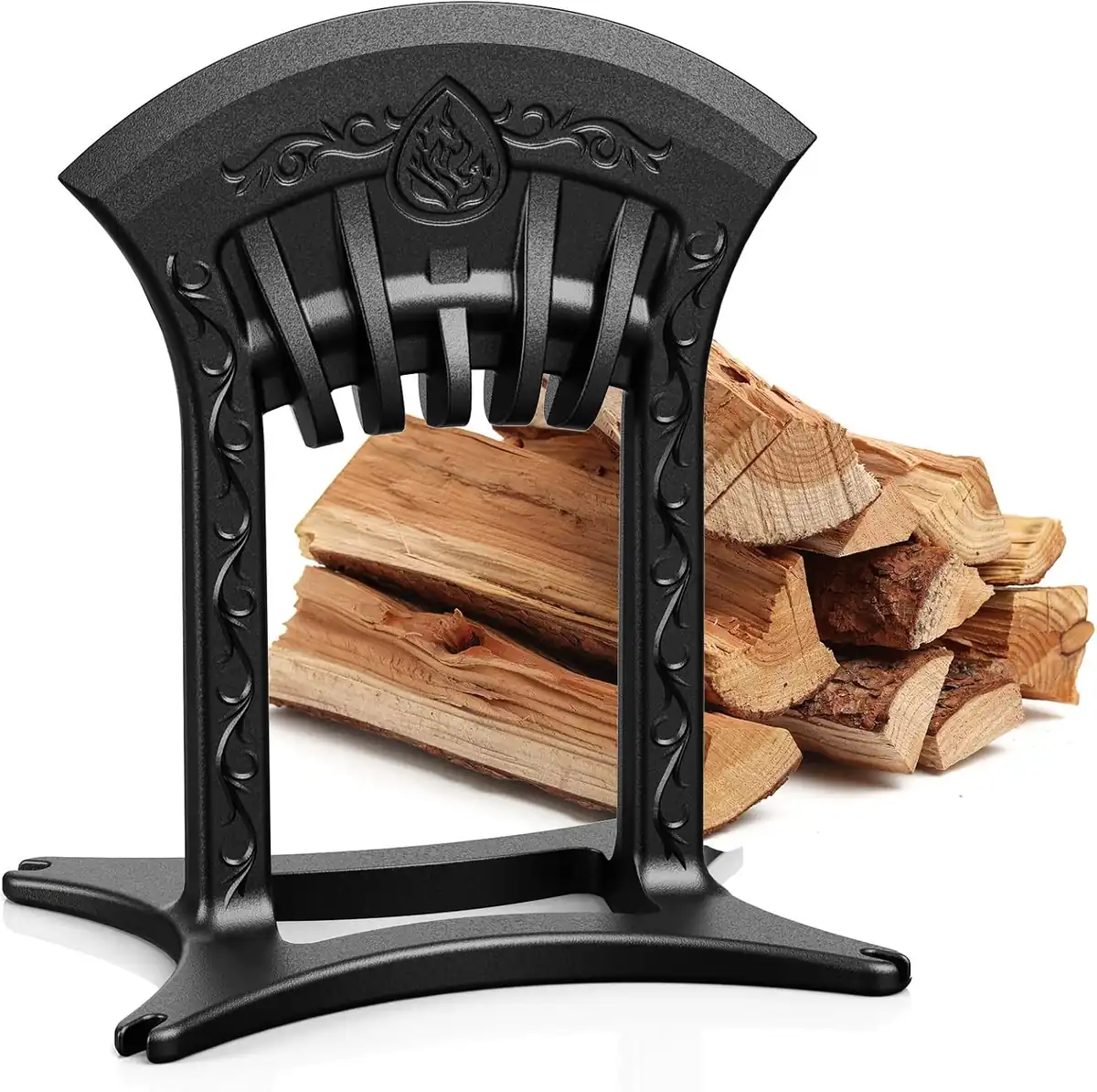
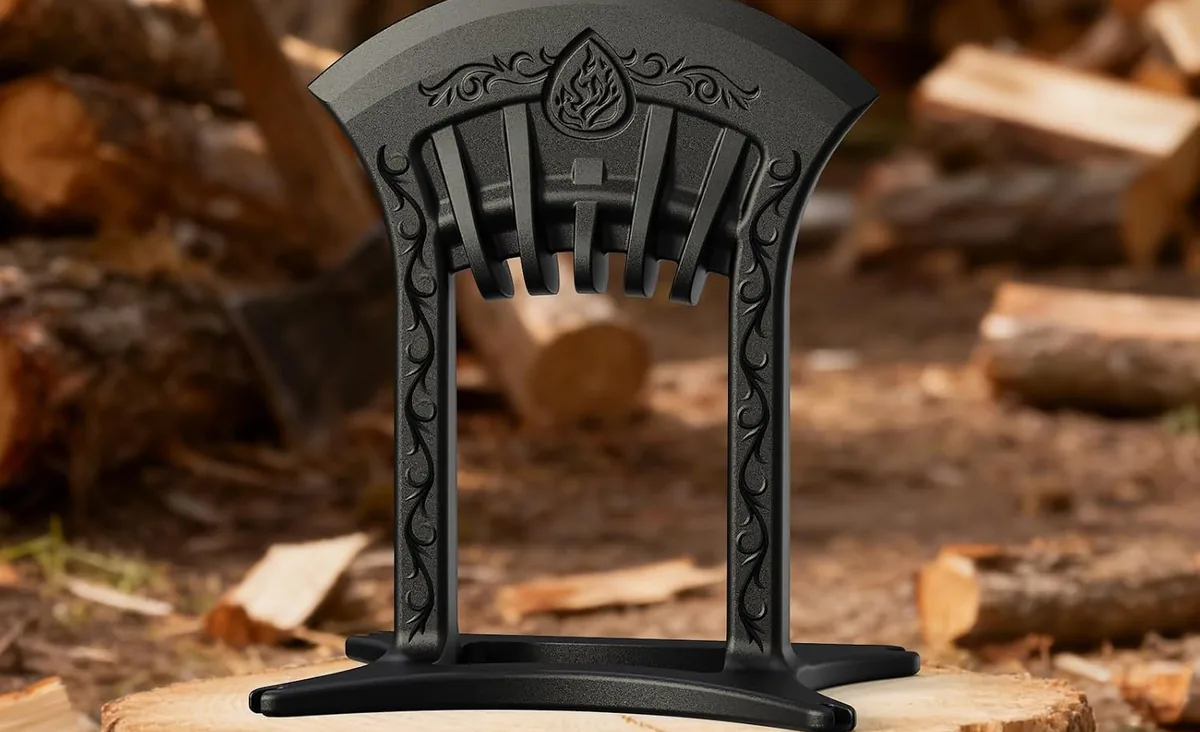
The Poffattr Kindling Splitter L is the kindling splitter that arrives ready to mount: four screws in the box, four holes in the base and a black safety cover for the arch edge. It is a one-piece cast iron arch with five fins under it and an 8.27 in opening, made for small to medium pieces.
WHY I CHOSE THIS ✓
I chose it for the screws and the cover, two small things that save a trip to the hardware store and a scraped hand in the shed. Poffattr packs both in the box with the splitter. That makes it the easy tool to set up this week.
Poffattr Cast Iron Kindling Splitter L Specs
Key Features:
- Four screws included: the box holds the screws for the four holes in the base.
- Black safety cover: it fits over the arch edge when you store or carry the tool.
- 8.27 in opening: the listing gives this width and a height of 9.84 in.
- Five fixed fins: the piece stands on them and is struck from above.
- Powder-coated finish: the maker says the coating resists rust.
The listing sums up the method in four steps: screw the base down, place the piece on the fins, strike it with a hammer and collect the split. I screwed the base to a stump by the shed, set a short length of apricot on the fins and took my hand away before each strike. The 8.27 in opening suits fruit-tree wood, because fruit-tree wood is small in diameter, and the maker’s own wording is small to medium wood.
The cover is a small detail I used every time. It slips over the arch edge when I finish, and the edge stays covered in the tool shed where I reach past it for other things. At about 7 lb by the listing’s figure, the splitter is easy to carry to a new spot, though it is made to be screwed down. I go through the cover and the mounting in more detail in my Poffattr splitter review.
Drive the four screws into a stump or a thick board before the first strike, and put the cover back on when you finish.
A hammer is not in the box, so choose a solid one you can aim, and wear goggles and work gloves. Keep your hand off the top of the piece before every strike, because the arch edge is sharp.
Upkeep is a brush and a dry shelf. Poffattr says the powder coating resists rust, and I still store the iron dry with the cover on. The tool is made for fixed use, so portable work needs a firm base of your own.
Choose it if you want a kindling splitter you can mount the day it arrives and cover when you finish. Skip it if you need a printed log size, if you split pieces wider than the opening, or if you want a tool for a campsite.
FINAL VERDICT
The Poffattr is the mount-it-today kindling splitter, with its own screws and a cover for the edge. Choose it when you have a stump or board and want to start splitting without a hardware run.
It is the kindling splitter that comes with its own screws.
5. Qinmorelixy 3 Inch Mini Kindling Splitter Best Portable
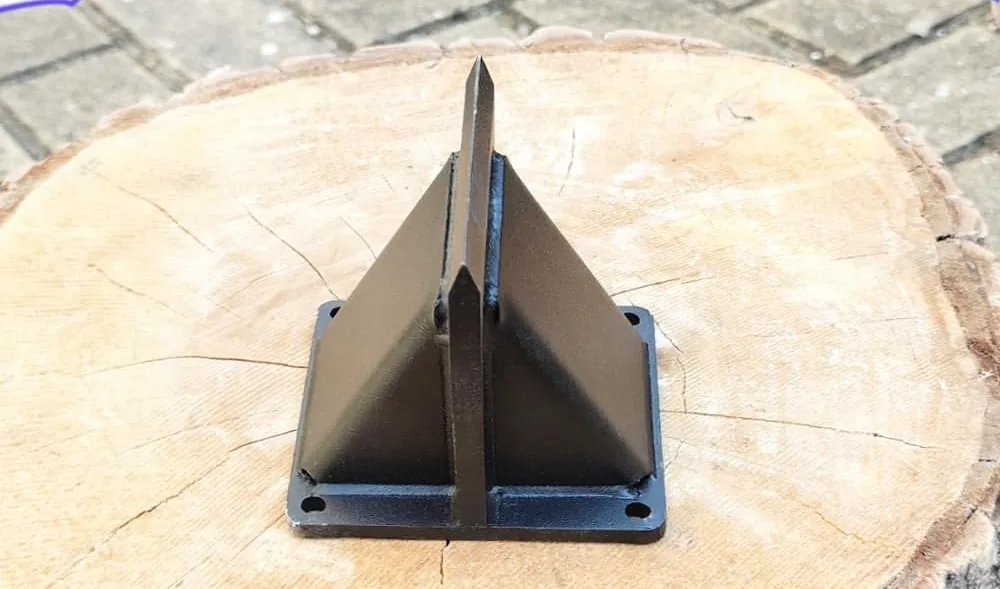
The Qinmorelixy 3 Inch Mini Kindling Splitter is the portable kindling splitter on this page: a steel wedge on a pyramid base, 3.1 in on each side and 1.5 lb by the listing. It makes small pieces into 1/4 in to 1 in kindling, and it goes into a camping bag.
WHY I CHOSE THIS ✓
I picked it for portability: a 3.1 in wedge and 1.5 lb by the listing’s figure go anywhere a hammer goes. I recommend it as the second kindling tool for a campsite or a patio fire pit, and I leave the stove stack to a bigger tool.
Qinmorelixy 3 Inch Mini Kindling Splitter Specs
Key Features:
- Pyramid base: the wedge sits on a square foot plate that measures 3.1 in on each side.
- Four pre-drilled holes: they fix the tool to a stump or a flat surface.
- Kindling result: the listing names 1/4 in to 1 in pieces as the result.
- Hardened steel blade: the maker says the steel is heavy-duty with a rust-resistant coating.
- Camping size: the listing says it fits in camping gear, a glove box or a kitchen drawer.
You stand a small piece on the blade and tap it with a hammer, which is the listing’s own description. I fixed the wedge to a stump first and stood the piece on the blade before I let go. It turns short lengths of dormant pruning wood into pencil-thin kindling, and it handles nothing larger; the maker’s own wording is small logs.
Screws are not in the box, so I used my own through the four holes. Unmounted, a 1.5 lb wedge can shift under a hammer blow, and the listing itself tells you to mount it for stable backyard use. In a tool bag it weighs next to nothing, and that is where it lives between jobs.
Fix it down with your own screws before you strike, and keep your hand clear of the blade while you tap.
Wear goggles and work gloves, and keep your hand off the top of the piece before every tap. The blade is a sharp steel edge, so I carry the wedge in a bag and never loose in a pocket.
It takes no upkeep beyond a wipe and a dry bag. The mini wedge is for kindling only, so the listing’s pieces of 1/4 in to 1 in are the job. I keep my own screws in the same bag so the wedge mounts anywhere I find a stump.
Reach for it if you make small kindling at a campsite, a fire pit or a stove from short, thin pieces and want a tool that fits a bag. Skip it if you split thick limb pieces, if you need a ring around the wedge, or if you want a tool that arrives with its screws.
FINAL VERDICT
The mini wedge is the pocket-sized choice for small kindling and travel. Pick it when portability beats opening size.
It is the pocket kindling splitter for camp and fire pit.
How to Choose the Best Kindling Splitter
Six checks decide whether a kindling splitter earns its place on your block: the opening, the weight and mounting, the material, the striking tool, the wood and the budget. Start with your widest piece, because it sets the opening you need.
Match the Opening to Your Widest Piece
A kindling splitter shows a ring, an arch or a base size, and makers rarely print a log limit. A 9 in ring and a 6.5 in ring are widths of the space the wood stands in, and neither is a promise about the biggest piece the tool takes. Measure your widest piece across its middle and keep it well inside the opening, because a piece that fills the ring has no room to stand square. My Kindling Cracker review covers the 6.5 in ring on the smaller tool.
| Printed size | What it tells you |
|---|---|
| Ring or arch opening | The width of the space the wood stands in |
| Frame height | How tall the tool stands, which sets your stooping height and the length of piece it holds |
| Tool size, such as 3 in | The footprint of the tool; the maker may print a separate result size |
I measure my thickest limb sections with a folding rule before I judge any opening. For logs rather than limbs, my list of the best splitter for small logs goes through five picks.
Pro Tip
Cut every piece square at both ends and to the same length before you start. A short, square piece stands upright in the opening, and a long or slanted piece leans.
Choose the Weight and the Mounting for Your Spot
Makers print weight on different bases. A product weight, a listing item weight and a shipping weight describe different things, so compare a tool only with a weight on the same basis, and expect a heavier tool to stay put on a block.
- Freestanding: the base stands on a flat pad and moves when you do.
- Bolted down: bolt holes in the base fix it to a stump, a block or a workbench, and the fasteners are often yours to buy.
- Wall mounted: a wall mounted kindling splitter is a lever tool fixed to a wall, and the five tools on this page stand upright on a block instead.
My work pad by the shed is level concrete, so I bolt a tool to a block there and carry nothing to the pile.
Compare Cast Iron, Cast Steel and Welded Steel
A cast iron kindling splitter is one casting, and one maker says its frame has no welds, no joints and no moving parts. Another maker calls its cast steel harder and less prone to rust than cast iron, and a mini wedge is a welded steel part. Rust claims are the makers’ own, so I keep every iron tool dry and brush it clean after use. My Kindling Cracker against KABIN comparison puts cast iron next to cast steel.
- Cast iron: heavy, one piece, steady on a block.
- Cast steel: the maker’s claim is hardness and rust resistance.
- Welded steel wedge: small, light and made for the smallest pieces.
Plan the Striking Tool and Your Hand Position
Most kindling splitters ship without a hammer, and the maker of one ring-and-wedge design lists a hammer, a mallet or even another piece of wood as the striking tool. Pick a solid hammer you can aim, because the wedge never moves and every bit of force comes from your swing. I settle three things before the first strike:
- Eyes and hands: safety goggles and work gloves on.
- Free hand: off the top of the piece before every strike.
- Footing: split pieces cleared away from my feet.
Key Takeaway
A bigger opening takes wider wood, a heavier base stays put, and a solid hammer you can aim does the work.
Split Dry Wood Cut to Length
University of Tennessee Extension puts seasoned firewood below 20 percent moisture and green wood normally above 60 percent, measured on a dry-weight basis, and says wood dries only when it is cut to length, split, stacked and exposed to breezes (1). A USDA Forest Service pilot study of small birch found that firewood cut to length and stacked dried faster than whole trees left in tree length (2).
Moisture also decides how the kindling burns. A stove study found that burning rate and emissions followed the moisture content of the fuel (3), and the USDA Forest Products Laboratory describes interlocked-grain wood as exceedingly difficult to split radially (4). I stack my split pieces off the ground near the shed so the next batch is dry.
Set a Budget by Price Tier
A kindling splitter sits in the budget tier, and all five picks here do. The tools with the biggest rings sit near the top of that tier, and the 3 inch wedge is the small kindling splitter at the bottom. The table shows what a little more money buys inside it.
| Spend more on | What you get |
|---|---|
| A larger opening | Wider limb pieces fit the ring |
| More weight | A base that stays put when you strike |
| Carry handles | An easier move to the pile |
I spend the extra on the opening, because the opening is what I cannot change later.
Log Splitter for Kindling or a Hand-Struck Tool
A powered log splitter can make kindling, but its job is rounds, and its manual sets the log size, the power source and the shutdown order you must follow. Hand injuries from powered log splitters appear in clinical case series, including a Vermont series of disabling hand injuries (5), and a Swedish study linked them to unsafe machines and to patterns of use such as two people at the machine (6). For rounds with a hand pump instead of a motor, my list of the best manual splitters is the place to start.
A hand-struck tool has no ram and no motor, and it still has a wedge and a hammer, so it asks for the same respect. I pick the hand-struck tool for kindling and small pieces, and I read the manual of a powered splitter before I use one on rounds.
Kindling Splitter Safety Before the First Strike
A kindling splitter has a fixed wedge and a hammer. The five tools here have no motor, so the shutdown steps for powered splitters do not apply, and a powered log splitter needs the full shutdown steps in its own manual.
Eyes, Hands and Footing
Wear safety goggles and work gloves when you split. University of Minnesota Extension advises goggles or safety glasses whenever you strike a steel wedge by hand, foot and shin protection, and split pieces cleared away so you keep your footing.
Take your hand off the top of the piece before every strike. Kindling Cracker says its cast ring keeps your fingers away from the wedge. That is a design claim and it does not replace the habit.
Bystanders and Site
Keep children, pets and other people out of the work area, at the distance the maker prints, and stop if anyone comes closer. The listing for the Kindling Cracker Original says at least 20 feet, University of Minnesota Extension says the same distance for splitting by hand, and no distance makes a work area safe on its own: keep watching it.
Set the tool on firm, level, dry ground or bolt it to a block that does not rock. Never let a child strike, and never carry a tool loose in a pocket.
My Overall Verdict
Three kindling splitters stand out, and the order follows the size of the pieces you split. The ring decides more of the job than the brand. My Kindling Cracker Original vs King XL comparison shows how much the ring size changes the job.

1. Kindling Cracker King XL Cast Iron Kindling Splitter Best Overall
For orchard limbs and wide pieces, bolted to a block.

2. Kindling Cracker Original Cast Iron Kindling Splitter Best Premium
For stove kindling from thin pieces, with a ring around the wedge.
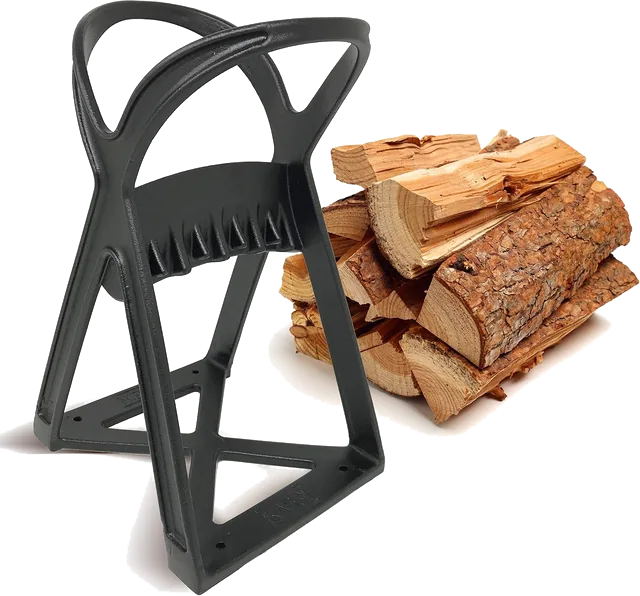
3. KABIN Kindle Quick Cast Steel Kindling Splitter Best Value
For a household that wants carry handles and a stable X base on a budget.
I judge a hand tool by what it lets me do with the wood I have, so I measure my widest piece first and pick the ring that clears it.
For a stove fed from an orchard, the King XL is the best kindling splitter on this page.
Why Kindling Cracker King XL Cast Iron Kindling Splitter Might Be the Best Choice
The Kindling Cracker King XL Cast Iron Kindling Splitter is my top pick because it has the largest printed ring opening on the list, and an orchard produces wide pieces. Kindling Cracker says the frame is one piece with no moving parts, so your hammer is the only thing that moves.
The trade-off is weight: 21 lb by the maker’s product weight. I park it on a block by the shed and bolt it down. My King XL kindling splitter review covers its 9 inch ring for thicker kindling.
Here is what puts it at the top:
✓ Ring: a 9 in inside diameter, the largest printed opening on the page.
✓ Frame: 17 in tall, which the maker says takes longer pieces.
✓ Build: one-piece cast iron with no moving parts, as the maker describes it.
✓ Base: a 10.5 in stance with bolt holes for a stump or workbench.
✓ Upkeep: a brush after use, which the maker calls virtually maintenance-free.
Frequently Asked Questions
Is a kindling splitter worth it?
A kindling splitter is worth it when you split small pieces for a stove, fire pit or pizza oven on a regular basis, because the fixed wedge and ring hold the wood for your strike. It is poor value for rounds and for anyone who splits kindling once a year, since the tools here take small pieces only.
How to make a kindling splitter?
To make a kindling splitter, fix a wedge or a set of fins upright on a heavy base, bolt the base to a stump or a bench, and stand the piece on the wedge to strike it with a hammer. The cast and steel tools on this page are built that way in one piece.
How to split kindling with a hatchet?
The first step in splitting kindling with a hatchet is the hand-splitting precautions University of Minnesota Extension gives: goggles or safety glasses, foot and shin protection, and bystanders at least 20 feet away. A cast kindling splitter holds the wood on a fixed wedge, so the strike lands on a hammer-struck tool and no blade swings toward your legs.
What is a wall mounted kindling splitter?
A wall mounted kindling splitter is a lever tool fixed to a wall or post that pushes a flat blade down onto a small log, so you work a lever by hand instead of swinging a hammer. None of the five tools on this page mounts that way, because they stand upright on a block or bolt to a stump.
What is a kindling cracker splitter?
A kindling cracker splitter is a cast iron stand with a ring on top and a fixed wedge inside, where you stand a small piece of firewood in the ring and strike it with a hammer, a mallet or even another piece of wood. The Kindling Cracker Original and King XL on this page are two sizes of that design.
References
- Taylor A. Moisture Content of “Seasoned” Firewood. W179. University of Tennessee Institute of Agriculture; 2014.
- Sampson GR, Gasbarro AF. Drying Firewood in a Temporary Solar Kiln: A Case Study. Research Note PNW-RN-450. USDA Forest Service, Pacific Northwest Research Station; 1986.
- Price-Allison A, Lea-Langton A, Mitchell EJS, et al. Emissions performance of high moisture wood fuels burned in a residential stove. Fuel. 2019;239:1038-1045.
- Ross RJ, ed. Wood Handbook: Wood as an Engineering Material. General Technical Report FPL-GTR-282. USDA Forest Service, Forest Products Laboratory; 2021.
- Kristiansen TK, Seligson D. Log splitter injuries to the hand. J Occup Med. 1981;23(6):400-402.
- Lindqvist A, Nilsson O. Hand injury from powered wood splitters: machine safety, patterns of use and injury events. Int J Occup Saf Ergon. 2011;17(2):175-186.
Safety Note: Only an adult who has read the manual and understands the controls should use a log splitter, never a child or anyone tired or impaired. The ram and wedge push with tons of force and can crush or cut off fingers, hands and feet: never put your hands or feet between the log and the wedge, the ram or any part of the splitter while it moves, keep your fingers out of cracks that open in the log, load each log by holding its sides, never its ends, and run the control only with your hand, never tying down, blocking or bypassing a two-hand control. Keep your hands clear during both the splitting stroke and the return stroke. Follow the manual’s unloading sequence; WEN 56207 requires the entire cycle to finish and the ram to retract fully before removing split wood. Never straddle or step over an operating splitter or reach or bend over it to retrieve a log. One person operates the control and also loads the log unless the exact manual explicitly permits a loading helper. Never let anyone hold the log while you operate the splitter. If a loading helper is permitted, wait until that helper has left the operating area and reached the manual’s required clearance before moving the control. Keep children, pets and other people out of the work area, at least the distance your manual prints for that exact model, and stop if anyone comes closer. No single distance is safe for every splitter. Set the splitter on firm, level, dry ground outdoors, never on a slope, ice, mud or slippery ground. Secure it against movement as the manual directs; Yardmax requires blocking the front and back of both wheels. Work in daylight or good artificial light as the manual permits, and keep split pieces cleared away from your feet. Never run an electric splitter in rain or damp conditions. Split one log at a time, with the grain and square-cut ends, within every size and weight limit your manual gives, including any minimum length. Check for nails, wire and other foreign objects. Reject knotted, curved or uneven logs where the manual forbids them; Boss ES7T20 forbids uneven logs, including knotted or curved logs. Stop at the manual’s splitting time limit and follow its procedure rather than forcing the log. Wear the eye protection your manual specifies: Champion calls for ANSI-approved safety glasses, and Boss calls for safety goggles or safety glasses with side shields. Also use a face shield where your manual asks for one, hearing protection with a gas engine or wherever your manual asks, sturdy boots (steel-toed where your manual asks), gloves exactly as your manual directs, and no loose clothing, jewelry, drawstrings or untied long hair. Pressurised hydraulic fluid can inject through your skin from a hole too small to see: never check for a leak with your hand, pass cardboard or wood over the spot instead, and see a doctor at once if fluid hits your skin, even if the wound looks small. Before freeing a stuck log, checking or adding fluid or oil, servicing, cleaning, sharpening, adjusting, moving, towing, storing or leaving the splitter, complete the shutdown for its power type. Electric: release the controls, switch the motor off, wait until every moving part has stopped completely, including the ram and any flywheel, then unplug it from the outlet by the plug. Gas: release the controls or return the hydraulic control lever to neutral as your manual directs, turn the engine off, wait until every moving part has stopped completely, including any flywheel, let the engine and muffler cool, then disconnect the spark plug wire and secure it away from the plug. Manual hydraulic: stop pumping and release the pressure exactly as your manual directs. On every hydraulic splitter, relieve hydraulic pressure as the manual describes before servicing or touching a hose, fitting, cap or the wedge area. Never remove the hydraulic oil cap or vent plug while the machine is running or hot, and never adjust pump or valve pressure settings. Before moving, towing or storing a gas splitter, close its fuel valve where fitted as the manual directs. Free a stuck log only by the manual’s procedure, including its instructions for any powered clearing step, never with your hands. Refit every guard before restarting. Use the grounded supply your manual requires and GFCI protection. If an extension cord is permitted, use a grounded three-wire outdoor-rated cord of the manual’s specified gauge and length. Keep connections away from water, keep the cord clear of moving parts and your feet, and never handle the plug with wet hands or disconnect it by pulling the cord. Refuel a gas splitter outdoors in a well-ventilated area with the engine off and cooled for several minutes, following any longer cooling period in its manual. Keep smoking, flames and sparks away, never overfill the tank, and wipe up spills before starting. Keep the manual’s clearances from surrounding objects and combustible materials. Never run it indoors or in a garage or shed, even with the doors open, because the exhaust contains carbon monoxide. Tow a towable splitter only as its manual describes, with towing chains attached exactly as the manual specifies, and never faster than the speed it prints. Store it dry and out of children’s reach, following the manual’s fuel-storage restrictions; Champion 100236 prohibits storing the unit indoors with fuel in its tank. Follow your manual’s lifting and handling instructions and every printed log-weight limit. Take breaks and stop when you are tired.