

This BILT HARD gas log splitter review ends in a buy for one kind of yard: a woodpile far from any outlet, a level pad to work on and logs cut to 21 inches or less. Skip it if you want to split upright or need a published weight, log diameter or warranty before you pay. I set it up on the gravel pad in front of my machinery shed, a short roll from the orchard where the plum and apricot limbs come from. Below I cover the specs, the first start, splitting, stuck logs, towing, upkeep and the drawbacks.
BILT HARD Gas Log Splitter Review Verdict for Yard Work
The BILT HARD is the gas powered hydraulic log splitter I recommend to a homeowner who cuts rounds at the pile and has no cord within reach. According to BILT HARD, it pairs a 209cc engine with a 2-stage 14 GPM gear pump, takes logs up to 21 inches long and works horizontally only. Its 22-ton rating comes from the product listing. Anyone who wants vertical splitting or a machine that carries a stated weight belongs with another model. My best log splitter for firewood ranking sets it against six other models.
- Who it is for: a property owner with a level pad, an engine-sized pile and a second adult for assembly.
- What it does best: it runs without a cord and accepts the longest logs among the splitters I compared, 21 inches as printed.
- Main trade-off: you fill two oil systems and purge air from the hydraulic one before the first split, and several figures a buyer wants are not printed.

BILT HARD 22-Ton Gas Splitter Specs at a Glance
Two rows decide most purchases: the maximum log length, because it is a hard ceiling, and the mobility row, because it tells you how the machine gets to the pile. The rest of this horizontal log splitter reads as plain engine and pump figures. My horizontal log splitter picks compare five machines by log size and mobility.
| Row | BILT HARD 22-Ton Gas |
|---|---|
| Splitter type | Gas hydraulic, 2-stage gear pump |
| Engine | 209cc; horsepower not published by the maker |
| Rated tonnage, product listing’s rating | 22 ton |
| Max log length, maker’s figure | 21 in |
| Max log diameter | Not published by the maker |
| Cycle time, maker’s figure (basis not stated) | 7 seconds |
| Orientation | Horizontal only |
| Mobility | Two 13 in pneumatic wheels, support leg, towable |
| Weight | Not published by the maker |
| Warranty | Not published by the maker |
Setting Up the Splitter and the First Start
Nothing about the first start is plug and play. BILT HARD’s related 20 ton manual asks for a second adult during assembly, and the engine ships without oil, so the work starts with a shopping list: engine oil, hydraulic fluid and fuel.
Full Shutdown Box
Shutdown before you free a stuck log, check or add fluid or oil, touch a hose, fitting or the wedge, clean, sharpen, adjust, move, tow, store or leave the splitter. Never use your hands to free a stuck log, and never check a hydraulic leak with your hand. Electric splitter: release the controls, switch the motor off, wait until every moving part has stopped completely, including the ram and any flywheel, then unplug it from the outlet by the plug. Gas splitter: release the controls or return the hydraulic control lever to neutral as your manual directs, turn the engine off, wait until every moving part has stopped completely, including any flywheel, let the engine and muffler cool, and pull the spark plug wire off and secure it away from the plug. On a hydraulic splitter, relieve the hydraulic pressure as your manual describes before servicing it or touching any hose, fitting, cap or the wedge area. Never remove the hydraulic oil cap or vent plug while the machine is running or hot. Before moving, towing or storing a gas splitter, close the fuel valve where fitted as its manual directs. Use only the stuck-log procedure your manual gives, including its instructions for any powered clearing step, and refit every guard before restarting.
I fill the engine with SAE 10W-30 first, because the manual warns against cranking or starting the engine before it has been properly filled. Then I fill the hydraulic reservoir on a cold, level machine with the engine off. Only after that do I start the engine and run the lever out and back several times to chase the air out of the oil.
Air in the oil means a second check. Before you do this, complete the full shutdown for your splitter in the shutdown box above. With the machine cold and level again, I look at the level against the marks: the manual wants it above the COLD line and never above the HOT line on a cold unit, or oil is pushed out through the vent. Fill and level checks happen outdoors, on firm, level, dry ground, in daylight only, never on mud, ice, brush or snow, with seven feet of clearance from anything combustible.
Plan to buy more fluid than the box holds. The related 20 ton manual calls for 2.5 gallons of hydraulic oil, while its packing list shows 0.9 liters, and BILT HARD does not print the fill quantity for the 22 ton, so I fill to the level marks.
How It Splits in Real Work
A log splitter pushes a ram or a wedge with tons of force, and every habit below follows from that.
The Control Lever and Where Your Hands Stay
The lever sits on top of the valve, and you push it forward with one hand to split and back with one hand to return the push plate. I set each round on the beam holding its sides, step back with both hands off the wood, then push the lever. My free hand stays away from the wedge and the beam slide until the plate has fully returned, as the manual’s crush warning says.

Keep your hands clear of the log and the wedge during the return stroke too. One person runs the control, and the manual allows no helper to hold anything. Research on powered wood splitters found that injured patients on wedge splitters often named more than one person at the machine as a cause (1).
Log Length and Setting a Round on the Beam
This BILT HARD log splitter prints a 21 inch maximum log length and no diameter, so I treat 21 inches as a ceiling and never as a target. I cut every round to length at the saw, with square ends, and I split only with the grain, as the manual says. A round that will not seat or split is not forced.
As a 22 ton log splitter it carries a rating, not a measured force, and the 7 second cycle is BILT HARD’s printed figure with no basis stated. Across a stack of rounds I notice the wait for the ram, and I use that figure as a reference only. My hydraulic log splitter picks put gas, electric and manual units side by side.
Cold Mornings and the Warm-Up
Cold changes the routine. The manual wants the hydraulic oil above 10 F before the engine starts, because cold oil can damage the pump, and below 32 F it asks you to run the wedge out and back several times before splitting. On a frost morning I wait for the ram to move smoothly before the first round goes on.
A Stuck Log, a Leak and Gas Safety
A knotted fork from an old plum limb is the round most likely to stall the ram. The related 20 ton manual’s method is to push the control lever in the reverse direction and let the splitter strip the log from the wedge. If the log stays stuck, the machine goes off, and only then does that manual allow a sledge hammer and a crow bar. Before you do this, complete the full shutdown for your splitter in the shutdown box above.
Never free a stuck log with your hands, and never hammer on the wedge before the machine is off.
Hydraulic fluid can escape through a hole too small to see and inject under the skin. Never check for a leak with your hand: pass cardboard or wood over the spot and look for discolouration, and see a doctor at once if fluid hits your skin. If the instructions that come with your unit give a different stuck-log method, follow those. A review of high-pressure injection injuries to the hand found that the location of the injury and the injected material influenced the risk of amputation (2).
A gas engine adds carbon monoxide. BILT HARD’s manual says that using the splitter indoors can kill you in minutes, so I run it outdoors only and never in a shed or garage with the door open. Reports of poisonings from portable gasoline generators show what that exhaust does when an engine runs in a garage or beside a window (3).
Refuel outdoors with the engine off and cooled, with no smoking, flames or sparks nearby, never overfill the tank, and wipe spills before you start. The related manual asks for seven feet of clearance from combustible material. Start the engine only with the procedure in its engine manual, and note that Champion warns that rapid starter-cord retraction can pull your hand and arm toward the engine faster than you can let go.
Moving, Towing, Noise and Storage
On the gravel yard I roll it by hand to the pile, with the engine off. The 13 inch wheels crossed packed soil and gravel without a fight, and at the pile I set the support leg down and block both tires before I load a round, as the manual directs. Before you do this, complete the full shutdown for your splitter in the shutdown box above.
Towing is a separate decision. BILT HARD’s related 20 ton manual says never to exceed 25 MPH, to attach safety chains and lock the splitter to the hitch, to carry no riders or cargo, and to block the wheels before you leave it. I do not tow it myself, the hitch type and ball size are not published, and your own instructions come first if they differ. Before you do this, complete the full shutdown for your splitter in the shutdown box above.
A gas powered log splitter is loud, so I put hearing protection on before the pull cord. NIOSH recommends keeping exposure to 85 dBA over an eight-hour workday and halving the time for each 3 dBA increase (4). The manual asks for eye protection, gloves and work boots, and no loose clothing. Keep children, pets and other people well clear of the work area, as your manual describes.
Upkeep Between Uses
BILT HARD’s maintenance table puts hoses, hydraulic fittings, nuts and bolts and the moving parts on an each-use check, and it asks for grease on the beam surface. Before you do this, complete the full shutdown for your splitter in the shutdown box above.
Before every start, check that the wedge, ram, beam, hoses and fittings are undamaged and tight, the fluid is at the level the manual gives and every guard is in place. If the splitter leaks, groans, vibrates or moves the ram on its own, stop, complete the full shutdown and have it fixed before you use it again.
Storage and leaving it follow the same rule. Before you do this, complete the full shutdown for your splitter in the shutdown box above. The manual then wants the machine clean and dry, with all surfaces lightly lubricated, and indoors or under cover through severe weather and winter, away from children and from any spark or flame, with fuel stored the way the engine manual says. It also says never to leave the splitter unattended while the engine is running.
Who Should Buy the BILT HARD and Who Should Skip It
- Buy it if your woodpile sits away from an outlet, you cut rounds to 21 inches or less and you have a level pad and the patience to fill two oil systems and purge air from the hydraulic one.
- Skip it if you want to split upright, if you need a published weight, log diameter or warranty period, or if a small stack of thin rounds is the whole job. For thin rounds, I compare five options in my list of log splitters for small logs.
Drawbacks of the BILT HARD Gas Splitter
The 22-ton rating is the listing’s, and the related manual covers a 20 ton machine. Treat 22 tons as the listing’s claim and follow the instructions that arrive with your unit if they differ. Weight, log diameter, horsepower and warranty period are not printed, which makes planning a lift or a loading ramp guesswork.
Horizontal only means every round gets lifted to the beam, and the price sits at the premium end of gas splitters. Assembly needs a second adult and several wrenches.
How the BILT HARD Compares With Alternatives
Two electric splitters show where a cord changes the choice, so I compare them on power source and log length only. I put the gas unit against the electric in my BILT HARD and SuperHandy splitters comparison.
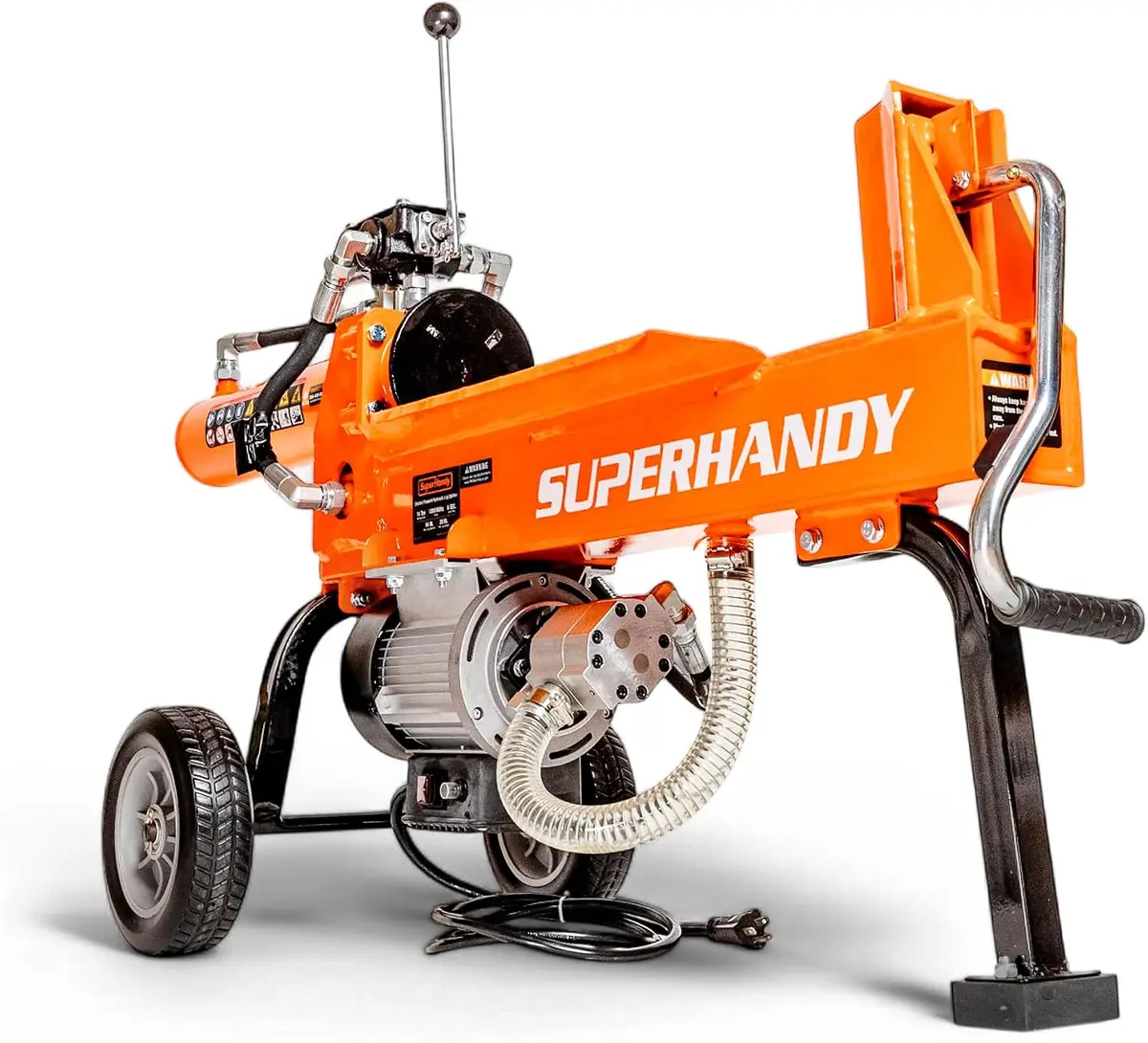
SuperHandy 14 Ton Electric Log Splitter
The SuperHandy runs from a 120 V, 15 A outlet and its manual prints a 20.5 inch maximum log length. Pick it if you split near a shed outlet and want a quieter, fumeless machine.
YARDMAX YS0650 Electric Log Splitter
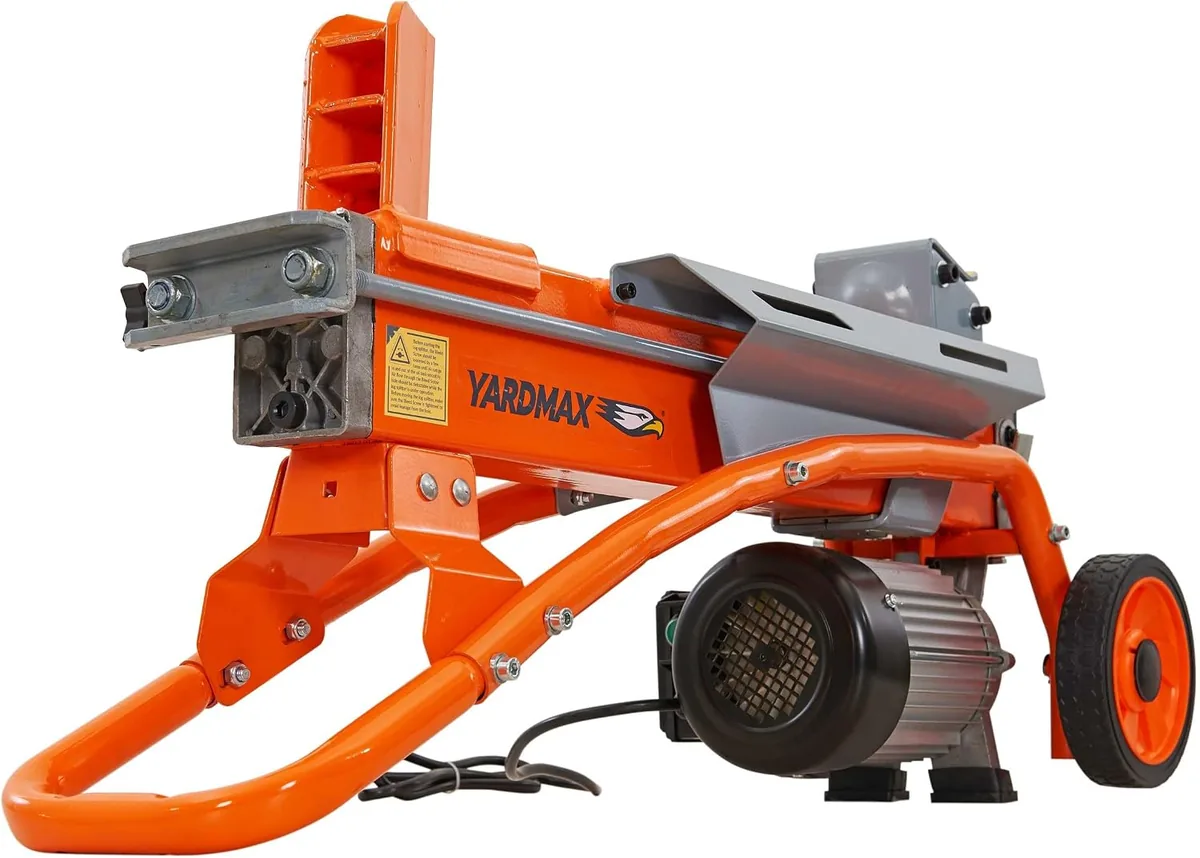
The YARDMAX is a 15 A electric unit rated 6.5 tons, with a 20.5 inch maximum log length in its manual. Pick it if your rounds are modest, you want a smaller electric machine and the pile is within cord reach. I go through the smaller electric in my review of the YARDMAX YS0650.
Common Problems to Plan For
The manual’s troubleshooting list mostly starts with fluid.
- Slow or stalled ram: low oil, air in the oil, blocked lines, a damaged control valve or a damaged cylinder can all cause it. Before you do this, complete the full shutdown for your splitter in the shutdown box above.
- Valve will not stay in detent or will not kick out: stop and have the valve checked by a qualified service person, and never adjust the pump or valve pressure yourself. Before you do this, complete the full shutdown for your splitter in the shutdown box above.
- Hard engine starting below 32 F: the manual changes the hydraulic fluid to ATF. Before you do this, complete the full shutdown for your splitter in the shutdown box above.
- Engine stalls under low load or will not start: check the switch and the fuel valve first. Before you do this, complete the full shutdown for your splitter in the shutdown box above.
My Final Verdict on the BILT HARD 22-Ton Gas Splitter
For a woodpile with no outlet nearby, this is the horizontal gas splitter I pick. Buy it for the engine, the 21 inch log length and the large wheels, and set aside an afternoon for assembly and fluids. Keep every round inside the printed limit and keep your hands off the log once the lever moves. That is where my BILT HARD gas log splitter review lands: a clear yes for the right pad and the right pile. For more options, my best log splitter ranking compares seven picks for home firewood.
Frequently Asked Questions
How big a log can the BILT HARD 22-ton gas log splitter take?
The BILT HARD 22-ton gas log splitter takes logs up to 21 inches long, according to BILT HARD, and it splits only in the horizontal position. A maximum log diameter is not published, so cut each round square, keep it inside the length figure and treat that length as a ceiling, never a target.
What size engine does the BILT HARD 22-ton gas log splitter have?
The BILT HARD 22-ton gas log splitter has a 209cc gas engine that drives a 2-stage 14 GPM hydraulic gear pump, and BILT HARD does not print the horsepower. The engine ships without oil, so before you fill it or check the level, complete the full shutdown for your splitter in the shutdown box above.
What fluid does the BILT HARD gas log splitter use?
BILT HARD’s related 20 ton manual names AW32, AW46 or a universal hydraulic oil for the reservoir, with automatic transmission fluid below 32 F, and SAE 10W-30 for the engine oil. Before you check or add any fluid, complete the full shutdown for your splitter in the shutdown box above.
Can you tow the BILT HARD 22-ton gas log splitter?
BILT HARD’s related 20 ton manual allows towing at no more than 25 MPH, with safety chains, the splitter locked to the hitch, no riders or cargo and the wheels blocked at rest. Before you move or tow it, complete the full shutdown for your splitter in the shutdown box above.
What is the difference between the BILT HARD 20-ton and 22-ton log splitters?
The listings for both machines print the same 209cc engine, 14 GPM pump, 3.5 by 19 inch cylinder, 7 second cycle, 21 inch log length and 13 inch wheels. The rating differs, 20 tons in the manual and 22 tons on the listing, and the stand wording differs, so treat the 22 ton figure as the listing’s claim.
References
- Lindqvist A, Nilsson O. Hand injury from powered wood splitters: machine safety, patterns of use and injury events. Int J Occup Saf Ergon. 2011;17(2):175-186.
- Hogan CJ, Ruland RT. High-pressure injection injuries to the upper extremity: a review of the literature. J Orthop Trauma. 2006;20(7):503-511.
- Centers for Disease Control and Prevention. Carbon monoxide poisoning from hurricane-associated use of portable generators – Florida, 2004. JAMA. 2005;294(12):1482. doi:10.1001/jama.294.12.1482
- National Institute for Occupational Safety and Health. Noise-Induced Hearing Loss. Noise and Hearing Loss. Centers for Disease Control and Prevention; 2024.
Safety Note: Only an adult who has read the manual and understands the controls should use a log splitter, never a child or anyone tired or impaired. The ram and wedge push with tons of force and can crush or cut off fingers, hands and feet: never put your hands or feet between the log and the wedge, the ram or any part of the splitter while it moves, keep your fingers out of cracks that open in the log, load each log by holding its sides, never its ends, and run the control only with your hand, never tying down, blocking or bypassing a two-hand control. Keep your hands clear during both the splitting stroke and the return stroke. Follow the manual’s unloading sequence; WEN 56207 requires the entire cycle to finish and the ram to retract fully before removing split wood. Never straddle or step over an operating splitter or reach or bend over it to retrieve a log. One person operates the control and also loads the log unless the exact manual explicitly permits a loading helper. Never let anyone hold the log while you operate the splitter. If a loading helper is permitted, wait until that helper has left the operating area and reached the manual’s required clearance before moving the control. Keep children, pets and other people out of the work area, at least the distance your manual prints for that exact model, and stop if anyone comes closer. No single distance is safe for every splitter. Set the splitter on firm, level, dry ground outdoors, never on a slope, ice, mud or slippery ground. Secure it against movement as the manual directs; Yardmax requires blocking the front and back of both wheels. Work in daylight or good artificial light as the manual permits, and keep split pieces cleared away from your feet. Never run an electric splitter in rain or damp conditions. Split one log at a time, with the grain and square-cut ends, within every size and weight limit your manual gives, including any minimum length. Check for nails, wire and other foreign objects. Reject knotted, curved or uneven logs where the manual forbids them; Boss ES7T20 forbids uneven logs, including knotted or curved logs. Stop at the manual’s splitting time limit and follow its procedure rather than forcing the log. Wear the eye protection your manual specifies: Champion calls for ANSI-approved safety glasses, and Boss calls for safety goggles or safety glasses with side shields. Also use a face shield where your manual asks for one, hearing protection with a gas engine or wherever your manual asks, sturdy boots (steel-toed where your manual asks), gloves exactly as your manual directs, and no loose clothing, jewelry, drawstrings or untied long hair. Pressurised hydraulic fluid can inject through your skin from a hole too small to see: never check for a leak with your hand, pass cardboard or wood over the spot instead, and see a doctor at once if fluid hits your skin, even if the wound looks small. Before freeing a stuck log, checking or adding fluid or oil, servicing, cleaning, sharpening, adjusting, moving, towing, storing or leaving the splitter, complete the shutdown for its power type. Electric: release the controls, switch the motor off, wait until every moving part has stopped completely, including the ram and any flywheel, then unplug it from the outlet by the plug. Gas: release the controls or return the hydraulic control lever to neutral as your manual directs, turn the engine off, wait until every moving part has stopped completely, including any flywheel, let the engine and muffler cool, then disconnect the spark plug wire and secure it away from the plug. Manual hydraulic: stop pumping and release the pressure exactly as your manual directs. On every hydraulic splitter, relieve hydraulic pressure as the manual describes before servicing or touching a hose, fitting, cap or the wedge area. Never remove the hydraulic oil cap or vent plug while the machine is running or hot, and never adjust pump or valve pressure settings. Before moving, towing or storing a gas splitter, close its fuel valve where fitted as the manual directs. Free a stuck log only by the manual’s procedure, including its instructions for any powered clearing step, never with your hands. Refit every guard before restarting. Use the grounded supply your manual requires and GFCI protection. If an extension cord is permitted, use a grounded three-wire outdoor-rated cord of the manual’s specified gauge and length. Keep connections away from water, keep the cord clear of moving parts and your feet, and never handle the plug with wet hands or disconnect it by pulling the cord. Refuel a gas splitter outdoors in a well-ventilated area with the engine off and cooled for several minutes, following any longer cooling period in its manual. Keep smoking, flames and sparks away, never overfill the tank, and wipe up spills before starting. Keep the manual’s clearances from surrounding objects and combustible materials. Never run it indoors or in a garage or shed, even with the doors open, because the exhaust contains carbon monoxide. Tow a towable splitter only as its manual describes, with towing chains attached exactly as the manual specifies, and never faster than the speed it prints. Store it dry and out of children’s reach, following the manual’s fuel-storage restrictions; Champion 100236 prohibits storing the unit indoors with fuel in its tank. Follow your manual’s lifting and handling instructions and every printed log-weight limit. Take breaks and stop when you are tired.