

In this PowerSmart snow blower review my verdict is to buy the 24-inch gas two-stage for a long gravel or paved drive, and to skip it if you want power steering, heated grips or a light machine. I used it on the farm road and the yard around the machinery shed, where snow often comes in near freezing and wet. It is a 212cc, self-propelled machine with electric start and eight gear positions. Below I cover specs, starting, clearing, gravel, care and the real drawbacks.
PowerSmart Snow Blower Review and My Short Verdict
I recommend the PowerSmart 24-Inch Two-Stage Gas Snow Blower for a long drive or farm track where the snow runs deeper than a single-stage machine can ride over. For a gas machine at the entry tier it gives you a 24-inch path, electric start and six forward speeds, and it asks for fresh fuel, bolt and tire checks before each use and a safe clearing habit. You pay in weight, a plain control set and a plastic chute. For other options on a long or wide lane, I compare five snow blowers for large driveways.
- Who it is for: owners of a long gravel or paved drive who want gas power and a push-button start.
- What it does best: takes deep or packed snow in a 24-inch path with a gear for every pace.
- Main trade-off: 187 lb by the manual, with no power steering and no heated grips listed.
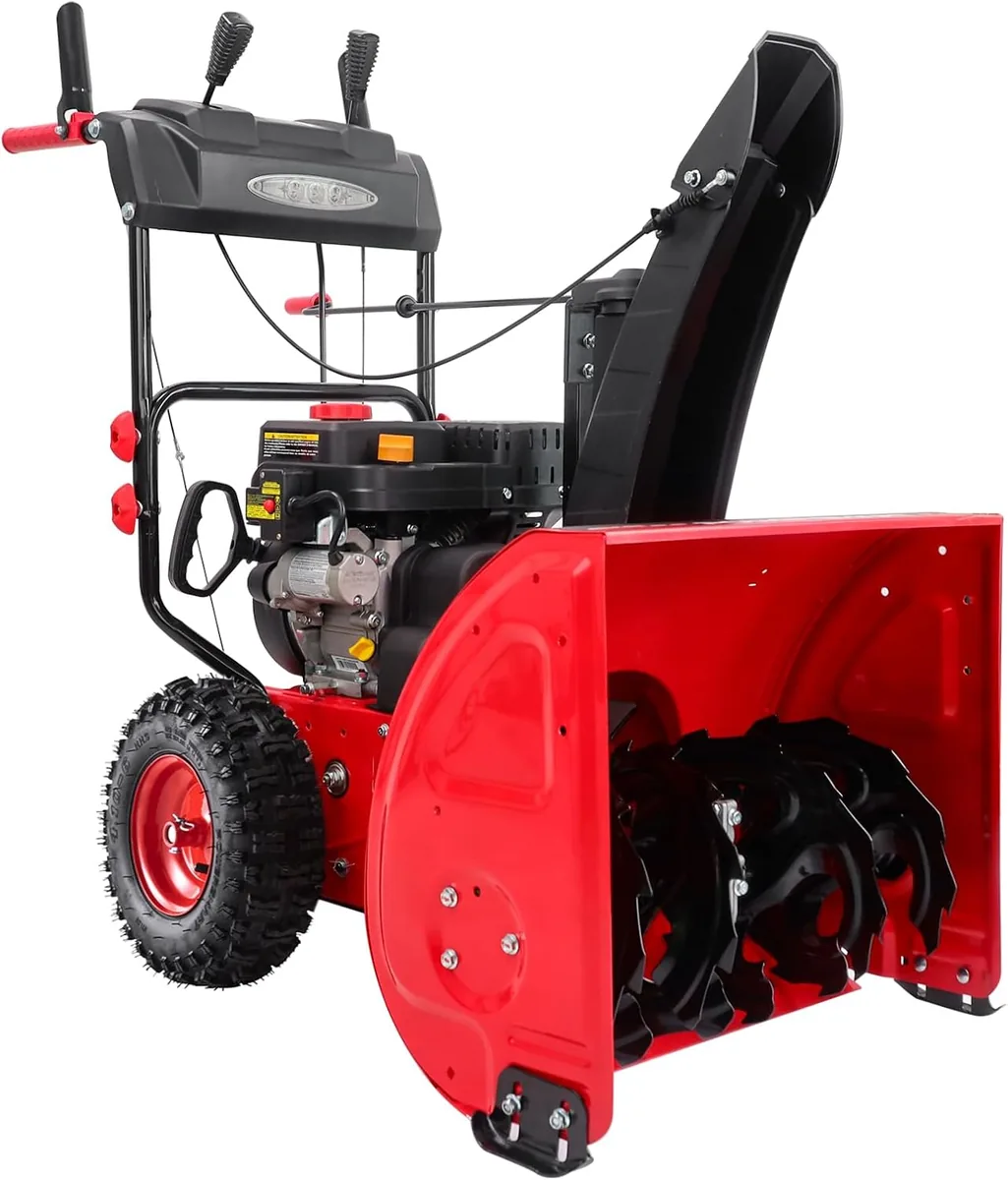
Specs and What Comes in the Box
The PowerSmart 24 inch snow blower is a self-propelled two-stage machine. Two rows matter most: the 21-inch intake, because it sets how deep a bite the housing takes, and the 187 lb weight, because that is what you push on a slope. My guide to the best two-stage snow blowers compares gas and battery models.
| Spec | Figure |
|---|---|
| Engine | 212cc, 4-cycle OHV |
| Clearing width | 24 in |
| Intake height, per the manual | 21 in |
| Drive | 6 forward, 2 reverse, self-propelled |
| Start | 120 V electric start plus recoil |
| Chute | 180 degrees, crank handle and deflector lever |
| Throw distance, maker’s figure | Up to 40 ft |
| Fuel tank and oil | 0.5 gal tank, 20.29 fl oz crankcase |
| Weight, per the manual | 187 lb |
| Warranty | 2 years limited for home use |
This is the PowerSmart snow blower 212cc, model DB7108B, and PowerSmart sells near identical 24-inch machines with different weight, tank size and gears, so check the model number before you order. The box holds the machine, the chute handle, skid shoes, spare shear pins and a clean-out tool clipped to the housing. The engine ships without oil, so fill the crankcase before the first start.
According to PowerSmart, the machine moves up to 2,400 lb of snow a minute, but the maker names no snow type or test method, so I read that as a marketing number and judge the machine on intake, weight and gears.
Starting It With the Cord, Primer and Choke
The PowerSmart snow blower electric start runs from a 120 V outlet, so you need a grounded three-wire extension cord and a spot to plug it in. The manual gives this order, and it is worth following exactly.
- Close the choke and put the safety key in.
- Press the primer bulb three times.
- Plug the cord into the machine and the outlet.
- Hold the starter button for 2 to 3 seconds, and wait 10 seconds between tries.
- Open the choke slowly and let the engine run for several minutes before you throw snow.
After a cold night the routine felt quick to me: three pushes on the primer, choke closed, and a short hold on the button. If it will not turn over, the manual’s troubleshooting table points first to a loose cord, a tripped breaker or an extension cord that is too thin or too long, and a rough start after summer storage points to stale fuel.
Start it and run it outdoors only. Exhaust carries carbon monoxide, and poisoning cases from gasoline generators run in garages and homes show how fast that goes wrong (1), so an open garage door does not make a garage safe.
PowerSmart wants fresh unleaded gasoline of 87 octane or higher, used within 30 days of purchase, with no oil mixed in. The machine manual states no ethanol limit, so read the engine manual before you fill the tank. I refuel outdoors on an engine that has cooled for at least 2 minutes, and I carry the can out of the shed instead of filling beside the furnace. One season the first start was rough because fuel had sat in the tank all summer, so I emptied it and refilled with fresh fuel, as the manual says.
How It Clears Snow
This PowerSmart two stage gas snow blower works in two steps. The steel auger breaks up the snow and pulls it to the center, and the impeller behind it throws it out of the chute. The 24-inch path and the 21-inch intake set the size of each bite, and the manual says to take deeper snow in several narrower steps, overlapping the passes and slowing down. For deep, packed drifts, I compare five snow blowers for heavy snow.
Pro Tip
Work out where the pile will land before the first pass. Snow thrown against a tree base, a drip line or a shed door becomes a meltwater problem later.
Six forward gears and two reverse let you match the pace to the snow. There is no neutral position: you release the drive lever. Never shift while the lever is held, because the manual says it damages the drive mechanism and voids the warranty. The drive lever stays in your hand as you steer, so self-propelled does not mean hands free.
The chute turns 180 degrees with a crank handle, and a deflector lever sets the angle. According to PowerSmart the throw reaches up to 40 ft, and wind and snow type cut that. On a windy day the Košava sent snow back at me, so I changed the chute direction and the line of my pass, which matches the manual’s advice to work with the wind when you can.
I rate it fair for wet snow taken in narrow passes with the auger engaged, and I do not buy a machine like this for snow so wet and compacted that the manual itself offers no complete fix. The manual says wet, heavy snow clogs and sticks more to the auger and chute, so keep the auger engaged, and it adds that some snow is simply too wet or compacted. Snow near freezing is the usual case on my land, and in US forecasting data the fluffiest snow, above 25 inches of snow per inch of water, was rare when the mean air temperature through the lower atmosphere sat near or above about 27 F (2). I compare options for heavy slush in my list of snow blowers for wet snow.
Equal depths can also weigh very different amounts, because fresh snow ranges from about 3 inches per inch of water to as much as 100 (3). So I judge a snow day by weight, not by depth, and I take heavy snow in narrow passes.

Gravel, Slopes, Weight and Noise
The manual says to move the skid shoes down for gravel and up for hard-packed snow, and to set the shave plate slightly above the ground, higher for larger stones, using a spacer board of the height you want. On my crushed-stone drive I lowered the shoes so the scraper rode above the stones, and I noticed the shoes wore faster there. Stones can still be thrown, so clear loose ones from the throw path first. The machines I recommend for a crushed-stone drive are in my picks of snow blowers for gravel driveways.
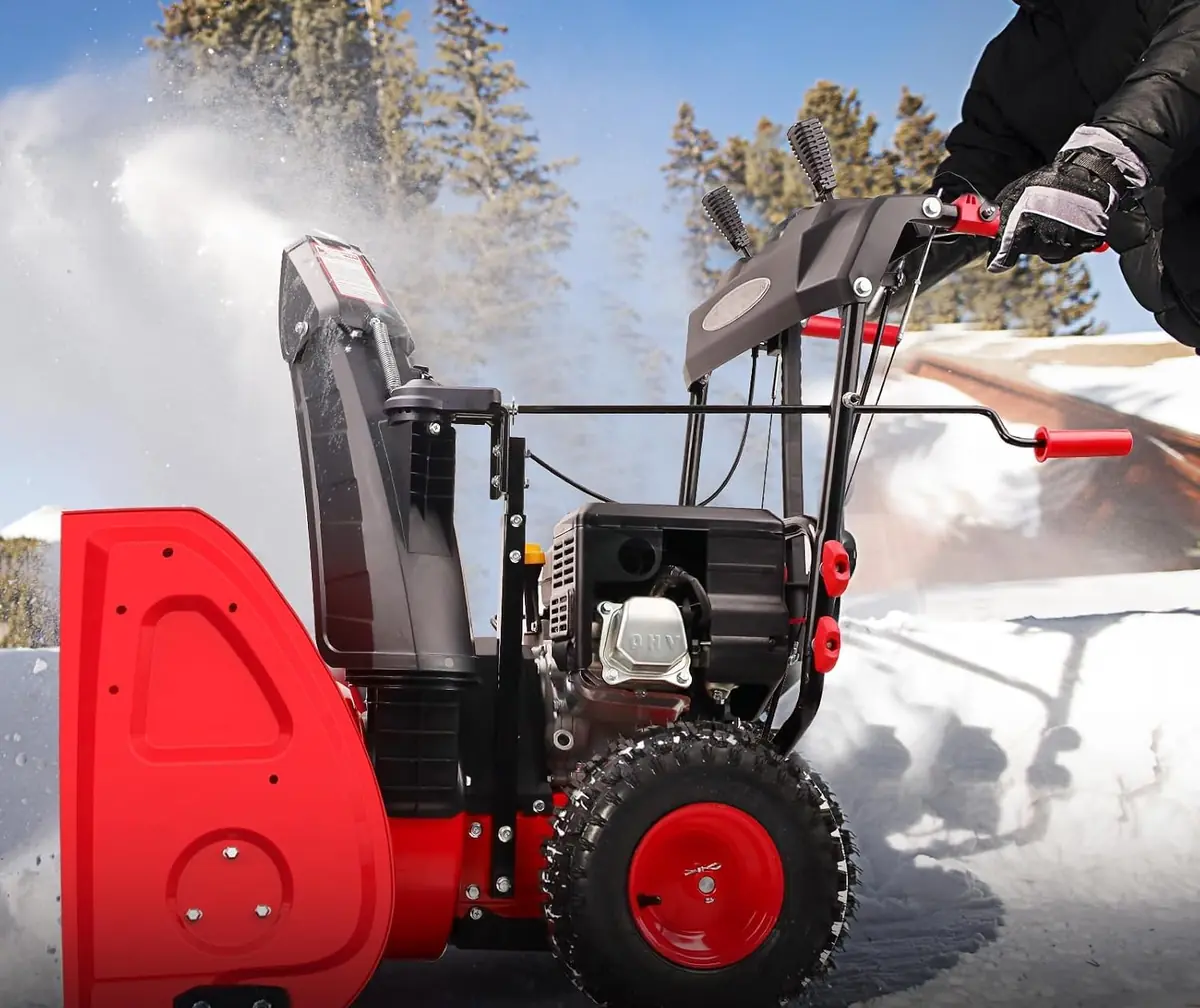
At 187 lb by the manual, the machine is heavy for a slope. The manual tells you to take care on slopes and when you change direction but gives no slope limit, so work ground you can walk with the machine in control. Keep people and pets at least 75 feet away while it runs. Check the tires at 20 to 24 psi before each use.
PowerSmart publishes no noise figure for this machine. NIOSH recommends 85 dBA averaged over an eight-hour day and halving the exposure time for every 3 dBA more (4), and I wear hearing protection from the first minute with any gas engine.
Care, Shear Pins and Clearing a Clog Safely
The PowerSmart snow blower shear pins break on purpose when the auger hits something solid, and spares ship with the machine. Replace them only with pins from PowerSmart, never with ordinary bolts, and disconnect the spark plug wire for belt and shear pin work.
A clog is where people get hurt. A national emergency room sample found that 22% of the hand injuries from clearing a clogged snow blower in 2009 to 2017 were amputations (5). A second sample covering 2003 to 2018 found that 44.5% of snow blower injury visits came from putting a hand in the chute (6). The manual’s order is the one to follow:
- Release the controls and stop the engine.
- Remove the safety key.
- Wait until the auger and impeller have stopped completely.
- Clear the chute with the clean-out tool clipped to the housing, never with a hand.
A frozen lump from the plow ridge at the gate jammed my auger once. I let go of the controls, stopped the engine, took out the key, waited until everything had stopped and cleared it with the clean-out tool.
Check the bolts before and after each use, because engine vibration loosens hardware. After clearing snow, run the auger and impeller for 30 seconds to throw out what is left, then wipe the machine down and skip the hose, since water freezes. The manual also asks for an annual dealer inspection and says the warranty does not cover it, and the warranty itself runs 2 years for home use and 90 days for professional use.
How It Compares With Alternatives
Three other two-stage machines sell on Amazon and show what you give up or gain next to this PowerSmart. The table sets the manual figures side by side, and the notes say who should pick which.
| Machine | Width | Power | Weight |
|---|---|---|---|
| PowerSmart DB7108B | 24 in | 212cc gas, cord plus recoil start | 187 lb |
| Ariens Deluxe 28 SHO 921048 | 28 in | 306cc gas, cord plus recoil start | 267.5 lb |
| Honda HSS928 AATD | 28 in | 270cc gas, track drive, key start | 276 lb dry |
| EGO SNT2400, tool only | 24 in | 56V battery, no fuel | 143.3 lb without packs |
Ariens Deluxe 28 SHO 921048
The Ariens clears a 28-inch path with a 306cc engine, a 200 degree chute and a remote deflector control, and its manual lists a three-year residential warranty. Pick it if your drive is wide or the snow is deep enough to justify 80 lb more machine. Heated grips are an accessory on this model, not standard. My review of the Ariens Deluxe 28 SHO gives my assessment of this 306cc two-stage machine for wet snow.
Honda HSS928 AATD
The Honda rides on rubber tracks with a hydrostatic drive that gives infinitely variable speed, a 198 degree electric joystick chute and a key-start starter that needs no cord. Pick it for a sloped, packed or icy paved lane where wheels slip and you want steering by clutch. Honda’s manual forbids using it on a gravel road or driveway and sets a slope limit of 20 degrees, so it is not the choice for a gravel drive. It weighs 276 lb dry, which asks for even more room and strength than the PowerSmart. My review of the Honda HSS928 gives my verdict on this 28-inch track-drive machine.
EGO SNT2400
The EGO SNT2400 is the battery option at the same 24-inch width, with a 20-inch intake and variable auger speed. The listing is the bare tool, so packs and a charger are bought separately, and the manual says not to run a single pack in snow deeper than 8 inches or very wet or icy snow. Pick it if you want no fuel, no cord for starting and a machine about 44 lb lighter than the PowerSmart before the packs go in. I set the two side by side in my PowerSmart and EGO snow blowers comparison.
Who Should Buy It and Who Should Skip It
This machine suits a buyer who clears a long drive, wants gas power and accepts a basic control set. Clearing snow is also hard on the heart: in a small study of ten healthy men, shoveling heavy wet snow pushed heart rate to 86% to 97% of maximum within 10 minutes, and an electric snow thrower on the same snow gave lower readings (7). That study tested neither gas machines nor people with heart disease, so a machine does not make the job safe for anyone told to avoid exertion.
- Buy it if: your drive is long, the surface is gravel or pavement, and you want electric start at the entry tier.
- Buy it if: your snow arrives deep or packed and a single-stage machine would ride up on it.
- Skip it if: you want power steering or heated grips, which the manual does not list.
- Skip it if: you need a published noise or torque figure.
- Skip it if: your slope is steep or your storage space is tight.
Drawbacks Worth Knowing
The weight is the first one, and the second is the plastic chute that the listing and maker page describe. PowerSmart prints no engine power, torque or noise figure, so you cannot compare it with other machines on those numbers. The control set is basic, with one LED light on the front panel, and the machine cannot run in a closed room under any circumstance.
My Final Recommendation
I recommend this machine to owners of a long drive who want a PowerSmart gas snow blower without paying for extras they will not use. Buy it, fuel it fresh, clear clogs the manual’s way, and start, run and refuel it outdoors only. For a long gravel or paved drive, this PowerSmart snow blower review points to a plain, capable two-stage tool that does what its manual promises. My guide to the best gas snow blowers compares five two-stage options for heavy snow and long drives.
Frequently Asked Questions
Who makes the PowerSmart snow blower?
PowerSmart sells the snow blower under its own brand, including this 24-inch gas two-stage model, which carries the model number DB7108B. The machine’s 77-page manual lists a PowerSmart support line for parts and questions, so owners take problems straight to the brand and they should keep the model number ready.
Is PowerSmart a good snow blower?
The PowerSmart 24-inch gas two-stage is a good snow blower for a long gravel or paved drive when you want electric start and eight gear positions at the entry tier. It is a plain machine, with no power steering, no listed heated grips and a plastic chute, so match it to your drive first.
How to start a PowerSmart snow blower?
To start the PowerSmart 24-inch outdoors, close the choke, insert the safety key, press the primer bulb three times, plug in a grounded cord and hold the starter button for 2 to 3 seconds. Wait 10 seconds between tries, then open the choke slowly and let the engine run several minutes.
Are 2 stage snow blowers worth it?
A two-stage snow blower is worth it when your drive is long, your snow is deep or packed, or the surface is gravel, because the auger lifts snow and a separate impeller throws it. Makers rate two-stage machines for snowfalls of 12 inches or more, while a short paved drive with light snow suits a single-stage.
Should I get a 24 or 28 inch snowblower?
Pick a 24-inch snowblower for a narrow or tight drive and easier handling, and a 28-inch one when drive length and snow depth make fewer passes worth the extra weight. A wider housing clears more per pass but weighs more, and this 24-inch PowerSmart already weighs 187 lb by the manual.
References
- Hampson NB, Dunn SL. Carbon Monoxide Poisoning from Portable Electrical Generators. J Emerg Med. 2015;49(2):125-129.
- Ware EC, Schultz DM, Brooks HE, Roebber PJ, Bruening SL. Improving Snowfall Forecasting by Accounting for the Climatological Variability of Snow Density. Weather Forecast. 2006;21(1):94-103.
- Roebber PJ, Bruening SL, Schultz DM, Cortinas JV Jr. Improving Snowfall Forecasting by Diagnosing Snow Density. Weather Forecast. 2003;18(2):264-287.
- National Institute for Occupational Safety and Health. Noise-Induced Hearing Loss. Noise and Hearing Loss. Centers for Disease Control and Prevention; 2024.
- Hammig B, Jones C. Hand injuries associated with reaching into a snow blower to clear clogged snow. Am J Emerg Med. 2020;38(4):785-788.
- Loder RT, Solanki D. Events Due to Snowblower Use Seen in US Emergency Departments From 2003 Through 2018. Cureus. 2020;12(12):e11836.
- Franklin BA, Hogan P, Bonzheim K, et al. Cardiac Demands of Heavy Snow Shoveling. JAMA. 1995;273(11):880-882.
Safety Note: Snow blowers throw snow, ice and hidden objects with force. Never reach into a clogged chute or auger. Shut the machine off first: stop the engine on a gas model, unplug a corded model, or remove the safety key and every battery pack from a battery model. Wait at least as long as your manual says, often 10 seconds, and until every moving part has stopped, then remove the key and disconnect the spark plug wire where your manual says so, and clear the clog with the clearing tool. Keep people and pets out of the discharge path, run gas models outdoors only, and read the manufacturer’s manual.