


The best snow blower for seniors, and for anyone who wants easier handling, comes down to three printed facts: how the machine starts, how it steers and what you have to move. I keep a 3.7-acre orchard, the yard around the house and a farm road open, and I ran each of these seven machines on those jobs.
Affiliate Disclosure: Garden Power Scout is a proud participant in the Amazon Services LLC Associates Program. As an Amazon Associate, we earn from qualifying purchases, at no extra cost to you.
Three of the seven run on batteries, two on gas and two on a cord. My top pick is the EGO Power+ SNT2807 28-Inch Two-Stage Cordless Snow Blower Kit, a self-propelled two-stage machine with no pull cord and a joystick chute, and every review below says who should skip its machine.
Best Snow Blower for Seniors Reviews 2026: 7 Machines I Put to Work
These seven machines start in three ways, move in four ways and run on three kinds of power. I ranked them by how each starts, steers and moves, and I give every weight with its basis. The safety section below carries the shutdown steps and the protective gear for all seven.
1. EGO Power+ SNT2807 28-Inch Two-Stage Cordless Snow Blower Kit Best Overall
The EGO SNT2807 starts with no pull cord and no fuel, drives itself forward and in reverse, and aims its chute from a joystick on the handle. That combination is why it ranks first on a page about starting, steering and moving. It is a two-stage machine, my best battery snow blower pick for a wide paved drive or a farm road, and the kit holds two 12.0Ah packs and a dual port charger.

WHY I CHOSE THIS ✓
It takes the cord, the fuel and the chute crank out of the job and puts the chute on the handle. It drives itself, aims its own chute and carries heated grips. The limits are a width and weight that suit a wide drive more than steps, and two packs to charge.
EGO Power+ SNT2807 28-Inch Two-Stage Cordless Snow Blower Kit Specs
Key Features:
- No pull cord, no fuel: the machine starts from the safety button and the controls, so there is no choke, no prime and no old tank to deal with.
- Variable-speed self-propel: a speed lever sets forward and reverse speeds, with a click between the two ranges, so the machine moves itself while you steer.
- Turn levers: the left and right levers each release one wheel for a turn, and the manual says squeezing both lets you push the machine by hand after the shutdown steps in the safety section below.
- Joystick chute and deflector: one electronic joystick turns the chute 100 degrees left and 100 degrees right, and pulling the handle back lifts the deflector, so the discharge changes from the handle.
- Heated grips and headlights: the grips hold between 95 F and 131 F per the manual, and LED lights on the deck and the handle serve a dark morning; the grips shut off after 10 minutes without another function.
- Overload protection: when the auger is overloaded the motor slows by itself, and if that does not clear it the auger stops and the indicator flashes orange.
- Two-pack kit: two 12.0Ah packs and a dual port charger come in the carton, and EGO says not to use one pack in snow deeper than 8 in. or in very wet or icy snow.
What I noticed first was where my hands went. With the drive lever set, I steered with the turn levers and aimed the chute with the joystick near the end of the farm road, and the weight showed on the turns by the yard gate. EGO prints a 28 in. width and a 21 in. intake height, and a throw of up to 60 ft as its own best case. The turn levers release one wheel at a time for the turns.
EGO publishes no runtime in minutes. Its claim is up to a 32-car driveway with 8 in. of snow on one charge with the two 12.0Ah packs, and it gives no car length, snow type or temperature, so I read it as a best case. The manual’s operating range is -4 F to 50 F, and it says the machine may not start when the battery is at -4 F or colder; the cold-start line is in the safety section below.
The second job was the plow ridge at the gate, the heavy bank a plow can leave across the entrance. I took it in layers, top first, and when I pushed too hard the auger slowed by itself and the indicator went orange. A stall means stop: I completed the shutdown steps in the safety section below before I touched anything, and I went on only after the cause was found, any damage was repaired and EGO’s restart conditions were met. EGO’s manual stores two spare shear pins on the chute assembly, which tells me a part is meant to break before the gearbox does.

Press the safety button first. EGO’s manual says the reverse order starts nothing, and the machine powers itself down after 5 minutes without a function.
On steps, narrow walks and tight garages the width and weight work against you, and EGO’s manual says not to operate on grades steeper than 10%. EGO prints a bystander distance of 100 ft, and the discharge goes away from people, pets, cars and windows.
Before a forecast storm I complete the shutdown steps in the safety section below, then charge both packs indoors. EGO’s manual puts the best charging range at 41 F to 104 F and asks you to keep packs where the temperature will not drop below -4 F. The bearings need no lubrication, and the scraper bar is the part to replace when it wears. The pack swap was the part I minded: two 12.0Ah packs to carry through the door.
Buy it if you clear a long or wide paved drive and want to start without a cord, steer with levers and aim the chute from the handle. Skip it if your jobs are steps, a narrow walk, a gravel yard or a tight garage, and skip it if you cannot hold and turn a machine of this weight on your own slope. EGO’s manual allows gravel only after you adjust the machine for it.
FINAL VERDICT
The SNT2807 earns first place by taking the cord, the fuel and the chute crank out of the job. Choose it for a wide paved drive where its weight is a fair price for a machine that drives itself.
It is the cordless two-stage I recommend for a wide drive.
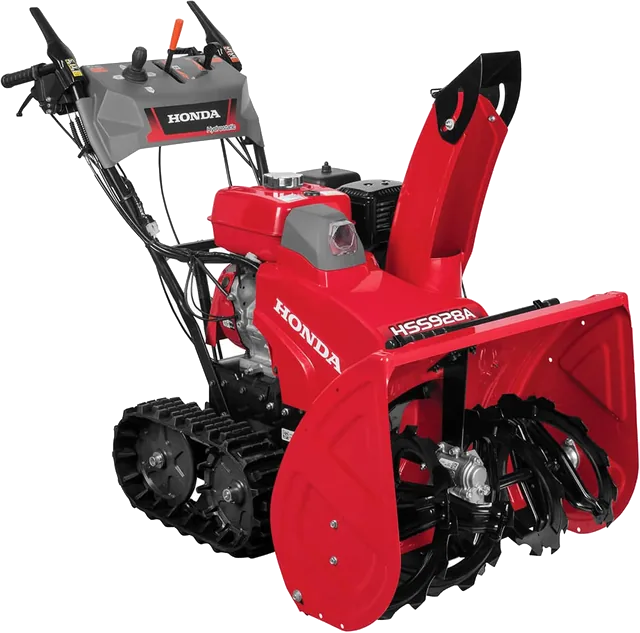
2. Honda HSS928 28-Inch Track-Drive Two-Stage Snow Blower (HSS928AATD) Best Premium
The Honda HSS928AATD starts from its own battery with a key and no cord, then drives on rubber tracks through a hydrostatic transmission, with a remote electric joystick for the chute. It is a two-stage gas machine that Honda lists at 276 lb dry, and it sits in the highest price tier on this page. For a paved drive with a slope or a patch of ice it is my best gas snow blower pick, if the budget stretches that far.

WHY I CHOSE THIS ✓
It starts without a cord and steers with two clutch levers: a key, a hydrostatic lever and two clutches. It suits a sloped paved drive and a buyer who accepts the highest price tier on this page and a maintenance schedule that sends some jobs to a dealer.
Honda HSS928 28-Inch Track-Drive Two-Stage Snow Blower (HSS928AATD) Specs
Key Features:
- Key electric start: a DC starter runs from the machine’s own battery, so no extension cord is needed, and a recoil starter is the backup.
- Hydrostatic drive: one lever sets speed forward and in reverse across an infinitely variable range, and Honda says ground speed does not change auger speed.
- Steering clutches: squeezing a lever stops power to that track so the machine turns, and Honda’s manual says a clutch applies no brake and a lever is fully on or fully off.
- Rubber tracks with cleats: Honda describes them as built for inclines, rough ground and icy conditions, which is Honda’s own claim.
- Remote electric chute joystick: it turns the chute 198 degrees and sets the deflector, so the discharge changes from the handle.
- Auger height lever: a thumb lever sets three marked zones, lower for hard snow or a fine finish, middle for normal use and higher for deep snow or transport.
- LED work light and shear bolts: a 12 V 6 W LED light serves a dark morning, and shear bolts protect the auger on an overload.
The surprise came beside the machinery shed. After the shutdown steps in the safety section below, pulling both steering levers frees the machine to roll by hand even with the engine off, which matters when you park 276 lb against a wall. Honda’s manual adds that the clutches cut power and apply no brake, so on a slope I treat that rolling as a flat-ground trick.
The start routine has more steps than a push-button machine. Honda’s manual walks through the shift lever, the fuel valve, the choke in cold weather, the throttle and the key, then asks for a warm-up of the engine and the transmission, so read it before the first start. The starter runs 5 seconds a try at most, with a 10-second wait before the next. Honda prints a 52 ft maximum throw for its own snow, and no runtime per tank.
The second job was keeping the machine off gravel. Honda’s manual says never to use it to clear snow from a gravel road or driveway, because it can throw rocks with enough force to cause serious injury, so I use it on the concrete work pad and leave the crushed-stone yard to a shovel. On slopes Honda says not above 20 degrees, and never on a roof. A buyer whose drive is gravel should skip this machine and read the manual before choosing any other.

Keep the auger height lever in the middle zone for normal passes. Honda says lifting the handlebar while the lever is held down lowers the auger toward the ground, which belongs on a very smooth, ice-covered surface only.
Complete the shutdown steps in the safety section below before you clear anything, and use the snow clearing bar stored on the machine, never a hand. Honda’s manual warns that an obstructed auger or blower could suddenly move when the obstruction is cleared.
Fuel and the starter battery are the upkeep. Complete the shutdown steps in the safety section below before you refuel, and follow the refuelling lines there. Honda asks for unleaded fuel of 86 octane or higher with no more than 10% ethanol and says fuel can deteriorate in as little as 30 days, so I fill the tank fresh before a forecast storm. The starter battery must stay charged, and leaving the engine switch on with the engine stopped drains it.
Buy it if your drive is paved or hard concrete, slopes a little or ices over, and you want a key start with no cord and a drive you steer with two levers. Skip it if the drive is gravel, if the budget is modest, or if you cannot store a machine of this weight on a dry floor with room to roll it out. Honda’s manual also marks some service jobs, such as valve clearance and belts, for a dealer.
FINAL VERDICT
The HSS928AATD is the gas machine for a buyer who will pay for a cord-free start and a track drive. Pick it for a paved, sloping drive and a shed floor that holds 276 lb.
It is the track-drive gas machine for a sloped paved drive.
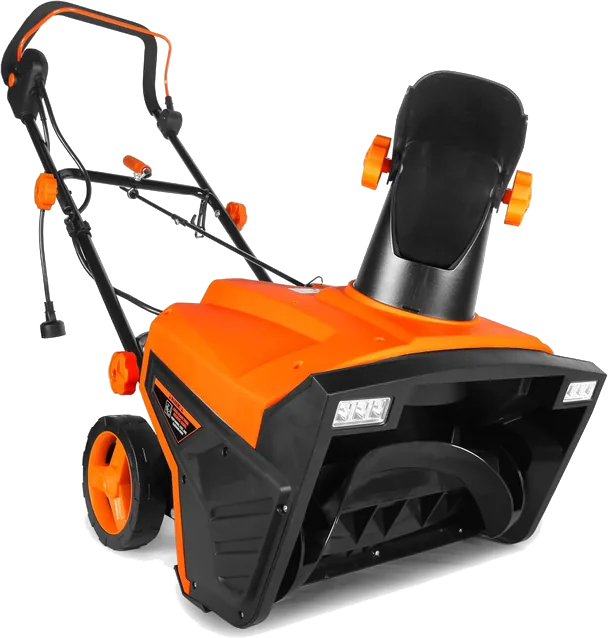
3. WEN 5670 20-Inch Corded Electric Snow Thrower Best Value
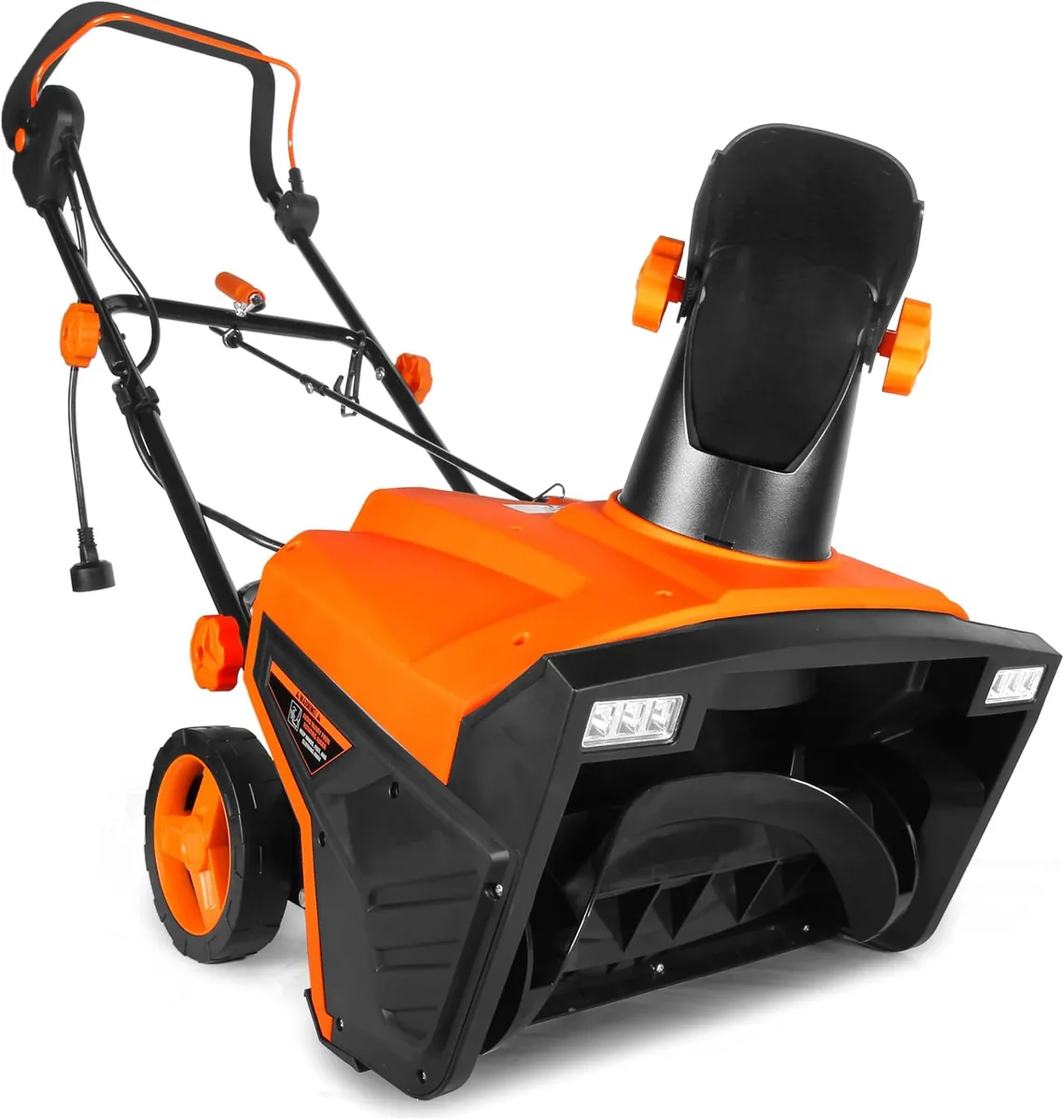
The WEN 5670 is the lowest priced machine on this page, a 20 in. corded electric snow thrower that WEN lists at 29.3 lb. You start it by holding a safety lock button and the starting handle together, you push it, and you aim the chute from a crank on the handle bar. For a short paved path and a porch within a cord’s reach of an outlet it is the best cheap snow blower I can recommend.
WHY I CHOSE THIS ✓
It is the cheapest way into a powered path-clearer that still has a crank chute, a squeeze deflector and lights. It is a push-only corded machine for a short paved job, and its limits are the cord’s reach and the missing operating ratings: WEN’s manual prints none for temperature, snow wetness, gravel or ice.
WEN 5670 20-Inch Corded Electric Snow Thrower Specs
Key Features:
- Lock button and handle start: you hold the safety lock button and the starting handle together, which keeps the machine from running by accident while it is plugged in.
- Crank chute: after the same shutdown steps, a crank on the handle bar turns the chute from 0 to 180 degrees, clockwise for a throw to the left and counter-clockwise for the right.
- Squeeze deflector: after the shutdown steps in the safety section below, a squeeze handle sets the stream between 15 and 60 degrees, and you lock the deflector before use.
- Extension cord holder: the box includes a holder for the cord loop, and the manual wants the loop on it so the plug does not pull apart.
- Two LED lights: two lights across the front serve a dark morning on the path.
- 7.1 in. wheels: the wheels carry the machine over the cleared path, and you push it with the handles.
- Cord chart in the manual: 14 gauge up to 25 ft and 12 gauge up to 50 ft, with longer runs marked not recommended.
WEN prints a 20 in. width and a 10 in. clearing depth, and I used it on the path from the house door to the shed pad. You hold the lock button and the starting handle together to start, then hold the handle against the push handle. After the shovel I had used before, the low weight on the handles stood out. Push it gently and evenly, as WEN’s manual says, and take a deeper fall in layers.
The cord sets the route. WEN’s manual lists 14 gauge cord up to 25 ft and 12 gauge up to 50 ft, marks 100 ft and 150 ft runs as not recommended, and asks for an outdoor-rated cord on a GFCI-protected circuit or outlet. It also wants a separate circuit with a 15 A time-delayed fuse and wire not under 12 gauge. The box holds no extension cord, and the cord rules are in the safety section below.
The second job was the pile. After the shutdown steps in the safety section below, I turned the crank to throw toward the open grass strip beside the pad, away from the tree strips and the shed door, and I squeezed the deflector to bring the stream down. The throw side decides where the meltwater goes, and a pile against the shed door refreezes at night. WEN prints up to 29.5 ft as its own best case, so I plan the pile for a much shorter throw, and I move it before the next storm.
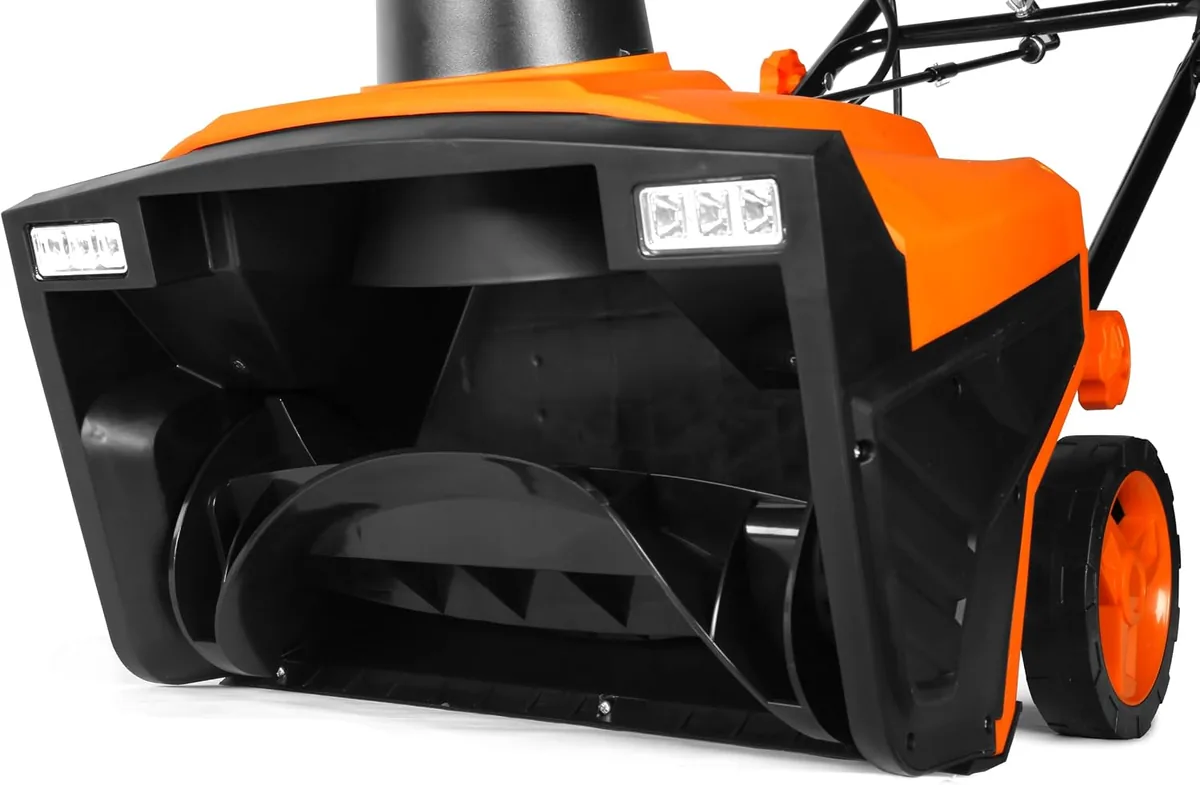
After a session, run the machine for a few minutes so the collector and the impeller do not freeze, as WEN’s manual says. Then complete the shutdown steps in the safety section below before you wipe off the ice and snow or turn the crank several times.
WEN’s manual says never to use your hands to clear the chute and names no clearing method, and the box holds no tool. Complete the shutdown steps for WEN in the safety section below before you go near the chute, then contact WEN or a service center for the clearing method; never use a hand or foot.
Complete the shutdown steps in the safety section below before storage, then remove the ice and snow, inspect the cord, store the machine dry away from children and cover it loosely. The motor needs no lubrication, and WEN says lubricating may damage the unit. WEN says never to run it with frozen parts and to use a UL-listed cord that meets its chart, replacing a damaged one. It also says the normal noise may make it hard to hear approaching people, and a purchase from a third-party or secondhand seller voids the warranty. The cord I step over to turn was the part I minded.
Buy it if your snow job is steps, a short paved drive or a path within a long cord’s reach of an outlet, and you want the lowest cost. Skip it if the drive is long, gravel or regularly deeper than the 10 in. clearing depth, or if you dislike a cord. WEN’s manual prints no operating rating for temperature, snow wetness, gravel or ice.
FINAL VERDICT
Take the 5670 when the outlet is close, the snow is light and the lowest cost matters most. A drive beyond its cord or its 10 in. clearing depth is outside what it is for.
It is the budget corded machine for the path to the shed.
4. EGO Power+ SNT2125AP 21-Inch Auger-Propelled Cordless Snow Blower Kit Best Auger-Propelled Snow Blower
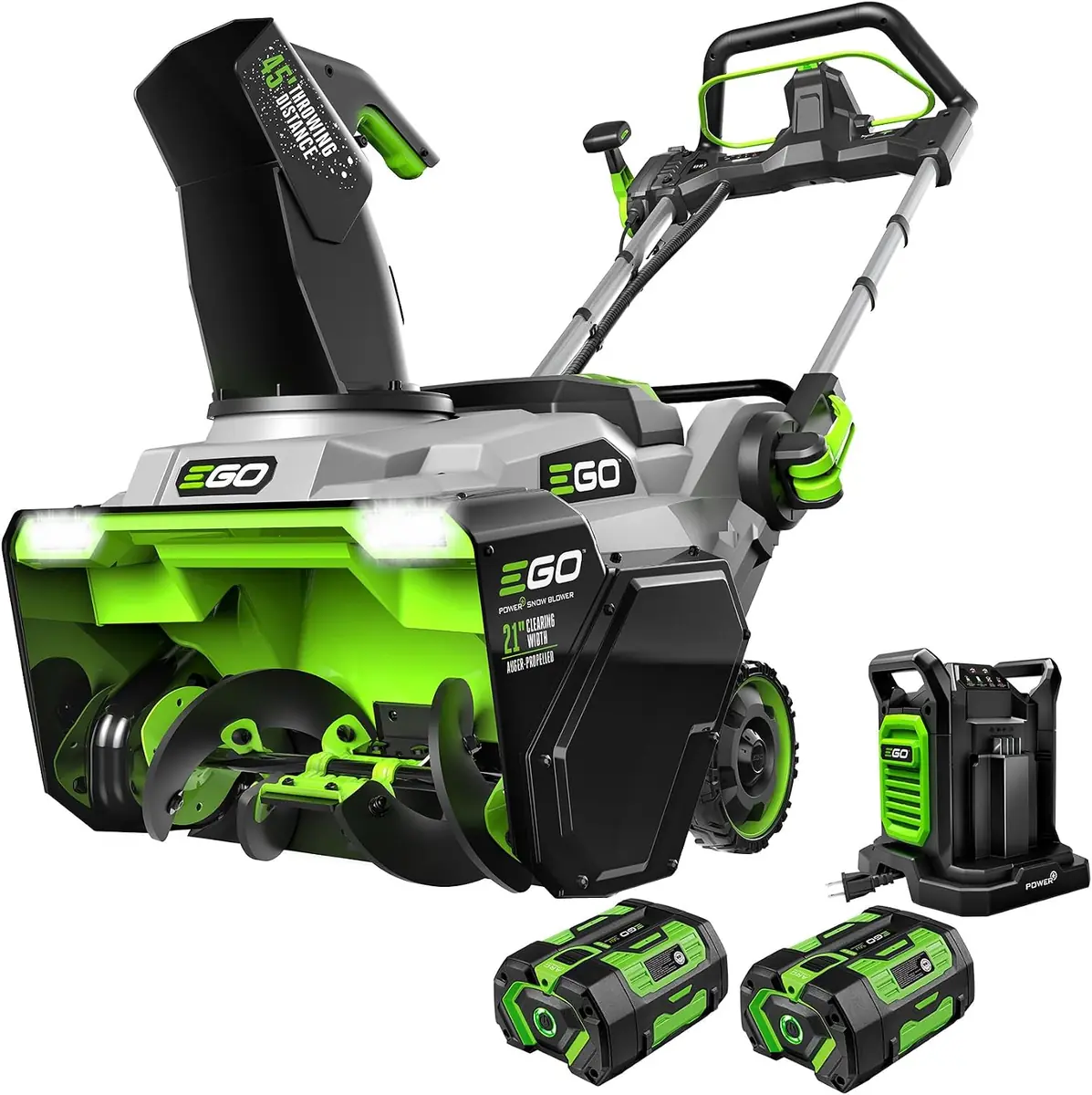
The EGO SNT2125AP is the only auger propelled snow blower on this page: lift the handle and the auger grips the pavement to help pull the machine forward. It is a 21 in. single-stage battery machine with a push-button start and a chute and deflector you set from the handle. The kit holds two 7.5Ah packs and a dual port charger.
WHY I CHOSE THIS ✓
It is the one machine here that pulls against the pavement and puts both chute controls on the handle. It suits a paved drive and a path, and the manual’s ban on gravel is its limit.
EGO Power+ SNT2125AP 21-Inch Auger-Propelled Cordless Snow Blower Kit Specs
Key Features:
- Auger-propelled position: you lift the handle so the auger contacts the ground, and EGO says the traction assists the machine forward; it is an assist, not a drive motor.
- Push-button start: you press the safety button, pull the bail switch to the handle and release the button once the auger starts, with no cord and no fuel.
- Chute and deflector on the handle: one handle turns the chute 90 degrees left to 90 degrees right, and a trigger sets the deflector.
- Heated grips and LED headlights: the grips hold 95 F to 131 F, and both switch off after idle time.
- Electric brake: EGO says the auger stops within 3 seconds of releasing the bail switch.
Before I unfolded the side rails and fitted the chute, I completed the shutdown steps in the safety section below. Then I swung the chute handle through its full range and moved the speed dial before the first pass. EGO prints a 21 in. width and a throw of up to 45 ft. EGO’s own FAQ says the rubber paddle helps move the machine forward when you lift gently on the handle as it engages the snow.
EGO gives no runtime in minutes, only a claim of up to a 16-car driveway with 8 in. of snow on one charge with the two recommended 7.5Ah packs. Its manual says not to use a single pack in snow deeper than 3 in. or in very wet or icy snow.

The scraper bar caught on the raised concrete edge of the work pad in front of the machinery shed, a small lip that a shovel never notices.
EGO’s manual says do not use on a graveled surface, and the edition on the listing adds no ice and extreme caution on slopes. Complete the shutdown steps in the safety section below before you clear a clog, and use the wooden rod or commercial tool the manual names.
On a thaw day with meltwater standing on the pad I left the machine in the shed and shoveled until it drained. After the shutdown steps in the safety section below, I keep the packs indoors in winter.
Buy it if your job is a paved drive and a path and you want a machine that helps itself forward without a cord or fuel. Skip it if the drive is gravel, steep or icy, if you want a drive motor, or if you cannot manage a 60 lb machine to fold and store as EGO’s manual describes.
FINAL VERDICT
The SNT2125AP fits a household that clears a paved path, wants no fuel and accepts pulling the machine back by hand. EGO’s manual rules out a gravel surface.
It is the auger-assisted battery blower for the paved path.
5. Westinghouse WSnow20 20-Inch Corded Electric Snow Blower Best Corded Snow Blower Rated for Continuous Use
The Westinghouse WSnow20 is a 20 in. corded electric snow blower that Westinghouse lists at 31.1 lb, with a start button and a bail lever and a crank for the chute. Its manual says it is designed and rated for continuous operation at ambient temperatures above 23 F (-5 C), with extreme cold for short periods only, and that rating is why it is the best corded electric snow blower on this page for a hard surface within reach of an outlet.

WHY I CHOSE THIS ✓
It is the only corded machine here whose manual prints a continuous-operation rating at a stated temperature, and it starts with a button and a lever together. It suits a hard surface near an outlet, and the cord and the 10 in. intake are its limits.
Westinghouse WSnow20 20-Inch Corded Electric Snow Blower Specs
Key Features:
- Button and bail start: you press and hold the start button, pull and hold the bail against the handle, then release the button and keep holding the bail, so the machine cannot run by accident.
- Crank chute: a crank turns the chute 180 degrees, and you complete the shutdown steps in the safety section below before you adjust it.
- Squeeze-and-lock deflector: you set the height of the stream by hand and lock it, after the same shutdown steps.
- Folding handle: after the shutdown steps in the safety section below, you loosen the handle knobs and lower the upper handle for storage.
- Dual LED headlights: a dark morning on the path stays workable.
Westinghouse prints a 20 in. width and a 10 in. intake height, and I used the machine on the path to the house door before daylight, where the two LED headlights decided the start time. On the first start I pressed and held the button, pulled and held the bail, released the button and kept holding the bail, and the machine ran only while I held it. The manual lists 31.1 lb, and the handle folds down for the tool shed corner.
The manual’s temperature line is the one I read twice: continuous operation above 23 F and extreme cold for short periods only. Read it as a limit on cold mornings, because below 23 F the manual allows short periods. The cord chart is 14 AWG up to 25 ft and 12 AWG up to 50 ft.

Plug in at an outdoor outlet on a GFCI circuit and keep the discharge away from electrical devices, as Westinghouse’s manual says.
The manual names no clearing method and says never to use hands to unclog the rotor housing. Complete the shutdown steps in the safety section below, then contact Westinghouse or an authorized service center. Westinghouse requires hearing protection whenever you operate it.
After the shutdown steps in the safety section below, wipe it dry, mop up the melted drips, fold the handle and store it indoors away from fertilizer and rock salt. If the motor runs but the auger does not turn, Westinghouse says the drive belt may be worn or broken.
Buy it if your snow job is a short paved drive, a path or a porch within a cord’s reach, and you want a manual with a stated temperature range. Skip it if the drive is gravel or icy, longer than the cord reaches or deeper than the 10 in. intake, or if the cold mornings stay under 23 F for hours. Westinghouse says not to use it on ice.
FINAL VERDICT
The WSnow20 asks you to read one line first: continuous work above 23 F. If your mornings clear that mark and an outlet is near, it fits the job.
It is the corded blower with a stated working range.
6. Ariens Deluxe 28 SHO 921048 Two-Stage Gas Snow Blower Best Wheeled Gas Snow Blower
The Ariens Deluxe 28 SHO, model 921048, is the only gas machine on this page that rides on wheels, and it starts with a key, a 120 V electric starter and a recoil backup. It is a 28 in. two-stage machine with 6 forward and 2 reverse speeds, and it is the older 921048 generation, not the current 921072.

WHY I CHOSE THIS ✓
It is the wheeled gas machine with a cord-start routine and a turn control, for a buyer who wants gas without tracks. It has 6 speeds and Auto-Turn, and its limits are the cord, the weight and the older generation.
Ariens Deluxe 28 SHO 921048 Two-Stage Gas Snow Blower Specs
Key Features:
- 120 V electric start with recoil backup: a grounded, outdoor-rated cord of 13 amp minimum plugs into a household outlet.
- Six forward and two reverse speeds: a friction disc drive moves the machine itself.
- Auto-Turn axle control: the axle locks on a straight pass and releases in a turn.
- Crank chute and in-dash deflector: the chute rotates 200 degrees and the deflector lever sits in the dash.
- Clean-out tool and spare shear bolts: a clean-out tool is stored on the auger housing, and two spare shear bolts come with the machine.
The starting routine surprised me after a cold night: choke, primer bulb, throttle to run, then the electric button, with the recoil handle as a backup. The cord was the thing I noticed, a 13 amp outdoor cord run from the shed outlet. Ariens limits the starter to 10 tries of 5 seconds on and 5 seconds off.
Auto-Turn is the feature I looked for on the turns. Ariens says the axle locks on a straight pass and unlocks in a turn, and I used it on the pad for the turns. Ariens prints a throw of 3 ft to 55 ft, which is a best case, and no run time per tank.
Before I set the skid shoes for the gravel yard, I completed the shutdown steps in the safety section below. Ariens calls for two 22 mm spacers under the scraper ends for gravel, then the shoes lowered to touch, and still says to use extreme caution on gravel.
Before you clear a jam, complete the shutdown steps in the safety section below, and use the clean-out tool, never a hand. Ariens’ manual adds that you wait for hot parts to cool.
Ariens asks for fresh unleaded fuel of 87 octane or higher with no more than 10% ethanol and stabilizer in all fuel. Complete the shutdown steps in the safety section below before you refuel, and follow the refuelling lines there. What annoyed me was the weight: 267.5 lb needs a large shed floor.
Buy it if you want a gas two-stage on wheels, you park it beside an outdoor outlet and you read the 921048 manual. Skip it if you want no cord, no fuel and no oil, or the newest generation. A deck, a patio or pavers is no place for 267.5 lb on steel skid shoes.
FINAL VERDICT
The 921048 trades a cord start and 267.5 lb for gas power on wheels. It makes sense where an outlet stands beside a roomy shed and the older generation’s 306 cc engine appeals.
It is the wheeled gas two-stage with the cord-start routine.
7. SENIX 40V 18-Inch Cordless Single-Stage Snow Blower (STX2-M) Best Lightweight Cordless Snow Blower
The SENIX 18-inch STX2-M is a lightweight snow blower for steps, a narrow path and a short walk: SENIX’s manual lists 31.1 lb and does not say whether packs are included. It is a push-only, single-stage battery machine with an 18 in. cut, and the kit holds two 4.0Ah packs and a charger.

WHY I CHOSE THIS ✓
It is the narrowest machine here at 18 in., with a listed 31.1 lb. It suits the steps and the path, and its limits are the push-only drive and the 50 F to 80 F storage advice.
SENIX 40V 18-Inch Cordless Single-Stage Snow Blower (STX2-M) Specs
Key Features:
- Safety switch then lever: you press the safety switch button, then pull the ON/OFF lever, and the reverse order does not start it.
- Chute rod and deflector trigger: a rod turns the chute 180 degrees from a handle at the grip, and a squeeze trigger sets the deflector.
- Auger speed lever: a lever sets the auger speed, which sets the throw.
- Narrow 18 in. cut: the width fits a path or a gap beside a shed.
- X2 pack platform: two 20V Max packs work in series, and the kit includes both packs and the charger.
The job I matched it to was the path from the house door to the shed pad and the narrow gap beside the tool shed. SENIX prints an 18 in. cut, and the narrow cut fits where a wider machine will not. SENIX lists 31.1 lb and does not say whether packs are included.
SENIX says real working time varies with snow depth, density, temperature and battery condition. The manual says not to expose the unit to rain or wet conditions.
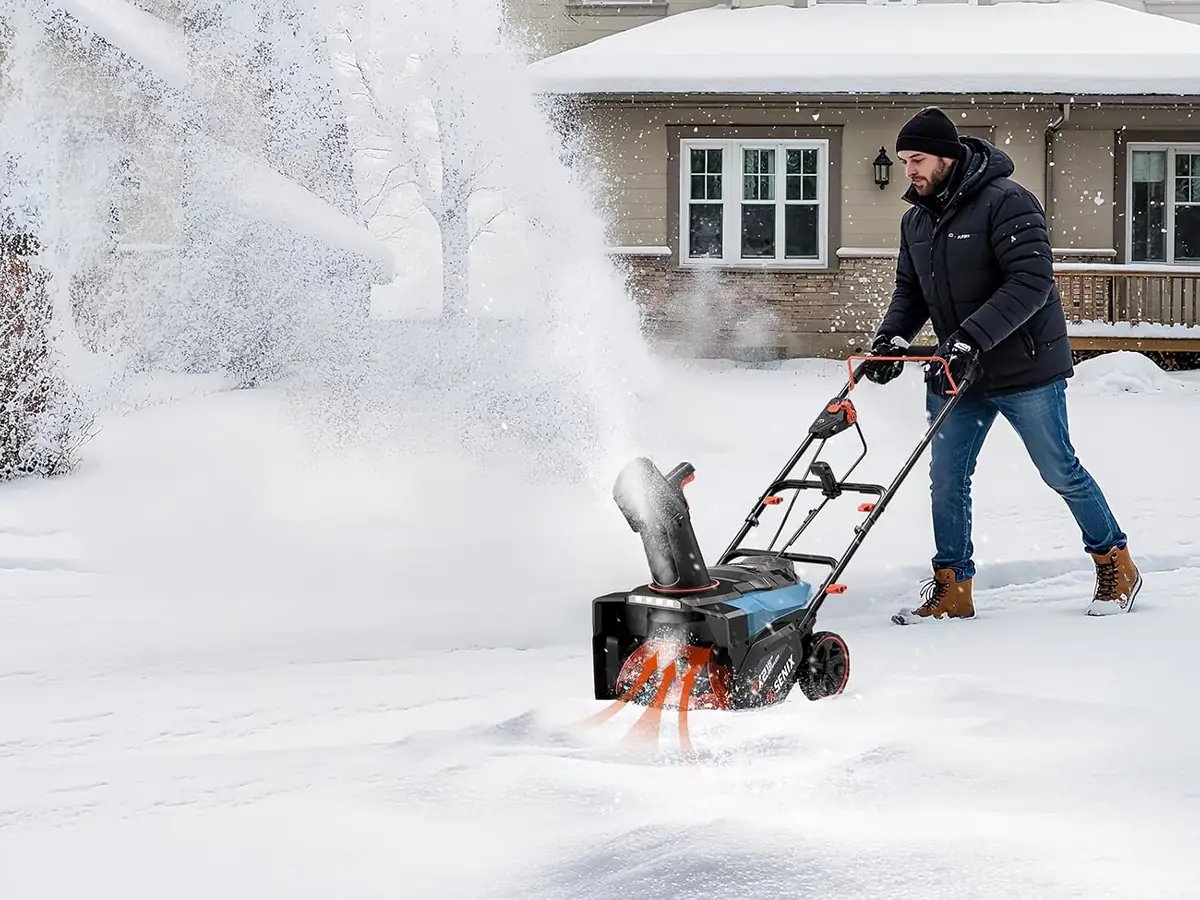
The chute clogged on wet snow once when I walked too fast. I completed the shutdown steps for SENIX in the safety section below, which include removing every installed battery pack, before I went near the chute, and cleared it with a clean tool, never a hand. The cause was my pace, and I checked for damage and restarted only as SENIX’s manual allows.
SENIX’s manual says not to use the machine on a graveled surface unless it is adjusted for one, and the only adjustment is pushing down on the handle. It prints a bystander distance of 33 ft (10 m).
After the shutdown steps in the safety section below, wipe it with a damp cloth only, with no detergents or solvents on the plastic. The manual says to keep the tool and packs at 50 F to 80 F in storage and to use the charger indoors only. What annoyed me was the storage line: a cold shed sits outside that range.
Buy it if your jobs are steps, a deck, a short walk and a narrow gap, and you want a narrow battery machine. Skip it if you have a long drive, gravel, a plow ridge or heavy wet snow, or an unheated shed for storage.
FINAL VERDICT
Reach for the STX2-M when the job is a deck, a step or a gap where width is the problem. A long drive, gravel or a cold shed puts it out of the running.
It is the light battery blower for the steps and the gap.
How to Choose the Best Snow Blower for Seniors
Choose by the jobs that wear you down: starting, steering, lifting and turning, and the chore each power type brings. The six factors below turn each job into a figure you can read on a spec sheet before you buy.
How the Machine Starts
Starting is the job you repeat most, and the order of steps differs by machine. A battery machine starts from a safety button and then a control, and on some the wrong order starts nothing. A corded machine starts with a button and a lever, or with a lock button and a handle. A gas machine starts by recoil, by a key, or by an electric starter that runs from an outlet or from the machine’s own battery. An electric start snow blower is only as handy as its power source, because a cord start needs an outdoor outlet within reach.
| Start method | What you handle | What to read in the manual |
|---|---|---|
| Battery, safety button first | The button, then the control; some machines power down after idle time | The order of the button and the control |
| Corded, button and lever | The cord, an outlet and a hold-to-run lever | The cord gauge, its length and the outlet protection |
| Gas, electric start from a cord | An outdoor cord and an outlet near the machine | The cord rating and the starter time limit |
| Gas, electric start from the machine’s own battery | A key, and a starter battery that must stay charged | The battery charge rule |
| Gas, recoil only | A pull cord and the fuel routine | The primer, choke and throttle steps |
- Ask what the start needs before you ask how fast it is: a charged pack, an outlet, a cord or fuel.
- Read the order of the safety button and the control, because a wrong order can start nothing.
- Check whether a recoil starter is the backup when an electric starter does not turn the engine.
I judge a start method by the place where I start the machine: at the shed wall I have an outlet, and at the farm gate I do not.
Drive and Steering
A self propelled snow blower moves itself while you steer, and a push-only machine makes you supply the force. Between them sit single-stage machines where lifting the handle lets the auger traction assist the machine forward, and track drives where steering clutches stop power to one track for a turn. Steering controls matter more than top speed, because turns near steps and walls are where a heavy machine asks the most of you.
- Look for a speed lever with forward and reverse, so the machine backs out under its own power.
- Look for turn levers that release one wheel or one track.
- Read what the maker says about pulling a push-only machine backwards, because some manuals warn against it.
Pro Tip
List the turns on your drive before you shop. A drive with a turn at a wall or a step asks more of the steering than a straight run does.
On my farm road the straight runs were never the problem; the turns by the yard gate were.
Weight and Handling
Weight is a figure to read with its basis. A maker may print a weight without the battery packs, dry without fuel, or with no basis at all, and a shipping weight on a listing is a different number again. A lightweight snow blower is a different tool from a track machine, and numbers with different bases mislead. Pick the weight you can lift, store and turn.
| Basis printed | What it leaves out or adds | What to do |
|---|---|---|
| Without battery packs | The packs | Add the pack weight from the maker’s battery page |
| Dry | Fuel and oil | Count a full tank on top |
| Machine weight, no basis stated | Packs or fuel may be in or out | Do not compare it with a figure that has a basis |
| Shipping weight on a listing | It adds the packaging | Never use it as the machine’s weight |
- Measure where the machine will live and how wide the door is.
- Decide whether you lift it into a vehicle or up steps, or only roll it.
- Find the hardest turn on your drive and read the steering for it.
Key Takeaway
Match the weight to your lifting and turning. A light machine still needs the right width and a source of power, and a heavy one needs a floor with room to roll it out.
Before I lift or roll any machine at the shed door, I complete the shutdown steps in the shutdown box in the safety section below.
Chute Control
The chute decides where the snow lands, and where it lands decides what you shovel afterward. Some machines turn the chute with a crank on the handle bar, some with a lever, and some with an electric joystick. The deflector sets the height of the stream by a squeeze handle, a lever or the same joystick.
| Control | How it works | What to check |
|---|---|---|
| Crank | You turn a handle to aim left or right | Reach and turn with a glove on |
| Handle lever and trigger | A lever aims the chute and a trigger sets the deflector | Both controls within reach of the grips |
| Electric joystick | One control aims the chute and sets the deflector | What the manual says about the chute after a power-down |
I settle the throw side before I start from the shed and work out along the farm road.
Single-Stage or Two-Stage
The two designs differ in how the snow leaves the machine. A single-stage machine uses one auger that gathers the snow and throws it, and the auger touches the pavement. A two-stage machine uses an auger that feeds an impeller, which throws the snow while the auger stays off the ground. Makers describe single-stage machines for lighter snow on paved surfaces and two-stage machines for larger jobs, and each manual sets its own limits, gravel included.
I read the stage in the manual before I read the width, because it decides which surfaces the maker allows.
Battery, Gas or Cord
Each power type gives you a chore. Battery machines need charging inside the temperature range the manual gives, and a review of vehicle batteries at cold temperatures reports that lithium-ion cells lose available energy in the cold (1). Gas machines need fresh fuel, the right oil and outdoor running only. Corded machines need an outdoor-rated cord that stays clear of the auger.
| Power | What you handle | What to read |
|---|---|---|
| Battery | Packs to charge and carry, a charger and a storage temperature | The charging range and the number of packs |
| Gas | Fuel, oil, outdoor running and a starter that may need a cord or a battery | The fuel grade and the storage steps |
| Corded | An outdoor-rated cord, an outlet and the cord length | The cord gauge and length chart |
- Check the carton list: some kits hold packs and a charger, some are tool only, and a clean-out tool is not always in the box.
- Read the warranty page for the household term and any seller the maker requires.
- Look for the storage line, because some manuals give a temperature range for the machine and the packs.
Pro Tip
Write down where each pack, fuel can or cord will live in winter before you buy. The manual’s storage line decides whether your shed works.
I read where each manual says the packs and the fuel should live before I put a machine in the shed.
Snow Blower Safety and Shutdown Steps
A snow blower has a spinning auger behind its intake and, on a two-stage machine, an impeller behind that. Honda’s manual says hand contact with the rotating impeller inside the discharge chute is the most common cause of injury associated with snow blowers, and EGO’s manual says the same of the rotating auger assembly.
Read the snow blower’s or snow shovel’s manual before you start it, and follow it. Its warnings, its operator rules and its steps for your exact model come before anything in this article.
The Shutdown Box
Shutdown Box
Shut the machine down before you clear a clog, adjust, inspect, clean or service anything, or leave it. Release the drive and auger controls. Never use your hand or foot to clear the chute, the intake or the auger. Gas machine: turn the engine off with its stop switch and wait until every moving part has stopped, for the time your manual gives. Then isolate the engine the way your manual requires for the task: remove the safety key, disconnect the spark plug cap or cable, or both, where your manual says so. Let a hot engine and exhaust cool before you work near them, refuel or store the machine. Battery machine: turn the machine off, wait until every moving part has stopped for the time your manual gives, often 10 seconds, and remove the safety key and every battery pack, in the order your manual gives. Corded machine: turn the machine off, unplug it from the outlet, and wait until every moving part has stopped, as your manual says. Every machine, after the steps for its type: clear a clog only with the clearing tool or method your manual names (a stick only where that manual permits one), never with a hand or a foot. Where your manual gives a different order, wait time, isolation step or tool for the task, follow your manual’s version.
Where a maker’s order differs from the box, the maker’s order wins:
- EGO SNT2807: shut the motors off, remove the battery packs, wait 10 seconds, then use the chute cleaning tool, never a hand.
- EGO SNT2125AP: shut the motor and auger off, remove the battery packs, wait 10 seconds to be sure the auger has stopped, then use a wooden rod or another commercial clearing tool; the box holds none.
- SENIX STX2-M: release the ON/OFF lever, wait 10 seconds, remove every installed battery pack, then use the clean tool the manual names; the delivery list holds none.
- Honda HSS928AATD: stop the engine, wait until all rotating parts have stopped, remove the spark plug cap, then use the snow clearing bar stored on the machine. Honda adds that an obstructed auger or blower could suddenly move when the obstruction is cleared.
- Ariens 921048, clog clearing: stop the engine, remove the key, wait for all moving parts to stop and hot parts to cool, then use the clean-out tool stored on the auger housing.
- Ariens 921048, cleaning, inspection and service: complete the clog steps above and also disconnect the spark plug wire and keep it away from the plug, as Ariens’ manual separately requires.
- WEN 5670: gently release the starting handle, let the auger come to a complete stop, unplug the machine, then wait until every moving part has stopped. WEN names no clearing method, so never use a hand or foot in the chute, and contact WEN or a service center. Never run it with frozen parts: stop, unplug, inspect and let every part thaw before you restart.
- Westinghouse WSnow20: stop the motor, wait for all moving parts to stop, then disconnect the machine from the power supply. The manual names no clearing method, so never use a hand or foot in the housing, and contact Westinghouse or an authorized service center. After striking an object, release the trigger, wait for a complete stop, disconnect, inspect and repair before restarting.
Clogs, Thrown Objects and Protective Gear
Never put your hand or foot into the chute, the intake or the auger, even for a moment. CPSC says injuries most frequently happen when people try to clear the auger or the chute with their hands. Complete the shutdown steps in the shutdown box, wait until every moving part has stopped, and use only the clearing tool or method your manual names; use a stick only where your manual permits one.
A US emergency department analysis of snow blower injuries from 2009 to 2017 calls hand injuries the main injury threat for operators (2), and a report on one city’s record snowfall describes patients who reached into a running machine, some of them sure the auger was disengaged (3). EGO’s own warning label says its machine is capable of amputating hands and feet and throwing objects.
Aim the chute away from people, pets, cars and windows. Before you start, clear toys, boards, wires, hoses and other objects from the area, because the machine can throw whatever it picks up. Use the machine only where you can see well.
- EGO SNT2807: people and pets at least 100 ft (30 m) away, and the discharge away from electrical devices.
- EGO SNT2125AP: other people and pets at least 30 m (100 ft) away.
- Westinghouse WSnow20: bystanders and pets at least 100 ft away, and the discharge away from electrical devices.
- SENIX STX2-M: bystanders at least 33 ft (10 m) away, per its symbol table.
Wear eye protection, gloves and non-slip footwear when you operate the machine, and put them on before you start. Follow your manual’s additional equipment and clothing requirements. Gas snow blowers are loud enough to justify hearing protection, such as ear plugs or ear muffs. NIOSH recommends limiting exposure to 85 dBA over an eight-hour day and halving the time for each 3 dBA more.
- EGO SNT2807: ANSI Z87.1 eye protection with side shields, and no loose clothing, scarves or jewelry.
- EGO SNT2125AP: ANSI Z87.1 eye protection with hearing protection, safety goggles or glasses with side shields and a full face shield, rubber boots, footwear that improves footing, and no loose clothing, scarves or jewelry.
- Westinghouse WSnow20: ANSI Z87.1 eye protection with side shields, hearing protection whenever operating, gloves and rubber boots.
- WEN 5670: eye protection, and a respiratory mask, non-skid safety shoes and hearing protection as the conditions call for.
- SENIX STX2-M: eye, hearing and breathing protection and gloves, per its symbol table.
- Honda HSS928AATD: eye protection and non-slip boots.
- Ariens 921048: hearing protection, per its safety decal.
Keep children, pets and other people away from the work area while the machine runs, and never let a child use the machine. EGO’s manual adds that adults must not operate the machine without proper instruction, and WEN’s manual says to operate it only when alert and not tired or under the influence of drugs, alcohol or medication.
Cord, Battery, Gas and Cold
Use the outlet protection and the extension cord your manual specifies. Use only an outdoor-rated extension cord of the type, gauge and length your manual gives, and use a GFCI-protected outlet where your manual calls for one. Keep the cord away from the auger and the discharge, and know where the cord is at all times. Do not use the machine in rain or in damp or wet places where your manual says not to, and do not let water get on the unit.
- Westinghouse WSnow20: an outdoor cord of the types its manual lists, 14 AWG up to 25 ft and 12 AWG up to 50 ft, a GFCI outlet advised, and no rain.
- WEN 5670: an outdoor-rated cord, 14 gauge up to 25 ft and 12 gauge up to 50 ft, with 100 ft and 150 ft runs not recommended, GFCI protection on the circuit or outlet, no rain or wet conditions, and no change to the plug.
- Ariens 921048: the 120 V electric start takes a listed, grounded, outdoor-rated cord of 13 amp minimum.
Complete the shutdown steps in the shutdown box before you charge, swap or store a pack. Use only the battery packs and the charger your maker specifies for your exact machine, and charge them as your manual describes. Do not charge a frozen pack, and charge only inside the temperature range your manual gives for the pack and charger: a pack that has thawed can still be too cold to charge. Do not use a damaged pack or a damaged machine. Keep spare packs and the charger indoors in winter, and store the packs as your manual describes.
- EGO SNT2807 and SNT2125AP: best charging between 41 F and 104 F, and packs stored where the temperature will not drop below -4 F.
- EGO SNT2807: no use in standing water or slush puddles, and no hose washing; its splash rating holds only with the battery compartment closed.
- EGO SNT2125AP: keep pack terminals away from metal objects, and do not use a damaged or modified pack or machine.
- SENIX STX2-M: the charger indoors only, the tool kept dry and away from rain, and the tool and packs stored at 50 F to 80 F.
- Honda HSS928AATD: the starter battery must stay charged, and leaving the engine switch on with the engine stopped drains it.
Only where your manual describes a cold battery pack as the reason a machine will not start, complete the shutdown steps in the shutdown box, then warm the battery packs indoors as your manual says and try again. A jam, a frozen control or a pack that is hot, swollen, leaking or damaged is not a cold pack: do not force a frozen control, do not retry, and do not charge or use a damaged pack or machine. EGO’s manuals say the machine may not start when the battery temperature is -4 F (-20 C) or less, and ask you to warm the pack indoors for 10 minutes or longer.
Run a gas snow blower outdoors only, never in a garage, a shed or any enclosed or poorly ventilated space. The exhaust contains carbon monoxide, which you cannot see or smell and which can kill in minutes. Opening a garage door does not make it safe to run the engine inside. Keep the exhaust away from windows, doors and vents.
Before you refuel, complete the shutdown steps in the shutdown box and let the engine cool. Refuel outdoors, never in a garage or a shed, away from flames and sparks. Fill the fuel tank only with the fuel your manual names, only as full as your manual says, tighten the cap fully, and wipe up spilled fuel before you start the engine.
- Honda HSS928AATD: unleaded fuel of 86 octane or higher with no more than 10% ethanol, and a fill to about 1.4 in. (35 mm) below the top of the filler neck.
- Ariens 921048: fresh unleaded fuel of 87 octane or higher, E10 at most, no E85, and stabilizer in all fuel; blends above 10% ethanol void the warranty.
Engine oil is a separate job: do it only as your manual describes, and never put it in the fuel tank unless the manual says so.
Footing, Gravel and Upkeep
Follow your manual’s slope limit and its instructions for working on a slope, and do not try to clear steep slopes. Use extreme caution on slopes and when you turn. Wear non-slip footwear, and stop work if you do not have secure footing, releasing the controls as your manual directs.
- EGO SNT2807: not on grades steeper than 10%, and work across the grade.
- EGO SNT2125AP: the manual edition on the listing says to use extreme caution on slopes, and not to use the machine on ice.
- Honda HSS928AATD: not on a slope over 20 degrees, and never on a roof.
- Westinghouse WSnow20: not on ice, because you can slip and fall, and not on frozen lakes, rivers or roofs.
Use the machine on gravel only if its manual permits it. A single-stage machine can pick up stones and throw them, so the makers say not to use one there, and some two-stage manuals forbid gravel roads and driveways too. Stones can still be thrown, so clear stones and objects from the throw path. Before you adjust the skid shoes or the scraper, complete the shutdown steps in the shutdown box; then, where the manual permits gravel, set the skid shoes as it says.
- Honda HSS928AATD: never use it to clear snow from a gravel road or driveway.
- EGO SNT2125AP: do not use on a graveled surface.
- SENIX STX2-M: not on gravel unless adjusted for it, and the only adjustment is pushing down on the handle.
- EGO SNT2807: gravel only after the skid shoes are adjusted for it.
- Ariens 921048: two 22 mm spacers under the scraper ends for gravel, the shoes lowered to touch, and extreme caution on gravel drives.
- Westinghouse WSnow20: a hard, clean surface, because gravel, sand and debris can be picked up and thrown at you.
Before you check or change a shear pin, a scraper bar, skid shoes, paddles or a belt, complete the shutdown steps in the shutdown box. Use only the replacement parts your maker names; a shear pin is meant to break to protect the gearbox and motor, so never replace it with an ordinary bolt. EGO stores two spare shear pins on the SNT2807, Honda and Ariens use shear bolts, and the SNT2125AP has no shear pins.
If your manual directs you to run the machine for a few minutes after clearing so melted snow flings off, do that outdoors. Then complete the shutdown steps in the shutdown box, let a hot engine cool, and wipe the machine dry. Do not wash it with a hose or water if your manual says not to.
At the end of the season, complete the shutdown steps in the shutdown box, then store the battery packs indoors as your manual says. On a gas machine, add fuel stabiliser and run the engine outdoors, or empty the tank, as your manual says, then complete the shutdown steps again before you store it. Never store the machine with fuel in the tank in a building near a water heater, space heater or dryer.
- Honda HSS928AATD: under 1 month, fresh gasoline in the tank; 1 to 3 months, fresh gasoline plus stabilizer and a drained carburetor; over 3 months, drain the tank and the carburetor; run the engine outdoors for 10 minutes after adding stabilizer, then complete the shutdown steps in the shutdown box and let the engine cool before you rinse the auger housing and tracks with a garden hose.
- Ariens 921048: run the engine outdoors at least 5 minutes after adding stabilizer, then complete the shutdown steps in the shutdown box and let hot parts cool before you wash salt off with mild soap and low-pressure water.
- SENIX STX2-M: clean it with a damp cloth only.
Heart Strain and Snow Clearing
Heart Strain and Snow Clearing
The American Heart Association says the strain of heavy snow shoveling may be as demanding on the heart as a treadmill stress test, and that cold air constricts blood vessels throughout the body. The association also says that using a snow blower raises the heart rate to around 120, compared with about 170 while shoveling, and still advises caution: people with heart disease or major risk factors should have someone else clear the snow.
In a small test of ten healthy young men clearing heavy wet snow, shoveling pushed the heart close to its maximum, and the responses were lower with an electric snow thrower (4). In a study of men with symptom-free coronary artery disease and good work capacity, snow blowing and shoveling produced a similar heart rate and oxygen uptake (5). Neither study says a snow blower is safe for a person with heart disease.
When my arms tire or my hands go cold, I stop for a break instead of finishing the drive.
My Overall Verdict
Seven machines, three questions: how each starts, how it steers and what you have to move. Each review says who should skip its machine.

1. EGO Power+ SNT2807 28-Inch Two-Stage Cordless Snow Blower Kit Best Overall
The EGO SNT2807 suits a wide paved drive where you want no pull cord, a self-propel drive and a chute you aim from the handle.
2. Honda HSS928 28-Inch Track-Drive Two-Stage Snow Blower (HSS928AATD) Best Premium
The Honda HSS928AATD suits a paved drive with a slope, for a buyer who will pay for a cord-free key start and a track drive.
3. WEN 5670 20-Inch Corded Electric Snow Thrower Best Value
The WEN 5670 suits a short paved path near an outlet and the buyer with the lowest budget.
I recommend the EGO Power+ SNT2807 28-Inch Two-Stage Cordless Snow Blower Kit first because it takes the pull cord, the fuel and the chute crank out of the work, and I keep the corded and smaller battery machines for short paths. The best snow blower for seniors is the one whose start, steering and weight you can manage on your own drive.
Why EGO Power+ SNT2807 28-Inch Two-Stage Cordless Snow Blower Kit Might Be the Best Choice
I recommend the EGO SNT2807 first because it covers the three jobs this page is about with the fewest things to manage. It starts with no pull cord, it moves itself forward and in reverse at a speed you set, and its joystick aims the chute and the deflector from the handle.
The trade-off is plain: 181 lb without the packs, two 12.0Ah packs to charge and carry, and a 28 in. width that does not suit steps or a tight garage. EGO’s manual allows gravel only after you adjust the machine, and it prints a 10% grade limit.
These are the facts that decided it:
✓ No pull cord and no fuel, per EGO’s manual.
✓ Variable-speed self-propel with forward and reverse.
✓ An electronic joystick for the chute and the deflector on the handle.
✓ Heated grips and LED headlights as standard.
✓ Two 12.0Ah packs and a dual port charger in the kit.
Frequently Asked Questions
What is the best snow blower for elderly people?
The best snow blower for elderly people is the one whose start, steering and weight the owner can manage, and here the EGO SNT2807 leads on those printed facts. It has no pull cord, a self-propel drive and a joystick chute, but it is the heaviest battery machine here, so read its weight against your own turns.
At what age should a person stop shoveling snow?
The age at which a person should stop shoveling snow is not one I can give, and the American Heart Association says the strain of heavy snow shoveling may be as demanding on the heart as a treadmill stress test. It also says people with heart disease or major risk factors should have someone else clear the snow.
What is the difference between a single-stage and a two-stage snow blower?
A single-stage snow blower uses one auger that gathers and throws the snow, while a two-stage snow blower uses an auger that feeds an impeller, which does the throwing. Makers describe single-stage machines for lighter snow on paved surfaces and two-stage machines for larger jobs, and each manual sets its own limits.
How long does gas last in a snow blower?
Gas stays fresh in a snow blower only for a limited time, and the makers set the limits: Honda’s manual says fuel can deteriorate in as little as 30 days, and Ariens asks for stabilizer in all fuel. Neither prints a run time per tank, so follow your own manual’s storage steps for the machine you buy.
Are handheld snow blowers any good?
Handheld snow blowers, which makers sell as power snow shovels, are made for steps, decks, paths and light snow, and each maker prints a snow depth for its model. They do not replace the machines on this page for a drive, so match the tool to the job and read the printed depth.
References
- Jaguemont J, Boulon L, Dubé Y. A comprehensive review of lithium-ion batteries used in hybrid and electric vehicles at cold temperatures. Appl Energy. 2016;164:99-114.
- Hammig B, Jones C. Hand injuries associated with reaching into a snow blower to clear clogged snow. Am J Emerg Med. 2020;38(4):785-788.
- Tetz DJ, Aghababian R. Hand Injuries From Snow Blowers: A Report of an Epidemic. Prehosp Disaster Med. 1995;10(4):265-267.
- Franklin BA, Hogan P, Bonzheim K, et al. Cardiac Demands of Heavy Snow Shoveling. JAMA. 1995;273(11):880-882.
- Sheldahl LM, Wilke NA, Dougherty S, Tristani FE. Snow blowing and shoveling in normal and asymptomatic coronary artery diseased men. Int J Cardiol. 1994;43(3):233-238.
Safety Note: Snow blowers and power shovels throw snow, ice and hidden objects with force. Never put a hand or foot into the chute, intake or auger. Before you clear a clog, adjust, service or store the machine, release the controls and shut it down in the order your manual gives for your exact model. The steps are: on a gas machine, stop the engine, remove the key and disconnect the spark plug cap or wire where the manual says, and let the engine cool; on a battery machine, switch it off and remove every battery pack, and the safety key if it has one; on a corded machine, switch it off and unplug it. Touch nothing until every moving part has stopped and any waiting time your manual gives has passed, and clear a clog only with the tool or method your manual names. Aim the chute away from people, pets, cars and windows. Run a gas machine outdoors only, never in a garage, a shed or any enclosed or poorly ventilated space, even with the door open, and keep the exhaust away from windows, doors and vents.