
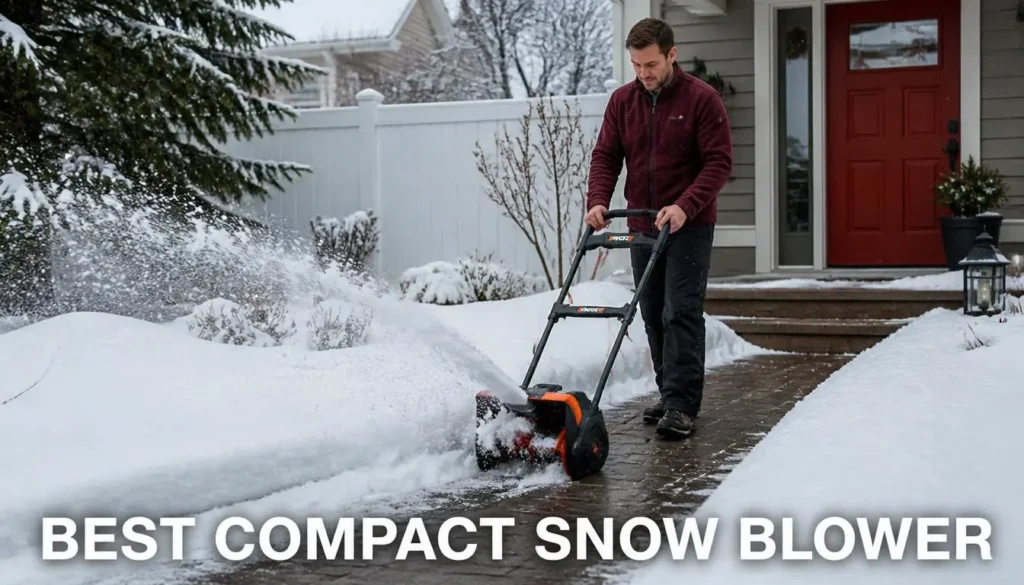

The best compact snow blower is a machine you can carry up a step, fold away and steer along a short drive, a path or a porch. I keep up a 3.7-acre orchard and the yard around the house, so I judge each machine by the paths I have to open.
Affiliate Disclosure: Garden Power Scout is a proud participant in the Amazon Services LLC Associates Program. As an Amazon Associate, we earn from qualifying purchases, at no extra cost to you.
I picked five I recommend, two corded and three on batteries, from 18 to 21 in. wide. My top pick is the Westinghouse WSnow20 20-Inch Corded Electric Snow Blower, which plugs into an outdoor outlet and lists a 31.1 lb machine weight in its manual.
Best Compact Snow Blower Reviews 2026 With 5 Models I Put to Work
These five machines are two corded and three battery blowers, each between 18 and 21 in. wide. The choice comes down to a cord or a pack, and to the weight you can handle on your own paths and surface.
1. Westinghouse WSnow20 20-Inch Corded Electric Snow Blower Best Overall
The Westinghouse WSnow20 is the corded machine for a concrete pad, a path and a porch within reach of an outlet. It cuts a 20 in. path with a 10 in. intake height, and Westinghouse’s manual lists the machine at 31.1 lb, a figure to judge against where you store and carry it. For a short paved drive and the walk to the door, it is my best compact snow blower.

WHY I CHOSE THIS ✓
I put it first because everything it asks for is an outlet and a hard surface. The headlights, the bail lever and the handle-mounted chute controls are what I look for on any small machine, and Westinghouse backs it with a published two-year warranty document and lifetime technical support. Light, 20 in. wide and simple to set up beside an outlet is the case for it, and the cord and the 10 in. intake are the price.
Westinghouse WSnow20 20-Inch Corded Electric Snow Blower Specs
Key Features:
- Corded power: 120 V and 15 A mean no pack to charge and no fuel to carry, and the only limit is how far your outdoor cord reaches.
- 20 in. path: a wide strip per pass keeps a short walk to a few passes along the same line.
- 10 in. intake height: Westinghouse’s printed figure for the snow the auger takes in, so a deeper fall is taken in layers.
- Crank chute and deflector: a crank turns the chute 180 degrees and a squeeze-and-lock handle sets the deflector, and complete the shutdown steps in the safety section below before you adjust either, and Westinghouse’s manual adds that the unit must be disconnected from the power supply for it.
- Dual LED headlights: a dark winter morning stays workable without a lamp in your other hand.
- Start button plus bail lever: the machine cannot start by accident while it is plugged in and the button is not held.
- Cord retainer hook: the loop of extension cord sits on the unit, and the manual says not to run it without the hook.
On the 40 by 30 ft concrete pad in front of the machinery shed I plugged in at the shed wall and worked outward, so the cord always trailed over snow I had already cleared. Westinghouse lists a 20 in. clearing width. That is the whole pattern with a corded blower: the cord sets your route. Westinghouse rates the throw at up to 29.5 ft and gives 680 lb of snow per minute as its own claim, and I read both as best-case figures from the maker’s test snow.
The cord is the second thing to weigh. Westinghouse’s chart lists 14 AWG up to 25 ft and 12 AWG up to 50 ft, an outdoor cord with the types the manual names, and a GFCI outlet, and the manual says to keep the unit out of rain. The cord, GFCI and discharge lines for every corded machine on this page are in the safety section below.
The second job was the apron at the shed door on a day of snow near freezing. That snow packs, and the chute packed with it. The shutdown steps in the safety section below came first, I restarted only once the chute was clear, and I read Westinghouse’s clearing instructions before the first storm because the box holds no clean-out tool. The manual rates continuous work above 23 F, so I keep the long runs for milder mornings.

Stop at the edge of the gravel. Westinghouse says gravel, sand and debris can be picked up by the air inlet and thrown at you or at bystanders, so I end each pass at the edge of the pad and shovel the crushed-stone strip by hand.
A corded machine puts an extension cord on the snow, so know where the cord is at all times and keep it away from the auger and the discharge, as Westinghouse’s manual directs. Westinghouse also says to keep the discharge away from electrical devices.
After the shutdown steps in the safety section below, wipe it dry, clean up the melted drips on the floor (a slip hazard, says the manual), fold the upper handle down and store it indoors, away from fertilizer and rock salt. The manual calls for no lubrication. If the auger turns but the snow does not move, Westinghouse points to the drive belt first. What annoyed me was the cord at the end of each pass: I step over it as I pivot, and I never stopped noticing it.
Buy it if your snow job is a short paved drive, a walk and a porch apron within a cord’s reach of an outlet. Skip it if the drive is gravel, longer than your cord can reach, or regularly deeper than the 10 in. intake. It also suits nobody who dislikes dragging a cord.
FINAL VERDICT
The WSnow20 is where I send a buyer with a short paved job and an outlet nearby. It asks for a hard surface and a cord, and it gives a light, wide machine that starts with a button and a bail lever.
It is the corded blower for the shed pad and the porch.
2. EGO Power+ SNT2134 21-Inch Single-Stage Snow Blower Best Premium
The EGO SNT2134 is the cordless pick for a paved drive and a walk, and the premium choice on this page. It cuts a 21 in. path with a 13 in. intake height, and the kit holds two 6.0 Ah packs and a dual port charger. If you already own EGO 56V packs, it is the best small snow blower to add to the shed.

WHY I CHOSE THIS ✓
I put it second and call it my premium choice because everything you touch sits on the handle: the chute levers, the deflector detents, the auger speed dial and the heated grips. EGO backs it with a 5-year tool warranty and a 3-year battery warranty, and the packs carry over to other EGO 56V tools. I pick it for an owner who wants a cordless blower with a finished feel.
EGO Power+ SNT2134 21-Inch Single-Stage Snow Blower Specs
Key Features:
- Two packs in the kit: the 56V 6.0 Ah packs and the dual port charger come in the box, and the same packs fit other EGO 56V tools.
- 21 in. path, 13 in. intake height: EGO’s printed figures for the width of the cut and the snow the auger takes in.
- Auger speed dial: it sets the throw, and EGO’s up to 45 ft rating is its best-case figure.
- Handle levers for the chute: each lever moves the chute 100 degrees left or right, and the deflector handle has detents.
- Electric brake: EGO says the auger stops within 3 seconds of releasing the bail switch.
- Heated grips and headlights: the grips run in a 95 to 131 F range and switch off after 10 minutes idle, and the LED lights sit on the deck and the handle.
- Overload response: the motor slows the auger first, which is the cue to feed it less snow, and if it cuts out and flashes orange you stop and complete the shutdown steps in the safety section below before you inspect it.
On the 4 ft path to the house door the chute levers and the deflector handle sit within reach of the grips, and that control layout is what makes this machine feel finished. The auger speed dial sets the throw, and I pick the setting by where the pile lands, the open grass strip beside the pad, and not by the 45 ft figure on the page.
At 66 lb without packs, per the manual, it is a heavy machine for a single-stage blower, and it is push only. The weight showed on the turns at the end of the path, where the machine pivots on its wheels. EGO’s manual sets a slope limit of 10 percent, so it stays off steep ground.
The scraper bar caught on the raised edge of the concrete pad in front of the machinery shed, a small ridge that a shovel never notices. EGO sells skid shoes and lists the scraper bar as a wear part, so that edge is where I expect the wear. On a thaw day, with meltwater standing on the pad, I left it in the shed: EGO prints an IPX4 splash rating that holds only with the battery compartment cover closed, and the manual says to wipe up melt that drips from the machine because it is a slip hazard.

A pack swap is a hands-on step, so complete the shutdown steps in the safety section below first, then keep the second set of packs indoors and swap them when the first pair feels weak in the cold. EGO’s manual gives a charging window of 41 to 104 F and says to store packs where the temperature will not drop below -4 F.
EGO’s manual limits a single pack to snow of 3 in. or less that is not very wet or icy, so treat the two packs as the working setup. The packs, the charger and the cold rules are in the safety section below.
The manual lets you replace the rubber paddles and the drive belt yourself, and the skid shoes and scraper bar are listed wear parts. EGO Connect over Bluetooth carries firmware updates. For storage, once the shutdown steps in the safety section below are done, the manual has you wipe the compartment and fold the side rails, after turning the chute fully left and setting the deflector to its lowest detent.
Choose it if you want a cordless blower for a paved drive and a walk, or if you already run EGO 56V tools. Skip it if your drive is gravel, steeper than 10 percent or longer than two packs will cover. EGO’s manual says not to use it on a graveled surface, and it is push only.
FINAL VERDICT
The SNT2134 is the premium pick for a paved drive when a finished control layout matters more than weight. The one decision it asks of you is whether you want to steer a push machine that weighs 66 lb without its packs.
It is the cordless blower with everything on the handle.
3. WEN 5670 20-Inch Corded Electric Snow Thrower Best Value
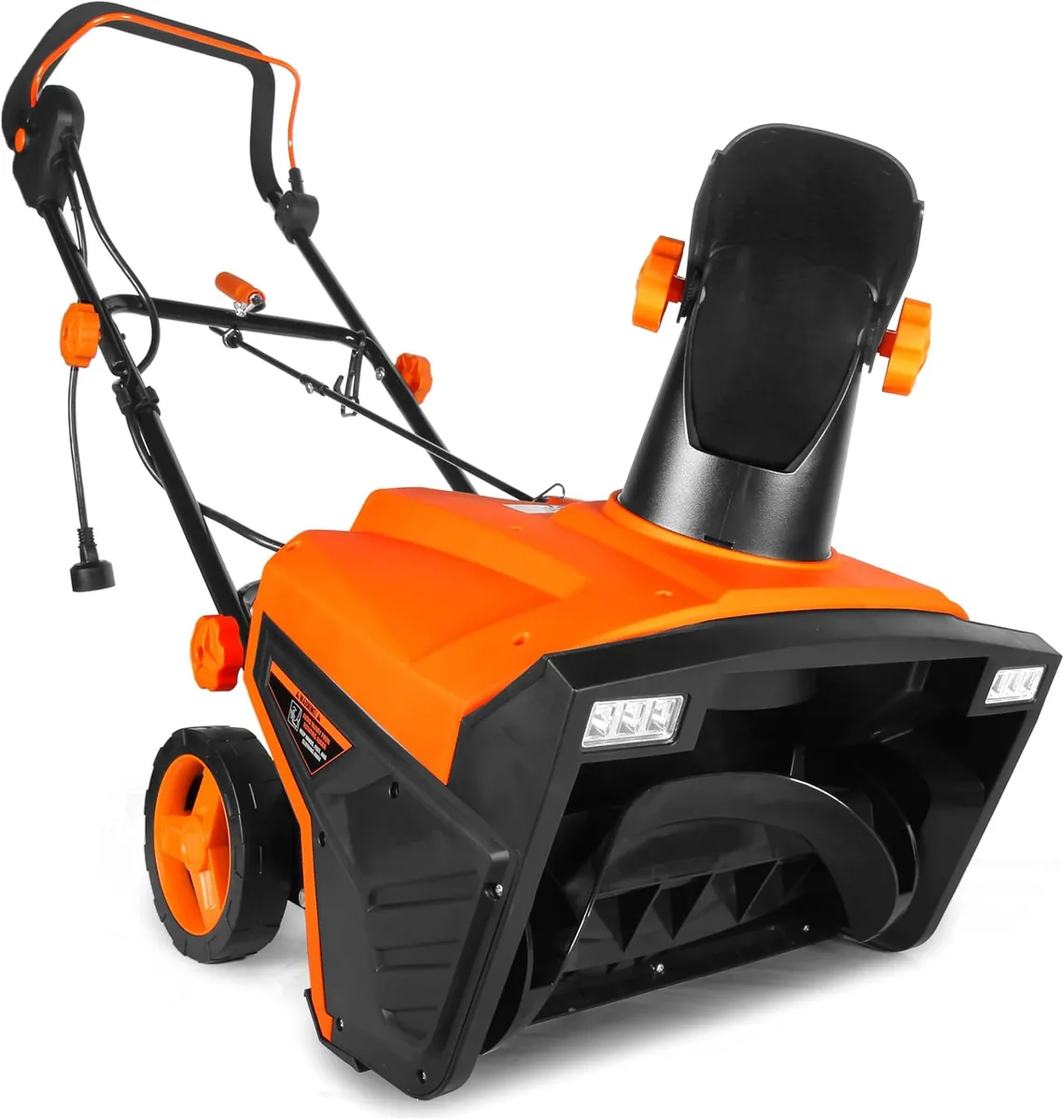
The WEN 5670 is the budget machine that makes a corded blower an easy first buy: 20 in. wide, 10 in. deep and 29.3 lb in WEN’s manual. I call it the best small electric snow blower for a short paved path when the lightest tool to carry matters. Its value is scoped to hard surfaces within cord reach, and that is where it earns its place.
WHY I CHOSE THIS ✓
I chose it for value because a budget price still buys a full manual with a parts list and a two-year home warranty. The scope is a short paved path within a 50 ft cord of an outlet. Its limits are plain: the cord ties it to the outlet, the intake is 10 in., and the warranty remedy is replacement of parts.
WEN 5670 20-Inch Corded Electric Snow Thrower Specs
Key Features:
- 15 A corded motor: 120 V and 60 Hz, 3000 RPM with no load, with no pack to charge and no fuel to carry.
- 20 in. wide, 10 in. deep: WEN’s printed width and depth for a short walk or a porch apron.
- Two-hand start: the safety lock button and the starting handle must be held together, and that keeps a bump from starting it.
- Crank chute and squeeze deflector: the crank turns the chute 0 to 180 degrees and the squeeze handle angles the stream from 15 to 60 degrees.
- Two front LED lights: they sit across the front of the housing for early starts.
- Cord holder and handle hook: the extension cord loops through the holder and over the hook so the plug does not pull apart.
- 7.1 in. wheels: the body pivots on its wheels, which is how the manual has you turn around instead of pulling the unit backwards.
The manual has you start near the outlet and work outward, and to turn I step over the cord and pivot on the wheels. The rule I had to unlearn is reversing: WEN says never to pull the unit backwards through the snow, because snow enters the air vents at the back, so I turn the machine around and push forward every time.
Set the chute first: complete the shutdown steps in the safety section below, and note that WEN’s manual adds that the tool must be off and unplugged for adjusting. Crank clockwise to throw left, counter-clockwise to throw right, and lock the deflector. Then the start asks for both hands: you hold the safety lock button, then the starting handle, and once the lock button is released the handle stays held against the push handle. WEN says never to direct the chute at the operator, bystanders, vehicles or windows.
After the shovel, my shoulders and lower back noticed the difference, and the path to the house door was open sooner. WEN also says the normal noise may make it hard to hear approaching people, so I check around me before I start. Afterwards the manual has you run it a few minutes so the collector and impeller do not freeze; then the shutdown steps in the safety section below come before you turn the crank several times or wipe the machine down.
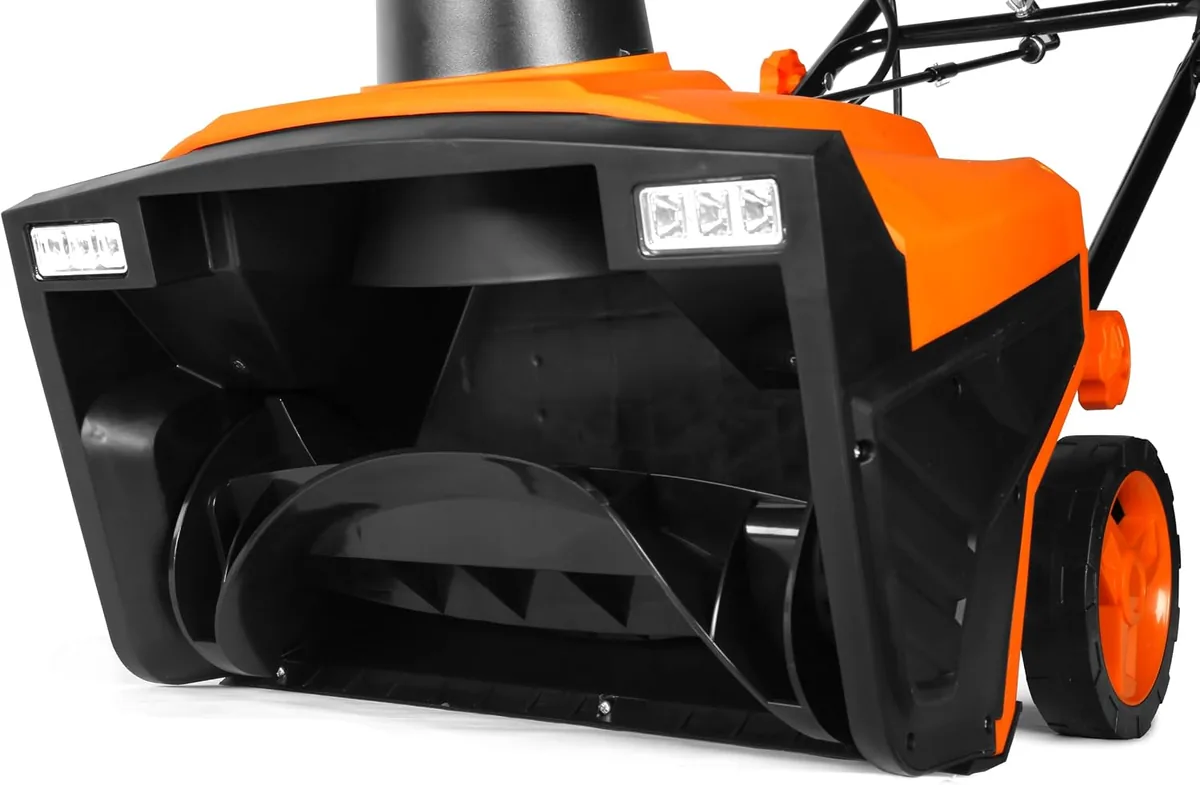
Loop the cord through the holder and over the handle hook before you pull the lock button. WEN lists 14 gauge to 25 ft and 12 gauge to 50 ft for a 15 A cord, and it marks 100 ft and 150 ft as not recommended, so measure your run first.
WEN says never to use your hands on the chute, and WEN’s manual names no clearing tool or method beyond switching off and unplugging, so contact WEN if snow stays packed, and the shutdown steps are in the safety section below. WEN’s warranty statement voids the warranty for purchases through third-party or secondhand vendors, so read it before you order.
WEN’s manual wants a separate circuit with a 15 A time-delayed fuse and wire not under 12 gauge, and the unit is double insulated with a polarized plug that you must not modify. It uses lifetime lubrication, and WEN warns that lubricating may damage the unit, so the oil can stays on the shelf. Frozen parts are never forced or thawed with a flame. The cord is the one thing I never stopped managing, and the manual’s cord holder and handle hook are the habit that makes it tolerable: loop first, then start.
Pick it for a short paved drive, a porch apron and a walk within a long cord of an outlet, in light to moderate snow. Skip it for gravel, long drives, deep snow or heavy wet snow, and for anyone who dislikes a cord.
FINAL VERDICT
The WEN 5670 is the value choice for a short paved job near an outlet. Pay for it with a cord and a 10 in. intake, and it returns a light, full-width machine at the lowest cost of the five.
It is the budget corded blower for the porch and the path.
4. SENIX 40V 18-Inch Cordless Single-Stage Snow Blower Best Small Lightweight Snow Blower
The SENIX STX2-M pairs an 18 in. cut with a printed machine weight of 31.1 lb, and SENIX publishes no weight with the two packs. That makes it a small lightweight snow blower for a path to the shed, a short walk and a narrow gap, where a wider machine gets in the way. The box holds two packs and the charger.

WHY I CHOSE THIS ✓
I chose it for width and weight: an 18 in. path and 31.1 lb for the machine, as SENIX prints it, which is what a narrow path, a gap beside a wall and a short walk call for. The two packs and the charger come in the box.
SENIX 40V 18-Inch Cordless Single-Stage Snow Blower Specs
Key Features:
- 18 in. path, 8 in. cut depth: SENIX’s printed width and clearing depth.
- Chute rod at the grip: a mechanical rod turns the chute 180 degrees and a squeeze trigger sets the throw height.
- Auger speed lever: it sets the removal and throw speed, and the 33 ft figure is SENIX’s best case.
- Start order: safety switch button first, then the ON/OFF lever.
- Brushless motor: 1,500 W rated output, with an LED light that comes on at start.
The path from the house door to the shed pad is the job I matched it to, because an 18 in. cut suits a narrow path. Before I lift it out of the shed, I complete the shutdown steps in the safety section below. Then I judge it by the 31.1 lb SENIX prints for the machine, with no weight published for the two packs.
SENIX says actual runtime varies with snow depth, density, temperature, auger speed and battery condition, so real runtime is shorter in deep, wet snow and at low temperature. The manual recommends storing the tool and packs at 50 to 80 F, a range an unheated shed does not meet, so the packs and the charger stay indoors. The symbol table says to use the charger indoors only, so before a forecast storm I complete the shutdown steps in the safety section below and then charge both packs indoors.
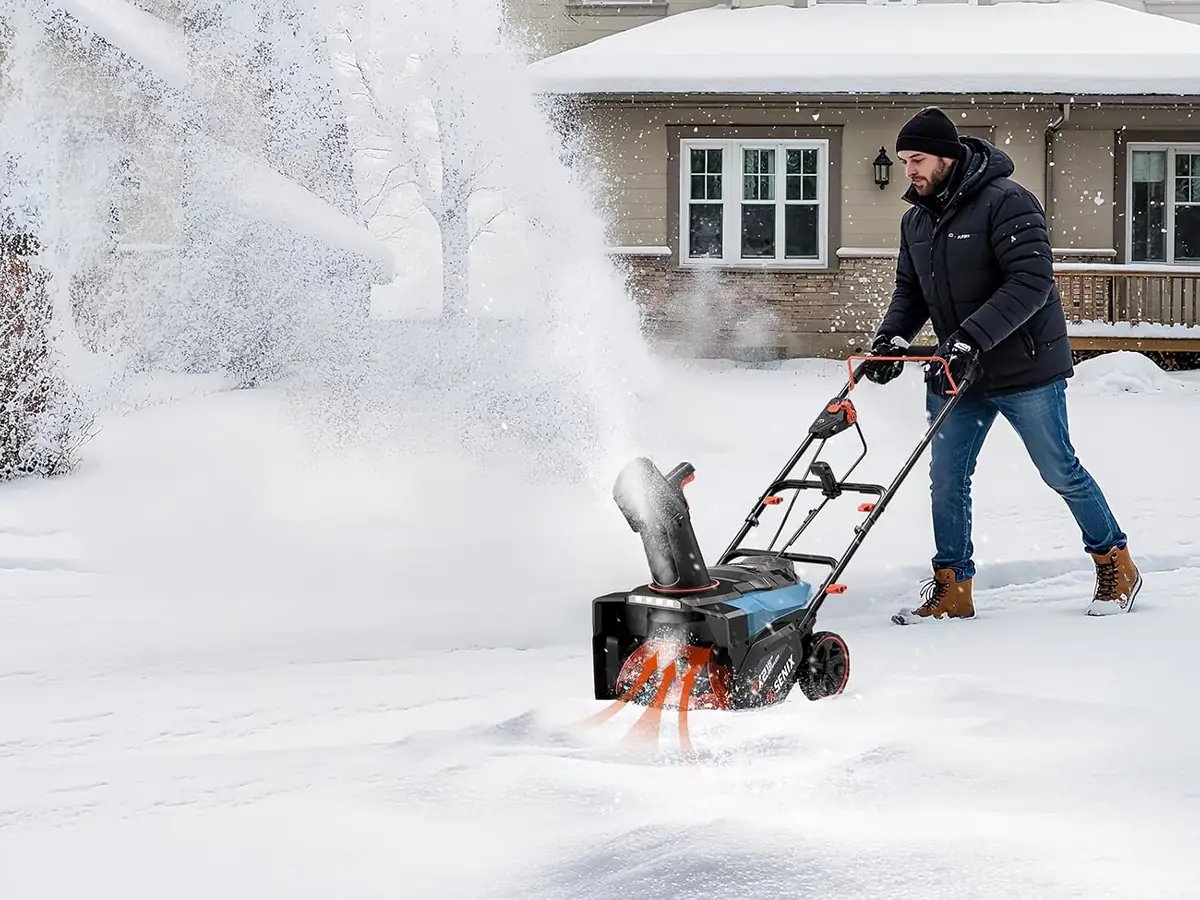
The shutdown steps in the safety section below come before you touch the roll shaft and rubber plates, which SENIX’s manual has you check before first use: they must be screwed down and facing the right way.
SENIX’s manual says do not expose the unit to rain or wet conditions. After the shutdown steps in the safety section below, use a damp cloth only and never a detergent or solvent on the plastic.
The box has no clean-out tool, though the manual says always to use a chute clean tool, so I hang a clearing tool by the shed door. It is push only, and the belt and the scraper bar are the serviceable parts the manual covers.
Pick it for narrow paths, gaps and short walks where weight and width matter more than reach. Skip it for a long drive, gravel, heavy wet snow, the plow ridge or an unheated storage shed, and skip it if you want self-propel.
FINAL VERDICT
The STX2-M is the light cordless choice for narrow, short jobs. Take the 18 in. path and the kit in the box, and plan on a clearing tool of your own and a warm place for the packs.
It is the light cordless blower for narrow paths and gaps.
5. SENIX 40V 21-Inch Cordless Single-Stage Snow Blower Best Small Battery Snow Blower
The SENIX STX2-M1 is the best small battery snow blower on this page for a buyer who wants a 21 in. cordless cut at a lower tool weight and a lower price tier. It puts a 21 in. path on a 36 lb tool weight, and the box holds two 5.0 Ah packs and a dual-port charger.

WHY I CHOSE THIS ✓
I chose it for four printed facts together: a 21 in. path at a 36 lb tool weight, both packs and the charger in the box, a chute turned by a button, and a mid-range price tier. That is a 21 in. cordless machine at a lower weight and price tier, and it is push only, with the packs and charger in the box.
SENIX 40V 21-Inch Cordless Single-Stage Snow Blower Specs
Key Features:
- Button-turned chute: one button turns the chute through 180 degrees and a trigger sets the deflector.
- Auger speed button: it varies the no-load auger speed, and the 33 ft throw is SENIX’s best case.
- 21 in. path, 12 in. plow depth: SENIX’s printed width and depth for a short drive or a walk.
- Packs and charger in the box: two 5.0 Ah packs and a dual-port charger, and the packs fit SENIX’s other X2 tools.
- Start order: power button first, then the starter lever.
On cold powder and on snow near freezing the same machine behaved differently, and I watched which one packed in the chute. The near-freezing snow did. SENIX’s manual warns that heavy wet snow loads the belt and means the belt needs replacing more often, so on the days the snow sticks I feed it less snow per pass. If the chute packs, the shutdown steps in the safety section below come first, and I restart only after the cause is cleared.
SENIX’s spec table gives a maximum runtime of 15 minutes with two 5.0 Ah packs and states no conditions. Real runtime is shorter in deep, wet snow and at low temperature. The pair holds about 180 Wh by my arithmetic, 36 V times 5.0 Ah.
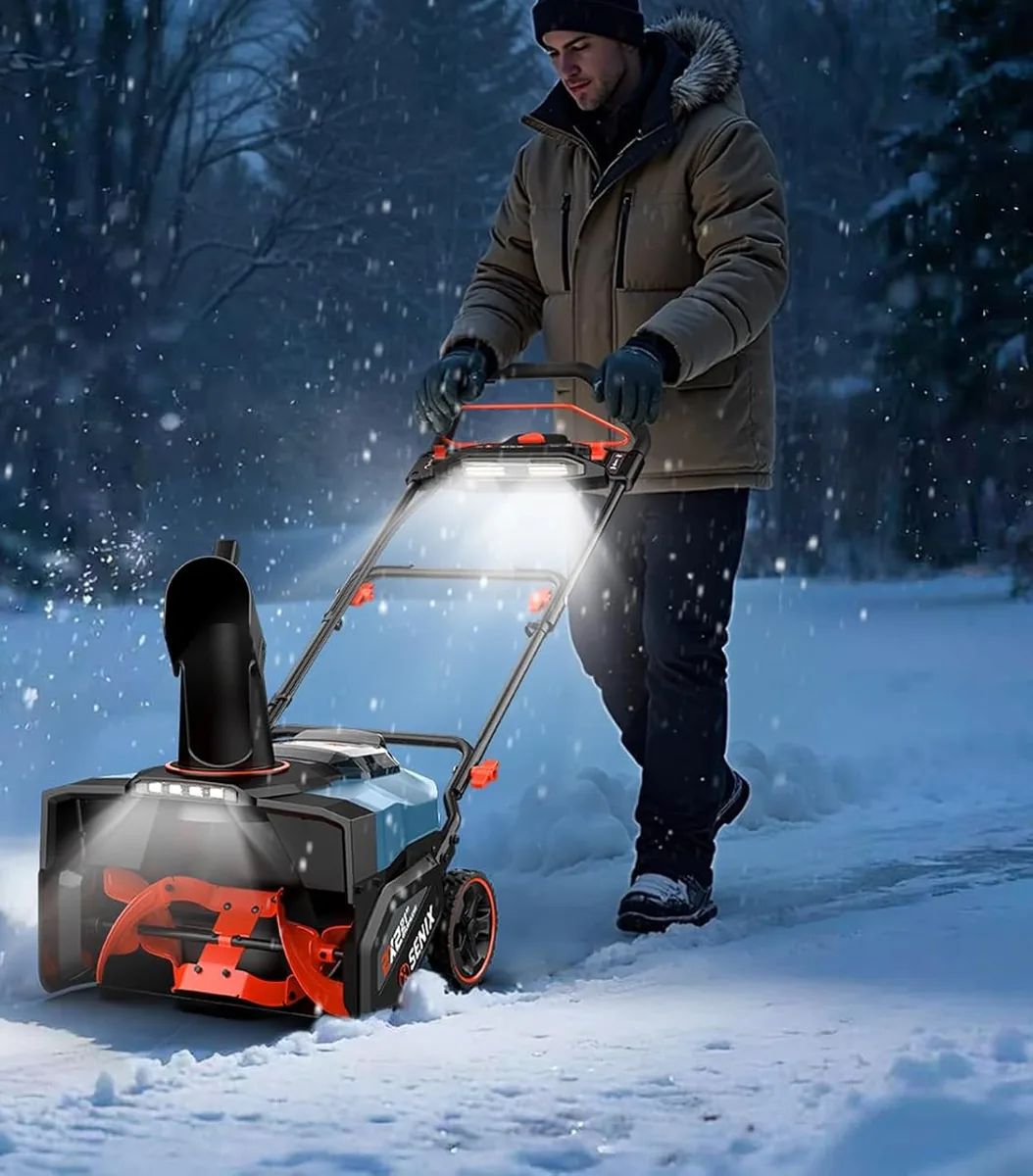
I decide the throw side before the first pass, with the wind at my back or across, because snow thrown into the wind comes back onto the cleared ground and onto me.
SENIX’s manual says do not expose the unit to rain or wet conditions and prints no weather rating, so after the shutdown steps in the safety section below, wipe it with a damp cloth and a soft brush and never wet it down.
No clean-out tool is in the box, though the manual says always to use one, so supply your own. After the machine hits an object, stop and complete the shutdown steps in the safety section below, then inspect and repair before restarting.
It suits a short paved drive or a walk, and a household that already owns X2 tools. Skip it for a long or wide drive, gravel, heavy wet snow or the plow ridge.
FINAL VERDICT
The STX2-M1 is my pick for a wide cordless cut at a modest weight with no cord to manage. Keep the work short and the surface paved.
It is the full-width cordless blower with a button on the chute.
How to Choose a Small Snow Blower
A small snow blower is a trade: you give up reach and depth and get weight, storage and a lower price. Six factors decide which trade suits your drive, and each one is a number you can read on the maker’s page or in its manual.
Printed Width and Weight
Width sets how many passes a path takes. Weight sets whether you can lift the machine at all. Makers print weight on different bases: the bare machine, the machine with its packs, or a shipping figure. A bare-tool number set beside a with-packs number tells you nothing, so read the basis before you compare.
| Basis | What the figure covers | What to ask |
|---|---|---|
| Tool only | The machine without packs or cord | What the packs add |
| With packs | The machine with its battery packs fitted | The maker’s printed figure |
| Shipping weight | The packed box, with its packaging | Never use it as machine weight |
In a small study, healthy men who cleared heavy wet snow with an electric thrower showed lower heart rates, blood pressure and perceived exertion than when they shoveled it (1). That test covered ten healthy young men and 10-minute bouts, so it says nothing about anyone with heart disease.
- Read the weight basis printed by the maker before you compare two machines.
- Picture lifting the heaviest machine you are considering into your own storage space.
- Match the width to your narrowest path, not your widest.
Pro Tip
Before you lift or carry any machine, complete the shutdown steps in the shutdown box. EGO’s manual names the lift handle and the left area on top of the intake as its lifting points, and every other machine follows its own manual. Picture where you will store and carry it before you buy.
Corded or Battery
A corded machine never runs down, but it stops where the cord stops. A battery machine carries no cord, and its packs set how long you can work. A small electric snow blower of either kind burns no fuel and makes no exhaust, so the choice is about reach and about where you keep the packs.
| Power | What it gives you | What limits it |
|---|---|---|
| Corded | No pack to charge or store | Reach ends at the cord, and each manual sets the cord and the outlet |
| Battery | No cord to drag or step over | Runtime and charging depend on the packs and the weather |
Cold matters for packs. Lithium-ion packs deliver less energy at low temperatures and their internal resistance rises (2). That review covers vehicle batteries, so I read it as a general warning. No maker prints a cold-weather runtime for these machines, and spare packs belong indoors in winter.
- Measure the distance from the nearest outdoor outlet to the far end of the job.
- Decide where the packs and the charger will live in winter.
- Ask whether the box holds both packs and a charger.
Intake Height and Snow Depth
Intake height is the maker’s number for the snow the auger takes in. The class decides what that number means in practice. Treat each maker’s figure as the maker’s own claim for one model, and weigh it against how deep and how heavy your usual snow is.
In a US forecasting study of snow ratios, snow depth against its liquid content, a mean low-level air temperature near or above about -3 C (27 F) went with very fluffy snow, a ratio above 25 to 1, less than 5 percent of the time (3). Those are atmospheric temperatures from a forecasting study, not readings at your driveway.
Key Takeaway
Pick a compact machine for the snow your winters usually bring and for paved ground. Read each maker’s depth figure as that maker’s own claim for that model.
Chute and Deflector Controls
The chute decides where the pile lands. Look for a crank, a rod, handle levers or a button, and for a separate deflector that sets the throw height. Complete the shutdown steps in the shutdown box before you adjust any of them, and follow your manual’s own requirement for the adjustment. Never aim the chute at people, pets, cars or windows.
Choose the control you can reach from the handle, and read your manual’s order before you adjust it.
What Is in the Box
A kit differs from a tool. Some boxes hold both packs and a charger, and some hold the bare machine. Corded boxes hold a cord holder or hook but not the extension cord, and few boxes hold a clean-out tool, even where the manual says to use one.
- Count the packs and read the amp-hour rating the maker prints for them.
- Check for a charger, and whether it charges two packs at once.
- Check for a clean-out tool, and plan your own if the box has none.
- Check for a cord retainer on a corded machine.
Surface, Slope and Warranty
Pavement is the surface these machines are made for. Some manuals allow a hard, clean surface only, some forbid gravel outright, and some allow it only after an adjustment the manual describes, and one gives a slope limit. Warranty terms run from two years to five on the tool and are written for home use; read the exact term and its conditions for the model you buy.
- Read the gravel line in the manual before you plan a route.
- Read the slope line, where the manual gives one.
- Read the warranty conditions, including who you buy from.
Compact Snow Blower Safety and Shutdown Steps
A snow blower has a spinning auger behind the chute and the intake, and hand contact with it is the most common cause of injury associated with snow blowers in EGO’s manual. The shutdown steps sit in one box below, and every hands-on step in this article points back to it.
Read the snow blower’s or snow shovel’s manual before you start it, and follow it. Its warnings, its operator rules and its steps for your exact model come before anything in this article.
Shutdown Box
Shut the machine down before you clear a clog, adjust, inspect, clean or service anything, or leave it. Release the drive and auger controls. Never use your hand or foot to clear the chute, the intake or the auger. Battery machine: turn the machine off, wait until every moving part has stopped for the time your manual gives, often 10 seconds, and remove the safety key and every battery pack, in the order your manual gives. Corded machine: turn the machine off, unplug it from the outlet, and wait until every moving part has stopped, as your manual says. Every machine, after the steps for its type: clear a clog only with the clearing tool or method your manual names (a stick only where that manual permits one), never with a hand or a foot. Where your manual gives a different order, wait time, isolation step or tool for the task, follow your manual’s version.
Where a maker’s order differs, the maker’s order wins:
- EGO SNT2134: shut the motors off, remove the battery packs, wait 10 seconds, then use a clean-out tool such as a wooden rod.
- SENIX STX2-M and STX2-M1: turn the motor off, wait 10 seconds, then remove the battery, and use a clean tool for the chute.
- Westinghouse WSnow20: release the trigger, wait for a full stop and unplug before any inspection, cleaning, adjustment or chute work; follow its manual for the clearing method.
- WEN 5670: switch the tool off and unplug it before adjusting or checking it, and stop the motor and unplug the unit before removing debris; WEN’s manual names no clearing tool or method beyond that, so never use your hands on the chute and contact WEN if snow stays packed.
Never put your hand or foot into the chute, the intake or the auger, even for a moment. CPSC says injuries most frequently happen when people try to clear the auger or the chute with their hands. Complete the shutdown steps in the shutdown box, wait until every moving part has stopped, and use only the clearing tool or method your manual names; use a stick only where your manual permits one.
EGO’s own warning label says the machine is capable of amputating hands and feet and throwing objects. Studies of emergency department and trauma center records point the same way: the authors of one national analysis call hand injuries the main injury threat for snow blower operators (4), another found that a hand placed into the chute was the largest single injury mechanism (5), and in one trauma center series most patients were hurt while unclogging the machine (6).
Aim the chute away from people, pets, cars and windows. Before you start, clear toys, boards, wires, hoses and other objects from the area, because the machine can throw whatever it picks up. Use the machine only where you can see well.
- Westinghouse WSnow20: keep the discharge away from electrical devices; bystanders at least 100 ft away.
- EGO SNT2134: people and pets at least 100 ft away.
- SENIX STX2-M and STX2-M1: bystanders at least 33 ft (10 m) away, per the symbol table.
Wear eye protection, gloves and non-slip footwear when you operate the machine, and put them on before you start. Follow your manual’s additional equipment and clothing requirements. Each maker adds its own:
- EGO: eye protection with side shields marked ANSI Z87.1, rubber boots, and no loose clothing or scarves.
- Westinghouse: the same eye protection, hearing protection for long runs, gloves and rubber boots.
- WEN: eye protection, non-skid safety shoes and hearing protection for appropriate conditions.
- SENIX STX2-M: eye, hearing and breathing protection and gloves in the symbol table.
- SENIX STX2-M1: eye protection, hearing protection, gloves and non-slip footwear, with rubber boots listed.
Use the outlet protection and the extension cord your manual specifies. Use only an outdoor-rated extension cord of the type, gauge and length your manual gives, and use a GFCI-protected outlet where your manual calls for one. Keep the cord away from the auger and the discharge, and know where the cord is at all times. Do not use the machine in rain or in damp or wet places where your manual says not to, and do not let water get on the unit.
- Westinghouse WSnow20: an outdoor cord marked SW-A, SOW-A, STW-A, STOW-A, SJW-A, SJTW-A or SJTOW-A, a GFCI outlet advised, 14 AWG up to 25 ft and 12 AWG up to 50 ft.
- WEN 5670: GFCI protection should be provided; for a 15 A cord, 14 gauge to 25 ft and 12 gauge to 50 ft, with 100 ft and 150 ft not recommended; do not modify the plug.
Complete the shutdown steps in the shutdown box before you charge, swap or store a pack. Use only the battery packs and the charger your maker specifies for your exact machine, and charge them as your manual describes. Do not charge a frozen pack, and charge only inside the temperature range your manual gives for the pack and charger: a pack that has thawed can still be too cold to charge. Keep spare packs and the charger indoors in winter, and store the packs as your manual describes.
- EGO SNT2134: do not use damaged or modified packs, keep the packs away from metal objects, charge only with the listed chargers between 41 and 104 F, and store packs where the temperature will not drop below -4 F. The IPX4 splash rating holds only with the battery compartment cover closed.
- SENIX STX2-M1: do not use damaged packs, and keep pack terminals away from metal objects.
- SENIX STX2-M and STX2-M1: do not expose the unit to rain or wet conditions, and use the charger indoors only; the STX2-M manual recommends storing the tool and packs at 50 to 80 F, and the STX2-M1 manual says to keep the machine clean in a cool, dry, well-ventilated place.
Only where your manual describes a cold battery pack as the reason a machine will not start, complete the shutdown steps in the shutdown box, then warm the battery packs indoors as your manual says and try again. A jam, a frozen control or a pack that is hot, swollen, leaking or damaged is not a cold pack: do not force a frozen control, do not retry, and do not charge or use a damaged pack or machine.
- EGO: a pack at -4 F or colder may not start the machine; warm it indoors for 10 minutes or more.
Follow your manual’s slope limit and its instructions for working on a slope, and do not try to clear steep slopes. Use extreme caution on slopes and when you turn. Wear non-slip footwear, and stop work if you do not have secure footing, releasing the controls as your manual directs. EGO’s manual says not to use the SNT2134 on grades steeper than 10 percent.
Use the machine on gravel only if its manual permits it. A single-stage machine can pick up stones and throw them, so some makers say not to use one there, and some two-stage manuals forbid gravel roads and driveways too. Stones can still be thrown, so clear stones and objects from the throw path. Before you adjust the skid shoes or the scraper, complete the shutdown steps in the shutdown box; then, where the manual permits gravel, set the skid shoes as it says.
- EGO SNT2134: the manual says not to use it on a graveled surface.
- Westinghouse WSnow20: the manual allows only a hard, clean surface.
- SENIX STX2-M and STX2-M1: the manuals say not to use the machine on a graveled surface unless it is adjusted for one.
Keep children, pets and other people away from the work area while the machine runs, and never let a child use the machine.
Before you check or change a shear pin, a scraper bar, skid shoes, paddles or a belt, complete the shutdown steps in the shutdown box. Use only the replacement parts your maker names. EGO lists the skid shoes, scraper bar, rubber paddles and drive belt as replaceable parts, and the SENIX manuals cover the belt and the scraper bar.
If your manual directs you to run the machine for a few minutes after clearing so melted snow flings off, do that outdoors. Then complete the shutdown steps in the shutdown box and wipe the machine dry. Do not wash it with a hose or water if your manual says not to. At the end of the season, complete the shutdown steps, remove battery packs and store them indoors as your manual says.
Heart Strain and Snow Clearing
The American Heart Association says the strain of heavy snow shoveling may be as demanding on the heart as a treadmill stress test, and that cold air constricts blood vessels throughout the body. The association also says that using a snow blower raises the heart rate to around 120, compared with about 170 while shoveling, and still advises caution: people with heart disease or major risk factors should have someone else clear the snow.
My Overall Verdict
Five machines, two on a cord and three on packs, and one real question: a cord or a pack.
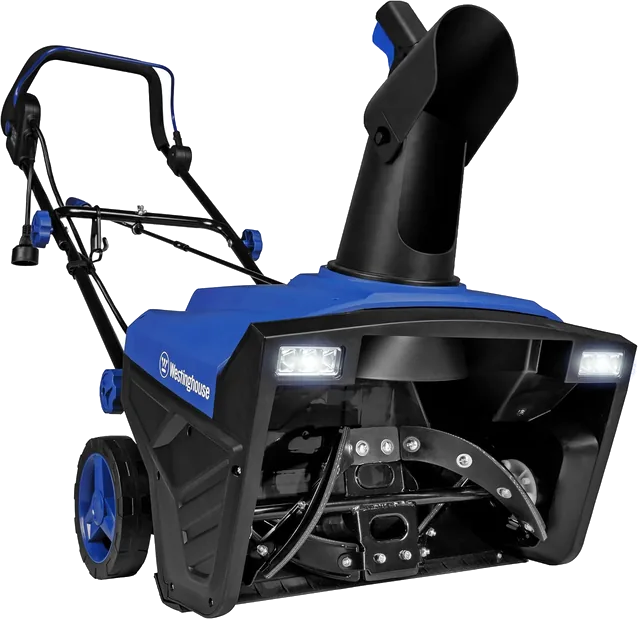
1. Westinghouse WSnow20 20-Inch Corded Electric Snow Blower Best Overall
The Westinghouse WSnow20 suits a short paved drive, a walk and a porch within a cord of an outlet.
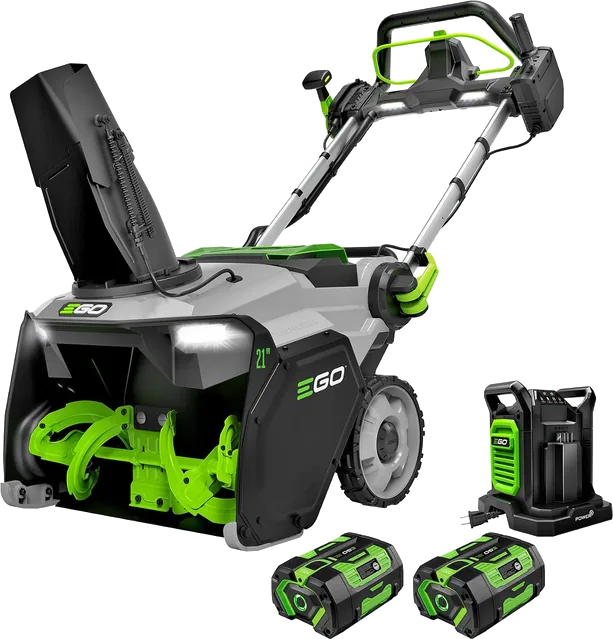
2. EGO Power+ SNT2134 21-Inch Single-Stage Snow Blower Best Premium
The EGO SNT2134 suits a cordless buyer who wants a premium kit for a paved drive and already owns EGO packs.
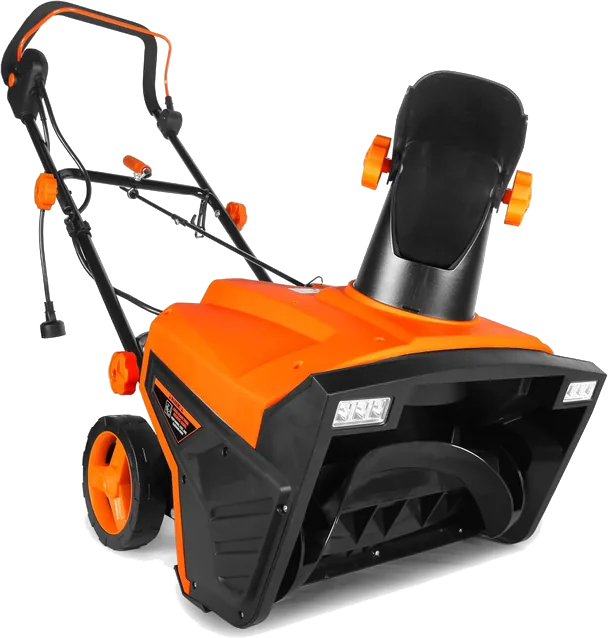
3. WEN 5670 20-Inch Corded Electric Snow Thrower Best Value
The WEN 5670 suits a tight budget and a short paved path near an outlet.
Pick by the surface you clear, the reach of your outlet and the weight you will carry, and read the manual of the model you choose before you start it. That is how you find the best compact snow blower for your own drive.
Why Westinghouse WSnow20 20-Inch Corded Electric Snow Blower Might Be the Best Choice
I put the Westinghouse first because it asks for an outlet and a hard surface and nothing else. Its manual lists a 31.1 lb machine weight, and it cuts a 20 in. path.
The trade-offs are plain: the cord sets your reach, the intake is 10 in. and the box holds no clean-out tool. For a short paved job I accept them.
Here is what the machine gives you:
✓ A 20 in. path from a 120 V, 15 A outlet.
✓ A 31.1 lb weight in Westinghouse’s manual.
✓ Dual LED headlights for dark mornings.
✓ A crank chute that turns 180 degrees from the handle.
✓ A two-year home warranty with lifetime technical support.
Frequently Asked Questions
What is the best small snow blower?
The best small snow blower for most short paved drives is the Westinghouse WSnow20, a corded 20 in. machine, and the EGO SNT2134 suits a cordless buyer who wants a premium kit. Choose by printed width, weight and the surface you clear, and read the manual of the model you buy.
What is the average weight of a snow blower?
The average weight of a snow blower depends on its class, and the five compact machines here list weights from 29.3 lb to 66 lb as their makers print them, on bases that differ by maker. Larger machines weigh much more, so read the maker’s own figure and its stated basis.
What is the best single-stage battery snow blower?
The best single-stage battery snow blower on this page is the EGO SNT2134 for a premium kit with heated grips and handle levers, and the SENIX STX2-M1 for a lower tool weight, 36 lb against 66 lb without packs, at a lower price tier. Both are push machines for paved ground, so follow each manual’s rules.
What is the best snow blower for a small driveway?
The best snow blower for a small driveway is the Westinghouse WSnow20 when an outdoor outlet is within cord reach, and the EGO SNT2134 when you want cordless. The Westinghouse is light and stops where its cord stops, while the EGO is heavy and needs two packs, so match either to a paved surface.
Where can you store a small snow blower?
Store a small snow blower indoors and dry, after the shutdown steps in the shutdown box and a wipe-down, with the handle folded where your manual describes one. A battery machine’s packs and charger stay indoors too, and each maker’s manual gives its own storage advice for the packs and the machine.
References
- Franklin BA, Hogan P, Bonzheim K, et al. Cardiac Demands of Heavy Snow Shoveling. JAMA. 1995;273(11):880-882.
- Jaguemont J, Boulon L, Dubé Y. A comprehensive review of lithium-ion batteries used in hybrid and electric vehicles at cold temperatures. Appl Energy. 2016;164:99-114.
- Ware EC, Schultz DM, Brooks HE, Roebber PJ, Bruening SL. Improving Snowfall Forecasting by Accounting for the Climatological Variability of Snow Density. Weather Forecast. 2006;21(1):94-103.
- Hammig B, Jones C. Hand injuries associated with reaching into a snow blower to clear clogged snow. Am J Emerg Med. 2020;38(4):785-788.
- Loder RT, Solanki D. Events Due to Snowblower Use Seen in US Emergency Departments From 2003 Through 2018. Cureus. 2020;12(12):e11836.
- Curtin P, Flood MG, DeFazio MW, et al. Snowblower Injuries to the Hand: A Longitudinal Study. J Occup Environ Med. 2026;68(1):63-65.
Safety Note: Snow blowers and power shovels throw snow, ice and hidden objects with force. Never put a hand or foot into the chute, intake or auger. Before you clear a clog, adjust, service or store the machine, release the controls and shut it down in the order your manual gives for your exact model. The steps are: on a gas machine, stop the engine, remove the key and disconnect the spark plug cap or wire where the manual says, and let the engine cool; on a battery machine, switch it off and remove every battery pack, and the safety key if it has one; on a corded machine, switch it off and unplug it. Touch nothing until every moving part has stopped, and clear a clog only with the tool or method your manual names. Aim the chute away from people, pets, cars and windows. Run a gas machine outdoors only, never in a garage, a shed or any enclosed or poorly ventilated space, even with the door open, and keep the exhaust away from windows, doors and vents.