
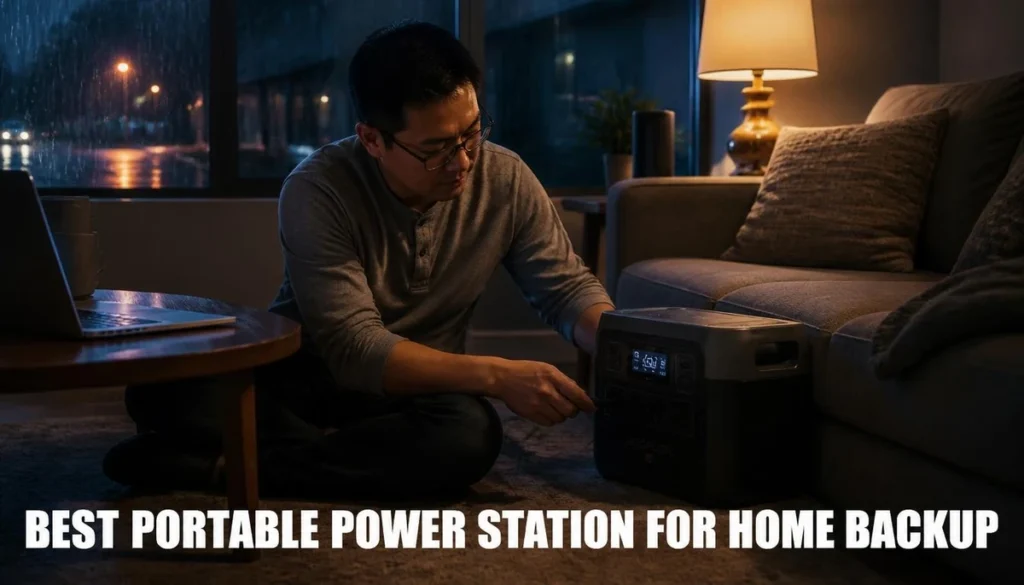
The best portable power station for home backup keeps a fridge, a router and a few lights running when the grid drops, with no fuel to store. I plan that backup around my own farmhouse panel, and I read each maker’s manual for its home connection before I look at capacity.
Affiliate Disclosure: Garden Power Scout is a proud participant in the Amazon Services LLC Associates Program. As an Amazon Associate, we earn from qualifying purchases, at no extra cost to you.
These five stations suit different homes, and the table above sets them side by side. My top pick, Anker SOLIX F3800 Plus 3840Wh Portable Power Station, documents a Home Power Panel port, a 240V outlet for an inlet box or transfer switch, and expansion, which no other station here does.
Best Portable Power Station for Home Backup 2026: 5 Picks I Compared
For real home backup I start with the Anker SOLIX F3800 Plus, the pick for a household that wants to grow toward a panel. The Jackery suits a large home with 240V loads, the budget Anker a short list of loads, the EcoFlow a 3,600 Wh battery on cords, and the BLUETTI a 3 kWh unit one person can move.
1. Anker SOLIX F3800 Plus 3840Wh Portable Power Station Best Overall
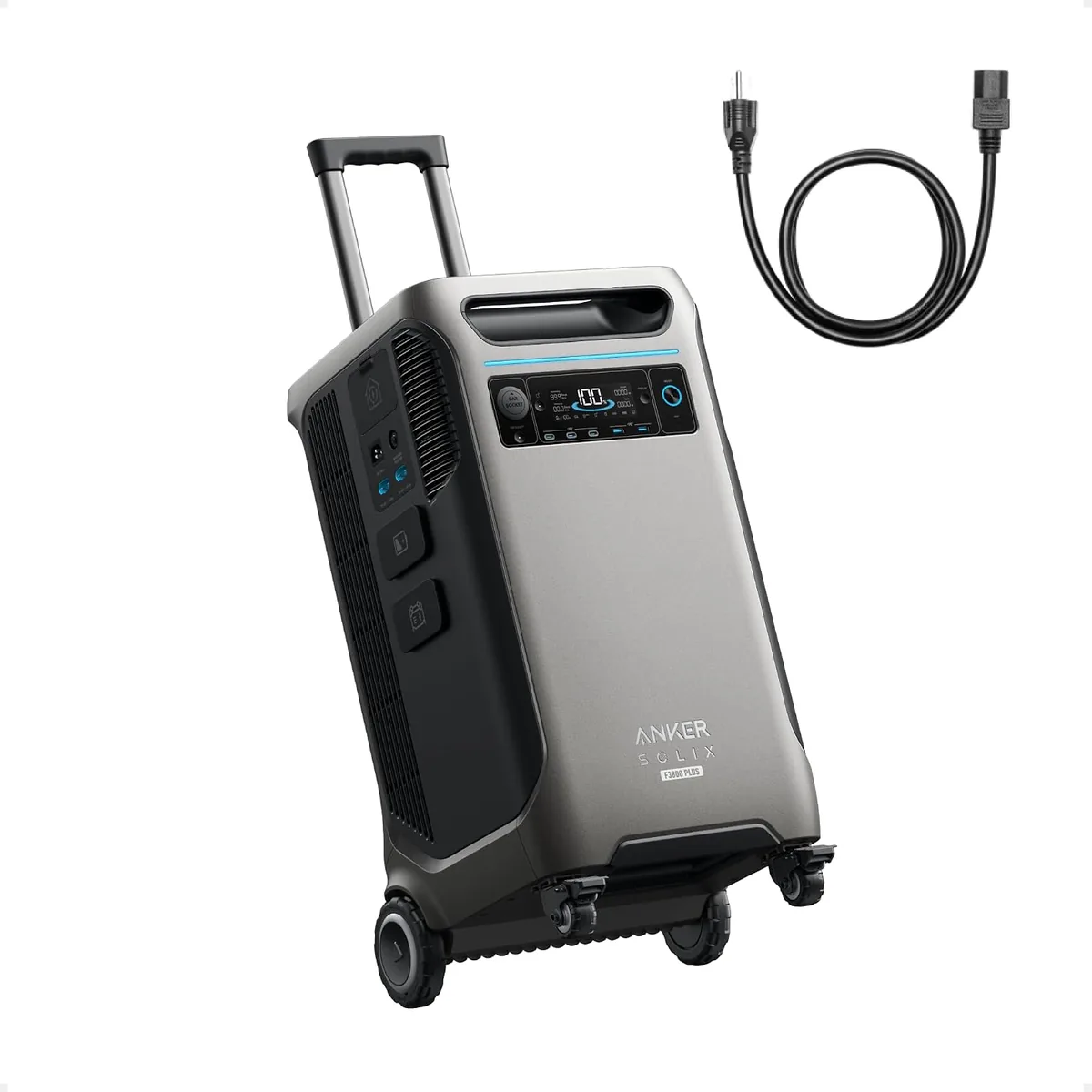
I stood in front of the farmhouse panel and counted the circuits I want kept alive before I read a single spec, and that is how the Anker SOLIX F3800 Plus ended up first. It holds 3,840 Wh behind a 6,000 W inverter, and its guide documents a Home Power Panel port and a 240V outlet for an inlet box or transfer switch, with expansion to 26,880 Wh on top. It is my pick for a household that wants to start with cords and grow into real backup.
WHY I CHOSE THIS ✓
Only this station documents a home panel port and a transfer switch outlet together with expansion. I can start on cords and grow toward a panel later without replacing the unit. That growth path is why it takes first place on this page.
Anker SOLIX F3800 Plus 3840Wh Portable Power Station Specs
Key Features:
- Home Power Panel port: Anker prints a 6,000 W, 120V/240V port for its separate home panel, and the house side is a licensed electrician’s job.
- 240V L14-30R outlet: The guide sends this outlet to your inlet box or transfer switch at up to 6,000 W. An inlet box is only the connection point, so the route needs transfer equipment that isolates the house from the utility, installed by a licensed electrician.
- Two 120V outlet groups: Each group has three NEMA 5-20R outlets rated 2,400 W, and a TT-30R is rated 120V, 25 A and 3,000 W. Connected loads must stay inside each outlet’s limit and the shared 6,000 W total.
- Expansion to 26,880 Wh: BP3800 expansion batteries, sold separately, raise the capacity, and the guide prints that ceiling.
- Two solar inputs: Each takes 11 to 165 V at up to 1,600 W, so two panel strings can feed it at once.
- Double Power Hub: The guide says two F3800 Plus stations linked this way can output up to 12,000 W.
- Three UPS outlets: The three left-hand 5-20R outlets switch to battery in 20 ms while the unit sits on a wall outlet.
The 6,000 W total is the gap between a cord-fed station and one built for a house. A 240V load and several 120V loads can share it, and each group of three 5-20R outlets tops out at 2,400 W, so a freezer, a router and the kitchen lights go on cords while the big loads wait for the 240V port. Anker lists no surge rating, so I size any motor by its own nameplate and count what is already running when it starts.
UPS covers only the three left-hand 5-20R outlets, and it works only while the station sits on a wall outlet. At 20 ms it is not an instant switch, so I keep desktop computers and medical equipment off it and use it for a router or lamps. Wall recharge tops out at 1,800 W, and while the unit recharges from 120V, the 240V port cannot be used and only the three UPS outlets work. With the 240V generator input adapter fitted, the 5-20R outlets are disabled, and only the L14-30R and TT-30R still work.
Winter changes the recharge. The guide lists 760 W of charging power at a cell temperature of 32 to 50 F (0 to 10 C), and its charging range starts at 32 F (0 C), so a station parked in a cold shed refills slowly. By default the AC outlets switch off after 15 minutes with no plug detected, and the unit powers off after 12 hours with no load and the outputs off.
Write the circuit list before any wiring talk: each load’s nameplate watts, with the 240V ones marked. That list tells an electrician what the transfer gear has to cover, and it tells you whether 6,000 W is enough.
The guide is specific about the 240V outlet: the neutral and ground of the inlet box or transfer switch must be properly connected, or appliances on that circuit may be damaged, and the inlet box route still needs transfer equipment that isolates the house from the utility. The connection belongs to a licensed electrician, who reads your circuit list to decide which loads the station can carry, and never to a plug in a wall outlet.
I label the three UPS outlets with tape so the router never lands on the wrong group. The weight is real at 135.6 lb, with wheels and a retractable handle, and on the gravel pad by the sheds the wheels rolled it where I wanted, but a doorsill still wants a second pair of hands. Anker’s guide says to switch the unit off with the main button first, then store it dry and cool, check the charge every week, to charge fully when it falls below 30 percent, and to charge to 100 percent every 3 months. Read the cycle rating and warranty term on the listing before you buy. Anker’s panel and the expansion batteries are separate purchases.
This station suits a household that plans a real house connection through a licensed electrician and wants room to add batteries later. Skip it if you want a unit you can lift into a car.
FINAL VERDICT
For a household heading toward a transfer switch or a home panel, this is the station I build the plan around. Its guide documents the routes to the house, and the premium tier and the weight are the price of that. Pick it when growth matters more than carry weight.
It is the backup station I plan a house around.
2. Jackery Explorer 5000 Plus 5040Wh Power Station Best Premium
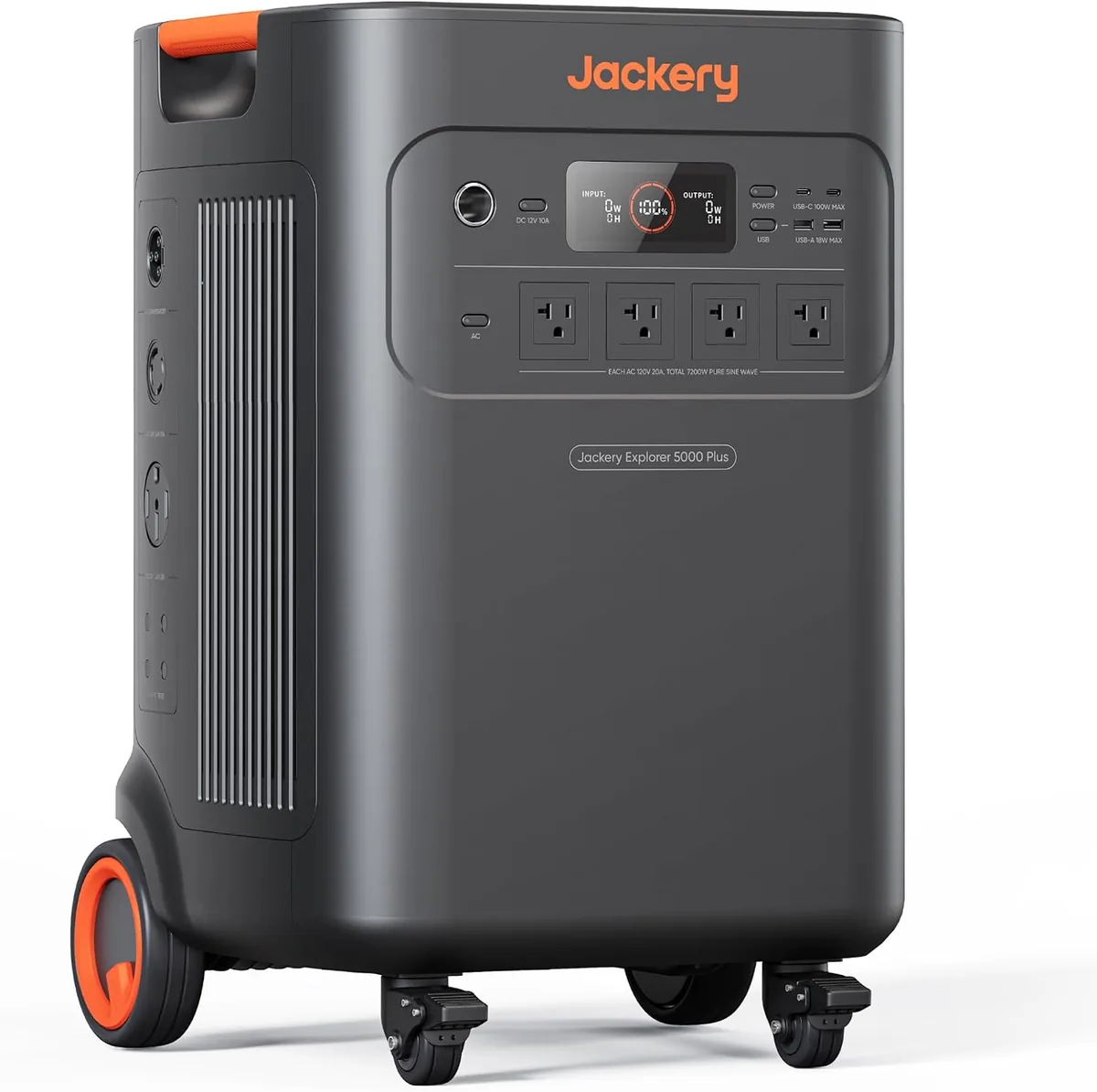
The Jackery Explorer 5000 Plus is the station I look at when the load list includes a 240V motor. It holds 5,040 Wh with 7,200 W of continuous output and a 14,400 W surge rating, and Jackery’s manual says it connects to the Jackery Smart Transfer Switch for house backup. The circuits it covers depend on the installed switch, the voltage, what runs together and each motor’s start draw. It is the premium pick for a large home, and it stays indoors.
WHY I CHOSE THIS ✓
The Explorer 5000 Plus has the highest rated output here and a transfer switch route printed in its manual, which is why I choose it for a big household. The cost is real: the premium tier, 134.5 lb, and a unit that never leaves the house.
Jackery Explorer 5000 Plus 5040Wh Power Station Specs
Key Features:
- 120V/240V outputs: The manual prints L14-30R and 14-50 outputs at 120V/240V, 7,200 W max, which is where a 240V load connects.
- Four 120V outlets: Each is rated 120V, 20 A and 2,400 W, and the AC1 and AC2 pair is rated 3,600 W with a 7,200 W surge.
- Smart Transfer Switch route: Jackery sells the switch separately, and the manual points to the switch’s own manual for the details.
- Up to 5 battery packs: The manual supports five packs for more capacity, with the packs kept apart from the main unit.
- Two UPS modes: Backup UPS switches in under 20 ms by default, and online UPS at 0 ms runs on the NEMA 5-20 ports only.
- 4,000 cycles to 70 percent: Jackery rates the cells for 4,000 cycles to 70 percent capacity, a different end point from an 80 percent rating.
- Solar and wall charging: The manual lists a 120V wall mode and two solar ranges, so the recharge plan can include panels.
The 7,200 W output is what sets the Explorer 5000 Plus apart. A 240V pump connects to the 120V/240V output only when its nameplate and its start draw fit, and the four 120V outlets suit the kitchen loads. I still check every motor against its own nameplate first, because the 14,400 W surge rating is a ceiling and not a promise that a given pump starts.
Backup UPS is on by default and switches in under 20 ms. Online UPS, the 0 ms mode, must be switched on in the app or by pressing the DC and AC buttons together, and then only the NEMA 5-20 ports work, up to 3,600 W. The L14-30R and 14-50 outputs cannot be used in bypass while the unit sits plugged into a wall outlet, which matters when you plan around grid power returning. The 240V loads never get the 0 ms mode, because online UPS runs on the 5-20 ports only.
Temperature limits shape where this unit lives. Jackery recommends charging between 32 and 113 F (0 to 45 C) and discharging between 5 and 113 F (-15 to 45 C), with output falling to 3,600 W between 5 and 14 F (-15 to -10 C). Storage for 1 year is rated at 32 to 77 F (0 to 25 C), so in a cold machinery shed I move it to a heated room before a recharge.
I set the online UPS mode in the app before I plug anything into the 5-20 ports, and I plan the cord’s route along the wall before the unit moves. Switch both units off before connecting a battery pack, and set each pack at least 8 inches (200 mm) from the main unit, as the manual says. A unit that expands to five packs becomes a row of heavy boxes, and the spacing decides where each one can stand.
Jackery’s manual is direct: this device is for indoor use only and must not be used outdoors under any circumstances, with open ventilation while it charges and the power cord unplugged in a storm. The safety section below covers the rest of the floor for every station.
Living with it means a dry corner with open air around it, so I give it the machinery shed’s dry end, away from the door, and never in a bathroom or a spot that sees moisture. Stored empty for 3 to 6 months, the manual warns, its performance will deteriorate and it may become unchargeable. The warranty is 5 years standard, with 2 more on a paid extension, but only for buyers from Jackery’s website, Jackery-branded platforms or authorized dealers, so check the seller on the listing. The Smart Transfer Switch and the extra battery packs are separate purchases, and the circuits the switch covers are set out in the switch’s own manual.
It fits a home with 240V loads, a wish for the transfer switch route and a dry indoor spot for a heavy unit. Skip it if the station has to live anywhere outdoors, if you need to lift it, or if you cannot confirm the seller on the listing. Anyone with medical or data equipment should read the maker’s documents first.
FINAL VERDICT
For a large home with 240V loads, this is the station that gives the most headroom, with a premium tier and a weight to match. It stays indoors and it needs a licensed electrician for the switch. Choose it for the capacity and the output, and give it a dry room.
It is the big-house station that stays indoors.
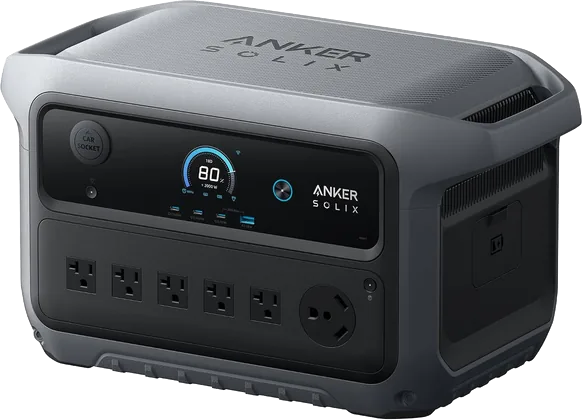
3. Anker SOLIX C2000 Gen 2 2048Wh Portable Power Station Best Value
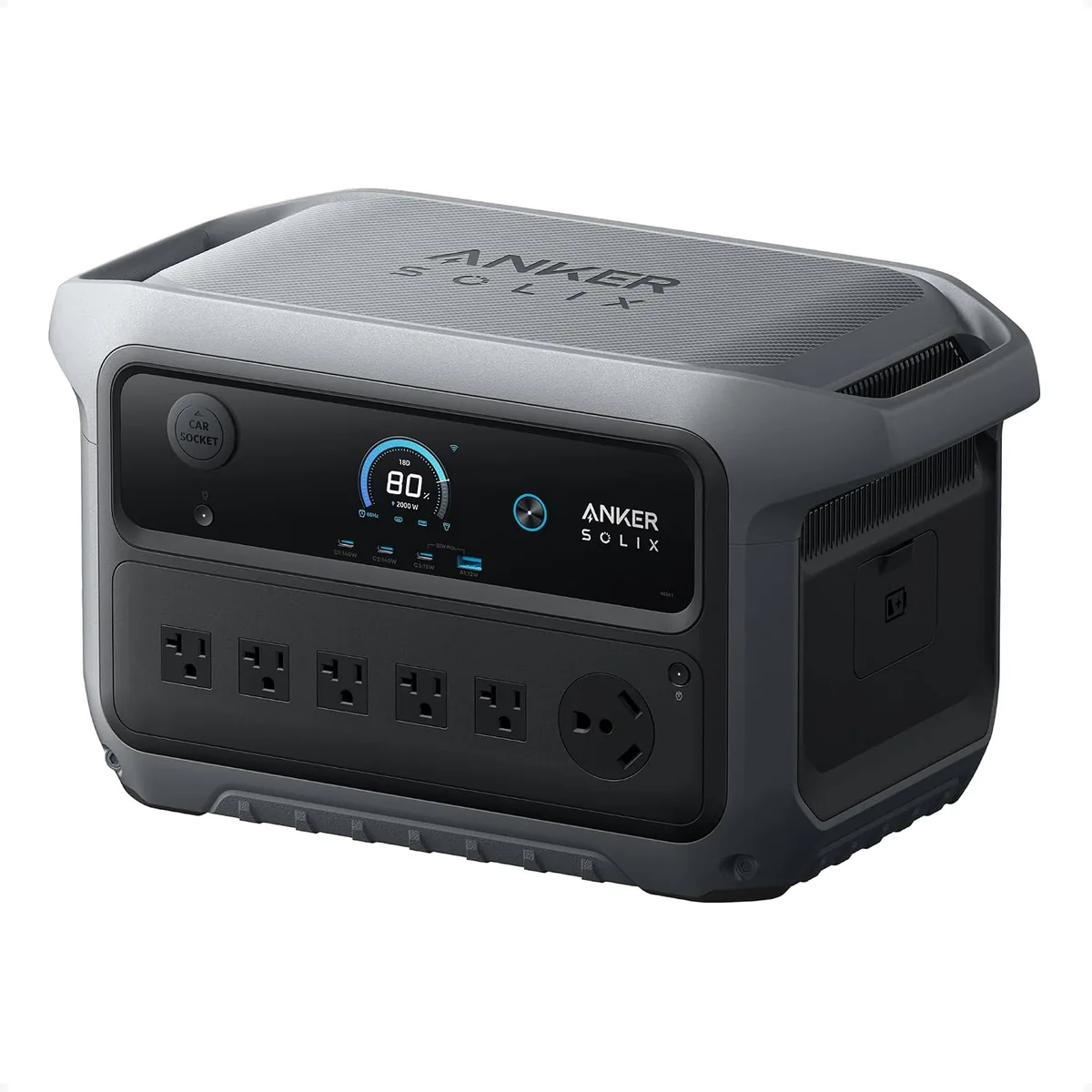
A small fridge, a router and the kitchen lights is the load list I picture for the Anker SOLIX C2000 Gen 2 in the budget tier. It holds 2,048 Wh behind a 2,400 W inverter in a handle-carry body, and its manual prints a 10 ms UPS switchover. It is my value pick for backing up a short list of loads on cords.
WHY I CHOSE THIS ✓
It is the budget pick for a short list of loads. The C2000 Gen 2 backs a fridge, a router and lights by cord, with a 10 ms switchover. Best value here means a short load list: it is the weakest unit on this page for a house connection.
Anker SOLIX C2000 Gen 2 2048Wh Portable Power Station Specs
Key Features:
- 2,400 W AC output: The manual prints 2,400 W max across the AC ports, and the TT-30 outlet is limited to 20 A and 2,400 W.
- 10 ms UPS: The manual says the unit switches to battery within 10 ms in a power outage.
- SurgePad: The manual lets certain heating-type loads draw up to 3,000 W, and says it is not for precision loads.
- Storm Guard mode: Before severe weather the unit charges at its fastest speed, and how full it gets depends on the power and time available.
- Charge limits in the app: You can set the lower limit from 1 to 20 percent and the upper limit from 80 to 100 percent.
- Solar and DC input: The XT60i port takes up to 800 W at 11 to 60 V.
- Expansion battery port: The manual shows an expansion battery connection, with no limit printed.
At 2,400 W the C2000 Gen 2 covers a refrigerator, a router and a few lights on cords, and that is the whole load list I give it. I read the fridge nameplate before I trusted it, because a compressor draws more for a moment at start than it does at steady load. Anker prints a 120V-only output with no 240V port, so 240V loads are not its job, and that is the line between this station and the larger ones on the page.
UPS is the quiet strength here: the manual says the unit switches to battery within 10 ms in a power outage, which suits a router or a lamp if that equipment tolerates a 10 ms gap. I keep medical and data equipment off the unit unless Anker’s own documents clear them. SurgePad does not work in bypass mode, and it is for heating loads, never for precision equipment. The manual says the unit uses a floating ground design, and a ground neutral plug is sold separately for devices that need the bond.
Anker’s storage routine is a weekly check of the charge, a full charge when it falls below 30 percent, and a full charge at least once every three months, all in a dry and cool place. Lithium batteries self-consume power, and the manual says so directly, so the check matters most for a station that sits unused. A reminder on the workshop wall keeps that check from slipping, because a station that sits full and idle is a tool in storage, and storage needs a schedule.
The app sets the lower limit from 1 to 20 percent and the upper limit from 80 to 100 percent, so before storm season I check which upper limit is set and follow the manual’s storage schedule.
Anker’s manual says to stop using the unit when a high or low temperature icon appears, and prints a charging range of 32 to 104 F (0 to 40 C) and a discharging range of -4 to 104 F (-20 to 40 C). I read the display for the temperature icon the manual describes and set the charge limits in the app. The manual wants a dry, cool place and the unit powered down between uses.
Anker lists no home panel or transfer switch route for this unit, so it feeds appliances by cord. The 2,400 W limit and the 20 A TT-30 outlet set the ceiling for any cord, and a cord must match them. The 120V-only output rules out a 240V pump. On the listing, read the box contents before you buy, because bundles with panels carry other listings. The routine is simple: the router and the fridge go on the unit, and everything else stays off it.
Pick it when the load list is short: a router and a fridge on cords, in the budget tier, with a 10 ms switch for equipment that tolerates it. Skip it if you need a 240V pump or a house connection.
FINAL VERDICT
For a household that wants a few loads covered in the budget tier, this is the value pick. It suits a short list within 2,400 W. Choose it when 2,400 W and a 10 ms switch cover your short list, and look elsewhere for the house.
It is the small-load station I buy first.
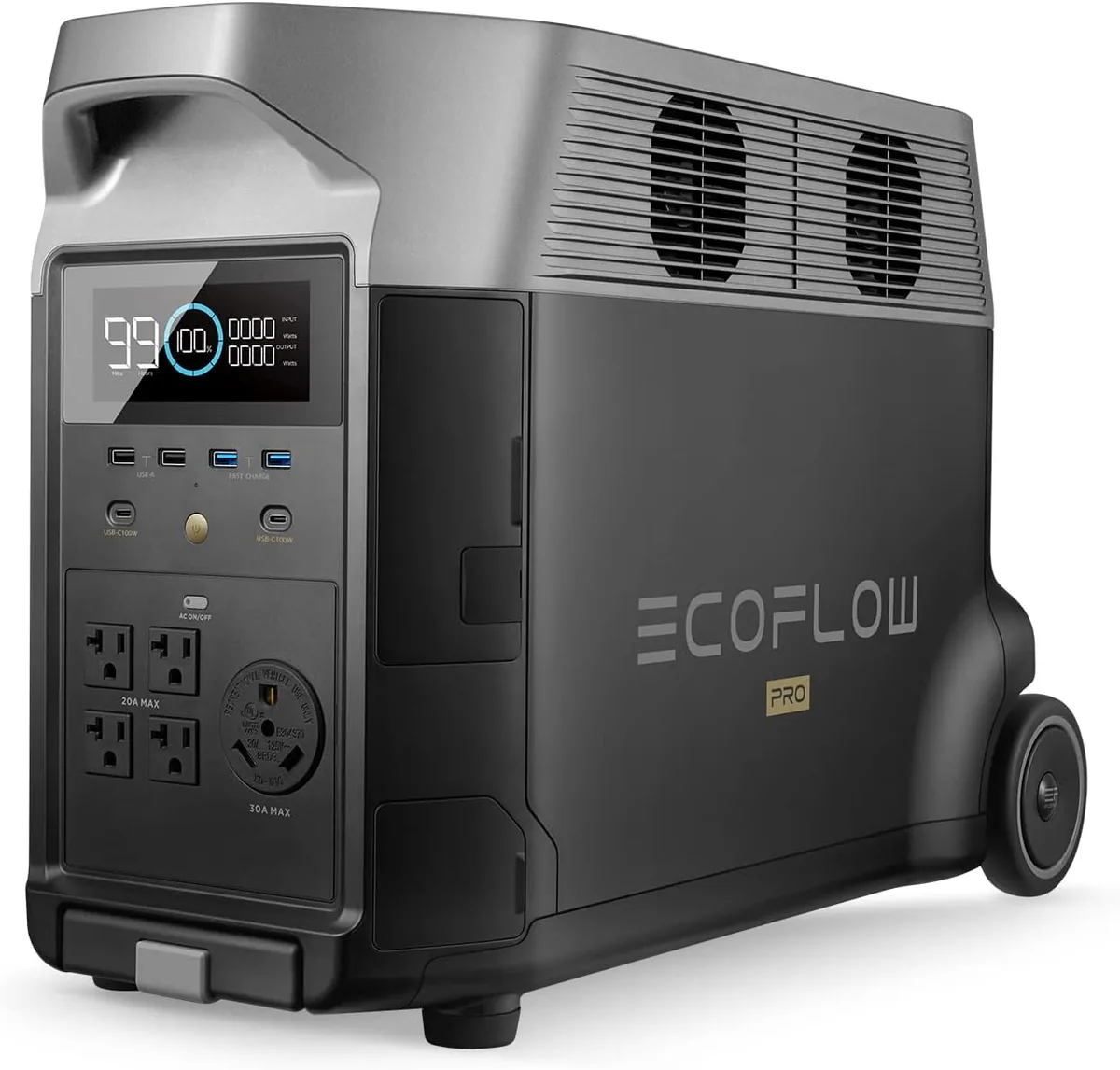
4. EcoFlow DELTA Pro 3600Wh Portable Power Station Best 3600Wh Portable Power Station
The EcoFlow DELTA Pro is the 3600Wh power station on this page, built for the person who wants a big battery feeding loads by cord. It pairs 3,600 Wh with 3,600 W of continuous output, five 120V outlets and room for up to two Smart Extra Batteries. It suits a freezer and several loads on extension cords.
WHY I CHOSE THIS ✓
This is the one 3,600 Wh unit on the list, with LFP cells rated to 3,500 cycles on an 80 percent basis. The weight and the 120V-only outlets decide who should buy it, and I rank it fourth for that reason.
EcoFlow DELTA Pro 3600Wh Portable Power Station Specs
Key Features:
- 3,600 Wh and 3,600 W: The manual prints the capacity and the continuous output, with a 7,200 W surge rating.
- 3,500 cycles to 80 percent: EcoFlow rates the LFP cells for 3,500 cycles to 80 percent capacity or more.
- Two Smart Extra Batteries: One DELTA Pro links with up to two extra batteries for more capacity.
- X-Boost: Certain heating loads up to 4,500 W run while the rated output stays 3,600 W, but not in bypass.
- EPS switchover in 30 ms: The unit passes grid power through and takes over in a blackout within 30 ms.
Match your loads to the 3,600 W rating. A refrigerator, a chest freezer, the router and the kitchen lights can share that ceiling by cord when their running watts, and the compressor start draws on top of them, stay inside the unit’s limits. EcoFlow’s manual lists 120V outlets only, with 240V shown as a charge input, so a 240V pump is outside what this unit feeds. It is the capacity pick of the five, and I match it to loads on cords.
The EPS function switches in 30 ms and is a basic UPS function that does not support 0 ms switching. Do not connect it to a device that needs 0 ms, such as a data server or a workstation. The manual does not recommend it for medical emergency equipment, and it says a refrigerator holding medicine needs the AC output set to Always on in the app. Wall charging tops out at 1,800 W at 120V, and 3,000 W at 240V with a third-party adapter or cable.
The wheel and handle roll it across the kitchen tile, and I tie the cords short so nobody trips. I check a chest freezer’s label first, then add its compressor’s start draw to whatever is running, because the inverter loses some energy.
EcoFlow says not to use the product in rain or humid environments, and to store it in a dry, ventilated place.
At 99 lb it rolls, and it is a two-handed job to put on a step. For storage the manual says to discharge the unit every three months, first to 0 percent, then recharge it fully, then discharge it to 60 percent, and it says the warranty will not cover the unit if it is neither charged nor discharged for more than 6 months. This is the original DELTA Pro, model EFD500, not the newer DELTA Pro 3.
This one is for a plan built on a big battery feeding a freezer and a few appliances by extension cord. Skip it if you need a 240V outlet, a home route from its own manual, or a unit for medical equipment or 0 ms loads.
FINAL VERDICT
This is the cord-loads station in a big battery body, and it keeps to what it does. It earns fourth place for its 120V-only outlets and its weight. Choose it for the 3,600 Wh and the cycle rating, and read EcoFlow’s documents before planning any house connection.
It is the big-battery station for cord loads.
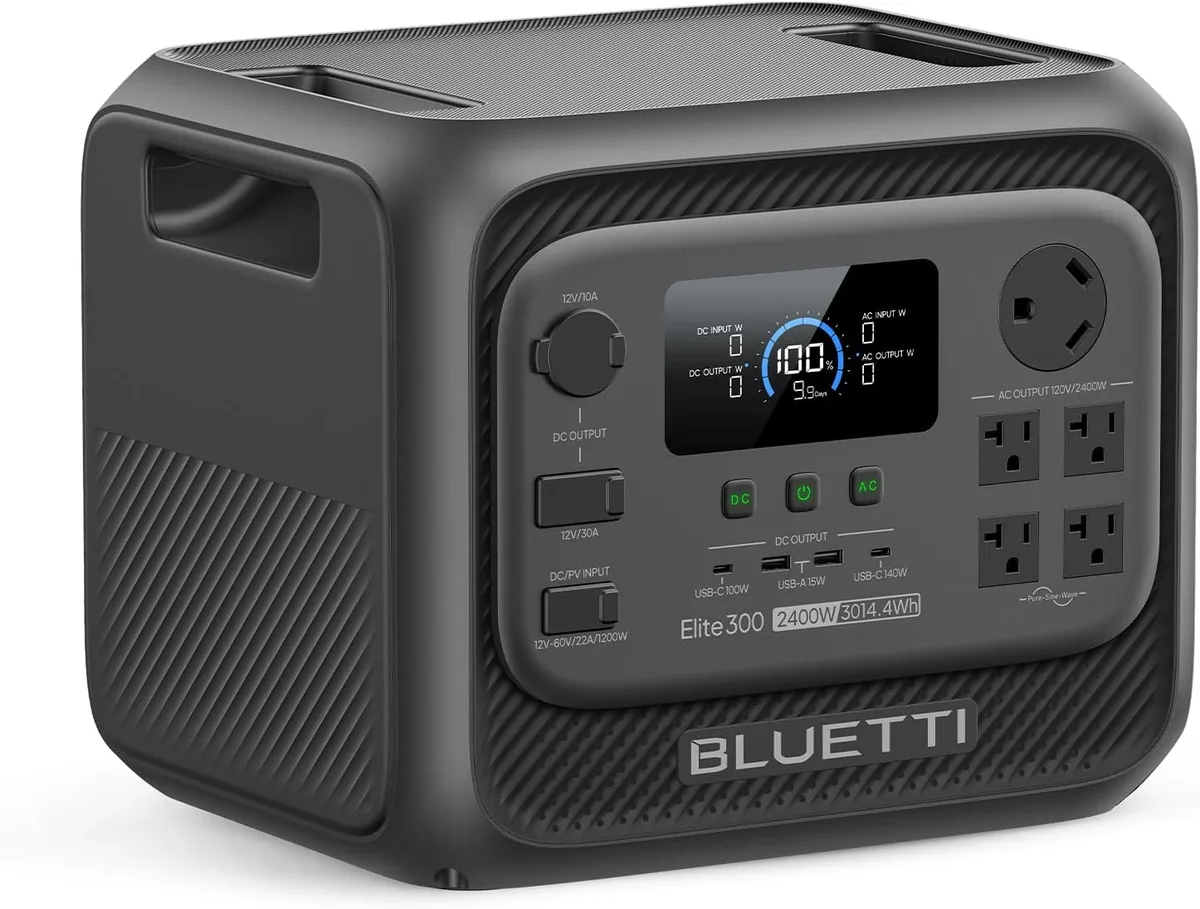
5. BLUETTI Elite 300 3014.4Wh Portable Power Station Best Lightweight 3000Wh Portable Power Station
I carried the BLUETTI Elite 300 from the pantry to the kitchen on a still night, and for a 3 kWh station that is a real feat. It holds 3,014.4 Wh at 57.98 lb, which makes it the lightest of the 3 kWh and larger units on this page, about 52 Wh per pound by my arithmetic from the manual’s own weight. It suits a household that wants a lightweight portable power station for a fridge, lights and a router.
WHY I CHOSE THIS ✓
Among units of 3 kWh and above on this page it is the lightest, at about 52 Wh per pound from the manual’s weight. No home panel route is printed, so I place it fifth.
BLUETTI Elite 300 3014.4Wh Portable Power Station Specs
Key Features:
- 3,014.4 Wh in 57.98 lb: The manual prints both figures, which gives the best Wh per pound of the larger units here.
- 2,400 W US output: The manual lists 2,400 W max at 120V, with no 240V outlet.
- Power Lifting mode: Off by default, it lets resistive loads rated 2,400 to 4,800 W run, while output stays 2,400 W.
- 10 ms UPS switchover: The manual lists a 10 ms switchover for loads that tolerate it.
- Three charge inputs: AC at 1,800 W, DC at 1,200 W through XT60, and both together at 2,400 W.
The 57.98 lb is the story, and a pantry door is no obstacle for a unit that size. The 2,400 W discharge ceiling suits a refrigerator, lights and a laptop on cords when their nameplate watts add up under it, and the manual lists 1,800 W max for the AC bypass output, so loads left on the pass-through stay under that, and a motor load needs its own check because the manual prints no surge rating.
Power Lifting mode is disabled by default and is for pure resistive loads only, so a motor never belongs there. UPS switchover is 10 ms, and the manual says UPS is not for devices like data servers or workstations that need high-performance UPS.
Below 5 percent charge, the manual says to recharge in time. The display shows the charge level, and I glance at it each time I pass the pantry. I keep a lamp near the unit so I notice when it goes quiet,, and I recharge well before that point.
BLUETTI’s manual says do not connect the unit’s AC output to the grid. It also says not to use the product in rain or high humidity, to charge it in a well-ventilated area, and it lists the protection rating as IP20, which means a dry room.
Charging runs from 32 to 104 F (0 to 40 C) and discharging from -4 to 104 F (-20 to 40 C). For storage, the manual says to charge to 40 to 60 percent, power the unit off and disconnect all cables, then keep it between 14 and 104 F (-10 to 40 C), below 95 F (35 C) for a month or longer.
Take it when you want 3 kWh that one person can still move, for a fridge, lights and a router. Skip it if you need 240V loads or a home route from its own manual. Skip data servers and workstations as well, which the manual excludes.
FINAL VERDICT
This is the station for a household that values moving it over wiring it. It gives the most Wh per pound among the larger units, and it is a cord-load unit. Choose it when weight is your problem.
It is the 3 kWh station I can move alone.
How to Choose the Best Portable Power Station
Choose by the loads you must keep on, and read the number on the box only after that. These seven factors follow the order I use at the farmhouse panel: watts and hours first, then the home route, switchover, recharging, weight and placement.
The Five Stations Side by Side
| Station | Capacity and continuous output | Voltage and surge | Expansion | Home connection |
|---|---|---|---|---|
| Anker SOLIX F3800 Plus | 3,840 Wh, 6,000 W | 120V/240V; surge not published | BP3800 batteries to 26,880 Wh | Home Power Panel port; L14-30R to an inlet box, with transfer equipment installed by a licensed electrician |
| Jackery Explorer 5000 Plus | 5,040 Wh, 7,200 W | 120V/240V; 14,400 W surge | Up to 5 battery packs | Smart Transfer Switch |
| Anker SOLIX C2000 Gen 2 | 2,048 Wh, 2,400 W | 120V; SurgePad 3,000 W for heating loads | Expansion port; limit not published | Not published by the maker |
| EcoFlow DELTA Pro | 3,600 Wh, 3,600 W | 120V; 7,200 W surge | Up to 2 Smart Extra Batteries | Not published by the maker |
| BLUETTI Elite 300 | 3,014.4 Wh, 2,400 W | 120V; surge not published | Not published by the maker | Do not connect the AC output to the grid |
Capacity in Watt-Hours
Watt-hours measure the energy a station stores, and watts measure how fast it delivers that energy. Divide the watt-hours by the average watts you draw to get hours before losses, and remember that the inverter loses some energy, so real hours run shorter. A narrative review of 50 articles reports links between outages and health consequences, from carbon monoxide poisoning to temperature-related illness, especially for people relying on electricity-dependent medical equipment (1).
| Figure | What it tells you | Where to find it |
|---|---|---|
| Capacity (Wh) | How much energy is stored | Spec table and manual |
| Continuous output (W) | How much the AC outlets deliver together | Spec table and manual |
| Surge output (W) | A short peak, not proof of motor starting | Spec table, when printed |
| Switchover (ms) | How fast it takes over from the grid | UPS section of the manual |
- Write the load list: each appliance, its nameplate watts, and whether it runs on 240V.
- Add the running watts: only the loads that must run at the same time.
- Check the total against capacity: multiply by the hours you want to cover and compare.
Pro Tip
I keep the load list on a card inside the pantry door, with nameplate watts copied from each label, so the sum is done before the grid goes down.
Output and Surge for Outage Loads
Continuous output is the load the inverter can sustain while energy remains, and surge output is a short peak; hours come from watt-hours and average draw. A surge rating is not proof that a motor starts, because a start check counts the loads already running. A 120V-only station cannot feed a 240V well pump or a central air conditioner, and many stations are 120V only, so check the outlet types in the manual.
- Running watts add up: sum the loads that run together and stay under the continuous rating.
- Start-up counts: add the largest motor’s start-up draw on top of what is already running.
- Voltage matters: a 240V load needs a 120V/240V outlet, and the manual names which one.
I read the pump’s nameplate before I look at any surge line on a box.
Refrigerator Starting Draw and Hours
A refrigerator’s compressor cycles on and off, so its average draw over a day sits well below its nameplate watts, and it starts with a higher short draw. Read the label on yours, then check that the station’s continuous output covers the running watts, then that its start capability covers the compressor’s start-up draw on top of what is already running. For hours, use the appliance’s average draw and treat the result as an estimate.
Worked Estimate, Before Losses
A 2,000 Wh station and a load that averages 100 W gives 2,000 divided by 100, or 20 hours before losses. The inverter loses some energy and self-consumption takes a share, so real hours run shorter.
Home Connection Through a Transfer Switch, Interlock or Home Panel
A station feeds house circuits only through transfer equipment the maker documents for that exact model, such as a transfer switch or its own home panel kit, installed by a licensed electrician who confirms it fits. OSHA says never to attach a generator directly to the electrical system of a structure unless a qualified electrician has installed it with a transfer switch. Where a manual says not to connect the AC output to the grid, the station stays a cord station, and I leave the farmhouse wiring to an electrician.
| Route | What it does | Who installs it |
|---|---|---|
| Cord to an appliance | Feeds one load through a grounded cord | You |
| Transfer switch | Moves selected circuits between the grid and the station | Licensed electrician |
| Maker’s home panel | Connects the maker’s station to chosen circuits | Licensed electrician |
Never Backfeed
Never plug a station into a wall outlet to feed the house. Backfeed can send power back onto utility lines and kill line workers and neighbors. Charging the station from a wall outlet with the maker’s charger is a different thing.
UPS Switchover and What the Manuals Rule Out
Standard switchover times in these manuals run from 10 to 30 ms, and one manual also prints an optional 0 ms online mode on limited outlets. Restrictions belong to the models that print them: two manuals say the UPS function is not for data servers or workstations, and one does not recommend its unit for medical emergency equipment. CDC and state health departments reported that a power outage contributed to heat-related and oxygen-dependent deaths after Hurricane Irma (2).
- Check the millisecond figure: a 10, 20 or 30 ms switch is a gap, and a router or lamp must tolerate it.
- Read the exclusions: your own manual lists what its UPS function is not for.
- Do not assume: a manual that prints no limit has not cleared the equipment for you.
Solar Recharging Off the Grid
Panels are a separate purchase. A station lists a solar input as a volt window and a watt limit, and the array’s voltage, current and power must stay inside each input’s limits, including open-circuit volts in the cold where the manual calls for it. I check that figure first, because weak sunlight cuts the real charging power below a panel’s label. Researchers interviewed 15 Puerto Rico families, and different households reported different uses of their solar-powered battery systems, from medicine refrigeration to asthma therapy and CPAP machines, and different problems, such as inadequate power, defective cables and blown fuses (3). For medical devices, follow the device maker’s backup-power requirements and your station’s own restrictions.
- Solar: a volt window and a watt limit per input, from the manual.
- Wall: the maker’s own charger, within the rated input.
- Generator or car: only where the manual lists the input and its limit.
Weight, Placement and Warranty
The gravel pad by the sheds takes wheels, and the pantry shelf takes only a unit I can lift, so weight decides where each station can live. Warranty terms come from the maker’s document, and some apply only to buyers from the maker’s own channels, so check the seller on the listing before you buy.
| Check | Why it matters |
|---|---|
| Weight and wheels | Decides who can move it and where it can stand |
| Indoor or outdoor rule | Some manuals allow indoor use only |
| Charge temperature range | Cold rooms slow or stop charging |
| Seller and warranty | Some warranties cover only the maker’s channels |
Portable Power Station Safety and Care
Each manual sets its own limits, and the points below are the floor for every station. Follow your manual first, and keep the unit dry, ventilated and out of reach of children.
- Ventilation: charge it in a well-ventilated area and never cover it or block its vents.
- Water and heat: keep it dry, and away from heat sources, stoves and heaters.
- Temperature: the five manuals print charging ranges that start at 32 F (0 C) and end at 104 or 113 F (40 or 45 C); charge only inside the range your manual prints.
- Case: never open the case, and stop using a damaged, swollen, smoking or hot unit at once and follow your manual’s emergency steps; if it smokes, vents or hisses, move away and call emergency services.
- Charger: use the maker’s charger or a solar input within the rated input, with undamaged cords.
A review of lithium-ion cell reactions says heat can shorten cell life above 104 F (40 C) and trigger thermal runaway at higher cell temperatures (4), and your manual’s own temperature limits are the ones to follow. In lab abuse tests on small cells, lithium iron phosphate cells showed a significantly lower thermal response than cobalt-based cells, though thermal runaway still occurred in some of them (5).
Home Connection Rule
A station feeds house circuits only through transfer equipment the maker documents for that exact model, installed by a licensed electrician who confirms it fits. Never plug it into a wall outlet to feed the house, because backfeed can kill utility workers and neighbors.
A fuel generator is a different machine with its own rules. It runs outdoors only, never in an enclosed or partly enclosed space such as a home, garage, basement, crawl space, shed or carport, even with doors or windows open. The CPSC says to keep it at least 20 feet from the house with the exhaust directed away from the home and other buildings, and the CDC says at least 20 feet from any doors, windows or vents.
Keep it dry unless its manual allows a listed cover that keeps the exhaust open, and never load it beyond its rated running watts. Refuel only with the engine off and cool. Battery-powered or battery-backup CO alarms belong inside the home, on every level and outside sleeping areas.
After a 2009 Kentucky ice storm, ten deaths were attributed to carbon monoxide poisoning, eight of them related to inappropriate generator location (6).
My Overall Verdict
Five stations, five different jobs, and one rule that held for all of them: a house connection comes from transfer equipment the maker documents, fitted by a licensed electrician. Here is how my top three line up.
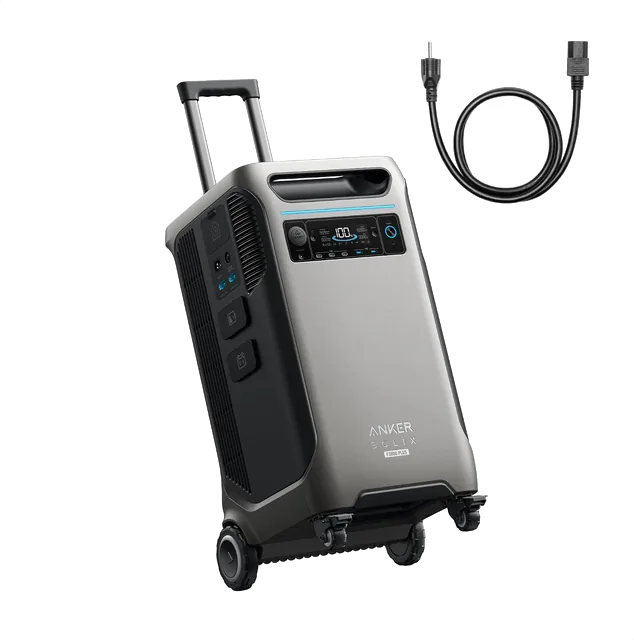
1. Anker SOLIX F3800 Plus 3840Wh Portable Power Station Best Overall
Best for a household that wants a panel or transfer switch route and room to add batteries.
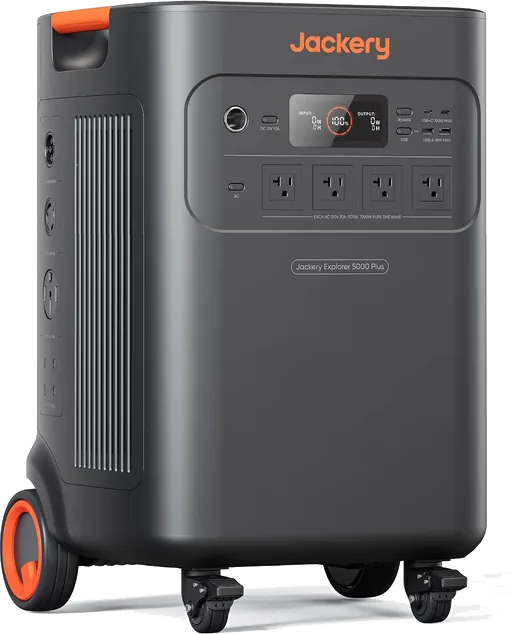
2. Jackery Explorer 5000 Plus 5040Wh Power Station Best Premium
Best for a large home with 240V loads and a dry indoor spot for a heavy unit.
3. Anker SOLIX C2000 Gen 2 2048Wh Portable Power Station Best Value
Best for a short list of loads on cords in the budget tier.
If I have to choose one for the farmhouse, it is the Anker SOLIX F3800 Plus, because its guide documents a Home Power Panel port and a transfer switch outlet. That is the station I plan around, and it is the best portable power station for home backup on this page.
Why Anker SOLIX F3800 Plus 3840Wh Portable Power Station Might Be the Best Choice
I picked the F3800 Plus first because it lets me start on cords and grow toward a panel without replacing the unit. Its guide prints a panel port and a transfer switch outlet, with expansion on top, which no other station here does.
The trade-off is weight and the premium tier: 135.6 lb on wheels, with the home panel and the expansion batteries sold separately. I accept both for a plan that can grow.
Here is what the F3800 Plus gives you:
✓ Panel port: a 6,000 W, 120V/240V Home Power Panel port.
✓ 240V outlet: an L14-30R outlet for an inlet box or transfer switch.
✓ Expansion: BP3800 batteries raise capacity to 26,880 Wh.
✓ Output: 6,000 W rated output.
✓ Capacity: 3,840 Wh base capacity.
Frequently Asked Questions
Who is better, EcoFlow or Bluetti?
Between EcoFlow and BLUETTI here, choose the EcoFlow DELTA Pro for load, at 3,600 Wh and 3,600 W, and the BLUETTI Elite 300 for carrying, at 3,014.4 Wh, 2,400 W and 57.98 lb against 99 lb. The DELTA Pro ranks higher on this page, for its larger capacity and higher output.
What is better, Jackery or EcoFlow?
Choose the Jackery Explorer 5000 Plus over the EcoFlow DELTA Pro for 240V loads and a Smart Transfer Switch route, since it offers 5,040 Wh and 7,200 W at 120V/240V. Choose the DELTA Pro at 3,600 Wh and 3,600 W at 120V and 99 lb, against the Jackery’s 134.5 lb, when 120V loads and weight matter more.
What size solar generator do I need?
A solar generator is a power station paired with panels, and sizing it takes three checks: running watts against its continuous output, start-up draw plus what already runs against its start capability, and average watts times hours against its watt-hours. Treat the hours as an estimate, because the inverter loses some energy.
How to connect a solar generator to a house?
Connect a power station paired with solar panels to a house only through transfer equipment the maker documents for that exact model, installed by a licensed electrician who confirms it fits. Never plug it into a wall outlet to feed the house, because backfeed can energize utility lines and kill line workers and neighbors.
Can a solar generator run a refrigerator?
A power station paired with solar panels can run a refrigerator when its continuous output covers the fridge’s running watts and its start capability covers the compressor’s start-up draw on top of anything else running. Read the fridge’s label, and treat any run time as an estimate from average draw, because the compressor cycles.
References
- Casey JA, Fukurai M, Hernandez D, Balsari S, Kiang MV. Power outages and community health: a narrative review. Curr Environ Health Rep. 2020;7(4):371-383. doi:10.1007/s40572-020-00295-0
- Issa A, Ramadugu K, Mulay P, et al. Deaths related to Hurricane Irma – Florida, Georgia, and North Carolina, September 4-October 10, 2017. MMWR Morb Mortal Wkly Rep. 2018;67(30):829-832. doi:10.15585/mmwr.mm6730a5
- Tosado GA, Matos M, Ahumada-Paras M, Chapko MK, Pozzo LD; Puerto Rico Solar Health Study Group. Evaluation of solar-powered battery systems for individuals using electricity-dependent medical devices in Puerto Rico following Hurricane Maria. Disaster Med Public Health Prep. 2023;17:e15. doi:10.1017/dmp.2021.114
- Lyu P, Liu X, Qu J, Zhao J, Huo Y, Qu Z, Rao Z. Recent advances of thermal safety of lithium ion battery for energy storage. Energy Storage Mater. 2020;31:195-220. doi:10.1016/j.ensm.2020.06.042
- Larsson F, Mellander BE. Abuse by external heating, overcharge and short circuiting of commercial lithium-ion battery cells. J Electrochem Soc. 2014;161(10):A1611-A1617. doi:10.1149/2.0311410jes
- Lutterloh EC, Iqbal S, Clower JH, et al. Carbon monoxide poisoning after an ice storm in Kentucky, 2009. Public Health Rep. 2011;126(Suppl 1):108-115. doi:10.1177/00333549111260S114
Safety Note: Use a portable power station only as its manual allows. Keep it dry, keep its vents clear and keep it away from heat and children. Charge it only within the temperature range your manual gives, with the maker’s charger or inputs inside their rated limits. Never open the case, and stop using a unit that is damaged, swollen or overheating. A fuel generator is different: its exhaust contains carbon monoxide, which can kill in minutes. Run it outdoors only, never in a home, garage, basement, shed or other enclosed or partly enclosed space, even with doors or windows open. The CPSC says to place it at least 20 feet from your home with the exhaust pointed away from doors, windows and vents, and to install battery-operated or battery-backup carbon monoxide alarms. Never plug any generator into a wall outlet: connect it to a house only through a transfer switch or interlock installed by a licensed electrician.