

In this WEN 56235i review the verdict is plain: buy it for camping, tailgating and short outages when a 39 lb carry matters, and skip it if you need a carbon monoxide shutoff, 240 V power or a 30 amp RV outlet. It gives 1,900 running watts, enough for a fridge, lights and a router. I read an engine’s manual before the first pull, the way I checked a sprayer before a season, and with a generator that is where the siting, fuel and grounding rules live. Below I cover what it runs, what it lacks and which models to check instead.
WEN 56235i Review: Quick Verdict
The WEN 56235i 2,350-Watt Inverter Generator is a 2,350-watt gasoline inverter generator that weighs 39 lb according to WEN. It sits in the budget tier. I recommend it as a light camping and outage unit, and my roundup of top camping generators shows the wider field for a campsite. I do not recommend it for a well pump or central air, and it has no carbon monoxide shutoff, so it stands outdoors at least 20 feet from the house with the exhaust pointed away, and the house needs battery CO alarms.
- Who it is for: campers, tailgaters and owners who need a fridge, lights and a router for a few hours of outage.
- What it does best: 1,900 running watts in a frame one person can carry across a yard.
- Main trade-off: no carbon monoxide shutoff and 120 V output only, so it cannot run a 240 V pump or central air, and a window air conditioner fits only if its running and starting watts fit the ratings.

WEN 56235i Specs That Matter
Two rows decide most purchases: running watts, which the generator holds for hours, and weight, which decides whether you carry it at all. WEN lists 2,350 starting watts for a few seconds and 1,900 running watts, and its manual advises staying at or below 1,710 watts, which is 90 percent of the running rating. My roundup of the best overall generators offers nine picks for home backup, camping and job site power.
| Spec | WEN 56235i |
|---|---|
| Type | Portable inverter generator, 79 cc four-stroke, recoil start |
| Fuel | Gasoline, 87 octane minimum, 10% ethanol at most; 1.06 gal tank |
| Starting watts | 2,350 W |
| Running watts | 1,900 W (15.8 A at 120 V) |
| Run time, maker’s figure | 5.7 hours at half load on a full tank |
| Noise, maker’s figure | 51 dB at quarter load, distance not stated |
| Weight, maker’s figure | 39 lb, dry or filled not stated |
| Outlets | Two 120 V receptacles, one 12 V DC, two USB; no 30 amp RV outlet |
| Warranty | 2 years limited, home use |
The panel groups the two 120 V receptacles, the 12 V DC outlet, the two USB ports, the eco mode switch and the parallel port in one place.

How the WEN 56235i Performs in Real Work
The unit is built for light, steady loads, and its manual shows where the limit sits. My roundup of the top inverter generators shows how other units handle the same loads.
What 1,900 Running Watts Will Run
WEN’s load chart gives these running and starting figures as examples. Check the nameplate on your own appliance before you size anything:
- Fridge or freezer: 800 W running, 1,200 W to start.
- Sump pump: 800 W running, 1,200 W to start.
- Window air conditioner: 1,200 W running, 1,800 W to start.
- Microwave: 1,000 W.
- Well pump, 120 V type: 1,000 W running and starting.
A window air conditioner at 1,200 W running leaves about 510 watts under WEN’s recommended 1,710 W load. Every compressor restart then has to fit inside the 2,350 W starting rating together with everything else that is running. I start the biggest motor first and add small loads one at a time, because a fridge compressor and a sump pump asking for 1,200 W each can trip the overload light.
Eco Mode and Noise
Eco mode lets engine speed follow the load: on below 1,000 W, off above it, says WEN. With eco mode on and only a fridge and a router plugged in, the engine note dropped to a low hum. WEN gives 51 dB at quarter load with no distance, so I do not set it against another brand’s figure. My roundup of quiet generators compares noise ratings at a stated distance.
WEN 56235i Run Time on One Tank
The 1.06 gal tank runs 5.7 hours at half load, according to WEN, which does not publish a quarter-load or full-load time. A long night at higher load means a refill, with the engine stopped and cooled first.
Living With the WEN 56235i
Four routines decide how long this engine lasts and how safe it is: oil, placement, cords and fuel.
Setup, Oil and Starting
The WEN 56235i generator ships without oil, and the engine takes 15 fluid ounces: 30W above 40F, 10W-30 from 0F to 40F, or synthetic 5W-30 at any temperature. I check the level on level ground before every run, because the low-oil sensor stops the engine and blocks starting rather than warning you first. Start it with nothing plugged in and let it run several minutes before you connect a load. Change the oil every 25 hours, sooner in dust or under heavy load, clean or replace the air filter every 3 months or 50 hours, and replace the spark plug every 6 months or 100 hours.

For a cold start I use the choke lever, pull slowly to resistance, then quickly. The WEN has recoil start only.
Placement and Carbon Monoxide
The manual shows no carbon monoxide sensor, and the separate 56235iX is the version sold with a CO Watchdog. According to the CPSC, a portable generator runs outdoors at least 20 feet from the house with the exhaust pointed away from it. WEN’s manual gives a shorter clearance from buildings, and I follow the agency distance. On the gravel pad beside my machinery shed, I point the exhaust at open ground, away from the shed, the storage room and every window.
The risk is real. Hyperbaric centers in the United States treated 264 people poisoned by portable generators over three years (1). After a Maine ice storm, the strongest risk factor for poisoning was putting a generator in a basement or an attached structure such as a garage (2). NIST garage tests recorded peak house carbon monoxide from under 10 ppm to over 10,000 ppm depending on door settings (3).
Keep it on a dry, level surface. WEN’s manual rules out rain and wet hands, so never run it in the rain and never touch it with wet hands or while standing in water. Use a cover only if WEN lists it for this model, and keep the exhaust open.
Keep it out of the garage, the shed and the carport even with doors open, and put battery CO alarms in the house; in North Carolina, 96.2 percent of the severe cases after an ice storm were in homes with no working alarm (4).
WEN 56235i Grounding, Cords and the House
The panel is marked neutral floating, and the manual says to ground the unit to a rod with No. 12 AWG wire. For cords, WEN’s chart allows 100 feet of #12 wire or 65 feet of #14 at 15 amps. I run a heavy, outdoor-rated, grounded cord from the generator to the workshop and lay it along the wall so nobody trips on it.
Never plug the generator into a wall outlet. Backfeed can kill utility workers, and a house connection belongs to a licensed electrician with a transfer switch or interlock. If you need backup power beyond this small unit, my roundup of the top generators for home backup offers nine options to consider.
Fuel, Refueling and Storage
The WEN 56235i manual says to use 87 octane gasoline with no more than 10 percent ethanol. In a federal test, small engines ran leaner and hotter as the ethanol share rose to 15 and 20 percent (5). Refuel outdoors with the engine off and cool for at least 2 minutes, and if fuel spills, move the generator 30 feet from the spill before starting.
WEN asks you to use fuel within 30 days of purchase and to drain the carburetor after each use and before storage. Before the season I drain the carburetor, and I run the engine for 20 to 30 minutes each month, which the manual requires.
Who Should Buy the WEN 56235i and Who Should Skip It
The WEN suits small, steady 120 V loads: keep the running total near 1,710 watts, and keep every motor start plus the other running loads under 2,350 watts. For other options for camping or outages, see my roundup of the top portable generators.
Buy it if these describe you:
- You camp or tailgate and want a generator you can lift into a trunk alone.
- You want a fridge, lights, a router and chargers running during a short outage.
Skip it if any of these describe you:
- You need a carbon monoxide shutoff built in.
- Your well pump or central air runs on 240 V, or your RV needs a 30 amp outlet.
- You run loads above 1,710 watts for hours.
WEN 56235i Drawbacks
Four limits matter before you buy.
- No CO shutoff: the 56235iX has one, this model does not. Site it outdoors and run battery CO alarms in the house.
- 120 V only: no 240 V pump, no central air. Check the nameplate on any motor before you buy.
- Small tank: 5.7 hours at half load means a refill on a long night. Refuel only after it has cooled.
- Altitude: above 2,000 feet the manual calls for a kit, and performance drops above 7,000 feet even with one.
How the WEN 56235i Compares With Alternatives
Three models from the same roundup differ from the WEN in CO shutoff, weight, warranty and fuel choice. Runtime and noise figures below carry the load and distance each maker gives, so read them as maker statements rather than a ranking. My roundup of the top dual fuel generators goes deeper on the fuel choice.
| Spec | WEN 56235i | Honda EU2200i | Champion 201317 | A-iPower SUA2301iD |
|---|---|---|---|---|
| Starting watts, gasoline | 2,350 W | 2,200 W | 2,500 W | 2,300 W |
| Running watts, gasoline | 1,900 W | 1,800 W | 1,850 W | 1,800 W |
| Weight, maker’s figure | 39 lb, basis not stated | 47.4 lb dry | 39.7 lb, basis not stated | 44.2 lb unit weight |
| CO shutoff | None in the manual | CO-MINDER | CO Shield | CO Watch-Guard |
| Fuel | Gasoline | Gasoline | Gasoline | Gasoline or propane |
| Run time, maker’s figure | 5.7 h at half load | 3.2 h at rated load, 8.1 h at quarter load | Up to 11.5 h at 25% load | Up to 9 h at 25% load |
| Noise, maker’s figure | 51 dB at quarter load, no distance | 48 dB(A) at quarter load, no distance | 53 dBA at 23 ft, load not stated | As low as 62 dBA, no distance or load |
| Warranty | 2 years | 3 years residential | 3 years | 3 years residential |
WEN 56235i vs Honda EU2200i
The Honda EU2200i 2,200-Watt Inverter Generator weighs 47.4 lb dry, which is 8.4 lb more than the WEN’s stated weight, and it adds a CO shutoff. Honda lists 48 dB(A) at quarter load, with no distance given. Pick the Honda if a built-in CO sensor or the brand matters more than the lighter carry. My head-to-head of the Honda EU2200i and EU3200i compares the two Honda models in detail.

Champion 201317
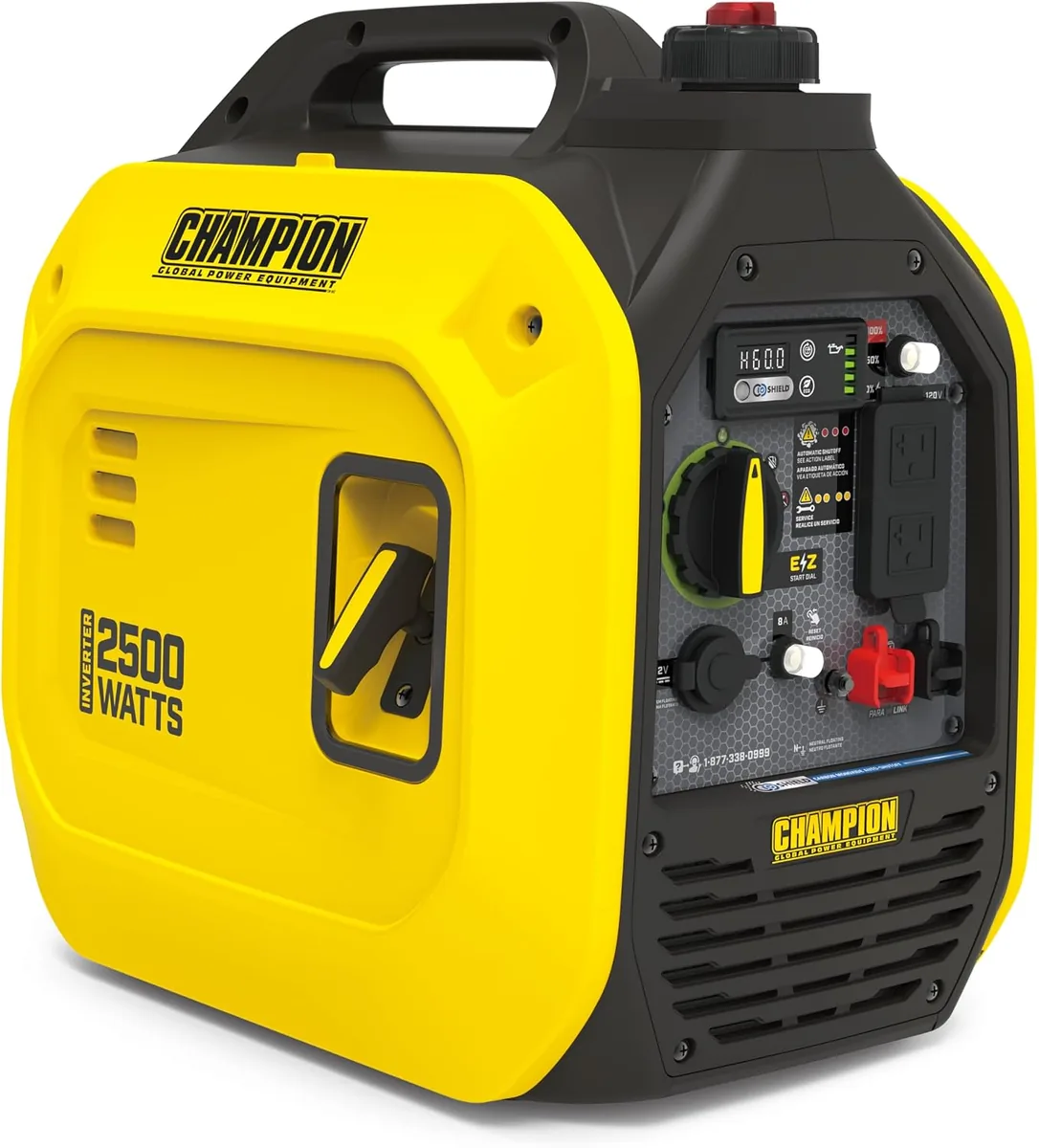
The Champion 201317 2,500-Watt Ultralight Inverter Generator weighs 39.7 lb, about the same as the WEN, with 1,850 running watts and a CO Shield shutoff. Pick the Champion for the WEN’s weight class with a shutoff.
A-iPower SUA2301iD
The A-iPower SUA2301iD 2,300-Watt Dual Fuel Inverter Generator runs on gasoline or propane, includes a 30 amp outlet and a CO sensor, and weighs 44.2 lb. On propane it drops to 1,600 running watts. Pick the A-iPower if you want propane storage or the 30 amp outlet. WEN’s own dual-fuel model is covered in my dual-fuel WEN DF450i review.

Common WEN 56235i Problems and How to Avoid Them
Four faults account for most calls about a unit like this, and each has a quick check.
- Won’t start: the low-oil sensor blocks starting, so check the oil on level ground first, then use the choke lever for a cold engine.
- Stops while running: a low-oil shutdown or an overload is the usual cause. Unplug every load, check the oil, then restart with nothing connected.
- Overload light: the load is above 1,900 watts, or several motors started together. Add loads one at a time, and switch eco mode off above 1,000 W.
- Weak power at high altitude: above 2,000 feet you need the WEN altitude kit, and the right kit depends on the serial number.
My Final Verdict on the WEN 56235i
I recommend the WEN 56235i to anyone who needs a light, plain generator for a campsite, a tailgate or a fridge and a router during a short outage. I send everyone with a 240 V pump, central air or a 30 amp RV to a larger unit, and anyone who wants a built-in CO shutoff to a model that has one. Run it outdoors, 20 feet from the house, every time, and keep battery CO alarms in the house. In one line, my WEN 56235i review says to buy it for light loads at a campsite or in a short outage and to keep it outdoors, dry and away from the house. My roundup of the top RV generators lists units with the 30 amp outlet this model lacks.
Frequently Asked Questions
What oil do you put in a WEN generator?
For the WEN 56235i, the manual calls for 30W above 40F, 10W-30 from 0F to 40F, and synthetic 5W-30 at any temperature. The engine holds 15 fluid ounces and ships without oil, so fill it to the full mark on level ground before the first start, and check the level again before every run.
Is WEN considered a good generator?
The WEN 56235i is a good generator for light loads such as a fridge, lights and a router, with 1,900 running watts, a 39 lb weight and a 2 year warranty. It is a poor fit if you need a CO shutoff, 240 V power or a 30 amp RV outlet, so judge the model against the job.
What will a 2000W inverter generator run?
A 2000W inverter generator runs a fridge, lights, a router and small tools as long as the running total stays inside its rating. The WEN 56235i gives 1,900 running watts, and its manual lists 800 W for a fridge or sump pump, 1,200 W for a window air conditioner and 1,000 W for a microwave.
How many watts does a small generator put out?
Small inverter generators such as the WEN, Honda EU2200i, Champion 201317 and A-iPower SUA2301iD put out 1,800 to 1,900 running watts on gasoline, and the WEN 56235i is rated at 1,900 running watts with 2,350 starting watts. The manual advises keeping the load at or below 1,710 watts, which is 90 percent of the running rating.
What size inverter generator for home?
An inverter generator the size of the WEN 56235i suits a few essentials at home, such as a fridge, lights and a router, and it cannot carry a whole house. Whole-house backup needs a much larger unit and a transfer switch or interlock installed by a licensed electrician, so size it from the nameplate watts of your loads.
References
- Hampson NB, Dunn SL. Carbon Monoxide Poisoning from Portable Electrical Generators. J Emerg Med. 2015;49(2):125-129. doi:10.1016/j.jemermed.2014.12.091
- Daley WR, Smith A, Paz-Argandona E, Malilay J, McGeehin M. An outbreak of carbon monoxide poisoning after a major ice storm in Maine. J Emerg Med. 2000;18(1):87-93. doi:10.1016/S0736-4679(99)00184-5
- Emmerich SJ, Wang L, Persily AK. Measured carbon monoxide concentrations from stock and reduced-emission prototype portable generators operated in an attached garage. J Air Waste Manag Assoc. 2017;67(8):889-898. doi:10.1080/10962247.2017.1300202
- Centers for Disease Control and Prevention. Use of carbon monoxide alarms to prevent poisonings during a power outage – North Carolina, December 2002. JAMA. 2004;291(14):1691. doi:10.1001/jama.291.14.1691
- Knoll K, West B, Clark W, et al. Effects of Intermediate Ethanol Blends on Legacy Vehicles and Small Non-Road Engines, Report 1 – Updated. NREL/TP-540-43543; ORNL/TM-2008/117. National Renewable Energy Laboratory; 2009.
Safety Note: Generator exhaust contains carbon monoxide, which can kill in minutes. Run a fuel generator outdoors only, never in a home, garage, basement, shed or other enclosed or partly enclosed space, even with doors or windows open. The CPSC says to place it at least 20 feet from your home and other buildings, with the exhaust pointed away from doors, windows and vents. Install battery-operated or battery-backup carbon monoxide alarms on every level of the home and outside sleeping areas. Never plug a generator into a wall outlet: connect it to a house only through a transfer switch or interlock installed by a licensed electrician. Refuel only with the engine off and cool, and read the manufacturer’s manual, including for a portable power station.